Sprinkles reviews The Gashlycrumb Tinies or, After the Outing by Edward Gorey

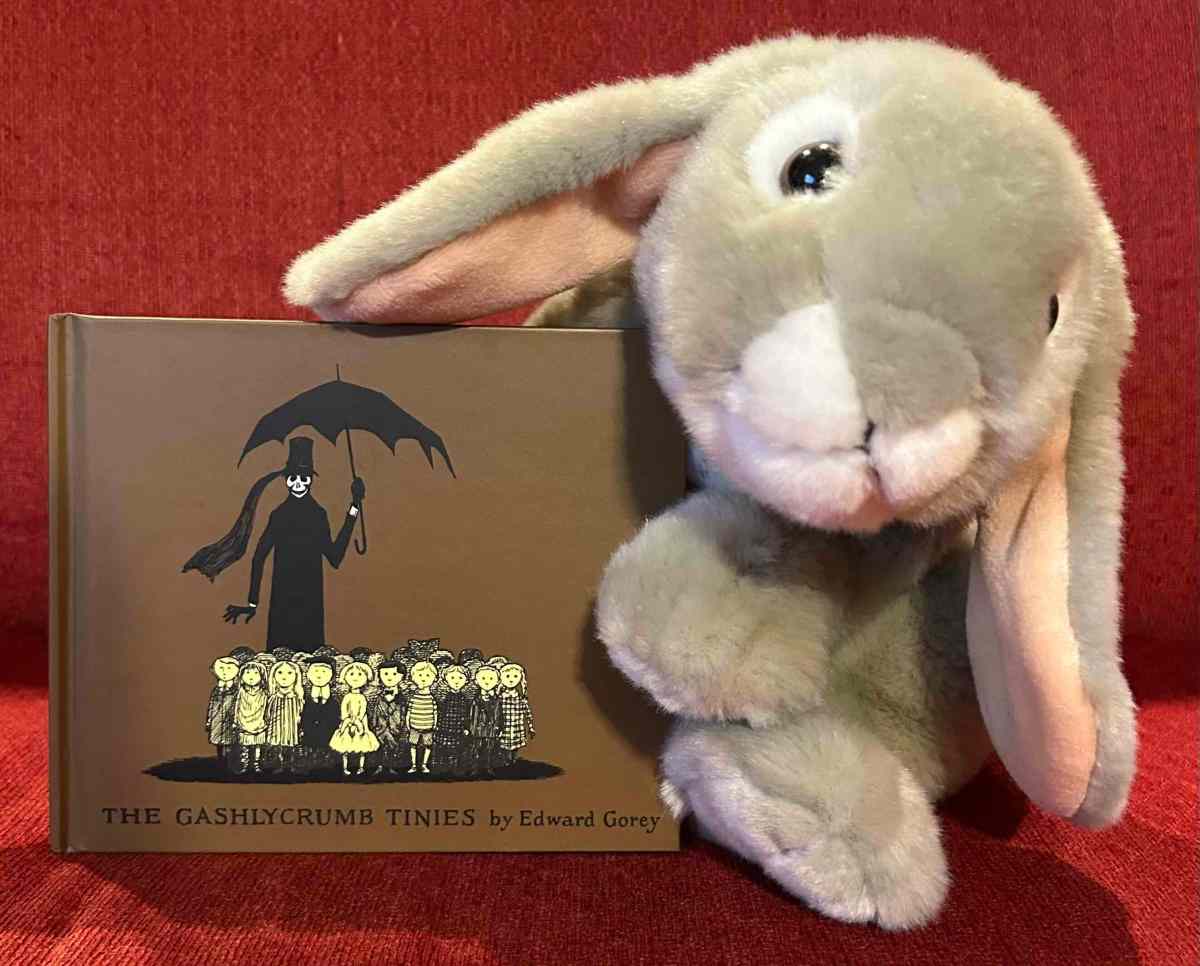
Today, to celebrate the spirit of Halloween, which was just yesterday, Sprinkles reviews The Gashlycrumb Tinies, or After the Outing by Edward Gorey, first published in 1963.
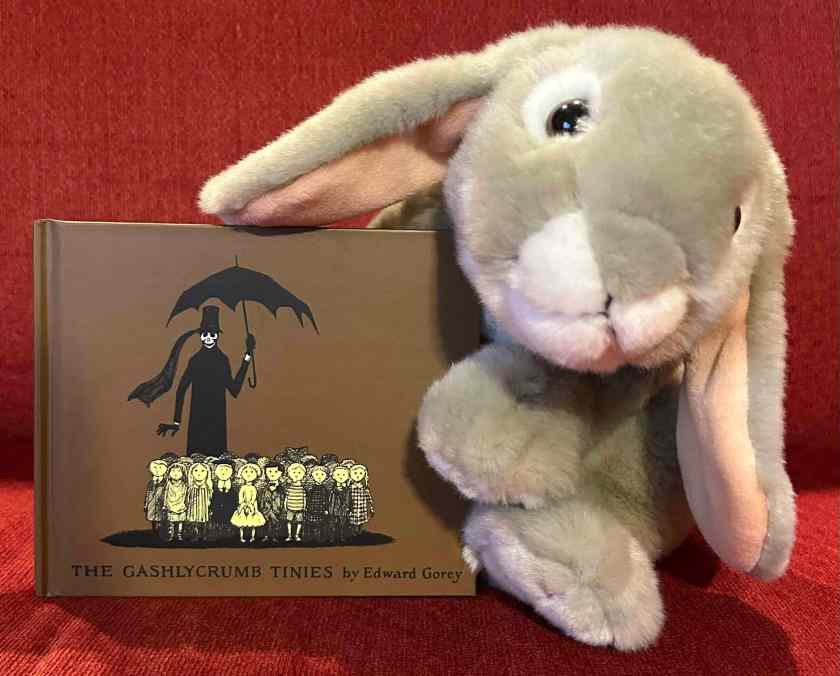
Sprinkles reviews The Gashlycrumb Tinies or, After the Outing by Edward Gorey.

The Gashlycrumb Tinies is written in the guise of an alphabet book, a book that has a page for each letter of the English alphabet with one word per letter described by words and / or depicted by some images explaining the word. But this is not a very good book to be handed out to young bunnies to read on their own.

The book does indeed have a page dedicated to each letter and there is a simple rhyme that holds up through the whole text, but the content is a lot more disturbing than one might expect. As this review is meant for Halloween, readers might expect something spooky. And indeed, the book is basically a list of twenty six children’s names, one child per letter, and lists the varied morbid ways each has died.

So if that is not too weird for you, here is a snippet to give you a taste:

I is for IDA, who drowned in a lake
J is for JAMES who took lye by mistake
K is for KATE who was struck with an axe
L is for LEO who swallowed some tacks

You get the point, I presume.
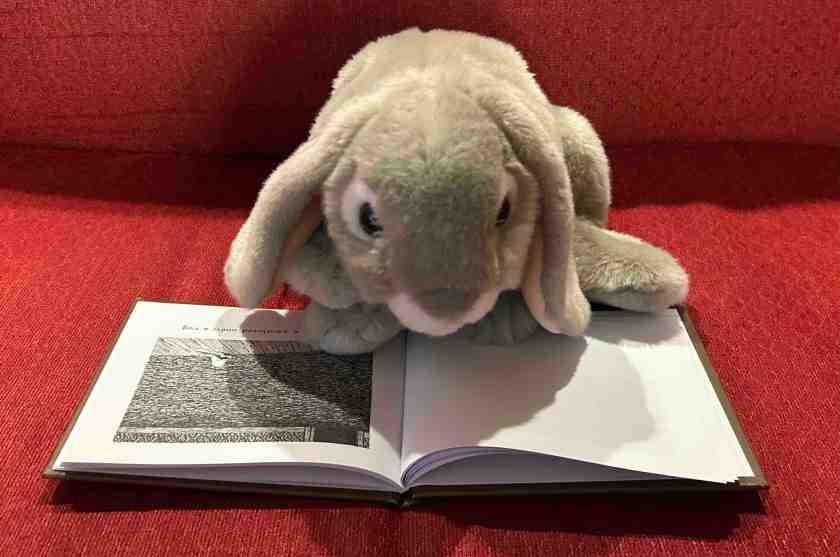
Sprinkles is reading The Gashlycrumb Tinies or, After the Outing by Edward Gorey.

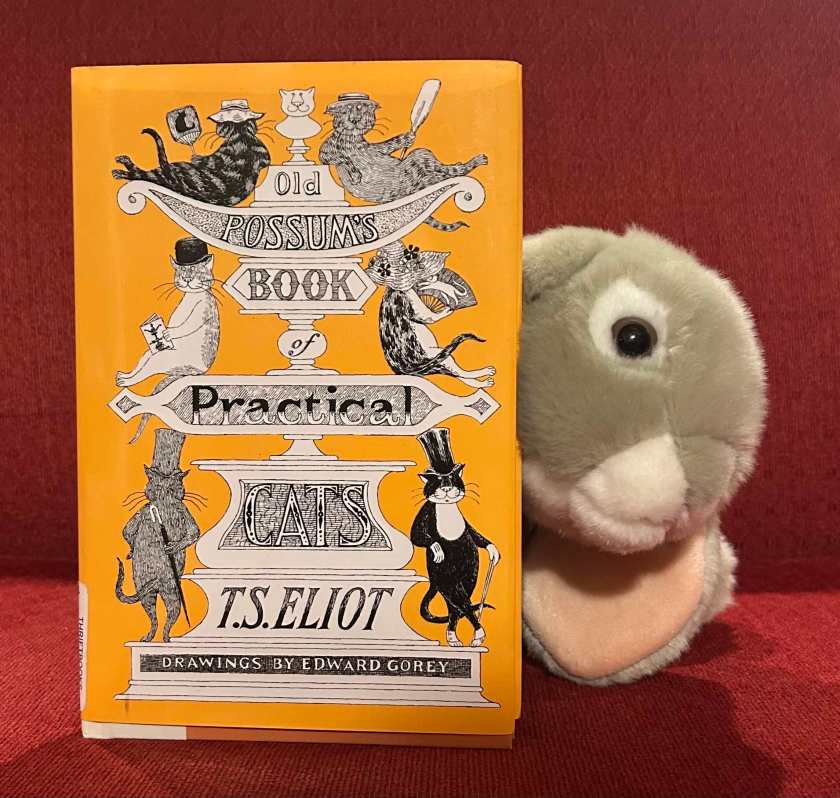
The book is the brainchild of the illustrious artist Edward Gorey, who was also the illustrator of Old Possum’s Book of Practical Cats by T.S. Eliot, which I read and reviewed a while ago. His art is textured, mostly dark, and very vivid. The children are always alone and so very small in the expansive space they are set in. One wants to pick them up and save them but of course that is impossible.

Gorey apparently said that the book was inspired by “those 19th-century cautionary tales, I guess, though my book is punishment without misbehavior”. Indeed all the illustrations accompanying the sentences about the untimely deaths of these poor young children are black-and-white, and have a somewhat eerie, old-fashioned feel to them. The image accompanying the “IDA” line I quoted above shows a dark but calm lake, a boat on the lake, and a little girl who is leaning over from the edge of the boat looking into the lake. The girl seems a bit unbalanced, and you might think that she might trip over, but you actually do not expect that will happen, because the image looks kind of serene. But then again you know, in this book, nothing goes right.

The book is probably not appropriate for the very young bunch, but it might be fun to read together with a young bunny with a morbid sense of humor. Otherwise it is best kept for a treasure for the parents or parents-to-be, who might be worrying non-stop about all the fanciful dangers little ones might face in this world. To awaken in them the reality that living itself is dangerous, the ways these little ones die are almost all kind of simple (except perhaps for poor Xerxes, who was “devoured by mice” and Neville who “died of ennui”). As such, the book is not even good as a cautionary tale for little ones; it simply is what it is: a morbid little book poking fun at our shock that at least some of us survive till adulthood. Why not take a look at it this Halloween to explore the absurdity of our fears and the unlikelihood of the survival of our species?
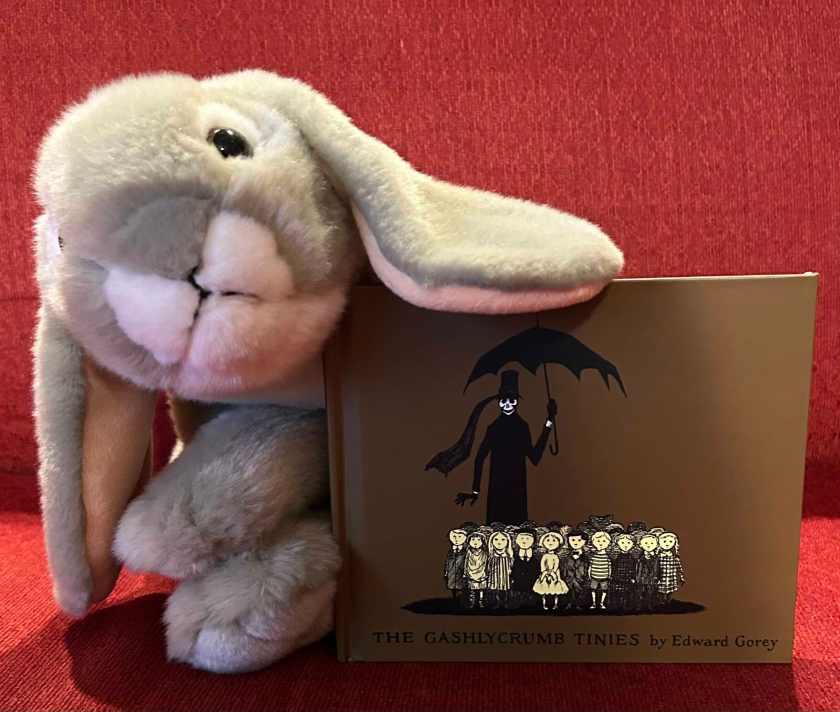
Sprinkles appreciated reading The Gashlycrumb Tinies or, After the Outing by Edward Gorey, and encourages all Halloween-spirited bunnies to take a look at it.

Sprinkles reviews Old Possum’s Book of Practical Cats by T.S. Eliot

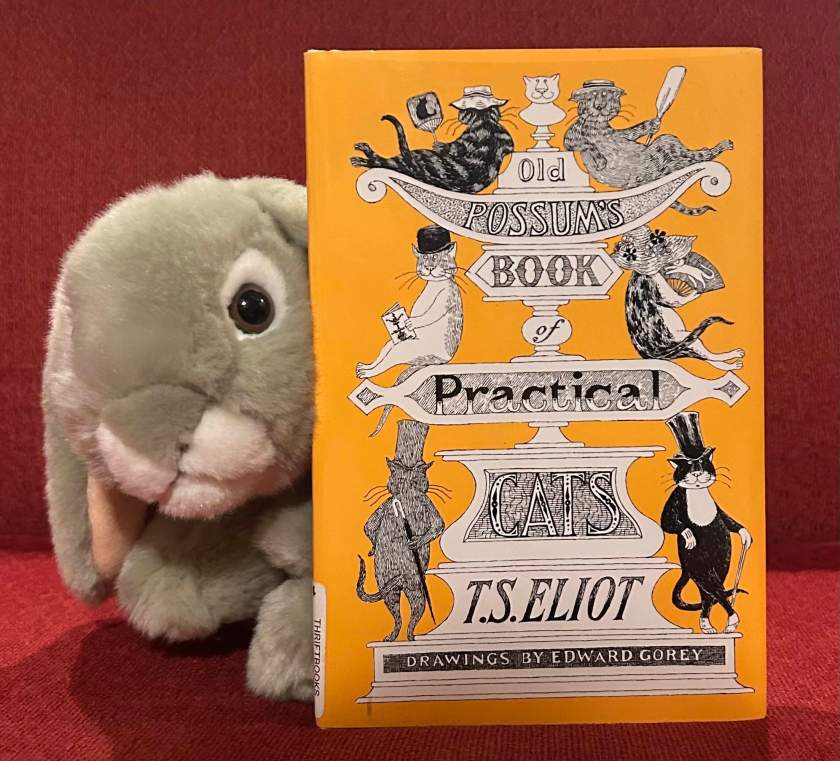
Today Sprinkles reviews a classic book of poems about cats, Old Possum’s Book of Practical Cats by T.S. Eliot, originally published in 1939. The edition reviewed here was illustrated by Edward Gorey and published in 1982.

Sprinkles reviews Old Possum's Book of Practical Cats by T.S. Eliot.
Sprinkles reviews Old Possum’s Book of Practical Cats by T.S. Eliot.

After chatting with Marshmallow about s most interesting book written by a cat, I decided to see if I could read more books about or by cats. This is how I first laid my paws on Old Possum’s Book of Practical Cats. This book was not claiming to be written by a cat but rather an old possum, but of course the possum was none other than the famed poet T.S. Eliot. Having reviewed a poetry book about dogs, I thought it would be fun to review a poetry book about cats as a way to balance the issue.

Old Possum’s Book of Practical Cats is a small book, with a total of fifteen poems spread over less than sixty pages. Every poem is accompanied by at least one full-page illustration, drawn expertly by Edward Gorey. Most of the poems have relatively simple and standard rhyme structures, so that they can be read out loud to a little one with much pleasure for all involved.

I should warn the reader that the book does include a poem, “Growltiger’s Last Stand“, that has a serious racist slur. This particular poem is about a dangerous cat named Growltiger, a bad bully of a cat, who hates Siamese cats because he was beaten by one and lost an ear to it. So it is within reason that he could be hateful towards all Siamese cats, but the poet himself did not need to use a racial slur to describe the latter. [It is honestly jarring to see this word in an otherwise perfectly enjoyable poetry collection. I’d recommend parents reading poems out loud to their little ones to consider skipping this poem, or perhaps rephrasing the line with the problematic word.]

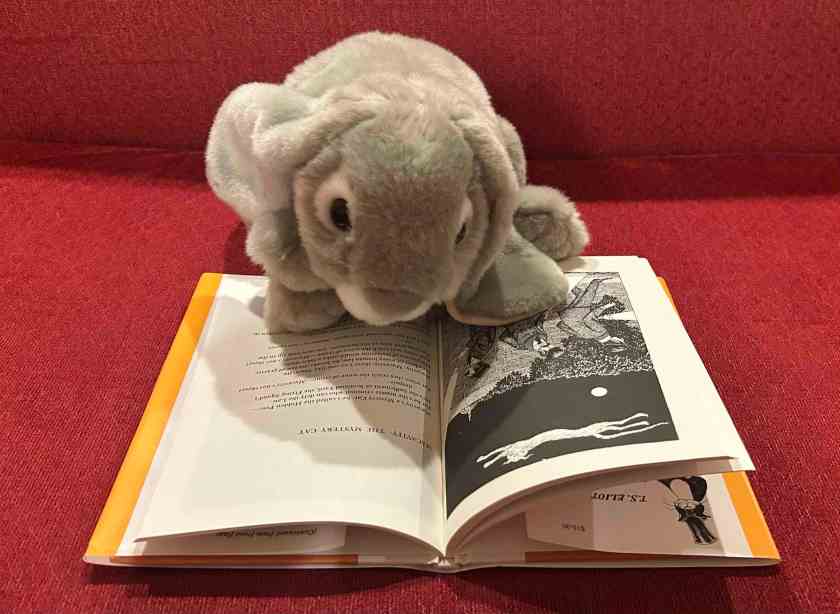
Sprinkles is reading "Macavity: The Mystery Cat" in Old Possum's Book of Practical Cats by T.S. Eliot.
Sprinkles is reading “Macavity: The Mystery Cat” in Old Possum’s Book of Practical Cats by T.S. Eliot.

When I started reading Old Possum’s Book of Practical Cats, I had no idea that it was the main inspiration for the outrageously successful Andrew Lloyd Webber musical Cats, which premiered in 1981. I had seen the musical itself way back in the last millennium, when I was about Marshmallow’s age. At the time, I had been overwhelmed by the sounds and the lights and knew that I was probably missing more than half of the plot. (I was seeing it performed in German, a language that I admire but am not terribly fluent in, so maybe you will give me some grace.) Now reading about it in more contemporary outlets, I can see that I did miss a lot. In particular the musical can apparently be viewed at a lot more adult, sensual level, and this totally evaded me back then. However, I am not at all upset about having missed all that. The cats were so fascinating, and they were so alien, and yet so irresistibly alive, I vividly remember leaving the performance hall excited and full of curiosity. Reading T.S. Eliot’s little book that started it all completes the circle for me, bringing me back to the joy and humor, to the simple appreciation of the many feline characters introduced so playfully by the poet in his letters to his godchildren.

While writing this review I also learned of a relatively recent movie production of the same content. Apparently it was a big flop, but looking at the trailer, I have to wonder how much of the failure was due to the uncanny valley effect, the discomfort humans tend to feel when a character in a book or a movie is almost too humanlike but not quite. As a bunny of course, this would not affect me as much, so I might end up trying to watch the movie some day.

Coming back to Old Possum’s Book of Practical Cats, I would like to suggest that readers should take a look at it for sure, especially if they are cat parents, of course, but even if one is not especially fond of cats, the book can offer some pleasure and fun.

Sprinkles loved reading Old Possum's Book of Practical Cats by T.S. Eliot and recommends it to all bunnies, young and old, who love cats, musicals, and whimsical poetry.
Sprinkles loved reading Old Possum’s Book of Practical Cats by T.S. Eliot and recommends it to all bunnies, young and old, who love cats, musicals, and whimsical poetry.