Caramel reviews Harold at the North Pole by Crockett Johnson

Many years ago, in the very early days of this blog Caramel reviewed a classic, Harold and the Purple Crayon, by Crockett Johnson. Today he is talking to Sprinkles about a sequel of sorts, Harold at the North Pole, published originally in 1957.

Caramel reviews Harold at the North Pole by Crockett Johnson.

Sprinkles: I was so excited to find this little book last week! So even though it is a Christmas book and we are nowhere close to Christmas, I thought it would be fun to talk about it today. 

Caramel: Yup. And I agreed. Because who doesn’t want to talk about Santa Claus and snow and Christmas gifts? 

S: I know, right? I mean we just couldn’t wait till December.. Anyways, our readers probably remember Harold, the little boy in blue overalls who creates the world around him with his ginormous purple crayon. 

C: Yeah, I would expect so. You and I talked about Harold and the Purple Crayon all the way back in 2020, so if they don’t remember, they can just read our old post. 

S: Yep. That was right around the time the pandemic really took off!

C: Yeah, the pandemic was around that time, which was pretty terrible. But the book was really good. And later, we also saw the live-action movie, which was actually pretty good.

S: Yeah, I remember watching it with you and liking it. It seems like the critics didn’t like it much, but we enjoyed it. 

C: Yup, we did. Maybe you can put a link to the trailer in the post?

S: Sure. Here is the trailer of the movie:

Harold and The Purple Crayon: official trailer, from YouTube.

C: Thanks. It was fun to watch. 

S: So let us get back to Harold at the North Pole

C: Sure. So this is about Harold, the very same little boy, But in the cover this time he is wearing green overalls, and a red hat. Very Christmas-y! 

S: Yeah, he is not in his blue overalls any more, but you are right, the red-green fits the holiday season very well. And the crayon is still purple, right?

C: Yup. So this time, Harold wants to find a Christmas tree before Santa can visit his home. So he goes out and tries to find a tree. Along the way he finds himself at the North Pole and ends up helping Santa. He also helps draw up Santa’s reindeer and a sleigh full of presents. And finally he gets back home and settles down near a fireplace to wait for Santa.

S: Yep. That sounds about right. 

C: Actually I think it kind of sounds a bit eerie. The boy is always alone, and there is nobody and nothing around him until he draws them. It is almost like a scary dream. 

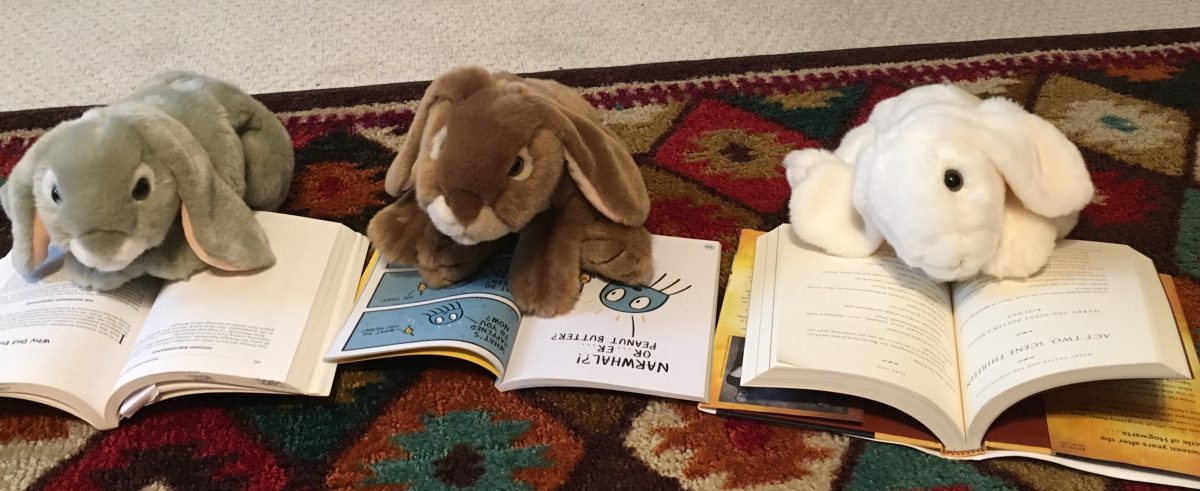
Caramel is reading Harold at the North Pole by Crockett Johnson.

S: Wait, if you read it like that, then it does not come across like a cute, warm, and fuzzy story. 

C: No, it doesn’t. And when you look back at the first book, that also could be the same, with Harold all alone, making stuff up as he goes around living all alone. Abandoned.  

S: Hmm, yes, I can see that. But it is not really the real world that he is in, is it? He is not all alone in a scary way really. I think maybe we are in Harold’s imaginary world, as he is recreating the world. The transitions from home, to the northern woods, to the North Pole, back home would be dizzying if real. But they are not. Harold just flows smoothly from one place to the other, as smoothly as he can draw something. 

C: Or actually he does not flow anywhere and the places just smoothly flow around him as he draws them. Yes, I know, it is not really about a little child all alone in a scary way, but I just wanted to say it would be kind of weird if this were real.

S: I guess that is why the movie version made the situation so weird. Nobody would believe the grown-up Harold. 

C: I wouldn’t. But you know, if the crayon were real, it would be really cool! And dangerous! All those bad people who were after the crayon in the movie, it totally makes sense, because the crayon is so powerful if you can create reality all by drawing something.  

S: Yes. 

C: So okay, the books are really sweet, they are not scary at all. I just wanted to say they are also a bit weird, but when read in their own story world, they are really sweet. And I think any little bunny would enjoy imagining themselves with a purple crayon and trying to figure out what they would draw with it and going into adventures with it and so on. 

S: Yeah, for sure. So what would you draw with it if you had the purple crayon?

C: I would draw the seventeenth book of Wings of Fire; lock in Sutherland! 

S: Not sure it works that way, Caramel… 

C: Dang it. Still, lock in Sutherland, I love those books, come out with more, please.

S: Okay, maybe she will some day. She has to go forth with the new story arc she started in the sixteenth book anyways. But so you wouldn’t draw anything else? I could draw an ice cream machine that makes ice cream for me, a bubble bath, a beautiful sunset, a comfy big chair, and lots of books and bookshelves around it where I could read.. I can go on forever! 

C: Well, Sprinkles, we do have lots of books and bookshelves in our house, and there is a comfy chair nearby too.

S: Yes, I know we are lucky. And maybe the things Harold draws are also kind of homelike, like a fireplace, and an armchair to sit on, and his home is also a regular home, just comfy. 

C: Like our home. Our home is comfy too. 

S: True… Okay, so overall what did you think of this book? 

C: It is cute. It would even make sense to a young person who has not read the original book, but if the young person liked that first book, they would definitely enjoy reading this around the holidays. It would make a good Christmas gift.

S: Yeah, it is kind of surreal, but young bunnies can get into surreal stories very quickly. 

C: Yeah, just ignore the probable psychological implications of why Harold has no parents, friends or any other people near him. Then it makes perfect sense.

S: You’re kidding, right? No young person would be worried reading this. Many picture books about young people don’t have other actors in them. 

C: Of course, yeah, it’s not scary, it’s a nice story. It is just that parents should probably be ready if their young bunny asks them these kinds of questions. It is about fun and imagination and not abandonment. Just in case, ya know.

S: Hmm, I think you have an overactive imagination sometimes Caramel.

C: Sometimes? I am offended. I have a perfectly normal imagination. And always. 

S: Okay, sorry, didn’t mean it that way. You do have a big imagination. 

C: The book is about Harold going north to find a Christmas tree, and then he finds himself at the north pole, and then he draws Santa and the whole Santa workshop, and then helps him make presents, then goes home, and realizes he forgot to find a tree, so he makes one. I think Crockett Johnson has an overactive imagination.

S: Yes I definitely agree. And it all makes the book suitably fun for the holidays. Which are about seven months away… 

C: But it is never too early to dream of Christmas! 

S: And it is actually time for some dreams. Bedtime, Caramel?

C: Yup. I think it is right about my bedtime. 

S: So then let us wrap this up. What would you like to tell our readers?

C: Stay tuned for more book bunny reviews!

Caramel loved revisiting Harold while reading Harold at the North Pole by Crockett Johnson and hopes that many others will enjoy it this next Christmas or any other time of the year.

Caramel reviews America As It Happened: A Moment-by-Moment Journey Through Time, From Prehistory to the Present Day

Today Caramel is reviewing America As It Happened: A Moment-by-Moment Journey Through Time, From Prehistory to the Present Day, a neat book published in 2026. As usual Sprinkles is taking notes and asking questions.
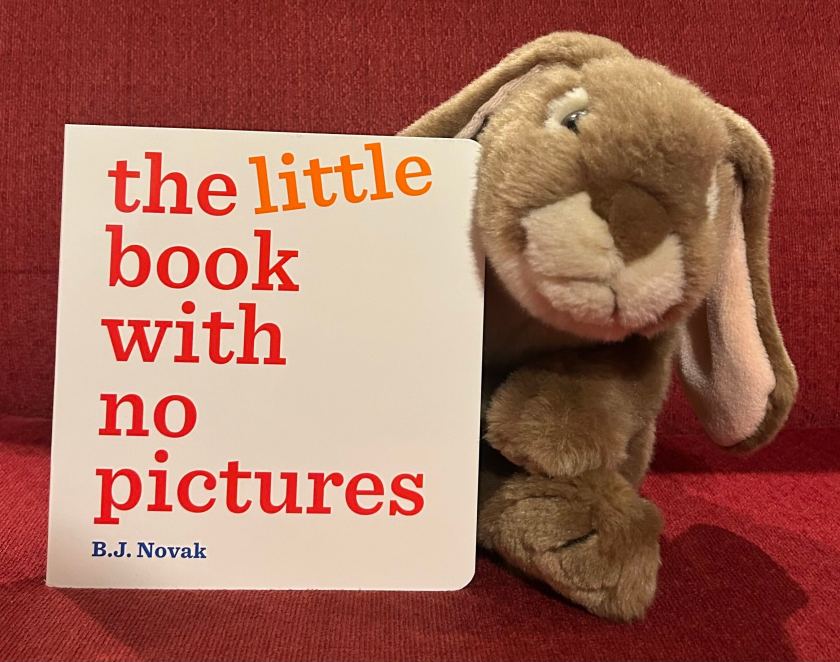
Caramel reviews America As It Happened: A Moment-by-Moment Journey Through Time, From Prehistory to the Present Day.

Sprinkles: So today we are talking about another book of facts. 

Caramel: Yup. This is a book full of facts!

S: So tell me a bit about it. 

C: Well, it is big and yellow and heavy. And smells kind of like newspaper but a bit fancier. 

S: Those are all correct descriptors for the book. Even the smell. I agree with you. It does smell like newspaper but as it is on somewhat thicker and higher quality paper, it does also feel a bit fancier. 

C: Of course that is intentional. Because the whole book is meant to look like newspaper pages. The idea is that each page shows you the front pages of a newspaper from a specific time in American history. 

S: Well, they are kind of fictional, right? I mean, in the sense that probably no newspaper actually printed these things. But the content is supposed to be factual. 

C: Yes, true. I don’t think anyone was printing newspapers back in 15,000 BCE. But there is a news piece titled “Land Bridge From Asia Under Threat” for that date. And there was not even an America back then. I mean it was definitely not called America. 

S: You are right Caramel. But I like the idea, definitely. The title is “America As It Happened” and newspapers report on events as they are happening, so it makes sense. 

C: Yep.

S: So tell me a bit more. You mentioned the land bridge and that was way back in time. Is that the earliest thing that the book mentions?

C: No. The very first thing is “Stalking Giant Sloths” and it is dated 21,000 BCE. It is saying that a community of hunter-gatherers stalked and hunted giant sloths. And then there are a few other articles all before 1600 but with lots of time between each. Of course we did not keep written records of what happened back then, so they only have a few things to tell. But then from 1600 on, things get busier. Each century gets its own section. And each section is about twenty to forty pages or so. 

S: So then there is the prehistory and then 1600-1700, 1700-1800, 1800-1900, 1900-2000?

C: Yes. And the last section is what has happened since 2000. Of course that is the most important one because I was born in that century. 

S: A lot of other young bunnies would agree, I am sure.

Caramel is reading America As It Happened: A Moment-by-Moment Journey Through Time, From Prehistory to the Present Day.

S: The book was published in 2026. So it gets us to today?

C: Kind of. The last item is “The Land of Liberty Turns 250”, so that is July 4, 2026. So it goes even beyond today!

S: Cool! I saw that there were entries for quite a lot of the important historical events that I can remember, and a lot of earlier events I knew about. But there were quite a lot of things I did not know. Did you learn anything new from this book?

C: Of course. I am a very young bunny. And even though I know a lot of history, there has been a lot of history before me. And a lot of things I know about but maybe not enough. For example I know about the Ford Model T, but the article on it was a lot more detailed than what I knew. For example, I didn’t know that the first factory was able to build only 11 cars a month. So learning that was cool. 

S: Great! I found it fun to flip through the pages of the book myself. What else can we tell our readers about the book?

C: Hmm, let me think. Maybe we can tell them that the bottom of each page has a continuing timeline, with smaller items for more specific things that happen that are important but did not get the flashy headlines. And at the end of the book there is a glossary. That is kind of like a dictionary, where some of the important big words get definitions so you don’t have to find a dictionary yourself.

S: Yeah I saw that. And the definitions provided are kind of simplified. I think the book is intended for younger bunnies, so they define words in somewhat simpler terms. 

C: I saw that they defined anarchist as “a believer in anarchism. This is the idea that society should be organized without leaders and that people should work together because they want to, not because they are forced to”. That must be simplistic then, because that sounds kind of like when young bunny friends get together and play. And people seem to think anarchists are bad, but the way they define it does not sound too bad. 

S: Yeah, it can work for a group of four or five young bunnies, not to have any leaders or organizing systems, but when you have a lot more bunnies involved and a lot more things to coordinate, things can get really unwieldy without at least a somewhat rigid structure. And throughout history, some folks who called themselves anarchists resorted to violence, so there is that, too. Wikipedia has a decent article on the topic. So yes the glossary is intended for younger bunnies so it does simplify a lot of things. Technically they are accurate but because they have to be so simple, they do miss out on some details and nuance. 

C: Still, they can be helpful when reading. I guess if one is curious or confused they could look things up on Wikipedia. 

S: I agree. Overall the glossary is helpful, I’d say. 

C: Me too. 

S: So Caramel, maybe this is a good time to wrap this review up. 

C: Sure. Wednesdays are always school nights. 

S: Yep. So what would you like to tell our readers?

C: Stay tuned for more book bunny reviews!
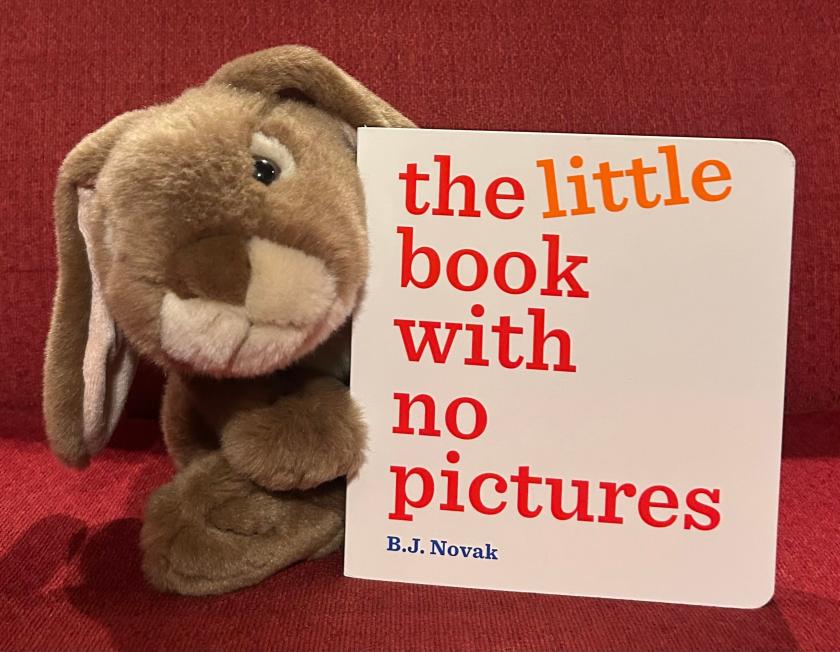
Caramel enjoyed reading America As It Happened: A Moment-by-Moment Journey Through Time, From Prehistory to the Present Day and believes he will continue to enjoy looking through its pages every now and then.

Caramel reviews The ABC Murders by Agatha Christie

Sprinkles is a huge Agatha Christie fan, so of course she was thrilled to see Caramel carrying around The ABC Murders, originally published in 1936. They are talking about the book today. As usual Sprinkles is taking notes and asking questions.

Caramel reviews The ABC Murders by Agatha Christie.

Sprinkles: I was so excited to see you reading an Agatha Christie book, Caramel! She is the best! 

Caramel: Yeah, I can see that point of view, she is a pretty good writer.

S: Yay! So you liked the book! I mean, I know there are a lot of folks who would not consider Christie a serious literary figure, but I always enjoy her books and I think she is great at what she does. 

C: Yup, she kept me guessing almost all the way to the end. 

S: Was this your first Agatha Christie novel?

C: Nope. I had also read And Then There Were None when Marshmallow was reviewing it. 

S: Ooh, that was a good one too. So, okay, back to The ABC Murders. I am sure I read this book but it must have been decades ago. And I do not remember much of the plot. Can you tell us a bit about it? 

C: So Hercule Poirot receives a suspicious letter signed by “ABC”.

S: Oh, so this has Poirot as the main detective! That is cool! Go on.

C: Yes, so this letter tells him that there will be a murder in Andover, and then someone actually dies there, so Poirot goes to Andover to figure things out. 

S: Poirot is Belgian, and often works with some British guy who writes about him, right? Kind of like Dr. Watson of Sherlock Holmes

C: Yes. The main narrator is Arthur Hastings, and the book is written like he is recounting the story rather than living through it. 

S: Apparently Hastings appears in quite a lot of Poirot mysteries. I suppose it is good to have a character like Hastings or Watson to tell us these stories about the genius detectives they are hanging out with and admire so much. This way the stories unfold naturally and we are in the dark about what is going on in the minds of these mysterious crime solvers until the very end. 

C: Yeah, it’s like that, ‘cept Hastings ole’ fellow has quite the thinker on emself-

S: Wait, what are you saying? Please speak normally. You are not a British gentleman from the nineteen twenties. 

C: Awww, ok, but that was fun! And I am only about a hundred years late! And not quite British… Anyways, the only difference is that Hastings is actually somewhat smart so he also figures some things out. Still it is clear to everyone including himself that he is not as smart as Poirot and is surprised when Poirot solves everything. 

S: Yup, that agrees with my previous understanding of their relationship.

Caramel is reading The ABC Murders by Agatha Christie.

S: So tell me a bit more. Could you tell the book was almost a hundred years old?

C: Well, it is exactly ninety years old actually. The book read fine to me. I did not think they were using old fashioned words or anything. And it is supposed to be happening in between the two world wars, and I could not even tell that, really. 

S: Yes, I think Christie’s language is clean and simple enough for us to not even notice it. Every now and then she uses a phrase that is unfamiliar to me, or she mentions something historical to me but contemporary to the story characters, but most of the time, I cannot tell at all that she wrote these things such a long time ago. 

C: Yeah, that checks out. Though it seems that in these books the detective and other people sometimes use words that today’s people might not understand. Like some words or phrases that refer to the railway map in Britain at the time. Of course I didn’t know that till they explained what it was they were talking about. But most of the time, I could totally forget this was supposed to be happening in the 1920s. That was even before your time Sprinkles!

S: Yes, of course it was before my time. It was even before my parents’ time, Caramel. 

C: Oopsie, or is that what you want me to think?

S: Okay, let us put aside any implications that I might be undead or-

C: Or a lich?!

S: Okay, let us not go there. 

C: Sure, that’s what a lich would say.

S: Caramel! These seem like ideas more fit for Midnight’s reviews. 

C: Oh yes, Midnight does like his fantasy books. But I like them too. 

S: I know. You like playing Dungeons and Dragons, and various versions of it. 

C: Actually these days, I prefer Pathfinder, which is really just D&D 3.5 edition. 

S: True. But Agatha Christie tells stories that are in some sense a lot simpler. She manages to find evil in mainstream people living regular lives. Seems like she has no need to go fantastic. 

C: That may be true for the books she has already written. But maybe when she begins to write new books, from BEYOND THE GRAVE? 

S: Okay, I have a feeling it is getting too late for us to be talking about books sensibly. 

C: That’s lich talk! Okay, okay, don’t get mad, I am kidding. But yes, you are probably right, it is getting late and it is a school night… 

S: Yep. So let us wrap up this review. Do you think you might read other books by Christie at some point? 

C: Sure. They are fun to read, and I do love solving puzzles!

S: Sounds great to me. Okay then, Caramel. What would you like to tell our readers?

C: Stay tuned for more book bunny reviews!
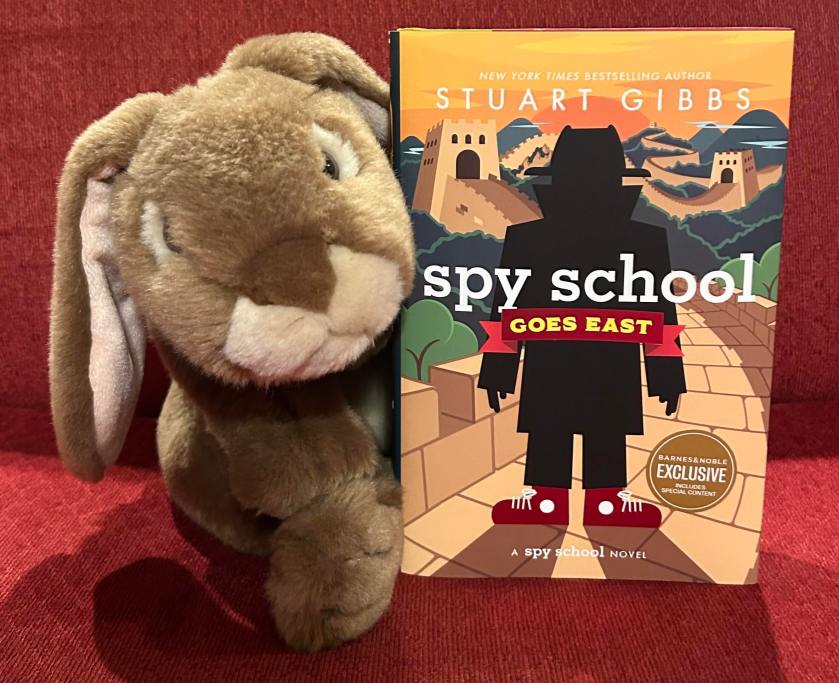
Caramel enjoyed reading The ABC Murders by Agatha Christie and recommends it to all bunnies who enjoy a little bit of detective mystery.

Caramel reviews Missile Mouse: Rescue on Tankium3 by Jake Parker

Last week Caramel reviewed Missile Mouse: The Star Crusher by Jake Parker. This week he reviews the second book in the series, Rescue on Tankium3, published in 2011. As usual Sprinkles is taking notes and asking questions.

Caramel reviews Missile Mouse: Rescue on Tankium3 by Jake Parker.

Sprinkles: So Caramel, today we are talking about the second Missile Mouse book. 

Caramel: Yes! I reviewed the first one last week and so this is just the perfect time to talk about the second one. 

S: Yes, agreed. So tell us what our favorite space spy Missile Mouse is up to in this book. 

C: It starts out with him chasing down a person, and he learns that the said person is being mind-controlled, which leads Missile Mouse to a planet called Tankium3. He learns there that all the men were kidnapped, and disappeared.

S: All the men from the planet disappeared?

C: At least all men from the species of people called Tankians.

S: Wow, that is weird. And quite scary. So what is the reason for this? Or is that the main mystery of the book then?

C: No, we learn that there’s an evil king, named Bognarsh, and he has taken all the Tankian men by mind control machines and is making them mine for fuel.

S: Fuel for spaceships and such? 

C: Yeah, and with the fact that the RIP, which I mentioned before in my review of the first book, is fighting the galactic government, fuel is really important.

S: I guess it is kind of like how oil is still so strategically important to today’s world, at least for humans. 

C: Yeah, logistics carry wars.

S: That is a powerful and very sophisticated thing to say for a little bunny like yourself, Caramel. But I do know you read a lot about history and know about many of the important wars of this planet. Where did you hear about this?  

C: I think it must have been in a history textbook about the civil war, it was talking about how the railroads of the North led to victory.

S: Oh that is interesting. I can see what it means. Especially for long wars, you need to sustain your men in the frontier, you need to keep feeding them, trying to keep them healthy, providing them with sufficient ammunition and so on, and all of that involves a lot of logistics. I also found via Uncle Google, the quote “Infantry wins battles, logistics wins wars,” attributed to American general John J. Pershing. Kind of the same idea!

C: Great minds think alike! I mean I am assuming Pershing was a great military mind, given how he has a Wikipedia page. Then again a lot of awful people also have Wikipedia pages. Anyways.

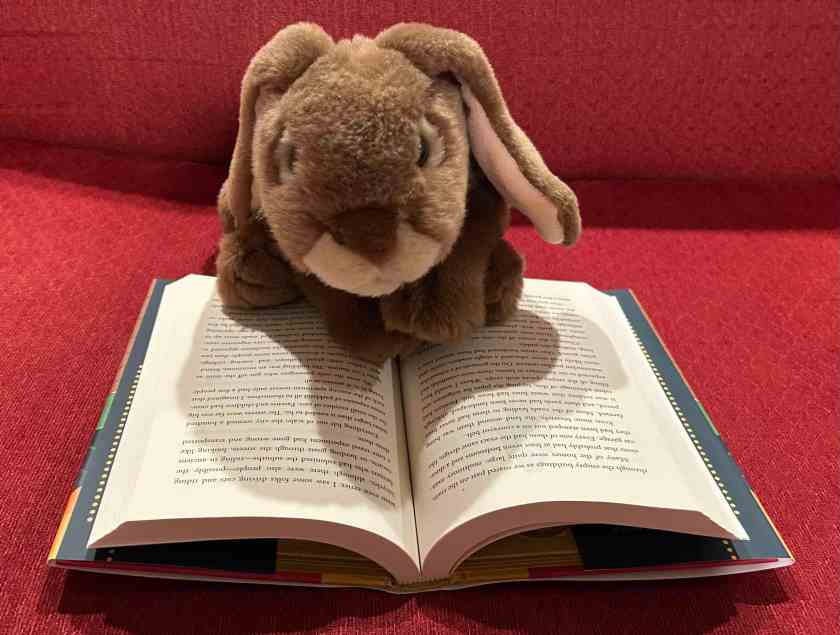
Caramel is reading Missile Mouse: Rescue on Tankium3 by Jake Parker.

S: Yes, anyways, let us get back to the book. So I now know why the fuel is so important. Now tell me a bit about these mind control machines.

C: Well, there is a big central thing and then there are these little pod-like things that are controlled by that central thing. The pod-like units attach to your head and control you, at least that’s what I got.

S: Alright, that makes sense sort of. So then does the Missile Mouse figure out how to remove them from affected people? Or will he turn off the central thing? Or am I again getting too close to asking for spoilers?

C: Yeah, the last one. I am not at liberty to discuss that information at this point.

S: Hmm, okay. Then let us talk about the book in more general terms. Are these books funny? Or do you just like to see the spaceships? I know you really like Jake Parker’s spaceships.

C: There are not that many spaceships that I could study carefully in this book, but the tech is cool anyways, too. The illustrations look very techy and sci fi, and match the setting quite well.

S: So this was a win for you?

C: Yeah, very much so. if there’s more books in the series, I would greatly appreciate reading them.

S: Okay, we can look into that, Caramel. But for now, this seems to be a good time to wrap up your review. 

C: Sure. Why not? 

S: Okay, let’s do that then. What would you like to tell our readers?

C: Stay tuned for more book bunny reviews!
Caramel enjoyed reading Missile Mouse: Rescue on Tankium3 by Jake Parker and is hoping that there is (or will eventually be) a third book in this fun series.