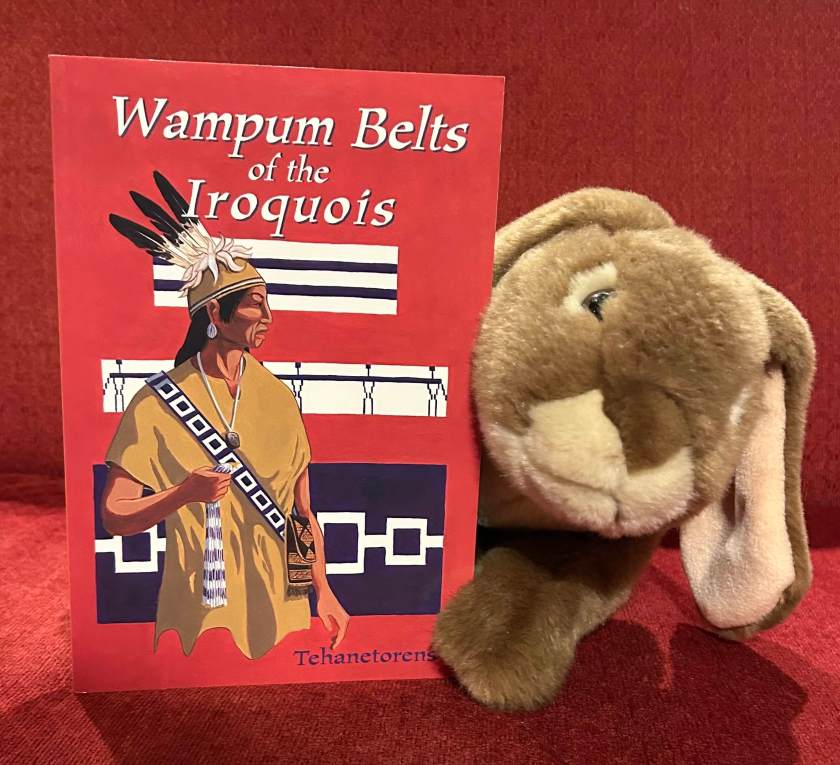
Today Caramel reviews Wampum Belts of the Iroquois, a book first published in 1999 by Tehanetorens. As usual Sprinkles is taking notes and asking questions.
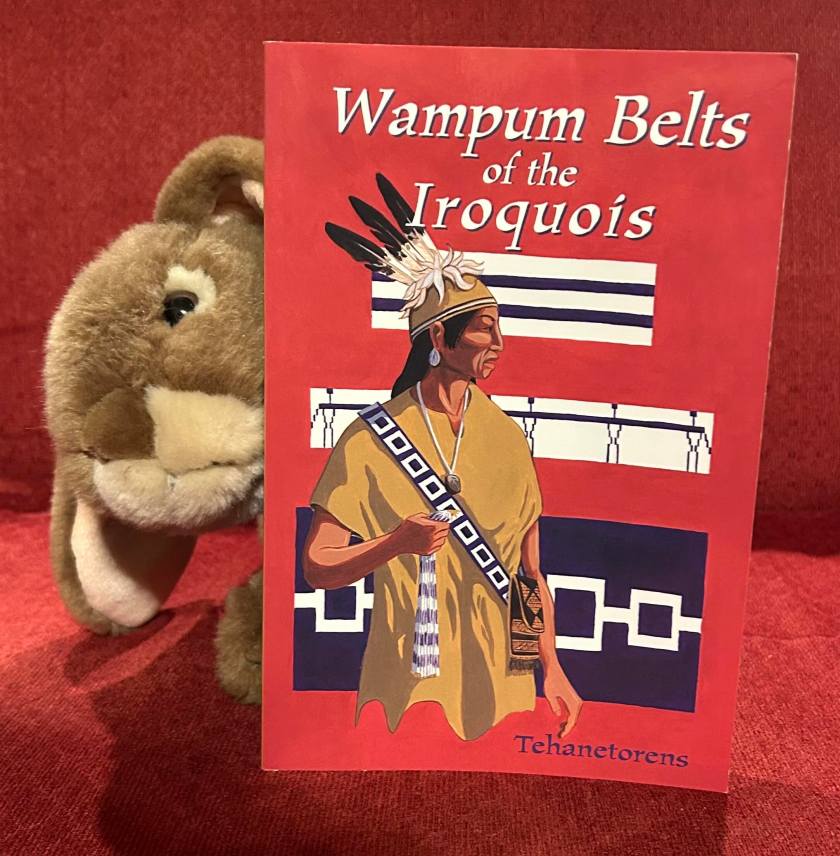
Sprinkles: Today you are reviewing a nonfiction book. It has been a while since you last reviewed a nonfiction book, no?
Caramel: Not really. I reviewed America As It Happened: A Moment-by-Moment Journey Through Time, From Prehistory to the Present Day only a couple weeks ago, and that was nonfiction.
S: True. Okay, so this book is also nonfiction. Tell me a bit about what it is about.
C: It’s about the wampum belts, which denote or commemorate laws, treaties and commitments. The Iroquois people make them and wear them, and the book talks about a lot of different examples of these belts.
S: That sounds really interesting. Tell me more.
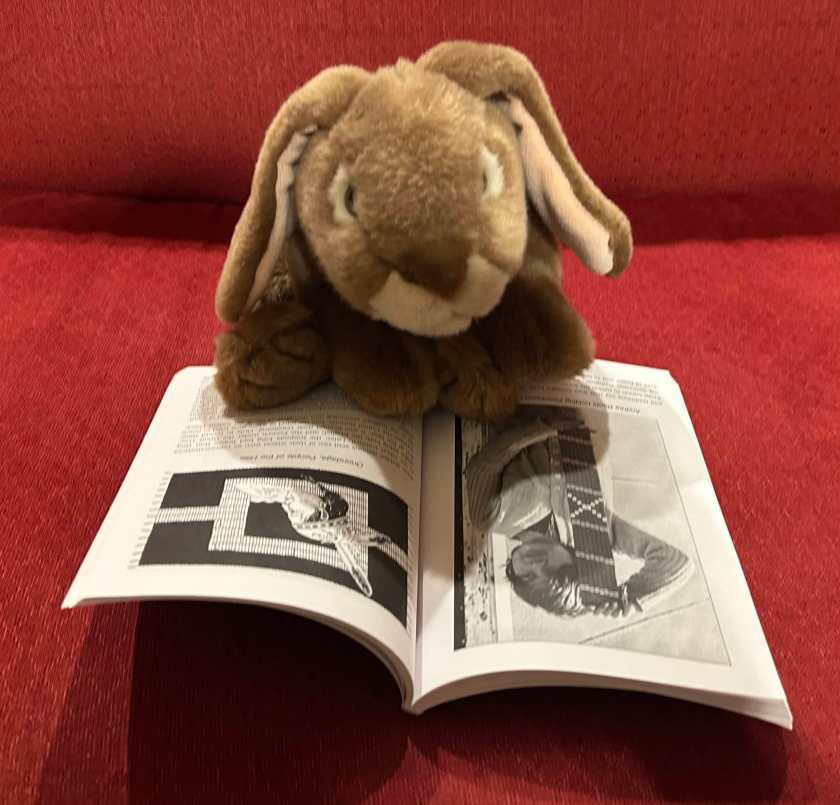
C: The book is about a school project. The person who wrote the book is the teacher, and his students at the Onkwehonwe Neha School worked with beads and other traditional materials to make replicas of important wampum belts. The book has a lot of different types of these belts. And the student who made each belt poses with the belt so you can see them too. They are really cool. I only wish the pictures were in color.
S: But even though they are in black and white, the pictures already show how many different types of wampum belts there are, right?
C: Yes. And for each belt, besides the photo of the child who made the belt, there is a lot of information about the belt. For example there is a belt called the Hiawatha or the ayonwatha belt, which shows the union between five nations (the five tribes making up the Iroquois), and looks like a wide dark belt with two white squares on either side of either a heart or a tree, which represents one of each nation, and they are connected by a line that symbolizes their union. It is neat how it symbolizes the five nations coming together.
S: I know that in a lot of traditional societies where rugs and carpets are woven, the people who weave them put in a lot of information into their work. These belts remind me of that kind of a tradition, a way to memorialize important events in objects that can also be used.
C: Yes, they are practical and useful but also beautiful. I really liked them.
S: Also these specific belts were able to connect the students who made them with their traditions and histories. It must have been a very engaging school project.
C: Yes, it is kind of like the ofrenda I made at school for my maternal grandfather. It was a way for me to learn more about him, because you know, I never met him, and when I was making it, you told me a lot more stories about him.
S: Yes, kind of like that. Of course that was more about your personal history, rather than the history of a whole people, but still you are right that it hopefully allowed you to connect a bit more deeply with someone from your past.
C: Yes.
S: So Caramel, what made you want to review this book?
C: You know I love fact-full books and this one is definitely full of facts. And it has lots of interesting pictures. And the kids holding their belts look so serious and proud, it is really neat to look at them. So I wanted to tell other young bunnies about it because the book is really neat.
S: That is fair.
C: There are also a lot of hand-drawn pictures in there, and those are cool too. Almost every page has some picture and so the book is really easy to read.
S: Yes, the pictures make it so engaging, you are right.
C: Of course.
S: Okay, Caramel, so maybe this is a good time to wrap up the review.
C: Again it is a school night, so I agree.
S: So let us do just that. What do you want to tell our readers?
C: Stay tuned for more book bunny reviews!