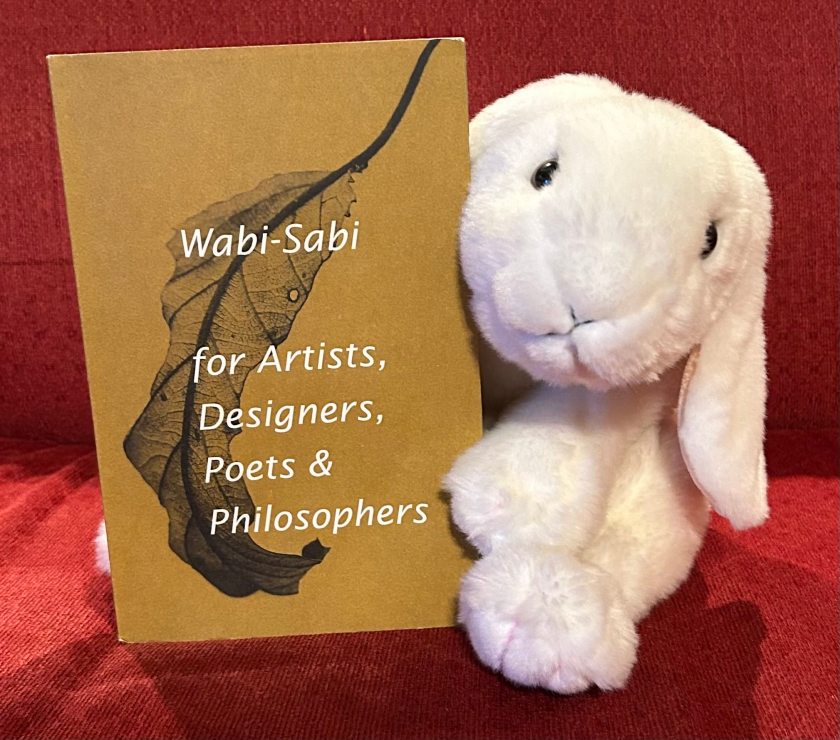
Marshmallow reviews Wabi-Sabi for Artists, Designers, Poets & Philosophers by Leonard Koren

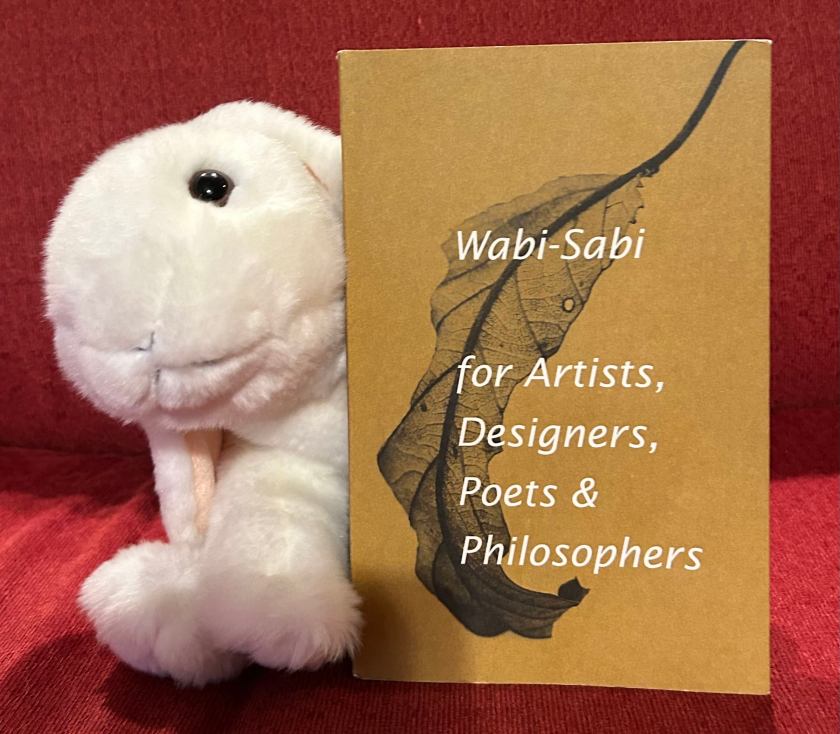
Today Marshmallow is reviewing Wabi-Sabi for Artists, Designers, Poets & Philosophers by Leonard Koren. Originally published in 1994, this book is widely viewed as the first publication that introduced Western audiences to the Japanese wabi-sabi aesthetic. Marshmallow read the revised 2008 edition.

Marshmallow reviews Wabi-Sabi for Artists, Designers, Poets & Philosophers by Leonard Koren.

Marshmallow’s Quick Take: If you like books about Japanese culture, Zen philosophy, or art in general, then this is the book for you! 

Marshmallow’s Summary (without Spoilers): This book serves as Koren’s definition for the wabi-sabi aesthetic, something he believes should never be defined. For context, he even says this explicitly at the start of the book. He states that the aesthetic has an intentional “History of Obfuscation” because of its Zen Buddhism roots, the iemoto system of Japanese trade, and aesthetic obscurantism (which is the practice of obscuring the full details of something to hide its nature). These big words make sense to the reader eventually though as he provides a paragraph of explanation for each cause. Overall, these three factors have long left wabi-sabi as a nebulous feeling, a set of aesthetic ideals that Japanese people have struggled to put to words or have purposefully not done so. Koren argues that this is for the best or it was in the past. However, wabi-sabi is an endangered way that he believes now requires a more rigid definition. After all, if people – artists, designers, poets, philosophers, and even ordinary people in general – cannot identify what makes something wabi-sabi, it is surely doomed to be lost.

Koren traces the history of the aesthetic back to the sacred ceremonies of the famed and wise tea master Rikyu. He allegedly began using homely, imperfect pieces in his tea-making process, something that was an oddity at the time. In the pre-Rikyu period, the ceremonies were filled with elaborate, ornate pieces of the Chinese aesthetic. In contrast, Rikyu created a uniquely Japanese style that focused on “the rustic, the simple, the artless, the unsophisticated.” Eventually, though, these pieces became viewed as even more valuable. But, as Koren explains, they then lost their wabi-sabi qualities.

This exemplifies what the wabi-sabi aesthetic really values. It is the “most conspicuous and characteristic feature of what we think of as traditional Japanese beauty” despite being very focused on “the idea of not being conspicuous at all.”

Tracing the origins and meanings of the words ‘wabi’ and ‘sabi,’ Koren defines wabi-sabi to be the aesthetic that focuses on three fundamental truths: nothing lasts, nothing is complete, and nothing is perfect. In some way, this also means that everything is in a state between the creation and destruction of something or, in another way of reasoning, everything is in the process of becoming something or becoming nothing. Nothing in itself is viewed as an opportunity for something and something is an opportunity for nothing.

It is all very complicated sounding, but Koren does a good job of spelling it out for all readers. With some quiet time and contemplation, this book offers us a way to prevent “the extinction of a beauty” that Koren’s work seeks to preserve. 

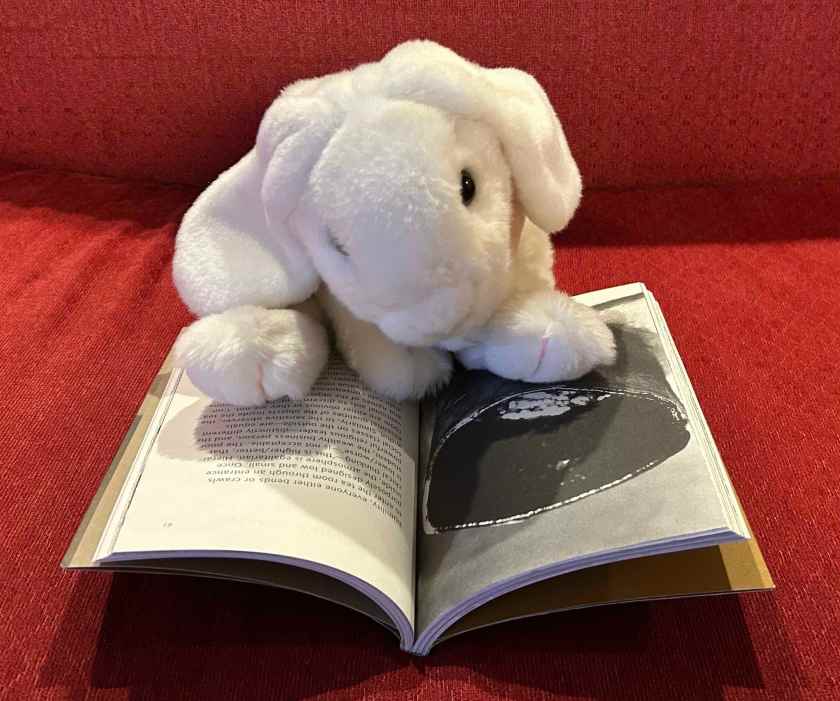
Marshmallow is reading Wabi-Sabi for Artists, Designers, Poets & Philosophers by Leonard Koren.

Marshmallow’s Review: I found Wabi-Sabi for Artists, Designers, Poets & Philosophers to be a fascinating analysis of this Japanese aesthetic. Wabi-sabi became somewhat of a trend online a little while ago and this book is a really good way to embrace and deepen one’s understanding of what wabi-sabi actually means. The internet trend associated with it is adorable and really meaningful! This book is a perfect way to explore the cultural significance it holds in Japan though. Koren analyzes the historical origins, how it developed over time, and how it is still somewhat present today.

I think reading Wabi-Sabi for Artists, Designers, Poets & Philosophers not only gave me an understanding of the aesthetic itself. It also showed me more about what the ideals and beliefs behind much of Japanese and Zen culture are. This is a really good experience to have for all bunnies because it really gives you good time to think about the thoughts of the tea masters from millennia ago and provides a moment of peace where you can think about quieter, natural philosophies that are so distant and distinct from much of the media we consume today. Finding that moment of calm in this book was a really valuable time and I would highly recommend reading this book – if not to learn about the aesthetic – to take some time to think about philosophy, life, and nature deeper.

Images are placed throughout the pages in black and white stills that hint at what wabi-sabi looks like. They are rather ordinary yet strange looking things but they give you a sense of the aesthetics meaning. I found that the book’s brevity and its accompanying images do a really good job of leaving you with a feeling of calm and a greater appreciation for the wabi-sabi things in life. While I’m not going to change my entire aesthetic, I think it is worth thinking about imperfections and the sometimes boringly simple as beautiful. In such a complicated world, books like this one give us time to return to another world when tea ceremonies and wabi-sabi were new, reopening our imaginations to see a whole new perspective. 

Marshmallow’s Rating: 100%.

Marshmallow rates Wabi-Sabi for Artists, Designers, Poets & Philosophers by Leonard Koren 100%.

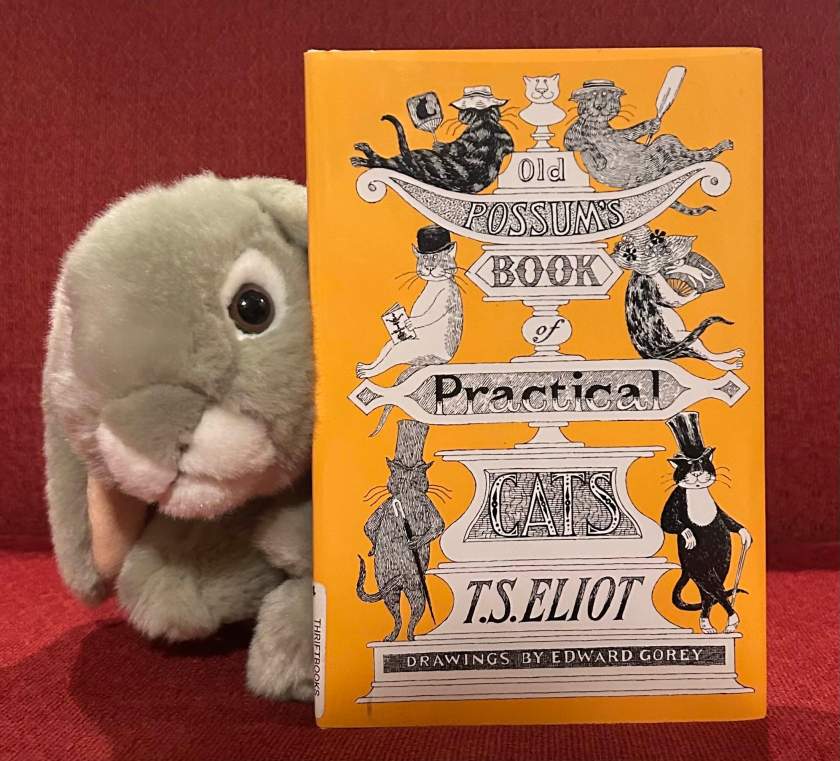
Sprinkles reviews Old Possum’s Book of Practical Cats by T.S. Eliot

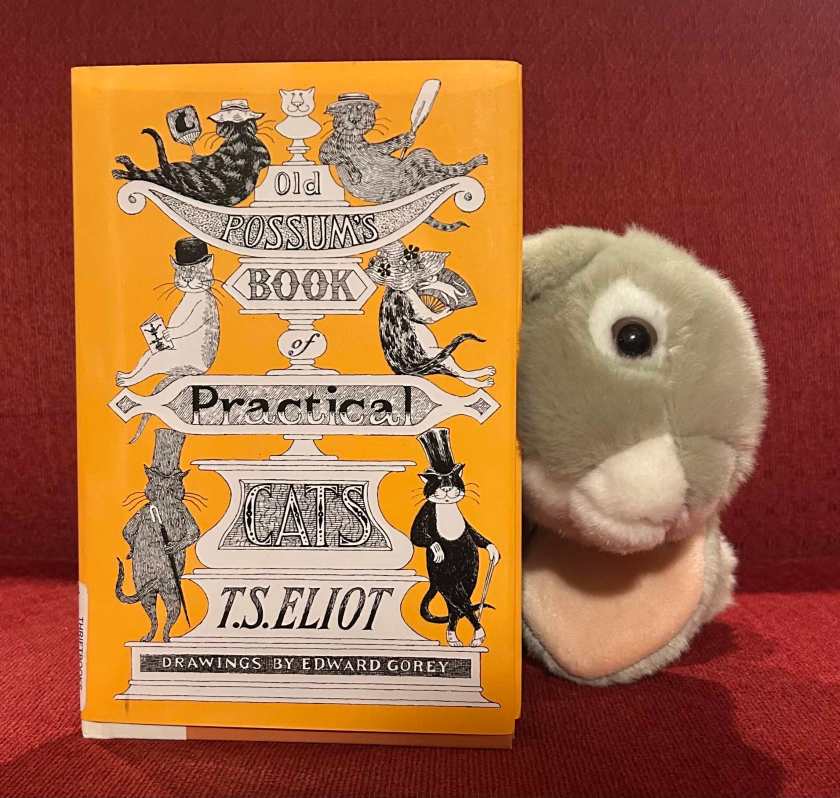
Today Sprinkles reviews a classic book of poems about cats, Old Possum’s Book of Practical Cats by T.S. Eliot, originally published in 1939. The edition reviewed here was illustrated by Edward Gorey and published in 1982.

Sprinkles reviews Old Possum's Book of Practical Cats by T.S. Eliot.
Sprinkles reviews Old Possum’s Book of Practical Cats by T.S. Eliot.

After chatting with Marshmallow about s most interesting book written by a cat, I decided to see if I could read more books about or by cats. This is how I first laid my paws on Old Possum’s Book of Practical Cats. This book was not claiming to be written by a cat but rather an old possum, but of course the possum was none other than the famed poet T.S. Eliot. Having reviewed a poetry book about dogs, I thought it would be fun to review a poetry book about cats as a way to balance the issue.

Old Possum’s Book of Practical Cats is a small book, with a total of fifteen poems spread over less than sixty pages. Every poem is accompanied by at least one full-page illustration, drawn expertly by Edward Gorey. Most of the poems have relatively simple and standard rhyme structures, so that they can be read out loud to a little one with much pleasure for all involved.

I should warn the reader that the book does include a poem, “Growltiger’s Last Stand“, that has a serious racist slur. This particular poem is about a dangerous cat named Growltiger, a bad bully of a cat, who hates Siamese cats because he was beaten by one and lost an ear to it. So it is within reason that he could be hateful towards all Siamese cats, but the poet himself did not need to use a racial slur to describe the latter. [It is honestly jarring to see this word in an otherwise perfectly enjoyable poetry collection. I’d recommend parents reading poems out loud to their little ones to consider skipping this poem, or perhaps rephrasing the line with the problematic word.]

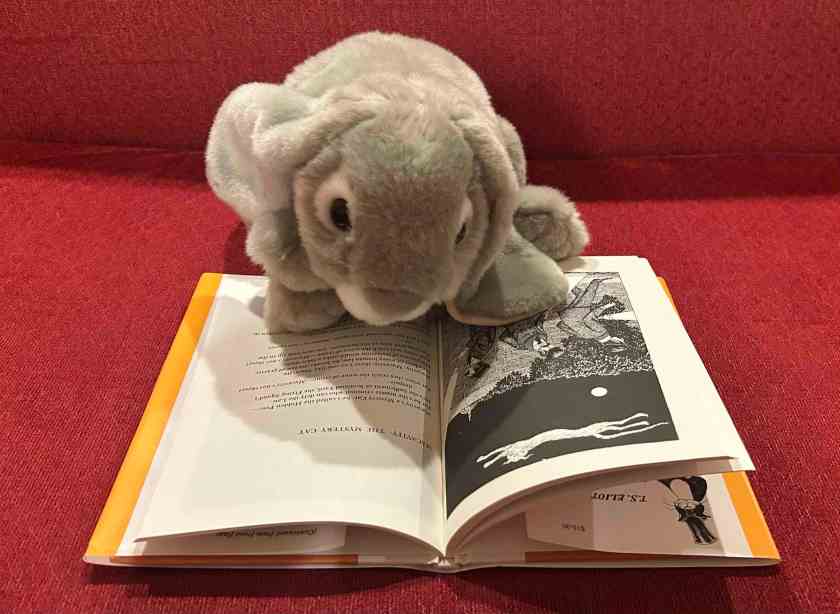
Sprinkles is reading "Macavity: The Mystery Cat" in Old Possum's Book of Practical Cats by T.S. Eliot.
Sprinkles is reading “Macavity: The Mystery Cat” in Old Possum’s Book of Practical Cats by T.S. Eliot.

When I started reading Old Possum’s Book of Practical Cats, I had no idea that it was the main inspiration for the outrageously successful Andrew Lloyd Webber musical Cats, which premiered in 1981. I had seen the musical itself way back in the last millennium, when I was about Marshmallow’s age. At the time, I had been overwhelmed by the sounds and the lights and knew that I was probably missing more than half of the plot. (I was seeing it performed in German, a language that I admire but am not terribly fluent in, so maybe you will give me some grace.) Now reading about it in more contemporary outlets, I can see that I did miss a lot. In particular the musical can apparently be viewed at a lot more adult, sensual level, and this totally evaded me back then. However, I am not at all upset about having missed all that. The cats were so fascinating, and they were so alien, and yet so irresistibly alive, I vividly remember leaving the performance hall excited and full of curiosity. Reading T.S. Eliot’s little book that started it all completes the circle for me, bringing me back to the joy and humor, to the simple appreciation of the many feline characters introduced so playfully by the poet in his letters to his godchildren.

While writing this review I also learned of a relatively recent movie production of the same content. Apparently it was a big flop, but looking at the trailer, I have to wonder how much of the failure was due to the uncanny valley effect, the discomfort humans tend to feel when a character in a book or a movie is almost too humanlike but not quite. As a bunny of course, this would not affect me as much, so I might end up trying to watch the movie some day.

Coming back to Old Possum’s Book of Practical Cats, I would like to suggest that readers should take a look at it for sure, especially if they are cat parents, of course, but even if one is not especially fond of cats, the book can offer some pleasure and fun.

Sprinkles loved reading Old Possum's Book of Practical Cats by T.S. Eliot and recommends it to all bunnies, young and old, who love cats, musicals, and whimsical poetry.
Sprinkles loved reading Old Possum’s Book of Practical Cats by T.S. Eliot and recommends it to all bunnies, young and old, who love cats, musicals, and whimsical poetry.

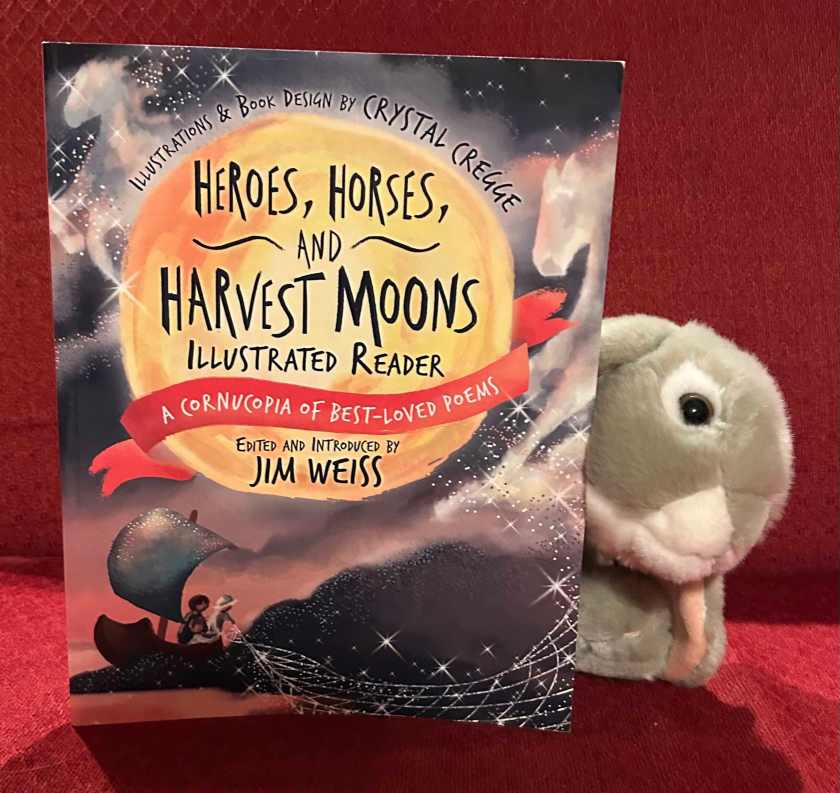
Sprinkles reviews Heroes, Horses, and Harvest Moons: A Cornucopia of Best-Loved Poems

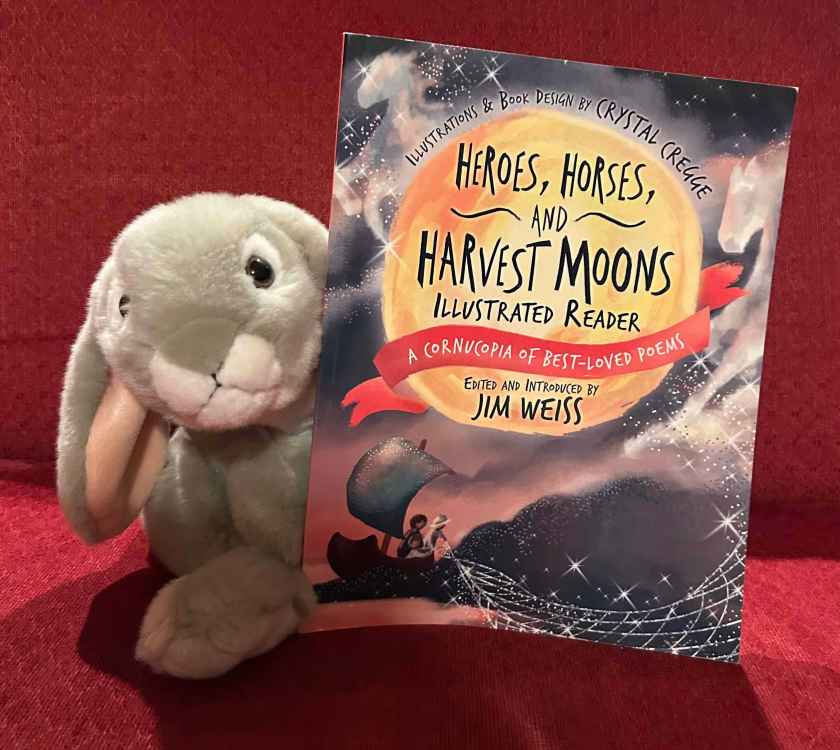
Sprinkles has reviewed several poetry anthologies for the book bunnies blog. Today she is writing about another: Heroes, Horses, and Harvest Moons: A Cornucopia of Best-Loved Poems, edited and introduced by Jim Weiss, illustrated by Crystal Cregge, and published in 2018.

Sprinkles reviews Heroes, Horses, and Harvest Moons: A Cornucopia of Best-Loved Poems, edited and introduced by Jim Weiss and illustrated by Crystal Cregge.

When I first began to look for poetry books for young readers, I did not know there would be so many beautiful options out there. But through the years, I was pleasantly surprised to find several lovely books that fit the bill, all clearly created with much care and love. Today I wanted to share with you one such book: a lovely little collection of poems titled Heroes, Horses, and Harvest Moons: A Cornucopia of Best-Loved Poems.

Heroes, Horses, and Harvest Moons: A Cornucopia of Best-Loved Poems is a paperback large-format book, and in the course of fifty-two pages, covers thirty-one poems and nine nursery rhymes. Most poetry anthologies will not have Mother Goose in their repertoire, but this is a different kind of an anthology. The sounds matter a lot in this book, and the easy rhymes and repetitions of the nursery rhymes included seem to be a natural place to introduce young ones to poetry.

So this could indeed be a first introduction to poetry for a young bunny. There is a little blurb at the beginning about what poetry is; it ends with “I hope you have fun.” This captures the spirit of the book well. These are poems selected not only for being well-known and well-loved, but also a lot of the time, they are fun and fun to read out loud. Christina Rosseti’s “Who Has Seen the Wind?” is almost like a fun little riddle, and would be fun for a young one to read out loud together with their grownup.

The illustrations on each page add to the fun factor. Carl Sandburg’s “Fog” starting with the lines:

The fog comes
on little cat feet.

is decorated by a city skyline with a crouching gray cat seemingly hiding behind it. The cat is looking curiously on and its tail is making an elegant wave above the city’s trees. All very amusing to explore as one thinks about the words of the poem…

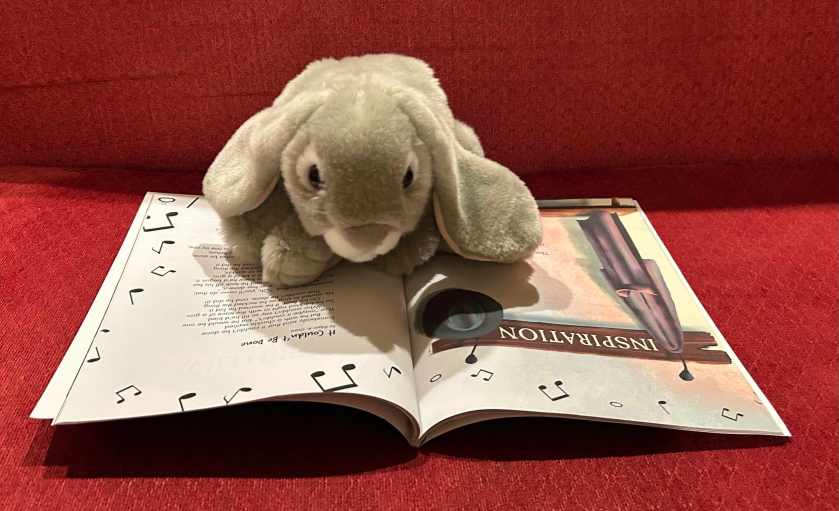
Sprinkles is reading Heroes, Horses, and Harvest Moons: A Cornucopia of Best-Loved Poems, edited and introduced by Jim Weiss and illustrated by Crystal Cregge.

Many of the poems that appear in Heroes, Horses, and Harvest Moons: A Cornucopia of Best-Loved Poems can be found in some of the books I have reviewed before. For example Robert Louis Stevenson’s “Windy Nights” is from A Child’s Garden of Verses. “I Hear America Singing” by Walt Whitman was in two of the anthologies I reviewed. “The King’s Breakfast” and “Jonathan Jo” by A.A. Milne are both from When We Were Very Young. But there are also a lot of new poems here. So one should not worry about complete overlaps. And when it comes to poetry, revisiting an old acquaintance is always welcome!

The poems are loosely organized into whimsical themed sections. The first section is made up of nursery rhymes from Mother Goose. Then comes a section on poems about nature. There are two sections called “Wild Ride”. The first contains “Paul Revere’s Ride” by Henry Wadsworth Longfellow, the second, “The Charge of the Light Brigade” by Alfred, Lord Tennyson. Other sections are titled “All American Poems”, “Unusual Companions”, “Poems That Take Flight”, “Sensible Nonsense”, “Bedtime and Dreamtime”. “Unusual Companions”, for example, contains “The Beanstalk” by Edna St. Vincent Millay, “The Little Elf” by John Kendrick Bangs, and “The Song of the Wandering Aengus” by William Butler Yeats.

All of these sections are preceded by a Foreword by Susan Wise Bauer, directed at parents, with some recommendations on how to use the book. But the recommendations are not simply about just reading the book together with a child and talking about the pictures. There is some discussion of the role of memorization and recitation of poetry, both seemingly lost arts. Older children might recoil at the idea of reciting a poem in front of others, but younger children often enjoy memorizing and reciting rhyming language. If they recited poetry instead of commercial jingles, wouldn’t that be lovely?

The book is accompanied by an audio version of the poems, too, all read by Weiss himself. You can hear a sample on the publisher’s website for the audio companion. Weiss has a very versatile voice and his readings of the poems are a joy to listen to. But I’d say that it will be a whole lot more fun to read it out loud yourself with your little one.

Sprinkles enjoyed reading Heroes, Horses, and Harvest Moons: A Cornucopia of Best-Loved Poems, and recommends it to all young lovers of poetry and their adults.

Sprinkles reviews The Death of the Hat: A Brief History of Poetry in Fifty Objects by Paul B. Janeczko and Chris Raschka

Sprinkles has already reviewed several poetry books for the book bunnies blog. Besides single-poet collections, she has also reviewed a handful of anthologies as well as a neat collection of poems by three contemporary poets celebrating a wide range of well-known poets. Today she is reviewing another anthology, The Death of the Hat: A Brief History of Poetry in Fifty Objects, curated by Paul B. Janeczko, illustrated by Chris Raschka, and first published in 2015.

You can take a quick peek into the book here: The Death of the Hat: A Brief History of Poetry in Fifty Objects.

Sprinkles reviews The Death of the Hat: A Brief History of Poetry in Fifty Objects by Paul B. Janeczko and Chris Raschka.

The Death of the Hat: A Brief History of Poetry in Fifty Objects is an interesting collection. The title might give you a hint about what to expect: you might imagine that this will likely be a collection of fifty poems each about a particular object, and the whole collection will likely give us a sense of the history of poetry. And you would be right, mostly.

So yes, most of the poems are about concrete objects, like a hat (the titular poem “The Death of the Hat” by Billy Collins) or a just-finishing candle (a poem by Rumi) or simply the letter E, my favorite (by George Gordon, Lord Byron, who just happens to be the father of Ada Lovelace):

A Riddle, On the Letter E by George Gordon, Lord Byron

The beginning of eternity, the end of time and space
The beginning of every end, and the end of every place.

But there are also quite a few poems which are about nature and natural beings. You can call them objects, sure, but I feel like they do not quite fit the term. Like snowflakes (Henry Wadsworth Longfellow), the midnight frost (Basho), the sun (Ben Jonson), an eagle (Lord Alfred Tennyson), and so on. Still, they are concrete, and I suppose, do make a category that excludes topics like spirituality, romantic love, meaning of life and so on.

Sprinkles is reading The Death of the Hat: A Brief History of Poetry in Fifty Objects by Paul B. Janeczko and Chris Raschka.

The history bit is worth mentioning. The time periods are described at the beginning; the curator of the collection, Paul B. Janeczko, in his introduction gives us a quick recap of the history of Western poetry, mainly focusing on what can be gleaned in poetry written in English. This is helpful and provides the reader some guidelines as they dive into the book. But then we find several poems that were translated into English! Now this is exciting, the poems are all exquisite themselves, but assigning to them the Euro-centric (or rather English-centric) period names feels a bit off then. For example, when you are reading poems from “the Renaissance”, you do not expect to find Basho from Japan, Emperor Le Thanh Tong from Vietnam or Kim Ku from Korea. The timelines work of course (1500s-late 1600s), and I was really excited by the diversity of the poets in the book. But the time period names still disoriented me a bit.

The book is a delight nonetheless, and I recommend it highly to any bunnies young or old. Especially if you want to enjoy some beautiful poetry in company of inspiring water colored sketches on each page. The illustrations by Chris Raschka definitely add an extra something to the book, sometimes whimsical, sometimes elegant, but always interesting, to each page. All in all, a wonderful collection to be read and savored.

Sprinkles enjoyed reading The Death of the Hat: A Brief History of Poetry in Fifty Objects by Paul B. Janeczko and Chris Raschka and recommends it to all current and future lovers of poetry, young and not-so-young.