Sprinkles reviews The Death of the Hat: A Brief History of Poetry in Fifty Objects by Paul B. Janeczko and Chris Raschka

Sprinkles has already reviewed several poetry books for the book bunnies blog. Besides single-poet collections, she has also reviewed a handful of anthologies as well as a neat collection of poems by three contemporary poets celebrating a wide range of well-known poets. Today she is reviewing another anthology, The Death of the Hat: A Brief History of Poetry in Fifty Objects, curated by Paul B. Janeczko, illustrated by Chris Raschka, and first published in 2015.

You can take a quick peek into the book here: The Death of the Hat: A Brief History of Poetry in Fifty Objects.
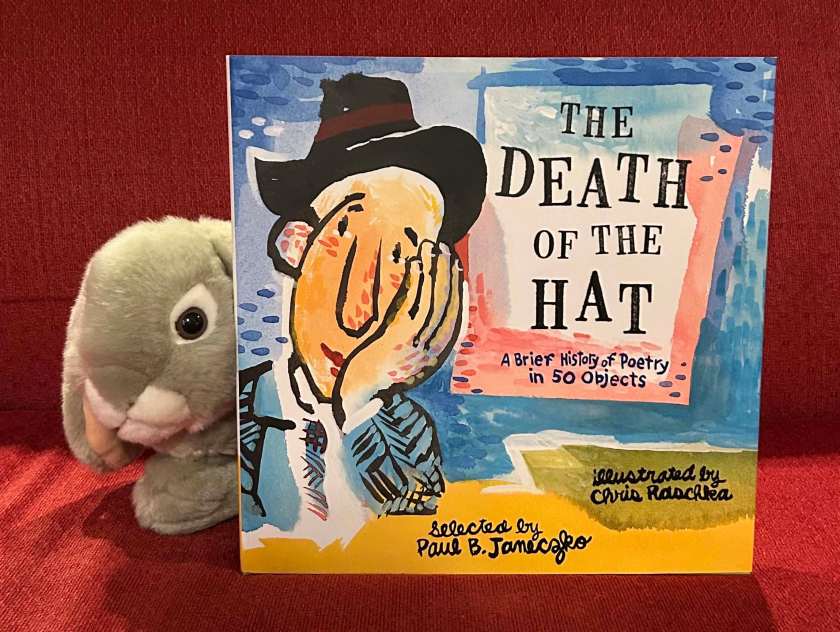
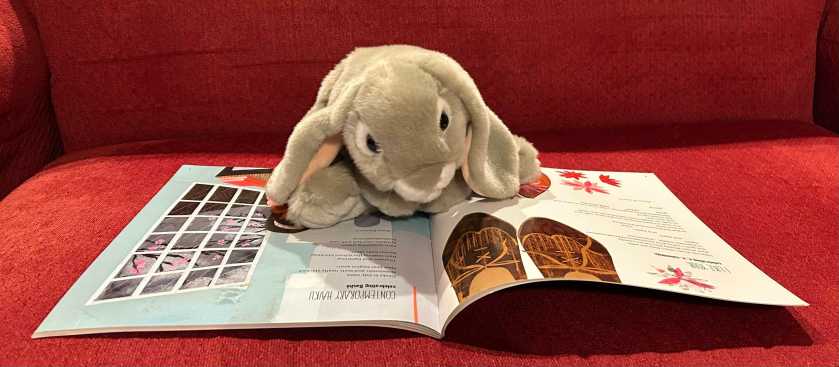
Sprinkles reviews The Death of the Hat: A Brief History of Poetry in Fifty Objects by Paul B. Janeczko and Chris Raschka.

The Death of the Hat: A Brief History of Poetry in Fifty Objects is an interesting collection. The title might give you a hint about what to expect: you might imagine that this will likely be a collection of fifty poems each about a particular object, and the whole collection will likely give us a sense of the history of poetry. And you would be right, mostly.

So yes, most of the poems are about concrete objects, like a hat (the titular poem “The Death of the Hat” by Billy Collins) or a just-finishing candle (a poem by Rumi) or simply the letter E, my favorite (by George Gordon, Lord Byron, who just happens to be the father of Ada Lovelace):

A Riddle, On the Letter E by George Gordon, Lord Byron

The beginning of eternity, the end of time and space
The beginning of every end, and the end of every place.

But there are also quite a few poems which are about nature and natural beings. You can call them objects, sure, but I feel like they do not quite fit the term. Like snowflakes (Henry Wadsworth Longfellow), the midnight frost (Basho), the sun (Ben Jonson), an eagle (Lord Alfred Tennyson), and so on. Still, they are concrete, and I suppose, do make a category that excludes topics like spirituality, romantic love, meaning of life and so on.
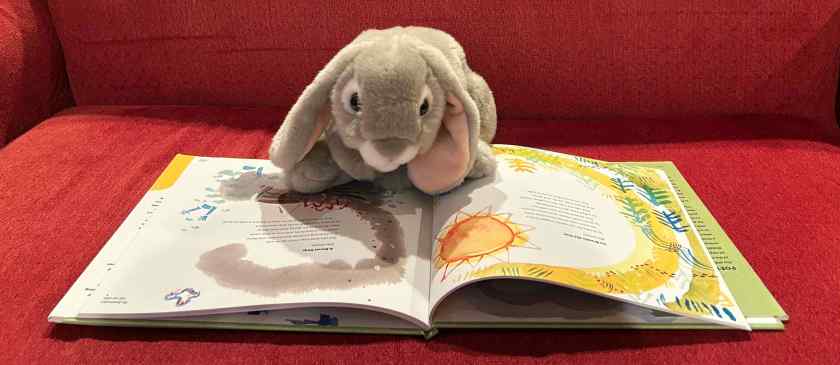
Sprinkles is reading The Death of the Hat: A Brief History of Poetry in Fifty Objects by Paul B. Janeczko and Chris Raschka.

The history bit is worth mentioning. The time periods are described at the beginning; the curator of the collection, Paul B. Janeczko, in his introduction gives us a quick recap of the history of Western poetry, mainly focusing on what can be gleaned in poetry written in English. This is helpful and provides the reader some guidelines as they dive into the book. But then we find several poems that were translated into English! Now this is exciting, the poems are all exquisite themselves, but assigning to them the Euro-centric (or rather English-centric) period names feels a bit off then. For example, when you are reading poems from “the Renaissance”, you do not expect to find Basho from Japan, Emperor Le Thanh Tong from Vietnam or Kim Ku from Korea. The timelines work of course (1500s-late 1600s), and I was really excited by the diversity of the poets in the book. But the time period names still disoriented me a bit.

The book is a delight nonetheless, and I recommend it highly to any bunnies young or old. Especially if you want to enjoy some beautiful poetry in company of inspiring water colored sketches on each page. The illustrations by Chris Raschka definitely add an extra something to the book, sometimes whimsical, sometimes elegant, but always interesting, to each page. All in all, a wonderful collection to be read and savored.
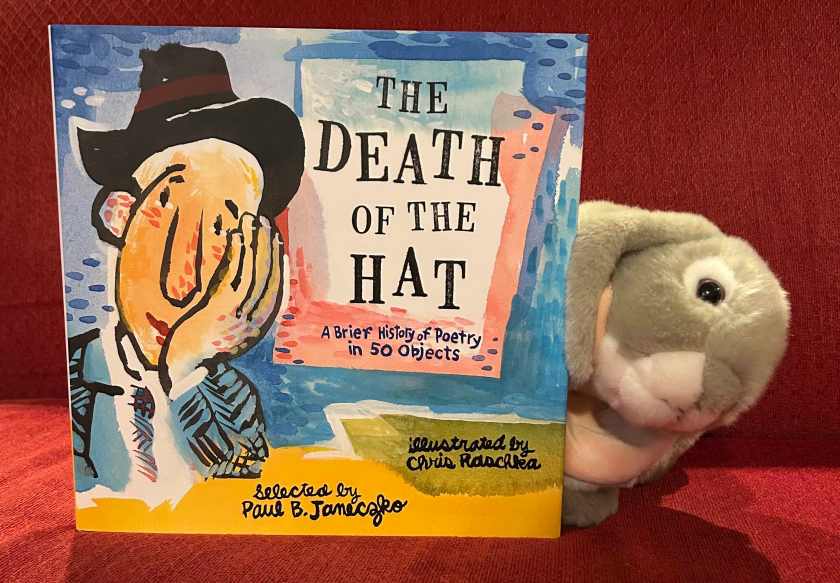
Sprinkles enjoyed reading The Death of the Hat: A Brief History of Poetry in Fifty Objects by Paul B. Janeczko and Chris Raschka and recommends it to all current and future lovers of poetry, young and not-so-young.

Sprinkles reviews Out Of Wonder: Celebrating Poets and Poetry by Kwame Alexander, Chris Colderley, and Marjory Wentworth

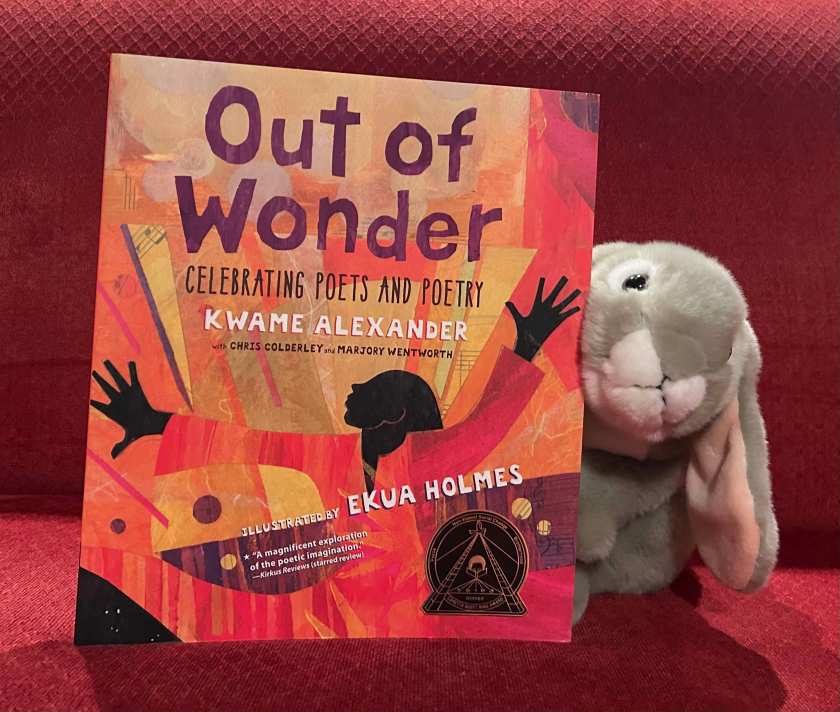
Today Sprinkles reviews Out of Wonder: Celebrating Poets and Poetry by poets Kwame Alexander, Chris Colderley, and Marjory Wentworth. Illustrated beautifully by Ekua Holmes, this poetry collection was first published in 2017.

Sprinkles reviews Out Of Wonder: Celebrating Poets and Poetry by Kwame Alexander, Chris Colderley, and Marjory Wentworth.

I have already reviewed a handful of poetry books through the years for the book bunnies blog. Most of these reviews were about individual books, but earlier this year, I have also reviewed three anthologies. The book I am reviewing today can also be viewed as an anthology of sorts, though it is a very particular type. Out Of Wonder presents twenty poems from three distinct poetic voices: Kwame Alexander, Chris Colderley, and Marjory Wentworth. And each poem is an homage to a specific poet that had a significant impact on the poet writing about them.

The book begins with a preface written by Alexander, where he introduces us to the project: through poems inspired by individual poets, the three authors of this book aim to introduce to the young reader the depths and breadths of poetry. Alexander writes:

“The poems in this book pay tribute to the poets being celebrated by adopting their style, extending their ideas, and offering gratitude to their wisdom and inspiration.”

Following this description then, it should not surprise the reader that the poems in the book are organized into three parts.

Part I, titled “Got Style?”, offers us six poems, written in the styles of Naomi Shihab Nye, Robert Frost, e. e. cummings, Bashō, Nikki Giovanni, and Langston Hughes. It is a great idea indeed to start with a style focus like this; these poets have particularly distinct styles, and the six poems honoring them manage to showcase to the young reader what possibilities exist for poetic form.

Part II, titled “In Your Shoes”, celebrates Walter Dean Myers, Emily Dickinson, Terrance Hayes, Billy Collins, Pablo Neruda, Judith Wright, and Mary Oliver with seven poems that explore themes and contexts that come directly from these poets’ own works.

Part III, titled “Thank You”, includes seven more poems, this time explicitly thanking and celebrating Gwendolyn Brooks, Sandra Cisneros, William Carlos Williams, Okot p’Bitek, Chief Dan George, Rumi, and Maya Angelou.

The book ends with a list of biographies of the twenty poets celebrated in it, so the curious reader can learn a bit more about these poets if desired. But of course the really curious bunnies will also want to check out poems by these poets. To that end, most of the links I provided above to the poets go to the Poetry Foundation page on them where you can find at least a couple sample poems.

Sprinkles is reading Out Of Wonder: Celebrating Poets and Poetry by Kwame Alexander, Chris Colderley, and Marjory Wentworth.

All twenty poems in Out Of Wonder are accessible to young readers, but they do not underestimate them. Each poem stands on its own, with its distinct style and voice. Alexander’s “Jazz Jive Jam” celebrating Langston Hughes dances even!

These are all really appealing poems. For example Marjory Wentworth’s “In Every Season” celebrating Robert Frost leaves resonances in one’s palate which complement the experience of reading his “Stopping by Woods on a Snowy Evening”. Chris Colderley’s “For Our Children’s Children” celebrating Chief Dan George is striking in its simplicity–here is an excerpt:

Let the shadows 
of drifting clouds
warm your cheek
and whisper softly:

Share the earth
with all creatures.
Love them, and they
will love you back.

Kwame Alexander’s “I Like Your” celebrates e. e. cummings in a style that reflects the latter’s very own–here is the beginning of this lovely poem:

I like my shoes when they are with
your shoes. Mostly the comes. Leastly
the goes. I carry your footsteps(onetwothreefour)
in between today(...)tomorrow.

Each and every one of these poems is a joy to read. And each is accompanied by beautiful illustrations by the talented Ekua Jolmes. Most poems thus get a full two-page spread and the illustrations are as distinct and striking as the poems themselves.

This is not a book to read from cover to cover in one sitting. Read one poem, look at the beautiful illustrations accompanying it, check the bio of the poet celebrated by the poem that is provided at the back of the book, and then finally, if you have the time, go find some poems by the same poet to see if you will find a new favorite of your own.

***

If you would like to know a bit more about the book, you should probably know that it has its own Wikipedia page! And you can also view the book trailer on Youtube:

Sprinkles reviews Now We Are Six by A.A. Milne

Last week Sprinkles reviewed a sweet little poetry book written by A.A. Milne: When We Were Very Young. Today she reviews Now We Are Six, a sequel if there could be one for a poetry book. First published in 1927, this book was also illustrated by Ernest H. Shepard.

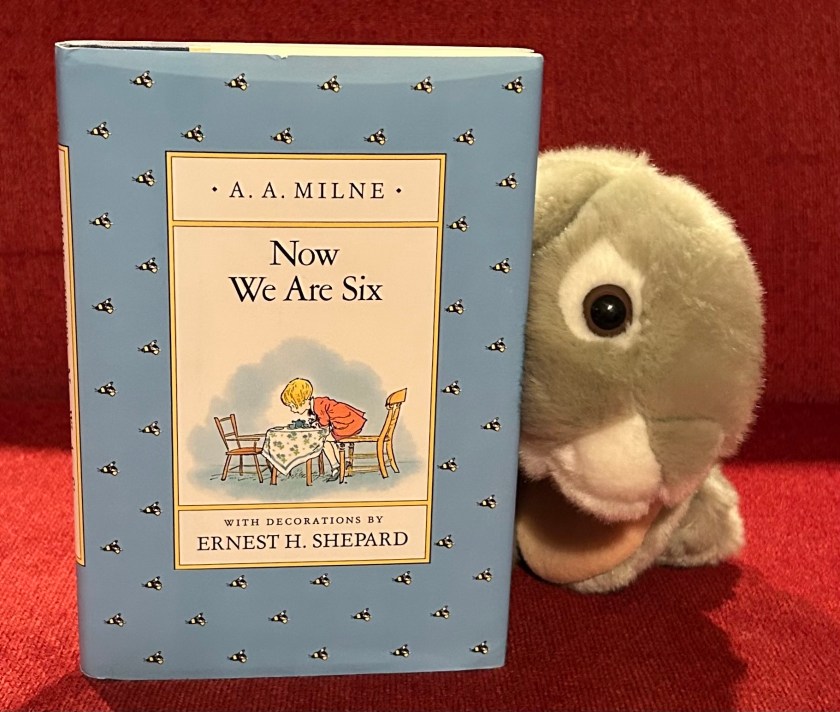
Sprinkles reviews Now We Are Six, written by A.A. Milne and illustrated by Ernest H. Shepard.

Last week I reviewed When We Were Very Young, written over a hundred years ago by A.A. Milne. Today I share with you some thoughts on another little poetry book by Milne that is almost a century old: Now We Are Six.

Now We Are Six is a perfect sequel to When We Were Very Young, and young bunnies who have enjoyed that book would definitely enjoy this book, too. In fact both Marshmallow and Caramel were gifted this book for their sixth birthdays. (Yes it was the same copy, which I think is fine. After all, Marshmallow had already graduated from being six years old when Caramel entered that age…) If you want to see what the book is like, you can see the contents in the Project Gutenberg page for the book here. But once again, I will say that the experience of holding a real copy of the book in your own hands (or paws!) is a lot more pleasant.

Before diving into the poems in the book, let me tell you that Milne’s introductions are really interesting. I am not sure the younger readers would appreciate them, but the adults reading the books definitely will. So please do not skip these; they are so fun to read!) In this introduction, we are also warned that Winnie the Pooh shows up in several of the poems. It is really neat to see Pooh’s evolution from the germ of an idea in one little poem in When We Were Very Little to a fully developed independent character who “walked through [the book] one day, looking for his friend Piglet, and sat down on some of the pages by mistake.”

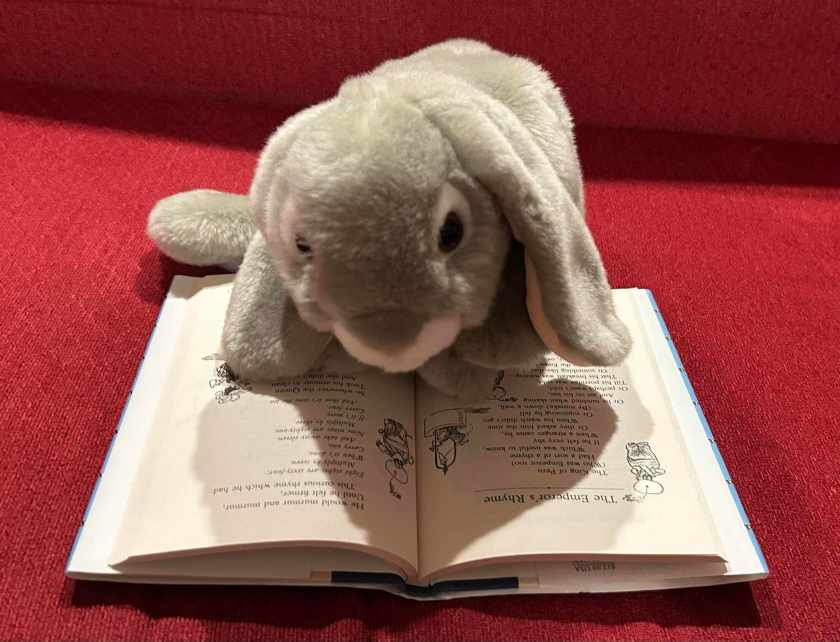
Sprinkles is reading Now We Are Six, written by A.A. Milne and illustrated by Ernest H. Shepard.

Now the poems! There are thirty five in total. And some are indeed about Winnie the Pooh, or at least they include Pooh as one of the main actors. For example, the poem “Us Two” is about a little boy narrating his adventures and conversations with Pooh. But pooh also just happens to show up in the illustrations of poems that do not explicitly mention his name. For example “The Engineer” is about a train the narrator is trying to play with, and Pooh shows up in the illustrations waiting for a ticket and then the train itself. The little bear makes a similar appearance, that is, only in the illustrations, for the last poem of the book, “The End”, where the narrating child is excited to be six years old:

But now I am Six, I'm as clever as clever
So I think I'll be six now for ever and ever.

Another one of my favorite poems in this book is “Explained” where a little girl named Elizabeth Ann goes around trying to find out just “how God began”. the question remains unanswered for all those who are reading the poem, even though in the end Elizabeth Ann gets an answer that satisfies her.

Unlike When We Were Very Young, which seemed to be almost exclusively written for a little boy, there are quite a few little girls in this book, or possibly a single little girl, who is sometimes named Elizabeth Ann and sometimes Anne. This makes a lot of sense if you read that the book is dedicated to Anne Darlington, who was a friend of Christopher Robin, Milne’s son. The Darlingtons and the Milnes were family friends, and they seem to have hoped that their two children would perhaps eventually marry each another. But in any case, I believe that the book does benefit from having a little girl in it.

The poems are once more about play and daily life and friendship and big questions. There is also room for big feelings. For example, the very first poem, “Solitude”, reminds the reader that all children are persons of their own rights, and sometimes they too will need some space. And there are a handful of poems which are more fantastical. For example “The Knight Whose Armour Didn’t Squeak” tells the story of a knight, you guessed it, whose armor did not squeak. One day, this knight spots another one whose armor does not squeak and figures out a way to eliminate him from this competition.

The illustrations in the book are once more by Ernest Shepard and complement the book’s quirky and fun feel. All in all, this book is a joy to behold and a joy to read. I recommend it with much enthusiasm to anyone looking to find a poetry book to read or share with a young bunny!

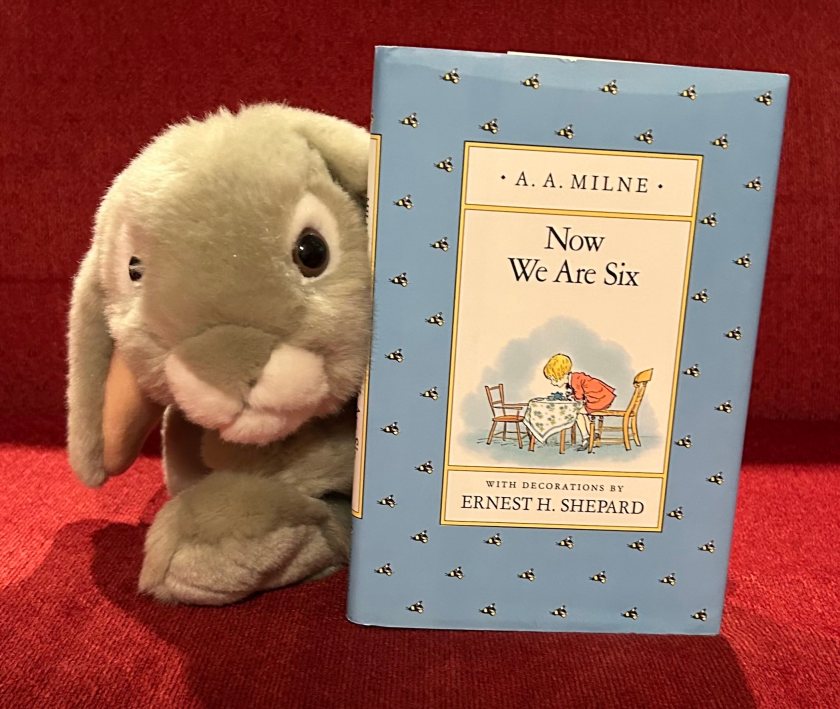
Sprinkles recommends Now We Are Six, written by A.A. Milne and illustrated by Ernest H. Shepard, to anyone looking for a little poetry in their lives.

Sprinkles reviews When We Were Very Young by A.A. Milne

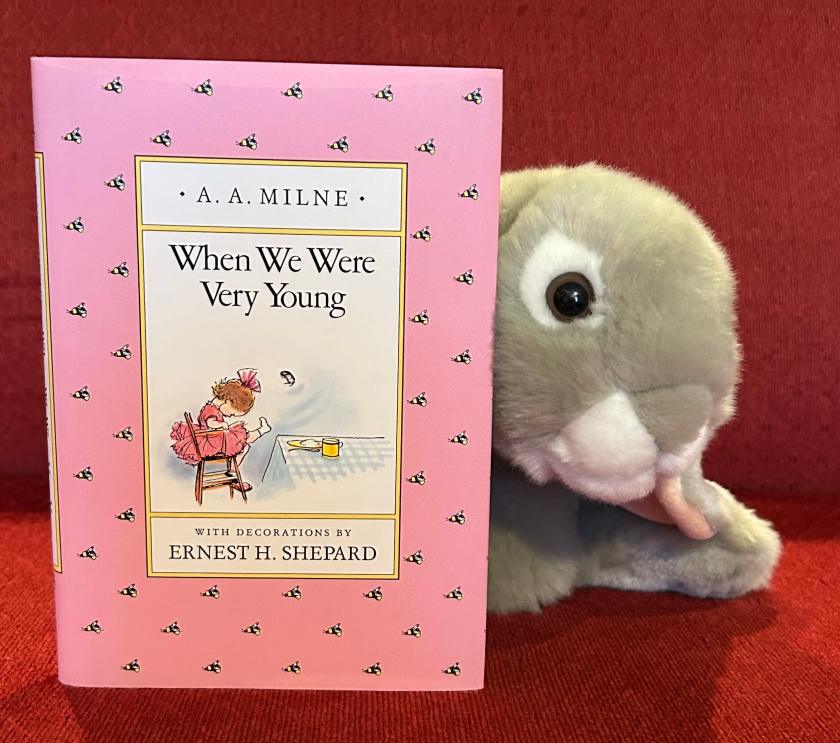
Today Sprinkles reviews a cute little poetry book, When We Were Very Young, written by A.A. Milne, illustrated by Ernest H. Shepard, and originally published in 1924.

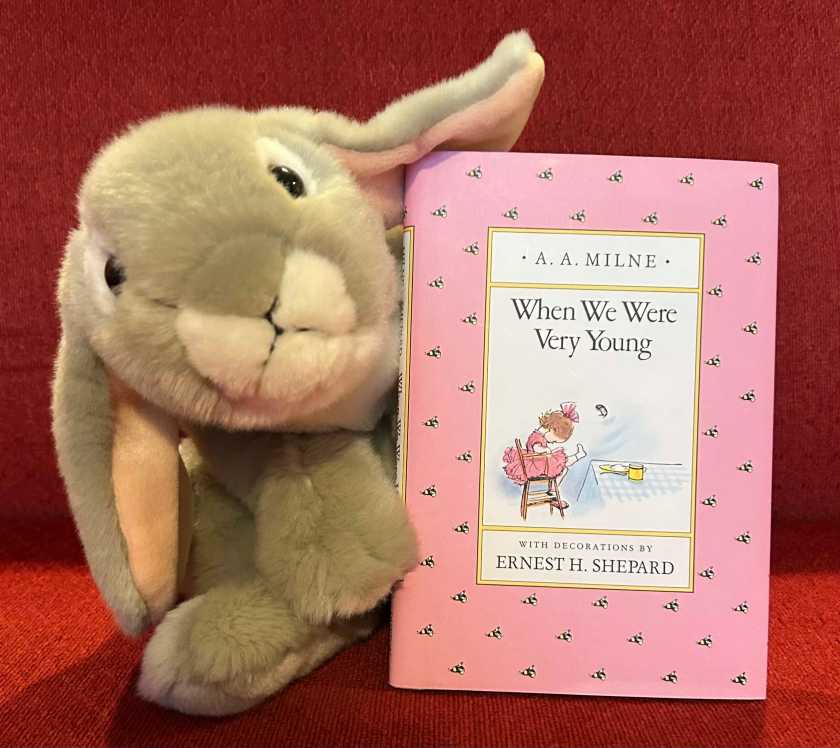
Sprinkles reviews When We Were Very Young, written by A.A. Milne and illustrated by Ernest H. Shepard.

Today I am excited to share with the readers of the book bunnies blog a wonderful little book of poetry, written over a hundred years ago, in 1924. If you are curious, you can read the poems in their entirety here in the Project Gutenberg page for the book. But I have to say that holding the book in your hands (or, as in my case, in your paws) is a real pleasure. The illustrations by the estimable Ernest H. Shepard are simple and yet timeless.

A.A. Milne wrote the poems in this book for his son Christopher Robin, who was four at the time. In his introduction he tells us that these verses often should be read as if they are coming from the voice of Christopher Robin or another young child, and when you read them out loud, that is almost always the feeling you get. And so I can imagine a young bunny and an adult one who loves them sitting down to read a few of them at a time and having a really wonderful time together.

There are a total of forty-four poems in the book. Many of them reflect different aspects of a young child’s life or zero in on small moments that loom large. There is a poem about the pleasure of being in the rain with waterproof outerwear (“Happiness”), another about how the four different chairs in the nursery could be different places and make for fun adventures all on their own (“Nursery Chairs”), and yet another about the joys of simply being outside without a purpose to go any particular place (“Spring Morning”). Then there are more playful poems about made-up characters and their stories. There is for example a poem about an elephant who is friends with a lion who is friends with a goat who is friends with a snail (“The Four Friends”), another about a dormouse who loves geraniums and delphiniums but is prescribed by a doctor to grow chrysanthemums instead (“The Dormouse and the Doctor”), and yet another about an alchemist who after years of effort is still unable to get it quite right (“The Alchemist”).

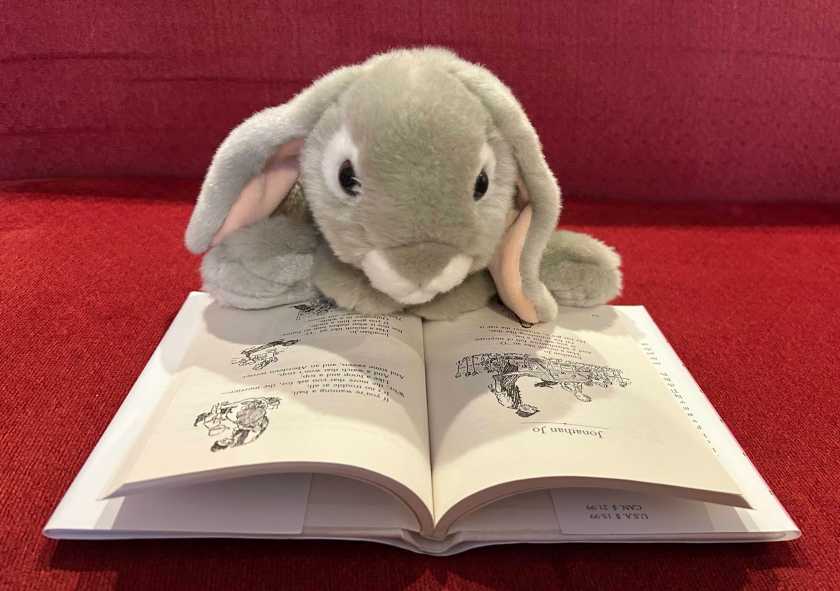
Sprinkles is reading When We Were Very Young, written by A.A. Milne and illustrated by Ernest H. Shepard.

Two of my other favorites in the book were the one about rice pudding (unsurprisingly named “Rice Pudding”) and the one titled “Lines and Squares” about why you should stay in the squares and never step on the lines when walking on a sidewalk–for otherwise a bear will eat you!

And then there is the thirty-eighth poem, “Teddy Bear”, which starts with:

A bear, however hard he tries,
Grows tubby without exercise.
Our Teddy Bear is short and fat
Which is not to be wondered at;
He gets what exercise he can
By falling off the ottoman,
But generally seems to lack
The energy to clamber back

And then there are twelve more stanzas with similar rhyme and goofiness. The poem finishes in the way it started, but with a twist:

A bear, however hard he tries,
Grows tubby without exercise.
Our Teddy Bear is short and fat
Which is not to be wondered at.
But do you think it worries him
To know that he is far from slim?
No, just the other way about--
He's proud of being short and stout.

And thus we see the birth of a little creature who would eventually become the world’s most famous bear: Winnie the Pooh! Ernest Shepard was apparently thinking of the teddy bear his son had while drawing the illustrations for the poem. These illustrations and Christopher Robin’s own toys together led to A.A. Milne creating the Winnie the Pooh character in the stories in the next couple years.

But even if you are not intrigued by Winnie the Pooh or his origin story, the poems in this book are lovely. And they are such a pleasure to read! Their simple melodies and sweet themes would also make them wonderful candidates for reading out loud with a younger bunny in your life. In other words, as Marshmallow would put it: if you are searching for a neat book to read out loud with the young bunny in your life or if you are simply looking for a lovely poetry collection about the magic of childhood to bring a smile to your face and a bit of childlike joy into your heart, then this might be the book for you!

Sprinkles recommends When We Were Very Young, written by A.A. Milne and illustrated by Ernest H. Shepard, to all who love the littlest bunnies in their families and want to read poetry with them.