Marshmallow reviews Wabi-Sabi for Artists, Designers, Poets & Philosophers by Leonard Koren

Today Marshmallow is reviewing Wabi-Sabi for Artists, Designers, Poets & Philosophers by Leonard Koren. Originally published in 1994, this book is widely viewed as the first publication that introduced Western audiences to the Japanese wabi-sabi aesthetic. Marshmallow read the revised 2008 edition.
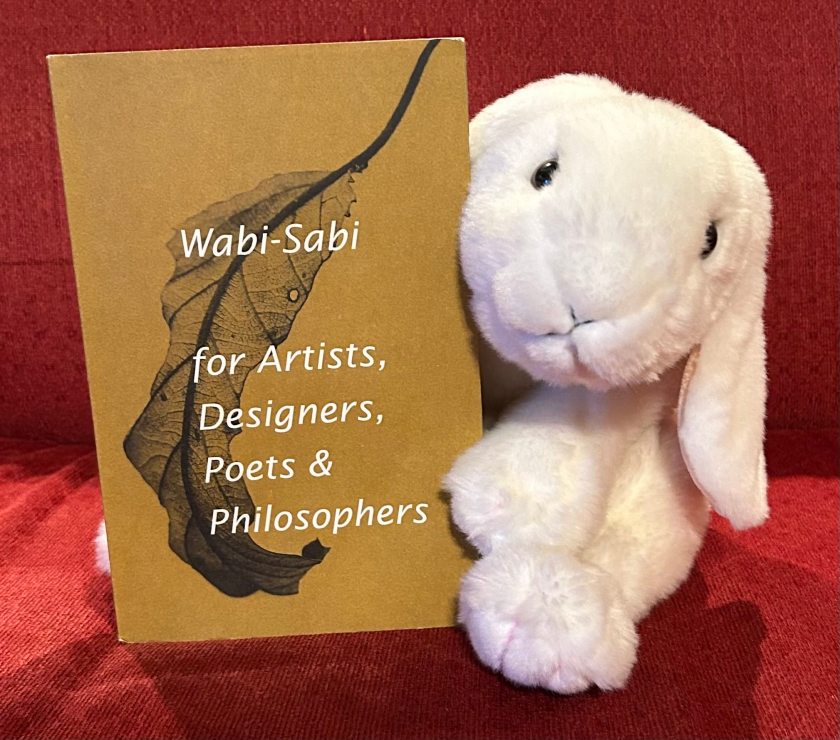
Marshmallow reviews Wabi-Sabi for Artists, Designers, Poets & Philosophers by Leonard Koren.

Marshmallow’s Quick Take: If you like books about Japanese culture, Zen philosophy, or art in general, then this is the book for you! 

Marshmallow’s Summary (without Spoilers): This book serves as Koren’s definition for the wabi-sabi aesthetic, something he believes should never be defined. For context, he even says this explicitly at the start of the book. He states that the aesthetic has an intentional “History of Obfuscation” because of its Zen Buddhism roots, the iemoto system of Japanese trade, and aesthetic obscurantism (which is the practice of obscuring the full details of something to hide its nature). These big words make sense to the reader eventually though as he provides a paragraph of explanation for each cause. Overall, these three factors have long left wabi-sabi as a nebulous feeling, a set of aesthetic ideals that Japanese people have struggled to put to words or have purposefully not done so. Koren argues that this is for the best or it was in the past. However, wabi-sabi is an endangered way that he believes now requires a more rigid definition. After all, if people – artists, designers, poets, philosophers, and even ordinary people in general – cannot identify what makes something wabi-sabi, it is surely doomed to be lost.

Koren traces the history of the aesthetic back to the sacred ceremonies of the famed and wise tea master Rikyu. He allegedly began using homely, imperfect pieces in his tea-making process, something that was an oddity at the time. In the pre-Rikyu period, the ceremonies were filled with elaborate, ornate pieces of the Chinese aesthetic. In contrast, Rikyu created a uniquely Japanese style that focused on “the rustic, the simple, the artless, the unsophisticated.” Eventually, though, these pieces became viewed as even more valuable. But, as Koren explains, they then lost their wabi-sabi qualities.

This exemplifies what the wabi-sabi aesthetic really values. It is the “most conspicuous and characteristic feature of what we think of as traditional Japanese beauty” despite being very focused on “the idea of not being conspicuous at all.”

Tracing the origins and meanings of the words ‘wabi’ and ‘sabi,’ Koren defines wabi-sabi to be the aesthetic that focuses on three fundamental truths: nothing lasts, nothing is complete, and nothing is perfect. In some way, this also means that everything is in a state between the creation and destruction of something or, in another way of reasoning, everything is in the process of becoming something or becoming nothing. Nothing in itself is viewed as an opportunity for something and something is an opportunity for nothing.

It is all very complicated sounding, but Koren does a good job of spelling it out for all readers. With some quiet time and contemplation, this book offers us a way to prevent “the extinction of a beauty” that Koren’s work seeks to preserve. 
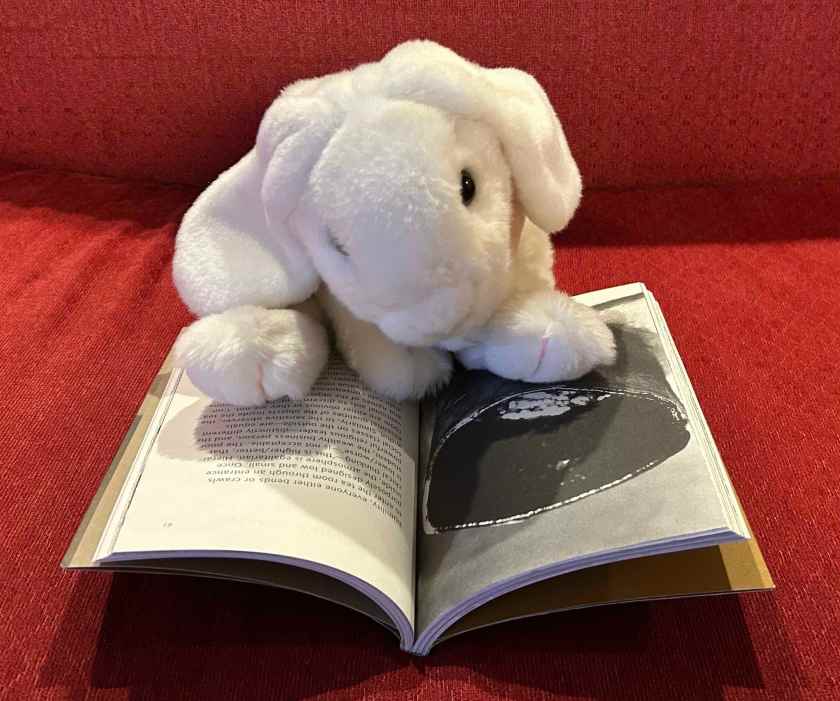
Marshmallow is reading Wabi-Sabi for Artists, Designers, Poets & Philosophers by Leonard Koren.

Marshmallow’s Review: I found Wabi-Sabi for Artists, Designers, Poets & Philosophers to be a fascinating analysis of this Japanese aesthetic. Wabi-sabi became somewhat of a trend online a little while ago and this book is a really good way to embrace and deepen one’s understanding of what wabi-sabi actually means. The internet trend associated with it is adorable and really meaningful! This book is a perfect way to explore the cultural significance it holds in Japan though. Koren analyzes the historical origins, how it developed over time, and how it is still somewhat present today.

I think reading Wabi-Sabi for Artists, Designers, Poets & Philosophers not only gave me an understanding of the aesthetic itself. It also showed me more about what the ideals and beliefs behind much of Japanese and Zen culture are. This is a really good experience to have for all bunnies because it really gives you good time to think about the thoughts of the tea masters from millennia ago and provides a moment of peace where you can think about quieter, natural philosophies that are so distant and distinct from much of the media we consume today. Finding that moment of calm in this book was a really valuable time and I would highly recommend reading this book – if not to learn about the aesthetic – to take some time to think about philosophy, life, and nature deeper.

Images are placed throughout the pages in black and white stills that hint at what wabi-sabi looks like. They are rather ordinary yet strange looking things but they give you a sense of the aesthetics meaning. I found that the book’s brevity and its accompanying images do a really good job of leaving you with a feeling of calm and a greater appreciation for the wabi-sabi things in life. While I’m not going to change my entire aesthetic, I think it is worth thinking about imperfections and the sometimes boringly simple as beautiful. In such a complicated world, books like this one give us time to return to another world when tea ceremonies and wabi-sabi were new, reopening our imaginations to see a whole new perspective. 

Marshmallow’s Rating: 100%.
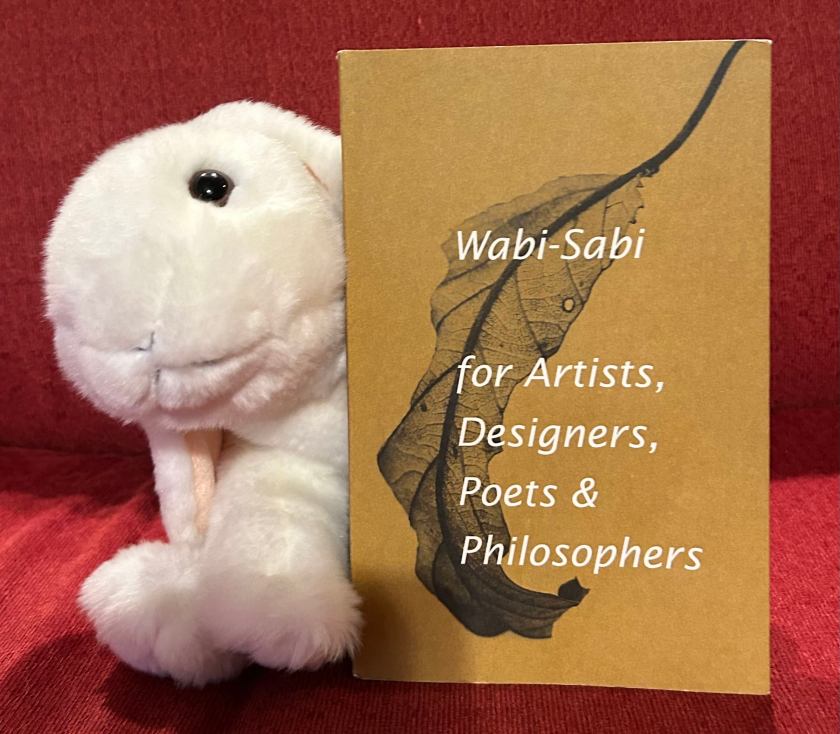
Marshmallow rates Wabi-Sabi for Artists, Designers, Poets & Philosophers by Leonard Koren 100%.

Marshmallow reviews The Cartoonists Club by Raina Telgemeier and Scott McCloud

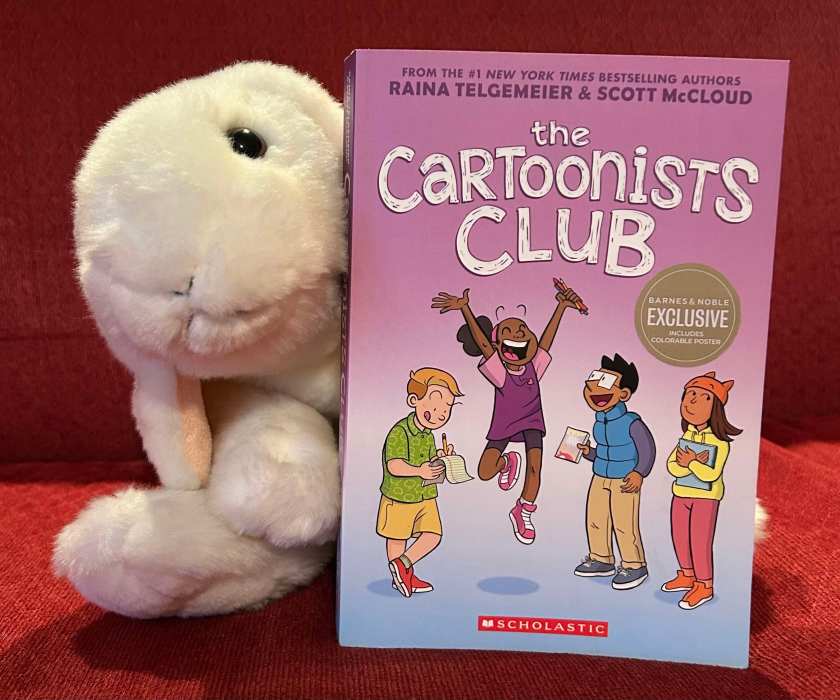
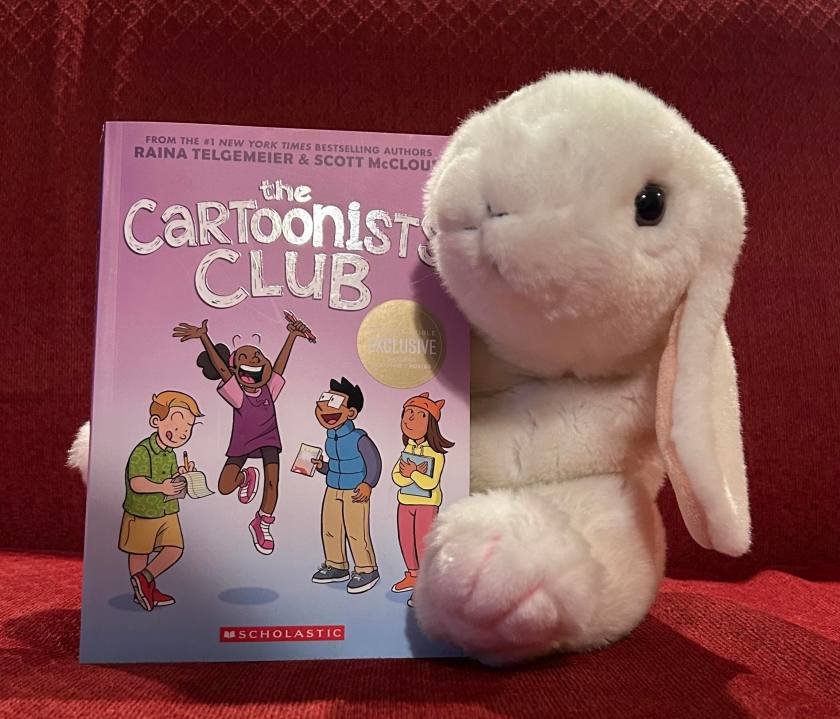
Today Marshmallow reviews The Cartoonists Club by Raina Telgemeier and Scott McCloud, first published in 2025.

Marshmallow reviews The Cartoonists Club by Raina Telgemeier and Scott McCloud.

Marshmallow’s Quick Take: If you like cartoons, art, or graphic novels, then this is the book for you!

Marshmallow’s Summary (with Spoilers): Makayla’s mind is always overflowing with new ideas for stories but Howard is the one who keeps passing her doodles during math class. One day, after they finally get caught by their algebra teacher, they decide to make their own comic book. When they meet up at their middle school’s library after school, Makayla reveals her master plan: they are going to form a club for the other students in their school who want to be cartoonists too. With the help of the kind librarian, they print out their posters and wait for the next day to see if anyone shows up.

Luckily, someone does! Art is an agender artist who loves “making mistakes” and can’t wait to make them in another new forum. The three of them become friends quickly and can’t wait to start making comic books. Unfortunately, they are extremely puzzled and ask the librarian what the “right” way to proceed is. To their surprise, she informs them that there is no right way at all. Through this newfound freedom, they proceed to produce numerous silly but fun short comics.

They also are able to welcome in a new member: Lynda. She’d been in the library since day one, drawing quietly in a corner, but had been too nervous to show anyone her art. Since she focused so heavily on the mistakes she made, she was too scared to show any part of her art at all.

As the story progresses, each of the characters’ artistic struggles are revealed and remediated through a group effort. The Cartoonists Club is a heartwarming, inspiring story perfect for any and all young artists interested in drawing. It is the ideal guide for young bunnies looking to find and create communities much like the one in this book!

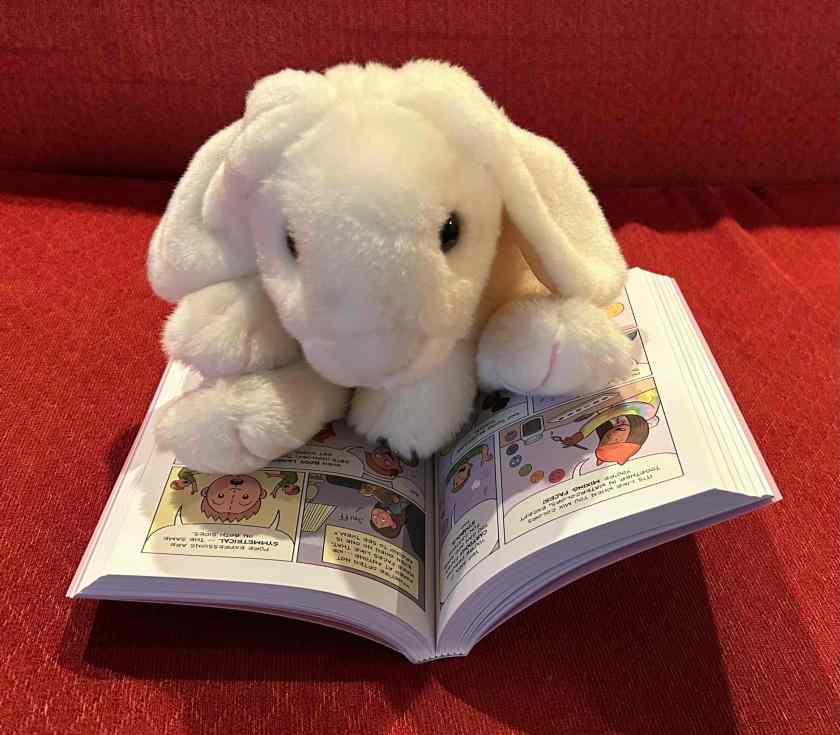
Marshmallow is reading The Cartoonists Club by Raina Telgemeier and Scott McCloud.

Marshmallow’s Review: I think The Cartoonists Club is a very cute book! The characters’ interest in comics and their making is a bit infectious in fact. I’ve always appreciated graphic novels and the like, but reading The Cartoonists Club has made me appreciate how much of an art they really are.

I really liked how different aspects of the art were highlighted in different chapters. In almost every section, the librarian or one of the club members teaches the club and the reader about how to perfect another aspect of cartoons. I especially liked the section that talked about the magic of the blank page. It was simple yet inspiring in a way that recalls the childlike awe too many of us lose as we grow older.

I think The Cartoonists Club is a perfect book for all young bunnies who love drawing or reading or learning! And while it might at first seem too childish for those older than twelve, I think there is still a lot of value in reading it. As a bunny who is no longer in middle school, reading The Cartoonists Club was still very inspiring and made me remember how important art is to me and to us as bunnies / humans. It is a relatively easy book to read and you can read it pretty quickly. But just because it is short and sweet doesn’t mean that its story isn’t significant; sometimes remembering that ‘childish’ sense of imagination is just what you need to recall that same passion and joyful outlook on life!

Marshmallow’s Rating: 100%.

Marshmallow rates The Cartoonists Club by Raina Telgemeier and Scott McCloud 100%.

Caramel reviews Pokko and the Drum by Matthew Forsythe

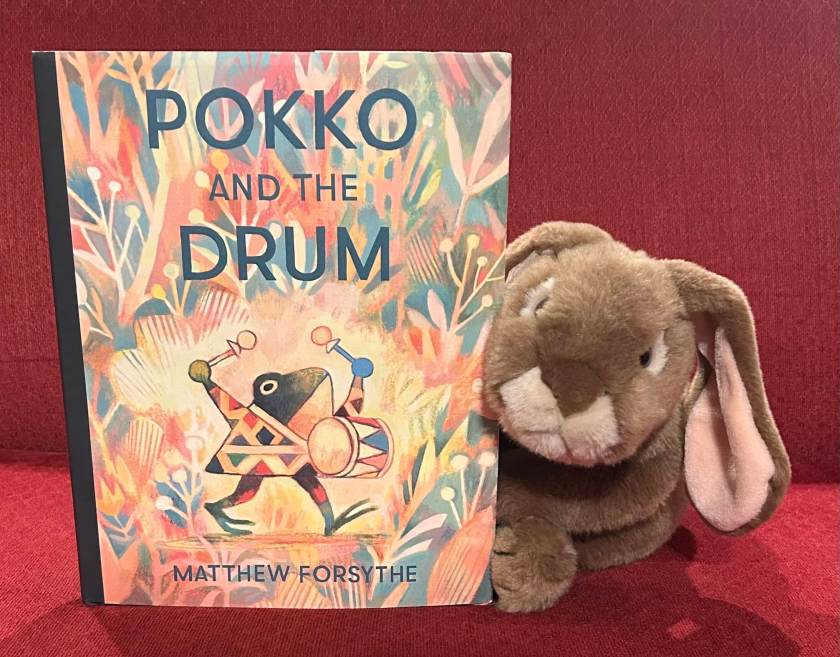
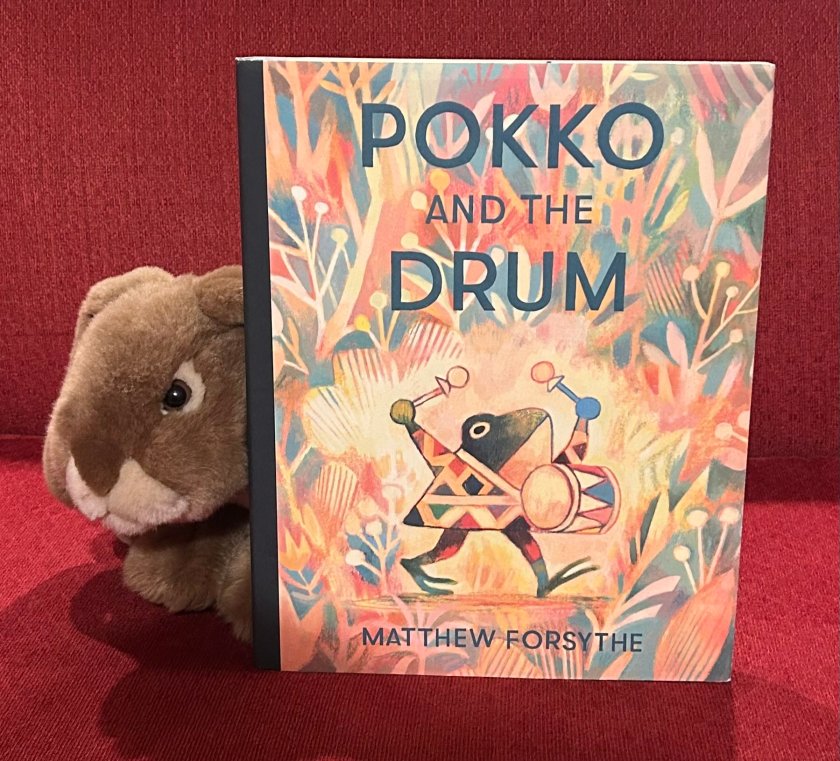
Today Caramel reviews a neat picture book first published in 2019: Pokko and the Drum by Matthew Forsythe. As usual Sprinkles is taking notes and asking questions.

Caramel reviews Pokko and the Drum by Matthew Forsythe.

Sprinkles: So Caramel, I see we have a neat picture book to talk about today.  

Caramel: Yes we do! It is about a frog named Pokko. 

S: Okay, so tell us a bit about Pokko. 

C: Pokko is a frog who was gifted a drum by her parents (bad idea on their part).

S: Why would that be a bad idea? And I think that is actually the very first sentence of the book, right?

C: Yeah, it was something along the lines of “The biggest mistake Pokko’s parents made was giving her a drum”. And it is later said (two pages later) that the reason is because the drum kept them from focusing, or really doing anything.

S: So the mom keeps trying to read, right? And a drum would be kind of loud I suppose. Remember how you played the trumpet for a while. That was loud. 

C: I at least had a thingy to make it quieter. I don’t think you can make drums quiet. 

S: That is true. Okay, so she is loud and so her dad suggests that she take it outside, right? 

C: Yes. And she does. But then she starts making some noise,or music I suppose. Then another animal joins her, and she plays louder. Then another joins her, again, and again, and by the time the sun sets, she has a whole band of animals following her and making music together, and they are so loud, the noise reaches her parents, all the way back in their home.

S: That sounds cool! So she makes friends with her music, right?

C: Yeah, it sounds cool, until a band member, a wolf, eats another one, a bunny.

S: Wait, that sounds kind of worrisome. 

C: Yes, it could be but in the book it is rather funny. Pokko scolds the wolf, saying that he can’t keep eating band members. The book is really funny. 

S: Wait, a wolf eats a bunny and you find that funny? 

C: Hmm, when you put it that way, as a bunny I should feel a bit concerned about the bunny who is eaten. But in the book Pokko scolds the wolf and the wolf behaves after that. And we move on. 

S: I see. I guess bad things happen in other books, too, and this is meant more as a funny thing rather than a tragedy.. 

C: Yep. 

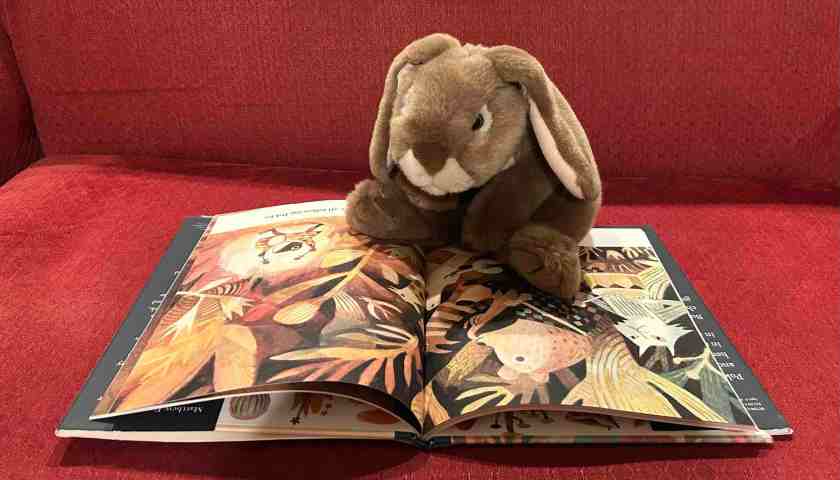
Caramel is reading Pokko and the Drum by Matthew Forsythe.

S: Alright. So I read in another review that this book was about the power of “marching to the beat of your own drum”. Do you agree?

C: Yeah, I could see that. She is after all playing her own drum as she likes, and she keeps walking, and others join her beat. It is exactly like that actually!

S: So do you think there is a moral to the story?

C: I did not read it for a moral, it is really funny, and I did not tell you half of all the funny lines. But if I need to think about a moral, hmm, let me think… Maybe it is like you said, march to the beat of your own drum and you will find your friends and your own place in the world?

S: That makes sense.

C: And maybe your parents might try to hold you down, and just don’t let them?

S: Okay, maybe that is going a bit too far. After all the parents were the ones who got her the drum. 

C: Yeah, you’re right, that was maybe a little ridiculous.

S: But then again, they did try to suppress her music, so you do have a point Caramel. Sometimes even usually supportive parents might feel the children are going too far, making too loud music, and so on. And then maybe it is okay to push a little. Maybe. 

C: Maybe. And she does not disrespect the parents. Just continues to play her drum. She is making music. And music is beautiful. 

S: Yes. Agreed! Okay, so you thought this was really funny, you even read some of the lines out loud to me. Tell me now a bit about the illustrations. It seems the author is also the person who illustrated the book.

C: Yes. They are really funny. And they are very good at showing the characters’ feelings. You see how happy Pokko is when she gets the drum, for example.

S: I looked through the pages of the book, and thought the illustrations were funny and very lively. The colors are warm, and each page is quite a lot of fun to look at. So all in all, you enjoyed this book, right?

C: Very much so. I don’t get to read too many picture books anymore, but when I do, this is the kind of book I love. Funny and fun!

S: Okay, Caramel. I think this is a good place to end our review. 

C: Sure. 

S: What do you want to tell our readers?

C: Stay tuned for more book bunny reviews!

Caramel enjoyed reading Pokko and the Drum by Matthew Forsythe and recommends it to all little bunnies looking for a fun story about a little frog who loves music.

Marshmallow reviews Water of the Sky: A Dictionary of 2,000 Japanese Rain Words by Miya Ando with Joan Halifax

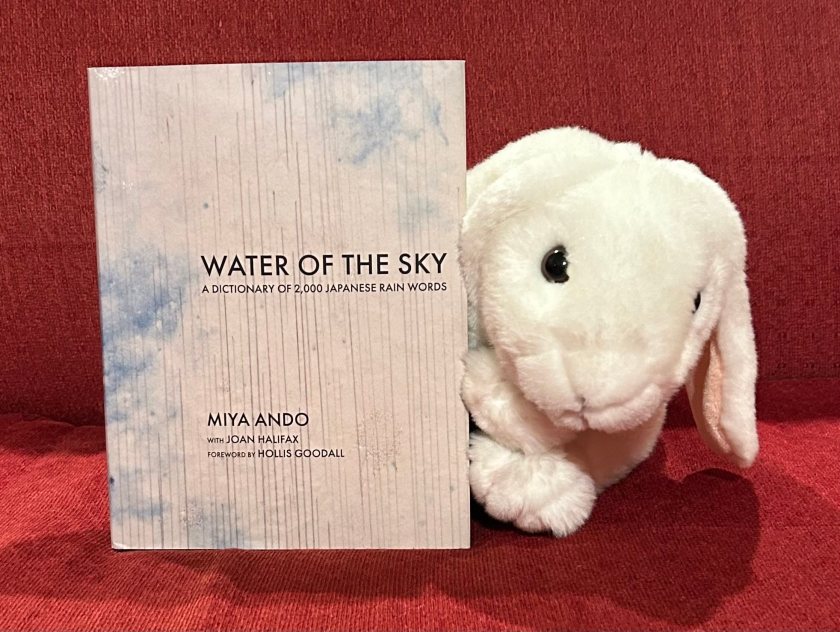
Today Marshmallow reviews Water of the Sky: A Dictionary of 2,000 Japanese Rain Words, a unique book by artist Miya Ando, published in 2025.

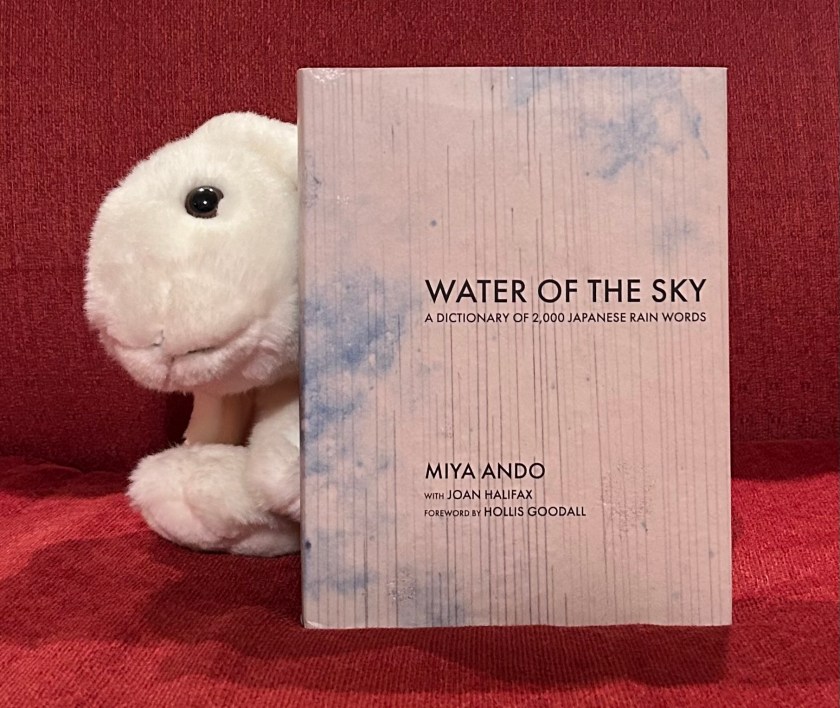
Marshmallow reviews Water of the Sky: A Dictionary of 2,000 Japanese Rain Words by Miya Ando with Joan Halifax.

Marshmallow’s Quick Take: If you like nature and taking time to think about things on a deeper level, then this is the book for you!

Marshmallow’s Summary: Miya Ando is a Japanese American artist whose grandfather was a Buddhist monk. Her mother and grandmother practiced tea ceremonies, and this upbringing gave her a deep understanding and appreciation of Japanese culture, poetry, and admiration for nature. This book reflects exactly that.

First off, I should note that pages 104-240 of the book contain the 2o00 words referred to in the book title. These pages list each of the 2000 words in Japanese script (first kanji, basically how the word is actually written, then the hiragana script to tell the Japanese reader how the word is pronounced, I think), and an English pronunciation of the word as well as a poetic translation of the meaning of the word.

There is not much text in Water of the Sky: A Dictionary of 2,000 Japanese Rain Words. except for the Foreword “A Constellation of Frozen Moments: The Language of Rain” by Hollis Goodall, Curator of Japanese Art at the Los Angeles County Museum of Art, the Preface by Miya Ando herself; and a short introductory essay “Perceiving Rain” by Joan Halifax, an American Zen Buddhist teacher. These are each a couple pages long and explain the author’s perspective, methods, and some of the Japanese words that relate to the book. Goodall, Ando, and Halifax all mention words like wabi, sabi, ichigo ichie, “thusness,” and mono no aware. These are not part of the 2,000 Japanese rain words, but are ideas that relate to rain. They are all very meaningful and nuanced and are very difficult to describe. There is no direct translation for the meaning behind those words. For example, wabi is the sad beauty of poverty which forces you to drink tea but to also experience it more gratefully. Sabi is the beauty of loneliness which cultivates beautiful haikus and ink paintings. I find it remarkable how these ideas can conjure soft images in my mind and have such a simple meaning yet leave a profound feeling of wonder and appreciation for life. This is something that continues throughout the book. It is, after all, a book with 2,000 Japanese words that are used for rain.

Shockingly, Japan has that many words (if not more) to describe all the different types of rain. I also learned that Japan, traditionally, has 72 micro-seasons which affect the way one is supposed to dress and conduct tea ceremonies.

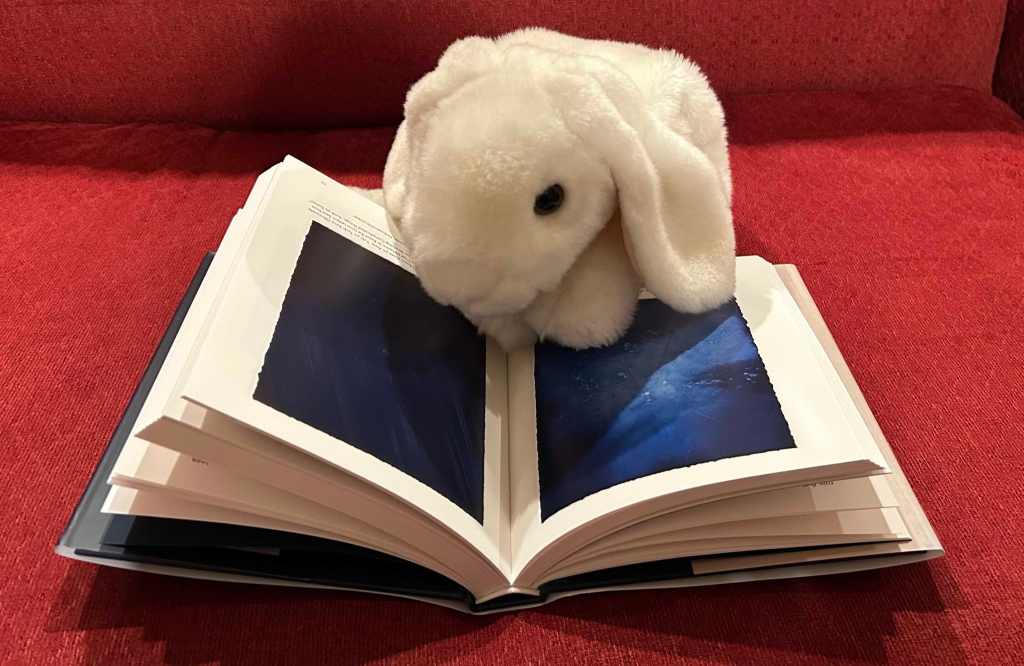
The first part of the book has 100 drawings by Miya Ando that represent some of these Japanese words. The drawings are all blue but they are all astoundingly unique. You would figure that there are only so many ways you can represent rain on a canvas. Yet, Japanese culture seems to have infinite ways to characterize rain and—in doing so—appreciate nature, its impermanence, and its existence (its “thusness”) in a way that so many of us today have perhaps never done once in our lives. This book presents this way of thinking to the reader and offers a sense of fulfillment just by being and a sense of wonder at how beautiful our world is.

If you are interested in seeing some of Ando’s work that appears in this book, you can check out: https://www.miyaando.com/rain

Marshmallow is reading Water of the Sky: A Dictionary of 2,000 Japanese Rain Words by Miya Ando with Joan Halifax.

Marshmallow’s Review: I was a bit stressed when I started reading Water of the Sky: A Dictionary of 2,000 Japanese Rain Words; reading it has made me feel so much better. The Japanese ideas of wabi, sabi, “thusness,” and others described in the book are reminiscent of a peaceful past that takes you out of the present and into a state of mind that is more ready to appreciate the world and the nature that silently surrounds us.

I will say that the writers are very verbose and some of their word choice feels overly esoteric. I had to look up a couple of words every paragraph or so. This, for me, was a worthwhile and fulfilling experience and I liked learning and trying to understand the meaning behind the complex sentence structures and SAT-level words. Yet, I do think this might be discouraging to younger bunnies or someone who is not a huge fan of hard words. I would recommend sticking to it though because the sense of calm and comprehension you get at the end is worth it.

Reading Water of the Sky: A Dictionary of 2,000 Japanese Rain Words and looking at Miya Ando’s art truly did make me feel as though I was in a completely different state of mind. Sometimes, I felt as if I was living back in ancient Japan and it was raining outside. This was a very interesting experience. Just like how the best haikus put a brief, impermanent image in your mind, this book does too. The authors discuss how rain is impermanent and how appreciating rain is appreciating nature and how things fades away and change and are created. Thinking about these sorts of things puts you on another level of thinking, a deeper yet higher level of understanding that does make you forget about daily stress for a moment.

Looking at Ando’s art is itself an amazing experience. It is amazing how there are so many different iterations of rain. Every moment truly is unique and never repeated. Japan is probably the first country to catalogue every beautiful, individual rainfall (the only comparable thing I can think of is that unproven claim that there are one hundred words for snow in Inuit).

I really appreciated reading Water of the Sky: A Dictionary of 2,000 Japanese Rain Words and all the hard work that went into making it! I would highly recommend it to anyone who has the time and is willing to push through the harder, more difficult reading at the beginning. The ideas are fascinating and beautiful and the paintings and the definitions themselves are beautiful as well. Or if you like, you can simply peruse Ando’s art work in bits and pieces. But taking your time with the book is the best way to appreciate it I think. Reading Water of the Sky: A Dictionary of 2,000 Japanese Rain Words really gives you the opportunity and duty to appreciate the beauty around you in the simple things of nature and everything in the world. We should all try to be a little more like that every day!

Marshmallow’s Rating: 100%.

Marshmallow rates Water of the Sky: A Dictionary of 2,000 Japanese Rain Words by Miya Ando with Joan Halifax 100%.