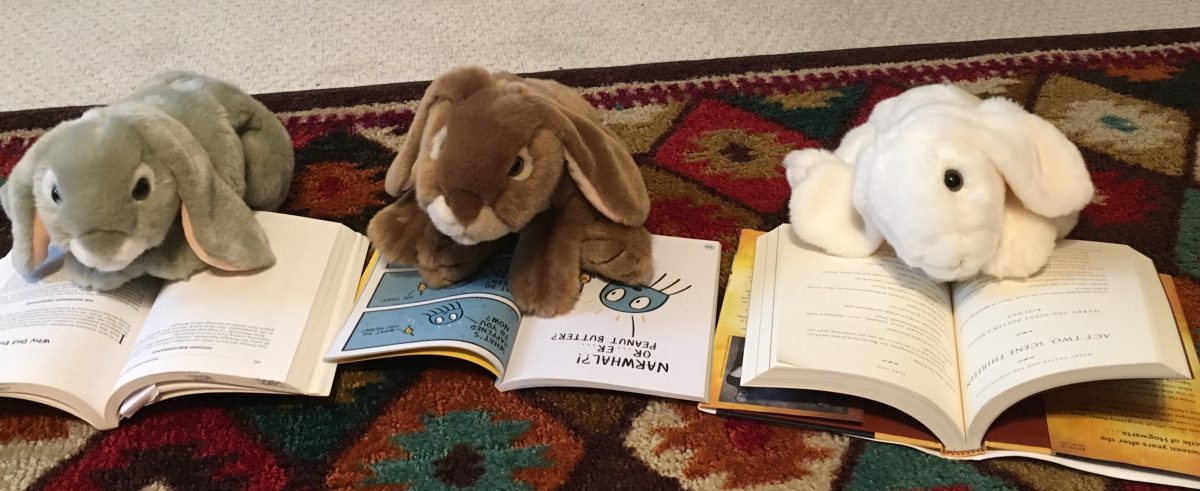
Marshmallow reviews The Fall of Iris Henley by Jennifer Graham

Today Marshmallow is writing about The Fall of Iris Henley, a 2026 book by Jennifer Graham.

Marshmallow reviews The Fall of Iris Henley by Jennifer Graham.

Marshmallow’s Quick Take: If you like exciting mysteries about high schoolers with way more drama than average, then this is the book for you!

Marshmallow’s Summary (with Spoilers): Iris Henley perfectly fits the stereotype of a Texan cheerleader. Blond, pretty, and with a football-playing boyfriend (named Rocky), she seemed like a sure finalist for Homecoming Court. Unfortunately, things got seriously messed up when Rocky and Lynette (her ex-best friend) are found dead under circumstances that indicate Rocky was unfaithful. The police declare it to be an open-and-shut case: Rocky shot and killed Lynette and then committed suicide after with the same gun. This explanation is widely accepted until a couple of months later.

Iris is the top girl (meaning she is the flyer at the top of their pyramid structure) and cheer has taught her how to put on a smile and cover her feelings in order to stay on top. She’s been trying to come to terms with losing her best friend and her boyfriend to the hands of her boyfriend himself; how can she grieve for him when he is the reason why he and Lynette are both gone?

During a football game, an anonymous poster on the school’s gossip site Sekrit claims that Rocky wasn’t the murderer after all — Iris was. It would make sense from a certain perspective. Lynette had been struggling with a drug problem and Iris accidentally leaked this news to the cheer coach, leading to Lynette’s permanent suspension from the team. Though Iris had not intended for it to happen, she became the top girl, the coveted role Lynette had held before. Cheer had been one of the few things keeping Lynette from going completely off the rails, and her drug addiction worsened quickly, especially after Lynette isolated herself from Iris (Lynette believed Iris had wanted to steal her spot). Rocky — who wasn’t the greatest guy — began having an affair (and not his first) with her at some point, which would give Iris a huge motive for murder.

On top of all that, on the night of the murder, Iris was at a cheer sleepover and she wasn’t fully straight-headed the entire time. Past a certain point, she starts to wonder whether it is possible that she did commit the crime while drunk. Almost the entire school thinks she did it too. Her other two best friends (Hailey and Sophie) stick by her and so does the “cute” boy from sports camp she’s been texting. They figure the best way to clear her name is to find out who’s been posting lies on Sekrit; but while searching for the liar, new truths come to light and it becomes increasingly clear that no one is or was trustworthy to start with. 

Marshmallow is reading The Fall of Iris Henley by Jennifer Graham.

Marshmallow’s Review: The Fall of Iris Henley is a very good book! I only saw two plot twists coming, and there were far more I was completely unprepared for. The story is fascinating and exciting; I know it is cliche to say, but you cannot put this book down! The characters are all developed extremely well, but then the author changes everything you think, feel, or think you know about a person — and in a way that is still logical and believable.

Also, I found it very interesting to read about a mystery set in a community that is very different from my own. The rural football culture in Iris’ city of Varda was intriguing to read about, though I think the author does some subtle critiquing of that way of life. This was interesting from an outsider’s perspective, but I can also see how this location choice could also appeal especially to those who live in similar settings.

That said, certain things the characters do are undeniably deserving of criticism. Iris and her friends all drink regularly and occasionally take other types of drugs; her best friends are often vaping and they skip class at least once. They are not good role models. Also, the characters are almost all seniors in their last year of high school and they engage in sexual interactions so this is another reason why this book might not be very appropriate for some. Luckily, nothing is shown in detail (all of these things are mentioned vaguely in passing) but it might be too much for bunnies younger than thirteen or fourteen.

All that being said, The Fall of Iris Henley was very thought-provoking and the mystery was very hard to solve. The author did a very good job of resolving the mystery, giving a satisfying end to the main conflict while tying up character development in a nice bow. This was a very good book overall and I would highly recommend it to everyone who is old enough to read it!

Marshmallow’s Rating: 98%.

Marshmallow rates The Fall of Iris Henley by Jennifer Graham 98%.

Marshmallow reviews Debating Darcy by Sayantani DasGupta

Today Marshmallow reviews Debating Darcy by Sayantani DasGupta, a book originally published in 2022 and recommended to us by a friend of the blog.

Marshmallow reviews Debating Darcy by Sayantani DasGupta.

Marshmallow’s Quick Take: If you like romance books that do not completely revolve around romance or books about high school, then this is the book for you! 

Marshmallow’s Summary (with Spoilers): Leela Bose is a Bengali American high schooler who has competed in Speech and Debate / forensics for all of her years at Longbourn High School. She specializes in Speech because those in Debate are, as she says, “the mansplainers of the forensic world […] all arguing, no artistry.”

And no one bugs Leela more than Firoze Darcy, a Lincoln Douglas debater from the private school Netherfield Academy. Though he is “at least by appearance, just what a young man ought to be,” the first time they meet makes a memorable impression on both. They are at a Speech and Debate tournament, and Leela is singing “The Schuyler Sisters” with her teammates on a table. She spots Firoze across the room and then sings part of the song to him. Unfortunately, he is offended and later ends up telling one of his friends that he didn’t think their private school should have joined the public school league and that Leela isn’t beautiful enough to “tempt him.” So, overall, they don’t fall in love at first sight.

This episode reminds Leela of a lot of unpleasant memories from when she felt out of place in a White neighborhood where her dark skin and curly hair was viewed as anything but beautiful; the fact that Firoze is also Desi like her makes the insult about her looks feel worse.

Enter the classic enemies-to-lovers trope. Eventually, it becomes clear that fate has other plans for the two because they keep bumping into one another. Leela eventually starts to prefer another boy in their league named Jishnu from Regimental (a military private school). He also does Lincoln-Douglas debate, but Leela and he click. The fact that they both hate Darcy is also a plus. But some things he tells her about Darcy feel a little off, and Leela starts to realize that she was a bit quick to jump to conclusions about him. She also eventually switches to doing Debate because she is already very good at Speech and feels like there is no more growth for her in that category. Not to mention that she wants to beat Darcy at his own game. And she does … but it is him that eventually wins her heart (sorry, I just felt like this line needed to be used). 

Marshmallow is reading Debating Darcy by Sayantani DasGupta.

Marshmallow’s Review: To be honest, I was initially a bit turned off by the premise of this book. I could tell it was going to be an enemies-to-lovers trope, and those make me sad because I am generally not convinced that if the guy is an unpleasant jerk at the beginning, he typically continues to be the same guy at the end; it is just that he starts treating the girl better or she starts making excuses for him and so on. However, this book was a pleasant surprise. All in all, I was relatively pleased at the conclusion with the ending.

Getting there was a bit painful though. If you like reading romance books that are a bit like torture and keep you waiting on your seat, then this is for you!

I liked the characters; DasGupta curates an entire cast of high school forensicators (as she calls Speech and Debaters) that are realistic, well-meaning, and endearing.

I was a bit surprised that the book went into the darker parts of Speech and Debate. There are discussions and scenes about sexism, sexual harassment, and sexual assault in the tournament setting. There is also one character who is groomed by another. This was jarring, but in a way that it needed to be. These problems do exist in all aspects of the world, and Speech and Debate is no exception. I think the author did a good job of showing Speech and Debate in an illuminating way (though she doesn’t show the sleep deprivation, anxiety, and depression some students go through). As a Speech and Debate competitor, I found it really cool to read about characters who do the same activity as me and a lot of things in the book felt very familiar. That was really cool to me!

When I started reading Debating Darcy, I expected to be disappointed by the romance but the familiarity kept me going and I was not disappointed. At the end, I was cheering them on. Debating Darcy is overall a very well written book; this should mean something coming from a person like me who doesn’t really like this type of book (enemies-to-lovers)!

Marshmallow’s Rating: 95%.

Marshmallow rated Debating Darcy by Sayantani DasGupta 95%.

Marshmallow reviews Scythe by Neal Shusterman

Marshmallow starts off the new year for the book bunnies blog with a review of Scythe, a 2016 book by Neal Shusterman that she read during the winter break.

(The book bunnies got a hold of this book after Caramel had read and reviewed an earlier book, Full Tilt, by Shusterman and wanted to read more from him.)

Marshmallow reviews Scythe by Neal Shusterman.

Marshmallow’s Quick Take: If you like sci-fi books about fascinating futuristic possibilities, then this is the book for you!

Marshmallow’s Summary (with Spoilers): Now, in this new future world, death no longer exists. The Thunderhead, an omniscient AI consciousness, runs the world; however, this is not a typically dystopian situation. The Thunderhead has a “purer” soul than any human and society is managed perfectly with everything running smoothly. Without death but with technology, humans are able to “turn the corner” (reverse their aging) whenever they wish. Revival centers are everywhere, so if there ever is a fatal accident, it is never truly fatal.

However, there is a catch. Without death, a population would grow unchecked; scythes serve in death’s place and must glean (accepted euphemism for taking the life of someone) a certain quota in the time between each Scythe Conclave (meeting). This keeps the fear of death alive to an extent, but in most people there is little more than a distant memory and a feeling of vague danger. At this point:

“The growth of civilization was complete […] there was no more left to learn. Nothing about our own existence to decipher. Which meant that no one person was more important than any other. In fact, in the grand scheme of things, everyone was equally useless.”

Most humans go through life, turning corners and reliving life yet again. Citra is at the actual beginning of her life, around sixteen. When Scythe Faraday (Scythes choose new names for themselves based on a ‘patron historic’) comes to Citra’s house and stays for dinner, she and her family presume he is there to glean someone. While most people try to kiss up to Scythes (hoping to avoid being gleaned), Citra doesn’t care. She thinks he will glean someone so he might as well make it clear without playing games with them. Her angry outburst impresses him and he reveals that he was just hungry and their neighbor—who wasn’t home yet—is the one he intends to glean. He leaves Citra’s family, but not without saying that Citra would make a good Scythe because she can “see through the facades of the world.” 

Rowan is also like Citra. He was in proximity to one of Scythe Faraday’s gleanings. The victim this time was a popular football player, Kohl, at his high school, but no one was brave enough to stay with him when the end came…except for Rowan. Scythe Faraday notes that Rowan was the only one who was brave enough to face death in order to be there to comfort Kohl. That is not what other people think though. They think he was there so he could watch Kohl’s gleaning and perhaps was even the cause. Gleanings are supposed to be random, but Rowan knew there must be something else. Indeed, Scythe Faraday reveals during Kohl’s last moments that he was chosen because he is a teenager with a car who likes to drink and Scythe Faraday then chose randomly from that demographic. But no one else knows this and, by association with this morbid event, Rowan becomes a social pariah.

In other words, both Rowan and Citra find themselves in the wake of Scythe Faraday’s reaping, and eventually they are both selected by him to be mentored as Scythes in training. As they become more and more immersed in the Scythedom, they learn that there is politics in play everywhere. A new movement—led by a Scythe Goddard—of younger Scythes who commit massacres almost for fun and material enrichment begin pushing against the “old guard” Scythes, those who believe in mercy and dignity for those gleaned.

Scythe Faraday teaches Citra and Rowan his philosophies and ideals, those of the “old guard.” But eventually, through the orchestration of Scythe Goddard, it is declared that only one of Scythe Faraday’s apprentices will be allowed to join the Scythedom. The one selected will have to kill the one who is not. This was never Scythe Faraday’s intent when he selected them, but it seems that there is only one way out and someone’s blood will be spilled. 

Marshmallow is reading Scythe by Neal Shusterman.

Marshmallow’s Review: Scythe is an amazing book! The philosophical nature of it made it extremely intellectually stimulating and the plot was engrossing. I read this at the same time that Sprinkles and Caramel were reading it and we kept fighting who got to the read first. When we all finished, we immediately wanted to read the second book!

The world imagined by Schusterman is a bit of a utopian version of our world, with things running more smoothly. Yet life has become rather artificial and everyone is essentially immortal. Purpose is rather absent from humans’ lives, except for the Scythes who have to take on a traumatizing role that shapes them forever. Once a Scythe, always a Scythe. Citra and Rowan learn that Scythes all glean in different ways, yet as Scythe Faraday says: there is no right way to glean, but there are definitely wrong ways. In this imaginary world, Schusterman sets up a struggle for power between Scythes and places Citra and Rowan in the midst of the chaos.

Honestly, Scythe was one of the most fascinating and engrossing books I have read. I really want to read the next book! The ending was very satisfying but it also leaves some things untold. The story does continue (I think there are three books in total in the series, Arc of a Scythe) and I am excited to read more!

Scythe is a really well written book and I think it is amazingly stimulating. It does force one to consider what life without purpose would be like and how mortality affects humanity. It also makes you appreciate life a lot more and makes you look for purpose in your own life. I would highly recommend reading this book. There is some violence, so I would not share it with bunnies younger than twelve. But this is an amazing book and I would completely recommend reading it for anyone else!

Marshmallow’s Rating: 100%.

Marshmallow rates Scythe by Neal Shusterman 100%.

Marshmallow reviews The Ballad of Songbirds and Snakes by Suzanne Collins

Today Marshmallow reviews the very first prequel to The Hunger Games trilogy by Suzanne Collins, The Ballad of Songbirds and Snakes, originally published in 2020.

[Marshmallow also reviewed The Hunger Games, Catching Fire, Mockingjay, The Hunger Games: The Illustrated Edition, and Sunrise on the Reaping.]

Marshmallow reviews The Ballad of Songbirds and Snakes by Suzanne Collins.

Marshmallow’s Quick Take: If you liked the previous Hunger Games books or are interested in beginning the series, then this is the book for you!

Marshmallow’s Summary (with Spoilers): Coriolanus Snow is better known as President Snow of Panem to most, but in this book he is little more than a student at the Academy. Though he comes from one of the most prestigious families in the Capitol, he struggles to make ends meet after the recent war.

During those Dark Days, the thirteen districts surrounding the Capitol rebelled against it—cutting off its resources to starve it into submission—and citizens of the Capitol experienced hardships that scarred all and killed many; Even though Coriolanus and his cousin Tigris survived the Dark Days (barely), they both witnessed horrific things that haunt them throughout the book.

At the beginning of the book, Coriolanus and Tigris are living with their Grandma’am in their once-luxurious apartment. Coriolanus’s parents died during the Dark Days, and their family’s lucrative munitions manufacturing business located in District 13 was destroyed when that district was obliterated by the Capitol as punishment. Even after the war ended (with a Capitol victory), the Snow family suffered. Without parents and their income, Tigris and Coriolanus are left to uphold the Snow reputation—even though they are no longer the rich family they were. Grandma’am trains Coriolanus and Tigris to maintain their dignity and they keep their economic struggles a secret, so the Snow family still seems powerful.

At his school, Coriolanus excels and hopes to be assigned as mentor to the tribute who will win the Hunger Games. One of the professors, a Professor Gaul, wants to make the Games into a spectacle and has a student paired with each tribute in an effort to help them survive or, at least, entertain Panem. Professor Gaul wants all of Panem to remember the war in this way, and she is hoping to make more people watch the Games (because many, of course, don’t love the idea of little kids killing each other).

At this time there have only been nine Hunger Games so far because the war was so recent. The Games have yet to become the extravagant extravaganzas seen in Sunrise on the Reaping or the trilogy with Katniss starting with The Hunger Games. The Capitol simply places the twenty-four children in an arena with a pile of weapons and watches them kill one another until only one remains.

While the Snow name is respected, Coriolanus does not have parents to bribe the school (while the other students do) and is assigned the worst possible tribute: the girl from District 12. This seems like an automatic loss because District 12 is full of weak, starving people, and the girls are presumed to be even weaker than the boys. However, when the Reaping occurs, Coriolanus realizes that this curse might have been a blessing in disguise; the girl, Lucy Gray Baird, becomes the most memorable tribute after some surprising events. While not physically threatening, Lucy Gray is charming and popular, both things Coriolanus can use to get her to victory. Her singing fascinates all of Panem and Coriolanus, who begins to fall for her. Luckily for him, the feeling is reciprocated. Unluckily for him and her, she is soon to be sent into the arena. And Professor Gaul is determined to make this year’s Games one that Panem will never forget. 

Marshmallow is reading The Ballad of Songbirds and Snakes by Suzanne Collins.

Marshmallow’s Review: I think that The Hunger Games trilogy and specifically this book should be made required reading for high school students. This book continues Collins’ trend of examining human instinct, morality, violence, and more.

I think The Ballad of Songbirds and Snakes can be a stand-alone if necessary or could be a great way to start reading the Hunger Games books. I wonder what it would have been like to read this book first and go through the series chronologically. Having read the other books first, I think both ways work well. However, this book stands out in its analysis of humanity because Coriolanus’s Academy setting facilitates discussions on these topics. For example, Professor Gaul has him and his classmates write essays about what they love about war. Such analyses make this a very deep and profound piece of work, something I believe could rival the works of Orwell and Huxley.

I think Collins also did an amazing job of writing this book from the perspective of a control-obsessed, self-promoting, yet initially well-intentioned young man. I knew that Snow was going to turn evil (because I knew his role in the other books), but watching the transformation was fascinatingly disturbing. He was manipulative and a bit narcissistic from the start, but watching the worst parts of him take over—especially at the end—was very strange.

The whole book is written in third person, but I read it in a flow state in which it felt in first person … until around halfway through when I felt a sense of disconnection from the character because I realized that something about him was no longer quite right. I am not sure how to explain this.

I would strongly suggest reading The Ballad of Songbirds and Snakes. I will say that it might be too dark for younger bunnies though, so I wouldn’t read it until around twelve years old—appropriately, the age when children are entered into the Reaping. I was a bit confused on the ending, but the epilogue tied everything up with a link foreshadowing what is to come in Snow’s future. 

Marshmallow’s Rating: 100%.

Marshmallow rates The Ballad of Songbirds and Snakes by Suzanne Collins 100%.