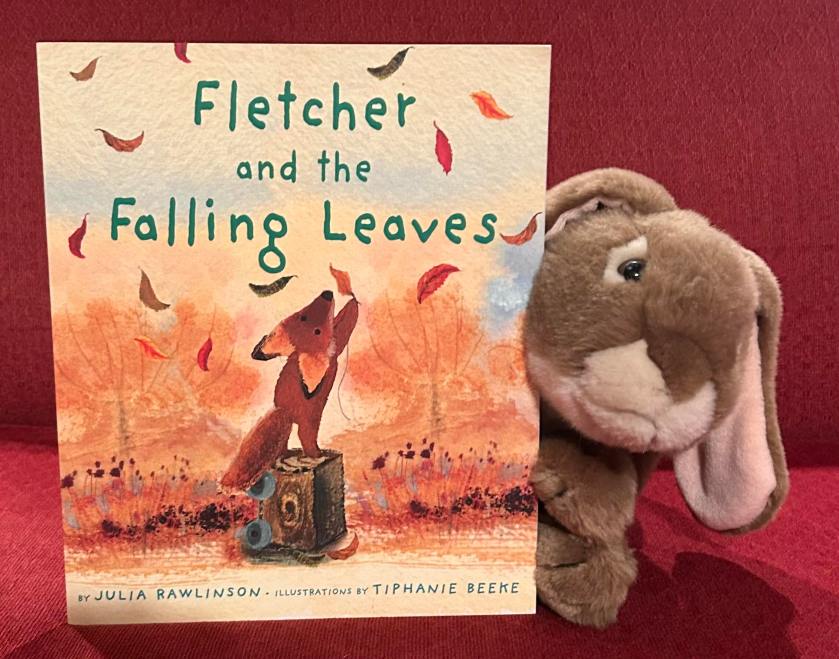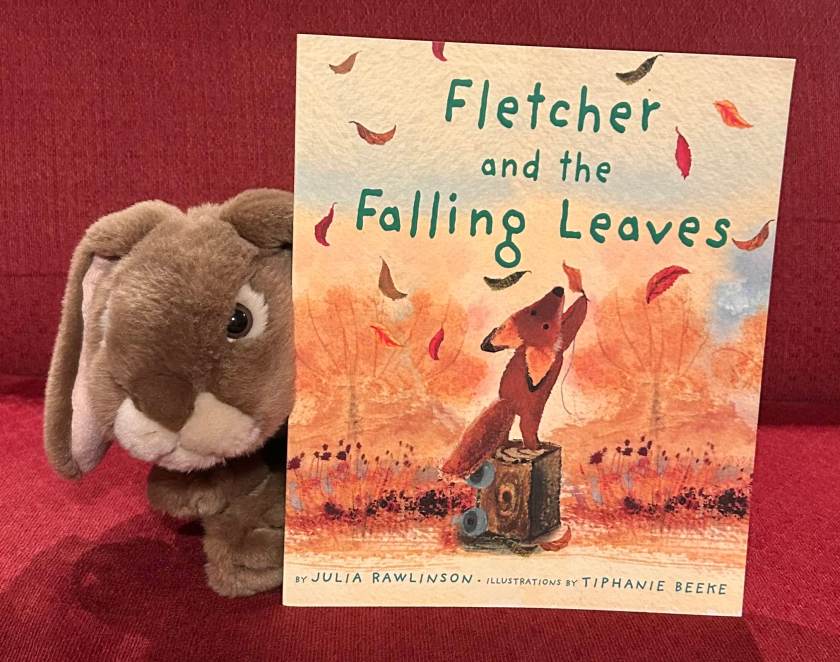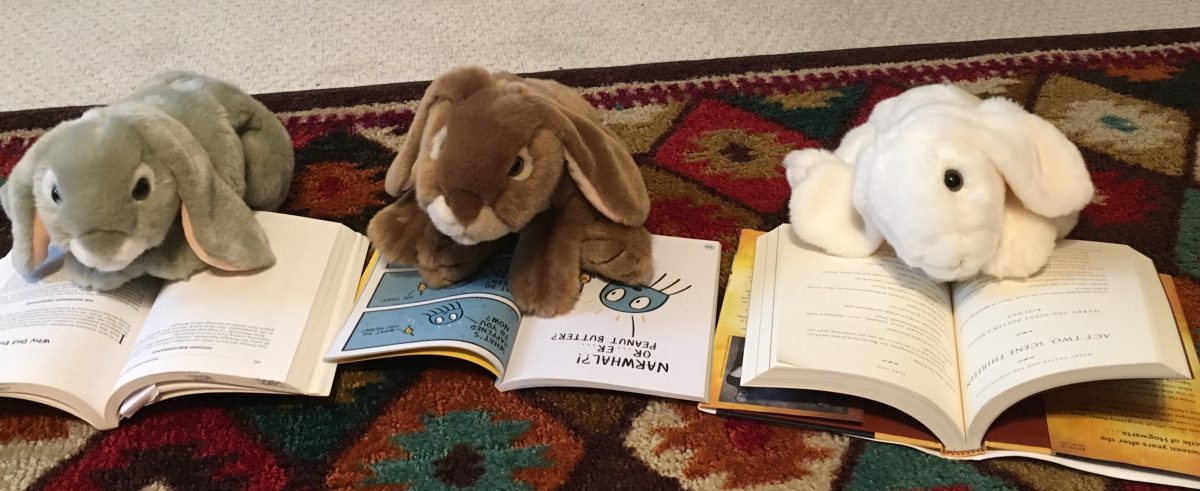
Caramel reviews Fletcher and the Falling Leaves by Julia Rawlinson

Today Caramel is reviewing Fletcher and the Falling Leaves, written by Julia Rawlinson, illustrated by Tiphanie Beeke, and first published in 2006. As usual, Sprinkles is taking notes and asking questions.

Caramel reviews Fletcher and the Falling Leaves, written by Julia Rawlinson and illustrated by Tiphanie Beeke.

Sprinkles: So Caramel, today we are talking about a sweet story about the coming fall season.

Caramel: Yes we are. It’s about a fox named Fletcher who hates change.

S: Well, he is a very young fox and he is not used to change. It is sometimes hard to deal with change, no?

C: Yeah, I don’t quite like change either, but it is sadly necessary.

S: Yes, you had to finish one school and start another. We had to move. You changed teachers, And so on. We have to deal with change all the time. And even when it is natural it can be hard. 

C: Yeah. And the change Fletcher is upset about in this book is also very natural. 

S: Okay, so tell us a bit more. 

C: So Fletcher is this little fox who loves a tree, but one day he notices that the tree’s leaves are losing their nice bright green color. 

S: Hmm…

C: Then the tree starts losing its leaves. So Fletcher at first thinks the tree is sick, so he goes to his parent, and asks about it, and the parent says not to worry, because it’s only autumn.

S: Of course! But Fletcher is young, so he probably has not seen autumn before! 

C: Yeah, so he eventually comes back to the tree, and sees there is only one leaf left on its branches, so he does anything to keep it on the tree.

S: Oh, I can see where this is going. He won’t be able to help much, will he?

C: Yeah, no. He tries to tape it to the branch, but eventually it falls, and he eventually learns that change is inevitable, and not always bad.

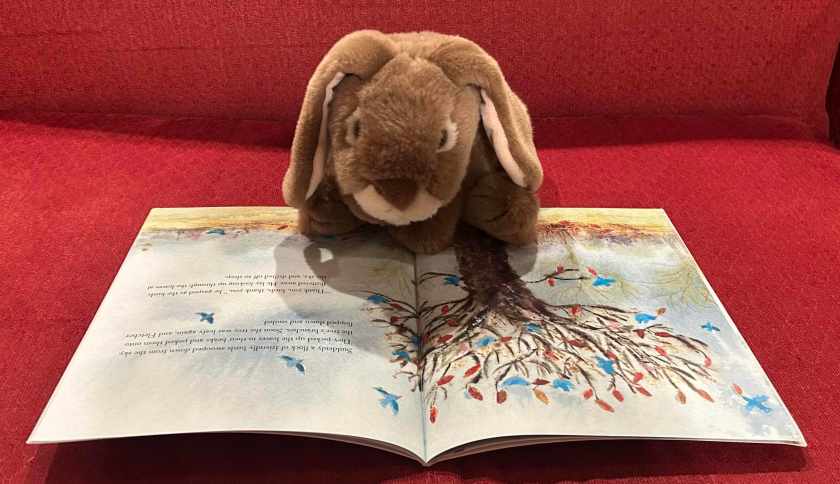
Caramel is reading Fletcher and the Falling Leaves, written by Julia Rawlinson and illustrated by Tiphanie Beeke.

S: Yes! Dare I mention impermanence? Maybe not. But I remember the very last page! Autumn is normal and after it comes winter! And it can be lovely!

C: Yeah, the last page is really pretty. But the whole book is really nice to look at! The colors are all very nice and warm. 

S: Yeah, and things look feathery and really almost dreamlike. I thought of the books we read that were illustrated by Isabelle Arsenault, like Captain Rosalie, Colette’s Lost Pet, and Albert’s Quiet Quest. It is really quiet and makes you feel peaceful when you are looking at the pages. 

C: Well, you also feel the anxiety and sadness Fletcher is feeling. So those are not very peaceful feelings, but the pictures are still very nice, so maybe you can guess that Fletcher will soon feel better too. 

S: Yes, I can see that. You are right Caramel! That’s a lovely observation! So do you like autumn? 

C: Meh, it’s nice, but it is nicer in winter, when it’s colder. I like cold, I’m a cold weather bunny.

S: That’s interesting! I like cold more than hot weather, too. But I also love autumn. I like the changing colors, and it is also when school starts which is always exciting! 

C: Which reminds me. Tonight is again a school night. Hint hint. 

S: Hmm, I think I know what you are getting at. Maybe we have said enough about this book. 

C: Yes. I do think this is a really neat book. Young bunnies will enjoy it and this is really a good time to read it because autumn is coming. But maybe we can wrap this review up, so I can go to sleep… 

S: Sure, that totally makes sense. Okay, let us wrap it up. What do you want to tell our readers then?

C: Stay tuned for more book bunny reviews!
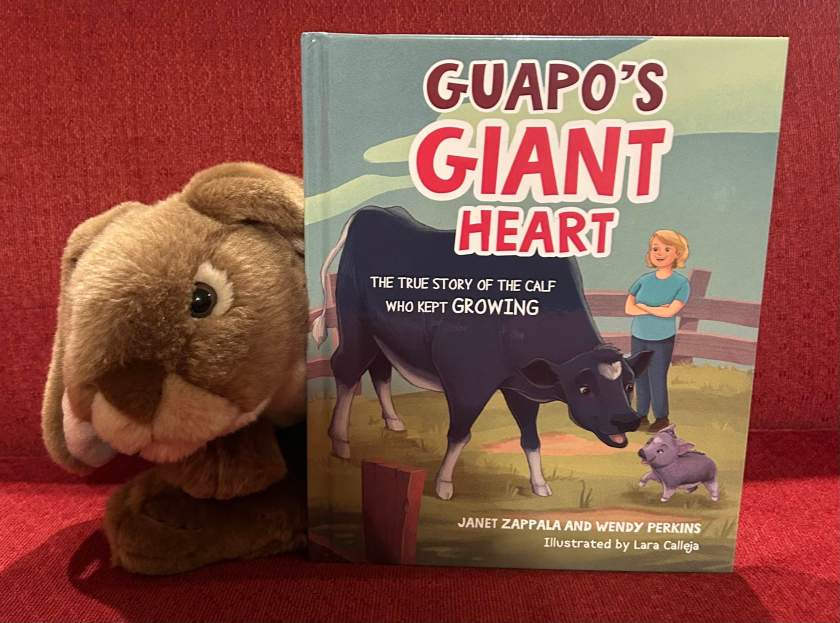
Caramel enjoyed reading Fletcher and the Falling Leaves, written by Julia Rawlinson and illustrated by Tiphanie Beeke, and is happy autumn is almost here!

Caramel reviews World War II Encyclopedia of Aircraft, Tanks, and Warships by Chris McNab

Today Caramel is reviewing World War II Encyclopedia of Aircraft, Tanks, and Warships by Chris McNab published in 2025. As usual, Sprinkles is taking notes and asking questions.

Caramel reviews World War II Encyclopedia of Aircraft, Tanks, and Warships by Chris McNab.

Sprinkles: So we are talking about a big book of facts again today.  

Caramel: Yes, yes we are. It’s about planes and tanks and ships, some of my favorite stuff, and I think this same guy wrote the encyclopedia of dinosaurs that I reviewed many many years ago, too, so I guess I should have known I would like the book. He just seems to write cool books. 

S: Well, it was clear you would like it because it is about World War II, aircrafts, tanks, and warships. 

C: Yes, that, too. 

S: Okay, so we know you liked the book. Then let us look into it together. Tell us about it. 

C: Well, it has a lot of illustrations. The cover says it has more than 1200! You know how I love my pictures, especially in a nonfiction book. There are three to five pictures on each page. Some are black and white photographs but many of them are in color and they are pretty detailed pictures of things. So I like them a lot! 

S: Sounds like just the right book for you. 

C: Yep.

S: So is it pages and pages of tanks and such?

C: Exactly. But first there are aircrafts. There is one type of aircraft on each page, and they go from page 10 till page 141, so there are more than a hundred and twenty planes! 

S: That is a lot of different types of planes. 

C: Yeah, a lot of different countries fought in World War II,  and each of them had many different types of aircraft. 

S: Okay, then after the aircraft what comes next? From the title of the book, I will guess: Tanks!

C: Almost. The next section is Tanks and Armored Fighting Vehicles. There are more than a hundred of these too. 

S: So let me guess. Is the next section warships?

C: Nope. There is a section on Artillery, Anti-Aircraft, and Anti-Tank Guns. It is a little shorter, but it also has a lot of examples, maybe forty to fifty different types. And then comes the section on Warships. 

S: Cool. 

C: Yes, very cool. There are over a hundred of those, too. 

Caramel is reading World War II Encyclopedia of Aircraft, Tanks, and Warships by Chris McNab.

S: I can see why you liked this book. 

C: Yeah. I really like all of the pictures of planes and tanks and ships. They’re cool to look at, and I also like to see the stats, like what they weigh or what they carry. So for example I learned that a typical heavy warship is 11,000 tons of displacement. That is a lot of water! 

S: Oh my! That sounds really heavy!

C: Yep. 

S: So I think you particularly like planes and tanks. Tell me a bit about your favorites. 

C: The F4U Corsair is my favorite plane. It is on page 108, and it is really cool. It has folding wings! 

S: Wow! I didn’t know they made planes with folding wings; that is very cool. 

C: It is! And the T-34 is my favorite tank. It was built and used by the Soviets and it had a huge impact on the war. They were cheap and quick to make and they were very powerful. There are two versions in the book. There is a 1942 version, on page 216, and then there is a revised version from 1944 on page 260. But I like the 1942 version best. I even made a model of it!  

S: That is cool! 

C: There is another one I find interesting. It is called the Churchill Crocodile, on page 251. It is a revision of the Churchill tank from 1941, which is on page 159. Both of them were British. 

S: Why is the Crocodile interesting? 

C: It is interesting because it is like a flame thrower on a tank. 

S: That would be quite destructive. 

C: Yes, I think so. The war was very destructive. I really just want to read about these machines because they are interesting as machines. I never want to really see them in real life, in a war. 

S: Agreed, Caramel. But I do have one last question. 

C: What is it?

S: Why was the Crocodile called a crocodile? 

C: Because it had a tail, a fuel tanker at the back. And they thought it looked like a crocodile tail I suppose. 

S: Hmm, that is interesting. 

C: All of the book was very interesting. 

S: I can see that! But it is getting late. 

C: And it is once again a school night. 

S: So is it time to wrap this up?

C: Yep. 

S: So what do you want to tell our readers? 

C: Stay tuned for more book bunny reviews!
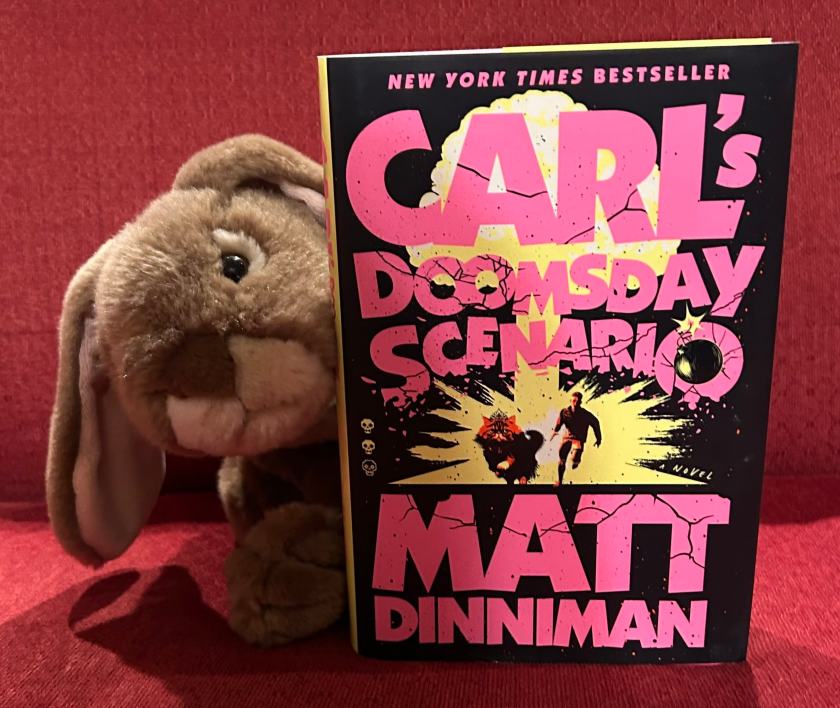
Caramel enjoyed reading World War II Encyclopedia of Aircraft, Tanks, and Warships by Chris McNab and learning so much more!

Caramel reviews Spaced Out: The Graphic Novel by Stuart Gibbs and Ward Jenkins

Both Caramel and Marshmallow have enjoyed reading and reviewing books by Stuart Gibbs for the book bunnies blog. Today Caramel talks about a recent graphic novel adaptation, Spaced Out: The Graphic Novel, of a 2016 book written by Gibbs; this version was published in August 2026 and was illustrated by Ward Jenkins. As usual Sprinkles is taking notes and asking questions.

Caramel reviews Spaced Out: The Graphic Novel by Stuart Gibbs and Ward Jenkins.

Sprinkles: So Caramel, today we are talking about the second book in Stuart Gibbs’s Moon Base Alpha series. 

Caramel: Yep. I read and reviewed the graphic novel version of the first book and now this is the second one. 

S: So let us dive right in. Tell us what the book is about. 

C: It is about Dash, the same guy from the first book, and there’s a new case for him to solve. A person has gone missing.

S: Oh say more. 

C: The person who’s missing is Nina, the station’s commander, and so the station goes through some issues as such. 

S: Oh wait. Dash and his family were living on the Moon, right? So Nina is the commander of the moon base — Moon Base Alpha?

C: Yes, they are, and yes, she is.

S: Cool. So this sounds like a typical Gibbs mystery, and he is so good at crafting fun mysteries. I am guessing this was good, too?

C: Yes it was, it also went into some more interesting stuff, but that was later, and as such, a spoiler.

S: Okay. I guess what we don’t know won’t hurt us. At least in this case. So tell me more about the book. Do we meet any characters besides Dash from the first book?

C: Yeah, almost all of them show up at least once, most of them more than once. 

S: That’s cool. So it really feels like a series then. So do you like Dash, the main character? Does he remind you of Ben Ripley from Spy School books? Or how about Teddy Fitzroy from the FunJungle books?

C: Yes, he kind of does, which makes sense. This is the same author after all. They are all fun characters and very likeable. And they manage to solve all sorts of mysteries. But this one is different because he lives in space! How cool is that? 

S: But of course we talked about how we really do not want to leave our own planet the last time… 

C: Yeah I stand by that still, until space travel is much safer.

S: I do too.

Caramel is reading Spaced Out: The Graphic Novel by Stuart Gibbs and Ward Jenkins.

S: So I noticed that the person who illustrated the Moon Base Alpha books is different from the person who illustrated the Spy School graphic novels. Do you like the style used in this book? 

C: Yes, I did, though the graphic novelizations for the Wings of Fire books are still my favorite. Now if only they came out with those more frequently…

S: But those books have an unfair advantage. I mean they have dragons! Not much can compete with that.

C: True, but what about dragons, in space?

S: Yeah, I suppose that would top everything! But okay, back to Spaced Out. Was it good enough for you to want more? There is apparently at least a third book in the original Moon Base Alpha series, so I am guessing they will publish the graphic novelization of that some time next year. Are you excited about that?

C: Yaaaaaaaayyyyy!

S: Okay, I am guessing that means this was a very fun read and you are excited about the next one?

C: Yes. 

S: Okay, then we will make sure to get you a copy when it does come out. So Caramel, do you think this is a good time to wrap up this review?

C: Yup. This is a school night so maybe it is a good idea. 

S: Sure, okay. Let’s do that. What do you want to tell our readers?

C Stay tuned for more book bunny reviews!
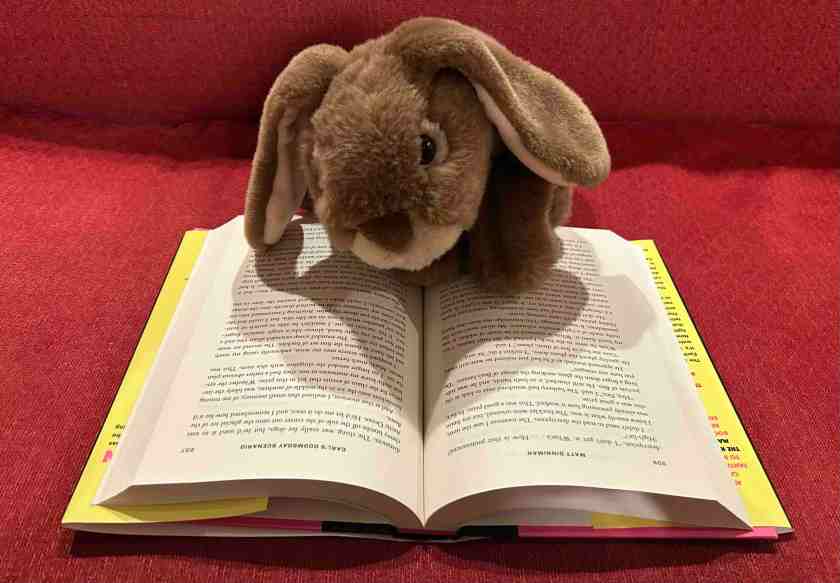
Caramel enjoyed reading Spaced Out: The Graphic Novel by Stuart Gibbs and Ward Jenkins and recommends it to all little bunnies who enjoy space mysteries.

Caramel reviews The Martian by Andy Weir

Today Caramel reviews The Martian by Andy Weir, the 2011 book that was the basis of the more recent movie The Martian. As usual, Sprinkles is taking notes and asking questions.

Caramel reviews The Martian by Andy Weir.

Sprinkles: So today we are talking about The Martian by Andy Weir. 

Caramel: Yes, Weir talking about The Martian.

S: That’s a good one, Caramel! Okay, so let us get to it. Would you start by telling us what the book is about?

C: Sure. It’s about a guy named Mark Watney, who goes to Mars, and gets trapped there.

S: So the Martian is a human then? It is not quite sci-fi with aliens and such?

C: No, no aliens, but yes sci-fi, we can’t get a spaceship full of people to Mars just yet. We haven’t even sent an unmanned ship there for a while, though NASA still has some rovers there. I even reviewed a book about them a while back. 

S: True, you are right of course. Sci-fi does not have to have aliens, but space travel a bit beyond what we can do today also definitely counts. So this guy Watney went to Mars alone or as part of a team? 

C: He was part of a NASA team, but he got impaled during a really bad sandstorm and the others had to leave before they could find him. But thankfully his accident was not deadly so he survives, and then he has to survive the planet all on his own. All the while everyone back home is sure he is dead, so they are not even looking for him or not even planning to come back to look for him… 

S: That sounds pretty dismal. 

C: Yes, but this Watney guy is a very creative guy and he figures out how to grow potatoes on Mars and all kinds of other engineering trickery and eventually he manages to get the NASA folks realize he is not dead, so they try to save him. 

S: That sounds like a pretty tense story. 

C: Actually, it is very funny, he tells a lot of jokes.

Caramel is reading The Martian by Andy Weir.

S: So the story is told through Watney’s perspective? Oh then at least we know he will most likely not die in the end. 

C: I believe yes, mostly. Every now and then we read the story through some folks on Earth, from NASA headquarters, and sometimes from the astronauts who were with him on Mars. And there is a lot more I can say, but to quote the amazing River Song, “Spoilers!” 

S: Alright, maybe this is enough then about the plot. What can you tell us about the rest? You already said the book is actually funny. 

C: Yep, though it does have some bad language. The guy is trapped on Mars after all, so he is a bit frustrated and is writing for nobody in particular because he expects he will likely die. So I didn’t mind the language really. And he is hilarious! 

S: I know you also saw the movie based on the novel. Did you think the two were similar? Did you like the book and the movie both? 

C: Yeah, the only really interesting difference is he doesn’t begin the movie with the same line. 

S: I guess they wanted to keep the movie PG-13! 

C: Yep! But in actuality there were some differences later on, but i thought that was funny.

S: I agree. It summarized his frustration very well. 

C: Anyway, the movie is pretty awesome too. I enjoyed reading the book and I enjoyed watching the movie. Maybe we can put a link to the trailer here. 

S: Sure, here we go:

The Martian (2015) trailer from YouTube

C: Thank you! 

S: Okay, so maybe this is a good time to wrap things up. 

C: Sure, why not?

S: Great! So what do you want to tell our readers?

C: Stay tuned for more book bunny reviews!
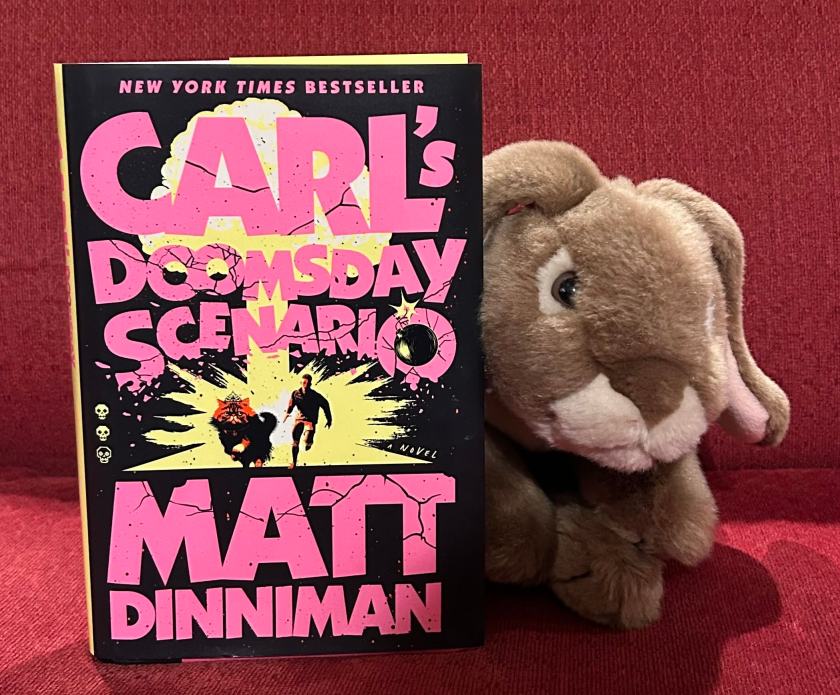
Caramel enjoyed reading The Martian by Andy Weir and recommends it to all bunnies who like space travel, science fiction, and extreme adventure stories.