Caramel reviews Redshirts by John Scalzi

Today Caramel reviews Redshirts, a book by John Scalzi first published in 2012. As usual Sprinkles is taking notes and asking questions.
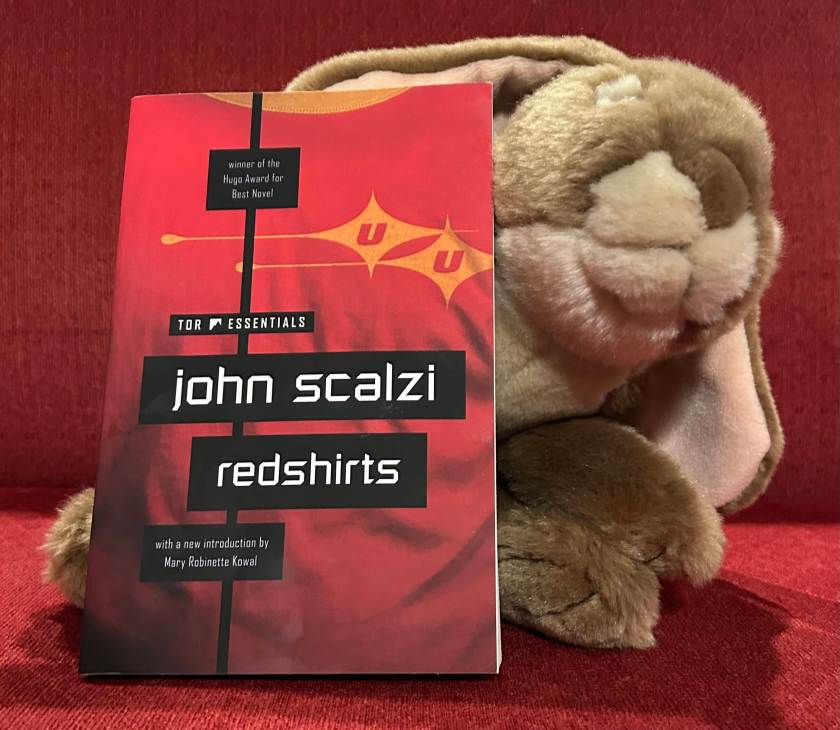
Caramel reviews Redshirts by John Scalzi.

Sprinkles: Today we are talking about a space story, right? 

Caramel: Yes, today we are talking about Redshirts, which is a story that is in a Star Trek-like universe. The book never comes out and says Star Trek of course, but you know it. 

S: True. Even the title is a throwback to Star Trek. Redshirts are the ensigns and other members of the crew who wear red uniforms, and if you watch enough Star Trek episodes, at some point it becomes clear that whenever a team goes down to a planet with some of the main characters and a few crew members wearing red, the dangers in the planet would kill off at least one of those redshirts. 

C: Yes. The book is really about that. The main character is this guy named Andrew Dahl and he is himself a redshirt. He joins the Universal Union, which is like the Federation in Star Trek, and is serving on the flagship. He realizes at some point that his friends keep dying. But none of the main crew dies. So the redshirts start getting suspicious. 

S: I think that is a really smart plotline. 

C: Yes, I think so too. But it gets even better. They realize that they do not really have memories beyond the ship they are on and so on, and they eventually discover that there is a real weird reason for everything. 

S: Yep!

C: But I am not telling. I think it would be a big spoiler.
Caramel is reading Redshirts by John Scalzi.

S: Yes, you do have a point there. Okay, so let us stop talking about the plot then and begin to talk about other things about the book. Actually I read Redshirts first and could not stop myself from laughing all the time. I thought you would enjoy it, too. Was I right?

C: Yeah, it was pretty good. I laughed a lot, too. 

S: I also found the plot twists pretty neat. 

C: Yeah, me too. But again, no spoilers! And I kind of guessed some of them. 

S: Good for you! I did not. But you and Marshmallow are getting pretty good at guessing narrative arcs. 

C: Well, we do read a lot of books. 

S: That’s true.

C: Yeah, so the book starts out with a guy on an away mission, for lack of a better term, and he is eaten by land worms, I have no idea what those could possibly be. But they sound just about right for the kind of weird monsters that appeared in the original Star Trek series. And so we immediately get some action and some weirdness, and it is all fun from that point on. 

S: I mean, I guess a lot of redshirts did die, I think, and death is not really funny, if you think about it, but in the storyline they were all quite absurd, and you could not help but laugh. 

C: Yeah, the setups of the away missions were all weirdly amusing, but the actual plot of the book was awesome. Kind of mind-boggling and mind-twisting, but also funny. And awesome!

S: I am so glad you enjoyed it. But I am wondering. Do you think someone would still enjoy this book if they did not watch any Star Trek?

C: Yes, yes, the plot can still stand alone, but knowing Star Trek sort of just makes it better.

S: I think I agree. For a Star Trek fan like me, there were a lot of inside jokes, but if you are not a Trekkie like me,,I think it is still a great read. Lots of fun and also some things to think about after you are done. 

C: Yep. 

S: Okay Caramel. I think this might be a good time to wrap up this review. 

C: Sure. Let’s do that.

S: What do you want to tell our readers?

C: Stay tuned for more book bunny reviews!
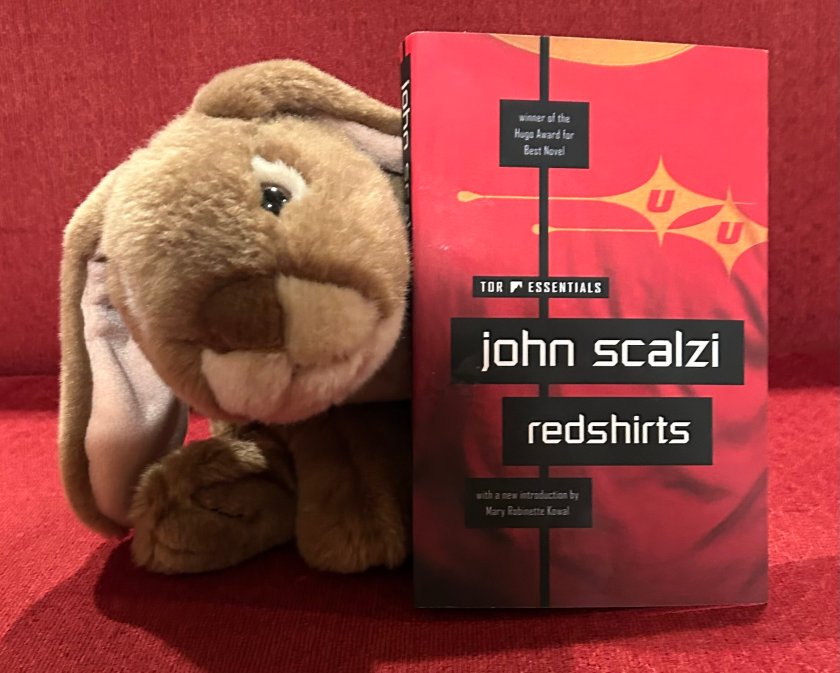
Caramel enjoyed reading Redshirts by John Scalzi and recommends it to all bunnies looking for some funny space stories.

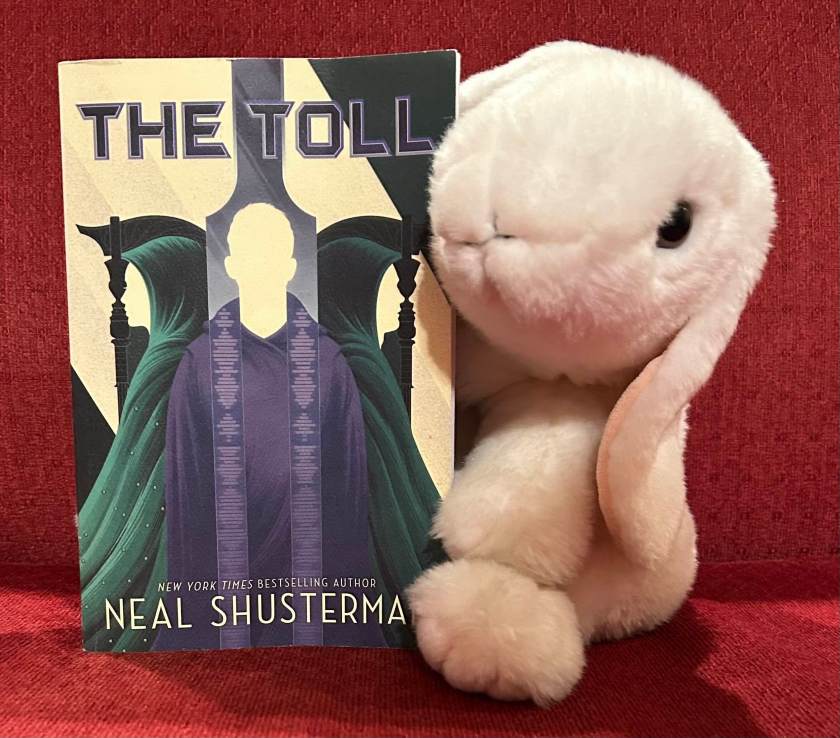
Marshmallow reviews The Toll by Neal Shusterman

Marshmallow has already read and reviewed Scythe and Thunderhead, the first two books in Neal Shusterman’s Arc of a Scythe series. Today she reviews the third book, The Toll, first published in 2019.

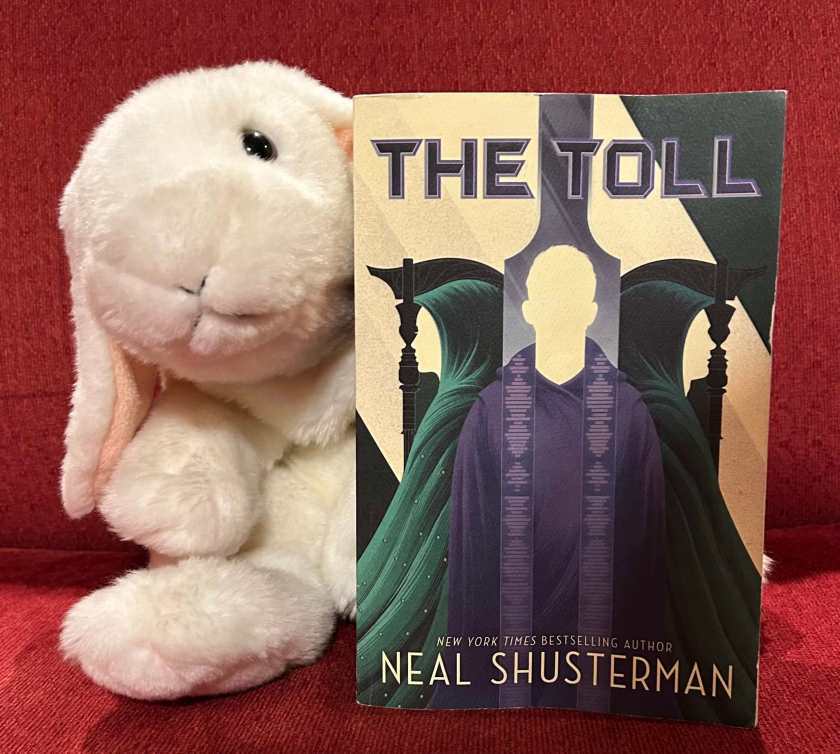
Marshmallow reviews The Toll by Neal Shusterman.

Marshmallow’s Quick Take: If you liked the previous books in the Arc of a Scythe series, then this is the book for you! But if you haven’t read those yet, then Scythe and Thunderhead are the books for you!

Marshmallow’s Summary (with Spoilers): Ever since every human was marked as unsavory, the Thunderhead went silent. The Thunderhead is the benevolent, all-knowing AI consciousness that runs the world, serving as a parent to those without, a therapist to those in need, a friend to those lonely … the list goes on. Without the Thunderhead, humanity feels a bit lost. Of course, all the physical things (revival centers, publicars, etc.) directed by the Thunderhead continue to run smoothly, perfectly. But the question of why the Thunderhead went silent seems answered by the recent sinking of Endura, which was essentially the man-made island serving as the capital of the global Scythedom. Rowan Damisch (dubbed Scythe Lucifer), who ended several corrupt scythes to serve vigilante justice, is blamed and the general consensus is that the Thunderhead marked all of humanity as ‘unsavory’ (which means the Thunderhead no longer speaks to them) to collectively punish them for Rowan’s crimes.

Unfortunately, this is not the real reason. Rowan sank with Endura, along with Citra Terranova–who you may know better as Scythe Anastasia. The Thunderhead was mourning their loss, too, along with all others lost in Endura. Rowan and Citra were actually trying to stop the destruction caused by Scythe Goddard, but instead Goddard seizes power afterwards and appoints himself the Overblade of North Merica. Goddard also begins changing the way the entire Scythedom works, eliminating the gleaning quotas so that scythes can glean as much or as little as they want to; he encourages other regional Scythedoms to do the same and soon the world is divided between scythes who align themselves with Goddard and those who are brave enough to resist his growing influence.

The Tonists, the main (perhaps only) religious cult that remains in a time of immortality, are another group against Goddard’s reign and scythes in general. Their religion always foretold of the Great Resonance, and the Thunderhead did release a technical wail (it made all alarms, beeps, and other sounds in the world go off for a brief couple of seconds) before it went silent. This reinvigorates their faith and legitimizes them slightly, especially now that they have the Toll.

Grayson Tolliver was raised by the Thunderhead and, in the last book, he saved Scythe Anastasia and her mentor Scythe Curie. The Thunderhead’s coding forbids it from interfering with scythe business, and the murder attempt targeting Scythe Anastasia and Curie’s lives fit that category; thus the Thunderhead wasn’t allowed to intervene to save them, but it could tell Grayson and it could predict that he would likely try to save them himself. Due to this interference, the Thunderhead was forced to mark Grayson ‘unsavory’ for a while, but after the Great Resonance (and everyone else being marked ‘unsavory’) he is clean and the only human on the planet who is able to talk to the Thunderhead. Living amongst the Tonists, he becomes their leader and the third part of their holy trinity—the Toll (the other two are the Thunder and the Tone).

While this is all happening, Scythe Faraday (Scythe Anastasia and Lucifer’s mentor) begins searching for the mythical fail-safe left by the founding Scythes in case the scythedom ever went in the wrong direction. This is because, unfortunately, the scythedom has gone astray and it seems like there aren’t enough people left to stand in Goddard’s way. Little does he know though that secrets lost to the sea and to space are not so lost after all. 

Marshmallow is reading The Toll by Neal Shusterman.

Marshmallow’s Review: I really enjoyed The Toll! I was extremely excited to read another book in this series and this book did not disappoint. I had loved the first two books and felt that ending the series in a satisfying way would be a very difficult challenge. However, Shusterman did a very good job and I think he made the best decisions possible. The ways the characters developed were nuanced, and I think he avoided certain stereotypical, simplistic arcs. The breakdown of one of the strongest characters was heartbreaking to read about, yet it was much more realistic than the unrealistic continual suppression of his emotional struggles.

The way the characters in this series grapple with mortality and the idea of gleaning (the ceremonial taking of lives executed by scythes) makes these books all very advanced and philosophical. They point towards what might lie ahead for humanity and how humanity both strives for and self-sabotages its improvement. I also find Shusterman’s imaginary world a bit comforting. While there is undoubtedly trouble in The Toll, there is also significant advancement for humans. Seeing and reading about a world where humans are still struggling to advance yet have already come so far is very inspiring and thought-provoking.

Despite the stark differences between our world and the world of The Toll, the characters are all incredibly well-written and I thought the relationship between (SPOILER) Citra and Rowan was very cute. Shusterman’s execution of their romance was very mature, I thought, because it seems that they do have some sort of physical interactions but we luckily don’t have to read about them. This omission actually helps strengthen the emotional legitimacy of their connection as that is what the author chose to highlight, rather than raw attraction.

I also thought the plot was amazing! The Toll was, like the previous books, a story that was so enveloping and compelling that I did not feel the need to slow down and try to predict what would happen next. I would just have to keep reading. I loved the final scene and I am very excited to read the additional books that Shusterman has written about this same story universe and is writing currently.

I would highly recommend reading all three of the books in the Arc of a Scythe series because they really do make you think about how differences between our world and the world of the series reflect on humanity as a whole and how mortality truly affects us. They are also just very entertaining. I am very excited for any new books set in the world of this series; I hope you read about it too!

Marshmallow’s Rating: 110%.

Marshmallow rates The Toll by Neal Shusterman 110%.

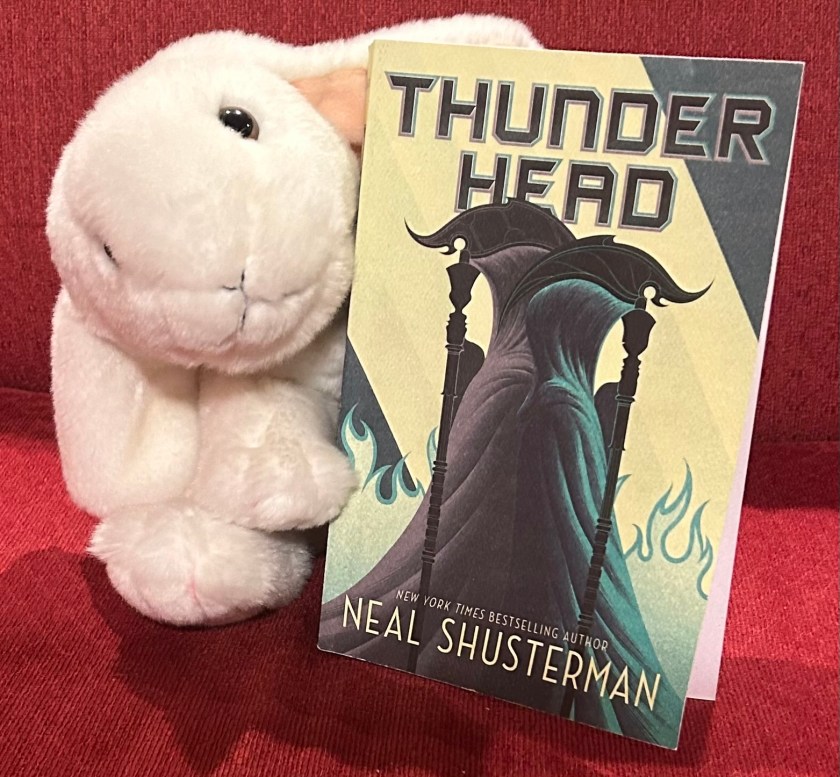
Marshmallow reviews Thunderhead by Neal Shusterman

A few weeks ago Marshmallow read and reviewed Scythe, the first book in Neal Shusterman’s Arc of a Scythe series. Today she shares with us her thoughts on Thunderhead, the second story in the series, originally published in 2018.

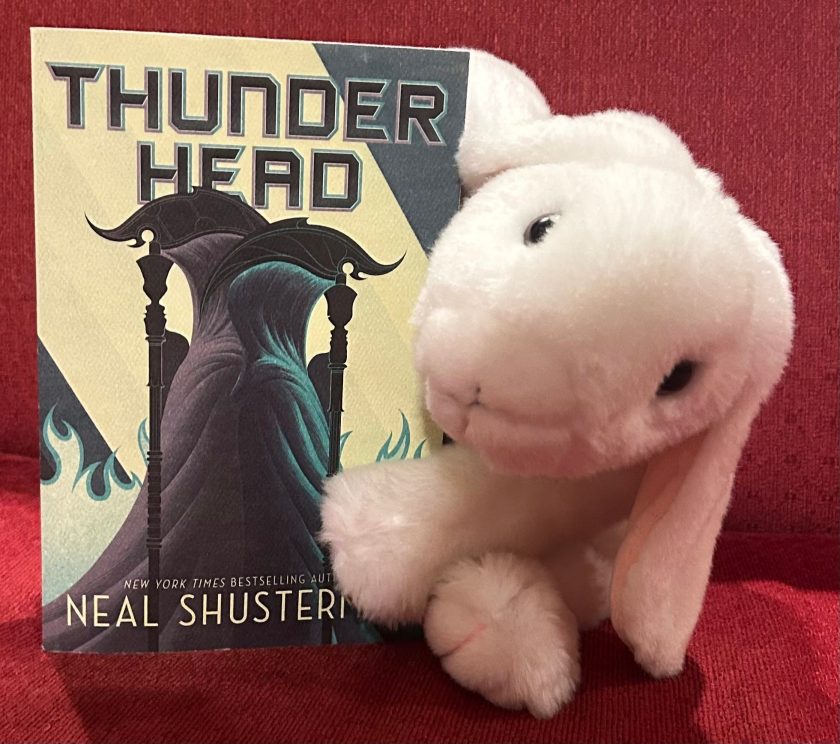
Marshmallow reviews Thunderhead by Neal Shusterman.

Marshmallow’s Quick Take: If you liked Scythe, the first book in Neal Shusterman’s Arc of a Scythe series, then this is the book for you!

Marshmallow’s Summary (with Spoilers): At the end of Scythe, Citra Terranova was ordained as a scythe while Rowan Damisch fled from the scythedom. At the beginning of Thunderhead, their lives are going in two very different directions.

Citra chooses the name Scythe Anastasia (for the patron historic of Anastasia Romanov) and begins gleaning in a different way; this is poorly received by some and lauded by others. When she selects someone to be gleaned, she tells them a month in advance and gives them that time to prepare. Then they seek her out at the end and tell her how they would like to die (those who try to flee are killed by a location-triggered device she implanted in their arm). This is a very unconventional method of gleaning given that most kill their victims almost instantly—and that is generally deemed the most merciful manner of death. However, Scythe Anastasia finds her version of death to be more acceptable to her conscience.

Some scythes don’t really care about mercy at all though. One such scythe is Scythe Brahms who plays his patron historic’s lullaby each time he gleans, which is generally with bias. A new scythe, Scythe Lucifer, begins to take out corrupt scythes like Scythe Brahms, burning them so their bodies cannot be revived. Scythe Lucifer spares Brahms, but the endings of the many other corrupt scythes he did not begin to alert the scythedom to his presence. They call him a vigilante and soon realize that he is none other than Rowan Damisch.

After seeing the rise of the ‘new order’ (a movement within the scythedom that ignores the founding ideals of discipline and modesty in order to actively encourage bloodlust, self-indulgence, and corruption for scythes), Rowan has vowed to take as many bad scythes out of the equation as possible. Of course, this doesn’t go over well with the scythedom, even though some like Scythe Anastasia acknowledge that the scythes removed were undeserving of their roles.

While the scythedom reels with shock over Scythe Lucifer’s actions, the Thunderhead (the ambivalent, benevolent A.I. consciousness that rules over humanity as a guardian angel, running everything perfectly to create the perfect world) stays quiet. Scythes are not allowed to communicate with it—in order to create a separation between the two institutions—but they are puzzled by why it has not done anything to stop Rowan. The Thunderhead, it is revealed, worries that the new order will topple the balance that has kept their utopian world at peace for so long. And while the Thunderhead can’t do anything to stop the new order, it can hint certain things to a certain Grayson Tolliver, an ordinary man who was essentially raised by the Thunderhead after his serial parents left him (serial parents are people who spend their immortal lives starting families but never sticking around to raise them). Through Grayson, the Thunderhead saves Scythe Anastasia and her former mentor Scythe Curie from a murder attempt. This begins Grayson’s new life as the Thunderhead’s vessel for action, action it is technically not supposed to be taking.

Through the perspectives of Scythe Anastasia, Scythe Lucifer, Grayson, and the Thunderhead (though sometimes we witness another scythe’s life), we see the glitches in the system—both real and metaphorical—grow. The scythedom has protected their utopian world for centuries, but everything seems to be changing for the worse. This is the one thing the Thunderhead cannot fix; it cannot save humanity from the scythedom if it cannot save the scythedom. 

Marshmallow is reading Thunderhead by Neal Schusterman.
Marshmallow is reading Thunderhead by Neal Shusterman.

Marshmallow’s Review: Thunderhead was an amazing book! I was absolutely fascinated by the first book and reading the second book has made me even more enveloped in the story. In Thunderhead, Shusterman shows how the characters we met earlier in Scythe have changed and how they have made new roles for themselves in their world. Furthermore, in this book, Grayson Tolliver is introduced and quickly becomes a central character. We get to witness his development and I am really, really curious to read more about him and how he will affect the plot.

The story line is ingenious and I found myself not even trying to predict what comes next. That was not out of a lack of interest; I was so enjoying the story that I was content to just continue reading to find out. After all, I didn’t really stop long enough to try to foretell the future. I am really excited to read the next book and find out what will happen.

Of course, both the third book and second book are irrelevant to someone who hasn’t read the first book. After reading Scythe, reading Thunderhead is the immediate instinct. Both books require the same reading level and maturity. Neither is particularly inappropriate and I think an eleven year old would find both intriguing. There is some violence and something sexual is implied at the end, but nothing is ever described in detail at all. This was perfect for me because I don’t mind those two things as long as I don’t have to read about it for more than a sentence! This was a good decision on Shusterman’s part because I think it makes the books more accessible and open to a broader audience.

That said, I felt his prose was slightly less flawless in Thunderhead. Certain sentences were worded a little strangely. Yet, this might have been a good thing overall because it made me feel like the book was from a future era, one you fall into when you start the first chapter.

Even though these books are set in a different time, the discussions about mercy, empathy, humanity, love, and what we owe to each other are relevant to everyone today. Thunderhead is very entertaining and interesting, but it also teaches values and morals that I think are crucial to a society hoping to reach utopia one day. As a whole, this book was absolutely amazing and I would completely recommend it to everyone. 

Marshmallow’s Rating: 100%. 

Marshmallow rates Thunderhead by Neal Shusterman 100%.

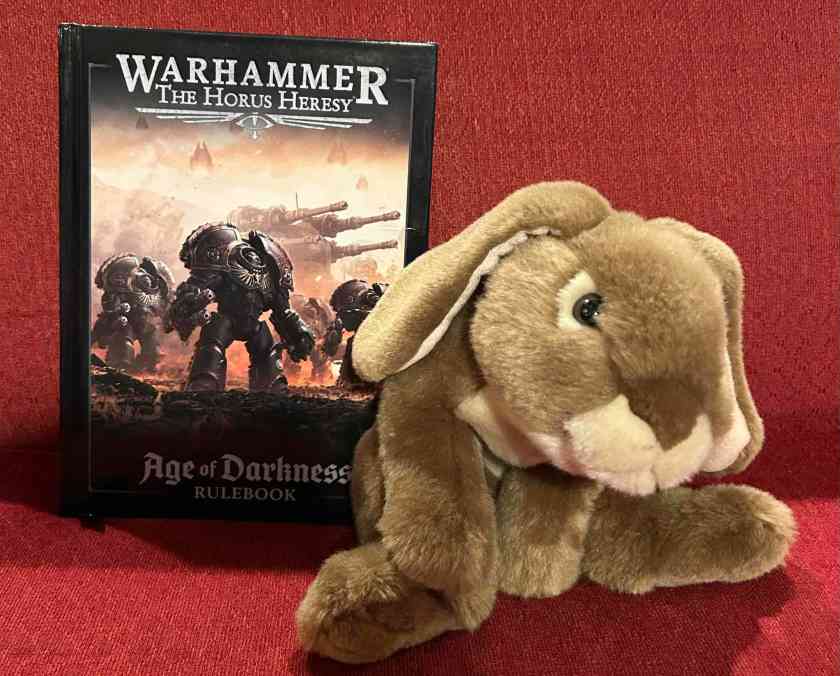
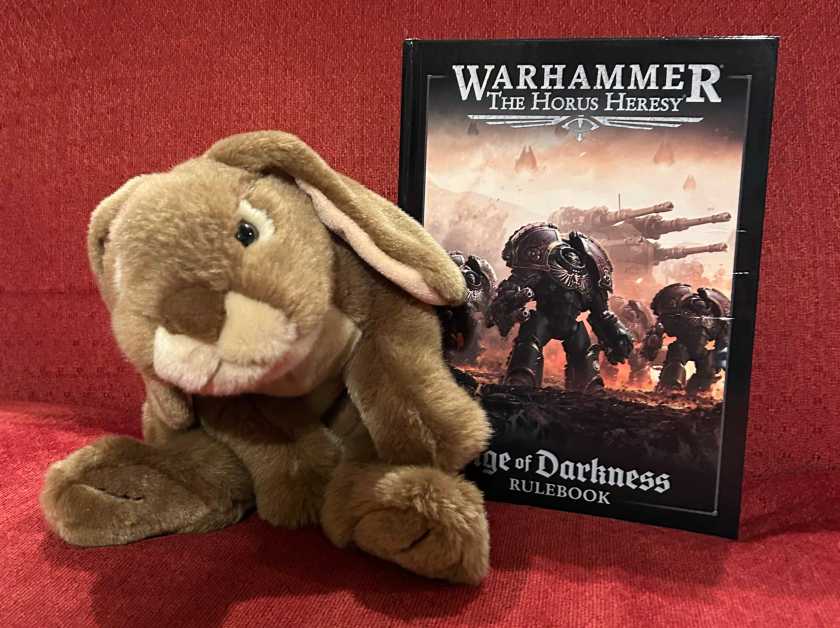
Caramel reviews Warhammer – The Horus Heresy: Age of Darkness Rulebook

As his first review for the new year, Caramel wanted to talk about Warhammer – The Horus Heresy: Age of Darkness Rulebook from 2022. As usual, Sprinkles is taking notes and asking questions.

Caramel reviews Warhammer – The Horus Heresy: Age of Darkness Rulebook.

Sprinkles: So Caramel, You had already reviewed the core ​​book for Warhammer 40000. What are the differences between the two?

Caramel::Well, in Warhammer lore the Horus Heresy is 10000 years earlier. So the time is around 30000, not 40000.

S: And why does this difference matter?

C: Well, now in this time, there is a civil war between humans and humans, mostly space marines versus more space marines, but they have cool armor, and best of all, tanks, and mechs.

S: Ahh, I understand why you like this now.

C: Yes, I’m a simple bunny.

S: But Caramel, in 40K, too, there was perpetual war. 

C: Yes, but in 40K, there are aliens too. In The Horus Heresy, it’s mostly between humans and humans. This is the background they give in the web page for the book:

The Imperium stretches across countless worlds, a newborn empire on the brink of ultimate victory. Yet at the peak of this golden age of conquest, the galaxy has been plunged into an Age of Darkness. Horus Lupercal, Warmaster of the Emperor’s armies, has turned against his gene-father, and the eighteen Space Marine Legions, once united in a Great Crusade to consolidate all Humanity beneath the Emperor’s banner, are riven by betrayal. This is the Horus Heresy – the bloodiest conflict Humanity has ever known. Civil war on a galactic scale, in which superhuman soldiers clad in advanced armour turn devastating weapons upon those they called brothers. Where do your loyalties lie?

S: So the Imperium is powerful but maybe not yet as spread around the universe, and the story is more about an internal struggle? 

C: Yes, basically, and the political issues with the God Emperor of Mankind being betrayed by his sons, like a certain Greek titan.

S: Ooh, I see, you are referring to Kronos and his sons, right?

C: Yeah, I am. I’m a smart bunny, too.

S: I never doubted that Caramel! But in your review of the 40K book, you told us that humans still worship the God Emperor. So does this mean that he will prevail?

C: Well, he doesn’t actually like religions, he is apparently old enough to have seen what it does. But he is a perpetual, or a being that is reborn, so, yeah, he was apparently also, I think Caesar, or something.

S: Again, this is very depressing. To have an autocratic leader who hangs around for ten thousand years of perpetual war. 

C: No comment. Except a tiny one: he isn’t there after the Heresy; he sort of dies, but doesn’t.

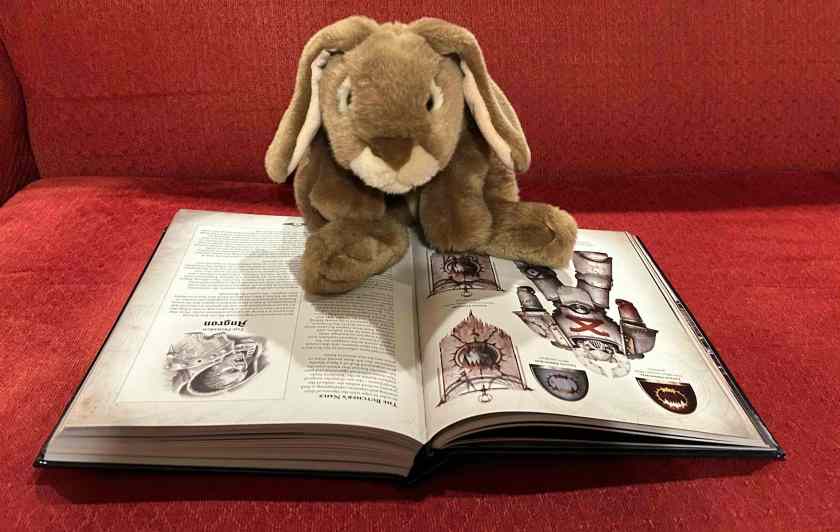
Caramel is reading Warhammer – The Horus Heresy: Age of Darkness Rulebook.

S: Hmm. I think you have been reading those other books about the Horus Heresy, right? 

C: No comment. I plead the fifth.

S: I have a sneaking suspicion we will be ending up with reviews of some of those books, too. 

C: Maybe, I plead the fifth again.

S: Okay, let us not go too far into speculation of that sort. Let us get back to this rulebook. So then the main types of warriors you can play with in this Horus Heresy world are different then, right? You do not have the same kind of warriors, I am assuming.

C: Yes, and no, some chapters of space marines still use the same types of armor and weapons, but have primaris versions, so larger and faster, but not really.

S: So, what are the chapters of this book about? I’m guessing there are rules in it.

C: Oh, yeah, so, the book starts off with a quote by Horus Lupercal to set the stage:

I never wanted this. I never wanted to unleash my legions. Together we banished the ignorance of Old Night, but you betrayed me. You betrayed us all. You stole power from the Gods and lied to your sons. Mankind has only one chance to prosper. If you will not seize it, then I will. So let it be war, from the skies of Terra to the Galactic Rim. Let the seas boil. Let the stars fall. Even if it takes the last drop of my blood, I will see the galaxy freed once more. And if I cannot save it from your failure, Father, then let the galaxy burn!

Then the book explains what the Horus Heresy game is, and then explains the types of space marine armor one might see during the Horus Heresy, but it is missing most of the terminator plates, or any of the tanks or dreadnoughts, but should I tell you what armors types it does talk about?

S: No, I think I had my daily dose of Warhammer today. 

C: Aw, one can never have too much Warhammer! 

S: I know you think so. 

C: Me and many other bunnies around the world! 

S: Okay, that is true. So now you have some figures that are from this world and some from the 40K era, right?

C: I have some space marines, but they work for both games; it all depends on whether or not my friends let me.

S: I see. And I also noticed that you have been reading the lore like it is real history basically. You have a solid grasp of the timelines and what happens when and you know so many details… 

C: Yep. I know it’s fiction, but it’s cool fiction.

S: Reminds me of the Foundation series Midnight started to review. That, too, envisions a whole future history of a galactic empire. 

C: Huh, maybe, but Warhammer sort of also changes the perspective of ancient beings, like necrons, aeldar and orks, who are all older than most of the universe. Then there are the old ones: frog men who are older than the entire galaxy.

S: Hmm, so it is more mixed in with fantasy than pure sci-fi, maybe? 

C: Yeah, I can see that.

S: Okay, cool. I am glad we talked about all this. I was wondering about The Horus Heresy, and this helps me get up to speed a bit about all that. So let us wrap up this review. 

C: Sure. I think I should probably go to sleep. 

S: Yes, I think that is a great idea. As we wrap it up, what would you like to tell our readers?

C: Stay tuned for more book bunny reviews!
Caramel has been enjoying reading Warhammer – The Horus Heresy: Age of Darkness Rulebook and will likely leaf through it for many more months (or even years) to come.