Marshmallow reviews Dear Debbie by Freida McFadden

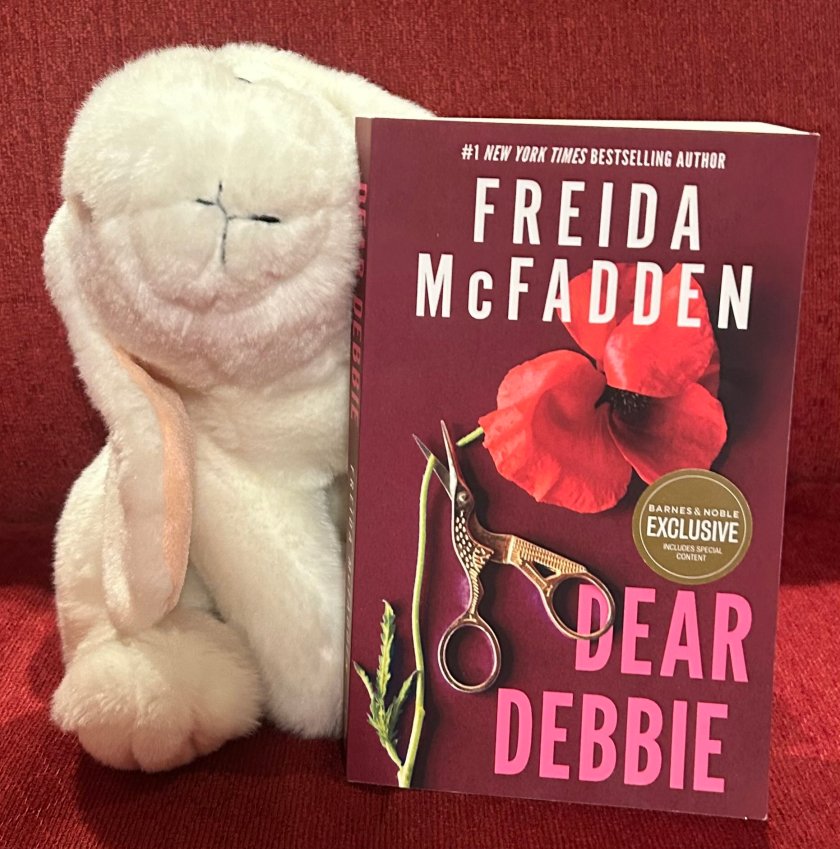
Today Marshmallow reviews Dear Debbie, a psychological thriller by Frieda McFadden published in 2026.
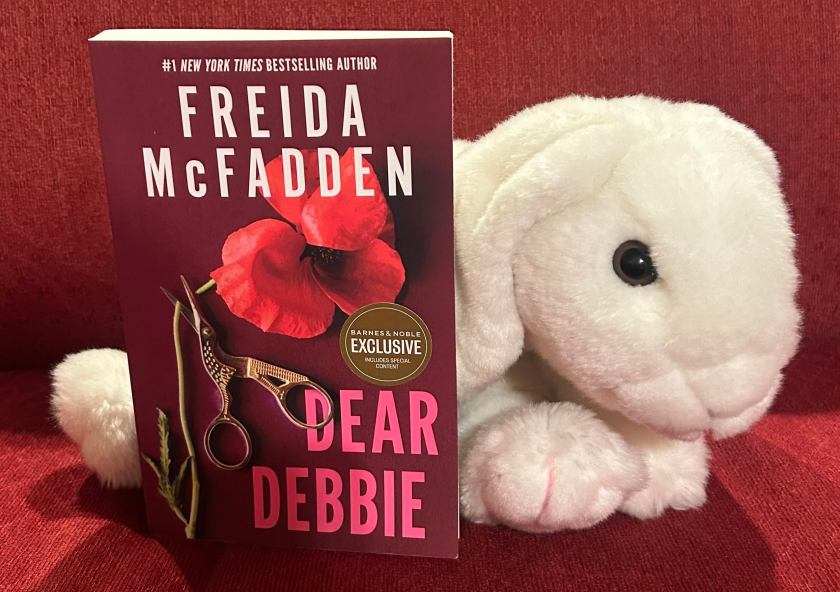
Marshmallow reviews Dear Debbie by Freida McFadden.

Marshmallow’s Quick Take: If you like books about murder, revenge, and vigilante justice, then this is the book for you! 

Marshmallow’s Summary (with Spoilers): Debbie Mullen might seem like a happy, contented housewife, but she has secrets far beyond what meets the eye. Like most mothers of teenagers, she is struggling to keep communication open with her two daughters, Lexi and Izzy. Lexi is a brilliant honors student senior but her boyfriend Zane is basically a stereotypical jerk. He is exactly the type of person that every parent hopes their child stays away from. So that is a bit of an issue for Debbie, as Lexi is determined to keep on seeing Zane and keep Debbie out of her life. Izzy is not as stereotypically rebellious, but she is silently hiding her problems from her parents too. Since she started playing soccer at a young age and she loves the sport with all her heart, Izzy has become one of the best players on her school’s team. Naturally, it is a bit of a shock for Debbie to learn that Izzy was kicked off the team (or possibly quit, though Izzy won’t tell her which). All of this chaos coincides with Debbie being fired from her part-time job at the local newspaper where she runs an advice column called ‘Dear Debbie’ (hence the name of the book!) Frankly, she is not having a good time.

This was not the life Debbie had imagined for herself when she was younger. With an IQ of 178 and an acceptance to MIT, she was told she would be the next Bill Gates. Unfortunately, she dropped out around halfway through for reasons she keeps hidden from everyone around her. Now, Debbie loves her family but feels under stimulated and underestimated. She keeps herself busy by maintaining an immaculate house and a lush garden, building apps every now and then, and keeping her family safe. She developed one app named Findly that allows her to track her family members (with their consent, of course, and in turn they can track her whereabouts at all times). That is how she learns that her husband is acting strange, “driving” around at night and turning off his location sharing for long periods of time. This is a cause for concern, but she also has other things to worry about, specifically, other people who she feels need to be brought to justice.

Debbie keeps a file on her laptop of secret Dear Debbie responses she wrote but never sent because they all ended with her advising the reader to take matters into their own hands in often violent ways. She decides to take her own advice and becomes somewhat of a housewife from hell. You’ll be surprised by how layered her plans are because nothing she does is unintentional.  
Marshmallow is reading Dear Debbie by Freida McFadden.

Marshmallow’s Review: Whatever you think about Dear Debbie, it is definitely a very impressive storytelling job. I did not see the main plot twist coming at all. I saw some of the others, but not the main one! I was shocked by how everything ended up being neatly tied together. Some of it felt a tiny bit like a stretch, but it was overall extremely impressive. Frieda McFadden seems to write a lot of this type of book, with “shocking central plot twists”, and I can tell that she has gotten very very good at it.

I enjoyed reading Dear Debbie and found its plot to be stimulating; it kept you constantly guessing at what was to come. I also liked how the story was told from several different perspectives and how that style ended up concealing certain key parts that were revealed at the end in a rather fantastic manner. Debbie is a bit of a psychological case study though. She is extremely good at managing her emotions on the surface but creates karma in secret in ways that are definitely illegal.

I would like to suggest that thrillers like this may have normalized murder a bit. And this is the first book I have read written from a murderer’s perspective, so I found it very disturbing. I did not like how simply and matter-of-factly she pulled the trigger(s). I don’t think bunnies younger than fourteen should be exposed to such a blase take on death. That said, it was a good book though. The writing is very fresh and entertaining, and the characters are all created in a very well thought out way. Some are very clearly designed to be hated and they definitely do make you feel as such. All others are made to be understood as three dimensional individuals with deep nuance.

Debbie herself has a story that is slowly peeled open to show her deep seated trauma and pain. It is revealed towards the end of the book (SPOILER!!!) that she was sexually assaulted as a college student, leading to her festering anger and eventual exit from MIT. This makes Dear Debbie suddenly hold much more weight than the average psychological thriller because she represents the extremes of what can happen when a mostly normal person is pushed to the limits of what is humanly endurable.

Reading Dear Debbie is entertaining of course. But I would also recommend reading this book as a way to think about and discover the darker parts of human nature and self control. When you read about Debbie’s own sense of justice, it makes you investigate your own with more focus. I don’t think everyone she punished deserved exactly what they got, but it was definitely a book that makes you understand why hurt people hurt people. The cycle of pain is one of the most tragic parts (if not the most tragic part) of the human experience and condition. Reading books like this one makes you realize just how ingrained that process is. Only when we read and recognize such a pattern can we acknowledge its existence and work to make a truer, better form of justice based on rehabilitation and the prevention of pain in the first place. In an imperfect world like our own, Debbie’s definition of karma is naturally understandable. I just hope that one day the cycle of pain and ‘justice’ becomes something we only read about in books like this. 

Marshmallow’s Rating: 98%.
Marshmallow rates Dear Debbie by Freida McFadden 98%.

Marshmallow reviews The Great Gatsby by F. Scott Fitzgerald

Today Marshmallow reviews a classic, The Great Gatsby by F. Scott Fitzgerald, originally published in 1925.

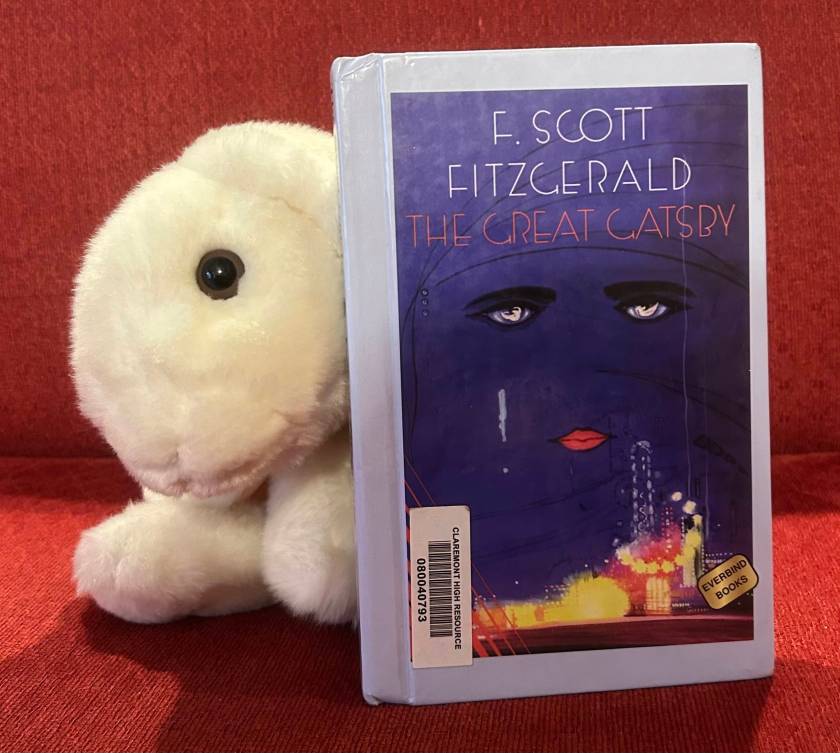
Marshmallow reviews The Great Gatsby by F. Scott Fitzgerald.

Marshmallow’s Quick Take: If you like reading celebrated classics, then this is the book for you!

Marshmallow’s Summary (with Spoilers): Nick Carraway is a man from the Midwest who came to New York City to work in the bond business. Living in West Egg (a peninsula home to the newly rich), Nick regularly visits his cousin Daisy and her husband Tom Buchanan, both of whom reside in East Egg (the peninsula across the water from West Egg where the wealthy, “old money” families live). As an outsider to the East Coast’s culture, he views himself as an honest, open-minded man with a perspective free of bias and judgement. His next door neighbor is a mysterious man who remains shadowed in uncertainty though.

This man is the titular Gatsby. He hosts extravagant parties with hundreds of guests, many of whom aren’t invited to be there but show up nonetheless. His house is beautiful, hinting unsubtly at how great his wealth must be. His origins are the focus of much speculation, but–because nobody is particularly close to him–no one is really able to discern much. Gatsby is somewhat like the Wizard of Oz: idolized in a distant, cryptic way with an impenetrable past but a present power that seems to know no bounds.

As Nick eventually gets closer to this new neighbor, he learns that there are indeed limits to his powers. Gatsby is infatuated with Daisy Buchanan, whose house is just alluringly across the water from his own. They had a passionate romance five years ago, but she agreed to marry Tom while Gatsby was at Oxford after the first World War. In a way, this reveals a tinge of superficiality within her. Yet, she is still as perfect as ever for Gatsby, who views her as the pinnacle of womanhood, grace, charm, beauty, wealth, and achievement. He wants nothing more than for her to openly declare to Tom that she never loved him. After all, Tom is busy having an affair with a middle-to-lower class woman in the “Valley of Ashes” (a much less wealthy part of the city).

Amidst this chaotic mess, Nick positions himself as the objective narrator watching the ideals of America degrade in the lap of luxury. Regarded as “the great American novel,” The Great Gatsby similarly casts itself as the defining text of its era, quietly revealing the reality of the 1920s Jazz Age and how America reached both new heights and horrific lows during that unforgettable time. 

Marshmallow is reading The Great Gatsby by F. Scott Fitzgerald.

Marshmallow’s Review: This is perhaps one of the best classics to read for younger bunnies. Even though it was written a whole century ago, I found the style to be the most comprehensible and understandable from the very start. Fitzgerald has a very clear style of prose and surprisingly lacks the extravagant descriptions that often characterize most ‘great works’ of literature. This was both a blessing and a curse in a way. I liked how pleasant it felt to understand the language of this book so easily, but it definitely left more to the imagination than most books. I suppose that might have been better in the long run though because I still had a very abstract yet meaningful image of the setting within my head by the end of the book.

Of course, the setting and time period are undeniably discernible from the dialogue and character behavior; certain characters (e.g. Tom Buchanan, Nick Carraway) describe events and people in ways that are not acceptable today. However, if one is mindful, this is not a major distraction; I find it interesting though how this reveals imperfections in Fitzgerald’s prose, much like how Carraway’s narration is frequently brought into question by literary critics. The main focus of the book is on examining America during that period and specifically within the context of the American Dream. And today, a century later, there are still a lot of things this book can tell us about the United States.

There are so many wonderful, online resources that go into a heartening level of detail and depth. Reading this book slowly is definitely a must; reading it slowly and then checking in with what others have synthesized from it is even better! Each of the characters have such depth and nuance, gently accumulated over the years through different perspectives and lenses. I personally doubt that Fitzgerald intended for everything to be viewed the way it has been. While I think the claim that Nick is gay might have merit, for example, I cannot confirm 100% that Fitzgerald meant for him to be so. Other interpretations (such as the common claim that Daisy represents the allure of wealth, Nick Carraway serves to contrast Midwestern ideals with the supposedly morally bankrupt East, etc.) are similarly interesting and worth investigating. Such research after or during the reading of this book is imperative, and I feel doing this deeper dive has expanded my understanding and appreciation of this book in more than one dimension.

Overall, I really enjoyed unfolding different aspects of this book. Even though it is quite a short book (taking up less than two hundred pages in the edition I read), the sheer amount of detail and depth there is to uncover is a joy in its own right. It might take some time, but it is worth it.

I would recommend The Great Gatsby to almost everyone; it lacks the sexual content, confusing verbiage, and obfuscatory abstractness that often bars youth and the general public from enjoying what is deemed as great literature. With The Great Gatsby, the only thing that determines your ability to appreciate the first “American novel” is your willingness to.

Marshmallow’s Rating: 100%.

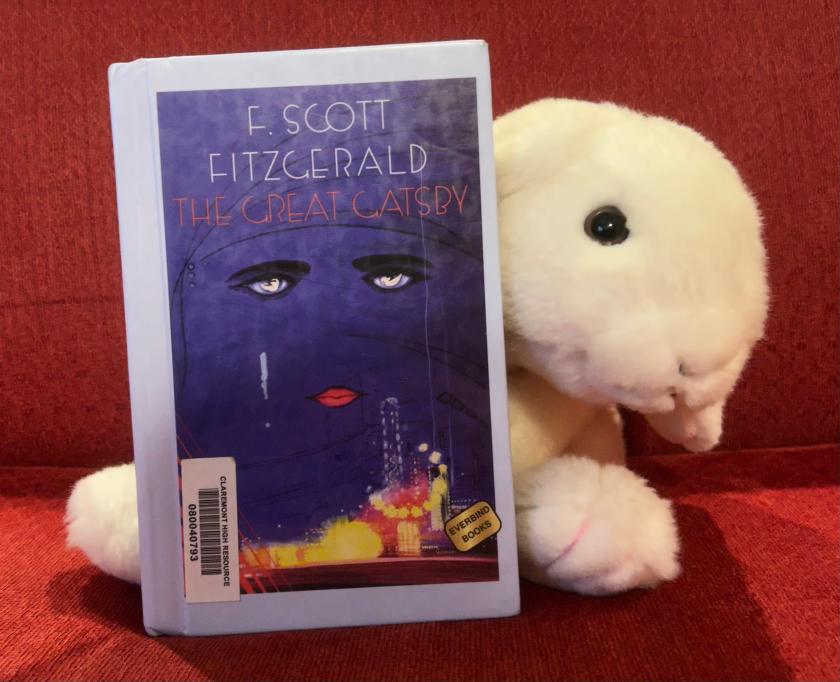
Marshmallow rates The Great Gatsby by F. Scott Fitzgerald 100%.

Marshmallow reviews Everything Here is Mine by Nicole Hollander

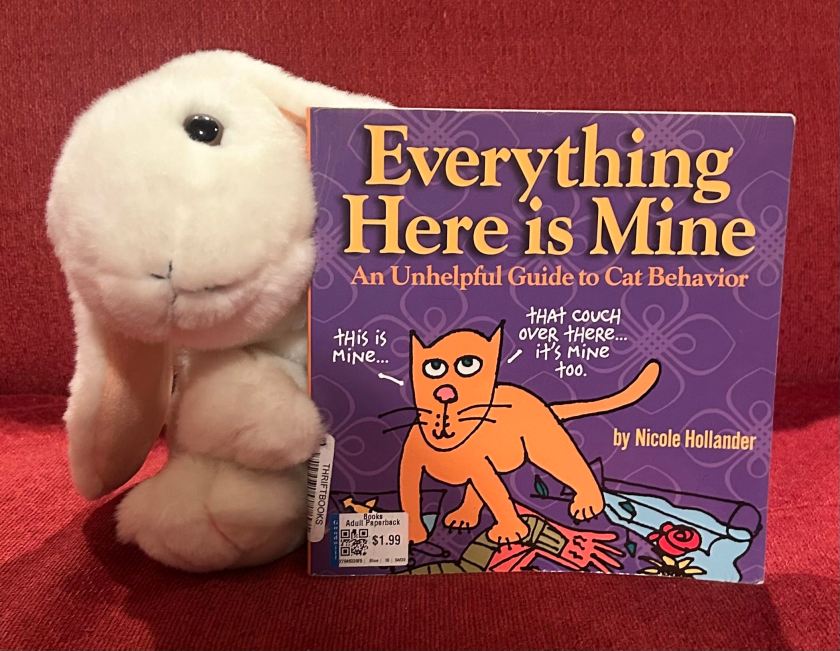
Today Marshmallow reviews Everything Here is Mine: An Unhelpful Guide to Cat Behavior. Originally published in 1992, this is a book of comic strips by the amazing cartoonist Nicole Hollander, whose daily comic strip Sylvia was enjoyed by many; she passed away in April 2026.

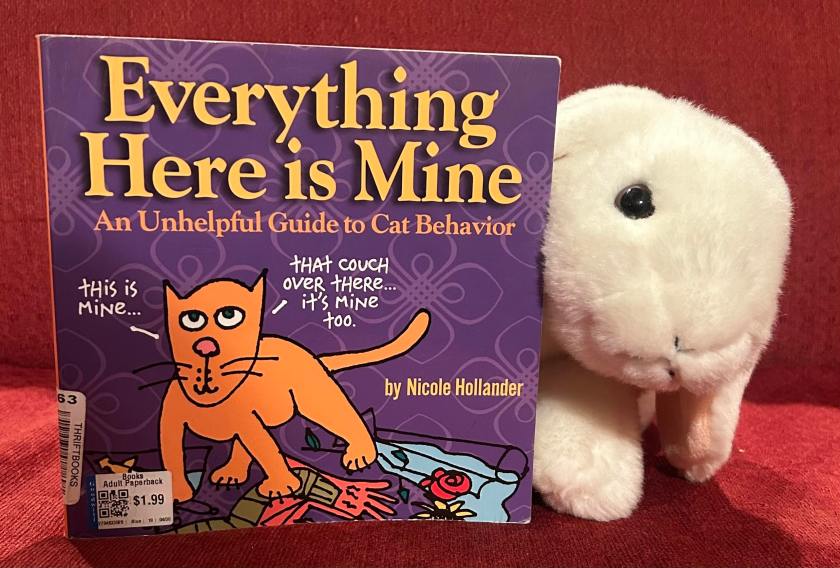
Marshmallow reviews Everything Here is Mine: An Unhelpful Guide to Cat Behavior by Nicole Hollander.

Marshmallow’s Quick Take: If you like cats and / or cartoons, then this is the book for you!

Marshmallow’s Summary (with Spoilers): Cats are from space. Specifically, according to Hollander, they are from the planet Hsif. Originally, they arrived during the time of the pyramids and began investigating Earth. Unfortunately, due to a civil war on their home planet, the main cat force had to leave behind several individuals. Budget cats later on prevented return missions so some of the cats were left stranded on our world. This is why cats spit up hairballs; it is an S.O.S. signal. This is merely the beginning of numerous new revelations and lessons about the cat species that you can find in Nicole Hollander’s Everything Here is Mine: An Unhelpful Guide to Cat Behavior.

As you can tell from the title, this book does honestly show how cats dominate their households. In sections labeled by related topics, Hollander gives us insight into what cats like and do not like. The sections are as follows: Cats in Space; Give Me That Wet Food, Baby; Fly Me to the Moon; Cats Who Dress Up; Don’t Lick That Cat; Oh, De Toilette; Slow Dancing With Your Cat; In the Heat of the Night; Vetnophobia; Cats and the Law; After You’re Gone; and more. In each, there are plenty of cartoons like the “Dear Cat Lady,” and “Misconceptions About Cats” columns. These provide some extra humor in what is already a very entertaining book!

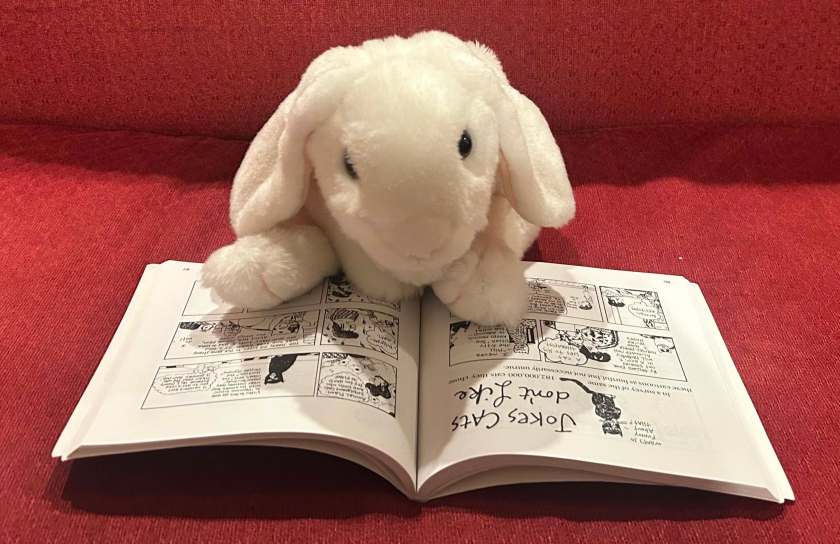
Marshmallow is reading Everything Here is Mine: An Unhelpful Guide to Cat Behavior by Nicole Hollander.

Marshmallow’s Review: I thought Everything Here is Mine: An Unhelpful Guide to Cat Behavior was a very funny book. I do not know any cats very well myself, but this definitely furthers a lot of general cultural stereotypes for cats. On the back of the book we meet a cat saying “We rule, but we’re fair…unless you serve us the wrong kind of food.” For many cat owners (or rather cat servants), this might strike a familiar chord. The cartoons are definitely amusing to any and all animals and animal lovers though. I particularly liked the “Heartbreaking Complaints of Cats” section that showed up every now and then. In those, a cat describes its issues to a disembodied voice outside of the panel–which I presume is meant to represent a therapist.

Overall, Everything Here is Mine: An Unhelpful Guide to Cat Behavior is a very fun book that is relatively lighthearted and light to read. It is not very long (less than 140 pages) and has plenty of funny pictures. All bunnies of all ages would enjoy this book, so I would highly recommend reading it if you have the time! It will make you smile even if you might not (yet) be a cat person. 

Marshmallow’s Rating: 100%.

Marshmallow rates Everything Here is Mine: An Unhelpful Guide to Cat Behavior by Nicole Hollander 100%.

Marshmallow reviews The Cartoonists Club by Raina Telgemeier and Scott McCloud

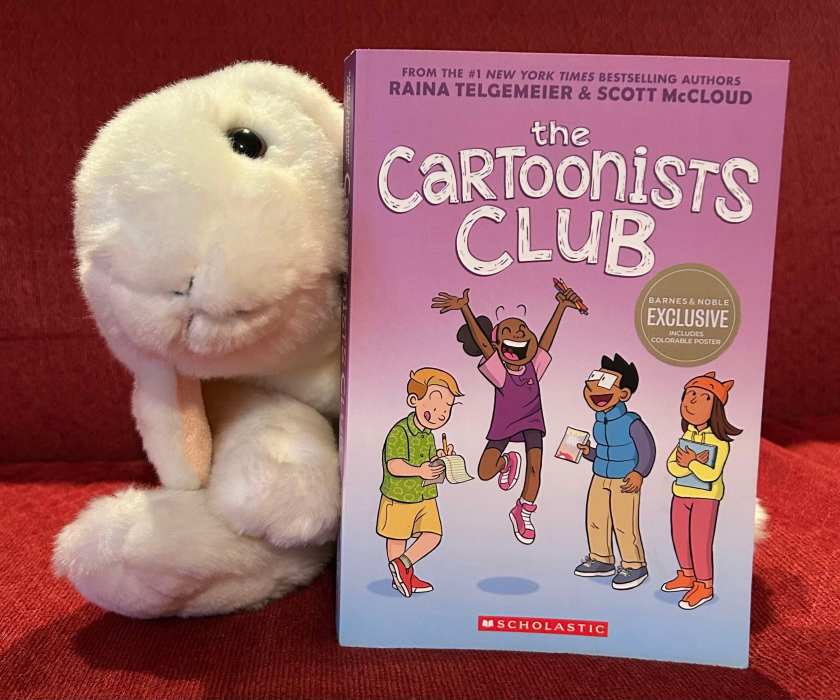
Today Marshmallow reviews The Cartoonists Club by Raina Telgemeier and Scott McCloud, first published in 2025.

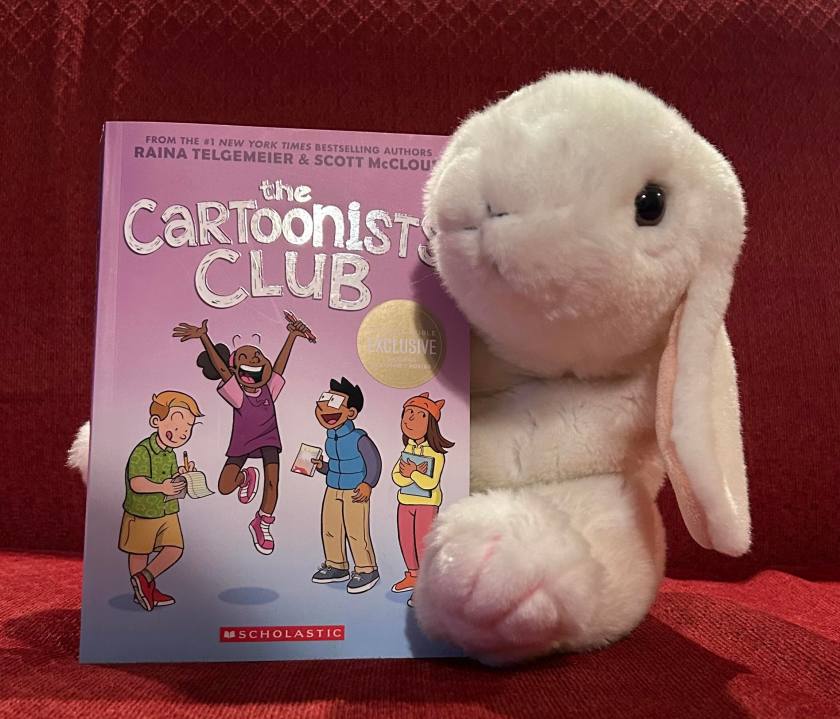
Marshmallow reviews The Cartoonists Club by Raina Telgemeier and Scott McCloud.

Marshmallow’s Quick Take: If you like cartoons, art, or graphic novels, then this is the book for you!

Marshmallow’s Summary (with Spoilers): Makayla’s mind is always overflowing with new ideas for stories but Howard is the one who keeps passing her doodles during math class. One day, after they finally get caught by their algebra teacher, they decide to make their own comic book. When they meet up at their middle school’s library after school, Makayla reveals her master plan: they are going to form a club for the other students in their school who want to be cartoonists too. With the help of the kind librarian, they print out their posters and wait for the next day to see if anyone shows up.

Luckily, someone does! Art is an agender artist who loves “making mistakes” and can’t wait to make them in another new forum. The three of them become friends quickly and can’t wait to start making comic books. Unfortunately, they are extremely puzzled and ask the librarian what the “right” way to proceed is. To their surprise, she informs them that there is no right way at all. Through this newfound freedom, they proceed to produce numerous silly but fun short comics.

They also are able to welcome in a new member: Lynda. She’d been in the library since day one, drawing quietly in a corner, but had been too nervous to show anyone her art. Since she focused so heavily on the mistakes she made, she was too scared to show any part of her art at all.

As the story progresses, each of the characters’ artistic struggles are revealed and remediated through a group effort. The Cartoonists Club is a heartwarming, inspiring story perfect for any and all young artists interested in drawing. It is the ideal guide for young bunnies looking to find and create communities much like the one in this book!

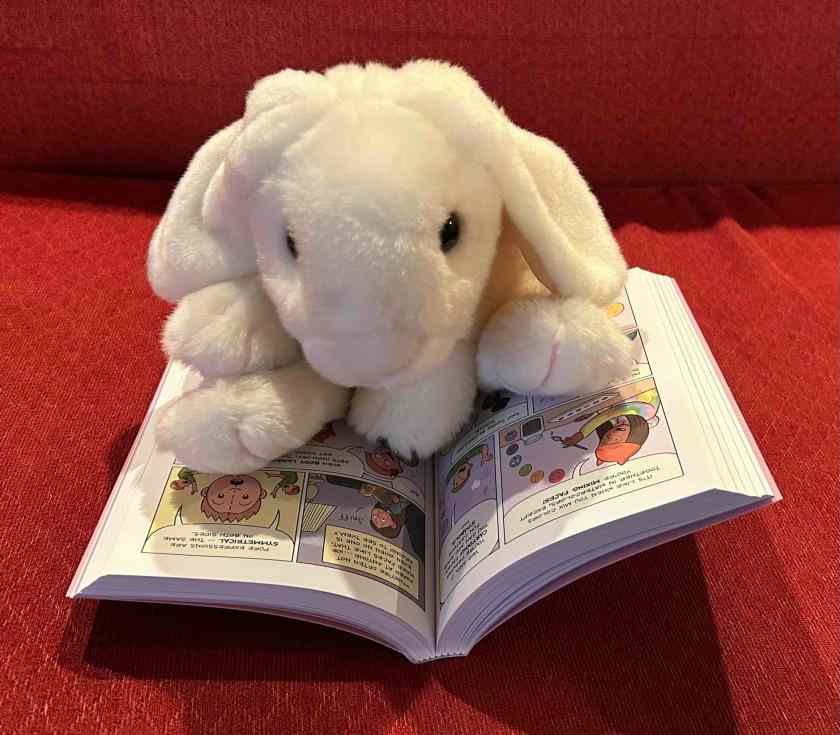
Marshmallow is reading The Cartoonists Club by Raina Telgemeier and Scott McCloud.

Marshmallow’s Review: I think The Cartoonists Club is a very cute book! The characters’ interest in comics and their making is a bit infectious in fact. I’ve always appreciated graphic novels and the like, but reading The Cartoonists Club has made me appreciate how much of an art they really are.

I really liked how different aspects of the art were highlighted in different chapters. In almost every section, the librarian or one of the club members teaches the club and the reader about how to perfect another aspect of cartoons. I especially liked the section that talked about the magic of the blank page. It was simple yet inspiring in a way that recalls the childlike awe too many of us lose as we grow older.

I think The Cartoonists Club is a perfect book for all young bunnies who love drawing or reading or learning! And while it might at first seem too childish for those older than twelve, I think there is still a lot of value in reading it. As a bunny who is no longer in middle school, reading The Cartoonists Club was still very inspiring and made me remember how important art is to me and to us as bunnies / humans. It is a relatively easy book to read and you can read it pretty quickly. But just because it is short and sweet doesn’t mean that its story isn’t significant; sometimes remembering that ‘childish’ sense of imagination is just what you need to recall that same passion and joyful outlook on life!

Marshmallow’s Rating: 100%.

Marshmallow rates The Cartoonists Club by Raina Telgemeier and Scott McCloud 100%.