Marshmallow reviews If Cats Disappeared from the World by Genki Kawamura

Today Marshmallow reviews If Cats Disappeared from the World by Genki Kawamura, originally published in Japanese in 2012; the English translation that Marshmallow read, by Eric Selland, is dated 2019.
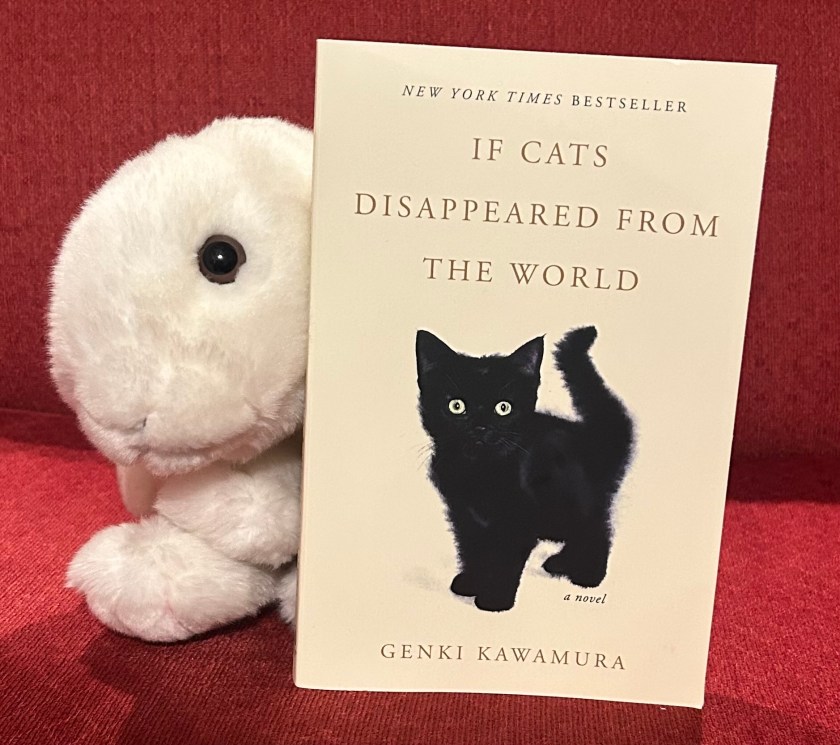
Marshmallow reviews If Cats Disappeared from the World by Genki Kawamura.

Marshmallow’s Quick Take: If you like books that make you truly think about life or if you just like cats, then this is the book for you!

Marshmallow’s Summary (with Spoilers): The narrator is never named in this book, but we know that he lives in a small town in rural Japan and that he works as a mailman. He tells you in the first page everything you need to know about him to understand how the story starts. After being diagnosed with a Stage 4 brain tumor, he is informed by his doctor that he has – at most – six months to live. He imagines responding in outrageous ways (running out of the office, screaming his head off, etc), but ends up thinking immediately about very superficial things: he was only one stamp away from getting a free massage at the local spa, he stocked up on too much toilet paper, he shouldn’t have bought so much laundry detergent last time. He leaves in somewhat of a stupor, his emotions rather suspended for a man who just received a death sentence. While he waits at the train station, he hears a small band singing a song about living in the moment and silently scoffs at their cliched idiocy. When the train takes too long, he decides to walk home instead and makes it to his door. Unfortunately, the reality of his situation sets in right as he stands in the doorway of his small, modest house and he collapses from overwhelm. 

When he wakes up, he is met by his doppelganger who somehow appeared in his home. It / He introduces itself / himself as the “angel of death” or, his more widely known name, the Devil. The narrator is not impressed by his apparel. After all, he expected the Devil himself to be more intimidating; rather, he is the narrator’s twin in physical appearance but with a horrific fashion sense. Dressed in bright Hawaiian t-shirts that the narrator strongly disapproves of, the Devil gives the dying man an offer. If the narrator agrees, the Devil will make one thing disappear from the world forever each day the man’s life is extended. It’s a rather simple deal. But, obviously, there is a catch–otherwise there would be no plot. The Devil gets to choose the object that will vanish and the object (and every object like it in existence in the world) will be erased and no one will ever remember it existed at all. Only the narrator will know.

Initially, the narrator is hesitant to agree, but the Devil reveals to him that he is set to die tomorrow. He is thus forced to decide today. With the inevitability of death staring him in the face (physically and temporally), only inches away, the man agrees.

The Devil’s first choice is the phone. He allows the narrator one last phone call before they disappear and so he calls a mystery someone to meet with them tomorrow one last time. The man wakes up the next day, alive and breathing, to a world without cellphones. At first, this is not a horrible horrible change. Everyone is reading or talking on the train when they used to just stare at screens the whole ride. His meeting with a mystery someone goes somewhat well, but but his past mistakes are slowly revealed. He’s lived a simple life but relationships are rather complex regardless. His family gently broke apart until – after his mother’s death – he stopped speaking to his father entirely. He and his girlfriend similarly separated after another tragedy, exposing a pattern of poor communication.

With each day, he gains new understanding of what his life was like and what it could have been. Of course, with each added day, he also loses something. The world loses telephones completely, movies, clocks… Each day, the narrator has to grapple with the fact that he is sacrificing something that belongs to everyone to save himself. He is forced to weigh his worth and the worth of a single life and how it compares with objects no one notices until they’re gone. 
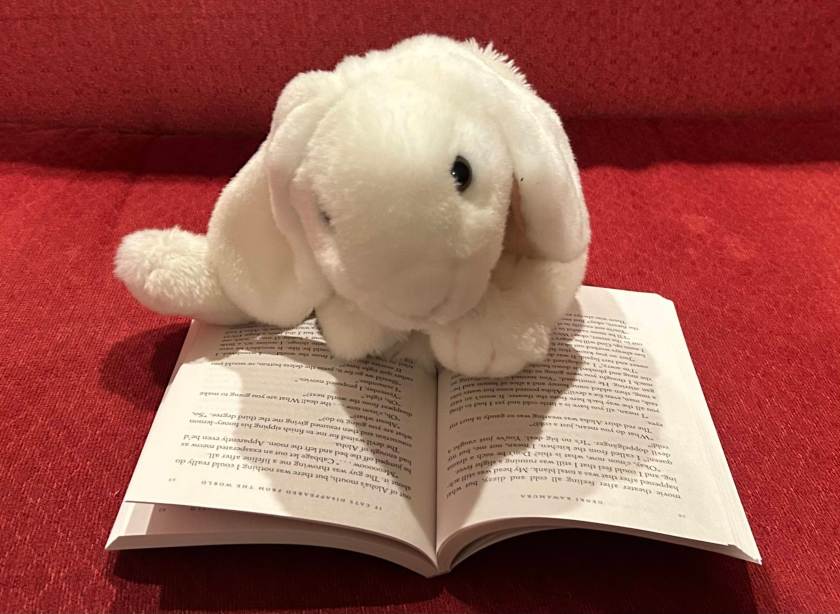
Marshmallow is reading If Cats Disappeared from the World by Genki Kawamura.

Marshmallow’s Review: If Cats Disappeared from the World is such a good book that is so truly simple. I will admit, the premise might feel a little cliche at the start. There have been a lot of books, movies, and thought experiments throughout human history centered on a character who is given an unavoidable death sentence. The journey of facing and having to accept one’s mortality is a naturally fascinating thing to mortal beings. But, while this book has a rather simple premise, it still makes you think in ways you might not expect. The plot is based on a much calmer and more common scenario than most books about mortality (e.g. often the characters live in mythical lands and face death on a day-to-day basis on their swashbuckling adventures). Here, the character is a more ordinary person than most, living in a quiet town in rural Japan where everything he has done is pretty much normal. But I think the frank simplicity and the seeming normal-ness of the setting serve to make this an even more potent experience.

I think reading If Cats Disappeared from the World is somewhat like meditating. It takes the most simple things and makes you re-examine them through the eyes of a dying man, enlightening you with a greater appreciation of the quieter, lesser seen parts of life. The writing is very clear throughout the entire book and only what is necessary is included. I read the translated version of this book (the original is in Japanese) so I cannot really speak to what it would have been like in the original language. However, the book’s simple nature of overwhelming the reader through highlighting the underwhelming was very impressive.

Each chapter represents another day and is labeled with the day of the week and a related title. It helps keep things in order and makes the plot make sense. This is a very not complicated book to read so I think anyone can easily read and understand it. I think it might be worth reading it slower though so each day sinks in a little more and you have time to interpret everything and think about how it relates or applies to your own life. It can also just be read in a day as it is less than 170 pages. But I think, just like the simple things mentioned in this book, this simple book matters more than one might think and it can and should completely change your perspective on life.

I think this book has truly made me value my relationships and the simple beauties in life on a level I did not before. I think reading books that make you think deeper and feel more grateful truly increases the quality of your life. Because, while you never know how long it will be, you can determine how rich your life is by how much you appreciate it and every moment, every breath, and every memory. 

Marshmallow’s Rating: 1,000%.
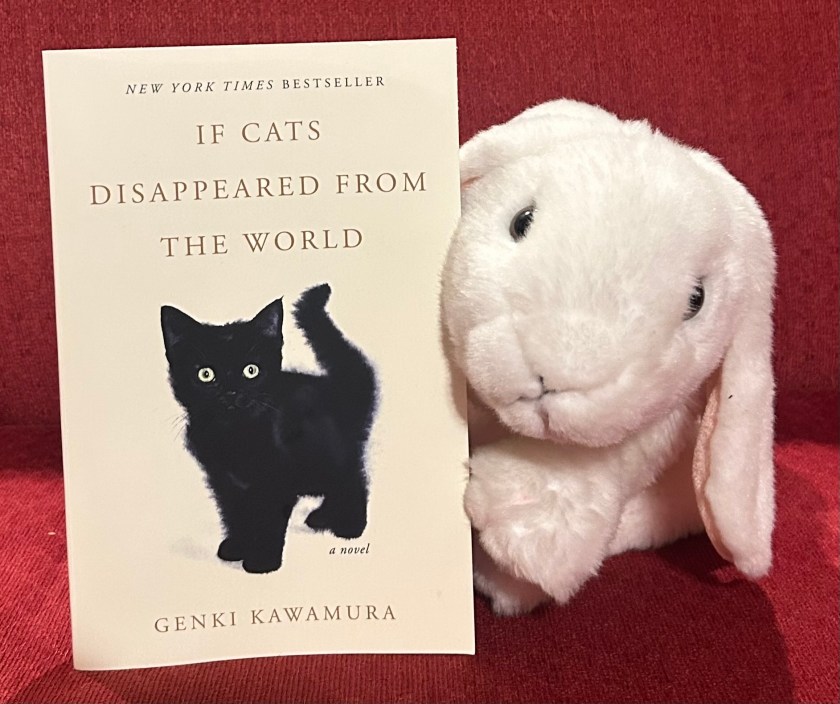
Marshmallow rates If Cats Disappeared from the World by Genki Kawamura 1,000%.

Marshmallow reviews The Color of Water by James McBride

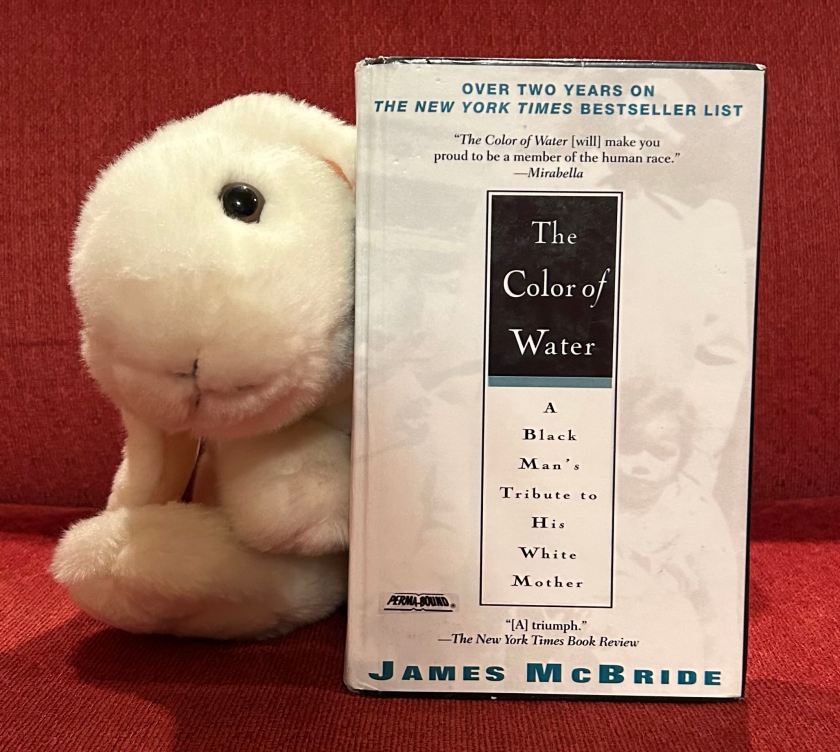
Today Marshmallow is writing about The Color of Water: A Black Man’s Tribute to His White Mother, written by James McBride and first published in 1995.

Marshmallow reviews The Color of Water: A Black Man's Tribute to His White Mother by James McBride.
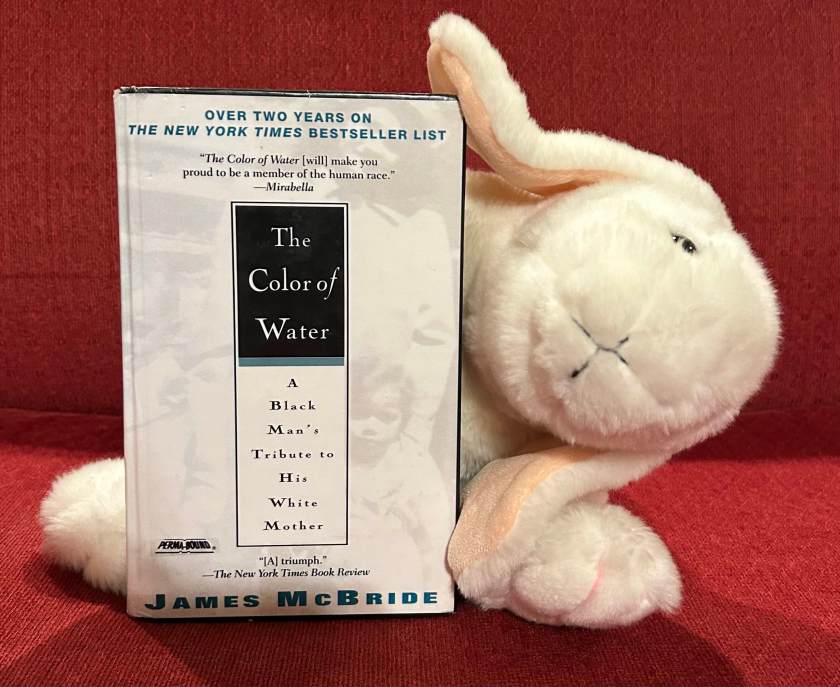
Marshmallow reviews The Color of Water: A Black Man’s Tribute to His White Mother by James McBride.

Marshmallow’s Quick Take: If you like biographies that reveal nuanced stories about race, family, identity, and love, then this is the book for you!

Marshmallow’s Summary (with Spoilers): James McBride is a Black man with a White mother. Today, this would likely not be considered much of a big deal. After all, mixed race marriages are something relatively commonplace in the United States today and are the simple result of the fact that love generally does not see color. However, back in the 1960s, such relationships were demonized and the pair separated by all means possible; Loving v. Virginia, the landmark decision of the U.S. Supreme Court on interracial marriage was only passed in 1967.

For James’ mother Ruth, this was yet another struggle in a long, seemingly endless line of strife. She was born in America to two Polish Jews and, due to the fact that her father was a “lousy rabbi,” her family had to keep moving to find new places of work for him. Eventually, they settled down in Suffolk, Virginia. There, Ruth felt discrimination firsthand constantly, with classmates calling her “Jew baby” or worse. But she also witnessed the overt racism directed towards Black people around her. Her first boyfriend, Peter, was a Black man and the young couple kept their relationship a secret out of fear of the KKK. Ruth also faced consistent abuse at home from a father that emotionally, physically, and sexually tormented her; yet, despite all of this, she persevered quietly and eventually built a family. She then kept rebuilding every time she was torn down.

In The Color of Water, the author James McBride tells the story of Ruth’s life intertwined with segments of his own autobiography in between. McBride describes his chaotic environment growing up as the eighth child out of twelve total. While he knew he was loved, there was unending pressure from Ruth to be academically successful, and within such a large family, there was not enough attention to go around. As James grew older, he started recognizing that his mother’s race was different from his own and that race was a construct that society unfortunately valued in countless ways. In seeking to uncover the details of his mother’s life, James simultaneously searches for his own identity and the role that race has in America. This likely won’t come as a surprise to anyone, but the answer is nuanced and riddled with mystery—much like Ruth herself.

Marshmallow is reading The Color of Water: A Black Man's Tribute to His White Mother by James McBride.
Marshmallow is reading The Color of Water: A Black Man’s Tribute to His White Mother by James McBride.

Marshmallow’s Review: I found The Color of Water: A Black Man’s Tribute to His White Mother to be a very interesting book. As a mixed race bunny growing up in a quite mixed neighborhood and school district, I have never really felt any need to ‘discover myself’ because I already knew what I was. However, James’ identity quest is understandable, especially because race was even more central to society in those times. Today, of course, race is still an issue, but seeing the way our nation was back then gives you a better sense of the role of race over time.

The Color of Water: A Black Man’s Tribute to His White Mother examines race on a national scale by specifically analyzing its role within a family setting. James’ story is rather unique, but the themes throughout the book (abuse, race, search for security, selflessness, grief, etc) are representative of the general human experience in certain ways. I think the fact that his life is sort of a more extreme version of general experiences helps highlight how remarkable the people in his life—and most people in general—are.

The book is relatively easy to read and I think the author wrote it for a broad audience. There are mentions of sexual abuse, drug use, and violence, so some parts might make this better for older readers (maybe twelve and older?) But overall, The Color of Water is a very important book that reveals simple truths about love, humanity, and America—such as the obvious fact that race should never dictate anything, especially love. 

Marshmallow’s Rating: 100%

Marshmallow rates The Color of Water: A Black Man's Tribute to His White Mother by James McBride 100%.
Marshmallow rates The Color of Water: A Black Man’s Tribute to His White Mother by James McBride 100%.

Marshmallow reviews The Sun and the Star by Rick Riordan and Mark Oshiro

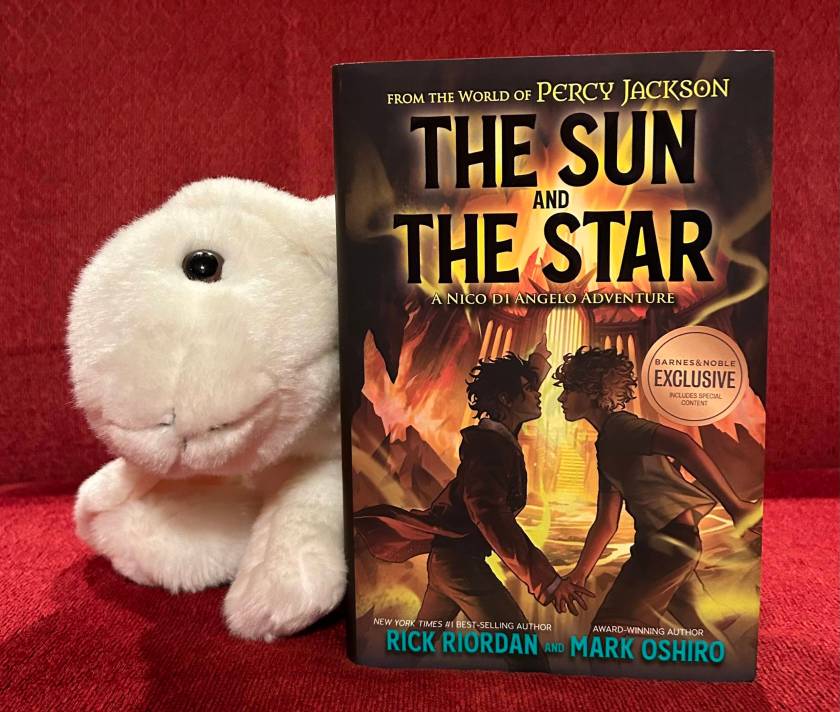
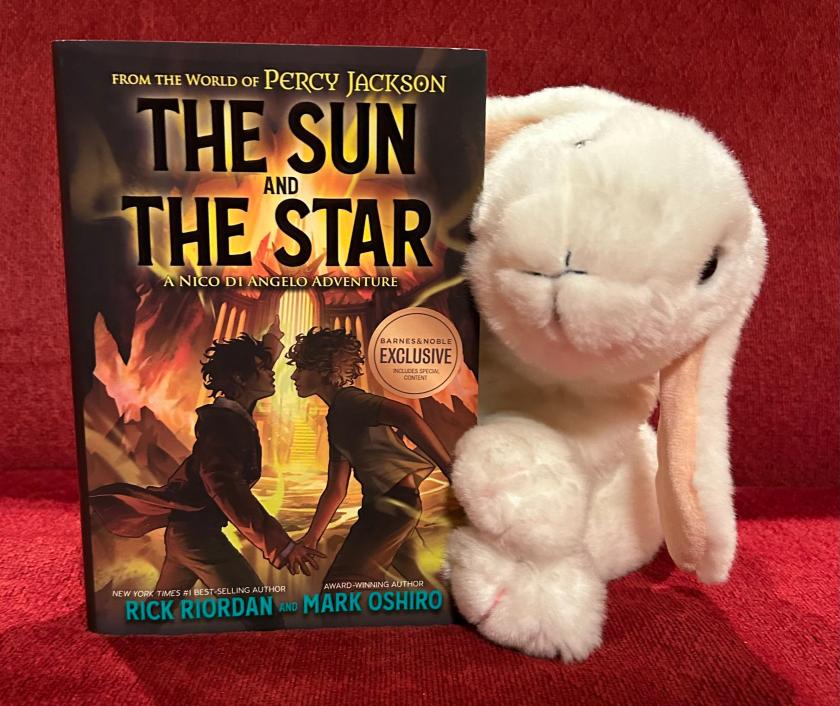
As a big Rick Riordan fan, Marshmallow could not pass on the opportunity to read a new book about the world of Greek and Roman demigods he created. Today she shares with us her thoughts on The Sun and the Star: A Nico Di Angelo Adventure, co-written by Rick Riordan and Mark Oshiro, which came out this month. Sprinkles is asking questions and taking notes.

Marshmallow reviews The Sun and the Star: A Nico Di Angelo Adventure, co-written by Rick Riordan and Mark Oshiro.

Sprinkles: So Marshmallow, as far as I understand, this is supposed to be the story of the quest hinted at at the end of The Tower of Nero, which was the fifth and last book of the Trials of Apollo series and which you reviewed almost a year ago. Did you need to reread the series or at least that last book before you dove into this one?

Marshmallow: Well, it might have been a good idea I guess, but honestly, I did not reread anything. I just dove right in.

S: But at least you already knew who Nico di Angelo and Will Solace were, right? So should readers know them before they read this book?

M: I think it would be good to have read some of the earlier Rick Riordan books, so that you would know some of the characters, and the general thrust of the world they are living in, but the plot of this book is solid enough and can stand on its own, so I think one could actually enjoy this one on its own. Of course you would get much more out of it if you had read all of the other books before.

S: Okay, so let us talk about that plot. What is happening? And tell us in a sentence or so who Nico and Will are.

M: So these books are always about adventures of certain demigods. That means that the heroes are always children of one of the Greek or Roman gods or goddesses. So Nico is a son of Hades, and Will is a son of Apollo. And they fell in love some time in the third or fourth book of the Trials of Apollo series, and they are already a couple in this book.

S: Okay, now we know the main characters. And what is the quest they are on?

M: They are going to save Bob from Tartarus. Bob is a Titan but he eventually became friends with Percy Jackson and helped him and his friends but now is taken prisoner and so needs saving.

S: That sounds dangerous.

M: It is. There are many monsters and evil spirits that they have to fight along the way. And the place itself, Tartarus, is trying to kill them. Or rather driving them insane, by making them lose all hope and such. And Nico, being a son of Hades, already feels pretty dark and unpleasant feelings. Will calls him his “little grumpy ball of darkness”, or something. And Will is of course so opposite, always bright and cheery. Not to mention he can glow! But in this book he needs to also figure out the darkness in himself.

S: Ooh, that sounds intriguing.

M: Yes, Sprinkles, I think you should probably read the book some time.

S: I just might.

Marshmallow is reading The Sun and the Star: A Nico Di Angelo Adventure, co-written by Rick Riordan and Mark Oshiro.

S: So overall what did you think? Two authors writing a book together is not that common. I know Caramel reviewed The Menagerie series by Tui Sutherland and Kari Sutherland, but other than that, I don’t think we reviewed any fiction authored by more than one person.

M: I did review one book like that: To Night Owl From Dogfish by Holly Goldberg Sloan and Meg Wolitzer. But you are right, I have not read too many other books like this one. And this book, especially the first half of it, did not sound like Rick Riordan’s other books. So it was clear it was not only him.

S: I understand that Riordan wanted to share this task with Mark Oshiro because the book centers two gay characters and he did not want to assume their perspective as a straight man himself. I think that is a good thing, but of course he also wrote several books where he told the story from the points of view of female characters.

M: I guess a lot of men write from female perspectives. And lots of women write from male perspectives. I’m thinking of the Harry Potter series for example.

S: I guess it is good that he was being thoughtful. It makes sense that he felt out of his element when thinking about a relationship of two young men and wanted to be careful.

M: Anyways in the end, the book turned out pretty good.

S: So you clearly enjoyed it. You did finish it rather quickly, and after all, it is more than 450 pages.

M: Yep. It was scary at times, and a bit mushier than some of the other books, but it was a lot of fun.

S: So how would you rate it?

M: I’d rate it 100%.

S: Sounds great! I will then have to borrow it from you for a while.

M: Sure.

S: And in the meantime, what would you like to tell our readers?

M: Stay tuned for more amazing reviews from the book bunnies!

Marshmallow rates The Sun and the Star: A Nico Di Angelo Adventure, co-written by Rick Riordan and Mark Oshiro 100%.