Today Marshmallow is reviewing Wabi-Sabi for Artists, Designers, Poets & Philosophers by Leonard Koren. Originally published in 1994, this book is widely viewed as the first publication that introduced Western audiences to the Japanese wabi-sabi aesthetic. Marshmallow read the revised 2008 edition.
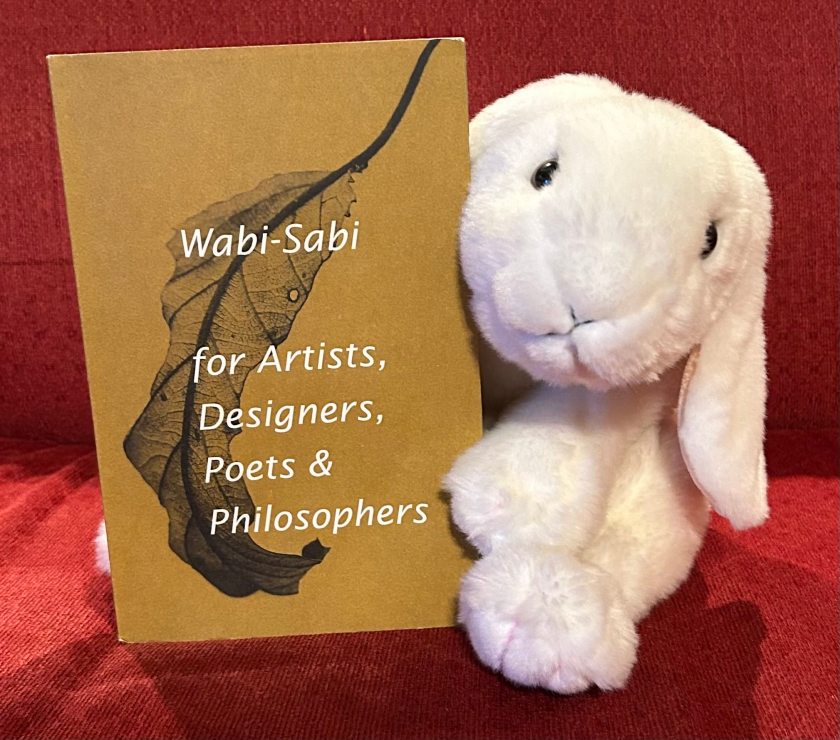
Marshmallow’s Quick Take: If you like books about Japanese culture, Zen philosophy, or art in general, then this is the book for you!
Marshmallow’s Summary (without Spoilers): This book serves as Koren’s definition for the wabi-sabi aesthetic, something he believes should never be defined. For context, he even says this explicitly at the start of the book. He states that the aesthetic has an intentional “History of Obfuscation” because of its Zen Buddhism roots, the iemoto system of Japanese trade, and aesthetic obscurantism (which is the practice of obscuring the full details of something to hide its nature). These big words make sense to the reader eventually though as he provides a paragraph of explanation for each cause. Overall, these three factors have long left wabi-sabi as a nebulous feeling, a set of aesthetic ideals that Japanese people have struggled to put to words or have purposefully not done so. Koren argues that this is for the best or it was in the past. However, wabi-sabi is an endangered way that he believes now requires a more rigid definition. After all, if people – artists, designers, poets, philosophers, and even ordinary people in general – cannot identify what makes something wabi-sabi, it is surely doomed to be lost.
Koren traces the history of the aesthetic back to the sacred ceremonies of the famed and wise tea master Rikyu. He allegedly began using homely, imperfect pieces in his tea-making process, something that was an oddity at the time. In the pre-Rikyu period, the ceremonies were filled with elaborate, ornate pieces of the Chinese aesthetic. In contrast, Rikyu created a uniquely Japanese style that focused on “the rustic, the simple, the artless, the unsophisticated.” Eventually, though, these pieces became viewed as even more valuable. But, as Koren explains, they then lost their wabi-sabi qualities.
This exemplifies what the wabi-sabi aesthetic really values. It is the “most conspicuous and characteristic feature of what we think of as traditional Japanese beauty” despite being very focused on “the idea of not being conspicuous at all.”
Tracing the origins and meanings of the words ‘wabi’ and ‘sabi,’ Koren defines wabi-sabi to be the aesthetic that focuses on three fundamental truths: nothing lasts, nothing is complete, and nothing is perfect. In some way, this also means that everything is in a state between the creation and destruction of something or, in another way of reasoning, everything is in the process of becoming something or becoming nothing. Nothing in itself is viewed as an opportunity for something and something is an opportunity for nothing.
It is all very complicated sounding, but Koren does a good job of spelling it out for all readers. With some quiet time and contemplation, this book offers us a way to prevent “the extinction of a beauty” that Koren’s work seeks to preserve.
Marshmallow’s Review: I found Wabi-Sabi for Artists, Designers, Poets & Philosophers to be a fascinating analysis of this Japanese aesthetic. Wabi-sabi became somewhat of a trend online a little while ago and this book is a really good way to embrace and deepen one’s understanding of what wabi-sabi actually means. The internet trend associated with it is adorable and really meaningful! This book is a perfect way to explore the cultural significance it holds in Japan though. Koren analyzes the historical origins, how it developed over time, and how it is still somewhat present today.
I think reading Wabi-Sabi for Artists, Designers, Poets & Philosophers not only gave me an understanding of the aesthetic itself. It also showed me more about what the ideals and beliefs behind much of Japanese and Zen culture are. This is a really good experience to have for all bunnies because it really gives you good time to think about the thoughts of the tea masters from millennia ago and provides a moment of peace where you can think about quieter, natural philosophies that are so distant and distinct from much of the media we consume today. Finding that moment of calm in this book was a really valuable time and I would highly recommend reading this book – if not to learn about the aesthetic – to take some time to think about philosophy, life, and nature deeper.
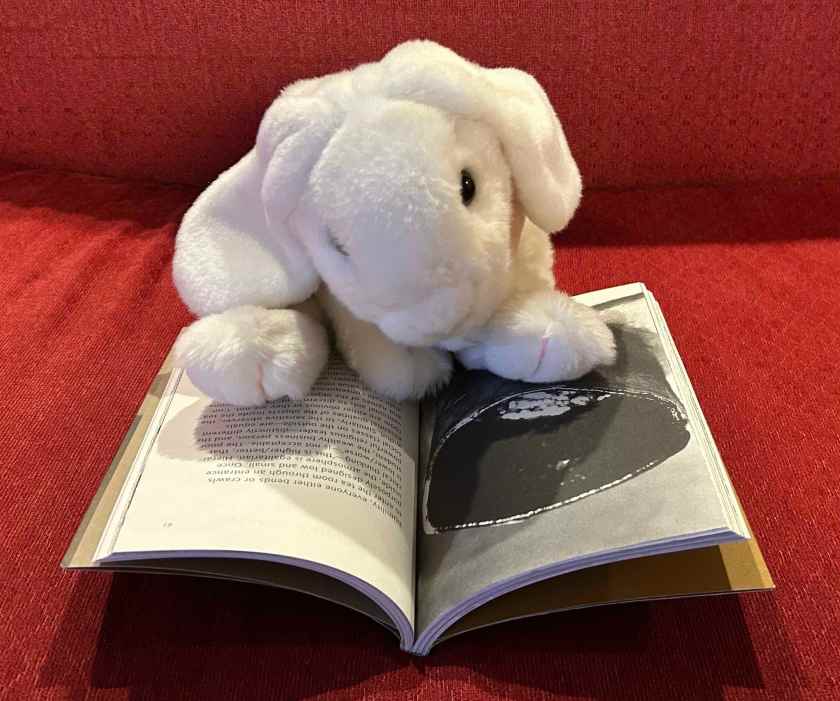
Images are placed throughout the pages in black and white stills that hint at what wabi-sabi looks like. They are rather ordinary yet strange looking things but they give you a sense of the aesthetics meaning. I found that the book’s brevity and its accompanying images do a really good job of leaving you with a feeling of calm and a greater appreciation for the wabi-sabi things in life. While I’m not going to change my entire aesthetic, I think it is worth thinking about imperfections and the sometimes boringly simple as beautiful. In such a complicated world, books like this one give us time to return to another world when tea ceremonies and wabi-sabi were new, reopening our imaginations to see a whole new perspective.
Marshmallow’s Rating: 100%.


RG’s & KG’s comments:
We are glad that Marshmallow found this book inspirational.
If Marshmallow still remembers her trip to Japan, she saw many instances of wabi-sabi. The Zen gardens, the old –weathered temples and shrines, the old Japanese lanterns covered in moss and the Sakura, the beautiful –if impermanent cherry blossoms.
Nothing becomes something, like Rikyu was not popular at the beginning, but now he is something.
LikeLiked by 1 person