Marshmallow reviews Learning How to Learn: How to Succeed in School Without Spending All Your Time Studying (A Guide for Kids and Teens) by Barbara Oakley, Terrence Sejnowski, and Alistair McConville

Marshmallow occasionally reads and reviews books about how to be a good student and today she is writing about one such book: Learning How to Learn: How to Succeed in School Without Spending All Your Time Studying (A Guide for Kids and Teens), a neat book by Barbara Oakley, Terrence Sejnowski, and Alistair McConville, published originally in 2018.
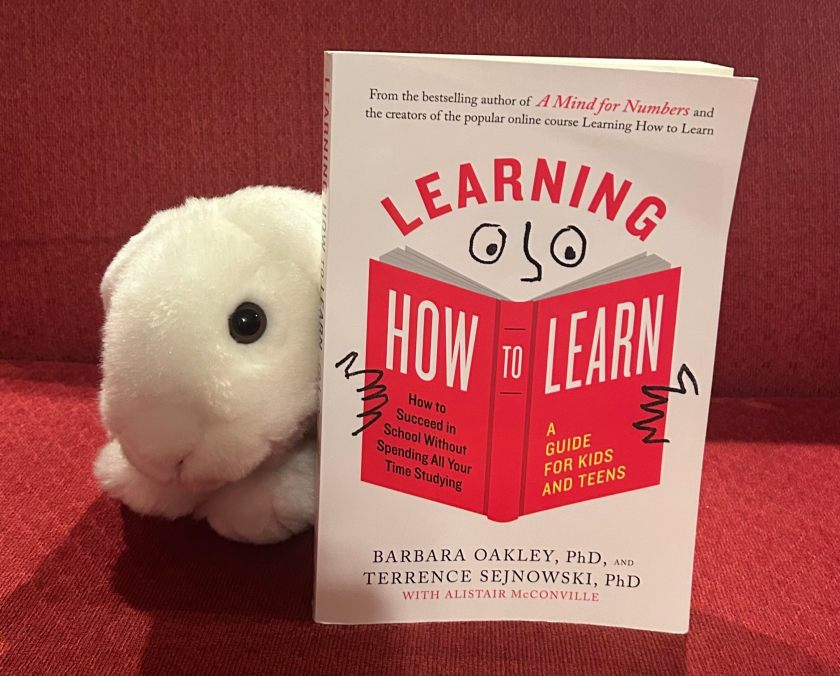
Marshmallow reviews Learning How to Learn: How to Succeed in School Without Spending All Your Time Studying (A Guide for Kids and Teens) by Barbara Oakley, Terrence Sejnowski, and Alistair McConville.

Marshmallow’s Quick Take: If you are a student, a teacher, or anyone who has felt lost in school, then this is the book for you!

Marshmallow’s Summary (with Spoilers): The book starts off with a note to parents and teachers who are reading the book to help a young student. The book officially starts with one of the authors, Oakley, introducing herself to the reader. She writes that she used to be a student who focused only on her liberal arts subjects, feeling that science and math (the subjects she struggled in) were not relevant to her because she was following her passions. However, I was a bit surprised to read the next sentence in which she reveals that she is now a professor of engineering—which requires a deep understanding of science and math as she admits. The enabling factor of this switch was her ability to learn how to learn. She next introduces her co-authors Sejnowski and McConville and then describes how her life changed and how she changed to adapt.

Most chapters in the book have case examples of somebody who, like Oakley, demonstrates the importance of knowing how to learn. Some of the chapter names are as follows: “The Problem with Passion,” “Easy Does It: Why Trying Too Hard Can Sometimes Be Part of the Problem,” “I’ll Do It Later, Honest! Using a Tomato to Beat Procrastination,” “Brain-Links and Fun with Space Aliens,” “Learning While You Sleep: How to Wake Up Smarter,” and “Learning Surprises: Pssst…Your Worst Traits Can Be Your Best Traits!”

One can probably tell that the book is full of interesting yet slightly silly-sounding topics. The authors talk about and teach a lot about fascinating neuroscience, but they explain everything with metaphors and cartoon drawings. There are a lot of pictures and the text of the book is large, so it is overall very comprehensible.

I liked how the authors synthesize the most relevant parts into tips at the end of the chapter. In order to teach the reader how to get better at learning, each chapter also has a list of questions to answer that help you do some active recall. I felt like these end-of-chapter activities make the book feel very interactive and energetic!

Overall, the authors provide a lot of intriguing information and shrewd advice. Some of the strategies were ones I had heard of before or have discovered on my own as a student, but a lot of them were also new to me. Each chapter focuses on a general theme or topic, expanding on the subject at hand throughout. This book is a great source for all students, teachers, and bunnies looking to get better at learning or just understand how the brain works better!
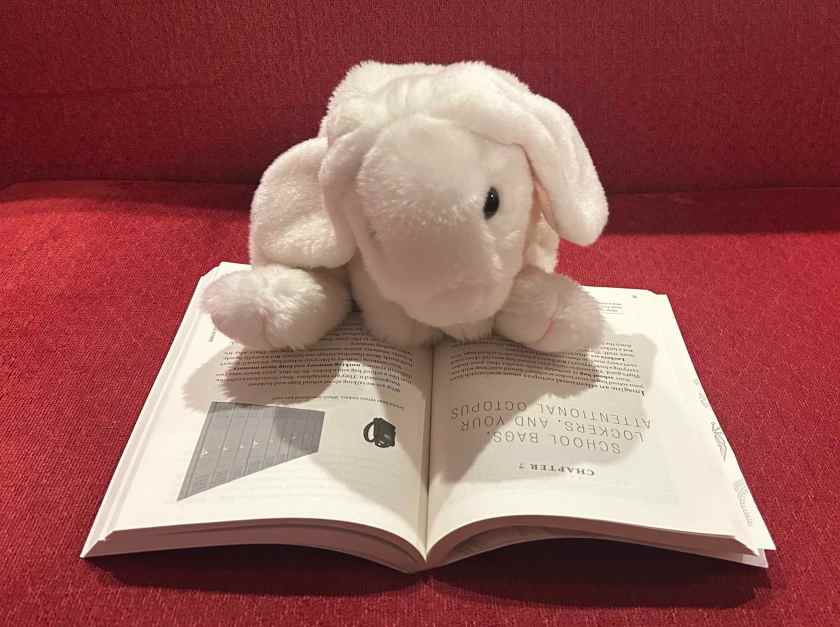
Marshmallow is reading Learning How to Learn: How to Succeed in School Without Spending All Your Time Studying (A Guide for Kids and Teens) by Barbara Oakley, Terrence Sejnowski, and Alistair McConville.

Marshmallow’s Review: I would highly recommend Learning How to Learn to everyone, especially students. I think (and I have heard some of my friends at school talk about this) that a lot of students feel as though they have never actually been taught how to learn. This is partially true, as most students are never told how to study or do their homework. When students are working on their own time, away from school and the direction of teachers, they are not always very good at knowing where to go or what to do. This book provides a lot of good instructions and helps steer the reader on a clearer, better path.

I regret not having read this book earlier. I will try to establish some of the habits suggested by this book and I hope that I will be better at learning and learning how to learn. I have already, on my own volition, focused a lot on how to learn and be a good student. For people also interested in this topic, I would also recommend looking at Cal Newport’s How to Be a High School Superstar and How to Become a Straight-A Student. This book is a lot more kid-friendly though, and a lot easier to read and understand. I really liked how interactive Learning How to Learn is and how it has a lot of images to break down the more complex ideas. I think the authors have done a very good thing by writing this book.

I would highly recommend that parents read Learning How to Learn with their children—the younger and earlier, the better. Too many bunnies fall behind in school because they feel like they simply aren’t smart enough to learn the material. This book shows that you don’t need to be smart, at least not in the way you think; you just need to try your best in a smarter way. 

Marshmallow’s Rating: 100%.
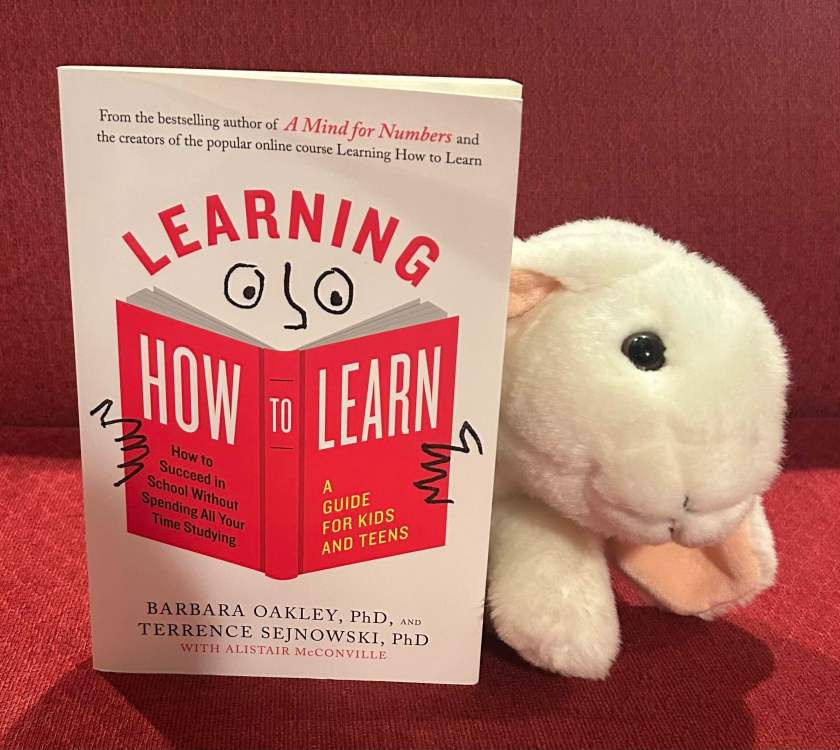
Marshmallow rates Learning How to Learn: How to Succeed in School Without Spending All Your Time Studying (A Guide for Kids and Teens) by Barbara Oakley, Terrence Sejnowski, and Alistair McConville 100%.

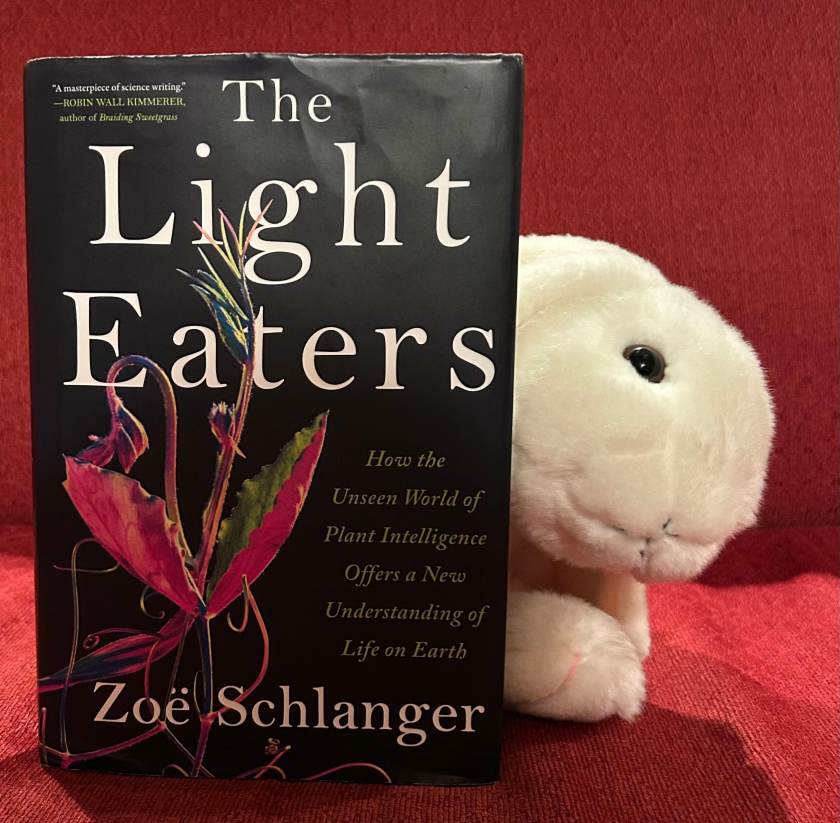
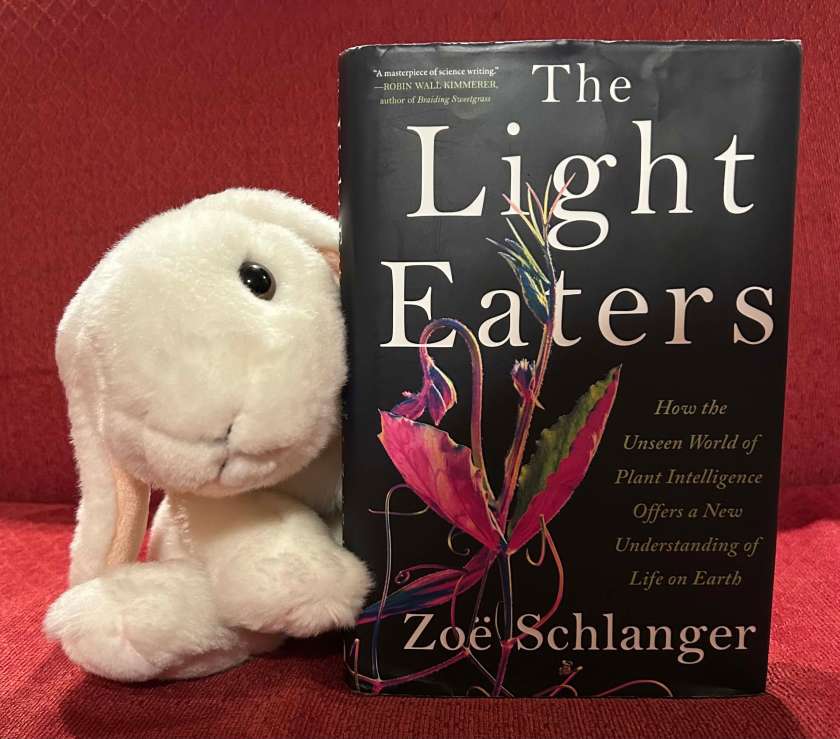
Marshmallow reviews The Light Eaters by Zoë Schlanger

Today Marshmallow reviews The Light Eaters: How the Unseen World of Plant Intelligence Offers a New Understanding of Life on Earth, a 2024 book by Zoë Schlanger.

Marshmallow reviews The Light Eaters by Zoë Schlanger.

Marshmallow’s Quick Take: If you like reading, then this is the book for you!

Marshmallow’s Summary: Generally, I tend to read fiction. As a result, most of the books I review here are fiction. However, this book was uniquely written and exists somewhere between the two. While it is completely centered on science and factual reality, some of the things I learned from it were so wonderful that I wonder whether we need fiction at all when nature has already provided us with such beautiful truths. (Sprinkles told me that this made her think of something the famous physicist Richard Feynman said: “I think nature’s imagination is so much greater than man’s, she’s never going to let us relax.”)

The book starts off with a modest introduction of the central question—are plants conscious? As such, the title of the first chapter is “The Question of Plant Consciousness.” The other chapters are as follows: “How Science Changes Its Mind,” “The Communicating Plant,” “Alive to Feeling,” “An Ear to the Ground,” “The (Plant) Body Keeps the Score,” “Conversations with Animals,” “The Scientist and the Chameleon Vine,” “The Social Life of Plants,” “Inheritance,” and “Plant Futures.” In each one, Schlanger focuses on a different aspect of plant life and delves into how it relates to the central question.

I’ve already been one to tend towards animism, and I did not have a difficult time considering the idea of plant consciousness; on the contrary, I found it enthralling. I loved how each example was so fantastic yet grounded in solid fact. One particularly striking example case Schlanger described was the emerald green sea slug. Ever since I read about it in this book, I have brought up this sea slug at every single opportunity I get (you’d be surprised by how many ways you can relate daily conversation to sea slugs and I’ve done them all). The slug is born brown and red, but immediately seeks out bright green micro-alga (basically, big and visible algae). It drinks up the chloroplasts, which are smooth and round circles, filling its body and turning it green. This process—with the slug’s transparent, tubelike tongue—looks just like drinking boba; this comparison delights me to this day! Then the sea slug somehow, wondrously begins to photosynthesize. While the sea slug is not a plant, Schlanger uses this creature to illustrate how the borders between animal and plant are not quite as defined as we might have once thought. This story was one of many fascinating facts I learned from this book. (It feels insufficient to say “facts” because they are more like revelations to me.)

Towards the end, Schlanger debates the nuances of what societal acceptance of plant consciousness would look like. She examines the wordings that botanists have used and would like to use. Perhaps new words and definitions will have to be made to help the public better understand that plant intelligence and / or consciousness is completely unlike those of humans or bunnies. The book ends in a rather abstract yet equally profound manner, leaving the reader wishing Schlanger had continued her marvelous writing.

Marshmallow is reading The Light Eaters by Zoë Schlanger.

Marshmallow’s Review: I think this might just be my favorite book. I did not finish it for the longest time because I didn’t want it to end. Each chapter revealed another beautiful part of nature and I felt constant awe, like one does when watching well-made documentaries.

I found Schlanger’s prose very different from what I’ve read from other writers. She writes the way that I feel she probably speaks. I don’t think she always used semicolons or other punctuation the way the standards of the English language demand; she used them more as tools to convey what she wanted. I know that this usage might bother some readers, and I was a bit taken aback initially. However, it did not counteract or undermine her words and her meaning.

I loved learning about what the world of plant and plant studies is like. Some recent events have made me start thinking about entering STEM a lot more. This book made me realize that science and the natural world has so much to explore and learn about. Regardless, I think everyone should read this book—even bunnies who don’t particularly like science. I think it raises and explores some very interesting and important questions about plants, their place on this planet, and ours. As concern for the climate becomes more and more critical, books that enlighten the public about the complexities of ecology are increasingly vital for social discussion. So, like I said at the beginning of this review, if you like reading or if you can read, then I would recommend reading this book with all of my heart.

Marshmallow’s Rating: 121%.

Marshmallow rates The Light Eaters by Zoë Schlanger 121%.

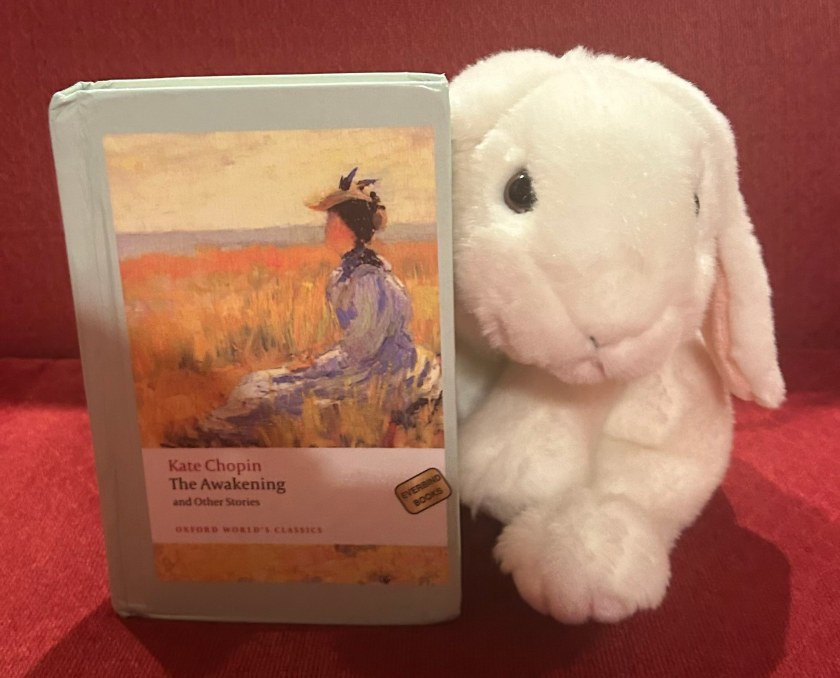
Marshmallow reviews The Awakening by Kate Chopin

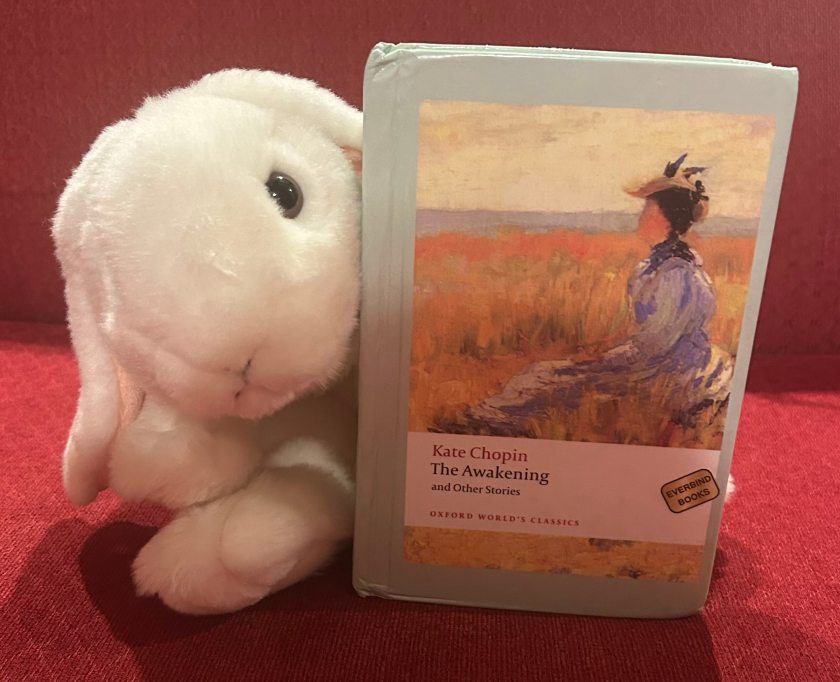
Today Marshmallow reviews a classic novel originally published in 1899: Kate Chopin’s The Awakening.

Marshmallow reviews The Awakening by Kate Chopin.

Marshmallow’s Quick Take: If you like reading books that make you think and take you back in time, then this is the book for you!

Marshmallow’s Summary (with Spoilers): Edna Pontellier lives in New Orleans, Louisiana during the late nineteenth century. As she is originally from Kentucky, Edna has felt a little out of place ever since she married Mr. Pontellier (who was born into the Creole culture), moving to Louisiana to live with him. Edna spends her days as a “mother-woman” now, attending to the needs of her husband and two sons and running the domestic details of the Pontellier household; however, this is not enough to satisfy Edna.

The Pontelliers are fortunately very wealthy and the book introduces us to them during their trip to Grand Isle (near the Gulf of Mexico) during the summer. At Grand Isle, Edna realizes that she is truly unhappy when Mr. Pontellier berates her for neglecting their children (despite the fact that he was out the whole night at the pub). She breaks down in tears, but finds comfort in spending time with her friend Robert—who is the son of the woman who runs the resort the Pontelliers stay at. While Mr. Pontellier is regarded as the best husband Edna and her friends know, he is not particularly attentive. Still, he sends back sumptuous gifts while he is away, and he has never abused or assaulted Edna.

To me, it seems that Mr. Pontellier is the best husband one could hope for from the men of that time period; he is a very by-the-book gentleman, treating his wife in the most caring manner he knows how (though it is mostly materialistic and he does not offer much in the way of emotional support or attention). I do not blame Edna for feeling discontent though.

During their time at Grand Isle, Robert and Edna become closer and closer—to the point that Adéle Ratignolle (a very close friend of Edna’s) warns him to stay away from Edna lest they start to believe they could become more than friends. But it is already too late because Edna’s heart has already made its way to Robert. Adéle, who is the paragon of what an ideal woman would be, provides a stark contrast to Edna. Edna is not a bad wife, but she is far from matching Adéle’s doting adoration and care for Mr. Ratignolle and their children. Along with her budding love for Robert, Edna starts to feel as though maybe she is not cut out to fit this mother-woman role.

When the Pontelliers return to New Orleans, Edna starts to take up more room, rejecting the standards she tried so hard to fit herself in. When Mr. Pontellier goes on a business trip and the children go to stay with his mother, Edna decides to move to a small cottage they own, called the pigeon house. There, her agency and independence are kindled and eventually ignite an affair with a man named Alcée Arobin (there are no inappropriate scenes; Chopin only describes an occasional kiss).

One might ask why Alcée comes into the picture when Edna loves Robert. The unfortunate answer would be that Robert ran off to Mexico in pursuit of some business opportunity, though this was a thinly veiled attempt to distance himself from Edna and his feelings of attraction to her. Alcée (a lady’s man with a distinct pattern of chasing married women) provides the physical satisfaction that Edna was missing. But Edna does not feel any sense of love or emotional connection to him. Robert is the one she loved. When he returns, Edna’s life will be forever changed. 

Marshmallow is reading The Awakening by Kate Chopin.

Marshmallow’s Review: This was a fascinating book. I really enjoyed reading about what life was like back then, and I felt as though Chopin had actually transported me there to witness it. I will say that I found Edna’s treatment of some of the servants quite infuriating (she is not abusive, but definitely demeaning). Regardless, this book was worth the time I put into trying to understand it. Initially, much like my endeavors with A Tale of Two Cities, reading the first couple of chapters was grueling. But after I got accustomed to the writing style of the time period, it was relatively easy to read.

I read The Awakening in my English class, so I did do a deeper analysis of this book than I might have done otherwise. I noticed that the titular “Awakening” could represent one of many things (her rebellion, her sexual relationships, her artistic pursuits, etc.) or perhaps all of them together. There is also the consistent image of the sea. This motif serves to represent independence, death, freedom, life, rebirth, rebellion, and more. Really, anything can represent anything—it is all up to the reader what they get out of the book. I found this book to be a source of gratitude for me. I am really glad that Edna’s world of repression and dissatisfaction has been partially torn down over the years since this book’s publication. The idea of a mother-woman that so defined and constrained her life has loosened its grip on women today. 

The ending came as a bit of a shock to me. I was hoping for the resolution of the story to go one way and it went off a cliff in the other direction (metaphorically, I mean, due to the surprising nature of the end). I will not say much more. But I think the ending Chopin chose sends the most meaningful message and it is quite open to interpretation.

I wonder if it is possible that the whole story is a dream and that Edna imagines her whole affair with Alcée and the drama with Robert. She does have one part of the book where she starts imagining something and perhaps she never stopped? This is a bit of a stretch, but I find such mental investigations intriguing. 

I would also mention that this is a very psychologically interesting book as well. Chopin does an excellent job of showing Edna’s psyche and why she feels the way she does. The reader’s emotions follow the same arc as those of Edna’s. I was saddened to come to the end of the book. 

This particular edition of the novel contains many short stories by the author; however, I have not read them yet; so far I have only read The Awakening. That is the only one I can speak about in depth. But I can definitely say that I would highly recommend reading it to all!

Marshmallow’s Rating: 98%.

Marshmallow rates The Awakening by Kate Chopin 98%.

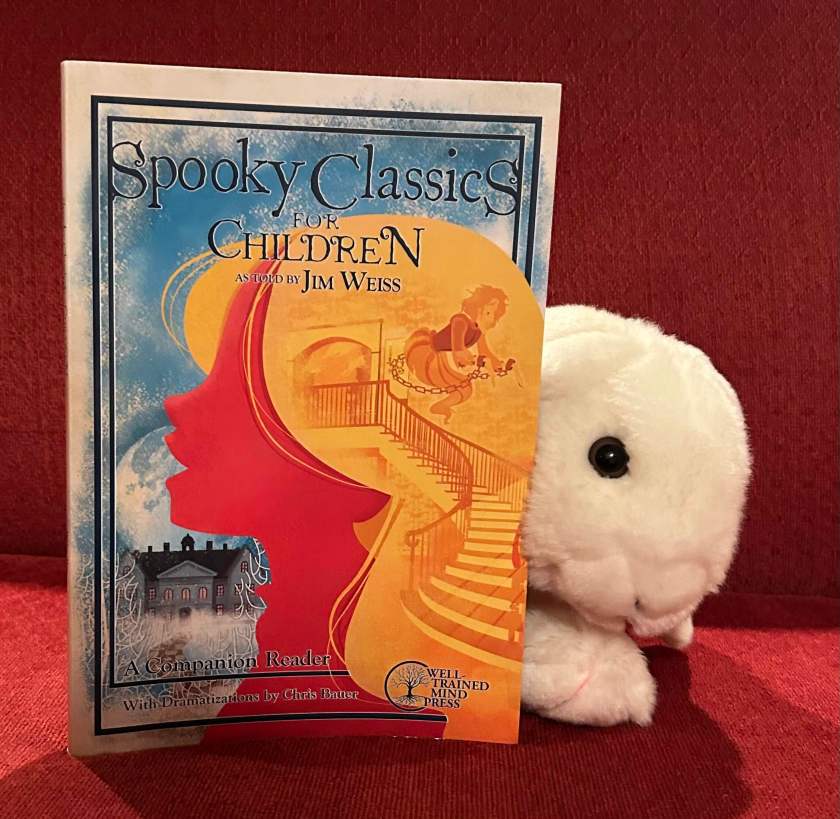
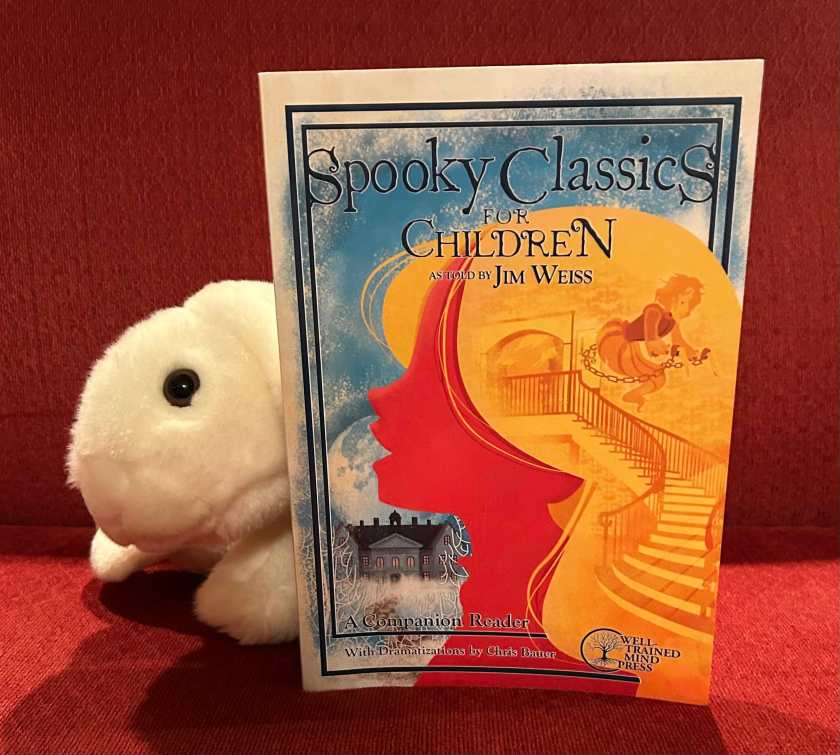
Marshmallow reviews Spooky Classics for Children: A Companion Reader, as told by Jim Weiss, and with Dramatizations by Chris Bauer

This week both of the younger book bunnies wanted to review spooky books to honor Halloween 2025. So on Wednesday, Caramel reviewed a cute picture book about a zombie and a brain. And today, Marshmallow reviews Spooky Classics for Children: A Companion Reader, as told by Jim Weiss, and with Dramatizations by Chris Bauer, which offers modern adaptations of three classic short stories.

Marshmallow reviews Spooky Classics for Children: A Companion Reader, as told by Jim Weiss, and with Dramatizations by Chris Bauer
Marshmallow reviews Spooky Classics for Children: A Companion Reader, as told by Jim Weiss, and with Dramatizations by Chris Bauer.

Marshmallow’s Quick Take: If you are looking for a fun book to read with your family during the fall season, then this is the book for you!

Marshmallow’s Summary (with Spoilers): This book is divided into several sections. The Preface introduces the stories and explains that the book can be used in three ways: listen, read, and speak. The first section has the stories laid out in a normal picture book-like fashion; this is Part I: Three Spooky Stories. The second section (Part II: Three Spooky Plays) provides scripts for each story and a guide for how to perform each one. 

The first story is called “The Canterville Ghost”, and it was originally written by Oscar Wilde and published in 1887. The story is set in Britain. The American Otis family (Mr. Otis is the American ambassador to Great Britain) moves into the Canterville Chase, a famous old ancestral castle. The catch is that the estate is haunted by the Canterville Ghost. Lord Canterville warns the Otis family of the haunting, but they do not believe in “mumbo-jumbo.” However, when the ghost’s existence becomes undeniable, they react in a relatively kind, well-mannered way. Eventually, the story ends happily—which I was initially not expecting! (Readers interested in the original Wilde version can check out this Project Gutenberg link.)

The second story is called “Dr. Heidegger’s Experiment” and was originally written by Nathaniel Hawthorne and published anonymously in 1837. The story is about five friends who are in their older years. Dr. Heidegger invites his four friends over to his house and offers them water from the Fountain of Youth. All four of his friends lived lives of sin and are full of regret. However, Dr. Heidegger himself does not drink the water; he merely wishes to see what happens when they do. They drink the water and age backwards, regaining their beauty and energy. However, they did not follow Dr. Heidegger’s advice to record for themselves some lessons learned before they drank the elixir, and so they do not remember the wisdom that they were supposed to have learned throughout their lives (though it is not that they forgot it, it is mostly that they did not gain it in the first place). The story ends with a clear message, and this story made me think a lot more than I was expecting to at the end. (Interested readers can check out this Project Gutenberg page for Twice-Told Tales, a collection that contains, among many others, the original story by Hawthorne.)

The third story is called “The Sending of Dana Da” and was originally written by Rudyard Kipling and published in 1888. The story is set in India a long time ago. A British man named Richard Evans meets a local wizard named Dana Da whom he treats generously. Dana Da offers the man help in return, asking him if he needs help in dealing with anyone he loves or hates. Evans eventually admits that he loathes a man named Everett Lone. Dana Da’s sending is a magical energy that he can shape into whatever he wishes; for this case, he shapes it into cats that appear in Lone’s life constantly (Lone hates cats). This magical story ends in a quaint way and wraps up the first section of the book nicely. (The original version by Kipling is somewhat different and may or may not be appropriate for young bunnies, so we will not link to it from here.)

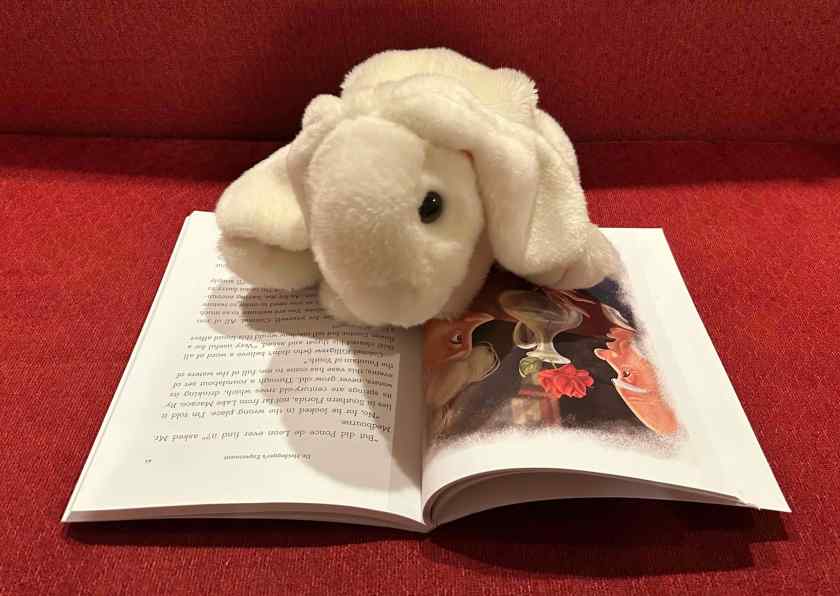
Marshmallow is reading Spooky Classics for Children: A Companion Reader, as told by Jim Weiss, and with Dramatizations by Chris Bauer

Marshmallow’s Review: Overall, I would highly recommend this book! I really enjoyed listening to the audio recording that came with it, and it was a really great experience. Jim Weiss is a great voice actor! (We loved his readings of the Harry Potter books many years ago.) But even if you do not have access to the recordings, the text itself is really engaging on its own. This book is accessible and appropriate for all ages, so I think it would be really fun to read or listen to as a family. I liked the drawings, but I especially liked the writing style; I found it energetic, engaging, yet simple at the same time.

The stories were also surprisingly deep. The first story made me think a lot about generosity while the second made me think a LOT about wisdom, living life in a meaningful way, and appreciation. I also wondered a lot about youth and age afterwards. The third one teaches a lesson about logic and magic, but also friendship and kindness. I would explain more but I think that might give the ending away.

The second section with the screenplay versions of the stories adapted by Chris Bauer would also be a great help for theatre programs for little children. I can see it helping set up a great show for children to watch and / or perform in. Of course I could also see a family doing it among themselves, too, just for fun. There are a lot of useful suggestions for either scenario.

As a whole, this book was really enjoyable, and I would completely recommend it to everyone! I know this is a bit late, but it would also make for a perfect Halloween book!

Marshmallow’s Rating: 100%.

Marshmallow rates Spooky Classics for Children: A Companion Reader, as told by Jim Weiss, and with Dramatizations by Chris Bauer 100%.