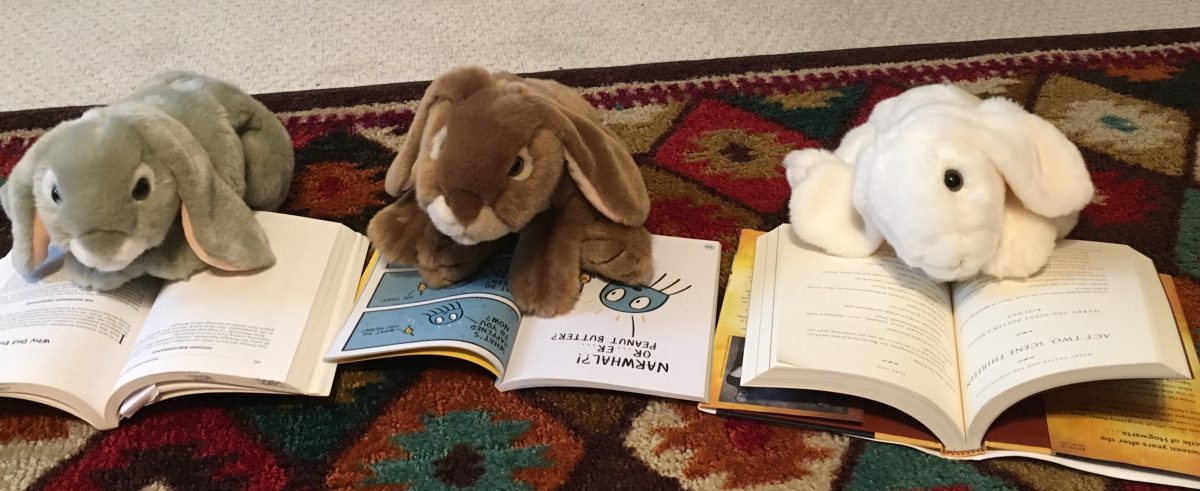
Marshmallow reviews The Fall of Iris Henley by Jennifer Graham

Today Marshmallow is writing about The Fall of Iris Henley, a 2026 book by Jennifer Graham.

Marshmallow reviews The Fall of Iris Henley by Jennifer Graham.

Marshmallow’s Quick Take: If you like exciting mysteries about high schoolers with way more drama than average, then this is the book for you!

Marshmallow’s Summary (with Spoilers): Iris Henley perfectly fits the stereotype of a Texan cheerleader. Blond, pretty, and with a football-playing boyfriend (named Rocky), she seemed like a sure finalist for Homecoming Court. Unfortunately, things got seriously messed up when Rocky and Lynette (her ex-best friend) are found dead under circumstances that indicate Rocky was unfaithful. The police declare it to be an open-and-shut case: Rocky shot and killed Lynette and then committed suicide after with the same gun. This explanation is widely accepted until a couple of months later.

Iris is the top girl (meaning she is the flyer at the top of their pyramid structure) and cheer has taught her how to put on a smile and cover her feelings in order to stay on top. She’s been trying to come to terms with losing her best friend and her boyfriend to the hands of her boyfriend himself; how can she grieve for him when he is the reason why he and Lynette are both gone?

During a football game, an anonymous poster on the school’s gossip site Sekrit claims that Rocky wasn’t the murderer after all — Iris was. It would make sense from a certain perspective. Lynette had been struggling with a drug problem and Iris accidentally leaked this news to the cheer coach, leading to Lynette’s permanent suspension from the team. Though Iris had not intended for it to happen, she became the top girl, the coveted role Lynette had held before. Cheer had been one of the few things keeping Lynette from going completely off the rails, and her drug addiction worsened quickly, especially after Lynette isolated herself from Iris (Lynette believed Iris had wanted to steal her spot). Rocky — who wasn’t the greatest guy — began having an affair (and not his first) with her at some point, which would give Iris a huge motive for murder.

On top of all that, on the night of the murder, Iris was at a cheer sleepover and she wasn’t fully straight-headed the entire time. Past a certain point, she starts to wonder whether it is possible that she did commit the crime while drunk. Almost the entire school thinks she did it too. Her other two best friends (Hailey and Sophie) stick by her and so does the “cute” boy from sports camp she’s been texting. They figure the best way to clear her name is to find out who’s been posting lies on Sekrit; but while searching for the liar, new truths come to light and it becomes increasingly clear that no one is or was trustworthy to start with. 

Marshmallow is reading The Fall of Iris Henley by Jennifer Graham.

Marshmallow’s Review: The Fall of Iris Henley is a very good book! I only saw two plot twists coming, and there were far more I was completely unprepared for. The story is fascinating and exciting; I know it is cliche to say, but you cannot put this book down! The characters are all developed extremely well, but then the author changes everything you think, feel, or think you know about a person — and in a way that is still logical and believable.

Also, I found it very interesting to read about a mystery set in a community that is very different from my own. The rural football culture in Iris’ city of Varda was intriguing to read about, though I think the author does some subtle critiquing of that way of life. This was interesting from an outsider’s perspective, but I can also see how this location choice could also appeal especially to those who live in similar settings.

That said, certain things the characters do are undeniably deserving of criticism. Iris and her friends all drink regularly and occasionally take other types of drugs; her best friends are often vaping and they skip class at least once. They are not good role models. Also, the characters are almost all seniors in their last year of high school and they engage in sexual interactions so this is another reason why this book might not be very appropriate for some. Luckily, nothing is shown in detail (all of these things are mentioned vaguely in passing) but it might be too much for bunnies younger than thirteen or fourteen.

All that being said, The Fall of Iris Henley was very thought-provoking and the mystery was very hard to solve. The author did a very good job of resolving the mystery, giving a satisfying end to the main conflict while tying up character development in a nice bow. This was a very good book overall and I would highly recommend it to everyone who is old enough to read it!

Marshmallow’s Rating: 98%.

Marshmallow rates The Fall of Iris Henley by Jennifer Graham 98%.

Marshmallow reviews The Toll by Neal Shusterman

Marshmallow has already read and reviewed Scythe and Thunderhead, the first two books in Neal Shusterman’s Arc of a Scythe series. Today she reviews the third book, The Toll, first published in 2019.

Marshmallow reviews The Toll by Neal Shusterman.

Marshmallow’s Quick Take: If you liked the previous books in the Arc of a Scythe series, then this is the book for you! But if you haven’t read those yet, then Scythe and Thunderhead are the books for you!

Marshmallow’s Summary (with Spoilers): Ever since every human was marked as unsavory, the Thunderhead went silent. The Thunderhead is the benevolent, all-knowing AI consciousness that runs the world, serving as a parent to those without, a therapist to those in need, a friend to those lonely … the list goes on. Without the Thunderhead, humanity feels a bit lost. Of course, all the physical things (revival centers, publicars, etc.) directed by the Thunderhead continue to run smoothly, perfectly. But the question of why the Thunderhead went silent seems answered by the recent sinking of Endura, which was essentially the man-made island serving as the capital of the global Scythedom. Rowan Damisch (dubbed Scythe Lucifer), who ended several corrupt scythes to serve vigilante justice, is blamed and the general consensus is that the Thunderhead marked all of humanity as ‘unsavory’ (which means the Thunderhead no longer speaks to them) to collectively punish them for Rowan’s crimes.

Unfortunately, this is not the real reason. Rowan sank with Endura, along with Citra Terranova–who you may know better as Scythe Anastasia. The Thunderhead was mourning their loss, too, along with all others lost in Endura. Rowan and Citra were actually trying to stop the destruction caused by Scythe Goddard, but instead Goddard seizes power afterwards and appoints himself the Overblade of North Merica. Goddard also begins changing the way the entire Scythedom works, eliminating the gleaning quotas so that scythes can glean as much or as little as they want to; he encourages other regional Scythedoms to do the same and soon the world is divided between scythes who align themselves with Goddard and those who are brave enough to resist his growing influence.

The Tonists, the main (perhaps only) religious cult that remains in a time of immortality, are another group against Goddard’s reign and scythes in general. Their religion always foretold of the Great Resonance, and the Thunderhead did release a technical wail (it made all alarms, beeps, and other sounds in the world go off for a brief couple of seconds) before it went silent. This reinvigorates their faith and legitimizes them slightly, especially now that they have the Toll.

Grayson Tolliver was raised by the Thunderhead and, in the last book, he saved Scythe Anastasia and her mentor Scythe Curie. The Thunderhead’s coding forbids it from interfering with scythe business, and the murder attempt targeting Scythe Anastasia and Curie’s lives fit that category; thus the Thunderhead wasn’t allowed to intervene to save them, but it could tell Grayson and it could predict that he would likely try to save them himself. Due to this interference, the Thunderhead was forced to mark Grayson ‘unsavory’ for a while, but after the Great Resonance (and everyone else being marked ‘unsavory’) he is clean and the only human on the planet who is able to talk to the Thunderhead. Living amongst the Tonists, he becomes their leader and the third part of their holy trinity—the Toll (the other two are the Thunder and the Tone).

While this is all happening, Scythe Faraday (Scythe Anastasia and Lucifer’s mentor) begins searching for the mythical fail-safe left by the founding Scythes in case the scythedom ever went in the wrong direction. This is because, unfortunately, the scythedom has gone astray and it seems like there aren’t enough people left to stand in Goddard’s way. Little does he know though that secrets lost to the sea and to space are not so lost after all. 

Marshmallow is reading The Toll by Neal Shusterman.

Marshmallow’s Review: I really enjoyed The Toll! I was extremely excited to read another book in this series and this book did not disappoint. I had loved the first two books and felt that ending the series in a satisfying way would be a very difficult challenge. However, Shusterman did a very good job and I think he made the best decisions possible. The ways the characters developed were nuanced, and I think he avoided certain stereotypical, simplistic arcs. The breakdown of one of the strongest characters was heartbreaking to read about, yet it was much more realistic than the unrealistic continual suppression of his emotional struggles.

The way the characters in this series grapple with mortality and the idea of gleaning (the ceremonial taking of lives executed by scythes) makes these books all very advanced and philosophical. They point towards what might lie ahead for humanity and how humanity both strives for and self-sabotages its improvement. I also find Shusterman’s imaginary world a bit comforting. While there is undoubtedly trouble in The Toll, there is also significant advancement for humans. Seeing and reading about a world where humans are still struggling to advance yet have already come so far is very inspiring and thought-provoking.

Despite the stark differences between our world and the world of The Toll, the characters are all incredibly well-written and I thought the relationship between (SPOILER) Citra and Rowan was very cute. Shusterman’s execution of their romance was very mature, I thought, because it seems that they do have some sort of physical interactions but we luckily don’t have to read about them. This omission actually helps strengthen the emotional legitimacy of their connection as that is what the author chose to highlight, rather than raw attraction.

I also thought the plot was amazing! The Toll was, like the previous books, a story that was so enveloping and compelling that I did not feel the need to slow down and try to predict what would happen next. I would just have to keep reading. I loved the final scene and I am very excited to read the additional books that Shusterman has written about this same story universe and is writing currently.

I would highly recommend reading all three of the books in the Arc of a Scythe series because they really do make you think about how differences between our world and the world of the series reflect on humanity as a whole and how mortality truly affects us. They are also just very entertaining. I am very excited for any new books set in the world of this series; I hope you read about it too!

Marshmallow’s Rating: 110%.

Marshmallow rates The Toll by Neal Shusterman 110%.

Marshmallow reviews The Color of Water by James McBride

Today Marshmallow is writing about The Color of Water: A Black Man’s Tribute to His White Mother, written by James McBride and first published in 1995.

Marshmallow reviews The Color of Water: A Black Man's Tribute to His White Mother by James McBride.
Marshmallow reviews The Color of Water: A Black Man’s Tribute to His White Mother by James McBride.

Marshmallow’s Quick Take: If you like biographies that reveal nuanced stories about race, family, identity, and love, then this is the book for you!

Marshmallow’s Summary (with Spoilers): James McBride is a Black man with a White mother. Today, this would likely not be considered much of a big deal. After all, mixed race marriages are something relatively commonplace in the United States today and are the simple result of the fact that love generally does not see color. However, back in the 1960s, such relationships were demonized and the pair separated by all means possible; Loving v. Virginia, the landmark decision of the U.S. Supreme Court on interracial marriage was only passed in 1967.

For James’ mother Ruth, this was yet another struggle in a long, seemingly endless line of strife. She was born in America to two Polish Jews and, due to the fact that her father was a “lousy rabbi,” her family had to keep moving to find new places of work for him. Eventually, they settled down in Suffolk, Virginia. There, Ruth felt discrimination firsthand constantly, with classmates calling her “Jew baby” or worse. But she also witnessed the overt racism directed towards Black people around her. Her first boyfriend, Peter, was a Black man and the young couple kept their relationship a secret out of fear of the KKK. Ruth also faced consistent abuse at home from a father that emotionally, physically, and sexually tormented her; yet, despite all of this, she persevered quietly and eventually built a family. She then kept rebuilding every time she was torn down.

In The Color of Water, the author James McBride tells the story of Ruth’s life intertwined with segments of his own autobiography in between. McBride describes his chaotic environment growing up as the eighth child out of twelve total. While he knew he was loved, there was unending pressure from Ruth to be academically successful, and within such a large family, there was not enough attention to go around. As James grew older, he started recognizing that his mother’s race was different from his own and that race was a construct that society unfortunately valued in countless ways. In seeking to uncover the details of his mother’s life, James simultaneously searches for his own identity and the role that race has in America. This likely won’t come as a surprise to anyone, but the answer is nuanced and riddled with mystery—much like Ruth herself.

Marshmallow is reading The Color of Water: A Black Man's Tribute to His White Mother by James McBride.
Marshmallow is reading The Color of Water: A Black Man’s Tribute to His White Mother by James McBride.

Marshmallow’s Review: I found The Color of Water: A Black Man’s Tribute to His White Mother to be a very interesting book. As a mixed race bunny growing up in a quite mixed neighborhood and school district, I have never really felt any need to ‘discover myself’ because I already knew what I was. However, James’ identity quest is understandable, especially because race was even more central to society in those times. Today, of course, race is still an issue, but seeing the way our nation was back then gives you a better sense of the role of race over time.

The Color of Water: A Black Man’s Tribute to His White Mother examines race on a national scale by specifically analyzing its role within a family setting. James’ story is rather unique, but the themes throughout the book (abuse, race, search for security, selflessness, grief, etc) are representative of the general human experience in certain ways. I think the fact that his life is sort of a more extreme version of general experiences helps highlight how remarkable the people in his life—and most people in general—are.

The book is relatively easy to read and I think the author wrote it for a broad audience. There are mentions of sexual abuse, drug use, and violence, so some parts might make this better for older readers (maybe twelve and older?) But overall, The Color of Water is a very important book that reveals simple truths about love, humanity, and America—such as the obvious fact that race should never dictate anything, especially love. 

Marshmallow’s Rating: 100%

Marshmallow rates The Color of Water: A Black Man's Tribute to His White Mother by James McBride 100%.
Marshmallow rates The Color of Water: A Black Man’s Tribute to His White Mother by James McBride 100%.

Marshmallow reviews The Good Mother Test by Michael R. French

Today Marshmallow is reviewing The Good Mother Test by Michael R. French, published in 2026. The book bunnies are delighted to be reviewing this book as part of a Blog Tour for The Good Mother Test organized by WOW! Women On Writing.

Marshmallow reviews The Good Mother Test by Michael R. French.

Marshmallow’s Quick Take: If you like books about family, love, and mother-daughter relationships, then this is the book for you!

Marshmallow’s Summary (with Spoilers): Emily loses her house to the bank when she is eighteen. Her family is forced out, but not before she sort of attacks one of the people foreclosing on her home. Yet, she recovers and succeeds academically, refusing to let that loss stop her from becoming great. At her new high school, she meets Salina, who becomes her best friend. After graduation, the two go their separate ways but remain in each other’s lives. Salina works at a plant nursery and Emily takes a gap year, planning to start her freshman year at UCLA on a scholarship after. During her gap year, Emily gets a job working as an assistant at a company doing work she finds fascinating; as a result, she excels.

If it feels like I am speeding through these parts, it is because the turning point of the story happens once Emily starts UCLA. She eventually reconnects with her former boss and that changes their relationship status to a romantic nature. Unfortunately, they make a mistake and Emily ends up pregnant. They are delighted by the idea of a child, but Doug (the father) ends up feeling like Emily isn’t right for him. He takes good care of her during the pregnancy and makes sure she is supported after, but he leaves Emily to shoulder parenting mostly by herself. Emily—who had been feeling directionless—finds purpose in her ‘career’ as a mother. Their daughter Violet becomes her whole life.

As Violet grows, it becomes clear that she is a prodigy and Emily does everything she can to provide for her, physically, emotionally, and intellectually. Doug re-enters their lives when Violet is relatively young and introduces his new girlfriend Amanda. Emily is immediately threatened as Amanda and Doug start to play larger and larger roles in Violet’s life. Amanda does seem rather benevolent in a way. She pays for clothes, education, and everything else Violet might need. Yet, something within Emily recognizes Amanda as a threat. Emily wants to be the best mother she can be, but how can she compete with someone who has everything?

Marshmallow is reading The Good Mother Test by Michael R. French.

Marshmallow’s Review: I found The Good Mother Test to be a very touching yet simultaneously strange book. The plot is very good and the story meaningful. I found the emotional connections and developments were very well developed. However, I did find certain lines throughout the book to be a bit off-putting. There were never any parts that were very disconcerting, but towards the beginning I found the characterization and treatment of a couple characters to be a bit bizarre. For example, Salina seemed sort of like a token who was treated and talked to in ways that weren’t right for a best friend. This problem was resolved very soon and other similar issues disappeared half way through the book. However, the book didn’t seem to recognize that some of these things were problems.

I found it interesting that all romantic relationships were devoid of emotion. The two main protagonists, Emily and Violet, are very detached from the men they are involved with. Speaking of which, intimacy is mentioned occasionally in a way that is more suitable for readers older than sixteen. The author luckily does not describe anything too inappropriate except for one time that was shocking to me when I read it.

The word I would use to describe this book is honesty. It feels as though it is written by a real person who went through a real story like this one. The author definitely deserves recognition for writing a book about motherhood while being a father. The style was starkly different from other fiction books I’ve read, more realistic and less focused on flowing rhetoric. This makes the world seem more grounded.

One thing that made it a bit difficult for me to relate to the characters in The Good Mother Test was the level of wealth they enjoyed. Amanda is incredibly rich and Violet, as a genius, eventually makes a ton of money on her own. As a result, they do a lot of things that are very difficult for most people to do. Jewelry, clothing, and lavish items are mentioned in almost every chapter. This was unusual (I am not sure how realistic their lifestyles are), but negligible.

Overall, I would recommend The Good Mother Test especially to mothers and daughters who are old enough to understand it and absorb its message. It is a very heartfelt book dedicated to the bond between mother and child, and reading this makes one realize just how beautiful that bond is. 

Marshmallow’s Review: 97%.

Marshmallow rates The Good Mother Test by Michael R. French 97%.