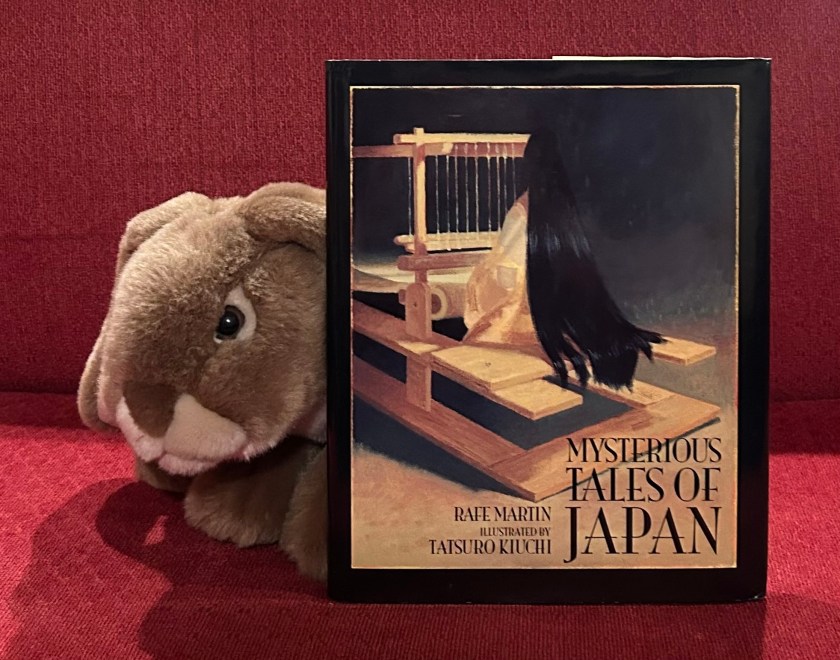
Caramel reviews Mysterious Tales of Japan by Rafe Martin

Today Caramel is talking to Sprinkles about Mysterious Tales of Japan, written by Rafe Martin and illustrated by Tatsuro Kiuchi, originally published in 1996.

Caramel reviews Mysterious Tales of Japan, written by Rafe Martin and illustrated by Tatsuro Kiuchi.

Sprinkles: So Caramel, today we are talking about Mysterious Tales of Japan, another one of those books you read for that Asian Myths and Legends summer course you took a while back. 

Caramel: Yeah, it is, I think, the last one? I already reviewed the other ones: Japanese Myths, Legends, and Folktales, Tamamo the Fox Maiden and Other Asian Stories, Chinese Myths and Legends: The Monkey King and Other Adventures, Vietnamese Children’s Favorite Stories, and Favorite Children’s Stories from China and Tibet

S: Yes, I think you are completing the set today. But this one is a bit different from the others, right? The stories are a bit spooky, I am guessing. 

C: Spooky? No, they’re not that spooky. But yes, there are ghosts and spirits and such. 

S: I see. Then please tell me a bit more about the book. 

C: It has some stories shared with some of the others, like “Ho-Ichi the Earless” and “Urashimmo Taro”, which I had already read in Tamamo the Fox Maiden and Other Asian Stories. Besides these, there are eight other stories, and I had not read those before; they were all new to me.

S: That’s cool Caramel. So ten stories and eight of them were totally new for you. Tell me a bit about the new stories. 

C: The other eight stories are “Green Willow”, “The Snow Woman”, “Kogi”, “The Crane Maiden”, “The Pine of Akoya”, “A Frog’s Gift”,  “The Boy Who Drew Cats”, and “Black Hair”. They are all about five pages or so.

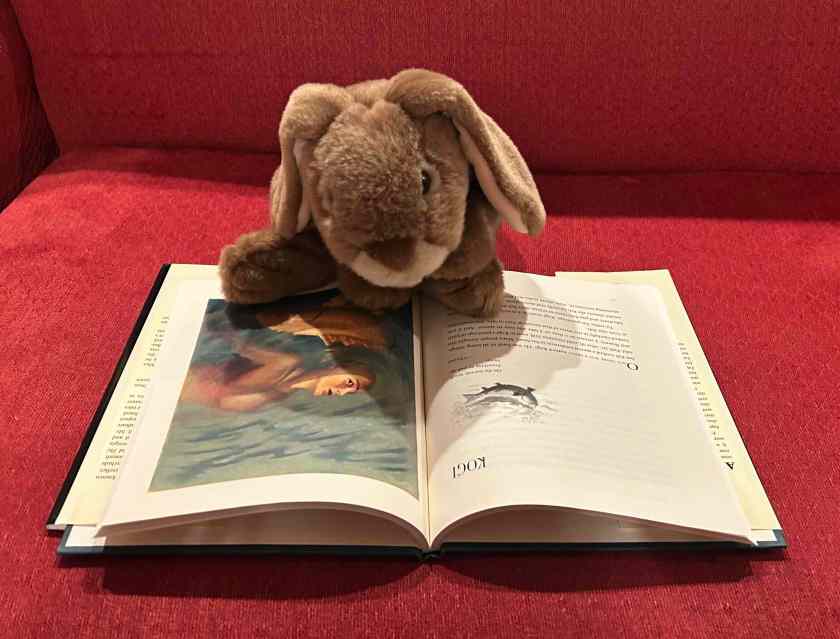
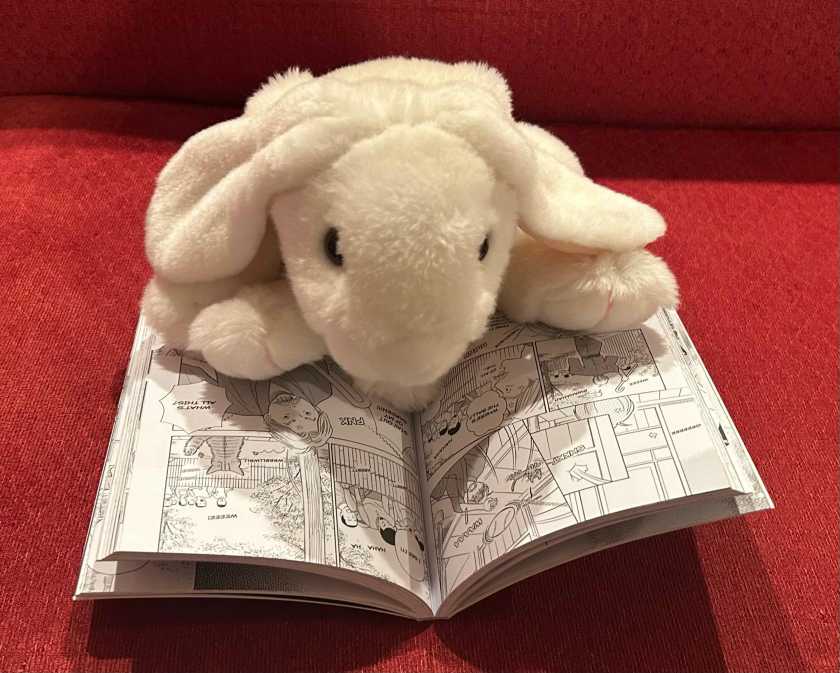
Caramel is reading Mysterious Tales of Japan, written by Rafe Martin and illustrated by Tatsuro Kiuchi.

S: Okay, so tell me a bit about these stories. Any one that surprised you? 

C: No, not really; most of the stories are sort of similar to others that I read before.

S: Okay, so I guess you are getting used to Japanese folk tales and their general feel. Then, maybe tell me which was the most interesting? Or the spookiest? 

C: I think that “Ho-ichi the Earless” is the spookiest. 

S: I remember that story from the other book. It was quite weird and spooky, I agree. But that book was basically a graphic novel adaptation, so it was very visual. Left not much to your imagination. 

C: This book has pictures, too, but only one or two for each story. So you have a lot more to imagine. 

S: That can sometimes be scarier. 

C: True. Sometimes the imagining is the part where I like real books over picture books. Let me think about what I want the main character to look like. Let me think about how the house the author is describing actually looks like. And so on. And the pictures in this book are not all very detailed. They give you a feel for the story, but you still have a lot more to imagine on your own. 

S: Yes, the pictures are beautiful and evocative, but you are right, they are not very detailed. They leave much room to create in your own imagination. So for example, the two stories you had already read before in that other book: when you were reading them here, did you have some new imagery in your mind to go along with the story line? 

C: Yeah, sometimes the space not drawn is the spookiest. It definitely was like that for me for “Ho-ichi the Earless”. 

S: Cool, thanks for all this Caramel. I think we have enough for a post, so maybe this is a good time to wrap things up. 

C: Sure, why not?

S: Great! What would you like to say to our readers as your closing words? 

C: Stay tuned for more book bunny reviews!

Caramel appreciated reading Mysterious Tales of Japan, written by Rafe Martin and illustrated by Tatsuro Kiuchi, and recommends it to all other young bunnies, but maybe they should think about reading it with a grownup bunny so they don't get too scared.
Caramel appreciated reading Mysterious Tales of Japan, written by Rafe Martin and illustrated by Tatsuro Kiuchi, and recommends it to all other young bunnies, but maybe they should think about reading it with a grownup bunny so they don’t get too scared.

Marshmallow reviews Soseki Natsume’s I Am A Cat: The Manga Edition

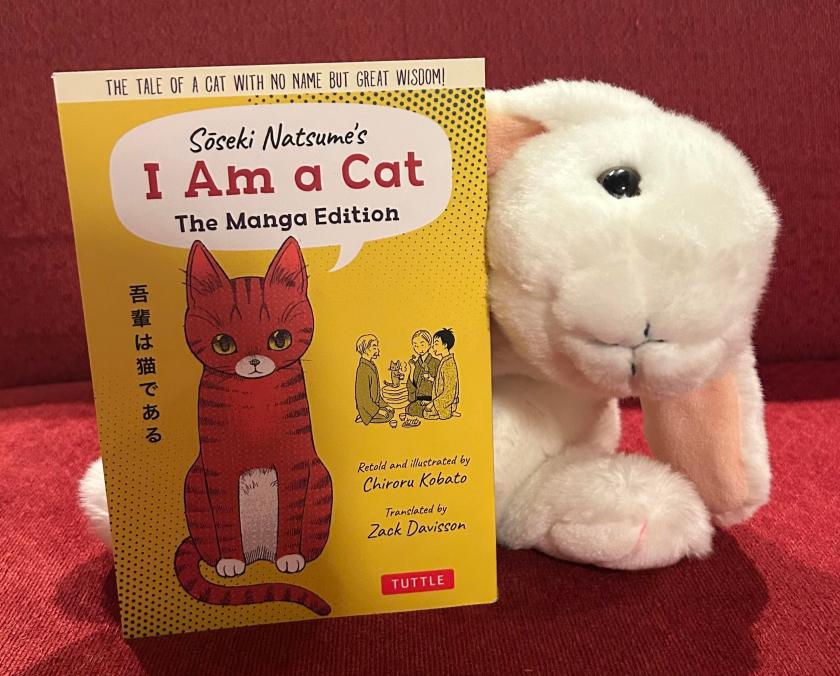
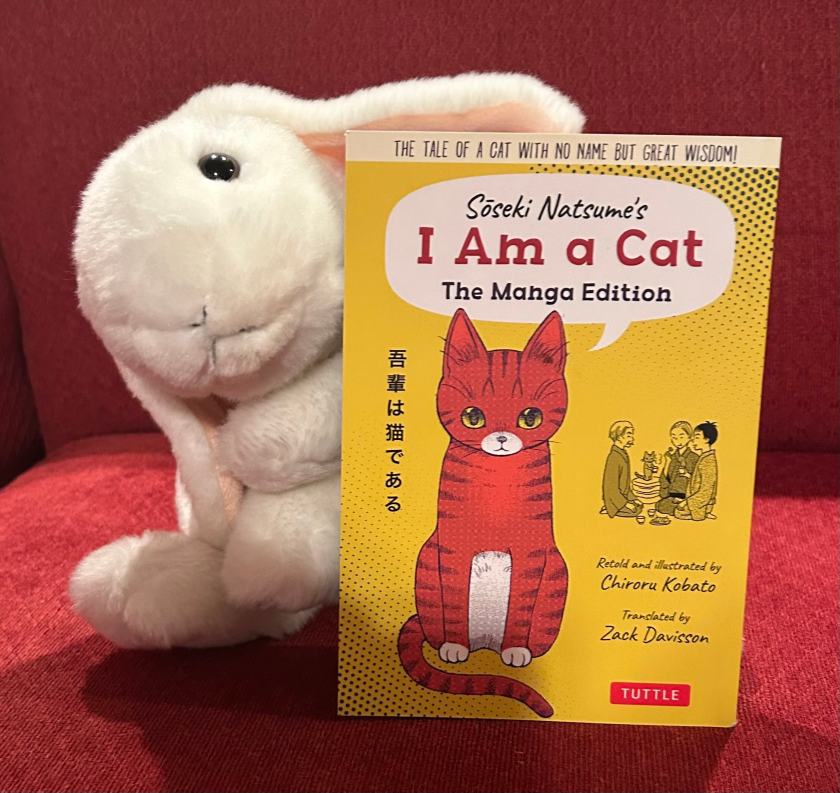
Today Marshmallow reviews Soseki Natsume’s I Am A Cat: The Manga Edition, the graphic novelization of the Japanese classic I Am A Cat, originally written by Soeki Natsume in 1905-1906. This “manga edition” was retold and illustrated by Chiroru Kobato, translated into English by Zack Davisson, and published in 2021. Sprinkles is taking notes and asking questions.

[In this post, we mention suicide as it relates to the content of the book, so if this is a sensitive topic for you, please consider not reading further.]

Marshmallow reviews Soseki Natsume's I Am A Cat: The Manga Edition, retold and illustrated by Chiroru Kobato, and translated into English by Zack Davisson.
Marshmallow reviews Soseki Natsume’s I Am A Cat: The Manga Edition, retold and illustrated by Chiroru Kobato, and translated into English by Zack Davisson.

Sprinkles: I am so excited we are finally talking about this book! I am very curious about it. So let us start with your standard overview. 

Marshmallow: Sure! If you like thought-provoking and eye-opening books from other cultures and other time periods, then this is the book for you!

S: That is a great start. Okay, now please do tell us a bit about what this book is about.. Since the title is “I am a cat”, I am guessing it is probably about a cat.

M: Yes, actually the main character is a cat who narrates the whole story (which takes place in early twentieth century Japan). He was separated from his family at a young age and was taken in—reluctantly—by the family of an English teacher named Sensei Kushami. He describes his life with them and the silly human occurrences / things they experience. 

S: So what kinds of things does he talk about? 

M: Early on, he describes his near-death experience with mochi. He also watches the humans gossip a lot about a rich woman named Ms. Kaneda and her nose (which I thought was very insensitive). The woman, whom the cat calls Lady Nose, has a very ungrateful yet beautiful daughter who may marry one of Sensei Kushami’s friends. There is a lot of confusion that surrounds this affair though and a lot of false rumors and accusations get thrown around. 

S: So the cat witnesses and talks about a whole lot of silly, trivial, petty things humans worry about. 

M: Yes. In the original version of the book, according to this neat recap we found online, this makes him feel pretty superior. In this manga version, he also seems a little amused by their behavior; however, he seems a little less judgemental.

S: In that recap and also on the Wikipedia article for the book, we also learn that the Japanese version of the title “I Am A Cat” also has sort of this formal feel to it because it uses a particular version of the first person pronoun “I” that is “a very high-register phrasing more appropriate to a nobleman, conveying grandiloquence and self-importance”. I am guessing that also makes the book funny to begin with, the cat is kind of pretty full of himself. 

M: I presume it does in Japanese, but of course, I didn’t quite catch that joke myself in English. 

Marshmallow is reading Soseki Natsume's I Am A Cat: The Manga Edition, retold and illustrated by Chiroru Kobato, and translated into English by Zack Davisson.
Marshmallow is reading Soseki Natsume’s I Am A Cat: The Manga Edition, retold and illustrated by Chiroru Kobato, and translated into English by Zack Davisson.

S: English has a single first-person pronoun which makes it a lot easier to learn or speak it, but you also lose a lot of nuance in this way, I suppose. Anyways, so this cat is observing his humans, kind of like Garfield. Garfield is kind of self-important in a way, but maybe a bit less interested in the humans.

M: Yes. I felt like the main character here did seem to care about his human family, but they did not really seem to always care about him too much (Sensei Kushani originally did not want him in the house at all). 

S: Hmm, that is interesting. So I know that when you first read this book, you were a bit disturbed by it. Can you tell us a bit about that? 

M: I felt that the book made too many references to suicide too lightly. Several characters consider hanging themselves on a pine called the Hanging Tree. None of the main characters ends up killing themselves, but it felt like it was mentioned too many times in the course of such a short book. 

S: I can see how that made the feel of the book kind of dark and uncomfortable for you. I am sorry about that. I had thought that this book is supposed to be satirical and philosophical, so I suggested that you read it. 

M: It’s okay! It was a little dark and unexpected, but the rest of the book was amusing to read. I can see why people find it both satirical and philosophical. It is pretty amusing to read a cat pontificating about the silly ways of humans. Like we bunnies do sometimes. People-watching is one of my favorite hobbies. 

S: I know, right? People-watching is fun! Okay, so tell us a bit about the satire or the philosophy then. 

M: Okay, the philosophy part was also pretty dark and depressing though. Sensei Kushani and his friends in academia and one in business discuss the integration of Western ideals into traditional Japanese culture. They also say some very sexist things about women to their friend who just got engaged. Meanwhile, the cat narrating the book ponders about life and whether it is worth it. At some point, he reaches the conclusion (which I disagree with) that life is only suffering and that death is the only peace. 

S: Okay, I can see that maybe these ideas are a bit too heavy for a “manga edition”. Maybe the original book deals with them with more nuance. So maybe let us now talk about the manga nature of the book. I know both you and Caramel have read a lot of graphic novels. But is this your very first manga?

M: I think so. I have never read a book that was meant to be read backwards which was a little difficult to adjust to.

S: Backwards for us of course, not for many other people around the world who read from right to left. 

M: Yes, but  I am still not sure whether I was supposed to start from the top of the page or somewhere else. 

S: I can imagine that can be disorienting. I have read only one manga-style book and that was disorienting for me, too. But I am honestly disoriented by all graphic novels, so maybe it was also that. Anyways, so let us wrap up this review then. All in all, did you enjoy reading this book? Did you find it interesting?

M: This book was definitely interesting. It helped me understand a little bit more about Japan’s culture and its understated, natural aesthetics and style. I also liked how this version simplified a classic book into a format that was somewhat easy to understand and definitely a lot easier to read for people who can’t read Japanese. I liked how this made one of the great Japanese novels accessible to others! I would rate this book around 95%. 

S: That is wonderful, Marshmallow. Then I am also glad you read it. What would you like to tell our readers as we end the post?

M: Stay tuned for more amazing book reviews from the book bunnies!

Marshmallow rates Soseki Natsume's I Am A Cat: The Manga Edition, retold and illustrated by Chiroru Kobato, and translated into English by Zack Davisson, 95%.
Marshmallow rates Soseki Natsume’s I Am A Cat: The Manga Edition, retold and illustrated by Chiroru Kobato, and translated into English by Zack Davisson, 95%.

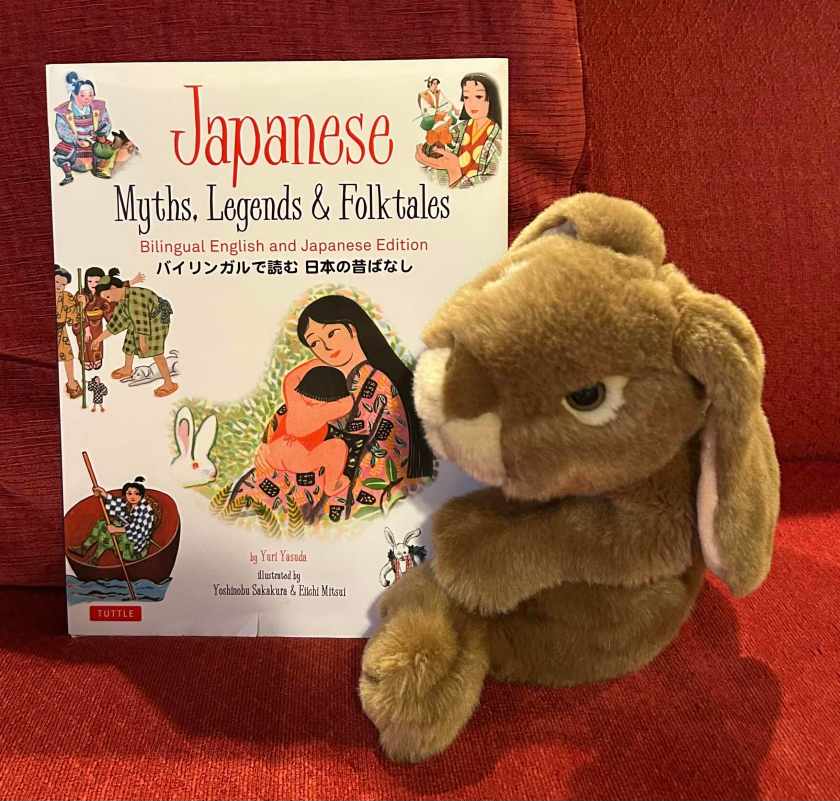
Caramel reviews Japanese Myths, Legends, and Folktales by Yuri Yasuda

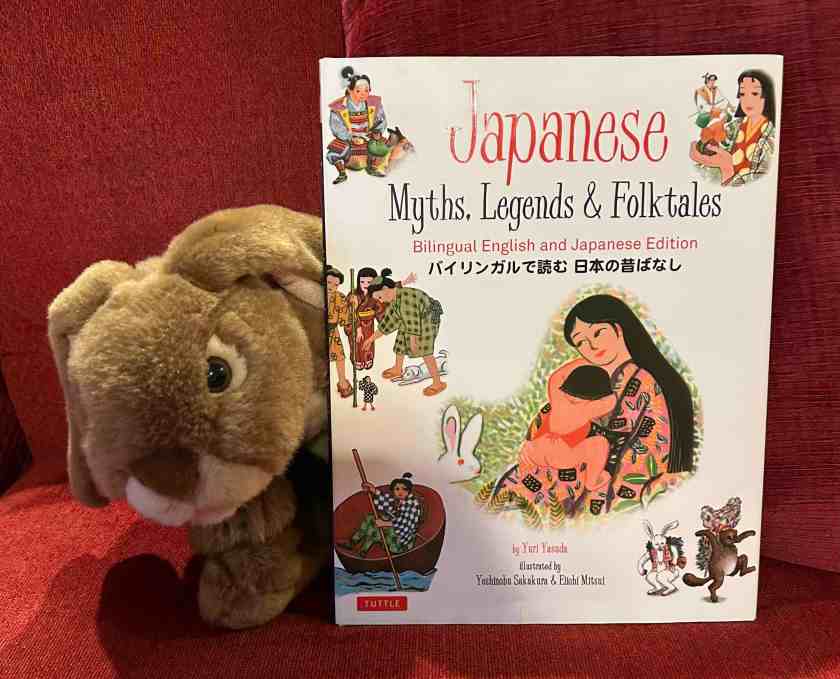
Last summer Caramel read several books on Asian myths and legends. Today he is talking to Sprinkles about one of these: Japanese Myths, Legends and Folktales: Bilingual English and Japanese Edition, written by Yuri Yasuda, illustrated by Yoshinobu Sakakura and Eiichi Mitsui, and published in 2019.

Caramel reviews Japanese Myths, Legends, and Folktales by Yuri Yasuda.

Sprinkles: So Caramel, this is one of your last reviews before we take off for the summer. What do you want to talk about today?

Caramel: It’s this book on Japanese myths and legends. I like all of the nice stories, and the pictures. The colors are nice.

S: You are right, there are a lot of illustrations in this book. Each page has at least one. And they are very stylized. That is, they all kind of fit in one style, they resemble one another in some ways. 

C: That makes sense though. It is all the same people who drew them. So it makes sense they would look like one another. 

S: True. 

C: And they are all very colorful and they use some really cool drawing  techniques!

S: That is a good observation Caramel! I agree with you! Now tell me a bit more about the stories.

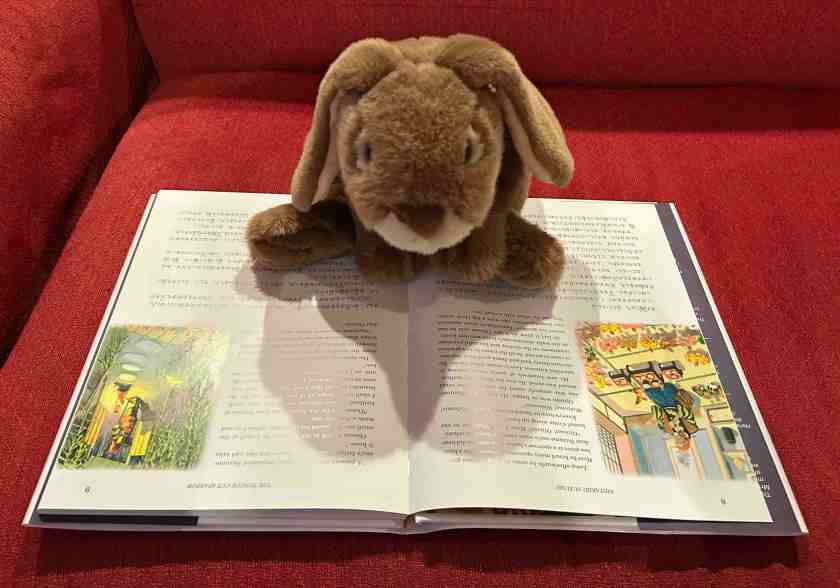
C: There are twelve stories. Each of them takes about three to five pages, usually below ten. On each page there is a picture or two, and then the top of the page is in English. And in the second half of the page the story is in Japanese. 

S: Oh, part of the book is in Japanese then! I guess it makes sense: the book is subtitled “The Bilingual Edition” after all. 

C: Well, actually, it’s called, “Bilingual English and Japanese Edition”.

S: Thank you for the correction Caramel. That makes total sense. But you don’t know how to read in Japanese. Was that okay?

C: Well, I don’t know how to read in Japanese YET. But yes, it was more than okay. It was cool to see the difference in the writing. Japanese people use a different alphabet than us. Or rather three different writing systems. I looked it up. There is a long Wikipedia article about it. And we tried to learn a bit of Japanese last summer. It is hard but it is also a lot of fun. I loved using the brush pens! 

S: Yes, that was a lot of fun! And you are so right in saying that you don’t know it YET. You are still such a young bunny, maybe you will learn it at some point.

C: I hope so. I especially want to play more with the brush pens, mostly the pens.

S: Sounds like a plan to me!

Caramel is reading Japanese Myths, Legends, and Folktales by Yuri Yasuda.

S: Okay, so let us get back to the stories. You said there are twelve of them. So tell us a bit about a couple of them. Maybe your favorites?

C: I liked the first one, “The Tongue-Cut Sparrow”. It’s about a kind old man who finds an injured sparrow and saves it. One day as he is out doing something, the sparrow eats the house flour, so the old man’s wife cuts the sparrow’s tongue off as punishment, and the sparrow flies off. Then on another day, the old man goes walking, and he meets the sparrow again. The old man was always kind to the bird, so the sparrow offers him some gifts. The old man takes the smaller gift and walks home to find that it has money. But his wife is not a nice person and she is greedy too so she gets upset that her husband did not get the bigger gift. So the next day she takes off to find the sparrow and asks for the bigger gift. The sparrow gives her the bigger gift and tells her not to open it until she is home. But she does open it before she gets home, and the demons inside the box attack her. Finally the old kind man finds her and saves her and the wife apologizes for being mean and unkind and they all forgive each other and live happily ever after. 

S: Hmm. What do you think the story means?

C: I think the moral of the story is that if you are given a gift, and told not to open it till home, then you should not open it till home. 

S: I can see how that could be one of the messages you get. Anything else?

C: You should not be selfish or greedy? And ask for the bigger gift? Bigger is not always better. 

S: That too could be a good lesson. 

C: Yes, and maybe being kind is always a good thing? The old man was kind to the bird and he was rewarded for it even though he was not being kind to get a reward. 

S: All true. Very good Caramel! I like these messages! And apparently this is a well-known story. There is even a Wikipedia article on it.

C: I am not surprised. The book is supposed to be about myths and legends, and those are probably all well known.   

S: You do have a good point there Caramel. Can you tell us the names of some of the other stories? 

C: Here is the full list: The Strong Boy, The Marriage of a Mouse, The Fisherman and the Tortoise, The Luminous Princess, The Peach Boy, The Kachi Kachi Mountain, The Old Man With Wens, The Old Man Who Made Trees Blossom,  The One-Inch Boy, The Lucky Cauldron, and The Monkey-and-Crab Fight. 

S: What is that last one about?

C: There is a crab who wants some peaches and asks for help from a monkey but the monkey cheats him and steals all the peaches.

S: So these stories are somewhat different from the fairy tales you grew up with, right? 

C: Yes very much so. There are lessons to learn in these too, but sometimes the lessons are a bit harder to see. 

S: Maybe because we did not grow up in Japan, the cultural context is not as transparent to us. 

C: Maybe. But I really liked these stories. They are all somewhat different but also very interesting. Kind of surprising and definitely fun to read. 

S: So I am guessing you would not mind it if other young bunnies read this book too?

C: Mind it? Of course not. In fact I would say they should read it. And maybe also look at the pictures and also the Japanese text below. I will learn how to read it one day, hopefully.

S: Sounds like a good goal, Caramel. Okay, this is a good time to wrap up this review. What do you want to tell our readers?

C: Stay tuned for more book bunny reviews!

Caramel enjoyed reading Japanese Myths, Legends, and Folktales by Yuri Yasuda and recommends it to all curious little bunnies who want to learn about the many different stories young bunnies around the world grow up with.

Marshmallow reviews Akira Yoshizawa: Japan’s Greatest Origami Master

This week Marshmallow shares her thoughts on Akira Yoshizawa: Japan’s Greatest Origami Master, a beautiful book with “Texts, Original Diagrams, and Models” by Akira Yoshizawa, a preface by Kiyo Yoshizawa, and an introduction by Robert J. Lang. Accompanying her in this review is her little friend for the day: Turtle.

Marshmallow reviews Akira Yoshizawa: Japan’s Greatest Origami Master, with text, diagrams, and models by Akira Yoshizawa. Accompanying her is her little friend, Turtle.

Marshmallow’s Quick Take: If you like books that teach you how to do stuff, or if you ever wanted to see really cool origami models of all sorts of animals and things, then this might be the book for you. 

Marshmallow’s Summary (with Spoilers): This book does not tell a story. It teaches the reader how to make the origami pieces in the book, though the origami in this book is not easy. This is not a book for people who don’t know what origami is. 

Here is Wikipedia’s definition of origami:

“Origami (折り紙, Japanese pronunciation: [oɾiɡami] or [oɾiꜜɡami], from ori meaning “folding”, and kami meaning “paper” (kami changes to gami due to rendaku)) is the art of paper folding, which is often associated with Japanese culture. In modern usage, the word “origami” is used as an inclusive term for all folding practices, regardless of their culture of origin.”

In this book, there is a detailed introduction written by an American origami expert, Robert Lang, where readers can learn about Akira Yoshizawa and his origami work. In the next few pages of the book, there are many pictures of Mr. Yoshizawa and his incredible origami works. Then most of the rest of the book is made up of Yoshizawa’s models of different types of animals and things. For example, there are models for making origami rabbits, sea turtles, small birds, wild geese, angel fish, butterflies, flying carpets, children from Snowland, lighthouses, seesaws, planes, and all sort of other neat things. There are step-by-step instructions and folding directions for each of these.

Marshmallow is pointing to the inside cover pages of Akira Yoshizawa: Japan’s Greatest Origami Master, with text, diagrams, and models by Akira Yoshizawa.

Marshmallow’s Review:  Reading Akiro Yoshizawa’s book, you can learn how to make some pretty complex pieces of origami. If you can’t or don’t want to try to make the origami, then you can just look at the pictures, which are in color and are very impressive. Mr. Yoshizawa’s origami animals and other origami are all very realistic.

Marshmallow and Turtle are looking at the table of contents of Akira Yoshizawa: Japan’s Greatest Origami Master, with text, diagrams, and models by Akira Yoshizawa.

If you want to make the origami in the book you need to have origami paper, but there is a way that you can make square origami paper with normal paper. Still, real origami paper might make your origami look prettier.

Some of the pieces of origami in this book require cutting or glue or multiple pieces of paper to finish. And almost all the models are pretty hard to do. I was able to make only a few of them, mostly the simpler ones, but still I enjoyed looking through the more complex ones, too.  

Marshmallow and Turtle are looking at the directions to make a sea turtle in Akira Yoshizawa: Japan’s Greatest Origami Master, with text, diagrams, and models by Akira Yoshizawa.

I think that this is a very good book for the whole bunny family; it can be read by many types of people. Younger bunnies will enjoy looking at the pictures, and older bunnies might want to try to make some of the origami pieces.

This book might also inspire the reader to go and try to learn more about origami, either about its history, or more about how to make more. (I know Caramel enjoys making samurai hats for example!) I really enjoyed trying to make the origami in this book, even when I couldn’t make it exactly the same as it was in the book.

Marshmallow’s Rating: 100%.

Marshmallow rates Akira Yoshizawa: Japan’s Greatest Origami Master, with text, diagrams, and models by Akira Yoshizawa, 100%.