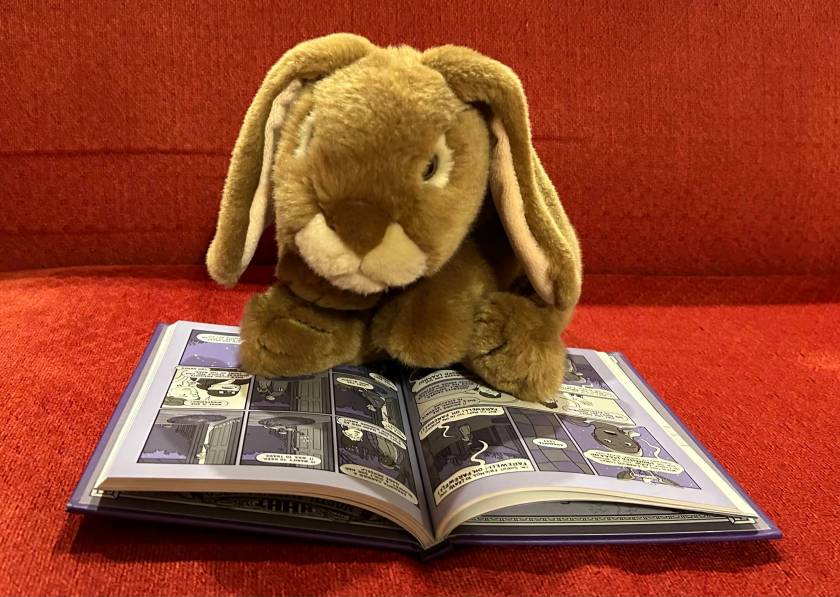
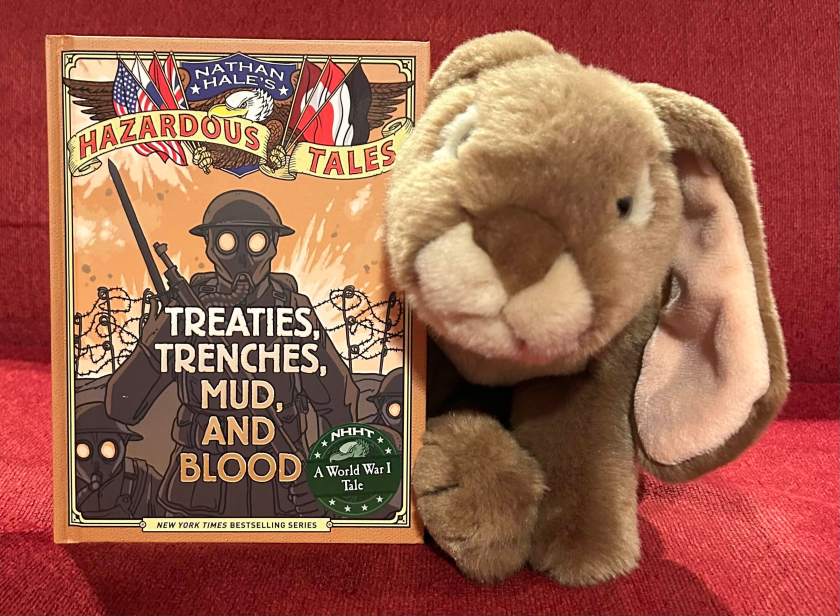
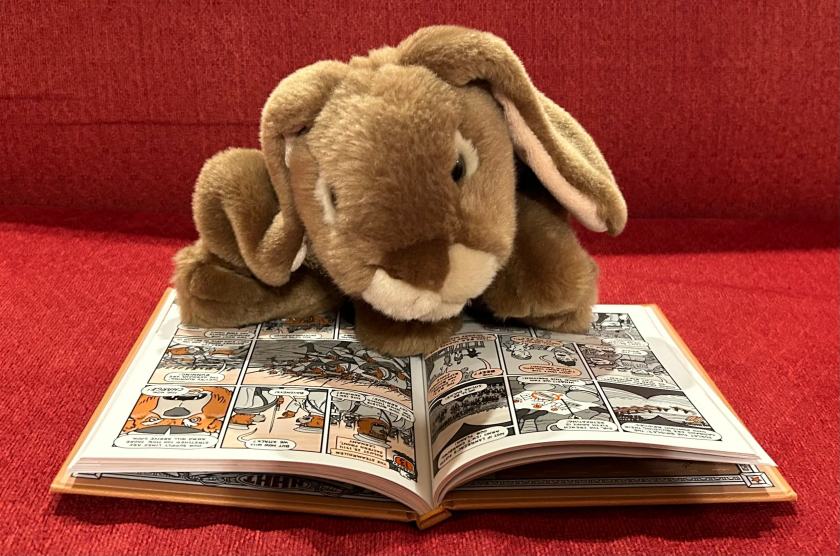
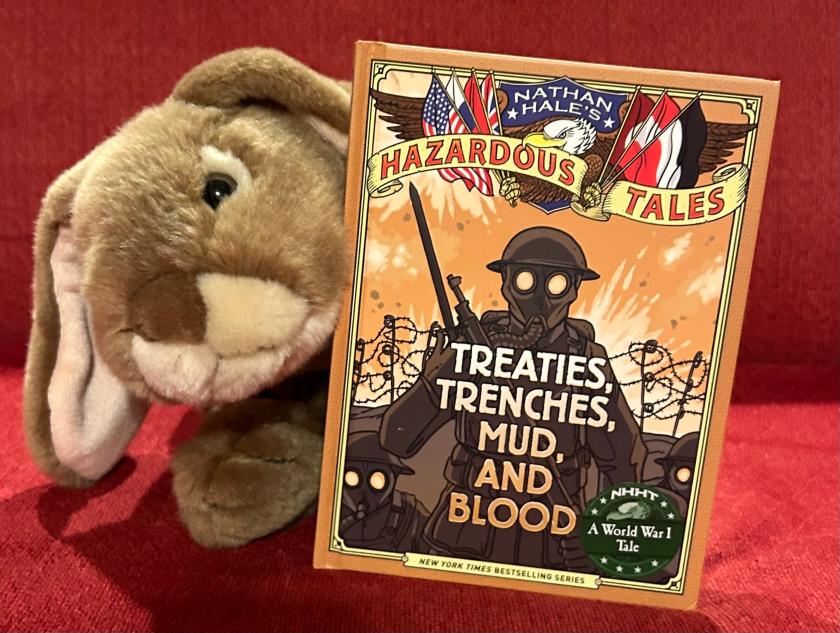
Caramel reviews Nathan Hale’s Hazardous Tales #2: Treaties, Trenches, Mud, and Blood by Nathan Hale

[We are back! The book bunnies were hit by a mysterious bug in the middle of October so had to take some time off. We are all finally feeling up for some reading and blogging again. Sorry for the disruption!]

Two weeks ago, Caramel reviewed the first book in the Nathan Hale’s Hazardous Tales series, recommended to the book bunnies by one of our friendly readers. This week he is talking to Sprinkles about the second book in the series, Treaties, Trenches, Mud, and Blood, first published in 2014.

[We were hoping to go through these books in order, but Caramel happened to first read a three-book sampler which was made up of the first, fourth, and the fifth books! So the numbering of these posts is mainly about the order Caramel is reading them in. Treaties, Trenches, Mud, and Blood, reviewed in today’s post, is the fourth ever book in the series, originally published in 2014.]

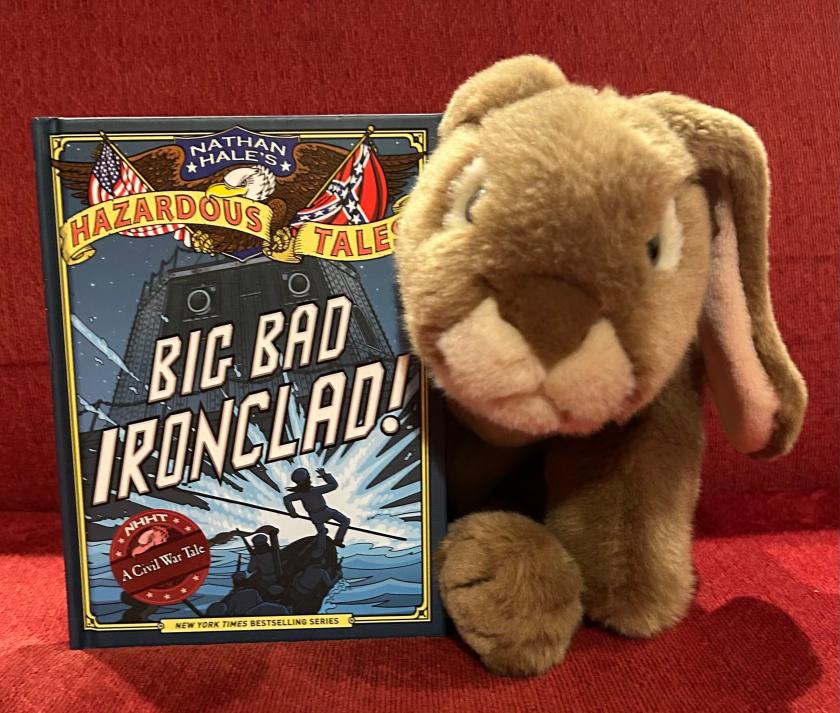
Caramel reviews Nathan Hale’s Hazardous Tales #2: Treaties, Trenches, Mud, and Blood by Nathan Hale.

Sprinkles: So here we are, ready to talk about the second Nathan Hale book. So tell us a bit about the book Caramel.

Caramel: This is about World War One. Apparently it is one of the worst wars ever, in terms of how many people died.

S: I agree. It was also a very impactful event, leading to the fall of many powers and rise of others. But then, is the book a basic history of the war?

C: It is a comic book, like the first book. So it is history, but told in a different way. Many of the people are not people. I mean, they use different kinds of animals to represent all sorts of people. Like there are bird-faced soldiers, lion-faced people, and so on. I think it is called “anthropomorphized animals” because they are supposed to represent humans.

S: So it is kind of like Maus, the book Marshmallow reviewed about the Holocaust, where the humans were replaced by cats, mice, and pigs?

C: Yes! But I have to say that book is so much more depressing.

S: But are they consistent with the animal depictions? Like all dogs are some type of people?

C: Well, kind of. The Russians are bears, the British are bulldogs, the Germans are eagles, the Ottomans are otter, and the Americans are bunnies, like us!

S: That is interesting! I guess in a war with so many different groups involved, it kind of makes sense. It would be really hard to distinguish different nationalities by their uniforms for example.

C: I agree. I think it is clever.

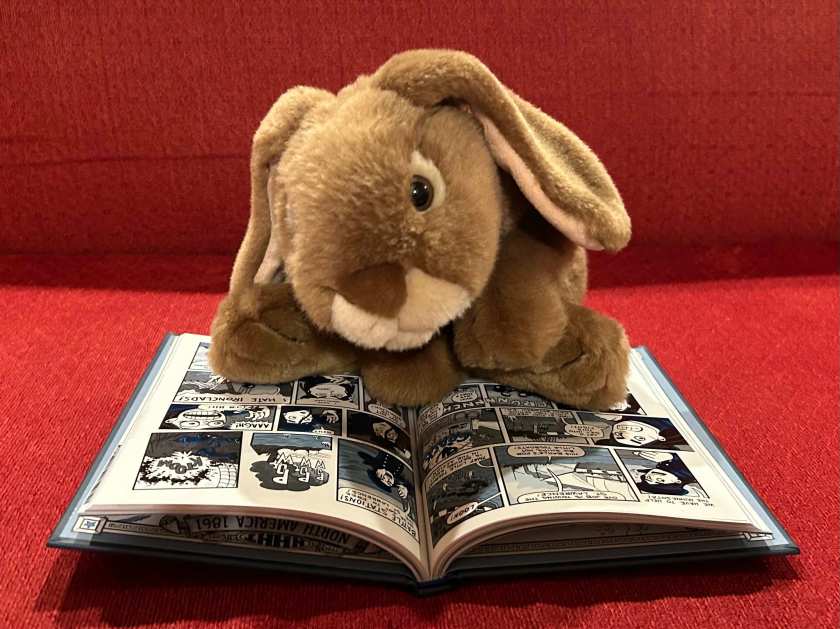
Caramel is reading Nathan Hale’s Hazardous Tales #2: Treaties, Trenches, Mud, and Blood by Nathan Hale.

S: I can see how you would like a book like this. You like facts, so you would of course like historical stuff.

C: Yes, and I really am curious about World War One. The book is full of facts! For example, I learned that the U.S. army did not have enough uniforms to go around at the time when the U.S. entered the war.

S: I did not know that! Interesting! So the book is really a story of the war, you say. Does it start at 1914 and end at 1918? Or does it go back and forward a bit so you get some context?

C: It goes from 1914 to 1918, mostly in the time order. It jumps from one battle to another though, and you learn lots of facts here and there, like I learned about the Unkillable Soldier.

S: I know you like your facts!

C: Yep.

S: So it is pure history?

C: Well, they do make up some dialogue. But they also sprinkle in some well-known quotes, like this one.

S: I see. So all in all, this was a good read for you?

C: Yes.

S: Do you want to read another Nathan Hale book or another book about the War?

C: Yes. Maybe I can take some time off from war stuff. The next Nathan Hale book sounds good though.

S: That is settled then. You read that and we talk about it next week.

C: Unless we all get sick again!

S: I hope we won’t. We should be immune by now.

C: Well, there are always other bugs.

S: You are right, but I do hope we will be able to continue with the blog. This was the first time in five years that we missed our scheduled posting times…

C: I know you are really bummed by that…

S: Yes. But I am glad we were able to start again today. So thank you for talking to me about your book!

C: You are welcome! I always like to talk about books!

S: So as we wrap up this review, what would you like to tell our readers?

C: Stay tuned for more book bunny reviews! And it won’t be too long!
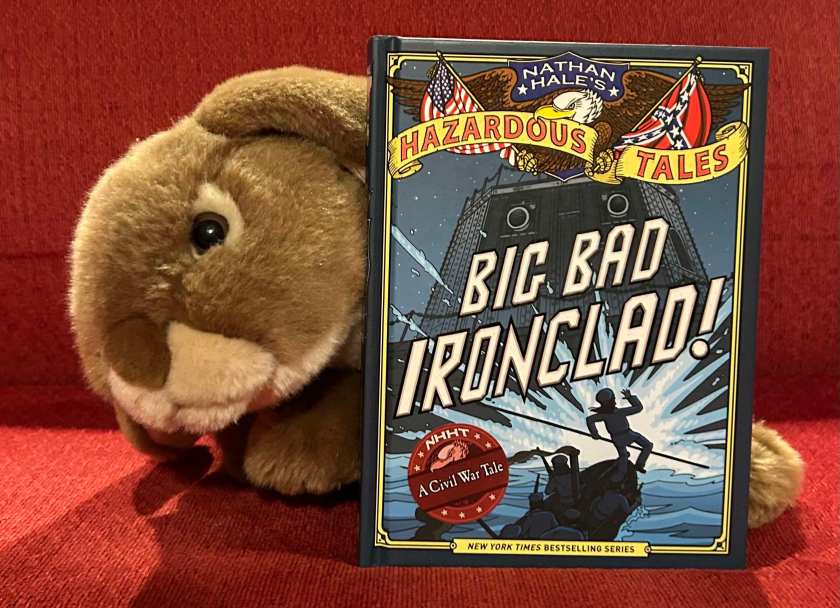
S: Hopefully…

Caramel enjoyed reading Nathan Hale’s Hazardous Tales #2: Treaties, Trenches, Mud, and Blood by Nathan Hale and is ready for more history!

Caramel reviews Nathan Hale’s Hazardous Tales #1: One Dead Spy by Nathan Hale

Today Caramel is talking to Sprinkles about the 2012 graphic novel One Dead Spy, the first book in the Nathan Hale’s Hazardous Tales series, recommended to the book bunnies by one of our friendly readers.

Caramel reviews Nathan Hale's Hazardous Tales #1: One Dead Spy by Nathan Hale.
Caramel reviews Nathan Hale’s Hazardous Tales #1: One Dead Spy by Nathan Hale.

Sprinkles: So Caramel, you were talking about finding a new series last week. It looks like you found one!

Caramel: Yup.

S: So tell me about this new series of yours.

C: This is a series called Nathan Hale’s Hazardous Tales. There are many books in it. They are all graphic novels about some history stuff.

S: Hmm, so why are they called Nathan Hale’s Hazardous Tales? Do they have something to do with Nathan Hale, the famous American spy?

C: Well, kind of but also kind of not. I mean, the books are written by a guy named Nathan Hale, so it makes sense that the series would have his name on it.

S: I see.

C: But also the very first book in the series, the one we are talking about today, is about the spy Nathan Hale.

S: Oh, that is neat! So a guy named Nathan Hale writing a book about another guy named Nathan Hale.

C: Yep.

S: So this One Dead Spy is the story of Nathan Hale the spy, right?

C: Yep.

S: I see. So tell us about the story a bit.

C: The book starts with him being on the gallows about to get hanged. He says his famous words: “I regret that I have but one life to give for my country.” And then the gallows turn into a history book and then the book eats Nathan Hale.

S: Wait, what?

C: Yup.

S: I’m sure that’s not how it happened.

C: Not in real life. But this is fiction, Sprinkles, don’t forget.

Caramel is reading Nathan Hale's Hazardous Tales #1: One Dead Spy by Nathan Hale.
Caramel is reading Nathan Hale’s Hazardous Tales #1: One Dead Spy by Nathan Hale.

S: Alright, after the book eats Hale, what happens then?

C: Then he comes back and he knows the entirety of U.S. history. The rest of the book is about the American Revolutionary War.

S: Oh, then if he will be narrating the other books, too, I can see why the series would be called Nathan Hale’s Hazardous Tales.

C: Yup.

S: Did you know about Nathan Hale before reading this book?

C: I learned a little in school. But also remember, in the Spy School series, Ben’s best friend Erica is Erica Hale, and she is a descendant of Nathan Hale. So that is fiction, too, but I think reading that made me remember the school stuff better.

S: Hmm, that is cool, actually.

C: It is. Reading is useful, Sprinkles!

S: I agree! So tell me, this is a graphic novel about history. Did you like this format for this kind of story?

C: Yes. I love graphic novels and I love facts. So this is basically two things I love put together.

S: That is wonderful Caramel. I am so happy you found a new series!

C: Me, too!

S: So maybe it is time for you to move on to the next book. And we can wrap this up then. What would you like to tell our readers?

C: Stay tuned for more book bunny reviews!
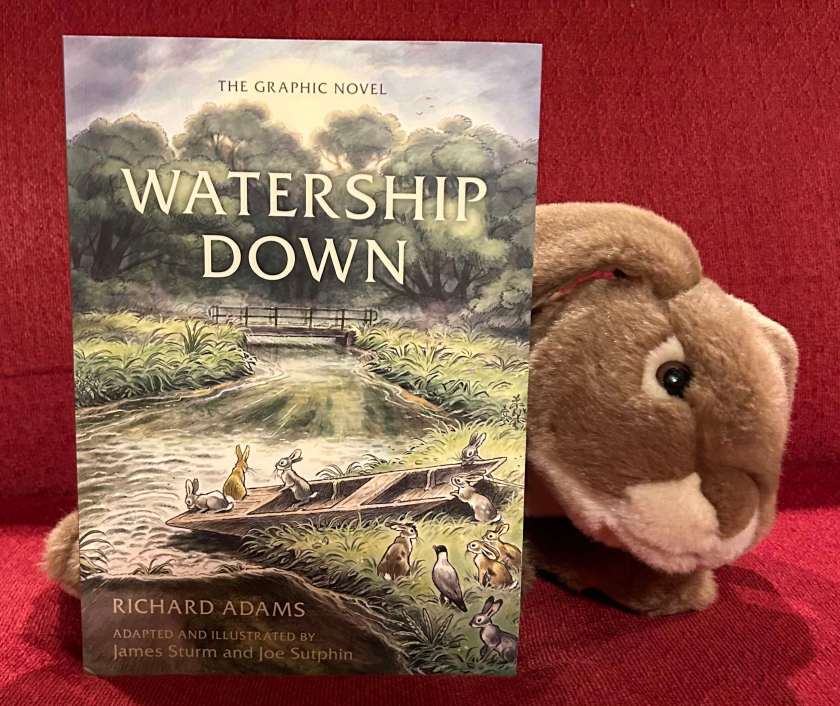
Caramel loved reading Nathan Hale's Hazardous Tales #1: One Dead Spy by Nathan Hale and is ready for the next book in the series.
Caramel loved reading Nathan Hale’s Hazardous Tales #1: One Dead Spy by Nathan Hale and is ready for the next book in the series.

Marshmallow reviews Maus: A Survivor’s Tale by Art Spiegelman

Today Marshmallow reviews the first volume of Maus: A Survival Tale, Art Spiegelman’s graphic novel first published in 1986. Sprinkles is taking notes and asking questions.

Marshmallow reviews Maus: A Survivor's Tale - I: My Father Bleeds History by Art Spiegelman.
Marshmallow reviews Maus: A Survivor’s Tale – I: My Father Bleeds History by Art Spiegelman.

Sprinkles: So Marshmallow, you chose to talk about a classic graphic novel today.

Marshmallow: Yes, we are talking about Maus: A Survivor’s Tale. This is in fact the first of two volumes, and Art Spiegelman published the second volume in 1991.

S: Okay, thanks for that important note. Wikipedia tells us that this is the first graphic novel that won a Pulitzer Prize. So I am glad you have read it and will talk with me about it.

M: I can see why it would get such an important prize. It is a very important book and it has a very important message.

S: Okay, so maybe it is about time to tell our readers what this book is about. They have already seen your photos with it, and they must be wondering.

M: Yes, sure. The book is about the Holocaust, and the imagery in the front cover is basically describing the main metaphorical device used in the story.

S: How so?

M: This is a graphic novel, as we said before, and all characters are animals. There are mice, and those are supposed to be the Jews, and then there are cats. Those are the Nazi Germans. Then there are pigs, who are supposed to be the non-Jewish Poles. And as I said before, the story takes place around the time of the Second World War.

S: I see. When you tell me all this, I am thinking of how sometimes a cat could be playing with a mouse just to have fun and even kill it with no remorse even when it does not need to eat it. I can see how the cat-mouse-pig metaphor could work.

M: Yes. The story is basically about Vladek who is the author’s father, and his experiences before and during the war. Vladek lived in Poland before the war, and when Germany invaded Poland, he and his family continued to live there. For a while they try to survive but eventually they are sent to the Auschwitz concentration camp.

S: That sounds intense!

M: It is. There is also a second story line, which is more or less the present day, or rather around the time this book was first published. The main story is basically the author’s father’s story, and the second story line is about the author as a grownup trying to connect with his father.

Marshmallow is reading Maus: A Survivor's Tale - I: My Father Bleeds History by Art Spiegelman.
Marshmallow is reading Maus: A Survivor’s Tale – I: My Father Bleeds History by Art Spiegelman.

S: Okay, so now we know the main plot lines and so on, but tell me Marshmallow, how was it like reading such a tough story in graphic novel form?

M: I thought it worked really well. It was very easy to visualize things, even though the characters are mice and cats and so on, because they had already been visualized for you. The book and its visual nature show the undeniably horrific nature of the Holocaust. You fully feel the pain of the mice, and knowing that these events actually happened to people, it makes the whole book even more impactful.

S: I wonder if the harshness of the realities the book is depicting can be related to why some people want to ban this book from school libraries. Some people want us to forget and never talk about these historical events, I am not talking about those people. But even those who believe we should teach this history might think that these stories are too hard to share with young people.

M: I understand why you want us to emphasize that the themes and imagery of the book might be disturbing to very young readers. There is violence in the book. But I also think it is very important for young bunnies to know what happened. And this book does a very good job in telling exactly what happened. And maybe ironically, the use of animal characters allows you to end up seeing the humanity of the victims of the Holocaust very clearly.

S: You make a very good point Marshmallow.

M: Thank you. I also wanted to say the book reminded me of Animal Farm a bit because it shows the worst aspects of humanity under the guise of animals. The animal characters allow us to look at ourselves and see how terrible we truly are or can be. Since we are not seeing humans, we can see things more objectively.

S: That makes sense to me, too, Marshmallow. Okay, this is already a pretty long post. Before we wrap things up, can you tell me how you would rate this book?

M: I’d rate it 100%. It is a striking and impactful book. And I recommend it strongly. It is important for bunnies to understand the magnitude and the impact of these events.

S: Okay, thank you Marshmallow. So last words?

M: Stay tuned for more amazing reviews from the book bunnies!

Marshmallow rates Maus: A Survivor's Tale - I: My Father Bleeds History by Art Spiegelman 100%.
Marshmallow rates Maus: A Survivor’s Tale – I: My Father Bleeds History by Art Spiegelman 100%.

Marshmallow reviews Beowulf: A Graphic Novel Adaptation by Gareth Hinds

Today Marshmallow is talking to Sprinkles about Beowulf: A Graphic Novel Adaptation, written and illustrated by Gareth Hinds and first published in 2007.

Marshmallow reviews Beowulf: A Graphic Novel Adaptation by Gareth Hinds.

Sprinkles: So Marshmallow, you read yet another graphic novel adaptation of yet another ancient story. Tell us a bit about this book.

Marshmallow: This book is about a hero named Beowulf. The story takes place within the world of Norse mythology. Beowulf is a strong warrior, who is the leader of a people called the Geats. There is a king named Hrothgar, who is the leader of the Danes, who decides to build a banquet hall that will be the greatest ever. Once this great hall is finished however, this monster from “an accursed race” called Grendel comes and eats everyone who is there at night. And then this happens for twelve winters.

S: Wait, so there is a monster who comes and eats the folks in the great hall at night. Then why don’t they leave the hall empty at night?

M: I do not really understand the logic there either. But that is what happens. So Grendel is a big threat to the Danes and their king. Until Beowulf comes and he says he will save them. And he fights Grendel and kills him.

S: So is that the whole story then?

M: No, this is only part one. Then Beowulf has to kill Grendel’s mother who is another monster, and then there is a dragon who comes, and Beowulf kills that too.

S: So the book is about three different heroic triumphs of Beowulf protecting or saving the Danes.

M: Almost but not quite. Those things kind of happen but there is more. Between the murder of Grendel’s mother and the dragon, Beowulf returns home and rules over his land for fifty years. And then the dragon comes and attacks the Geats. So Beowulf has to fight against the dragon. He manages to kill it but he is mortally wounded in the fight.

S: So he dies in the end?

M: Yes, but he seems quite at peace with it because he lived a long and valiant life and he saved his land and his people. And other people too.

S: You mean the Danes?

M: Right.

Marshmallow is reading Beowulf: A Graphic Novel Adaptation by Gareth Hinds.

S: So the original Beowulf story is very old.

M: Yes, not as old as the Iliad or the Odyssey, but the first known manuscript of the story is more than a thousand years old. But this graphic novel looks like it would fit right in with the genre. Especially if you like graphic novels which are very graphic.

S: Can you open that up a bit?

M: I mean the fights are depicted very explicitly. It is rather violent. For example, Beowulf rips off Grendel’s arm and Grendel is shown eating people and ripping off other people’s limbs and so on. It is really violent. I would definitely not recommend the book for little bunnies.

S: I looked at the book a bit and did see a lot of action and violence.

M: Yes. But I think most teenagers can handle it. And if they are trying to get the sense of the historic text, this could be very helpful. It is a very fast read. There is very limited amount of text, and there are many pages where there is no text whatsoever.

S: Hmm, that sounds interesting. It does seem like you appreciated reading the book.

M: Yes. I’d even rate it 95%. Honestly when I first began to read it, I thought that maybe the font of the text was a bit too fancy and could make it hard to read, but then I got used to it and could read it easily. I’d definitely recommend this book to bunnies curious to know the story of Beowulf.

S: That makes sense.

M: Did you know that J.R.R. Tolkien, the writer of the Lord of The Rings trilogy and The Hobbit, was a scholar who wrote a bunch about the original story Beowulf? He worked on a translation of it from Old English and even wrote about translating it.

S: I knew he was a scholar of ancient literature but I think I did not know he worked with Beowulf specifically. That is very interesting Marshmallow.

M: I thought so too.

S: Okay, then; this is probably enough for this review. What would you like to tell our readers as we wrap it up?

M: Stay tuned for more amazing reviews from the book bunnies!

Marshmallow rates Beowulf: A Graphic Novel Adaptation by Gareth Hinds 95%.