Caramel reviews The Giver by Lois Lowry

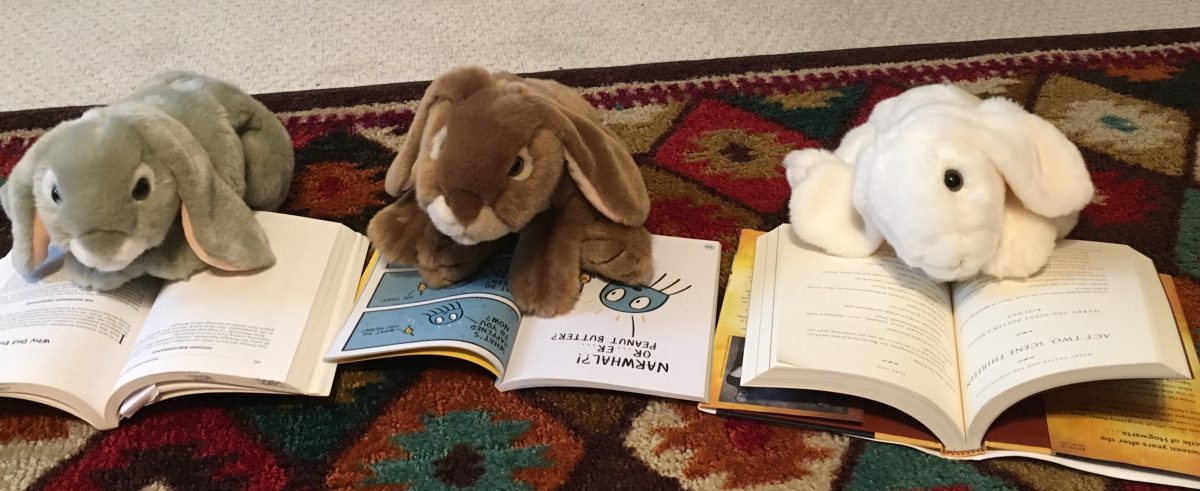
Today Caramel reviews a book he read in school: The Giver, by Lois Lowry. Published originally in 1993, the book has already become a classic, read by many students across the United States; it has also won the Newberry Medal in 1994. Sprinkles, who has not had the chance to read the book yet, is asking questions and taking notes.

Caramel reviews The Giver by Lois Lowry.

Sprinkles: So Caramel, today we are talking about The Giver, a book you have read and discussed in school over the course of a few weeks. 

Caramel: Yup. 

S: So let us start at the beginning. Can you tell our readers what the book is about?

C: Yes, sure. This book is about Jonas, a boy that lives in a community that controls the lives of those that live in the community.

S: I see. In what ways are they controlled? Can you give some examples?

C: They are not able to decide who they marry or choose their jobs. Even their death is controlled! The leaders get to choose who dies and when. They also choose the names of the newborn children. So the world of those who live in the community is very controlled, and they basically have no choice in anything.

S: Oh my goodness! When you first began with people not getting to choose who they marry or what their jobs should be, I was going to say that that has been the case in many societies throughout history, but then things got even more and more restrictive. No wonder this book is classified as a dystopian novel. Which according to my trusty dictionary means “an imagined state or society where there is great suffering or injustice.”

C: Yup, it sure does make sense, doesn’t it? But there is more. The people are also taking drugs to not have any emotions. Color is also taken from their lives, so at least they are not racist. But seriously, they are supposedly doing all this so everyone is equal, but it is pretty depressing.

S: Wow! That is really disturbing. Marshmallow had read and reviewed Brave New World where the people also had access to a drug called soma but there the drug was to just make them not feel bad things. That was also bad, of course, and it numbed them and made them more complacent, but forcing people not to have any emotions, and not to even see color, sounds really terrible.  

C: This is kind of a next level of control from Brave New World, even Nineteen Eighty-Four, I think. I mean I have not yet read those books, but from what Marshmallow wrote in her reviews, I have got a pretty good idea of what is going on.

S: Well, it seems you did understand them well enough. And of course you should read them at some point, too. But you are making a good comparison, Caramel. In Nineteen Eighty-Four, maybe there they do not mess with feelings in the same way; rather they break people who have attachments to other people and make them love the Big Brother only.  

C: In The Giver, too, they have a Big Brother-like leadership group. So for example, if you speak out against them once, you are “released.” Or injected with a deadly poison. The same happens with twins: one is kept, and the other is killed.

Caramel is reading The Giver by Lois Lowry.

S: Alright so in this dystopian world, what is going on? You told us the setting. Now tell us the plot, the events. 

C: Sure. So in the beginning, Jonas, the main character, starts to notice some weird things, For example, he starts to see some color. Like he has an apple and it for a moment becomes red. And then his friend Fiona is in color, too. But remember they could not see color before. 

S: It must be shocking to start seeing things in color if you had never seen color before. I remember the first color TV I saw, and I was so excited. But I could at least see color outside a TV screen before. 

C: Yep, it made him think that he was going crazy.

S: I bet! So then he starts asking questions and trying to understand what is going on with him and with his community and learns some really big secrets?

C: Hey, I was just going to say that! You stole my line Sprinkles.

S: Well, I have read my fair share of dystopian novels. 

C: That is probably true. I have not read as many books as you.

S: Well, you are still a very little bunny. And so you have many years to catch up. I bet you will catch up and pass me in just a few years… 

C: Maybe, just maybe.

S: Anyways, so what did you think? Did you enjoy reading this book?

C: Yep, it was a good book, except for chapters 11-13. I thought those were a bit too mushy, so I only skimmed through them. I am not sure I missed much.

S: I am guessing you are using mushy the same way Marshmallow uses it so some close romantic relationships were involved?

C; Yeah, but it really did get a bit too mushy for me.

S: Okay, I understand. So I would expect that there was some character development and such in those sections, so you probably did miss some things like that. But that’s alright. About the main setting and the story though, did things feel a bit too tense for you while you were reading it? Too depressing? It feels like it is a really oppressive world. 

C: Yeah, it is really oppressive. So I did not enjoy it like fun and games because it is about a very harsh world, but the story is very interesting, so I kept on reading. Also I had to read it. It was for school, remember? 

S: Yes, true that. But for example, do you think I should read the book, too? Do you think other young bunnies should read it? 

C: It is probably better suited, I suppose, for those bunnies that are not too young, but somewhere in the tweens or teens, everyone over ten or something should find it an interesting book, too. So yes, Sprinkles, you should definitely read it! 

S: Hmm, my last dystopian novels were the Hunger Games books that I read after Marshmallow recommended them. I guess I should look into this one, too. Did you know that there are apparently three other books from the same author that take place in the same world as The Giver? Do you think we should look into getting a copy of one of those for you? 

C: Maybe, but I think that this is kind of conclusive, and works really well as its own thing.

S: Oh, so no cliffhangers. That is great! And maybe you can take a break and look at some other worlds and stories for a bit. 

C: I’d like that. Maybe I will get to read a totally different type of book next week. We might at some point come back and revisit Jonas’s world though. I could like that, too. 

S: Sounds good. This might be a good place to wrap up this review Caramel. What do you want to tell our readers? 

C: Stay tuned for more book bunny reviews!
Caramel has enjoyed reading The Giver by Lois Lowry and is curious about the other books its author wrote as sequels.

Caramel reviews Adam & Thomas by Aharon Appelfeld

Today Caramel is talking to Sprinkles about Adam & Thomas, a book written originally in Hebrew in 2013 by Aharon Appelfeld, translated into English by Jeffrey M. Green, and illustrated by Philippe Dumas.

Caramel reviews Adam & Thomas, written by Aharon Appelfeld, translated into English by Jeffrey M. Green, and illustrated by Philippe Dumas.

Sprinkles: Let us talk a bit about this book Caramel. Maybe first start by telling us what it is about.

Caramel: It’s about two nine-year-old boys who escape one of the darkest times in human history. I mean, maybe the darkest time in modern history.

S: You are of course talking about World War II and the Holocaust, when millions of European Jews were systematically murdered by Nazi Germany and their collaborators.

C: Yes. And you know I did not really want to read this book because I knew it would be sad once I saw it was about that time.

S: Yes, I know. But I thought it was a good book and that you should probably read about that event anyways. After all, you just read The Donner Dinner Party and that was also about pretty harsh truths.

C: Yup. But I knew about the Holocaust. I did read Maus, too, even though Marshmallow was the one who reviewed it. And I did not like it because it is really really sad.

S: I know. But at least this book ends up in a more positive place, no?

C: Yes. There is that, at least. Not only do they survive the war hiding in the forest for years, but they even find their mothers after all that time.

S: Well, I guess we gave away the ending, but at least readers will know that things will get better in the end even when they re reading the darkest parts of the story. That there is hope.

C: Yes.

Caramel is reading Adam & Thomas, written by Aharon Appelfeld, translated into English by Jeffrey M. Green, and illustrated by Philippe Dumas.

S: Did you know this was a translation?

C: Yup. It says it on the cover page. And I know how to read.

S: Yes, of course. but sometimes people or even bunnies do not notice these things, so I thought I’d ask. So the author wrote this book in Hebrew, a language he learned only as a teenager. And he was apparently a pretty well-known author in Hebrew, and in English translation, and Jeffrey Green who translated this book was his standard translator.

C: I did not know any of that. But I think the English works perfectly well. I mean I thought it was a good book for young bunnies.

S: Yes, you are right. The sentences are simple and short. I think it is just right for young bunnies, even though the topic is a bit sensitive, and some younger bunnies might not be able to handle it.

C: Yes, I think so too. But the book is also a little long for really young bunnies. It has almost 150 pages!

S: But there are illustrations on almost every other page!

C: True. And they are really neat too.

S: Tell me more.

C: The illustrations are relatively simple and yet very detailed too. They are in color, and I liked looking at them.

S: I liked them too Caramel! So are you still upset with me for making you start reading this book?

C: No, not really. I think this is a good book with an interesting storyline, and it makes you feel like it might have actually happened. Like the characters are real people.

S: Apparently the author himself ran from a camp and lived in similar circumstances when he was about that age. So that might be why you found it so realistic, because it was real, at least to an extent.

C: Yes.

S: So maybe this is a good time to wrap up this review then. What would you like to tell our readers?

C: Stay tuned for more book bunny reviews!
Caramel appreciated reading Adam & Thomas, written by Aharon Appelfeld, translated into English by Jeffrey M. Green, and illustrated by Philippe Dumas, and thinks it is a good story to teach little bunnies about what happened to some young children during World War II.

Caramel reviews Nathan Hale’s Hazardous Tales #6: Alamo All-Stars by Nathan Hale

Today Caramel is talking to Sprinkles about Alamo All-Stars by Nathan Hale, published first in 2016. This is the sixth book in Nathan Hale’s Hazardous Tales series, and thankfully the sixth book Caramel happened to read from the series. (So finally these numberings match!)

For Caramel’s reviews of the five earlier books, please check out: One Dead Spy, Treaties, Trenches, Mud, and Blood, The Underground Abductor, Big Bad Ironclad, and Donner Dinner Party.

Caramel reviews Nathan Hale’s Hazardous Tales #6: Alamo All-Stars by Nathan Hale.

Sprinkles: So here we are, talking about yet another Nathan Hale book.

Caramel: Yes! And this one is also a great book!

S: Oh, yes? So you have enjoyed reading about the Alamo? Isn’t that supposed to be a story of a big defeat?

C: Yes, but a very heroic one! And at the end of the book, the author ties things up by telling us how the U.S. in the end did win over Texas. So they lost Alamo first, but eventually they won it back. Kind of like losing the battle and winning the war.

S: I see. But it was also probably a heroic win for the other side, at least the stand at Alamo.

C: I suppose. You are right. All wars have at least two sides. When one side wins and celebrates, the other side is losing and facing great difficulties. So I like reading about wars and history, but it would be best if there were no wars. I think we can say that we have had enough wars. Maybe we do not need any more.

S: Such wise words from a little bunny…

Caramel is reading Nathan Hale’s Hazardous Tales #6: Alamo All-Stars by Nathan Hale.

S: Okay, so this book is all yellow!

C: Yes, you said last time that each book has one thematic color, so maybe you were right. This is the yellow book. There are other colors in the book too, of course but yellow is a lot more visible in this book than the others.

S: Is there any humor in the book? I mean it is about war and death again, but …

C: Yes. At least there are some light-hearted moments. And it does not feel as heavy as Donner Dinner Party.

S: I see. That is good. So it seems from this page created by Fulton County Library System that there are at least six more books in this series.

C: Yup. I want to read all of them!

S: I think that can be arranged. But maybe we can take a short break for a bit.

C: What are you trying to tell me Sprinkles?

S: Me? Nothing. Maybe there are other books you could read for the next week or two.

C: Maybe. Or maybe not. I do like these books!

S: I know. But maybe we can try a few other books for a bit.

C: I see what you are doing. And I guess we will see what you find for me to read for next week.

S: I mean, I won’t force you.

C: Hmm.

S: Okay, maybe this is a good time to stop talking about this book and wrap this review up. What would you like to tell our readers?

C: Stay tuned for more book bunny reviews!
Caramel enjoyed reading Nathan Hale’s Hazardous Tales #6: Alamo All-Stars by Nathan Hale and looks forward to reading many more historical graphic novels in the near future.

Caramel reviews Nathan Hale’s Hazardous Tales #5: Donner Dinner Party by Nathan Hale

Caramel is on a roll reading books from the Nathan Hale’s Hazardous Tales series by Nathan Hale. So far he has read and reviewed One Dead Spy, Treaties, Trenches, Mud, and Blood, The Underground Abductor, and Big Bad Ironclad. Today he talks to Sprinkles about the fifth book he read in the series: Donner Dinner Party, which was originally published in 2013 as the third book in the series. (See this page created by Fulton County Library System for the full chronological order of the books.)

Given the morbid nature of the historical events described (involving death and cannibalism), this review might not be appropriate for very young bunnies.

Caramel reviews Nathan Hale’s Hazardous Tales #5: Donner Dinner Party by Nathan Hale.

Sprinkles: So Caramel, it seems like it is once again time to talk about a Nathan Hale book.

Caramel: Yes! It is great that I can read another one of Nathan Hale’s Hazardous Tales.

S: I know you love these books! So tell me, what is this one about? 

C: It is about the people going to California in 1846.

S: Oh, I see, so this is about the Donner party, going west toward California and getting lost? 

C:Yes it is.

S: So the dinner party part is kind of poking fun at the rumors that some of them ended up eating others?

C: Yes, but it is not a very funny joke in terms of what it means. And it is not rumors; the Wikipedia article says they actually ate some of those who died because they were weaker, but they apparently also killed two Native American guides and ate them.

S: Caramel, that is awful!

C: Yep, and disturbing.

S: I mean, the other books you read in this series also had people dying, there were many wars and such, but this somehow feels a lot more morbid. 

C: Yep, it does. But apparently history can be pretty terrible. 

S: I can see that this book is making that quite clear. 

C: Yep, it certainly did for me.

Caramel is reading Nathan Hale’s Hazardous Tales #5: Donner Dinner Party by Nathan Hale.

S: So was reading this book a bit more challenging then? The story is pretty disturbing. 

C: Yeah, it was a little, but the scary parts are mainly on a couple pages, making them easy to skip.

S: And it seems like an important story, about how humans can get quite vicious and terrible when they are desperate. 

C: Yeah humans are sometimes very mean to each other, which is not a good thing.

S: I mean when you read Watership Down, we saw there that bunnies can also be cruel to one another, but at least we would never eat each other. We are vegetarian. 

C: And I guess I will have to remind you that Watership Down was fiction, Sprinkles. This book is about a real event!

S: I know I know. I was just trying to lighten up the mood, but it is pretty difficult. So let us talk about the book in general. I suppose you had heard of the Donner party before. Did you learn anything new while reading Donner Dinner Party

C: Yep, that sometimes the people in the past, and sometimes now, can be very mean to others.

S: So true. And so sad… Okay, I will now shift gears because this is getting a bit too sad. It seems these books are in color but always only a couple colors show up on each two-page spread. Is that correct? 

C: yep, this one had around 8 different colors total.

S: But only a couple of the colors showing up on one page, right?

C: Yep, at most maybe 2-3 colors on one page.

S: But it still seems to work well, right? 

C: Yes, it feels colorful at least.

S: After this I think there are still a few more books in this series. Are you interested?

C: Yeah, I can’t imagine there will be too many more cannibal stories in there.

S: I agree. Okay, so let us wrap this up then. What would you like to tell our readers?

C: Stay tuned for more book bunny reviews!
Caramel appreciated reading Nathan Hale’s Hazardous Tales #5: Donner Dinner Party by Nathan Hale and is ready for another adventure.