Marshmallow reviews You Know, Sex by Cory Silverberg and Fiona Smyth

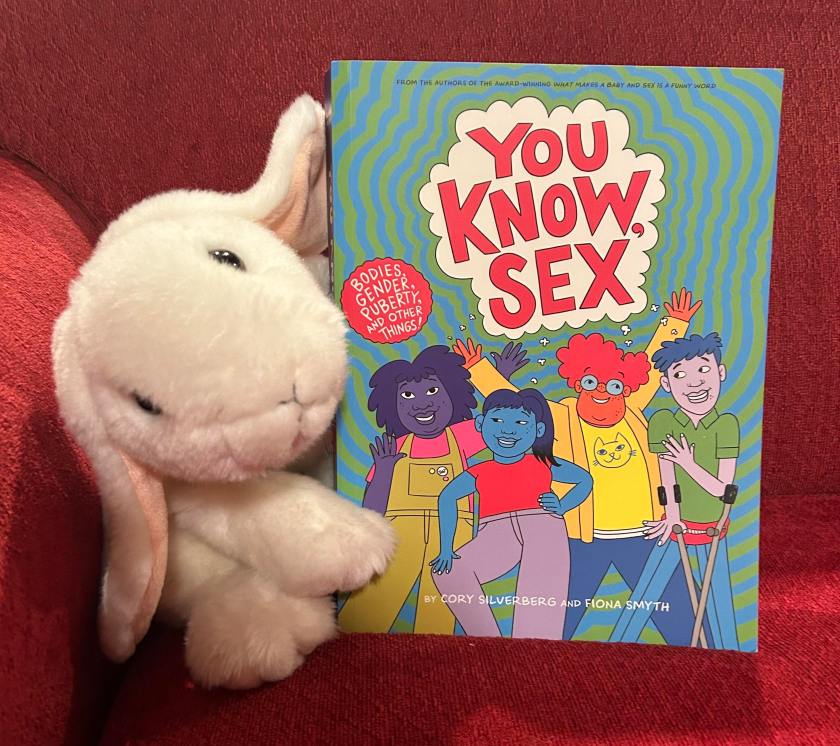
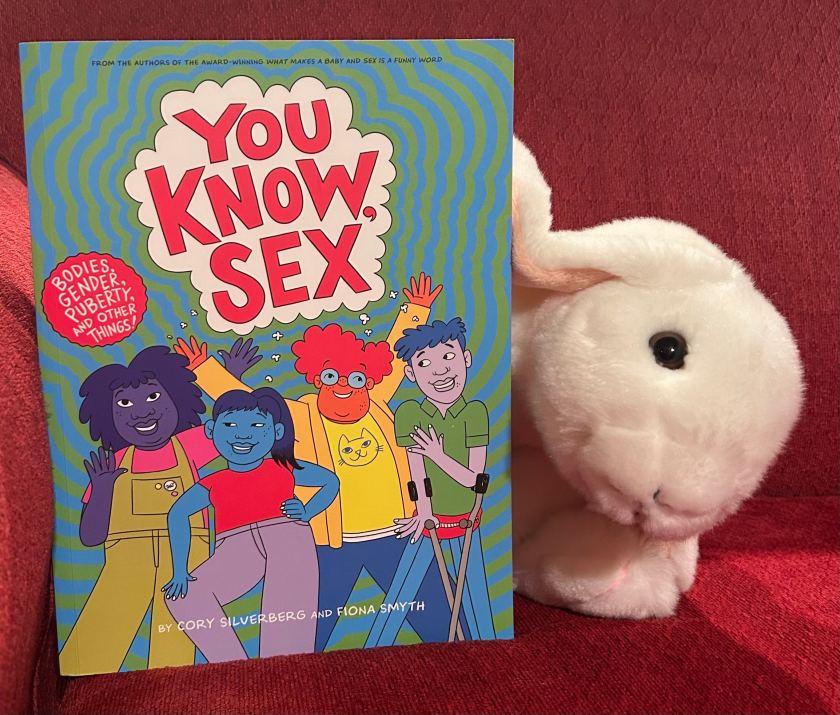
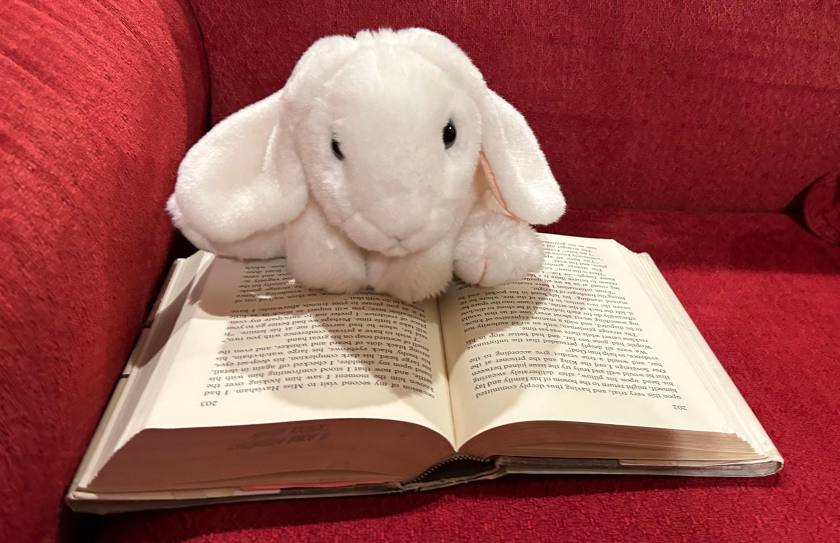
Marshmallow is reading about growing up and this week she wanted to talk about a recent book she read about puberty, growing up, and sex written for young people who are around her age: You Know, Sex: Bodies, Gender, Puberty, and Other Things by Cory Silverberg and Fiona Smyth. Sprinkles is taking notes and asking questions.

Marshmallow reviews You Know, Sex: Bodies, Gender, Puberty, and Other Things by Cory Silverberg and Fiona Smyth.

Sprinkles: First of all, as we begin this review, I want to thank you for reading this book, Marshmallow. After reviewing a collection of books about where babies come from, I had intended to write a post about a handful of books about puberty next. And one of the books I chose was this one, a huge, 432-page tome written in graphic novel form. But when I began to read it, I realized that my personal discomfort with the form (due to my poor eyesight) would mean I would probably not be able to give it its full due. So thank you for helping me out and checking the book out on your own.

Marshmallow: Well, that’s alright, Sprinkles. It was an interesting read.

S: That’s good to know. Can you tell us a bit about the specifics of the book?

M: Sure. You already said it is big, and has 432 pages. And you said it is written as a graphic novel.

S: The two who wrote this book also were the writer and the illustrator of What Makes A Baby?, one of the books I read for that review of books about where babies come from. And the pictures have the exact same style.

M: Yes, there are people with many different skin colors, like orange and purple and green and blue, and many different shapes and sizes.

S: Does that work well?

M: Yes, it is interesting. I think the people all look quite unique.

S: Well, I guess that makes the book more realistic, right? We are all quite different from one another.

M: Yes.

S: So tell us more about the book.

M: There are eleven chapters. They are titled: What is Sex? Bodies, Gender, Puberty, Feelings, Consent, Talking, Relationships, Reproduction, Touching, and Safety.

S: So the book covers a lot of ground.

M: Yup. It is also very contemporary.

S: What do you mean by that?

M: It has some ideas which I think are contemporary. They talk about gender identity and sexual orientation, transgender and non-binary people, and people having relationships with multiple partners.

S: The last one does not sound too contemporary to me. Polygamy and polyamory have been around for a long time. They have not always been accepted or legal though. I guess the authors are trying to teach the reader to be open minded about different arrangements.

M: I am not sure all readers would be too open to all of these ideas at this point.

S: I agree with that. Actually I too find some of these ideas challenging, especially polygamy. Though rabbits are typically not monogamous, according to Wikipedia, “scientific studies classify the human mating system as primarily monogamous, with the cultural practice of polygamy in the minority”. In any case, it is good to learn about how different people can relate with others.

M: Well, the book does not talk so much about polygamy as polyamory. But yes, it is good to learn about these different things.

Marshmallow is reading You Know, Sex: Bodies, Gender, Puberty, and Other Things by Cory Silverberg and Fiona Smyth.

S: They also talk about the changes a young bunny goes through in puberty, and more generally about biology and mechanics of sexual reproduction, right?

M: Well, yes. There are also very vivid depictions of things. They make an effort to show all kinds of things, so that the reader does not end up assuming that a body part has to look in one specific way. And they show people doing all kinds of different things together or alone.

S: I did look through the pages a lot, too, and I’d say there really are a lot of illustrations that some parents may not be comfortable with.

M: The self-discovery and self-exploration parts might also be kind of touchy topics for some folks, I’d imagine.

S: I did see a section on pornography, and that too is a very challenging topic. Perhaps grownup bunnies should read this book together with their young ones when they feel like the conversations about the various themes and issues that come up will be constructive.

M: I’d agree with that.

S: What were some of the other topics in the book? What topics did you find were most important?

M: They talk a lot about relationships, and I thought it was useful to learn about that. They talk about consent and power in relationships, and sometimes how people talk about being with people as a competition.

S: Yes, I did see that page about how sometimes people talk about “scoring” and the book instead encourages young people to think about “trust, respect, justice, joy, and choice”.

M: Yes, I did find those parts useful. All in all, it is an interesting and useful book, but I think grownups should probably check it out before sharing with their little ones.

S: Agreed. So what would you tell our readers as we wrap up this review?

M: Stay tuned for more amazing book bunny reviews!

Marshmallow appreciated reading You Know, Sex: Bodies, Gender, Puberty, and Other Things by Cory Silverberg and Fiona Smyth, and she thinks all growing bunnies should read a book along these lines; she also suggests grownups check it out before sharing with their little ones.

Marshmallow reviews Great Expectations by Charles Dickens

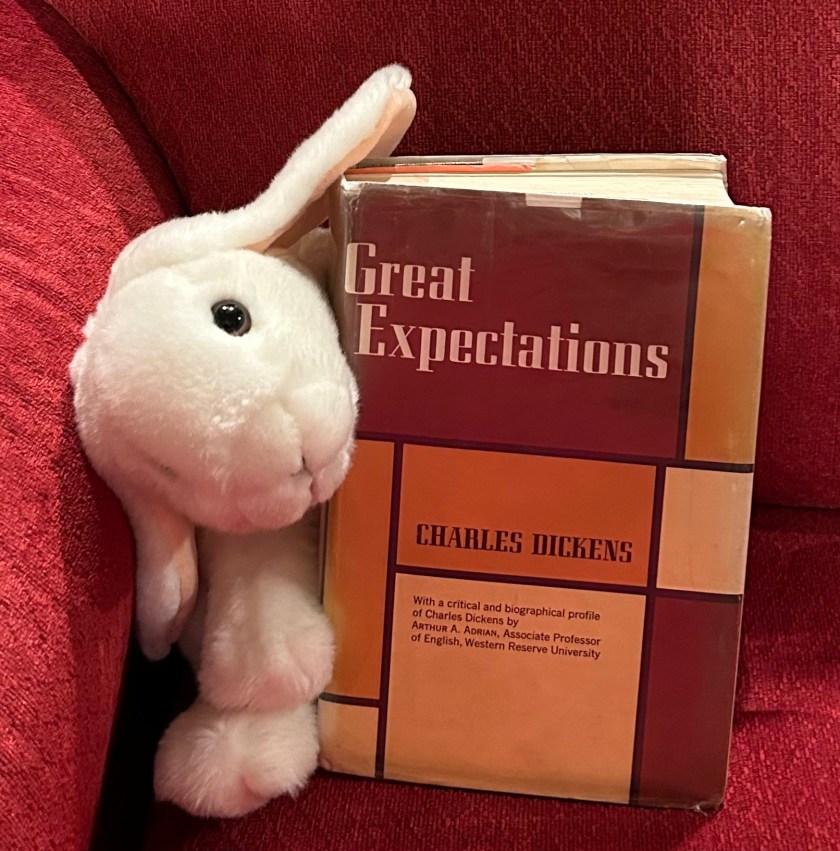
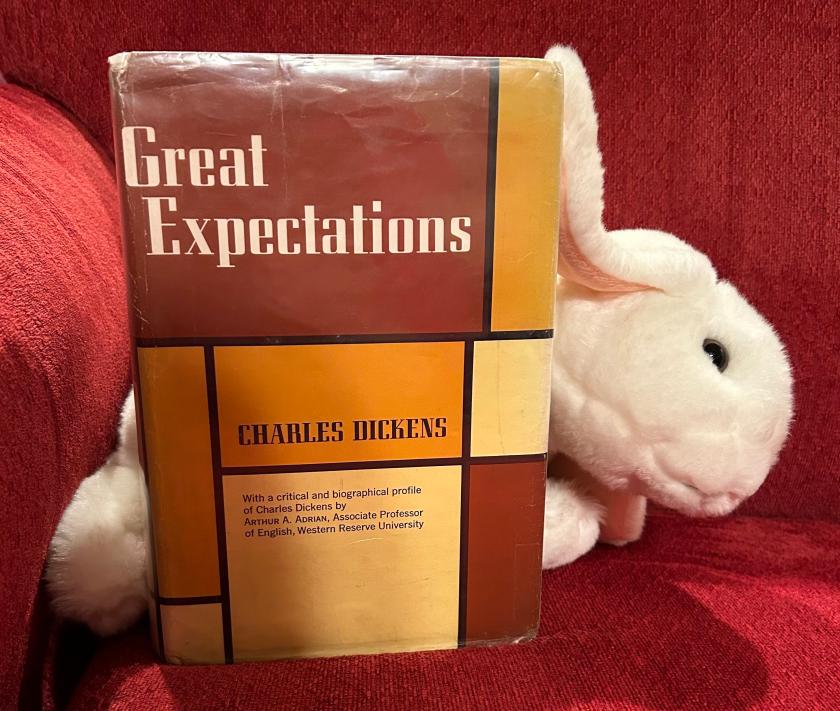
Marshmallow found a copy of a Charles Dickens novel, Great Expectations, in her classroom library and decided to check it out. Just like many other novels by Dickens, Great Expectations was first published as a serial, weekly from 1860 to 1861, and then came out as a single three-volume book in 1861. Below Marshmallow shares her thoughts on this classic.

Marshmallow reviews Great Expectations by Charles Dickens.

Marshmallow’s Quick Take: If you like books that are set in past time periods or if you enjoy coming-of-age stories, and if you are up for a really long read, then this might be the book for you. 

Marshmallow’s Summary (with Spoilers): Philip Pirrip (nicknamed Pip) is an orphan in the mid-early 19th century in Kent, England. His parents are dead but his much older sister (Georgiana Maria, though she is always referred to as Mrs. Joe) takes care of him. Unfortunately, she disciplines him very harshly, which was the norm back then. She is married to a blacksmith, Joe Gargery, who is kind and whom Pip views as a father figure. The story starts when Pip is around seven and he is visiting the graves of his parents and other siblings. There he unexpectedly meets an escaped convict who threatens to kill him unless he brings food and tools. Pip does so, but then soldiers arrive and ask Joe to mend some shackles. Pip comes with the soldiers and they find the convict fighting with another convict. The first one says that he stole the things that he ordered Pip to steal.

After this bizarre event, the narration moves on and we skip ahead a few years. In a couple years, a rich elderly woman is looking for a young boy to come visit her. Pip is chosen and so he starts going to her house every now and then. This woman is Miss Havisham who has an adopted daughter named Estella. Miss Havisham is a strange woman: she was supposed to be married, but when her fiancé left her at the altar, she froze everything where it was. She was still wearing her wedding dress and the clocks were all stopped to the time she learned she was abandoned. Miss Havisham raised Estella to be her revenge on the male part of the human species. Estella was raised to be heartless and break mens’ hearts. And Pip was to be her first victim. Pip falls in love with Estelle, leading to a great heartbreak throughout Pip’s life. 

Many years later, when Pip has been training to be a blacksmith, like Joe, he is given money to allow him to become a gentleman and he travels to London. It is presumed that Miss Havisham was the one who gave him the money. Pip’s life transforms many times into different things. This book follows his life through most of it from a young age to his older years. 

Marshmallow is reading Great Expectations by Charles Dickens.

Marshmallow’s Review: Great Expectations is a highly regarded book by the famous author Charles Dickens. I found it fascinating. I thought it was remarkable how it covered almost the entire life of one person. I also appreciated that there were so many twists and turns. I honestly did not expect what happened at the end. 

However, I would say that it is very difficult to read since it was written in a different time period where people wrote differently. Secondly, it is very complicated because there are so many characters and so many things happen to them at different times. I understood most of the book when I read it, but I missed some things because of the confusing language. I had to go back and reread and think things through a bit.

All in all I am glad to have read Great Expectations. It was my first Dickens book, and it is amazing to me that he wrote it and published it weekly first. It is such a big project! And there are so many things to keep track of because it is Pip’s entire life!

Marshmallow’s Rating: 95%.

Marshmallow rates Great Expectations by Charles Dickens 95%.

Marshmallow reviews Harry Potter and the Order of the Phoenix by J.K. Rowling

Marshmallow has been reviewing the illustrated editions of J.K. Rowling’s Harry Potter series for the book bunnies blog. In the past few years she has read and reviewed the first four books, Harry Potter and the Sorcerer’s StoneHarry Potter and the Chamber of SecretsHarry Potter and the Prisoner of Azkaban, and Harry Potter and the Goblet of Fire, all written by J.K. Rowling and illustrated by Jim Kay. This week, when the fifth book, Harry Potter and the Order of the Phoenix, finally appeared in the illustrated version, Marshmallow was able to get her paws on a copy and reread it once more. Below is her review of this book.

Marshmallow reviews Harry Potter and the Order of the Phoenix, written by J.K. Rowling and illustrated by Jim Kay and Neil Packer.

Marshmallow’s Quick Take: If you like books about magic and friendship, or if you have enjoyed the previous Harry Potter books, then this might be the book for you. (If you have not read any of the first four books yet, you might be better off starting from the beginning.)

Marshmallow’s Summary (with Spoilers): Harry Potter is a teenage boy who discovered on his eleventh birthday that he was a wizard (Harry Potter and the Sorcerer’s Stone). Since then his life has been transformed as he attends the Hogwarts School of Witchcraft and Wizardry. Not to mention that he is extremely famous as the boy who survived when Lord Voldemort, the Wizarding World’s most infamous villain, tried to kill him. When Voldemort failed to kill him, it was believed that the curse he released on Harry rebounded and killed Voldemort instead. However, in the four years Harry has attended Hogwarts, Voldemort has made several attempts to return. His first few attempts, chronicled in Harry Potter and the Chamber of Secrets and Harry Potter and the Prisoner of Azkaban, were eventually foiled, but unfortunately, last year, in the climax of Harry Potter and the Goblet of Fire, he succeeded. So at the beginning of this book, Lord Voldemort is back.

The bad part, besides the whole “worst wizard in the world has returned” part, is that the Wizarding World refuses to believe Harry when he tries to convince them that Voldemort is back, since he was the only witness to Voldemort’s return who is not working for Voldemort, and as expected, none of the others are talking. The entire Wizarding World believes now that Harry is no longer the miraculous boy who lived, but instead he is a nutjob conspiracist. Dumbledore, Hogwart’s headmaster, supported Harry’s claim and is now being demoted, with people insisting that he must be going senile. 

Since Harry only attends Hogwarts during the school year, he must spend most of the summer at the house of his aunt Petunia and uncle Vernon (with his obnoxious, bullying cousin Dudley). Aunt Petunia and Uncle Vernon despise magic as they are Muggles, or un-magical people, like the rest of us. (Harry’s parents were both wizards, but they were killed the night that Harry survived Voldemort’s curse.) Whenever Harry stays at his aunt and uncle’s, he is cut off entirely from the world of magic. Generally, his best friends, Ron and Hermione, send letters, but this summer, Harry only receives cryptic messages from them, saying that they are not allowed to tell him too much about what they are doing. 

Harry is thus feeling rather lonely and unhappy, when his predicament is much worsened by a sudden dementor attack. Dementors are foul creatures that feed on the despair of humans and can suck souls. Harry must use a spell to stop them from doing just that to his cousin Dudley (despite the fact that he hates him). However, underage wizards (like Harry) are forbidden from using magic in front of Muggles. As a result, Harry receives messages that inform him that he is to be tried for his behavior. So far it seems that everything is against him, and it is about to get a whole lot worse. 

Marshmallow’s Review: I have loved all of the Harry Potter books I have read (as well as pretty much every book written about this Wizarding World). The author has created a magical but realistic world with unique characters and undetectable plots. This fifth book is no exception.

As Harry is getting older, his world is becoming more and more dangerous, and the story is getting a lot scarier. Though I enjoyed this book immensely, and I watched the movie version with much excitement, I’d definitely urge caution for younger bunnies who might not yet be ready for this much tension.

The original version of the book, Harry Potter and the Order of the Phoenix, was already amazing, but this illustrated version is even more special. It is beautifully drawn by Jim Kay together with Neil Packer, filled with images and drawings relating to the story. The characters and events are portrayed in large, detailed drawings, each page is different, and I enjoyed diving into the images when I took my eyes away from the words. 

The Order of the Phoenix is the longest of the seven Harry Potter books, so this illustrated version is a really big book, almost like an encyclopedia volume. But it is beautiful to behold. I very much enjoyed returning once more to Harry’s world in this illustrated edition.

Marshmallow’s Rating: 100%.

Marshmallow rates Harry Potter and the Order of the Phoenix, written by J.K. Rowling and illustrated by Jim Kay and Neil Packer, 100%.

Marshmallow reviews Nineteen Eighty-Four by George Orwell

Last week while talking about Flowers for Algernon, Marshmallow and Sprinkles touched upon a book by George Orwell, Nineteen Eighty-Four, first published in 1949. This week, Marshmallow thought it might be a good idea if they picked up this book on its own and chatted a bit about it together.

Marshmallow reviews Nineteen Eighty-Four by George Orwell.

Sprinkles: So Marshmallow let us start with a quick recap of the book.

Marshmallow: Okay. Winston Smith, the main character of the book, lives in this weird futuristic world. The year is 1984, but even though 1984 is a long time ago for us today, it was a long time in the future when the book was written. The world Smith lives in is controlled by a government, run by the Party, which has several departments with contradictory names. For example there is the Ministry of Peace which deals with war. The Ministry of Truth deals with information and basically propaganda and the brainwashing of the population. And there is a Ministry of Love and a Ministry of Plenty.

S: I remember the Ministry of Truth and the Ministry of Peace, but I did not remember the Ministry of Plenty and the Ministry of Love. What do they do?

M: Ministry of Plenty deals with economic affairs, and the Ministry of Love deals with law and order.

S: Oh, yes, now I remember the Ministry of Love, of course. It involves the citizens’ love of Big Brother.

M: Yes, it seems that is the main goal of all punishment. It is creepy; everywhere the people are reminded that the Big Brother is watching them.

S: That phrase has now taken on a life of its own; people use the Big Brother to talk about government surveillance, and sometimes even corporate surveillance.

M: Yes, you even have a poster that says “Big Brother Is Watching You” in your office.

S: I think it is a good reminder. Even though we are not living in Winston Smith’s world of Oceania, I think it is always a good idea to remember that everything you do can be tracked, especially these days, especially if you are doing anything online.

M: Sounds a bit paranoid, no?

S: Well, I don’t really mean it quite that way. I mean it is always a good idea to think about what bread crumbs you leave for people out there. And it can always be worse, of course. There are many places in the world today, and there have been many societies throughout the world in all its history, where saying things and doing things that the governing people did not approve of would be met with harsh retaliation. We are quite lucky that we are not living in such a system, but it is always good to keep in mind what could have been or what could eventually come to happen.

M: I guess that is why George Orwell wrote this book, right? To warn us?

S: I think so. He was very concerned about the rise of the totalitarian Soviet regime and wanted to describe what could be its ultimate end point.

Marshmallow is reading Nineteen Eighty-Four by George Orwell.

M: In that way, this book does relate to Orwell’s other book that I reviewed for the blog, Animal Farm. That book, too, was a warning in some ways.

S: I agree. But would you want to open that up a bit?

M: That book was about how power corrupts and how governments can fail to represent their constituents’ needs when they are overtaken by ambitious individuals who manipulate the public to their own advantage. Here, too, power shows up. The Party is very much interested in staying in power. In fact that is part of Winston Smith’s job. At the beginning of the book, he is working at the Ministry of Truth and his job is to change the history and the complete record of things when the Party decides to support an alternative interpretation of the facts or sometimes even alternative facts.

S: That phrase has become quite famous these days too. Right?

M: That’s true! But I am also intrigued by the Party. We don’t ever really know what the Party is. And it is not even clear if there is a rebellious faction or if there is any other country out there, or anything else, any other possibility for the people in this world.

S: The Party’s rule is so complete, isn’t it? When I read this book for the first time, I was flabbergasted by the very end. It shook me, and I could not get over it for a while. I guess the total in totalitarian is real.

M: The thing that really got to me is that everything all goes back to the Party, even the illegal activities seem to be led and facilitated and controlled and crushed by the Party as the Party finds fit. It is so weird.

S: No way out. That is how I felt.

M: Yes, it was pretty hopeless. The overwhelming feeling I got was that if you find yourself in this situation, there is no way of getting out.

S: I guess Orwell wanted to warn us that such a future could happen, and once it did, there would be no way out, so we’d better not get ourselves to that point.

M: Makes sense to me.

S: So having read two of his most famous books, which of Orwell’s two books do you like more?

M: I still like Animal Farm more. I especially liked the fable nature of it. It seems to be about these farm animals, but it is so clearly about humans! And it also showed how even though the animals had good intentions at the beginning, they slowly went astray, in small steps. You could see the development, and it was very depressing, too, but you could see the steps that led them astray and you could see the end result would be pretty terrible. Having read Nineteen Eighty-Four, I think it is basically the end result of Animal Farm.

S: It is also a lot shorter and perhaps a bit easier, right? So would you recommend other bunnies to read either of the books?

M: I think both of them are books everyone should read. They are both heavy, but they point to very important issues. So I’d say to all bunnies that they should read both of the books. Not to depress yourself, but to start seeing possibilities and to try and avoid them. There is some sexual relation stuff in Nineteen Eighty-Four, as we spoke about in my review of Flowers for Algernon (though not as much as there was in that book), so perhaps Animal Farm is more appropriate for younger bunnies. And as you say, that book is shorter than this one, so it would be easier to read for that reason, too.

S: I tend to agree with you Marshmallow. I think we have said enough for one review today. As we wrap it up, tell us how you would rate this book.

M: I’d rate it 95%. Very good book, left me quite disturbed in the end.

S: And what else would you like to say to our readers?

M: Stay tuned for more amazing reviews from the book bunnies!

Marshmallow rates Nineteen Eighty-Four by George Orwell 95%.