Marshmallow reviews Soseki Natsume’s I Am A Cat: The Manga Edition

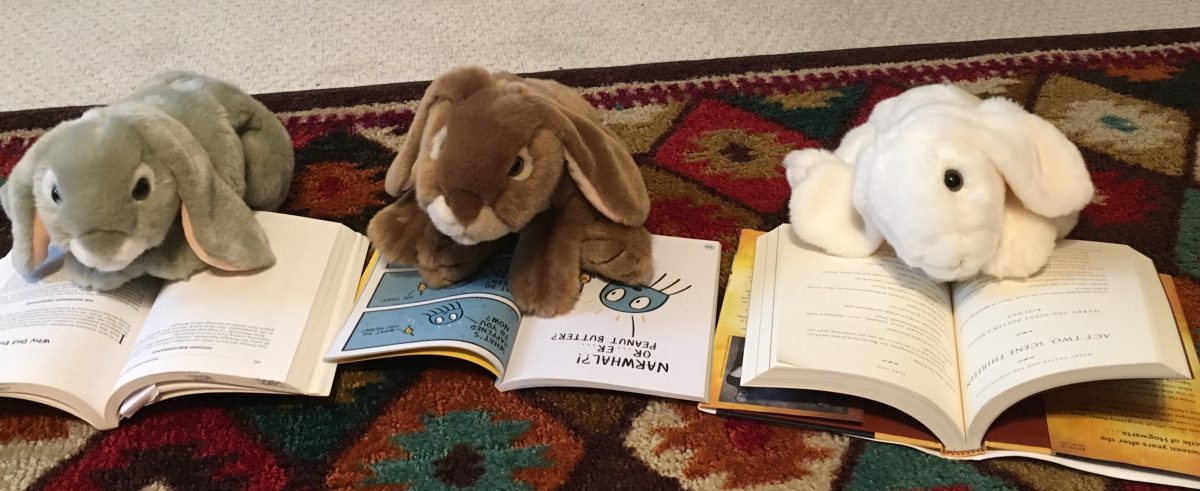
Today Marshmallow reviews Soseki Natsume’s I Am A Cat: The Manga Edition, the graphic novelization of the Japanese classic I Am A Cat, originally written by Soeki Natsume in 1905-1906. This “manga edition” was retold and illustrated by Chiroru Kobato, translated into English by Zack Davisson, and published in 2021. Sprinkles is taking notes and asking questions.

[In this post, we mention suicide as it relates to the content of the book, so if this is a sensitive topic for you, please consider not reading further.]

Marshmallow reviews Soseki Natsume's I Am A Cat: The Manga Edition, retold and illustrated by Chiroru Kobato, and translated into English by Zack Davisson.
Marshmallow reviews Soseki Natsume’s I Am A Cat: The Manga Edition, retold and illustrated by Chiroru Kobato, and translated into English by Zack Davisson.

Sprinkles: I am so excited we are finally talking about this book! I am very curious about it. So let us start with your standard overview. 

Marshmallow: Sure! If you like thought-provoking and eye-opening books from other cultures and other time periods, then this is the book for you!

S: That is a great start. Okay, now please do tell us a bit about what this book is about.. Since the title is “I am a cat”, I am guessing it is probably about a cat.

M: Yes, actually the main character is a cat who narrates the whole story (which takes place in early twentieth century Japan). He was separated from his family at a young age and was taken in—reluctantly—by the family of an English teacher named Sensei Kushami. He describes his life with them and the silly human occurrences / things they experience. 

S: So what kinds of things does he talk about? 

M: Early on, he describes his near-death experience with mochi. He also watches the humans gossip a lot about a rich woman named Ms. Kaneda and her nose (which I thought was very insensitive). The woman, whom the cat calls Lady Nose, has a very ungrateful yet beautiful daughter who may marry one of Sensei Kushami’s friends. There is a lot of confusion that surrounds this affair though and a lot of false rumors and accusations get thrown around. 

S: So the cat witnesses and talks about a whole lot of silly, trivial, petty things humans worry about. 

M: Yes. In the original version of the book, according to this neat recap we found online, this makes him feel pretty superior. In this manga version, he also seems a little amused by their behavior; however, he seems a little less judgemental.

S: In that recap and also on the Wikipedia article for the book, we also learn that the Japanese version of the title “I Am A Cat” also has sort of this formal feel to it because it uses a particular version of the first person pronoun “I” that is “a very high-register phrasing more appropriate to a nobleman, conveying grandiloquence and self-importance”. I am guessing that also makes the book funny to begin with, the cat is kind of pretty full of himself. 

M: I presume it does in Japanese, but of course, I didn’t quite catch that joke myself in English. 

Marshmallow is reading Soseki Natsume's I Am A Cat: The Manga Edition, retold and illustrated by Chiroru Kobato, and translated into English by Zack Davisson.
Marshmallow is reading Soseki Natsume’s I Am A Cat: The Manga Edition, retold and illustrated by Chiroru Kobato, and translated into English by Zack Davisson.

S: English has a single first-person pronoun which makes it a lot easier to learn or speak it, but you also lose a lot of nuance in this way, I suppose. Anyways, so this cat is observing his humans, kind of like Garfield. Garfield is kind of self-important in a way, but maybe a bit less interested in the humans.

M: Yes. I felt like the main character here did seem to care about his human family, but they did not really seem to always care about him too much (Sensei Kushani originally did not want him in the house at all). 

S: Hmm, that is interesting. So I know that when you first read this book, you were a bit disturbed by it. Can you tell us a bit about that? 

M: I felt that the book made too many references to suicide too lightly. Several characters consider hanging themselves on a pine called the Hanging Tree. None of the main characters ends up killing themselves, but it felt like it was mentioned too many times in the course of such a short book. 

S: I can see how that made the feel of the book kind of dark and uncomfortable for you. I am sorry about that. I had thought that this book is supposed to be satirical and philosophical, so I suggested that you read it. 

M: It’s okay! It was a little dark and unexpected, but the rest of the book was amusing to read. I can see why people find it both satirical and philosophical. It is pretty amusing to read a cat pontificating about the silly ways of humans. Like we bunnies do sometimes. People-watching is one of my favorite hobbies. 

S: I know, right? People-watching is fun! Okay, so tell us a bit about the satire or the philosophy then. 

M: Okay, the philosophy part was also pretty dark and depressing though. Sensei Kushani and his friends in academia and one in business discuss the integration of Western ideals into traditional Japanese culture. They also say some very sexist things about women to their friend who just got engaged. Meanwhile, the cat narrating the book ponders about life and whether it is worth it. At some point, he reaches the conclusion (which I disagree with) that life is only suffering and that death is the only peace. 

S: Okay, I can see that maybe these ideas are a bit too heavy for a “manga edition”. Maybe the original book deals with them with more nuance. So maybe let us now talk about the manga nature of the book. I know both you and Caramel have read a lot of graphic novels. But is this your very first manga?

M: I think so. I have never read a book that was meant to be read backwards which was a little difficult to adjust to.

S: Backwards for us of course, not for many other people around the world who read from right to left. 

M: Yes, but  I am still not sure whether I was supposed to start from the top of the page or somewhere else. 

S: I can imagine that can be disorienting. I have read only one manga-style book and that was disorienting for me, too. But I am honestly disoriented by all graphic novels, so maybe it was also that. Anyways, so let us wrap up this review then. All in all, did you enjoy reading this book? Did you find it interesting?

M: This book was definitely interesting. It helped me understand a little bit more about Japan’s culture and its understated, natural aesthetics and style. I also liked how this version simplified a classic book into a format that was somewhat easy to understand and definitely a lot easier to read for people who can’t read Japanese. I liked how this made one of the great Japanese novels accessible to others! I would rate this book around 95%. 

S: That is wonderful, Marshmallow. Then I am also glad you read it. What would you like to tell our readers as we end the post?

M: Stay tuned for more amazing book reviews from the book bunnies!

Marshmallow rates Soseki Natsume's I Am A Cat: The Manga Edition, retold and illustrated by Chiroru Kobato, and translated into English by Zack Davisson, 95%.
Marshmallow rates Soseki Natsume’s I Am A Cat: The Manga Edition, retold and illustrated by Chiroru Kobato, and translated into English by Zack Davisson, 95%.

Marshmallow reviews The Witch’s Apprentice and Other Stories by Ekta R. Garg

The book bunnies love various retellings of the classic fairy tales of the Western tradition, and through the years, they have reviewed many books that offered different takes on them. They also have explored, these past few months, several books that collect together fairy tales from geographies from around the world. Therefore they were delighted to learn that they made it to the list of 30 Best Fairy Tale Blogs and Websites in 2025, curated by Feedspot, a blog aggregation site.

To celebrate, today Marshmallow is reviewing a brand new book of fairy tales: The Witch’s Apprentice and Other Stories, written by Ekta R. Garg. The book bunnies are delighted to be reviewing this book as part of a Blog Tour for The Witch’s Apprentice and Other Stories organized by WOW! Women On Writing.

Marshmallow reviews The Witch's Apprentice and Other Stories by Ekta R. Garg.
Marshmallow reviews The Witch’s Apprentice and Other Stories by Ekta R. Garg.

Marshmallow’s Quick Take: If you like fantasy books that add on to the classic fairy tales and elaborate on their worlds, then this is the book for you! 

Marshmallow’s Summary (with Spoilers): The Witch’s Apprentice and Other Stories, as you can guess from the title, is a collection of short stories. There are a total of five stories in it. Each story picks up a well-known fairy tale or a classic folk tale, asks a followup question that you might have after reading it, and then goes on to offer a fantastical answer to that question.

The first story is set in the land of the Wonderful Wizard of Oz. The main character is the cousin of the Wicked Witch of the East. The Witch rules over Munchkinland and is the idol of the main character, who wants to become a witch just like her. This character, therefore, attends the school that trains students to be certified witches. Unfortunately, she is never summoned to take her final test, and the reasons she uncovers lead to the famous moment when Dorothy’s house smushes and crushes the Wicked Witch. The author offers this short story as a response to her question “When the tornado took Dorothy’s house to Oz, it landed on the Wicked Witch of the East and killed the witch instantly. What was the witch doing on the road in the first place?” I found this to be an interesting analysis and extension of the original story, opening the door to a related tangent that proved to be fun and entertaining to read.

The second story is about The Pied Piper of Hamelin. In this fairy tale, a musician promises to use his pipe music to get rid of the rats in the town of Hamelin. Even though he completes the job, the mayor refuses to pay the money owed, and the piper vows revenge. Later he comes back, plays his pipe, and lures all the children away from the town. The question this story seeks to answer is “What happened to the parents of Hamelin after that?” This story is much shorter than the others, and it left me feeling sad and somewhat unsatisfied.

But I really liked the story after it. This story focuses on the two conmen in The Emperor’s New Clothes, and I felt that it really helps flesh out the characters as three-dimensional people, rather than the flat caricatures shown in the more simplistic original story.

The second to last story is not quite about a fairy tale but rather a well-known nursery rhyme: Jack and Jill. The story goes into depth about the question “Why did Jack and Jill need that pail of water in the first place?” I found this story very touching in a heartbreaking way. It was very well developed and had a lot of nuance.

The final story is a mix of Goldilocks and Sleeping Beauty, which makes for an interesting cross-over. This time, the story answers two questions, one for each of the characters, and things get quite convoluted but in an interesting way.

Marshmallow is reading The Witch's Apprentice and Other Stories by Ekta R. Garg.
Marshmallow is reading The Witch’s Apprentice and Other Stories by Ekta R. Garg.

Marshmallow’s Review: As you can probably tell, I highly enjoyed reading The Witch’s Apprentice and Other Stories. However, that was part of the problem; I liked the stories too much and was disappointed that some of them were so short. It was very satisfying to read explanations for some things that were confusing or vague in fairy tales. But, on the other hand, Garg’s stories opened up a whole new can of questions. I really wanted to hear more about the characters she developed and the new plots she started.

These stories were all fantastic and very quick and fun to read. I would highly recommend the book to readers of all ages, especially if you enjoy reading retellings of fairy tales, as in Beasts and Beauty: Dangerous Tales, Thornhedge, A Tale Dark and Grim, Tuck Everlasting, Ella Enchanted, Half Upon a Time, Thornwood or Glass Slippers. But I also would like the author to write extensions for these extensions—or more of these types of stories!

Marshmallow’s Rating: 95%.

Marshmallow rates The Witch's Apprentice and Other Stories by Ekta R. Garg 95%.
Marshmallow rates The Witch’s Apprentice and Other Stories by Ekta R. Garg 95%.

Marshmallow reviews Digital SAT Manual (Version 8.0) by The Princeton Review

Today, Marshmallow is doing something different. She is writing about Digital SAT Manual by The Princeton Review, a test preparation manual.

[This is not meant as an advertisement or customer review. We felt that even though Digital SAT Manual is a different kind of book than our usual fare, it is undeniable that Marshmallow has spent a lot of time with it in these past few months. She also felt strongly that she had something useful to say about it.]

Marshmallow reviews Digital SAT Manual (Version 8.0) by The Princeton Review.

Marshmallow’s Quick Take: If you are a student planning on taking the SAT, then this is the book for you!

Marshmallow’s Summary (with no Spoilers): The SAT (or what used to be called the Scholastic Aptitude Test) is a standardized test used in the United States for college admissions. There is a lot of hype about it and many many rumors and myths. But ultimately, it seems to me that the SAT is not a measure of intelligence, but rather a measure of how good you are at utilizing tricks and the nuances of the testing type. It does seem to gauge, up to some level, how well you will do in college; this is true. If your score is below a certain level, many colleges will deem you unfit for entrance. The way to increase your score is to study, not just the material, but also the test itself.

Enter the Digital SAT Manual! The book starts off with a description of the SAT and the logistical details. It shows what the test will look like and how long each module is. This helps the reader gain a sense of familiarity with the testing format, which helps create a calmer experience during the actual exam. Then the book starts actually going into the specific types of questions that appear on the test and the strategies for each type. Before reading this book, I did not know that there were different question types. I kind of figured that the questions were all randomly ordered and were all random types. It turns out, though, that there is a lot of rhyme and reason behind the SAT, which is crucial to learn when preparing for the test.  

Marshmallow is reading the Digital SAT Manual (Version 8.0) by The Princeton Review.

Marshmallow’s Review: It may be clear already that I’ve recently taken the SAT. These past few months, the SAT has definitely been a topic close to the forefront of my mind. With many colleges and universities going back to requiring standardized test scores for admission, the importance of the SAT has only escalated. The best way to feel prepared is to know what is on the test and how to deal with it when you come face-to-face with it.

In the United States, the SAT marks a major landmark in many students’ lives—a point after which they are closer than ever to their college dreams. Of course, many withhold the fact that you need to study for the SAT. Many high-scoring students claim to have gone into the test without so much as opening a study book. However, anyone who has taken an SAT and examined the way it works will tell you: it is a test that scores how good you are at taking tests. As a bunny who took a couple practice tests and used study books before taking the actual digital SAT, I can confidently say that it is next to impossible for someone to get an outstanding score with no study; it is perhaps possible to get between a 1450 and 1500 first try but, above that, one must have studied.

I found the Digital SAT Manual to be extremely useful and effective; it helped me go from the mid-1400s to the 1500s. I really liked how it explained everything and was very transparent about the nature of the test. It detailed the different question types and had step-by-step instructions on how to answer each category. The practice sections were extremely helpful in helping me solidify my ability to understand the processes the book was teaching me. I did not always follow through with all of the book’s steps though; I felt like some annotation steps were superfluous and spent more time than I needed to or had. I also was a little surprised by how fast the test goes by; I definitely needed to go faster when taking it as opposed to when I did practice problems (for reference, I would generally finish the problem sets early, but found myself running out of time on longer practice tests).

As a whole, though, the Digital SAT Manual is irreplaceable. It is easy to understand and very interactive. I would highly recommend this book to all students. But above all, I would advise that you study for the SAT; trust me, the high-scorers are studying—even if they say otherwise!

Marshmallow’s Rating: 100%.

Marshmallow rates the Digital SAT Manual (Version 8.0) by The Princeton Review 100%.

Marshmallow reviews Fearful by Lauren Roberts

Marshmallow has already read and reviewed the three main books of Lauren Roberts’s Powerless trilogy:  PowerlessReckless, and Fearless.  She has also reviewed the novella Powerful, set in the same world as the books of the trilogy, and placed in between the first two books chronologically. Today she reviews a brand new addition to this series: Fearful, a novella published just last week that retells some of the events of Fearless from a different perspective.

Marshmallow reviews Fearful by Lauren Roberts.

Marshmallow’s Quick Take: If you liked Lauren Roberts’ previous books PowerlessReckless, and Fearless, then this is the book for you!

Marshmallow’s Summary (with Spoilers): Mara is the personification of Death. Her job is to essentially bring all the souls of the dead to a place called the Mors, what seems to be another dimension with a hungry earth, mist, and lots of grey trees. In the Mors, she leaves the souls alone, desperate to escape, and many eventually go insane. It is implied this is for people who did bad things in their lives.

Mara is summoned whenever a person is about to die and needs her to pass into the realm of death. So when the new king of Ilya, Kitt, takes a dose of the deadly Plague in an effort to become more powerful, she feels called to him. However, for reasons not explained, she feels a special connection to the young king–despite the fact that she promised never to set foot in Ilya ever again (again, for reasons left unexplained). By taking the Plague, Kitt is now doomed to die, though he does not yet believe it.

Mara starts wandering around his castle while she waits for his death, and she starts to take an interest in the relationship between an Imperial named Lenny and Blair (who killed Paedyn’s best friend in a previous book). Though they are extremely combative, Mara looks at their souls and sees that they are bonded. As their relationship starts to bring them closer, Kitt gets closer to his end. Mara and Kitt start talking at some point and they too start to have feelings for each other. Mara teaches Kitt how to die and Kitt teaches Mara how to live.

The author insinuates that Mara had a past life and was human, becoming Death itself somehow; the details and actual explanations are not given. As the book progresses, Kitt’s illness gets worse and worse. Ultimately, the end is not unexpected, but it is heart-breaking nonetheless: Kitt faces Death. The question is whether Death will greet him kindly or not. 

Marshmallow is reading Fearful by Lauren Roberts.

Marshmallow’s Review: Lauren Roberts enjoys torturing her readers. All but a few characters end up with horrible endings and this book leaves so many unanswered questions. I hope Roberts will write another book that explains half of this book.

That said, I did like Fearful. It was very interesting to hear Roberts’ explanation of Death, the afterlife, and other fantastical aspects of this world. I was very unsatisfied by her lack of explanation about Mara though. I think she is probably setting up another book specifically about her.

I did like how Fearful focused on Kitt, who was always like a third wheel in the Paedyn-Kai storyline. I thought a lot of what is said in this book was described briefly in the previous stories, especially the third book of the main trilogy, but this one added a lot more.

I thought the writing was extremely good. Towards the end of the book, as Kitt approaches Death and starts suffering memory loss as a side effect of the Plague, the writing really helps show his mind and emotions. I did not like the ending at all though and was very confused.

I would still recommend reading Fearful. I just really would like Roberts to write a follow-up that finishes it up fully!

Marshmallow’s Rating: 95%.

Marshmallow rates Fearful by Lauren Roberts 95%.