As the first review of the book bunnies blog this new year, we present to you Marshmallow’s review of Chinua Achebe’s Things Fall Apart. First published in 1958, Achebe’s novel is a modern classic, and Marshmallow has read it in school.
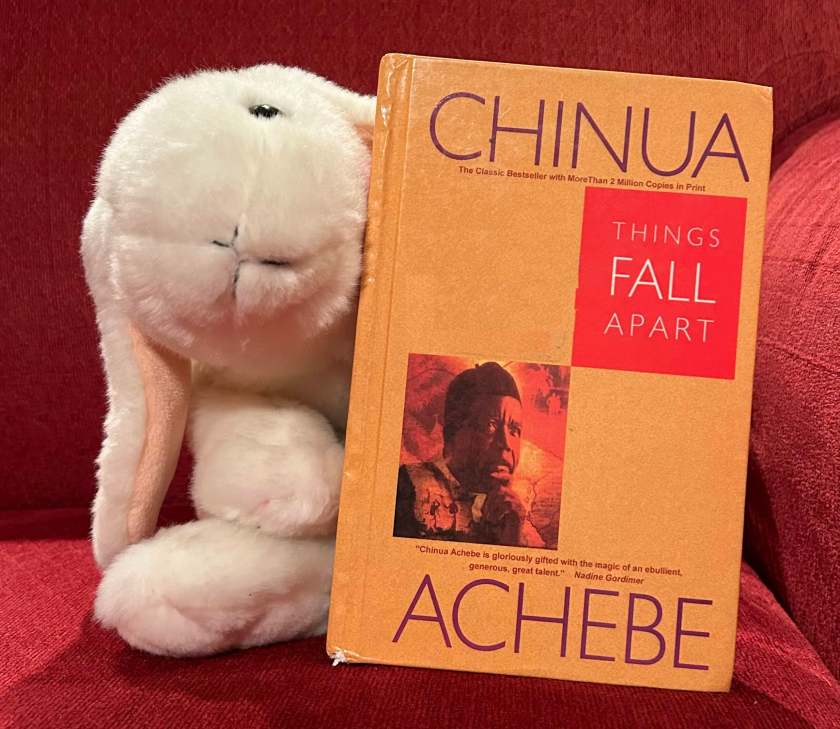
Marshmallow reviews Things Fall Apart by Chinua Achebe.
Marshmallow’s Quick Take: If you like historical fiction books about colonialism in Africa or books that make you think or feel, then this is the book for you!
Marshmallow’s Summary (with Spoilers): Set in the Nigerian Ibo society during the 1890s, this book starts with the introduction of Okonkwo. Okonkwo is a highly-respected man in his village Umuofia. Through his victories in battle and his defeat of the Cat (a famous wrestler), Okonkwo is a powerful man. As a result (as is Ibo culture), he has three wives, many children, a successful farm, and on occasion drinks palm wine out of his first human skull. He is what is called a “strong man.” However, his success and strength is a result of fear. His drive to succeed is fueled by a fear of being similar to his father, who was a efulefu (or worthless man). Okonkwo’s father was lazy and debt-ridden; thus, Okonkwo compensates for his father’s failures by working obsessively. Luckily for Okonkwo, in Ibo society, a man is not judged by his father, but by his own merit. Eventually, his success seems cemented. Yet, he is still controlled by anxiety, fear, anger, and violence. His household, though it reflects the traditional Ibo setup of its time, is a model case of domestic abuse.
Meanwhile, a woman from Umuofia is killed in a neighboring village. To avoid war with the fear-inspiring Umuofia, this village sends a virgin girl and a young boy to compensate. For the purposes of the plot, the boy (named Ikemefuna) is most important. Umuofia doesn’t immediately decide what to do with the boy, taking several years to do so. During this, he is placed in Okonkwo’s household and soon becomes fast friends with Okonkwo’s son, Nwoye. Over time, Okonkwo starts to view Ikemefuna as a son.
But when tragedy strikes, Okonkwo finds himself in a situation that pits his “strong man” facade against his heart. And as the book progresses, Okonkwo continually finds himself at odds with the changing village. The question is, how much more can he take before he falls apart?
Marshmallow is reading Things Fall Apart by Chinua Achebe.
Marshmallow’s Review: I think reading this book is an extremely important experience that all people and bunnies should have. Chinua Achebe–the author–wrote it in simple, easy to read English specifically so it would be accessible to all; this makes it a good book for all ages and levels of reading ability. But ultimately, this book is remarkably subtle and nuanced. The author’s tone is simple and unique, while startlingly complex at the same time. The plot evolves elegantly and the author creates compelling characters that make you need to see the storyline though. Additionally, Achebe successfully grapples with and portrays issues like colonialism, racism, and toxic masculinity. This book is incredible because of the insights it gives on such topics. It also shows the reader what (some) life and culture was like in Nigeria before colonialism.
Additionally, this book’s themes are philosophically, historically, psychologically, and culturally intriguing. Throughout, Achebe weaves in the concept of facades: facades of strength, of stability, of security, of trustworthiness, of happiness, of truth. Achebe’s work is remarkable, and the astute reader will recognize and appreciate the importance of such work.
Overall, I highly recommend this book to all because it’s imperative to understand what others in the world experience and experienced, especially in a world of such divided opinions and narrow perspectives.
Marshmallow’s Rating: 100%.
Marshmallow rates Things Fall Apart by Chinua Achebe 100%.
For the last couple years, at the end of the year, we have been doing a New-Year-ish thing of talking about all the books we have read through that year. (You can find our recap of 2022 here, and here is our recap of 2023.) This year, we continue this new tradition and take a look at our reviews for 2024.
[2024 saw the bunnies read and review many books, both new and classic. You can find a full list here.]
The book bunnies review the books of 2024.
Sprinkles: So maybe this year, we can start with Marshmallow.
Marshmallow: Sure. I have reviewed many, many books this year. I liked all of them, but there are a couple that I really, really, really liked. But maybe we can begin with the series I read and enjoyed.
S: Makes sense to me.
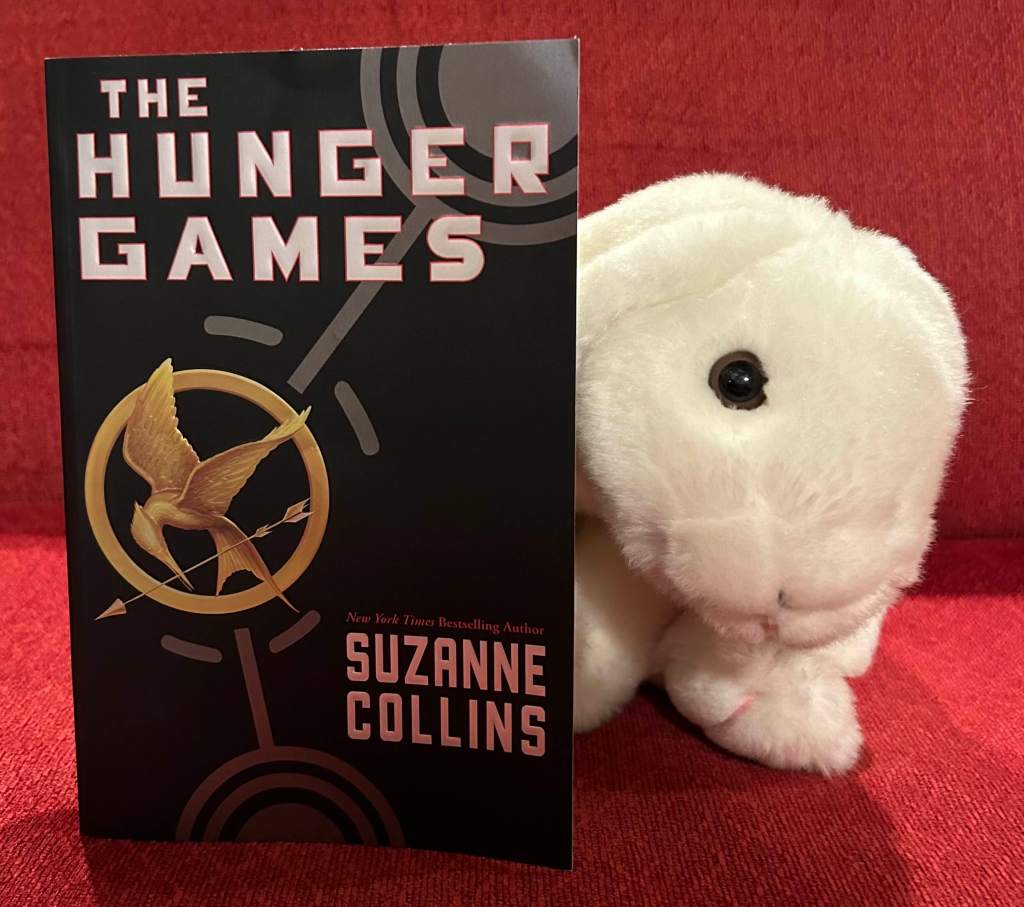
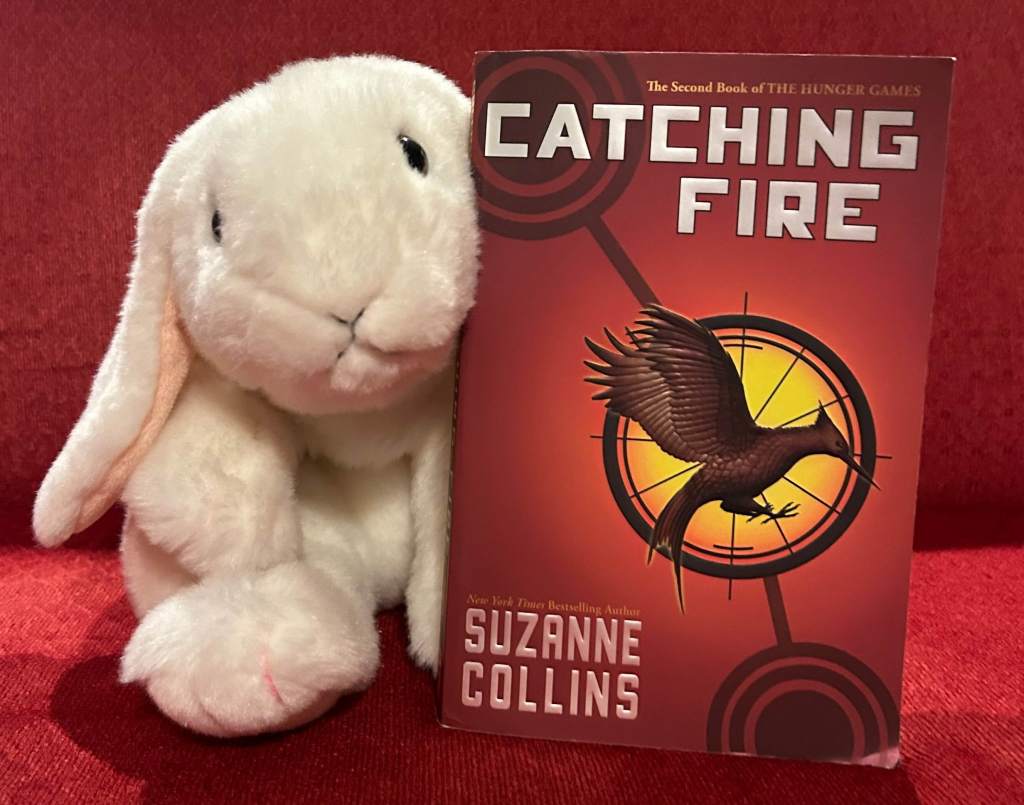
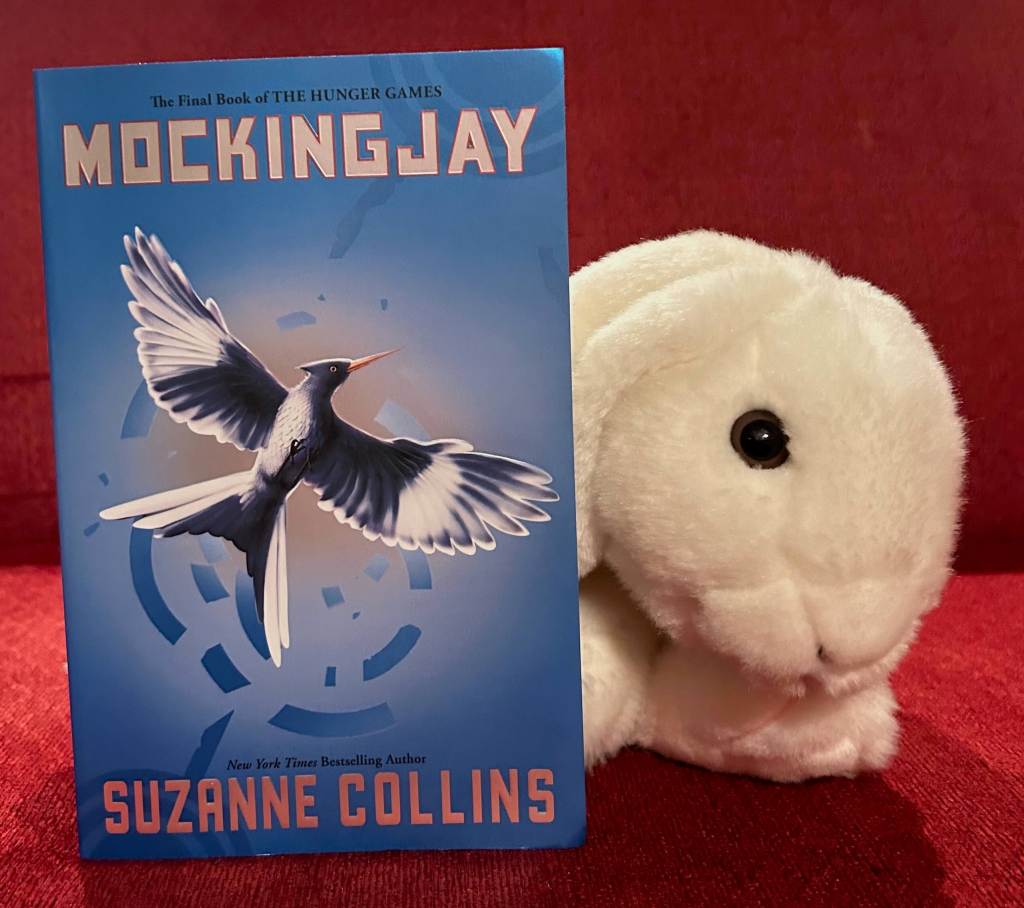
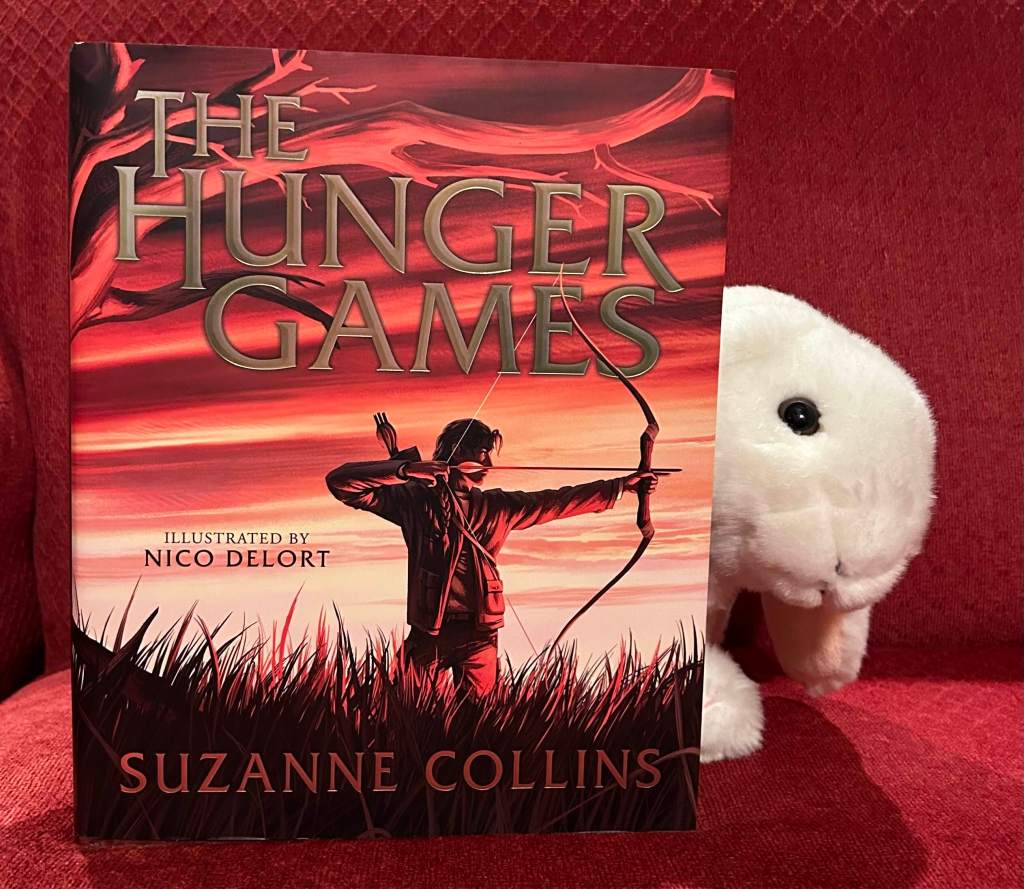
M: The first series I started this year was the famous Hunger Games series. Here are my reviews of the three main books: The Hunger Games, Catching Fire, and Mockingjay. And here is my review of The Hunger Games: The Illustrated Edition. I had never read these books before and quickly learned exactly why they are so revered. I was also shocked by how deep some of the themes were (family and friendship of course, but also lessons about the impacts of war, greed, violence, trauma, and poverty). This is an amazing series (I love it!) I would recommend to all reasonably mature bunnies (maybe like 12 and up?)
S: Yes, I remember how much you were affected by those books.
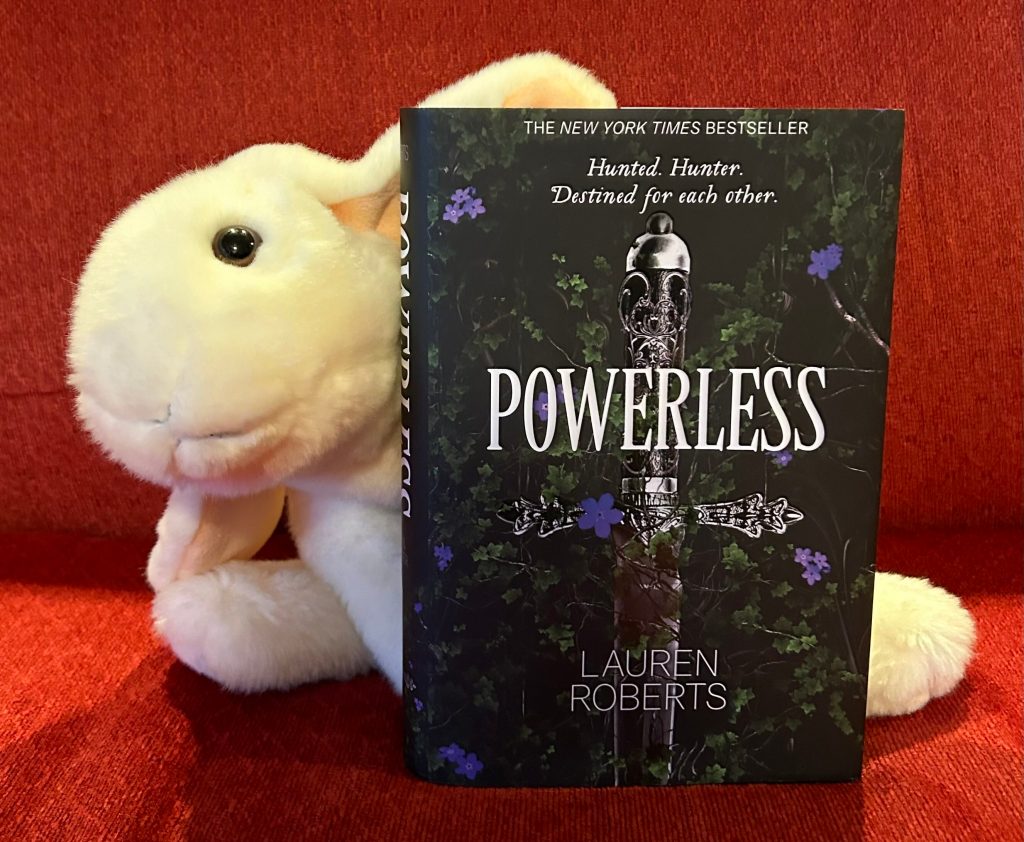
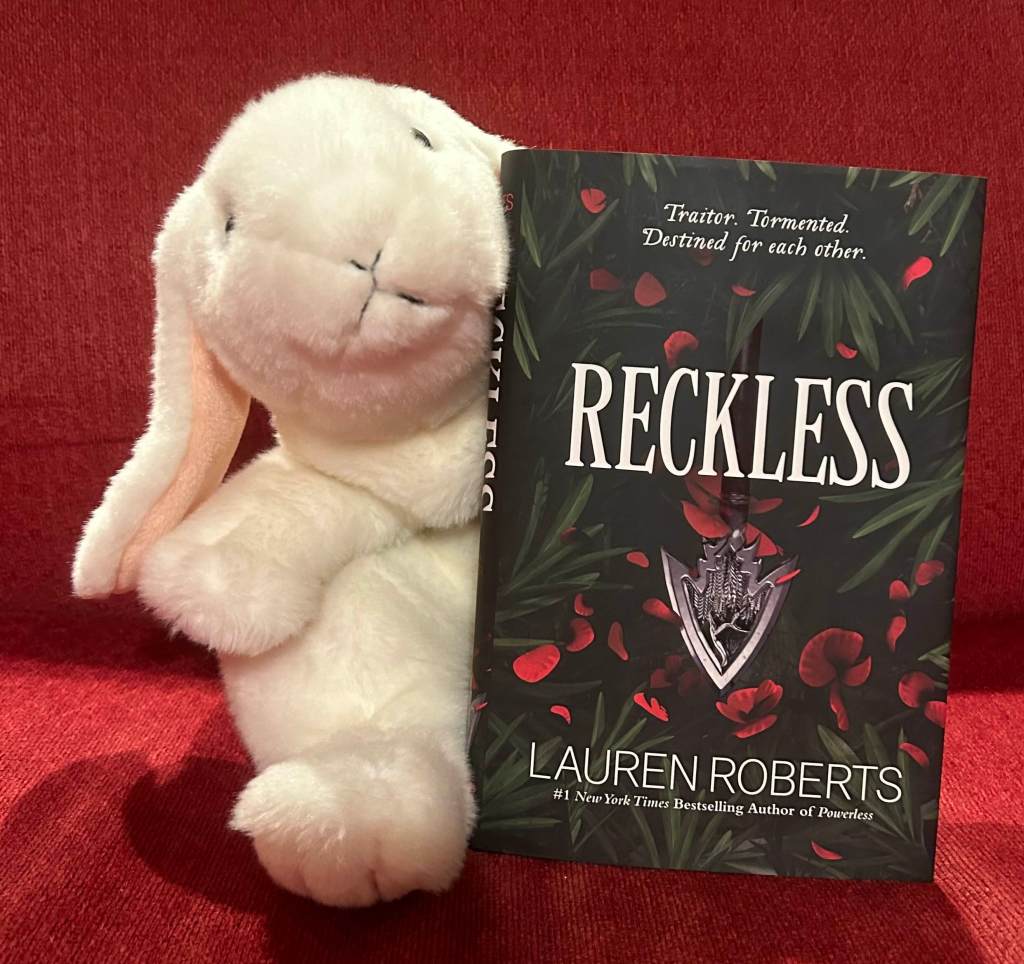
Marshmallow enjoyed reading the Hunger Games trilogy by Suzanne Collins as well as Powerless and Reckless by Lauren Roberts.
S: What about the other series you started this year?
M: Another series I began to read this year was the Powerless series. Here is my review of the first book: Powerless. And here is my review of the second one: Reckless. Unfortunately, not all of the books are out yet, so I am looking forward to reading and reviewing the last (?) book of this series next year. This is hands-down my favorite YA fantasy-romance series. I generally find this genre to lean too much into romance, but this series maintains the perfect balance. I would 100% recommend this book to all interested readers (YA probably), especially those who have been wronged by the ridiculous amount of romance infiltrating the YA fantasy section.
S: I still have not gotten around to reading those books, but I know you have really enjoyed them. So maybe they should go on my 2025 reading list.
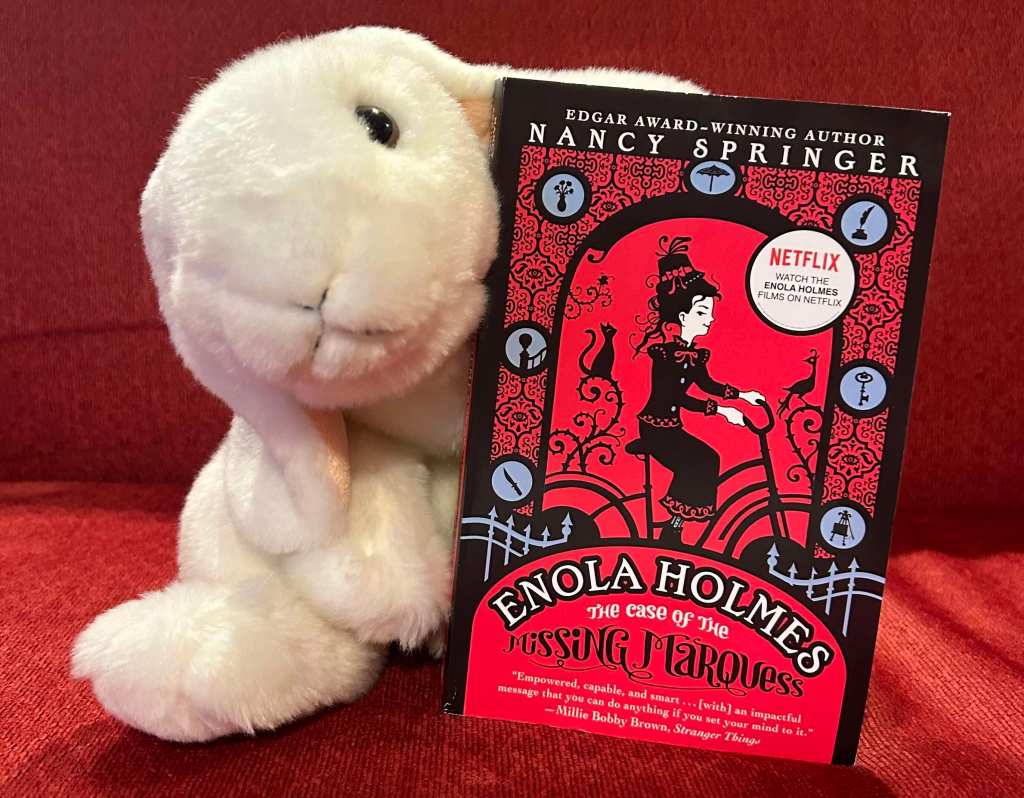
M: Maybe they should! The third series I have begun this year is the Enola Holmes series. I originally presumed these books to be easy and basic because the cover was not what I would characterize as a serious, intriguing mystery would look like. However, these books really take you to an entirely new time period, and the adventures of Enola Holmes never fail to excite, delight, and inspire.
S: You have only read and reviewed three of the books though, right?
S: Because they put together a few things you like. History, graphic novel format, humor-
C: Yes, what is there not to like? But there are many more books in the series, and I really hope to continue with those in 2025. And of course you know that my all-time favorite series is still Tui T. Sutherland’s Wings of Fire?
S: Yes, that is true. and you loved that one, too!
C: Yep.
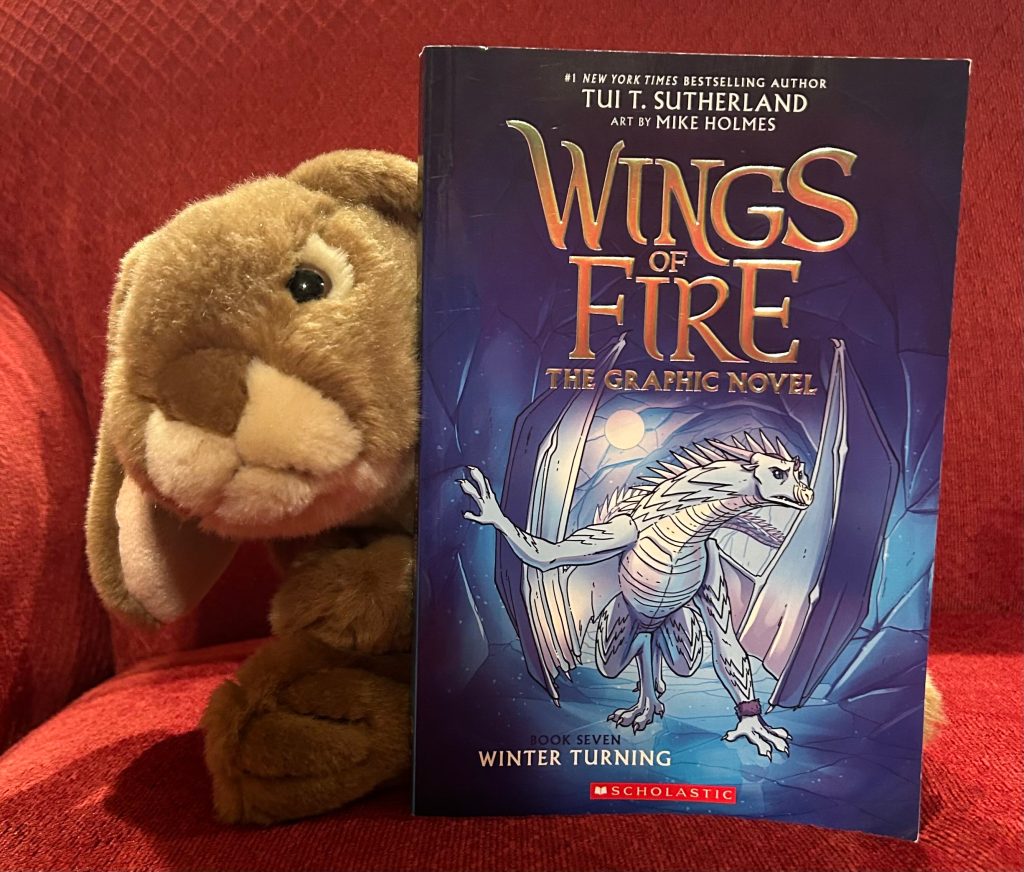
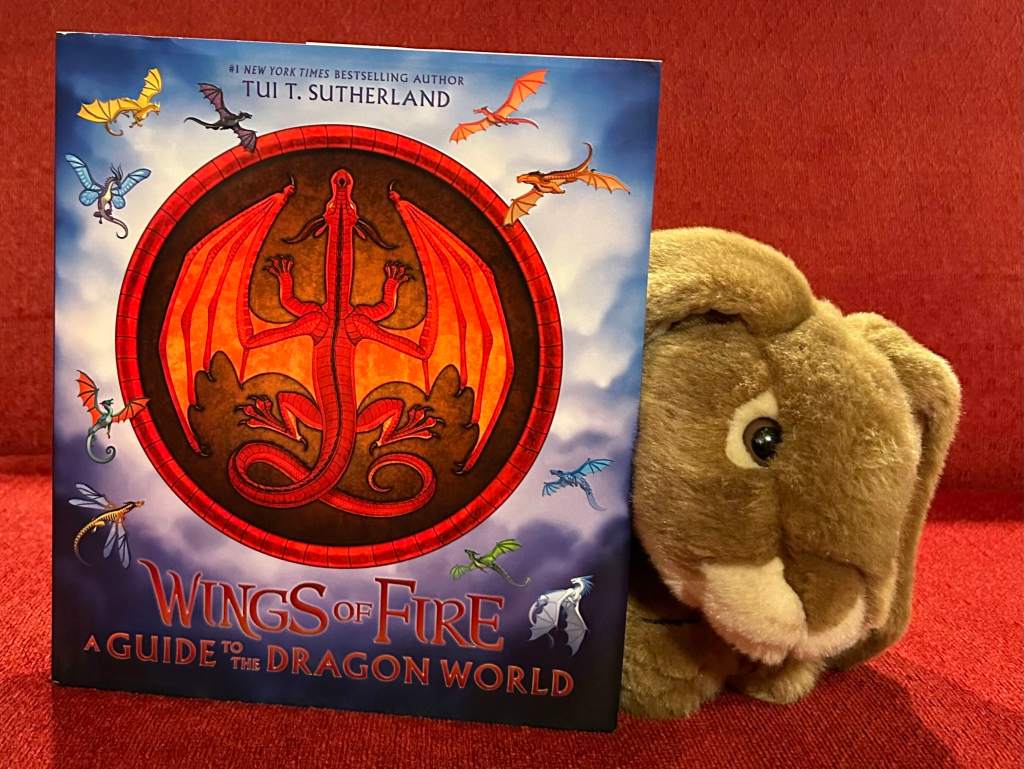
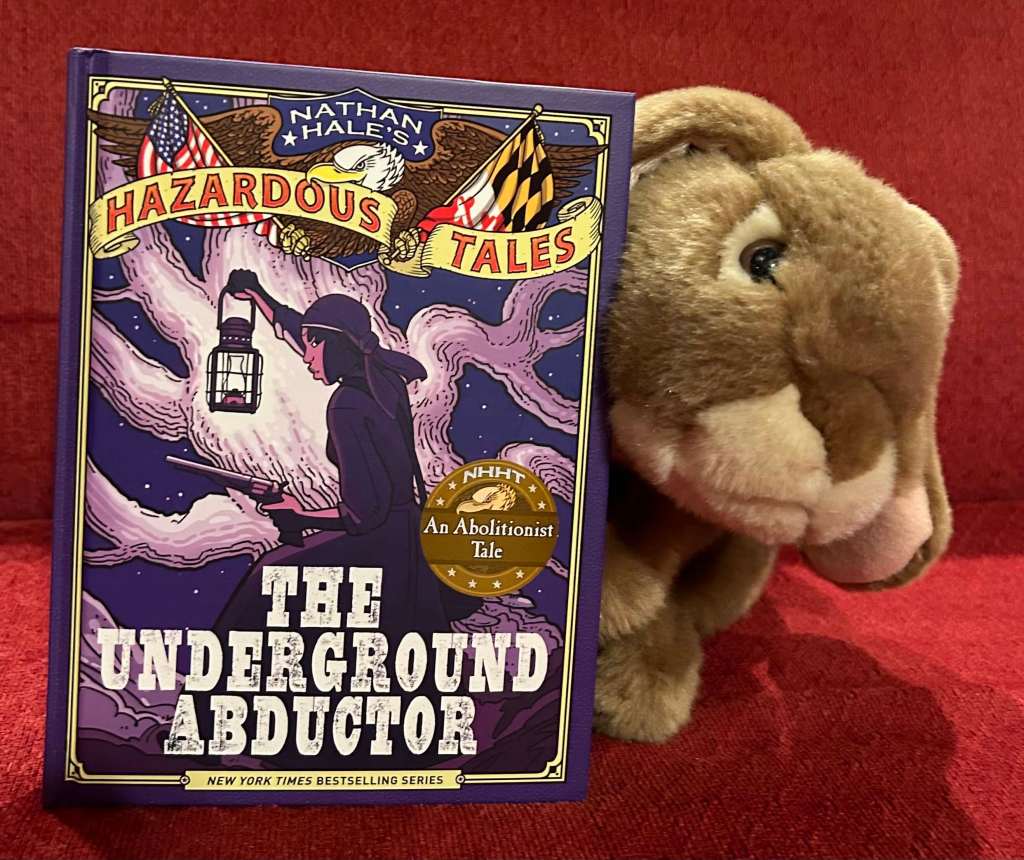
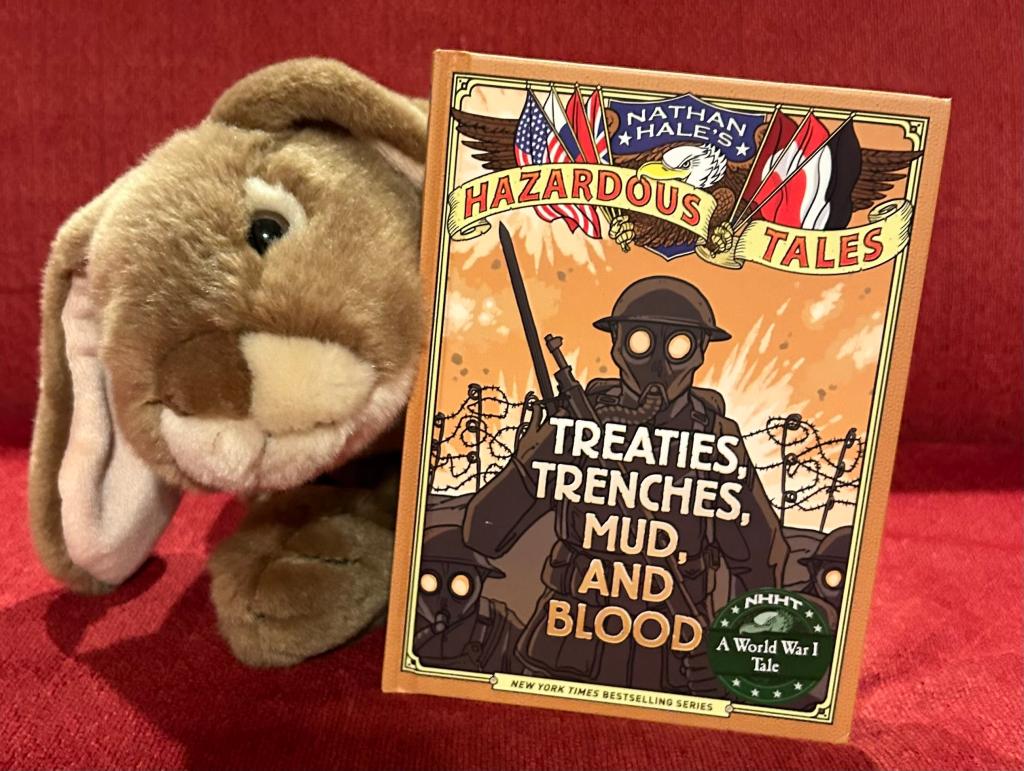
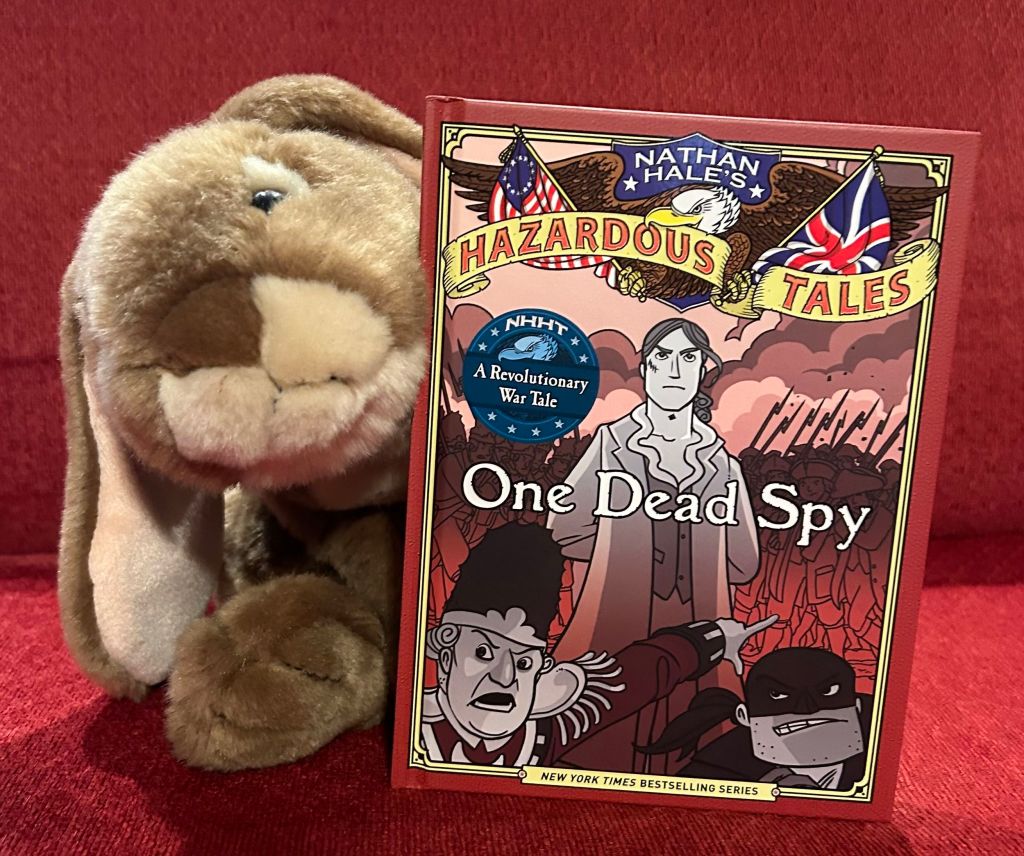
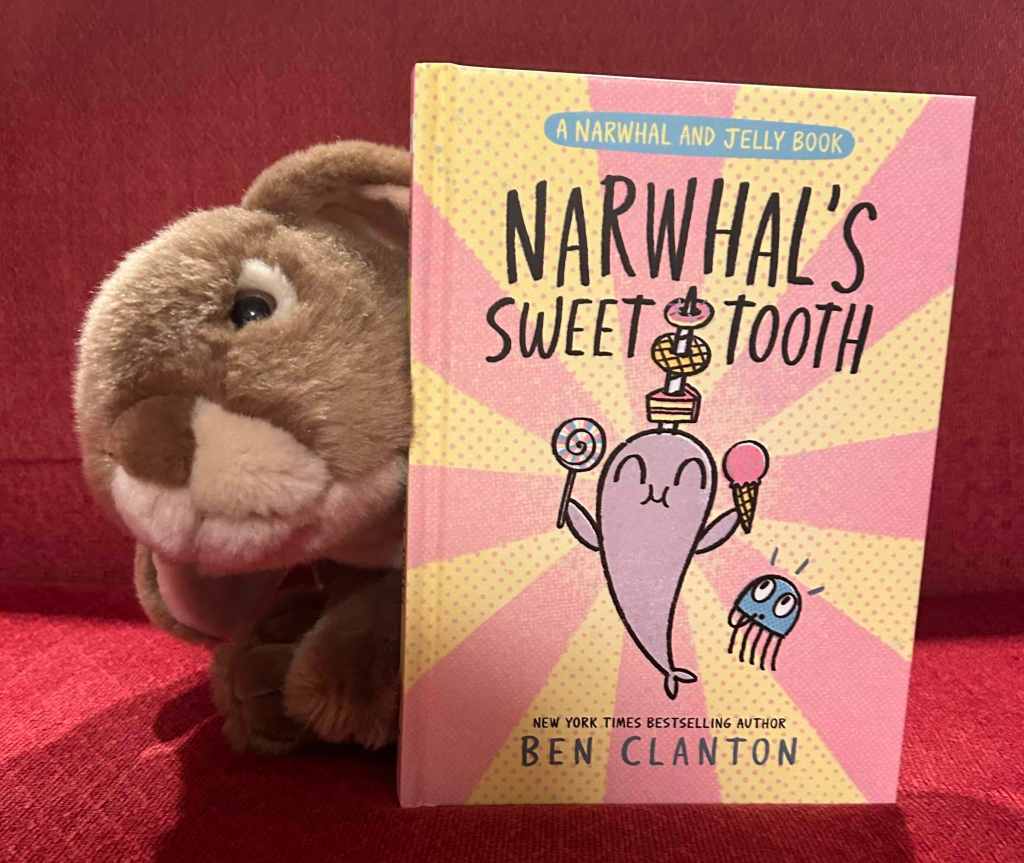
This year, Caramel read two more Wings of Fire books by Tui Sutherland, one more Narwhal and Jelly book by Ben Clanton, and three books from the Nathan Hale’s Hazardous Tales series.
Sprinkles: So Marshmallow, you have read many other books this year. Maybe you can tell us about the highlights. Maybe we can begin with the fiction?
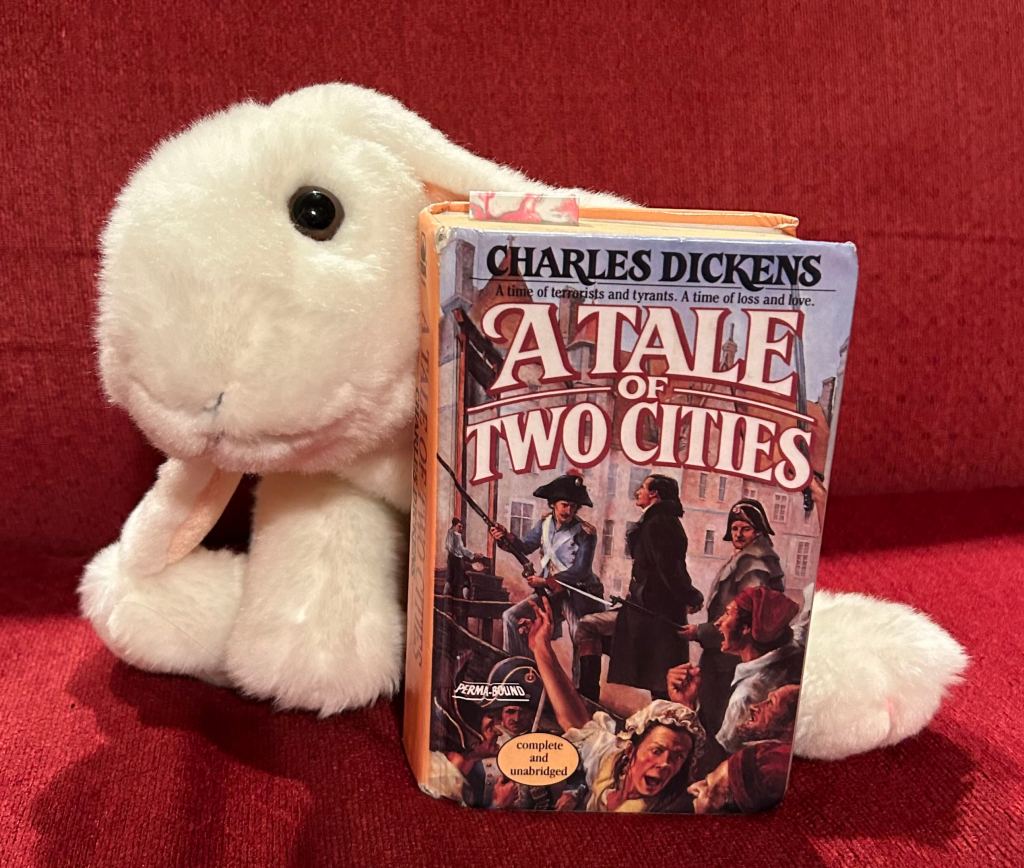
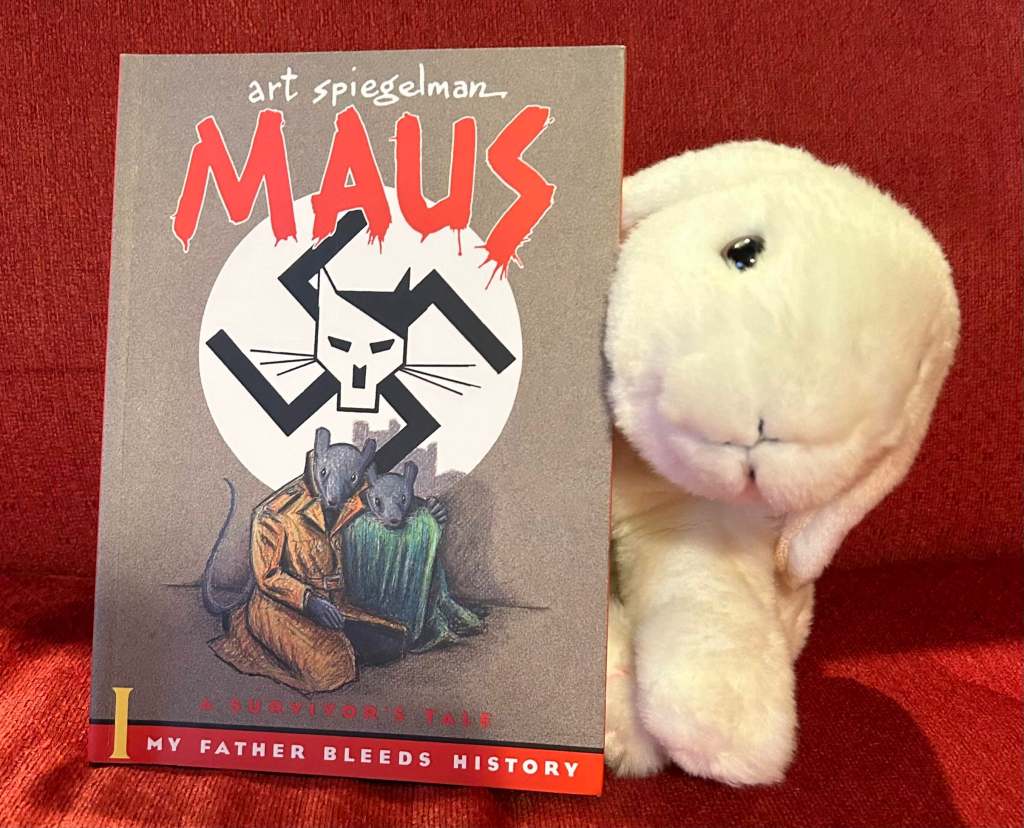
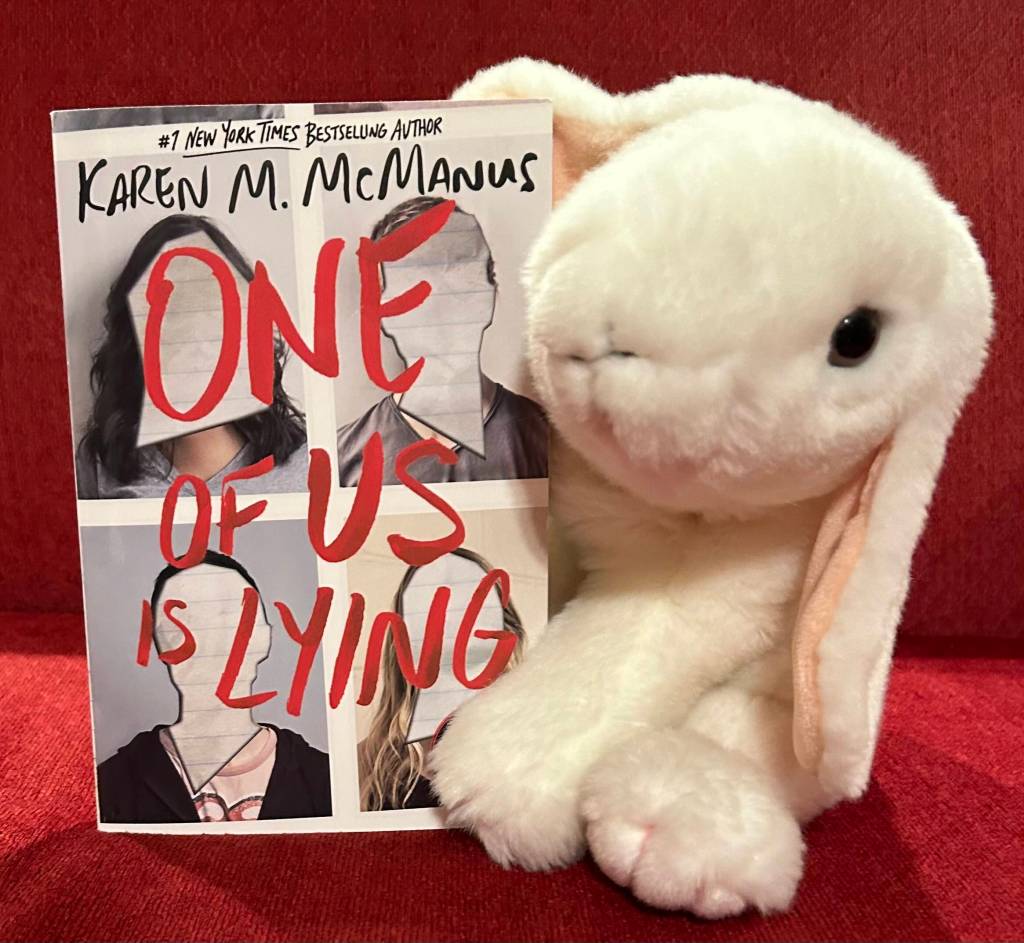
This year Marshmallow’s fiction reads ranged from Maus to One of Us is Lying to A Tale of Two Cities.
Sprinkles: So Caramel how about you? Which books of fiction did you enjoy reading most this year, other than those that belong to the series we talked about already?
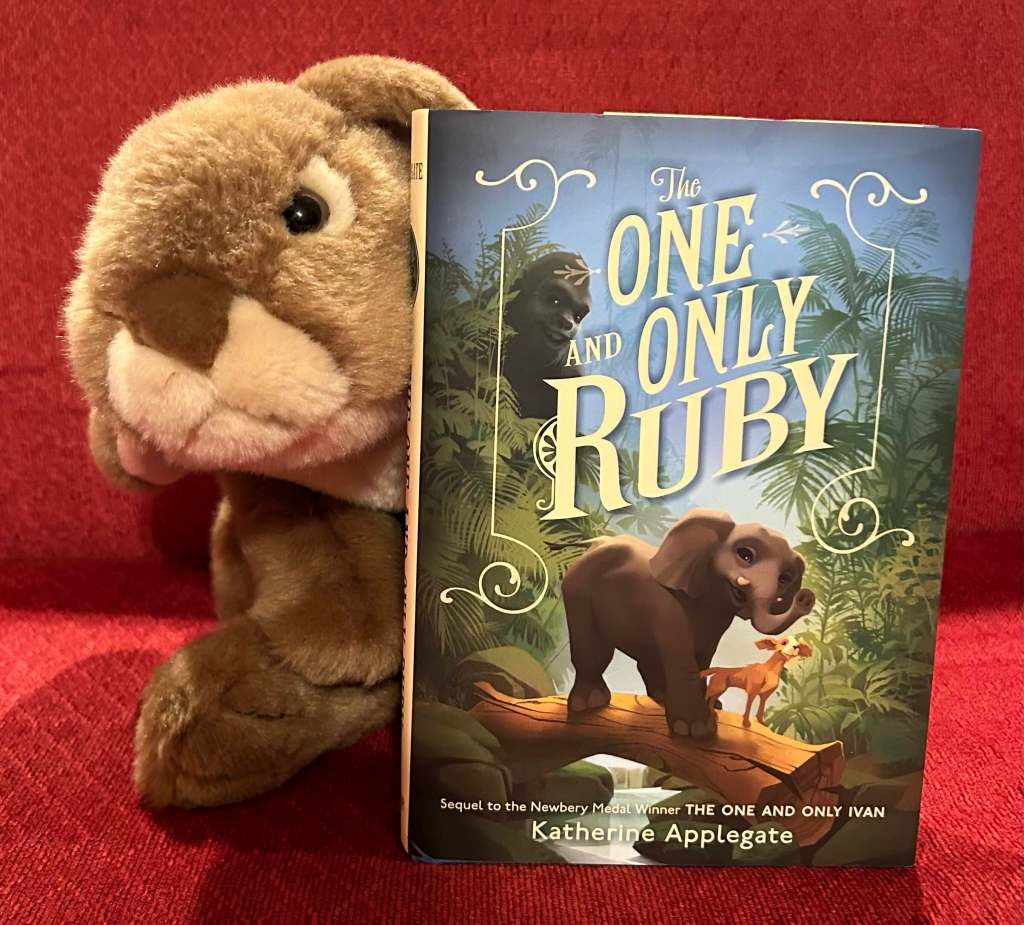
Caramel: Well, we forgot to talk about The One and Only Ruby and The One and Only Family, both by Katherine Applegate. Those are good books I read and they belong to a series but maybe we can mention them now?
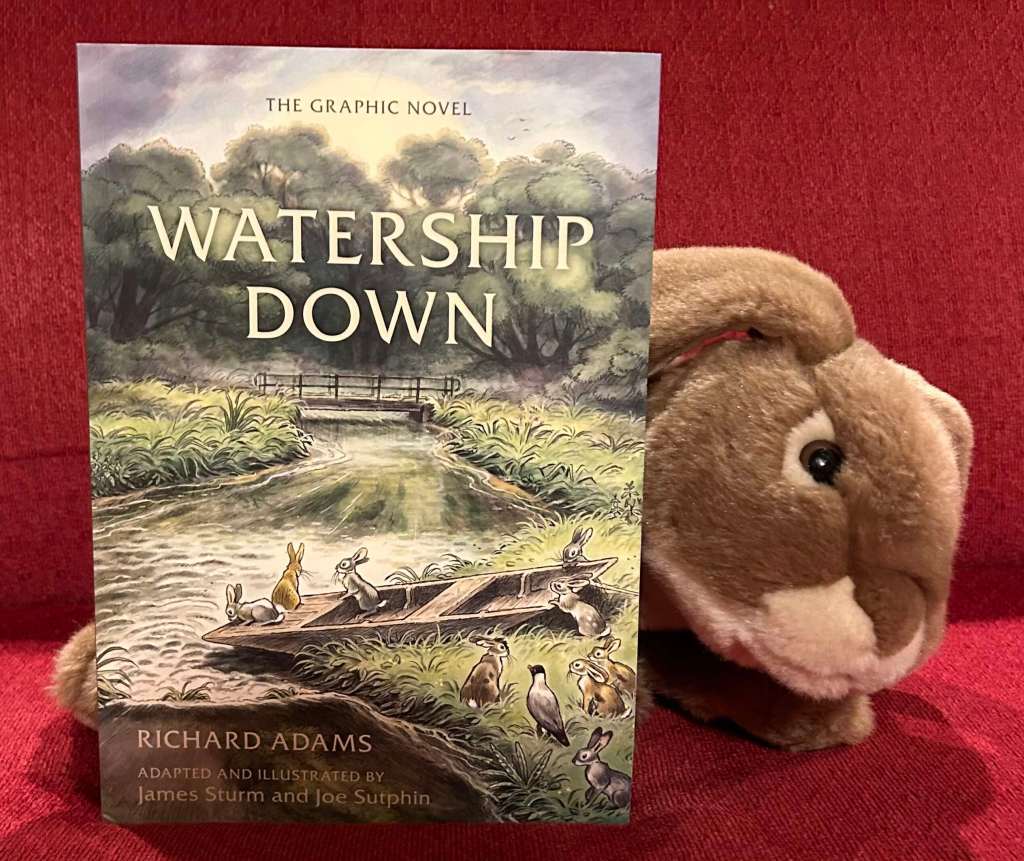
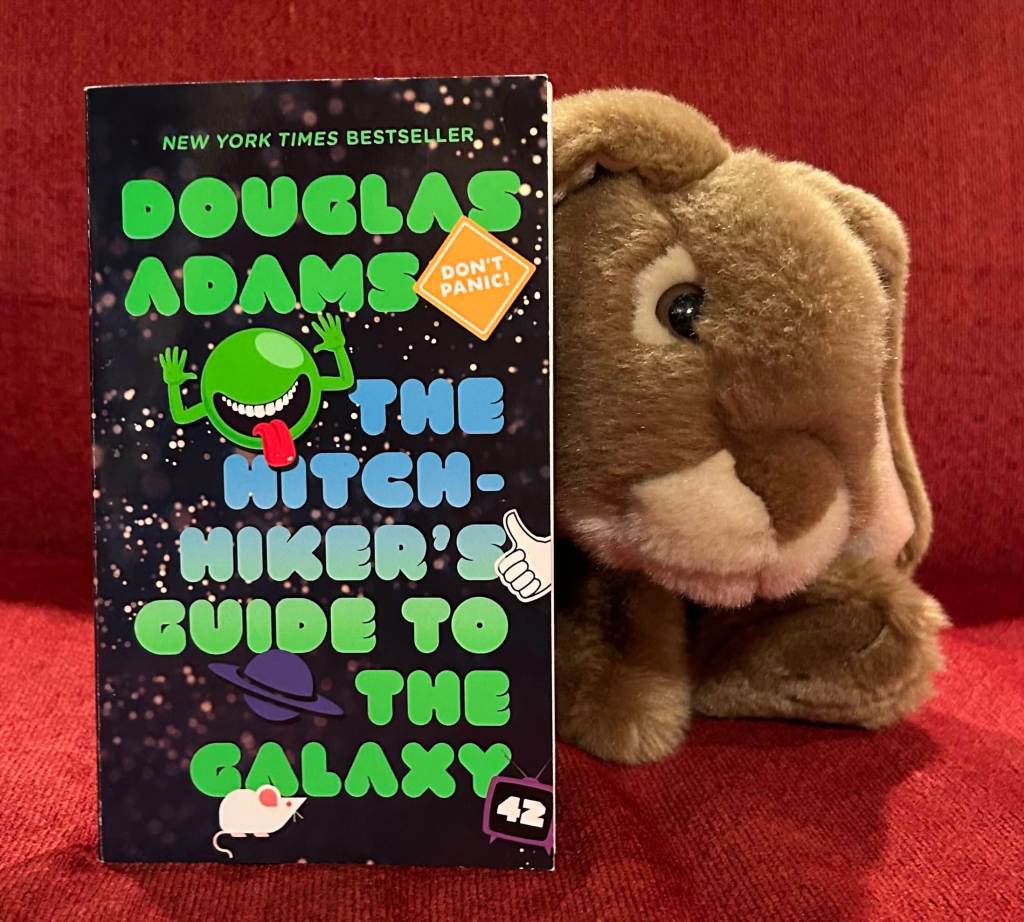
Caramel also read several fun books this year, including One and Only Ruby by Katherine Applegate, Watership Down by Richard Adams, and The Hitchhiker’s Guide to the Galaxy by Douglas Adams.
Sprinkles: You have also read many nonfiction books this year, right, Caramel?
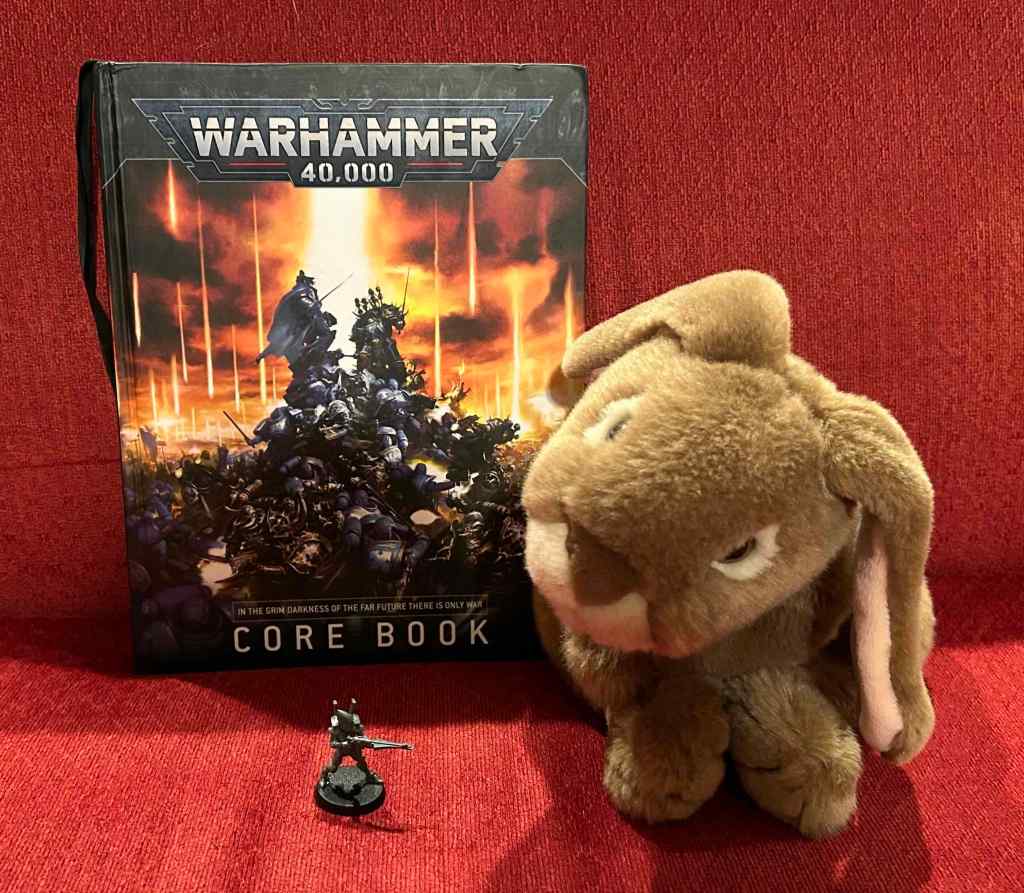
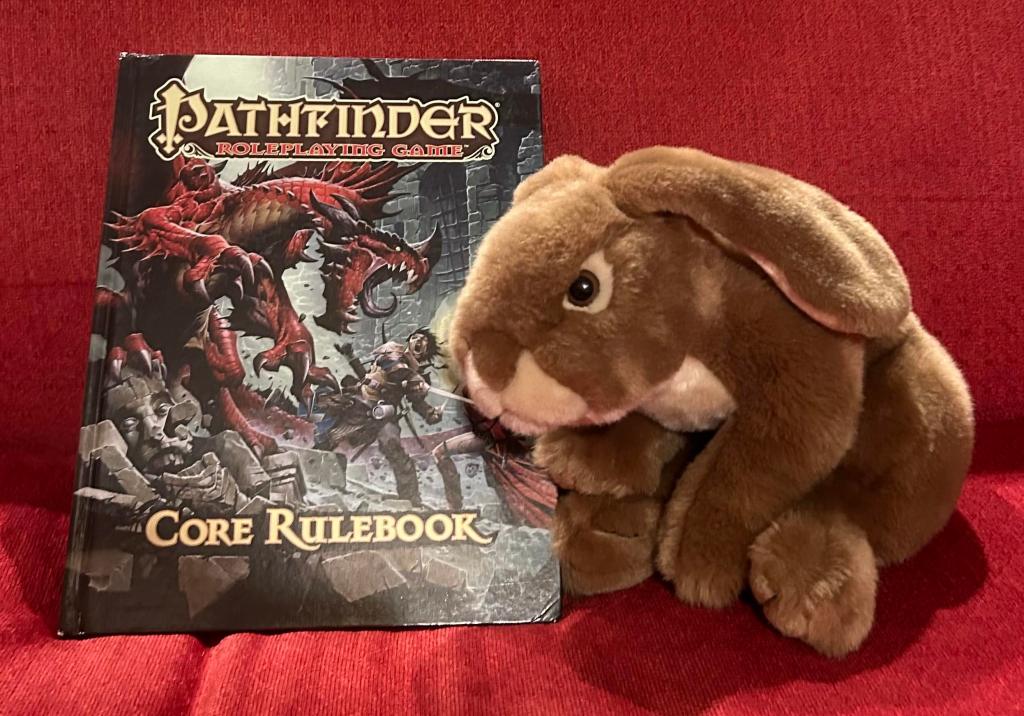
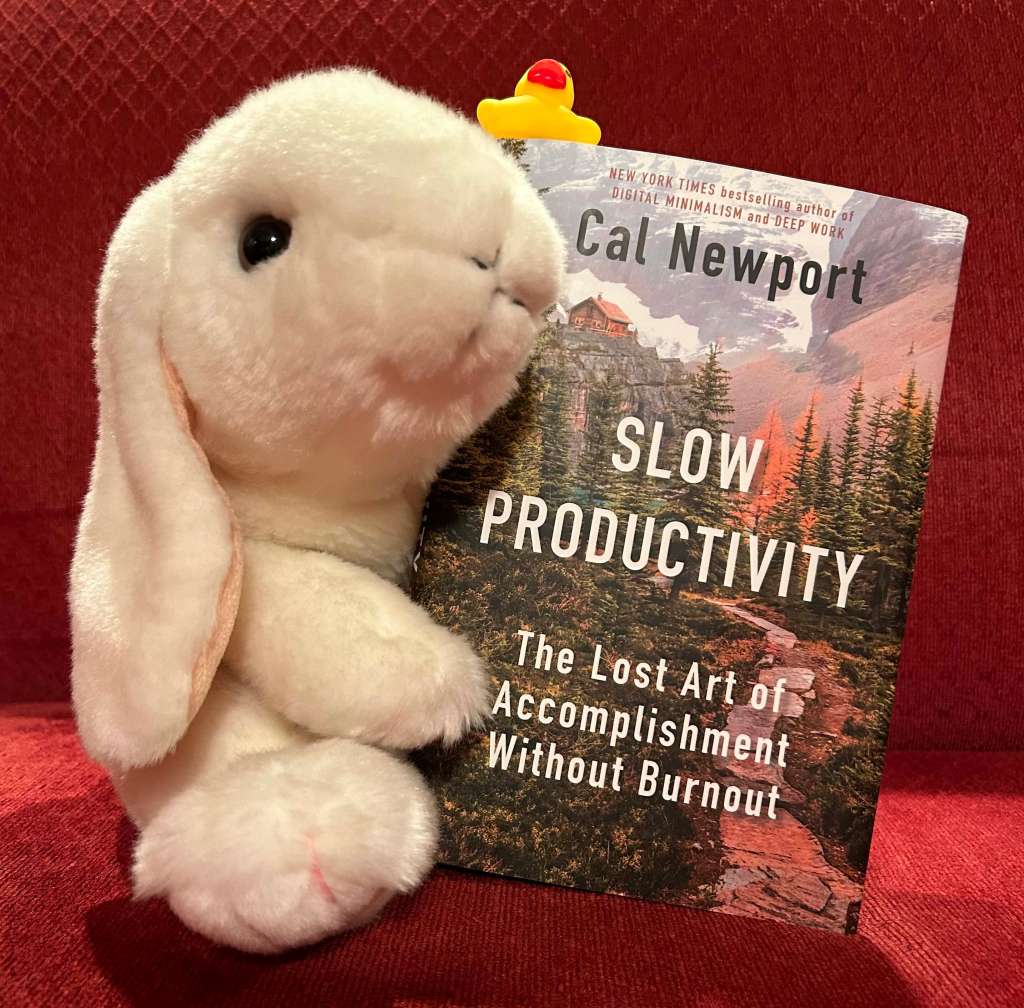
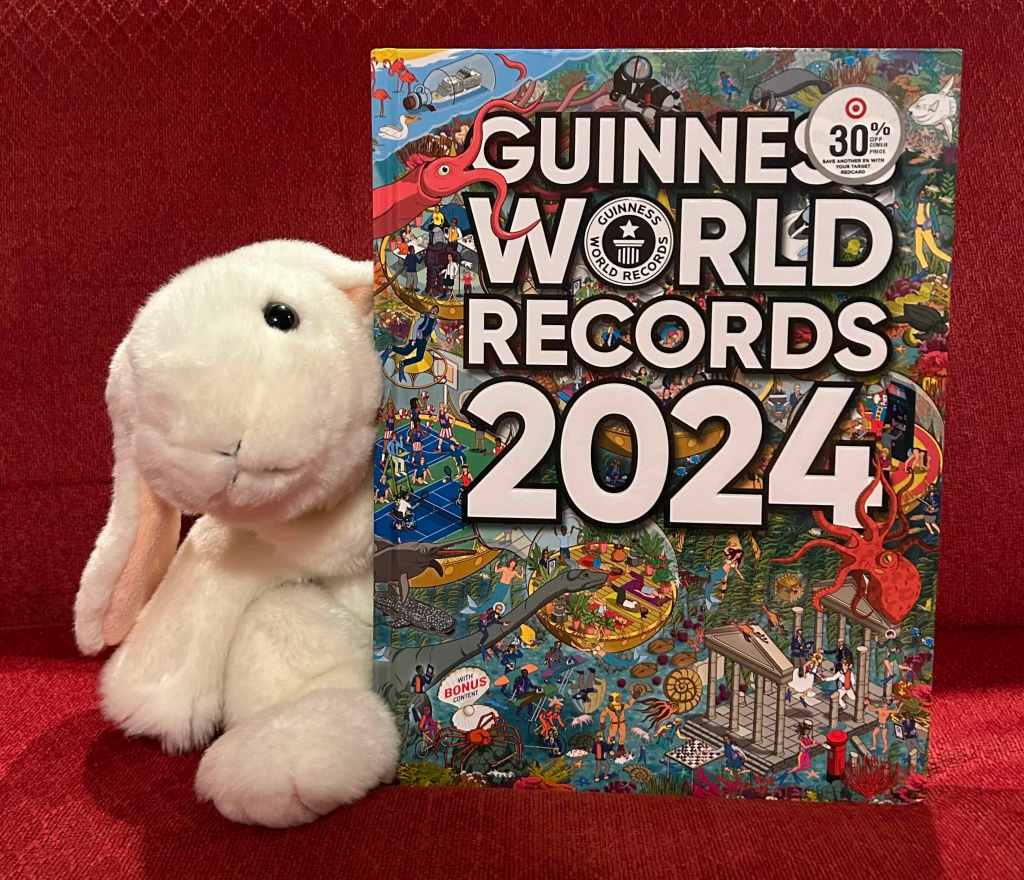
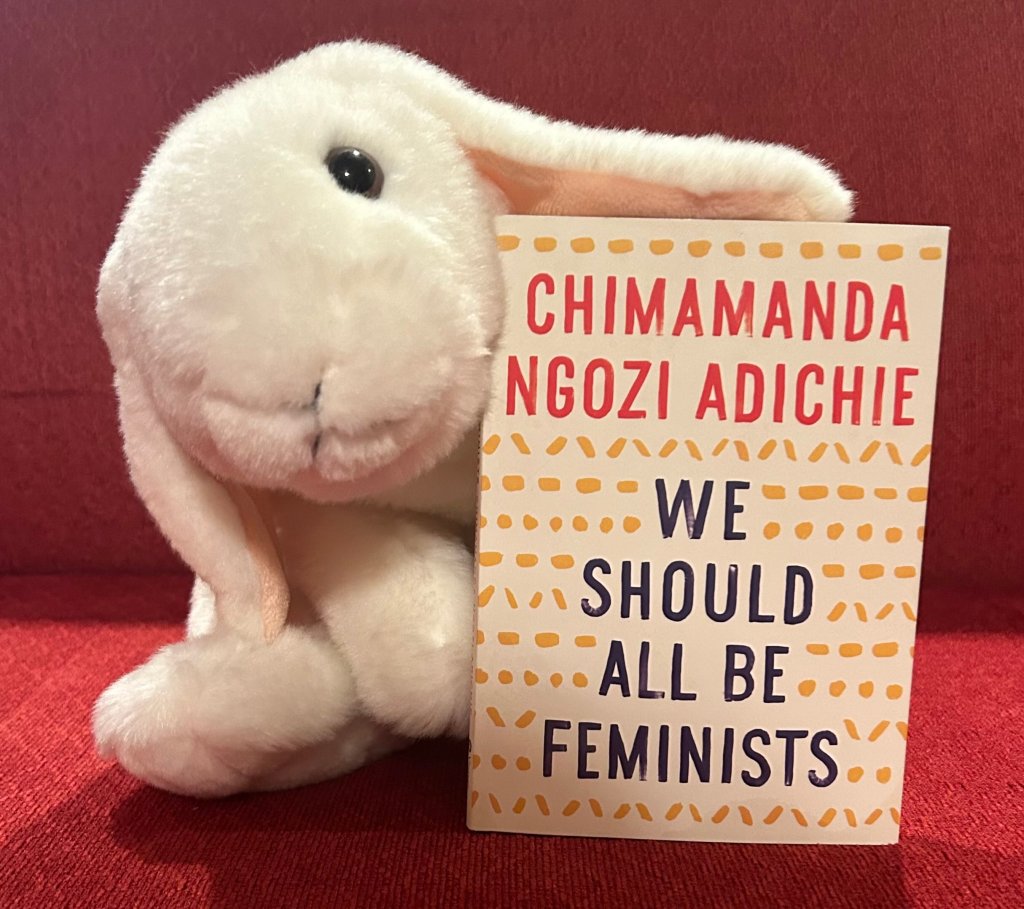
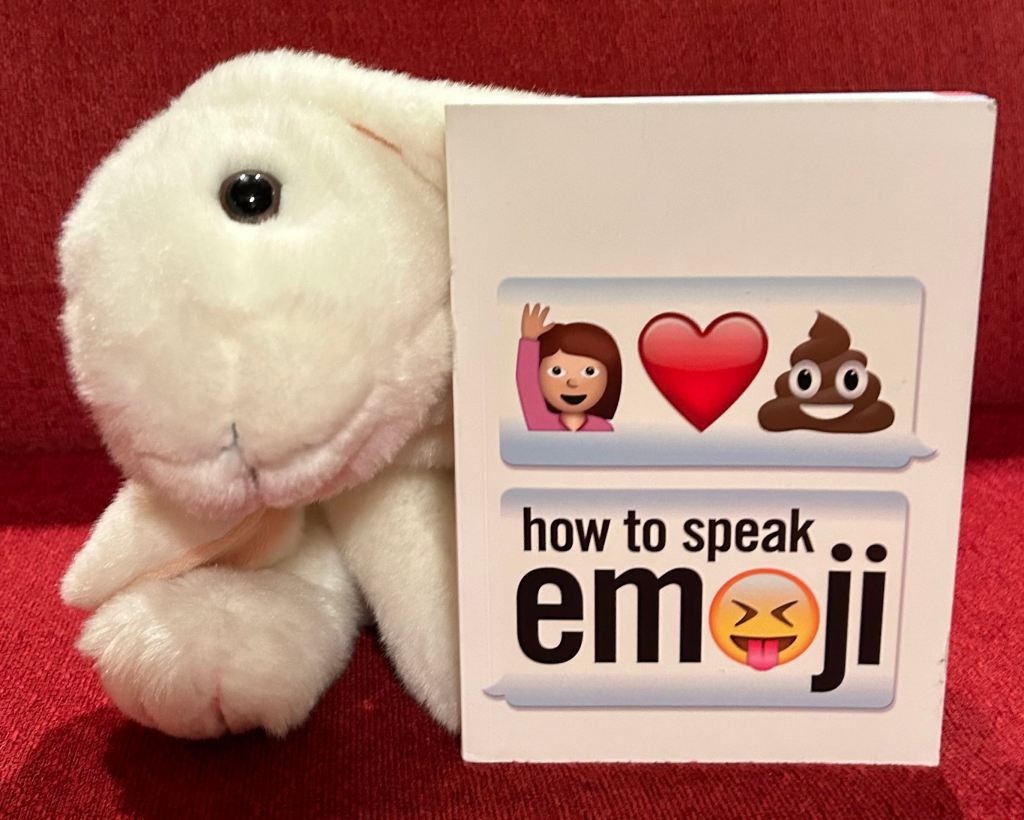
The bunnies also read a lot of nonfiction this year. Here they are posing with their favorites: Warhammer 40000 Core Book, Pathfinder Roleplaying Game: Core Rulebook, Slow Productivity, Guinness World Records 2024, We Should All Be Feminists, and How to Speak Emoji.
Sprinkles: We also all read many books of, or about poetry. Right?
Sprinkles: I also read and reviewed several children’s books about puberty. There were so many and those were all split between girl books and boy books, that I needed to have two reviews for them.
Marshmallow: We read most of those books, too, but I am glad you were the one who ended up reviewing them.
Caramel: I did peek into some of them, but I agree with Marshmallow, that it was good that you were the one who had to review them.
S: But all in all, we all read quite a lot of good, fun, and informative books this year, right?
M: And thought-provoking!
C: Yep. And I think we will be reading a lot more books next year!
M: But first, we have our month off!
S: Yes, we will take the month of January off.
C: And we are all really happy about that!
S: Well, we will continue to read, and we will get back to reviewing them in a month. And till then we just take a short break.
C: We deserve it!
M: Everyone deserves a break. And we are lucky to get one!
S: True. Okay, so what do you want to tell our readers Marshmallow?
M: I want to say: Happy new year everyone! We wish you a happy hoppy new year in 2025!
S: With lots of good books and many friends, old and new!
C: Yes! And stay tuned for more book bunny reviews, coming to you in February 2025!
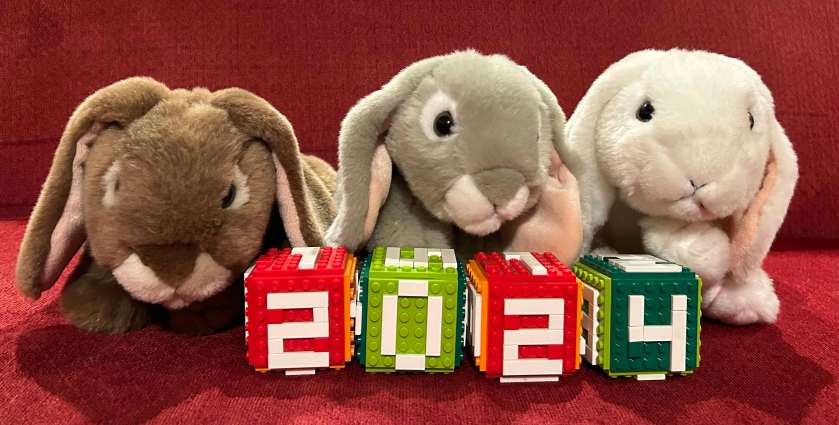
The book bunnies, and new friend Moose, wish all bunnies around the world a happy hoppy new year in 2025, with lots of good books and many friends, old and new!
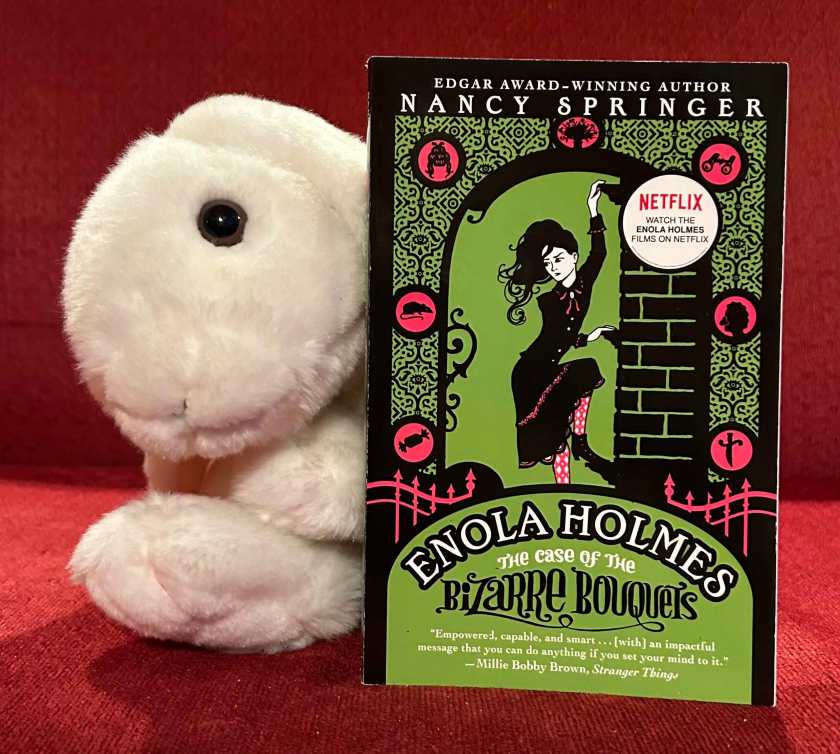
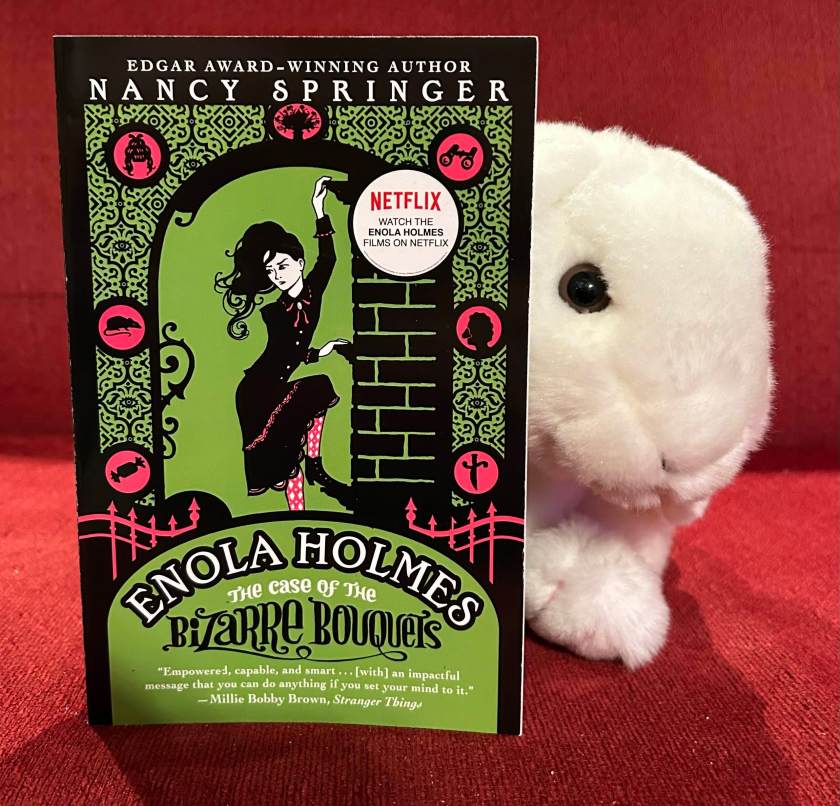
Marshmallow reviews Enola Holmes: The Case of the Bizarre Bouquets by Nancy Springer.
Marshmallow’s Quick Take: If you’re a Sherlock Holmes fan or if you like mysteries with female protagonist detectives, then this is the book for you!
Marshmallow’s Summary (with Spoilers): Enola Holmes has been living on her own in nineteenth century London for a couple months now. Given the fact that she is fourteen years old, one might ask why. The reason for her self-inflicted solitude is the fact that, during this period, women have no autonomy in the social status quo. Enola’s mother ran away from this set-up in a previous book and left Enola the means to do the same. Enola (whose name spells “alone” backwards) examined her surroundings and the expectations she was going to be forced to fulfill (finishing school, marriage, childbirth, etc.) and followed her mother’s suit. In doing so, Enola escaped the control of her older brothers: Mycroft and Sherlock Holmes (the famous detective). But even the famous detective Sherlock Holmes cannot locate her and she (while lying low) becomes adept at disguising herself by altering her appearance through various methods. Drawn to mysteries and puzzles, she solves several cases on her own (see for example The Case of the Missing Marquess and The Case of the Left-Handed Lady) and decides to found her own business as the world’s first and only professional “perditorian” (see The Case of the Missing Marquess: “From the Latin perditus, meaning “lost.” Perditorian: one who divines that which is lost”.)
Unfortunately, because women have no autonomy, she creates the business under the name of a male doctor while she disguises herself as his “assistant” Ivy Meshle. However, if her brothers find her, she will be forced to return to them and begin training to be a perfect “ornament to genteel society.” After several close brushes of being discovered by Sherlock and / or Mycroft, Enola once again finds herself drawn to the case of a certain Dr. John Watson. The reticent Arthur Conan Doyle reader may notice that this is the same Dr. Watson who is Sherlock’s loyal companion on his cases. For the few times she met him, Enola felt a fatherly affection towards Dr. Watson, so she (after some introspection and inspection of the situation) decides to search for Dr. Watson, too.
Normal mysteries are dangerous on their own. But her brother’s close proximity to this case makes it also a gamble with the freedom and autonomy she has had so far. Will Enola be able to find the doctor before her brother finds her?
Marshmallow is reading Enola Holmes: The Case of the Bizarre Bouquets by Nancy Springer.
Marshmallow’s Review: I would really recommend reading the first couple books in this series before this one to get context. But on its own, the world-building is enough to immerse the reader entirely in this Victorian-era mystery. The author consistently writes fascinating mysteries that never fail to disappoint in intrigue and complexity; yet the reader is never left confused at the end.
These Enola Holmes books stand out among all other mysteries I’ve read so far because the setting is so wonderfully set up. People often say reading is like a passport to other worlds and times. I was pretty sure they were lying, until now. Once I started reading this book, I couldn’t put it down because I didn’t want to stop learning about the mystery and the fascinating world it is in. The descriptions of London (I am pretty sure) are all factually correct for that time and all the details create an immersive experience that I would fully recommend.
This book series is also unique because it depicts a girl who is fully independent. Enola is perhaps the only female protagonist I have ever read about who isn’t in love, interested in, dating, or married to a guy. She is truly alone (in that sense) and is perfectly fine with it. It is good for girls to see that they have the choice to be so and that it is fine to be fine with that. This book also has strong themes of feminism; Enola’s strength, competence, and wit are rebelliously scandalous for the time. She stands up to the patriarchical system and doesn’t care what it thinks of her. She games the system to use it to her advantage when she disguises herself. But she never forgets to help the less fortunate with her fortunes.
But Enola is also more distinctive among other female protagonists because, as the author explicitly makes sure to state, Enola is not traditionally beautiful. She has a large nose, no delicate, feminine features of particular value, and a body like a “beanpole.” It is Enola’s virtue, brains, and bravery that makes her such a compelling character and I, for one, am expectantly looking forward to reading the next book!
Marshmallow’s Rating: 100%.
Marshmallow rates Enola Holmes: The Case of the Bizarre Bouquets by Nancy Springer 100%.
A few months ago Marshmallow reviewed Powerless by Lauren Roberts. This week she reviews the sequel, Reckless, published in July 2024.
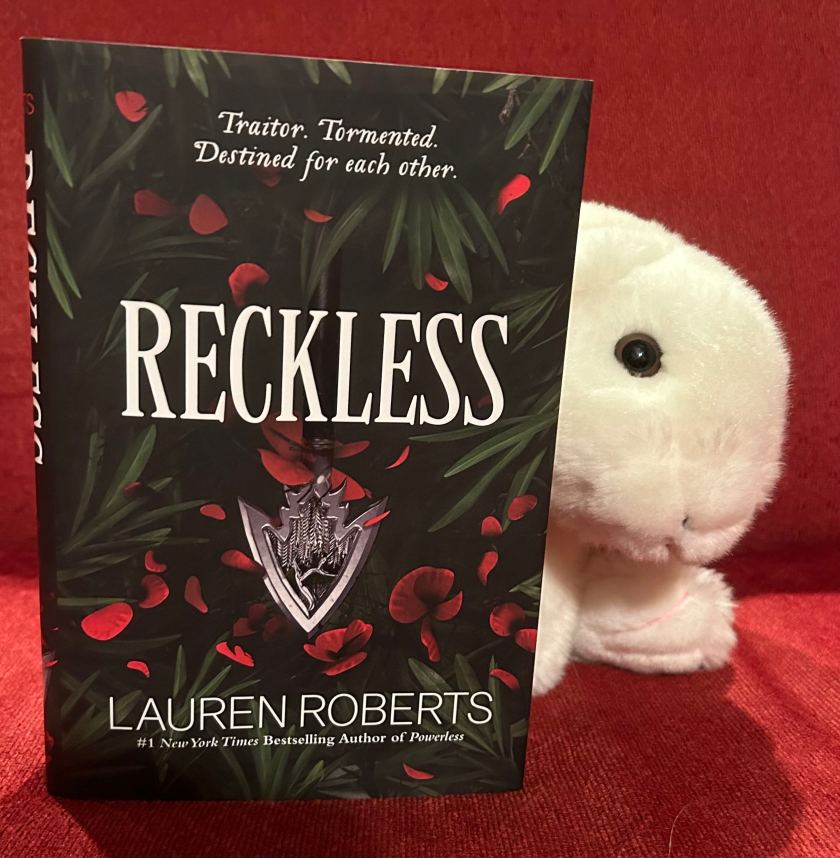
Marshmallow reviews Reckless by Lauren Roberts.
Marshmallow’s Quick Take: If you like fantasy books about family, friendship, and romance, then this is the book for you!
Marshmallow’s Summary (with Spoilers): Paedyn Gray killed the king of Ilya and is now, quite expectedly, on the run. Despite the fact that both of Ilya’s princes were falling for her, she is hunted by both: Kai (the ruthless Enforcer of Ilya, who carries out the king’s dirty work) and Kitt (the now-king). Paedyn herself was falling for Kai, but was also desperately trying to stop herself. Spoiler alert: she wasn’t and still isn’t winning. But despite their feelings towards her, Kai and Kitt are now bound by duty and blood to kill Paedyn for revenge and “justice”.
See, in Ilya, there are Elites (people who are born with special, magical powers) and there are Ordinaries (as the name suggests, people who are born without powers). Paedyn is an Ordinary who has been trying to disguise as a Elite her whole life; Ordinaries are hunted down and killed by… who else other than the Enforcer (Kai).
This way the author sets up what seems to be a tragedy waiting to happen between the hunted (Paedyn) and the hunter (Kai). In the first book, Paedyn joined a Resistance, a group that saves Ordinaries and fights to have Elites recognize them as equal. This has been a struggle because, according to the (now deceased) king, Ordinaries’ presence lessens the power of the Elites. Paedyn’s father was the founder of the Resistance, and he was killed by the king when she was very young, making her an orphan for the whole book. This leads to her, at the end of Powerless, killing the king in self defense (but also partially for revenge).
Since Ilya is no longer safe for her, Paedyn decides to leave for the nearby city of Dor; but to do so, she must cross the vast expanse of the Scorches, a massive, brutally parched desert. But before she can make it to the Scorches, Kai intercepts her. After learning that Paedyn was the one who killed his father, Kai gives her a head start because he knows he’ll need time to find the “courage” to kill her. This allows Paedyn to find refuge in her old house for a while, until Kai burns it down and keeps on chasing her. She evades him but is injured as she begins to traverse the desert. Eventually, she makes it to Dor. Unfortunately, Dor is full of enemies as well; Kitt has placed a bounty on her head and it’s not helping her out. But with her skill and finesse, she manages to keep a relatively low profile (as an anonymous underground fighter for illegal gambling purposes). But Kai still manages to track her down in Dor and forces her back into the open. As he begins to take her back to Ilya and presumably her death, their feelings begin to present problems. Kai must now choose between duty and love for his brother and love for Paedyn. And Paedyn is determined to keep fighting against him, to hate him till she dies. Once again though (spoiler alert!), she’s not winning.
Marshmallow is reading Reckless by Lauren Roberts.
Marshmallow’s Review: I really liked Reckless. The plot and the world-building are both fantastic! But the thing that makes this story stand out to me among other Young Adult fantasy books is that the author maintains a nuanced balance between romance and fantasy.
Reckless has a very good storyline about revolution and fighting against injustice. And I really love reading about the world the author has created because it’s actually really interesting on its own as well. The romance plot line contributes to the story and pushes it forward, so I appreciated its existence. I also want to know what happens to the characters because they are well-written and very, very deep. Unfortunately, I’ll need to wait till next year when the third (and last?) book in the series will be published.
In many fantasy YA novels, I find that the promising, amazing story and fantasy world soon become overwhelmed by a relatively unnecessary romance or a passionate relationship that takes over too much of the plot (e.g. Shatter Me, Unravel Me, Ignite Me). This book struck the perfect balance for me; I think there is a very thin line between just a full-on fantasy for young adults and a romance that is perhaps better put in the adults section.
I really enjoyed reading Reckless as a whole and I think that this book is what fantasy YA should be like. I couldn’t put it down once I started reading it and I would fully recommend it to all fantasy-lovers!
Marshmallow’s Rating: 101%.
Marshmallow rates Reckless by Lauren Roberts 101%.