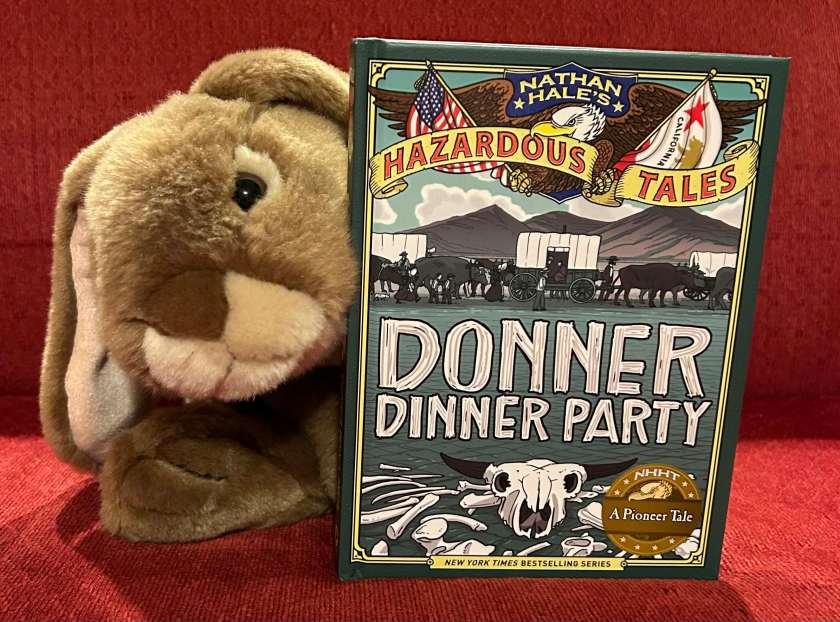
Caramel reviews Nathan Hale’s Hazardous Tales #5: Donner Dinner Party by Nathan Hale

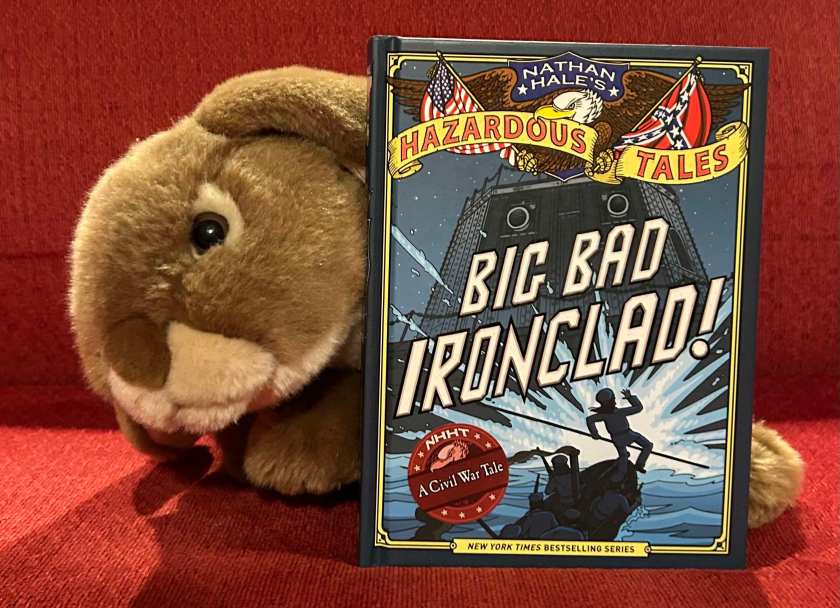
Caramel is on a roll reading books from the Nathan Hale’s Hazardous Tales series by Nathan Hale. So far he has read and reviewed One Dead Spy, Treaties, Trenches, Mud, and Blood, The Underground Abductor, and Big Bad Ironclad. Today he talks to Sprinkles about the fifth book he read in the series: Donner Dinner Party, which was originally published in 2013 as the third book in the series. (See this page created by Fulton County Library System for the full chronological order of the books.)

Given the morbid nature of the historical events described (involving death and cannibalism), this review might not be appropriate for very young bunnies.

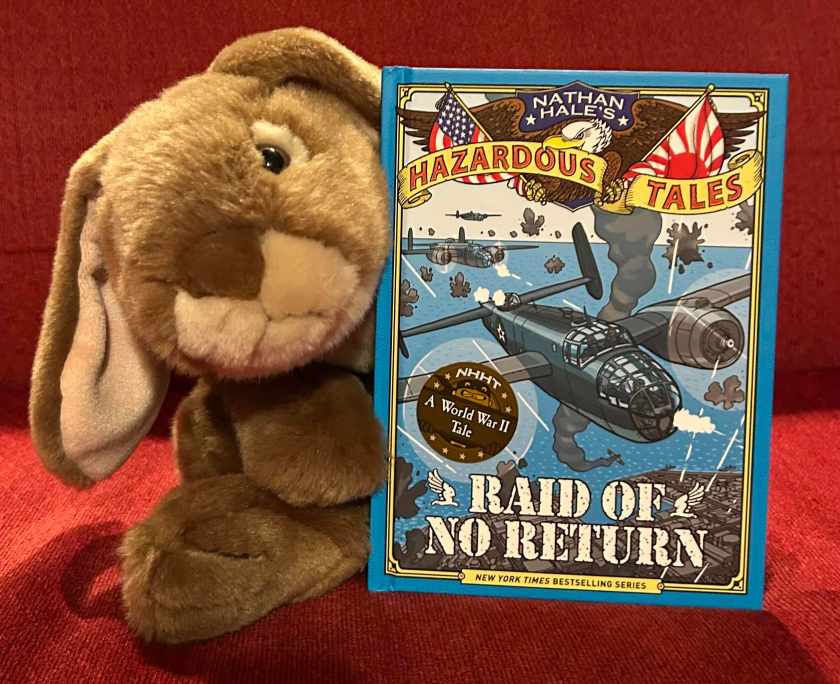
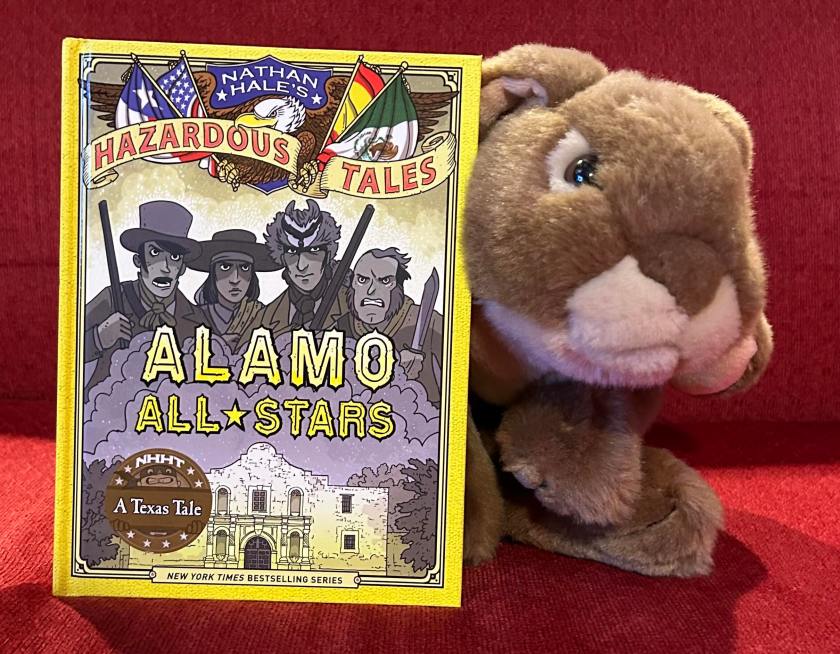
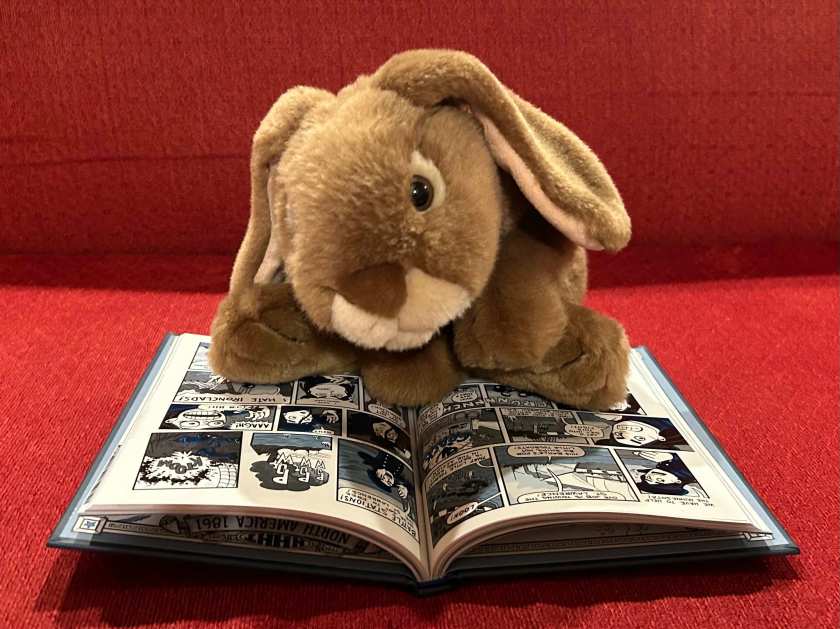
Caramel reviews Nathan Hale’s Hazardous Tales #5: Donner Dinner Party by Nathan Hale.

Sprinkles: So Caramel, it seems like it is once again time to talk about a Nathan Hale book.

Caramel: Yes! It is great that I can read another one of Nathan Hale’s Hazardous Tales.

S: I know you love these books! So tell me, what is this one about? 

C: It is about the people going to California in 1846.

S: Oh, I see, so this is about the Donner party, going west toward California and getting lost? 

C:Yes it is.

S: So the dinner party part is kind of poking fun at the rumors that some of them ended up eating others?

C: Yes, but it is not a very funny joke in terms of what it means. And it is not rumors; the Wikipedia article says they actually ate some of those who died because they were weaker, but they apparently also killed two Native American guides and ate them.

S: Caramel, that is awful!

C: Yep, and disturbing.

S: I mean, the other books you read in this series also had people dying, there were many wars and such, but this somehow feels a lot more morbid. 

C: Yep, it does. But apparently history can be pretty terrible. 

S: I can see that this book is making that quite clear. 

C: Yep, it certainly did for me.

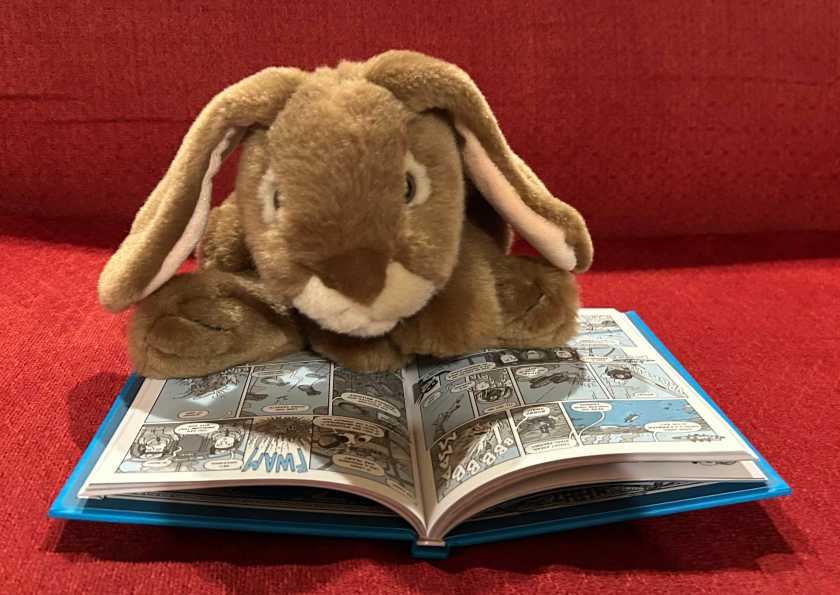
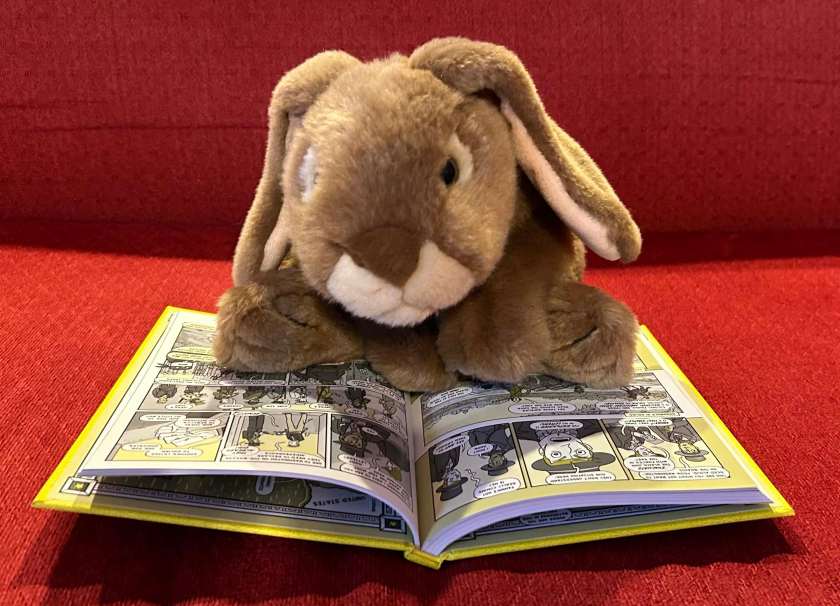
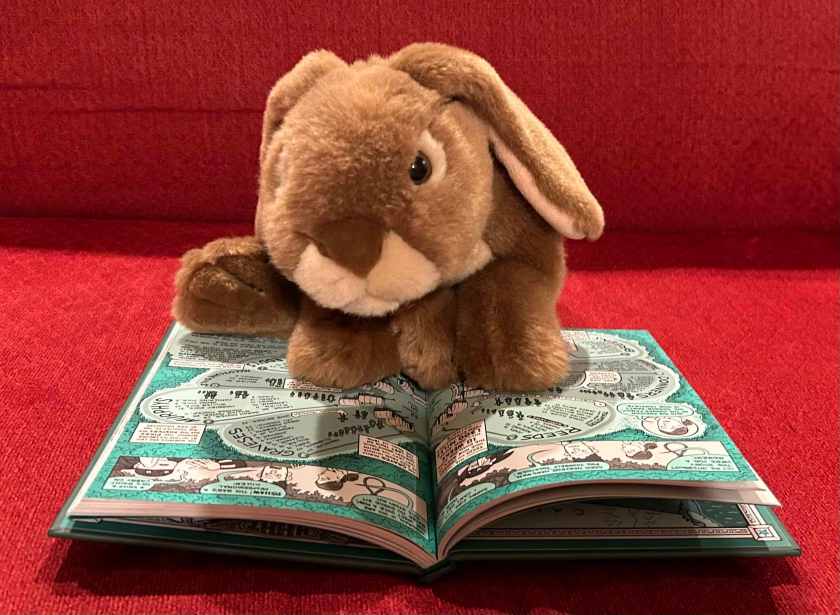
Caramel is reading Nathan Hale’s Hazardous Tales #5: Donner Dinner Party by Nathan Hale.

S: So was reading this book a bit more challenging then? The story is pretty disturbing. 

C: Yeah, it was a little, but the scary parts are mainly on a couple pages, making them easy to skip.

S: And it seems like an important story, about how humans can get quite vicious and terrible when they are desperate. 

C: Yeah humans are sometimes very mean to each other, which is not a good thing.

S: I mean when you read Watership Down, we saw there that bunnies can also be cruel to one another, but at least we would never eat each other. We are vegetarian. 

C: And I guess I will have to remind you that Watership Down was fiction, Sprinkles. This book is about a real event!

S: I know I know. I was just trying to lighten up the mood, but it is pretty difficult. So let us talk about the book in general. I suppose you had heard of the Donner party before. Did you learn anything new while reading Donner Dinner Party

C: Yep, that sometimes the people in the past, and sometimes now, can be very mean to others.

S: So true. And so sad… Okay, I will now shift gears because this is getting a bit too sad. It seems these books are in color but always only a couple colors show up on each two-page spread. Is that correct? 

C: yep, this one had around 8 different colors total.

S: But only a couple of the colors showing up on one page, right?

C: Yep, at most maybe 2-3 colors on one page.

S: But it still seems to work well, right? 

C: Yes, it feels colorful at least.

S: After this I think there are still a few more books in this series. Are you interested?

C: Yeah, I can’t imagine there will be too many more cannibal stories in there.

S: I agree. Okay, so let us wrap this up then. What would you like to tell our readers?

C: Stay tuned for more book bunny reviews!
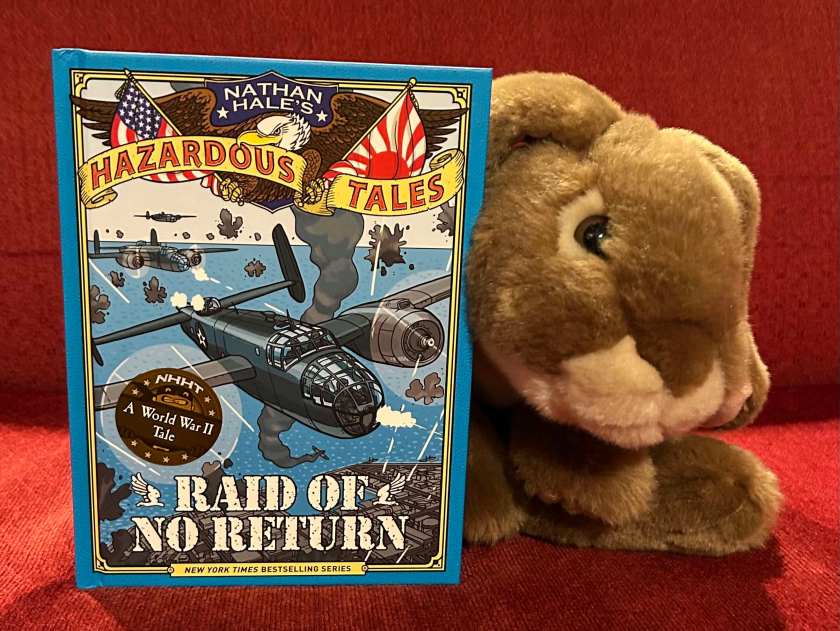
Caramel appreciated reading Nathan Hale’s Hazardous Tales #5: Donner Dinner Party by Nathan Hale and is ready for another adventure.

Caramel reviews Nathan Hale’s Hazardous Tales #4: Big Bad Ironclad by Nathan Hale

As his first review of 2025, Caramel wanted to continue with his favorite historical graphic novel series: Nathan Hale’s Hazardous Tales. He had already reviewed One Dead Spy, Treaties, Trenches, Mud, and Blood, and The Underground Abductor. Today he is talking about Big Bad Ironclad, fourth book in our collection. As usual, Sprinkles is taking notes and asking questions.

[We were hoping to go through these books in order, but Caramel happened to first read a three-book sampler which was made up of the first, fourth, and the fifth books! So the numbering of these posts basically is mostly about the order Caramel is reading them in. Big Bad Ironclad, reviewed in today’s post, is the second ever book in the series, originally published in 2012. Readers can see the publication order of these books at this page created by Fulton County Library System.]

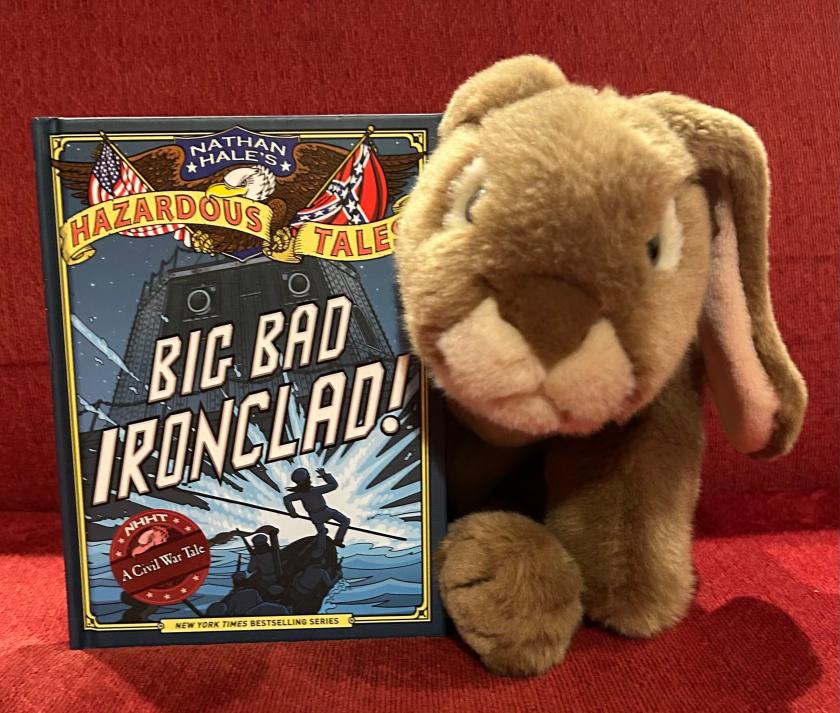
Caramel reviews Nathan Hale’s Hazardous Tales #4: Big Bad Ironclad by Nathan Hale.

Sprinkles: So Caramel, here we are again, and you chose to start off your 2025 reviews with yet another Nathan Hale book.

Caramel: Yes I have, and, what a book!

S: Hmm, I am guessing that means it is a good book?

C: yes, it certainly was.

S: So what is this one about? What time period are we in?

C: we are in the civil war, and it is about the ironclads, the first metal warships.

S: Oh yes, maybe we should remind our readers that these books are graphic novels that explore various time periods in the history of the United States. So this one is about the U.S. Civil War. Then we must be in the 1860s. 

C: Yes, that is important to do, and it is the 1860s.

S: Okay, so tell me more about the ironclads. 

C: They are older steam-powered warships that heavy iron plating is put over, like a jacket, allowing them to withstand cannons, and other guns of the time.

S: So kind of like an armor a warrior might put on. Underneath the iron are they made of wood then? 

C: Yes, they are, in fact, made of wood under the iron.

S: Hmm, I guess it makes sense to try and armor the ships. But wouldn’t that make them too heavy? Wouldn’t they sink?

C: Well, yes and no. The iron is placed on the exact right places as to not make it too heavy, yet still provide ample protection from attack.

Caramel is reading Nathan Hale’s Hazardous Tales #4: Big Bad Ironclad by Nathan Hale.

S: Okay, so that looks like a story you would be interested in, you like warships and such, but it is after all a graphic novel. Are there any human characters in the book? And what is the human story told?

C: It is about the stories of the ironclads and those who fought against them and how they defeated the big, bad ironclad.

S: Oh, so the ironclads are kind of like the new scary weapons and the story is about how they could be defeated. Do we also learn about the people who designed and built the ironclads? 

C: Yes, I suppose, but the story of how they are defeated is more central. 

S: Do both sides have ironclads or only one side?

C: Well, both sides have ironclads, but the story is told mainly from the view of the Union, the North, so we learn about how they build their ironclad and defeat the ironclad from the South. 

S: I see. So did you learn some new things while reading this book?

C: Yes, I did learn some new things; these books have so many facts! For example I learned that the Union built their own ironclad from the same inventor who made the peacemaker, a huge cannon which blew up and killed the president’s cabinet. They must have been desperate.

S: That is interesting! I had not heard about the peacemaker. Wikipedia has an article about the ship that it was installed on. So these books are factual but also fictional. Can you tell what is fact and what is fiction? 

C: Yes, it is rather obvious as the narrator, Nathan Hale, says the real things that happen, like he says things like, ”this is not an accurate representation of this person,” or something like that.

S: I see. That is cool. So you learn stuff about the history of the United States and also enjoy reading a fun graphic novel. I am assuming of course that you have enjoyed reading this book?

C: Yes, it was great!

S: I am assuming we will hear about a lot more Nathan Hale books in the near future. 

C: Yes, you will.

S: Can’t wait!

C: Well, you have to. At least till next week! 

S: Okay, okay, yes, till next week. So as we wrap up this review, what do you want to tell our readers?

C: Stay tuned for more book bunny reviews!
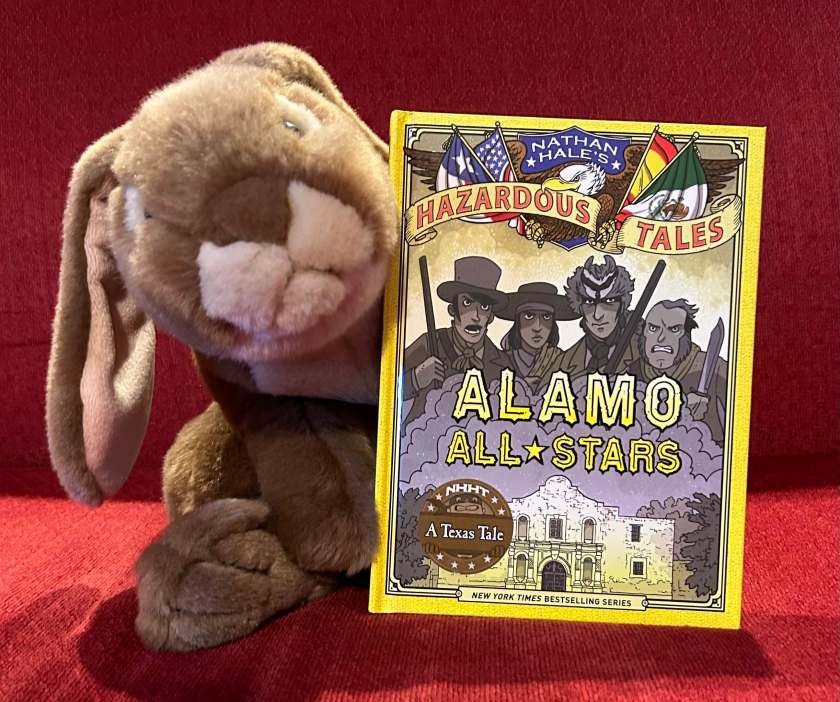
Caramel loved reading Nathan Hale’s Hazardous Tales #4: Big Bad Ironclad by Nathan Hale and can't wait to read the next book!
Caramel loved reading Nathan Hale’s Hazardous Tales #4: Big Bad Ironclad by Nathan Hale and can’t wait to read the next book!

Marshmallow reviews Things Fall Apart by Chinua Achebe

As the first review of the book bunnies blog this new year, we present to you Marshmallow’s review of Chinua Achebe’s Things Fall Apart. First published in 1958, Achebe’s novel is a modern classic, and Marshmallow has read it in school.

Marshmallow reviews Things Fall Apart by Chinua Achebe.

Marshmallow’s Quick Take: If you like historical fiction books about colonialism in Africa or books that make you think or feel, then this is the book for you!

Marshmallow’s Summary (with Spoilers): Set in the Nigerian Ibo society during the 1890s, this book starts with the introduction of Okonkwo. Okonkwo is a highly-respected man in his village Umuofia. Through his victories in battle and his defeat of the Cat (a famous wrestler), Okonkwo is a powerful man. As a result (as is Ibo culture), he has three wives, many children, a successful farm, and on occasion drinks palm wine out of his first human skull. He is what is called a “strong man.” However, his success and strength is a result of fear. His drive to succeed is fueled by a fear of being similar to his father, who was a efulefu (or worthless man). Okonkwo’s father was lazy and debt-ridden; thus, Okonkwo compensates for his father’s failures by working obsessively. Luckily for Okonkwo, in Ibo society, a man is not judged by his father, but by his own merit. Eventually, his success seems cemented. Yet, he is still controlled by anxiety, fear, anger, and violence. His household, though it reflects the traditional Ibo setup of its time, is a model case of domestic abuse.

Meanwhile, a woman from Umuofia is killed in a neighboring village. To avoid war with the fear-inspiring Umuofia, this village sends a virgin girl and a young boy to compensate. For the purposes of the plot, the boy (named Ikemefuna) is most important. Umuofia doesn’t immediately decide what to do with the boy, taking several years to do so. During this, he is placed in Okonkwo’s household and soon becomes fast friends with Okonkwo’s son, Nwoye. Over time, Okonkwo starts to view Ikemefuna as a son. 

But when tragedy strikes, Okonkwo finds himself in a situation that pits his “strong man” facade against his heart. And as the book progresses, Okonkwo continually finds himself at odds with the changing village. The question is, how much more can he take before he falls apart?

Marshmallow is reading Things Fall Apart by Chinua Achebe.

Marshmallow’s Review: I think reading this book is an extremely important experience that all people and bunnies should have. Chinua Achebe–the author–wrote it in simple, easy to read English specifically so it would be accessible to all; this makes it a good book for all ages and levels of reading ability. But ultimately, this book is remarkably subtle and nuanced. The author’s tone is simple and unique, while startlingly complex at the same time. The plot evolves elegantly and the author creates compelling characters that make you need to see the storyline though. Additionally, Achebe successfully grapples with and portrays issues like colonialism, racism, and toxic masculinity. This book is incredible because of the insights it gives on such topics. It also shows the reader what (some) life and culture was like in Nigeria before colonialism.

Additionally, this book’s themes are philosophically, historically, psychologically, and culturally intriguing. Throughout, Achebe weaves in the concept of facades: facades of strength, of stability, of security, of trustworthiness, of happiness, of truth. Achebe’s work is remarkable, and the astute reader will recognize and appreciate the importance of such work.

Overall, I highly recommend this book to all because it’s imperative to understand what others in the world experience and experienced, especially in a world of such divided opinions and narrow perspectives. 

Marshmallow’s Rating: 100%.

Marshmallow rates Things Fall Apart by Chinua Achebe 100%.

Marshmallow reviews Enola Holmes: The Case of the Bizarre Bouquets by Nancy Springer

Today Marshmallow reviews the third book in Nancy Springer’s Enola Holmes series: The Case of the Bizarre Bouquets, first published in 2008. (You might also like to see Marshmallow’s reviews of the first two books: The Case of the Missing Marquess and The Case of the Left-Handed Lady.)

Marshmallow reviews Enola Holmes: The Case of the Bizarre Bouquets by Nancy Springer.

Marshmallow’s Quick Take: If you’re a Sherlock Holmes fan or if you like mysteries with female protagonist detectives, then this is the book for you!

Marshmallow’s Summary (with Spoilers): Enola Holmes has been living on her own in nineteenth century London for a couple months now. Given the fact that she is fourteen years old, one might ask why. The reason for her self-inflicted solitude is the fact that, during this period, women have no autonomy in the social status quo. Enola’s mother ran away from this set-up in a previous book and left Enola the means to do the same. Enola (whose name spells “alone” backwards) examined her surroundings and the expectations she was going to be forced to fulfill (finishing school, marriage, childbirth, etc.) and followed her mother’s suit. In doing so, Enola escaped the control of her older brothers: Mycroft and Sherlock Holmes (the famous detective). But even the famous detective Sherlock Holmes cannot locate her and she (while lying low) becomes adept at disguising herself by altering her appearance through various methods. Drawn to mysteries and puzzles, she solves several cases on her own (see for example The Case of the Missing Marquess and The Case of the Left-Handed Lady) and decides to found her own business as the world’s first and only professional “perditorian” (see The Case of the Missing Marquess: “From the Latin perditus, meaning “lost.” Perditorian: one who divines that which is lost”.)

Unfortunately, because women have no autonomy, she creates the business under the name of a male doctor while she disguises herself as his “assistant” Ivy Meshle. However, if her brothers find her, she will be forced to return to them and begin training to be a perfect “ornament to genteel society.” After several close brushes of being discovered by Sherlock and / or Mycroft, Enola once again finds herself drawn to the case of a certain Dr. John Watson. The reticent Arthur Conan Doyle reader may notice that this is the same Dr. Watson who is Sherlock’s loyal companion on his cases. For the few times she met him, Enola felt a fatherly affection towards Dr. Watson, so she (after some introspection and inspection of the situation) decides to search for Dr. Watson, too.

Normal mysteries are dangerous on their own. But her brother’s close proximity to this case makes it also a gamble with the freedom and autonomy she has had so far. Will Enola be able to find the doctor before her brother finds her?

Marshmallow is reading Enola Holmes: The Case of the Bizarre Bouquets by Nancy Springer.

Marshmallow’s Review: I would really recommend reading the first couple books in this series before this one to get context. But on its own, the world-building is enough to immerse the reader entirely in this Victorian-era mystery. The author consistently writes fascinating mysteries that never fail to disappoint in intrigue and complexity; yet the reader is never left confused at the end.

These Enola Holmes books stand out among all other mysteries I’ve read so far because the setting is so wonderfully set up. People often say reading is like a passport to other worlds and times. I was pretty sure they were lying, until now. Once I started reading this book, I couldn’t put it down because I didn’t want to stop learning about the mystery and the fascinating world it is in. The descriptions of London (I am pretty sure) are all factually correct for that time and all the details create an immersive experience that I would fully recommend.

This book series is also unique because it depicts a girl who is fully independent. Enola is perhaps the only female protagonist I have ever read about who isn’t in love, interested in, dating, or married to a guy. She is truly alone (in that sense) and is perfectly fine with it. It is good for girls to see that they have the choice to be so and that it is fine to be fine with that. This book also has strong themes of feminism; Enola’s strength, competence, and wit are rebelliously scandalous for the time. She stands up to the patriarchical system and doesn’t care what it thinks of her. She games the system to use it to her advantage when she disguises herself. But she never forgets to help the less fortunate with her fortunes.

But Enola is also more distinctive among other female protagonists because, as the author explicitly makes sure to state, Enola is not traditionally beautiful. She has a large nose, no delicate, feminine features of particular value, and a body like a “beanpole.” It is Enola’s virtue, brains, and bravery that makes her such a compelling character and I, for one, am expectantly looking forward to reading the next book!

Marshmallow’s Rating: 100%.

Marshmallow rates Enola Holmes: The Case of the Bizarre Bouquets by Nancy Springer 100%.