Caramel reviews The Extraordinary Book That Eats Itself by Susan Hayes, Penny Arlon, and Pintachan

Caramel reviews The Extraordinary Book That Eats Itself, a book of eco-friendly activities that encourage environmental conservation through creative projects.

Today Caramel is talking to Sprinkles about a fun activity book first published in 2021: The Extraordinary Book That Eats Itself: Every Page Turns Into An Eco Project That Helps You Save The Planet, written by Susan Hayes and Penny Arlon and illustrated by Pintachan.
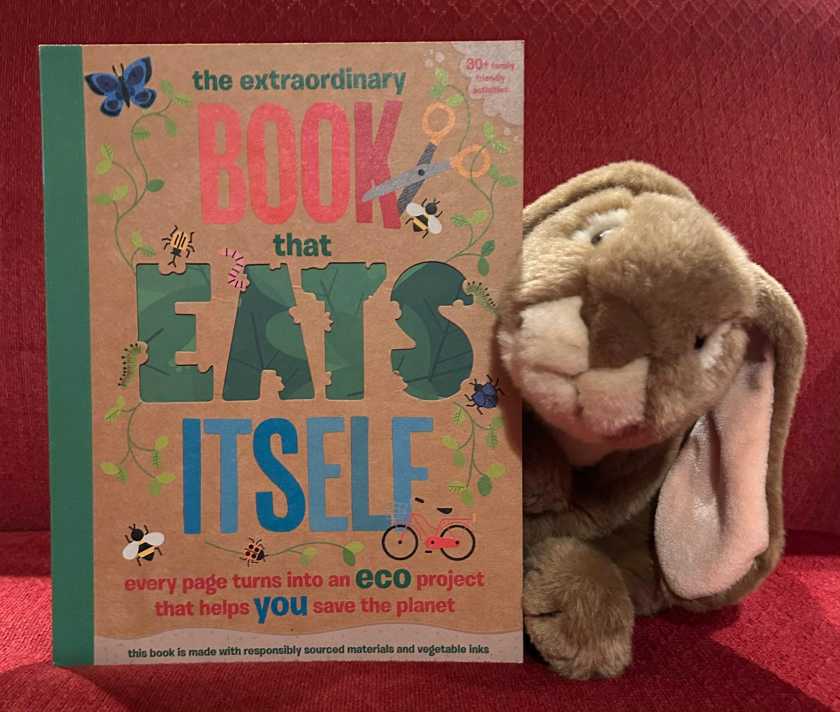
Caramel reviews The Extraordinary Book That Eats Itself, written by Susan Hayes and Penny Arlon, and illustrated by Pintachan.

Sprinkles: So Caramel, today you have another activity book for us. 

Caramel: Yep, I really like the activities in this book.

S: That is great! I hope we can talk about some of them in a bit. But let us start with the title. Why is this book called The Extraordinary Book That Eats Itself?

C: It is because the book has an activity on each page that allows you to use that page to create something that benefits the environment. You are supposed to use each of the pages, and even the cover pages, so in the end, when you are done with the book, the book has eaten itself up!

S: I see! That’s clever! 

C: Yes it is. And I want us to finish this review so I can get started with the activities!

S: Alright, we will hurry then. When I hold the book I can feel that the cover is hard card stock, and the pages are also relatively thick and very colorful. So they could make good material for crafts and such. 

C: Yeah, they suggest that you use all of them for a project. As I said, each page introduces a project and you are supposed to use that page, and sometimes some of the cover pages, for the activity.

S: I understand. So tell me about the activities then. 

C: Well, there are sixty pages and an activity on every two pages, so there are a total of thirty activities. There is a handy table of contents at the beginning and they list all the things. 

S: Okay, have you tried any of them yet?

C: No!! I am trying to finish this review so I can start pulling apart the pages and actually do the activities!

S: Okay, sorry, yes, let us get on with the review then, so you can get to help the book eat itself soon.
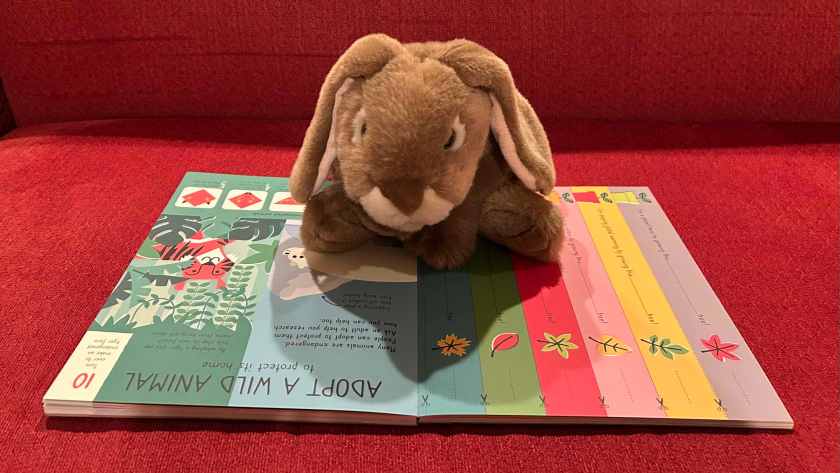
Caramel is reading The Extraordinary Book That Eats Itself, written by Susan Hayes and Penny Arlon, and illustrated by Pintachan.

S: Once we are done, which activity are you going to start with? Are you going to go page by page from the beginning to the end? Is there some kind of an order to the activities?

C: I think they mean it that way, but I am not sure if I want to go in the order they put the book together. 

S: Which activity will you start with then? 

C: I don’t know.

S: Well, then why don’t you begin at the beginning? That is the advice the King gave to Alice in Alice in Wonderland

C: Yeah, that might be the right train of thought there.

S: So what does that mean? What is the very first activity? 

C: To build a worm bin and to throw food into it like a composting bin.

S: Hmm, I like the idea in theory, but when we tried composting, we just got a lot of little flies in the house. But maybe we can try again. We probably did not do it right the first time. 

C: I remember the flies! But yes, maybe we should try again.

S: Okay, that is an interesting idea and we will talk about it. What is the next project?

C: To just share things. 

S: Instead of buying things new and so on?

C: Yep.

S: Hmm, so I can see why the book has the subtitle “Every Page Turns Into An Eco Project That Helps You Save The Planet”. They are trying to have you do things that will help you with environmental conservation, by encouraging you to try recycling, composting, and so on. 

C: Yep, remember you are supposed to recycle every scrap left over from the projects, so the book won’t create any trash. So it is truly a book that eats itself. Everything will be used up!

S: Like they say: ““Reduce, reuse, and recycle”.

C: Yes, that’s the spirit! 

S: Okay, what other projects seem especially enticing to you? 

C: I guess the first, the worm bin, is my favorite. But I also liked the twelfth one, which is about planting a tree. I also want to make my own pizza, which is the twenty-sixth activity. 

S: Hmm, pizza sounds yummy! And I love trees, and that sounds wonderful, too, Caramel. So maybe we should wrap this review up so you can get started!

C: Yep!

S: What do you want to tell our readers?

C: Stay tuned for more book bunnies reviews!
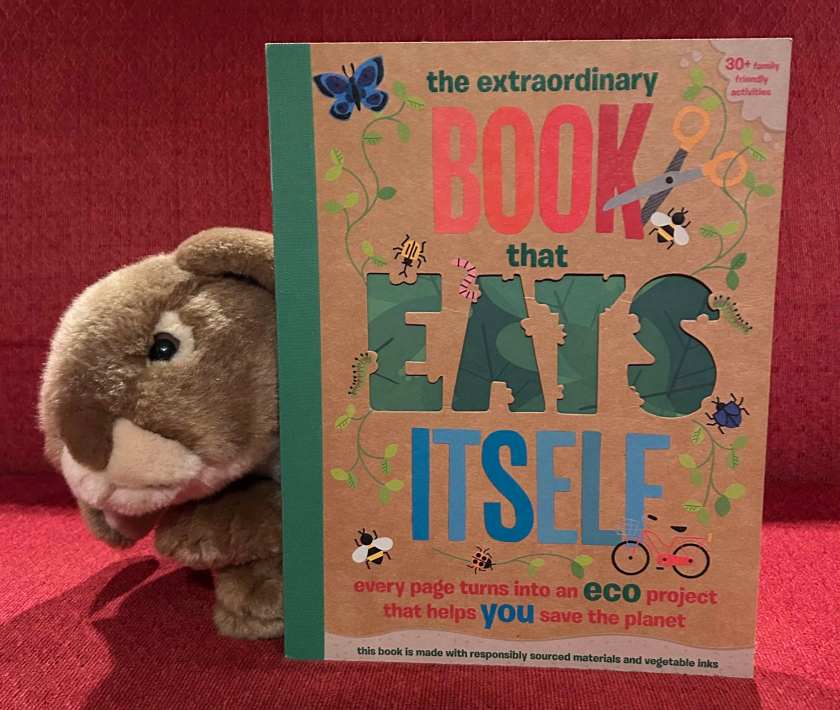
Caramel is excited to have finished reading and reviewing The Extraordinary Book That Eats Itself, written by Susan Hayes and Penny Arlon, and illustrated by Pintachan, so now he can get started with the activities!

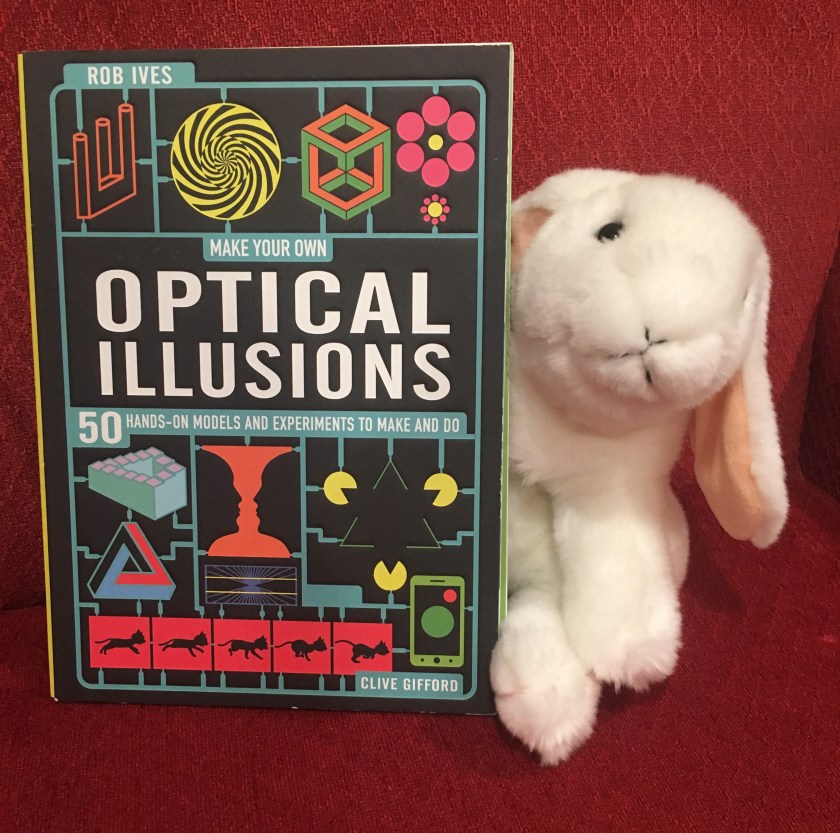
Marshmallow reviews Make Your Own Optical Illusions by Clive Gifford and Rob Ives

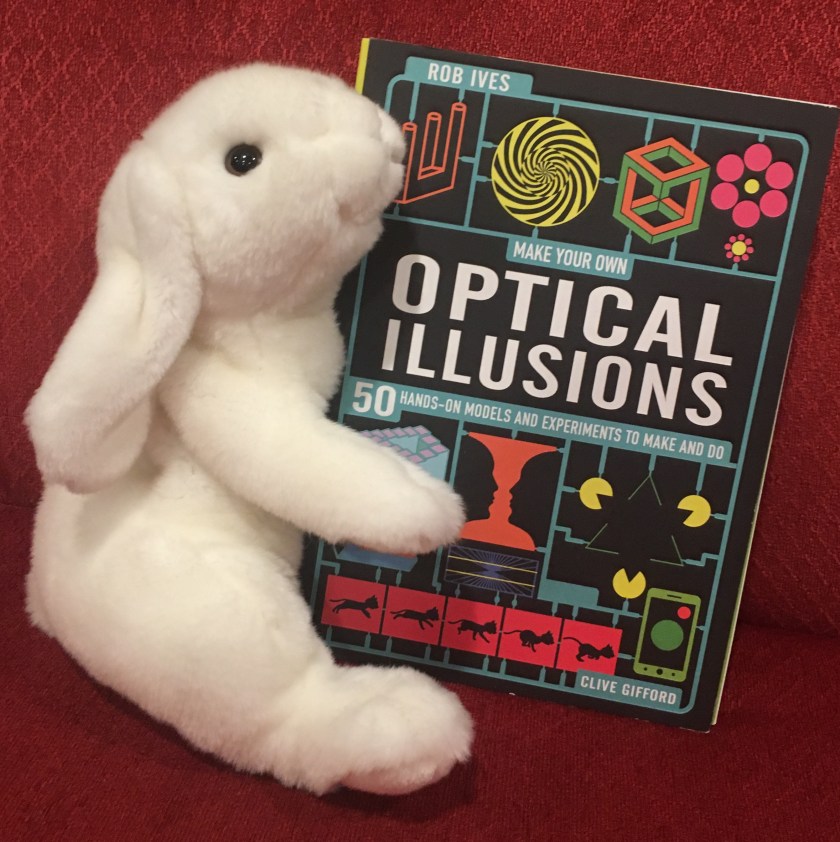
This week Marshmallow reviews a neat activity book written by Clive Gifford (text) and Rob Ives (paper engineering): Make Your Own Optical Illusions: 50 Hands-On Models and Experiment to Make and Do.

Marshmallow reviews Make Your Own Optical Illusions: 50 Hands-On Models and Experiment to Make and Do by Clive Gifford and Rob Ives.

Marshmallow’s quick take: If you like books that are about optical illusions and how they work, then this might be the book for you.  

Marshmallow’s Overview: This book is about optical illusions and what makes them so convincing that they fool your brain and eyes in to thinking that something looks different than it actually is.

There is a large variety of optical illusions in the book. At the beginning we learn about literal illusions, cognitive illusions, and physiological illusions.

“Literal illusions simply use one type of object to trick your brain into thinking it is viewing a different object or scene. Cognitive illusions occur because of the way your brain judges and decides on the information sent to it by the eyes. Physiological illusions are designed to exploit the limits of your body and vision system.”

This page from Arizona State University, written by Abigail Howell, explains the difference between these three, in case you want to learn more. There are also neat examples of each in the book.

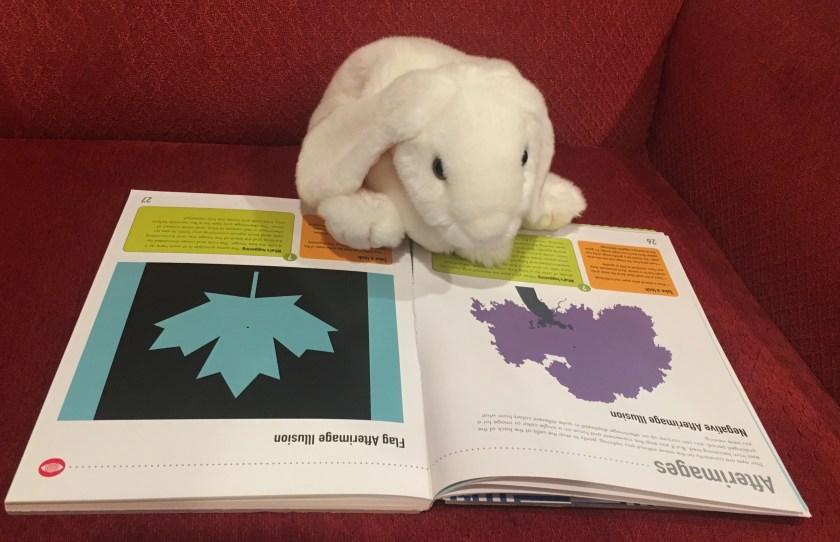
One of my favorite optical illusions in the book is a physiological illusion called Afterimages. This is where you stare at an image, for example a black light bulb, and then you look at a piece of paper that is white and then you see a glowing light bulb that looks like the light bulb you saw in the book but now the bulb you see is glowing! The reason that this happens is because, according to the book, your special light-detecting cells get tired after staring at an image for a long time, and they send a weak signal so that your brain reads it as the opposite color that the image actually is, thus making the light bulb look like it is glowing. 

Marshmallow is reading up on afterimages, a special kind of physiological illusion.

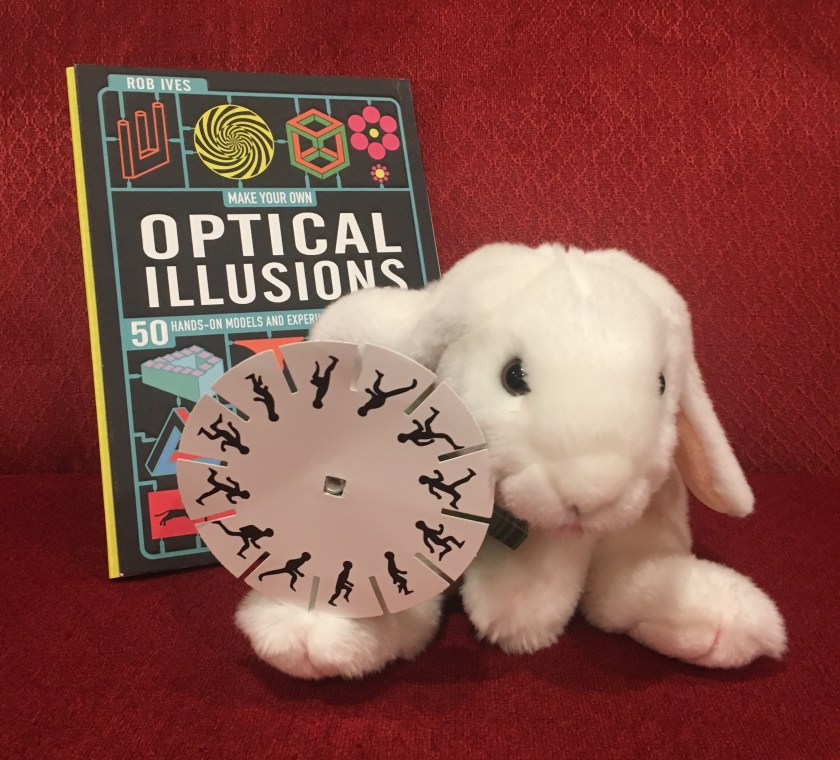
The book has a total of 64 colorful pages of text and examples of illusions. Then there are twenty pages in the back that have cardboard cutouts. You can “press them out” and they come out easily, so you can build your own optical illusions, little hand-held thingies that you can use to fool or trick your brain and eyes into thinking in strange ways. Some of these hands-on projects are things that you spin and then you see a person running. Some of the papers that you can press out are one that are to help you see why one of the optical illusions work.

Marshmallow is proudly showing one of the optical illusion toys she made using the cutouts from Make Your Own Optical Illusions: 50 Hands-On Models and Experiment to Make and Do.

Marshmallow’s Review: This is a great book which contains many great optical illusions that will definitely fool you. Some are optical illusions that you can build, and some are ones that make your eyes see two images in one picture. The explanations given to explain what is happening in your brain when you get fooled are expertly written so that anyone can understand why you see something that is not on the page.

The authors, Rob Ives and Clive Gifford, have cooked up some great illusions that are really interesting. When these optical illusions are mixed together, they make a mind-boggling illusion book.

This is a hands-on book that includes projects that you can put together by yourself and then amaze your mind. I have only made some of the projects at this point and I am excited to make some more.

Overall Make Your Own Optical Illusions is a great book for all bunnies, especially those who like to play with their minds and hands (or paws?).      

Marshmallow’s rating: 95%

Marshmallow rates Make Your Own Optical Illusions: 50 Hands-On Models and Experiment to Make and Do by Clive Gifford and Rob Ives 95%.