Marshmallow reviews Soseki Natsume’s I Am A Cat: The Manga Edition

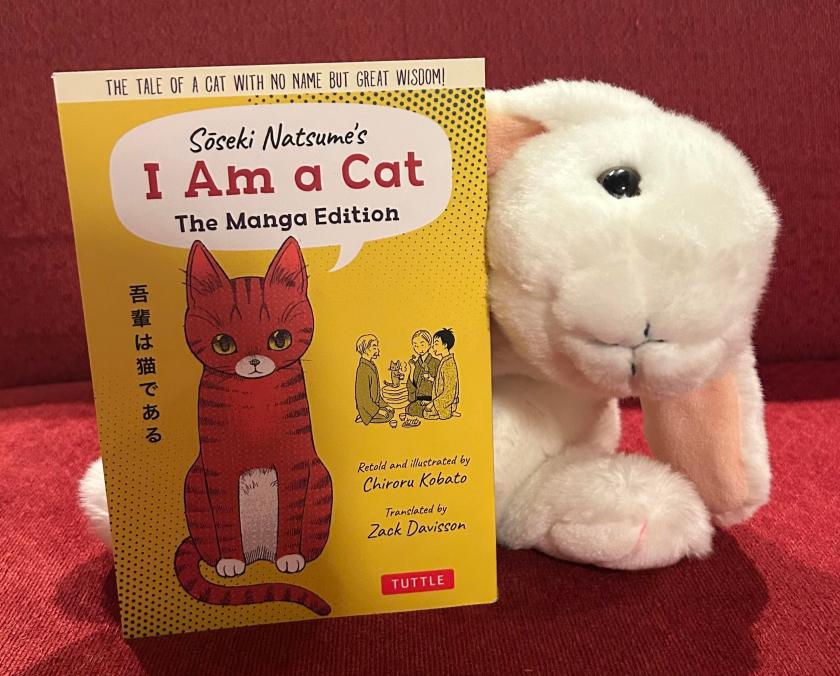
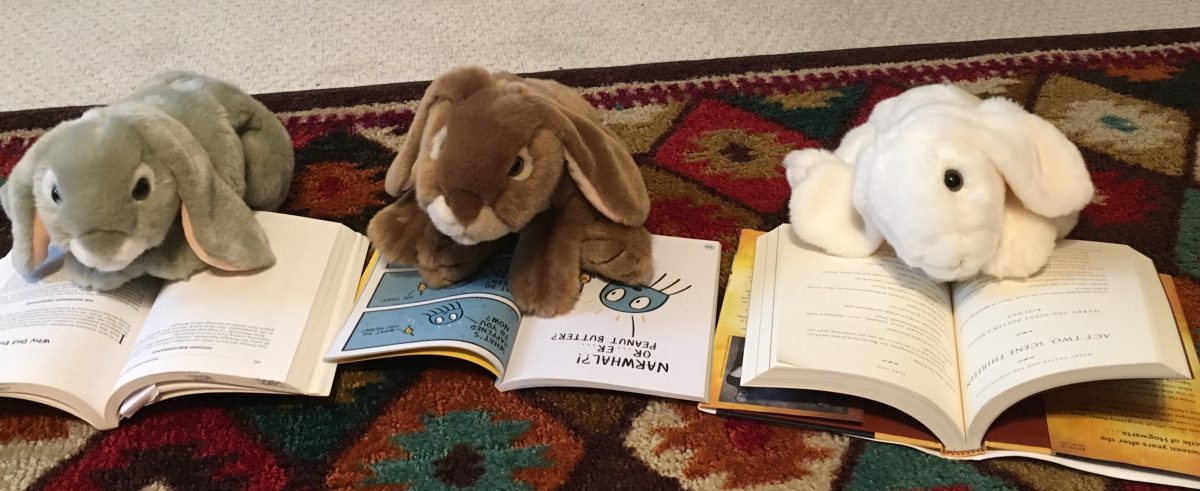
Today Marshmallow reviews Soseki Natsume’s I Am A Cat: The Manga Edition, the graphic novelization of the Japanese classic I Am A Cat, originally written by Soeki Natsume in 1905-1906. This “manga edition” was retold and illustrated by Chiroru Kobato, translated into English by Zack Davisson, and published in 2021. Sprinkles is taking notes and asking questions.

[In this post, we mention suicide as it relates to the content of the book, so if this is a sensitive topic for you, please consider not reading further.]

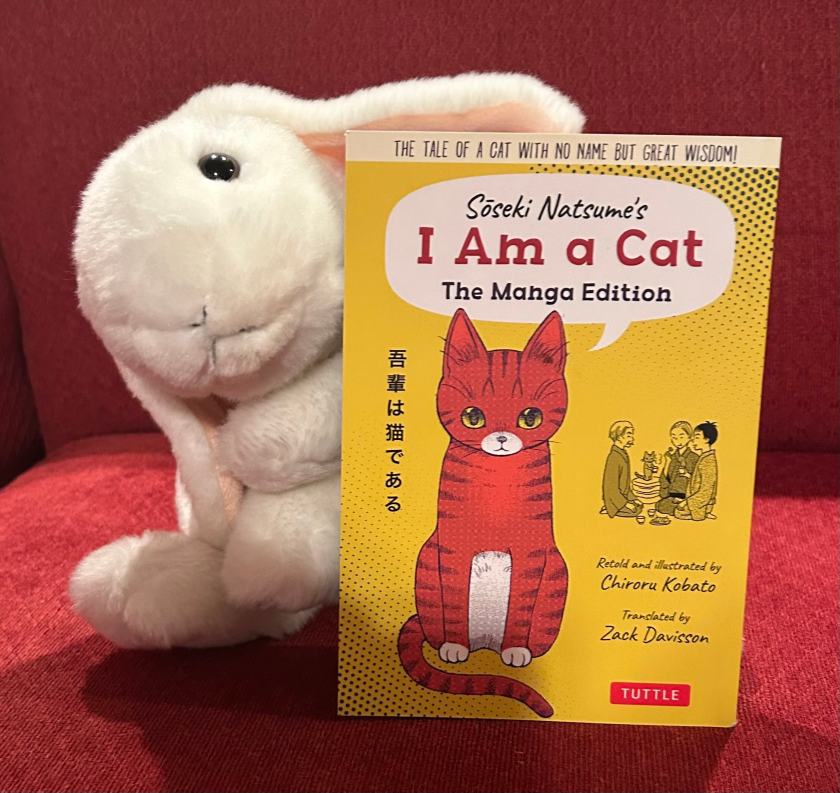
Marshmallow reviews Soseki Natsume's I Am A Cat: The Manga Edition, retold and illustrated by Chiroru Kobato, and translated into English by Zack Davisson.
Marshmallow reviews Soseki Natsume’s I Am A Cat: The Manga Edition, retold and illustrated by Chiroru Kobato, and translated into English by Zack Davisson.

Sprinkles: I am so excited we are finally talking about this book! I am very curious about it. So let us start with your standard overview. 

Marshmallow: Sure! If you like thought-provoking and eye-opening books from other cultures and other time periods, then this is the book for you!

S: That is a great start. Okay, now please do tell us a bit about what this book is about.. Since the title is “I am a cat”, I am guessing it is probably about a cat.

M: Yes, actually the main character is a cat who narrates the whole story (which takes place in early twentieth century Japan). He was separated from his family at a young age and was taken in—reluctantly—by the family of an English teacher named Sensei Kushami. He describes his life with them and the silly human occurrences / things they experience. 

S: So what kinds of things does he talk about? 

M: Early on, he describes his near-death experience with mochi. He also watches the humans gossip a lot about a rich woman named Ms. Kaneda and her nose (which I thought was very insensitive). The woman, whom the cat calls Lady Nose, has a very ungrateful yet beautiful daughter who may marry one of Sensei Kushami’s friends. There is a lot of confusion that surrounds this affair though and a lot of false rumors and accusations get thrown around. 

S: So the cat witnesses and talks about a whole lot of silly, trivial, petty things humans worry about. 

M: Yes. In the original version of the book, according to this neat recap we found online, this makes him feel pretty superior. In this manga version, he also seems a little amused by their behavior; however, he seems a little less judgemental.

S: In that recap and also on the Wikipedia article for the book, we also learn that the Japanese version of the title “I Am A Cat” also has sort of this formal feel to it because it uses a particular version of the first person pronoun “I” that is “a very high-register phrasing more appropriate to a nobleman, conveying grandiloquence and self-importance”. I am guessing that also makes the book funny to begin with, the cat is kind of pretty full of himself. 

M: I presume it does in Japanese, but of course, I didn’t quite catch that joke myself in English. 

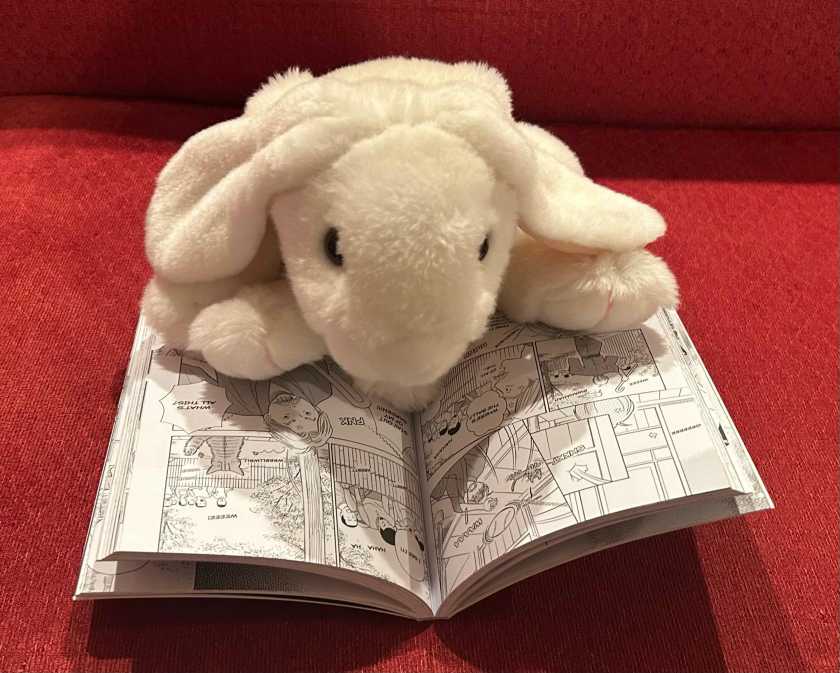
Marshmallow is reading Soseki Natsume's I Am A Cat: The Manga Edition, retold and illustrated by Chiroru Kobato, and translated into English by Zack Davisson.
Marshmallow is reading Soseki Natsume’s I Am A Cat: The Manga Edition, retold and illustrated by Chiroru Kobato, and translated into English by Zack Davisson.

S: English has a single first-person pronoun which makes it a lot easier to learn or speak it, but you also lose a lot of nuance in this way, I suppose. Anyways, so this cat is observing his humans, kind of like Garfield. Garfield is kind of self-important in a way, but maybe a bit less interested in the humans.

M: Yes. I felt like the main character here did seem to care about his human family, but they did not really seem to always care about him too much (Sensei Kushani originally did not want him in the house at all). 

S: Hmm, that is interesting. So I know that when you first read this book, you were a bit disturbed by it. Can you tell us a bit about that? 

M: I felt that the book made too many references to suicide too lightly. Several characters consider hanging themselves on a pine called the Hanging Tree. None of the main characters ends up killing themselves, but it felt like it was mentioned too many times in the course of such a short book. 

S: I can see how that made the feel of the book kind of dark and uncomfortable for you. I am sorry about that. I had thought that this book is supposed to be satirical and philosophical, so I suggested that you read it. 

M: It’s okay! It was a little dark and unexpected, but the rest of the book was amusing to read. I can see why people find it both satirical and philosophical. It is pretty amusing to read a cat pontificating about the silly ways of humans. Like we bunnies do sometimes. People-watching is one of my favorite hobbies. 

S: I know, right? People-watching is fun! Okay, so tell us a bit about the satire or the philosophy then. 

M: Okay, the philosophy part was also pretty dark and depressing though. Sensei Kushani and his friends in academia and one in business discuss the integration of Western ideals into traditional Japanese culture. They also say some very sexist things about women to their friend who just got engaged. Meanwhile, the cat narrating the book ponders about life and whether it is worth it. At some point, he reaches the conclusion (which I disagree with) that life is only suffering and that death is the only peace. 

S: Okay, I can see that maybe these ideas are a bit too heavy for a “manga edition”. Maybe the original book deals with them with more nuance. So maybe let us now talk about the manga nature of the book. I know both you and Caramel have read a lot of graphic novels. But is this your very first manga?

M: I think so. I have never read a book that was meant to be read backwards which was a little difficult to adjust to.

S: Backwards for us of course, not for many other people around the world who read from right to left. 

M: Yes, but  I am still not sure whether I was supposed to start from the top of the page or somewhere else. 

S: I can imagine that can be disorienting. I have read only one manga-style book and that was disorienting for me, too. But I am honestly disoriented by all graphic novels, so maybe it was also that. Anyways, so let us wrap up this review then. All in all, did you enjoy reading this book? Did you find it interesting?

M: This book was definitely interesting. It helped me understand a little bit more about Japan’s culture and its understated, natural aesthetics and style. I also liked how this version simplified a classic book into a format that was somewhat easy to understand and definitely a lot easier to read for people who can’t read Japanese. I liked how this made one of the great Japanese novels accessible to others! I would rate this book around 95%. 

S: That is wonderful, Marshmallow. Then I am also glad you read it. What would you like to tell our readers as we end the post?

M: Stay tuned for more amazing book reviews from the book bunnies!

Marshmallow rates Soseki Natsume's I Am A Cat: The Manga Edition, retold and illustrated by Chiroru Kobato, and translated into English by Zack Davisson, 95%.
Marshmallow rates Soseki Natsume’s I Am A Cat: The Manga Edition, retold and illustrated by Chiroru Kobato, and translated into English by Zack Davisson, 95%.

Caramel reviews Space Case: The Graphic Novel by Stuart Gibbs and Ward Jenkins

Caramel has reviewed many books by Stuart Gibbs before. Today he talks about a recent graphic novel adaptation, Space Case: The Graphic Novel, of a 2015 book written by Gibbs; this version was published in August 2025 and was illustrated by Ward Jenkins. As usual Sprinkles is taking notes and asking questions.

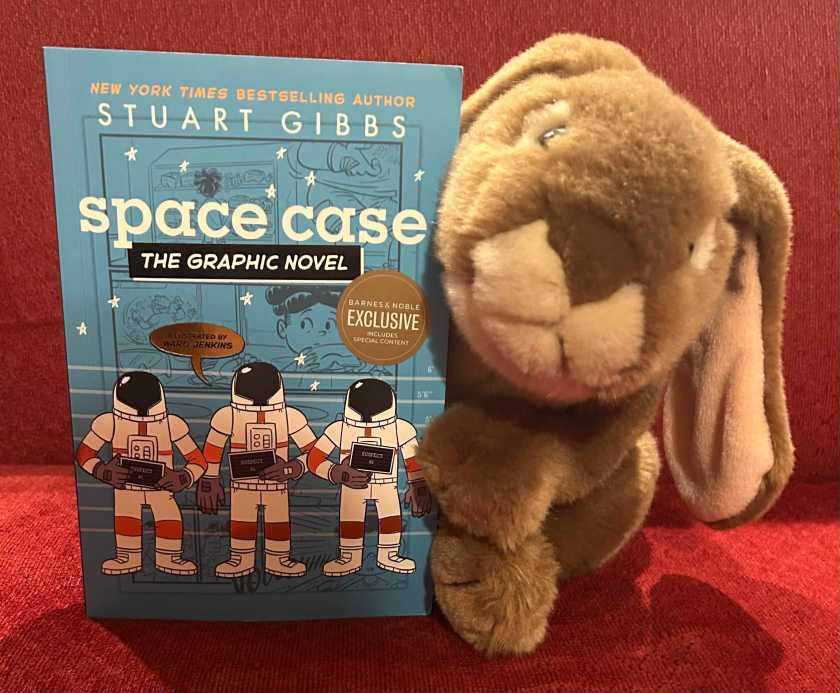
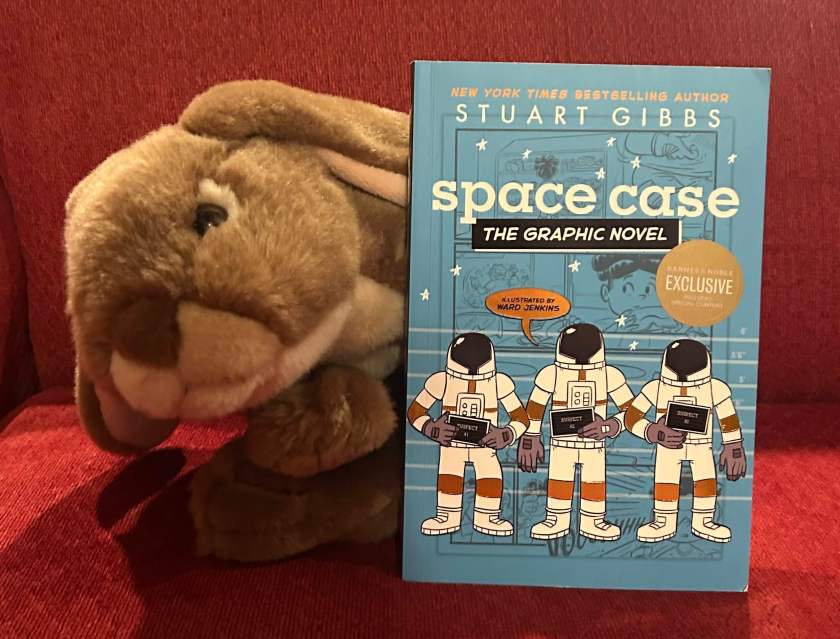
Caramel reviews Space Case: The Graphic Novel, written by Stuart Gibbs and illustrated by Ward Jenkins.

Sprinkles: So Caramel, today we are talking about a brand new graphic novel by Stuart Gibbs. And I know you and Marshmallow both love books by this author. So I am guessing this was something you were curious to read?

Caramel: Well, to be honest, I did not know about it before last week, but when I did, then I really did.

S: What does that mean? You just dove into the book and read it and now know everything about it? 

C: Kind of, but I will try to explain well. 

S: That is good. So please do go ahead. What is this book about?

C: It is about a boy named Dash who is living on the moon.

S: Wait. He is living on the moon. How is that possible?  

C: Yeah, he lives with his mom and dad who are scientists, and work there.

S: Okay, I see. Is the story happening in the near future then? 

C: I think so, but the specific date is not stated.

S: I see. Would you like to be living on the moon Caramel? I mean, if it were safe and there were a base and other folks living there and so on.

C: Maybe, I don’t know.

S: Okay. I understand. There are just too many possibilities, and I have to say I love seeing the blue skies and the trees and the mountains and so on. On the moon you would not see those. Then again you could see the Earthrise! And that might be worth at least a trip…

C: Yeah, if it’s for a day or a week, maybe it may work, but for a long time, no way.

S: Yeah, we bunnies quite like this planet!

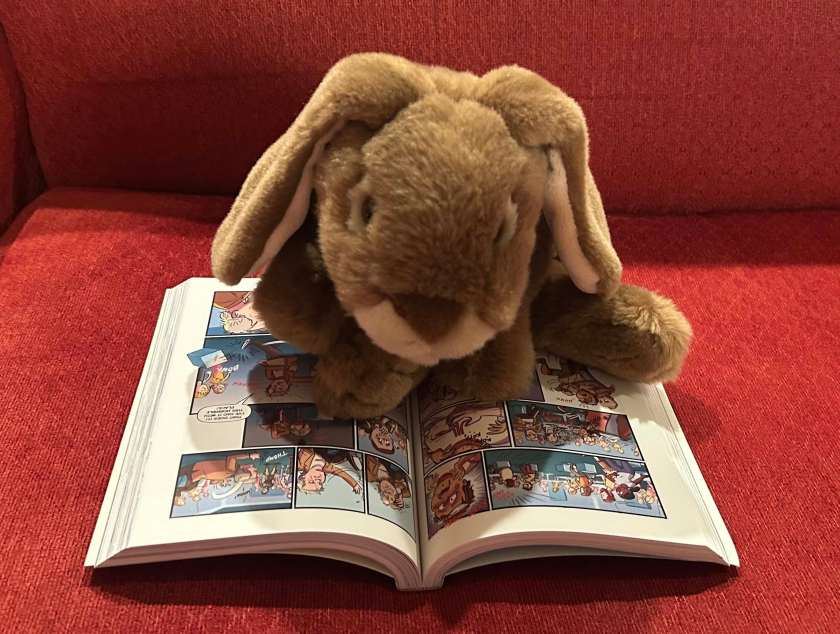
Caramel is reading Space Case: The Graphic Novel, written by Stuart Gibbs and illustrated by Ward Jenkins.

S: Okay, let us get back to the book then.  

C: So anyways, one day, Dash hears a conversation, and hears the scientific leader of the mission, or at least a leader of something, Then a little bit later, that scientist is found dead. 

S: Hmm, sounds mysterious. So this is a murder mystery?

C: Yeah, kinda.

S: Gibbs sure likes to write mysteries! You basically read and reviewed all his Spy School books and Marshmallow read and reviewed all his  FunJungle books, and both series are mysteries. Weird things keep happening around the main character and the main character and their friends have to figure things out. 

C: Yes, I have read and reviewed all the Spy School books, and they were good.  And this is very good too. 

S: Apparently it is also a part of a series. Did you know that this is the graphic novel version of a book from 2015 and there are two more books in this series? They are called the Moon Base Alpha series. 

C: Really?

S: Yes. But the other books are still only regular books. No graphic novel version yet. 

C: Hmm, kind of like the Spy School books. He first writes the books, and then the graphic novel versions come out, one by one, but really slowly…

S: Yes.

C: I might like to read those other books, too, then. I am not sure I can wait till the graphic novels come out.

S: Okay, so does that mean this book was really good, too? 

C: Yes, very good. It was a lot of fun but also exciting! 

S: So I am understanding that you liked the book a lot and would not mind looking into the other books in the Moon Base Alpha series.

C: Yeah, why not? It was a good book.

S: By the way, a new Spy School book is coming out soon. I am guessing you would like to read that, too?

C: Yes! Of course! 

S: I think we understand each other, Caramel. I will start looking into getting those books for you. And you will start looking into going to bed. 

C: Yup. I think this is a good place to end this review. 

S: Great! So what would you like to tell our readers?

C: Stay tuned for more book bunny reviews!

Caramel loved reading Space Case: The Graphic Novel, written by Stuart Gibbs and illustrated by Ward Jenkins, and is looking forward to reading more about Dash and his adventures.

Caramel reviews Tamamo the Fox Maiden and Other Asian Stories edited by C. Spike Trotman, Kate Ashwin, and Kel McDonald

In the summer of 2024, Caramel read several books on Asian myths and legends. A few months ago he reviewed one of these books. Today he is talking to Sprinkles about another one: Tamamo the Fox Maiden and Other Asian Stories, edited by C. Spike Trotman, Kate Ashwin, and Kel McDonald, and published originally in 2016. The edition the book bunnies read is from the 2022 printing.

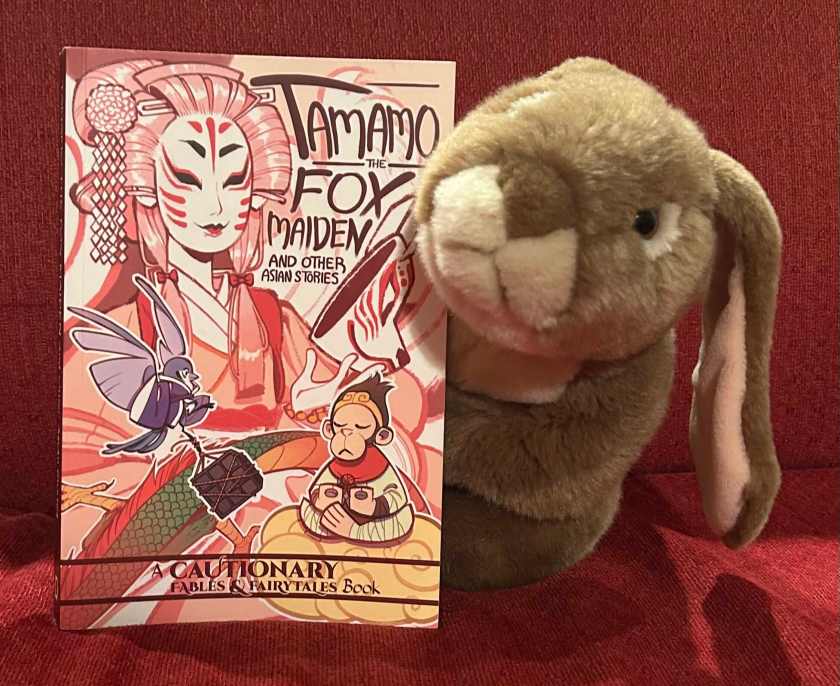
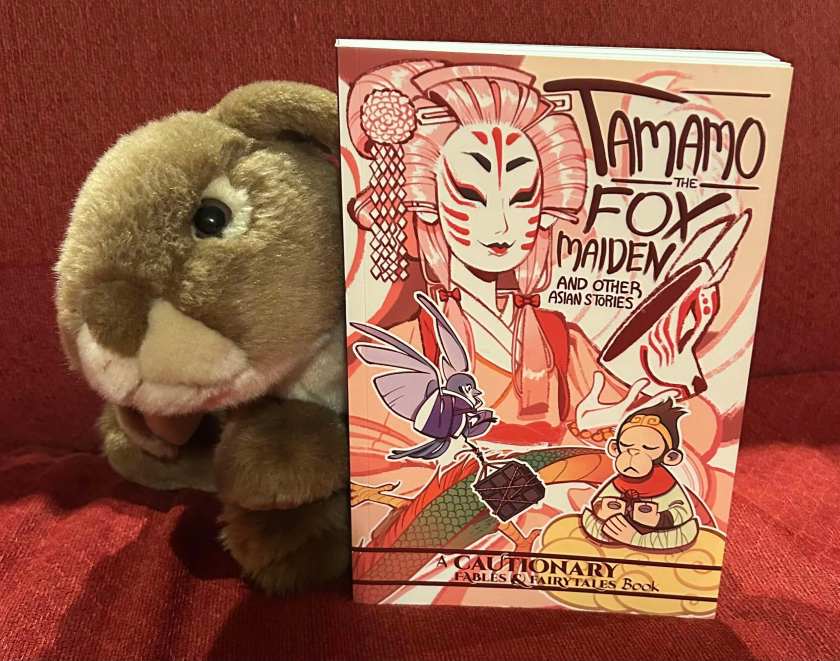
Caramel reviews Tamamo the Fox Maiden and Other Asian Stories, edited by C. Spike Trotman, Kate Ashwin, and Kel McDonald.

Sprinkles: So Caramel, you have a graphic-novel kind of a book for us today.

Caramel: Yes, kind of. It is not quite a graphic novel though. It has lots of different stories, not just one.

S: Yes, that is true, it is not quite a graphic novel, because it is not a novel. A novel is a long-form writing, and there is a well-developed story that goes on from the beginning to the end. This one has several short pieces.

C: Yes. There are about twenty-three different stories, of ten to twenty pages each. And they are from all over the world.

S: Well, not quite. Not from all over the world.

C: Okay, they are from all over Asia. There are stories from Japan, China, India, Georgia, Turkey, Laos, Myanmar, Tibet, and Iraq.

S: That is not all the world, but it is quite a lot of different places.

C: Yes, and each story is hand-drawn by a different artist, so it is pretty cool to see that. Every artist has their own style. They are all black and white, but you can definitely see the difference.

S: How cool, Caramel!

C: Yes, very cool!

Caramel is reading Tamamo the Fox Maiden and Other Asian Stories, edited by C. Spike Trotman, Kate Ashwin, and Kel McDonald.

S: So tell me a bit about the types of stories. The title of the book is Tamamo the Fox Maiden. So I am assuming there is a story in the book with that title.

C: Yup. It is a story from Japan. It is kind of weird but it is a classic folk tale apparently. Here is a version of it, but the version in the book is not quite the same.

S: It does not seem like it is your favorite then?

C: No not really.

S: So which story is your favorite?

C: I don’t know. I really liked “Ghost Pepper”, a story from Laos, adapted by Molly Nemecek. It is about this guy who likes cooking but his mom does not like spicy stuff. He finds a demon thing who likes his cooking and then he marries her. I like the artist’s style, amusing and very effective.

S: Oh that is neat Caramel. Any others?

C: “The Great Flood”, adapted by Stu Livingston, is also cool. It is a Chinese story, part of a myth that has been retold by many people apparently. I liked this one because it had a good moral.

S: And what was the moral?

C: The boy is hard-working and kind and generous, and not greedy. And in the end good things happen to him. So the story is saying, be kind, hard-working, and generous, and don’t be greedy.

S: I like that. Simple but valuable.

C: Yep.

S: I am glad you enjoyed this book Caramel.

C: Yes, I did! It is always cool to learn about the stories people from other places tell their children.

S: That is so true Caramel. But it is getting late now. I think this might be a good time to wrap up our review.

C: Yes, I already said all I wanted to say anyways.

S: Okay, then, let us stop. But before that you want to say one more thing to our readers, no?

C: Of course! Stay tuned for more book bunny reviews!

Caramel enjoyed reading Tamamo the Fox Maiden and Other Asian Stories, edited by C. Spike Trotman, Kate Ashwin, and Kel McDonald, and learning about the folk tales of many cultures from around the world.

Marshmallow reviews Sweet Valley Twins: The Graphic Novel (Best Friends and Teacher’s Pet) by Nicole Andelfinger and Claudia Aguirre

A few years ago, Marshmallow read and reviewed Kristy’s Great Idea (The Baby-Sitters Club Graphic Novels #1) written by Ann M. Martin in the 1980s and 1990s and adapted into a graphic novel by Raina Telgemeier in 2006. Today she is reviewing Sweet Valley Twins: The Graphic Novel by Nicole Andelfinger and Claudia Aguirre, another book whose origins lie in a beloved book series from the 1980s written by Francine Pascal. The edition she is writing about combines the first two books, Best Friends and Teacher’s Pet, in one volume and was published just this year, in 2025. Other artists who contributed to the book include Sara Hagstrom, Andrea Bell, and Warren Montgomery.

Marshmallow reviews Sweet Valley Twins: The Graphic Novel (Best Friends and Teacher’s Pet) by Nicole Andelfinger and Claudia Aguirre.

Marshmallow’s Quick Take: If you like books about friendship, sisters, family, and drama, then this is the book for you!

Marshmallow’s Summary (with Spoilers): Elizabeth and Jessica Wakefield are identical twins. In Best Friends, they start off as each other’s best friend. But like all middle-school aged girls and all book characters of that age, the two have started changing. In my opinion though, the one who is changing more is Jessica. Jessica has become increasingly more interested in boys and popularity, which is natural to an extent. Unfortunately, she has been recruited to join the Unicorns (which is a lot like the Plastics from Mean Girls). In order to get in, Jessica has to prove herself by completing three dares. Elizabeth is more interested in the Sweet Valley Sixers, the school newspaper she founded with her other friends Amy Sutton and Julie Porter. Both Elizabeth and Jessica thought they would be closer than ever in middle school, but they are growing apart instead.

In Teacher’s Pet, the focus is on their shared ballet classes. Jessica dresses to impress the first day, only to discover that their strict teacher Madame André is not a fan of her style. It is on that day that Jessica decides the teacher hates her. On the other hand, Elizabeth has no problem with the teacher, who actually really likes her. Jessica—who believes she is the best ballet dancer in the class—decides that Madame André picks favorites and that Elizabeth is a teacher’s pet. So when Elizabeth gets the solo for the rehearsal, Jessica is pretty jealous. Can the sisters overcome their differences? (Spoiler: The answer is predictably yes, but in a way that I was not too pleased with.)

Marshmallow is reading Sweet Valley Twins: The Graphic Novel (Best Friends and Teacher’s Pet) by Nicole Andelfinger and Claudia Aguirre.

Marshmallow’s Review: I think these books are really good, especially for young girls in middle school who are noticing behavioral changes in themselves or others. This book is a graphic novel and has two of the Sweet Valley Twins books in one. The Sweet Valley Twins books were originally written in 1986. I think it’s worth noting that there are no discussions about changing bodies in these books so the focus is more on how people’s personalities and interests change. That said, I was a little unhappy with the dynamic between Elizabeth and Jessica. I’ll preface this by saying I liked Elizabeth more due to her sweet, smart personality. I think the way Jessica changes is definitely normal and understandable too. But Jessica also changes in ways that are less excusable: she bullies other girls, pulls pranks on others, and is extremely self-centered. Jessica literally says she is the best dancer to her sister’s face—several times. I think this shows that she is a worse person, or at least doesn’t care so much about others. Yet, at the end of the second book (SPOILER), Jessica is the one given the solo lead role because Elizabeth fakes being injured. Why does Elizabeth give Jessica the role? Because Jessica complains about how she deserves it more and how she is better at ballet than everyone else until Elizabeth gives in and starts thinking she doesn’t deserve it either. I think it’s really good to have an accurate representation of sibling relationships in books, but I don’t like how the authors had the book end in a way that shows one of the sisters giving something they really wanted to the other just because the other one is jealous. I think that was a pretty messed-up ending and I don’t find that fair. I think Jessica definitely needs support, especially since she is so desperate to be viewed as popular and get validation. But the fact that she consistently bullies others and tears her sister down to get that is not okay. I think Jessica is portrayed too well in the book. So I definitely think this book is good to read for young girls. But I think parents and the readers should have a discussion about what a healthy relationship should be like, because Jessica’s behavior is not what should be normalized or idealized.

After I wrote the paragraphs above, I read this review of the second book in its original, which seems to imply that Jessica is clearly the better dancer and the teacher is really playing favorites and has poor judgment. That is not quite the impression one gets in the graphic novel version. Even if Jessica is more naturally inclined, Elizabeth is just as good though possibly with more instruction and practice. So to me, the teacher choosing one over the other does not seem like a big unfair thing. Jessica on the other hand does not handle things well and really comes across as a spoiled brat.

The graphic novel is otherwise a lot of fun to read. The colors and the characters’ depictions work really well. I did keep thinking back to all my favorite books by Raina Telgemeier, especially Drama. If you are up for a solid couple hours of fun reading about middle school blues, this book can be a good choice.

Marshmallow’s Rating: 92%.

Marshmallow rates Sweet Valley Twins: The Graphic Novel (Best Friends and Teacher’s Pet) by Nicole Andelfinger and Claudia Aguirre 92%.