Caramel reviews Nathan Hale’s Hazardous Tales #11: Cold War Correspondent by Nathan Hale

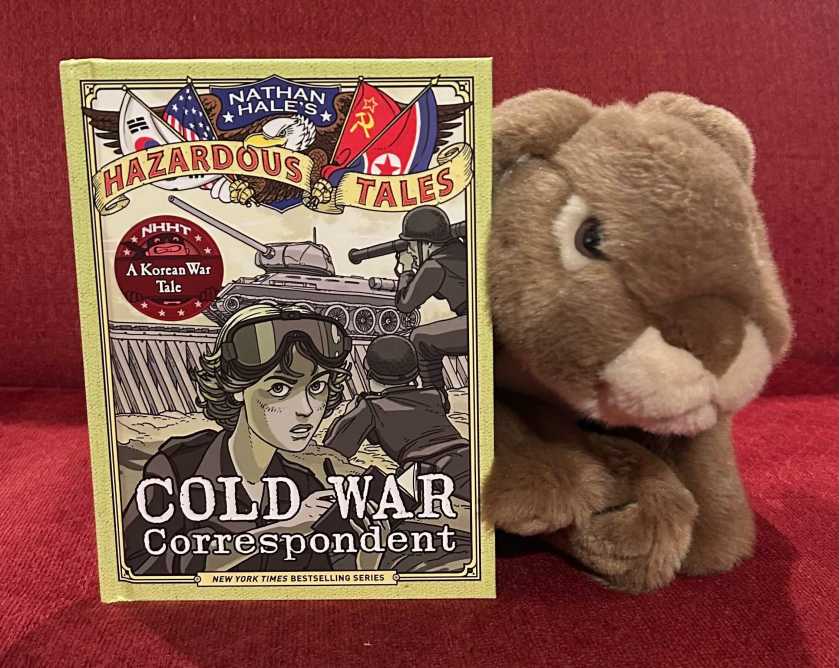
Caramel has read and reviewed several books in Nathan Hale’s Hazardous Tales, the historical graphic novel series by Nathan Hale. Today he is talking to Sprinkles about the eleventh book in the series, Cold War Correspondent, published first in 2021.

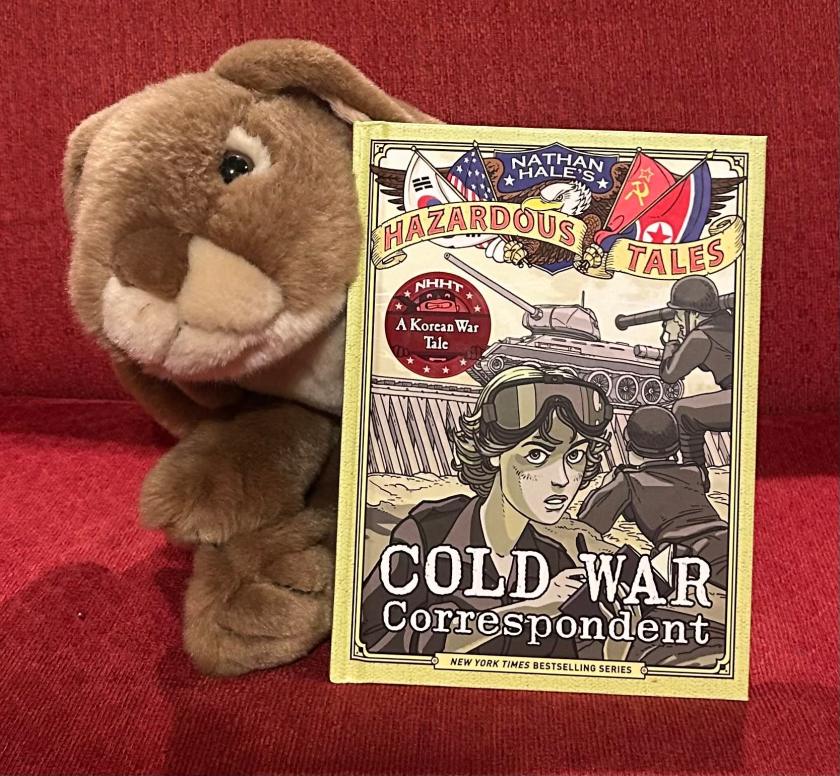
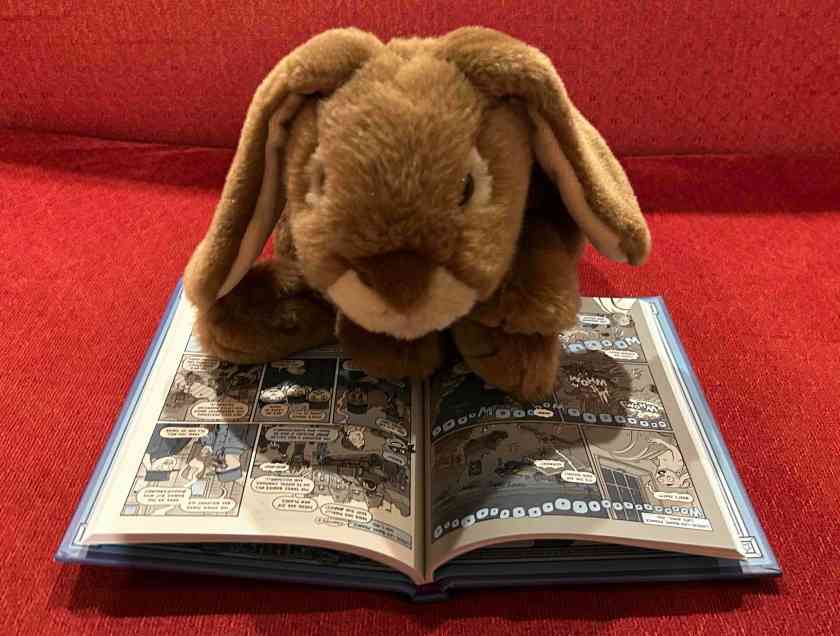
Caramel reviews Nathan Hale’s Hazardous Tales #11: Cold War Correspondent by Nathan Hale.

Sprinkles: Here we are, with another Nathan Hale book. 

Caramels: Yes, we are! And this one is about the Cold War, brr.

S: That’s funny! The Cold War is called the Cold War not because it is really cold temperature-wise though.

C: Well, I know of course. It is cold in the sense that it is not hot, like armies are not openly fighting, there is no open fire of one army attacking another. So no fire. So Cold.

S: You know so much Caramel! Here is how Wikipedia defines it:

The Cold War was a period of international geopolitical rivalry between the United States (US) and the Soviet Union (USSR) and their respective allies, the capitalist Western Bloc and communist Eastern Bloc, which began in the aftermath of the Second World War[A] and ended with the dissolution of the Soviet Union in 1991. The term cold war is used because there was no direct fighting between the two superpowers, though each supported opposing sides in regional conflicts known as proxy wars.

C: Actually the book is about a hot war which was a part of the Cold War. To be specific, the Korean War. One of those proxy wars I suppose, but the United States did have soldiers fighting in it, just not directly against the Soviet Union. 

S: Oh, that makes sense. And I am assuming there is a journalist involved somehow, the correspondent in the title. 

C: Yeah, the book is specifically about Marguerite Higgins. She was a war correspondent, a journalist who wrote about World War 2 and many other smaller wars, for the New York Herald Tribune

S: That is so interesting, Caramel. I of course know about the Korean War, but I had not heard of Higgins. She seems to have been a very brave woman. So the story in the book is the story of the Korean War through Higgins’ eyes? 

C: Yes, she is the narrator for this book, and she pops up from the hanging tree, or more so down from the tree.

S: The tree of Nathan Hale, you mean? So do we not see Nathan Hale in this one? 

C: No, we do, but he’s not the main narrator this time, more so of a commentary.

S: That is different from the other books, right?

C: Yes, it is. In most of the other books, he is not a commenter, he is the narrator, or at least the main narrator.

S: I guess it just worked best this way for this book then. Okay, so did you learn some new things from this book? Did you know about the Korean War or the Cold War or Marguerite Higgins before?

C: Yeah, of course, I knew about the Cold War, and I knew a bit about the Korean War, but not about Higgins. This was a good perspective change.

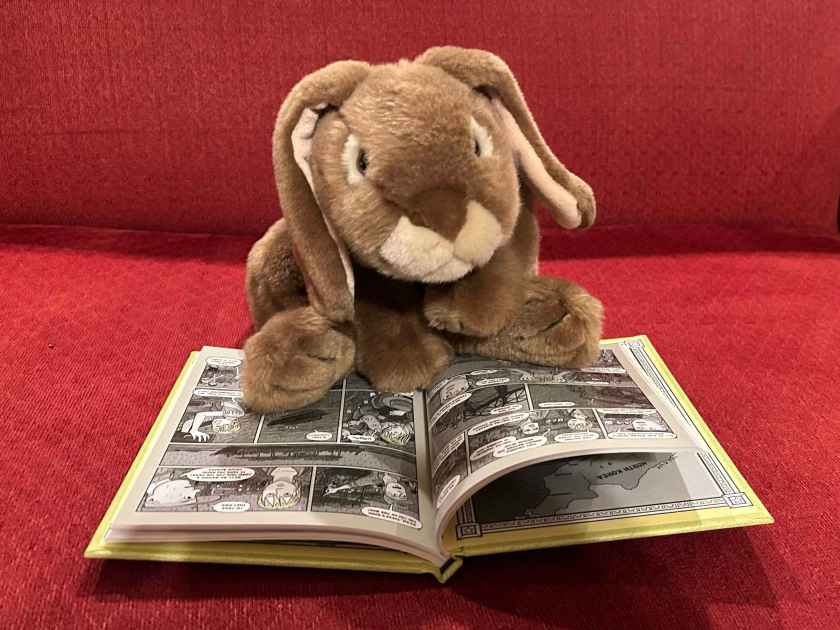
Caramel is reading Nathan Hale’s Hazardous Tales #11: Cold War Correspondent by Nathan Hale.

S: In what way?

C: This showed how badly prepared the South Koreans and the US were. They expected an attack and were preparing for it, but not effectively enough. They had no tanks, planes, artillery, or even armor-piercing bazooka rounds that worked, and among the things they had, many were duds. Meanwhile the North Koreans had almost a full air force and 150 Soviet T-34 tanks, the tanks that let the Soviets take Berlin in the Second World War.

S: I did not know any of these details either, Caramel. So of course the South would suffer dramatically given such a disparity. 

C: Yes, so the United States called for the United Nations to help. And about fifteen to twenty nations joined in with the United States to defend South Korea. And that war lasted a few years. 

S: And the book is about all that?

C: No, it’s mostly about Higgins and her experiences in Korea, not all of the war.

S: I guess the author decided to include a snapshot from the Cold War in his series. That makes sense to me. 

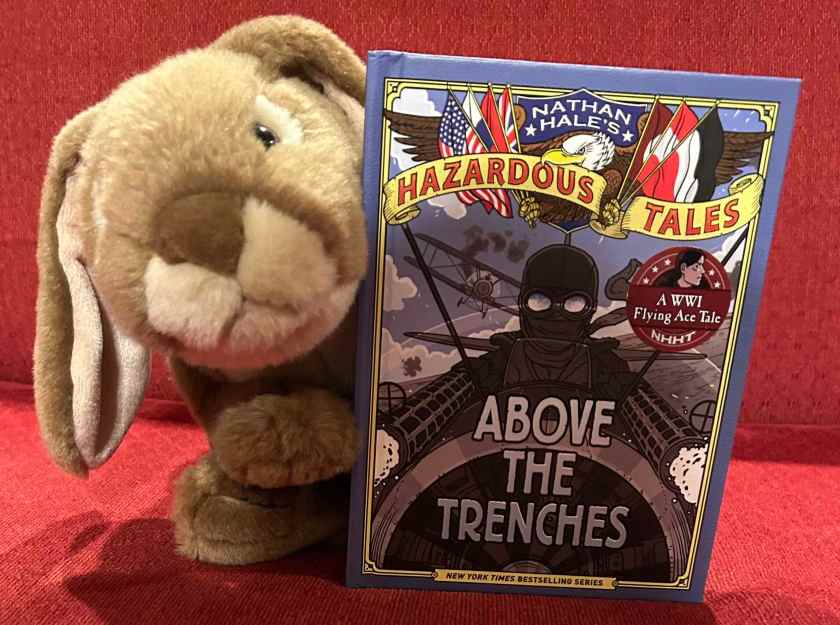
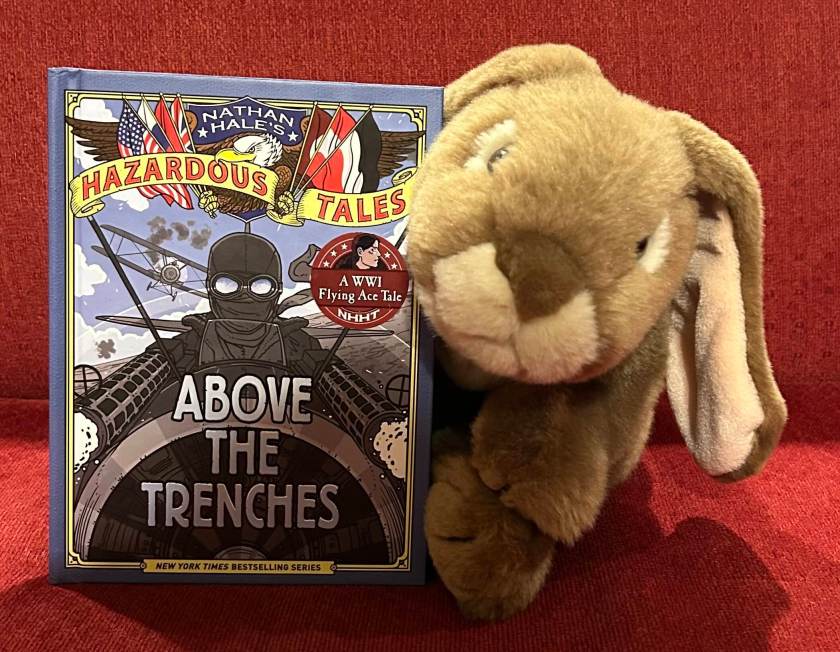
C: Yeah, this is the only book about the Cold War so far. The next one will be about World War 1. 

S: So you are all ready to move to the next one! But wait, wasn’t there another Nathan Hale book about World War 1?

C: Yes! It is the second book I reviewed from the series: Nathan Hale’s Hazardous Tales #2: Treaties, Trenches, Mud, and Blood

S: And you are ready for more?

C: Yup. 

S: Okay, so this is probably a good place to wrap this up then.

C: Sure.

S: What do you want to tell our readers?

C: Stay tuned for more book bunny reviews!
Caramel enjoyed reading Nathan Hale’s Hazardous Tales #11: Cold War Correspondent by Nathan Hale and talking about it too.

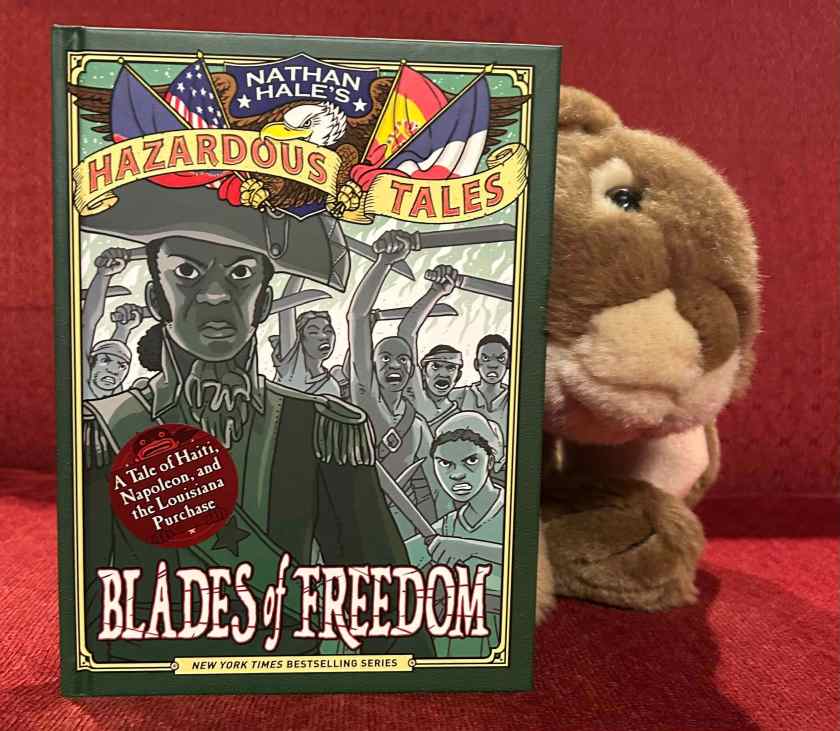
Caramel reviews Nathan Hale’s Hazardous Tales #10: Blades of Freedom by Nathan Hale

Caramel loves history and he loves graphic novels. So it is no surprise that he has enjoyed Nathan Hale’s Hazardous Tales, the historical graphic novel series by Nathan Hale. Today he is talking to Sprinkles about the tenth book in the series, Blades of Freedom, published first in 2020.

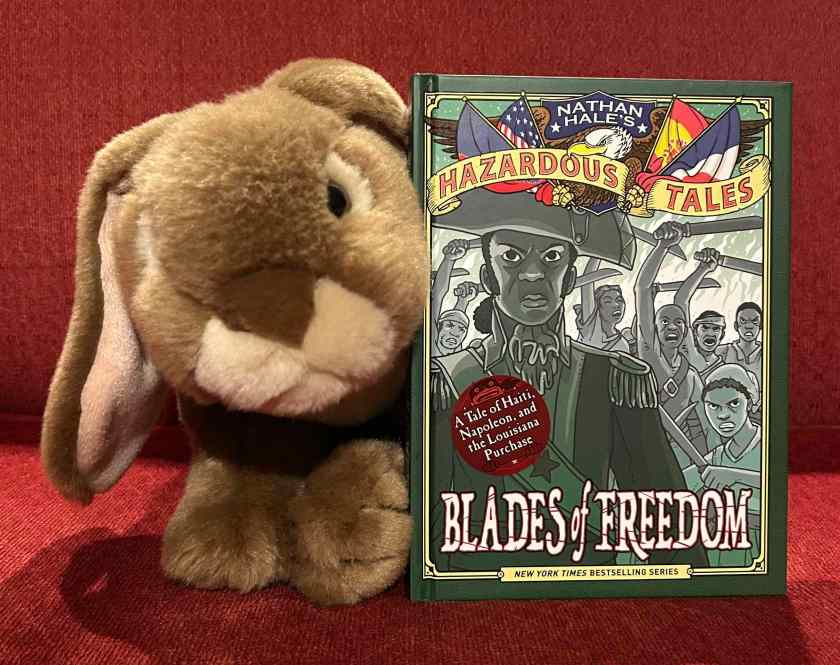
Caramel reviews Nathan Hale’s Hazardous Tales #10: Blades of Freedom by Nathan Hale.

Sprinkles: So Caramel, it has been a while since you reviewed a Nathan Hale book. 

Caramel: Yes it has. The last Nathan Hale book I reviewed was all the way back in May 2025!

S: But we finally were able to get a few more of them into your paws, and you immediately began to read them all.

C: Yes, I see a couple more Nathan Hale book reviews in our near future. 

S: I like that! So tell me what this one is about. 

C: This is about Napoleon’s rise, and the revolution in Haiti.

S: Wait! Those are all more or less French history, no? I thought the Nathan Hale books were mainly about the history of the United States. 

C: Well, think again, this one isn’t, except where Napoleon sold the Louisiana territory to the United States.

S: Hmm, I see. Also Haiti is in the Western hemisphere, so that also makes sense to me. And the revolution in Haiti was important for the whole Western hemisphere of course. 

C: And apparently it is more or less the reason why Napoleon ended up selling the whole Louisiana territory to the then-young United States. 

S: I guess this is again a story which informs a significant part of our understanding of the history of the United States. 

C: Yeah, sure. But it is definitely a lot more about Napoleon and the revolution in Haiti. That is where the title is coming from after all: blades of freedom is about the freedom of the enslaved in Haiti. 

S: Hmm, when you say it that way, the “Blades” part kind of sounds bloody. 

C: Well, we all know the French Revolution was very bloody. The Haitian one did not lack in bloodshed either. 

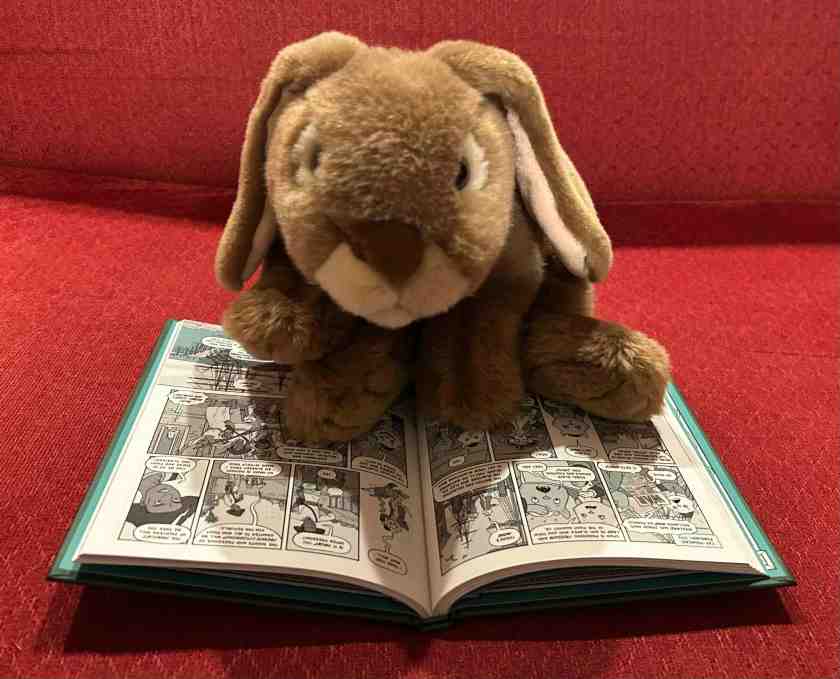
Caramel is reading Nathan Hale’s Hazardous Tales #10: Blades of Freedom by Nathan Hale.

S: I guess it is hard to have a revolution that is totally peaceful. But tell me more about the book. 

C: Sure. Just like the earlier Nathan Hale books, it has some great characters. It has Napoleon, two cats, and the leaders and catalysts of the Haiti revolution, Francois Mackandal, Dutty Boukman,, Jean-Jacques Dessalines, and Toussaint L’Ouverture.

S: Other than the two cats, those sound like real historical characters, Caramel. 

C: Yep, and the cats are not real but funny. 

S: And is Nathan Hale still narrating this story too? 

C: Yes, it’s one of Nathan Hale’s Hazardous Tales, so of course he is still narrating. You can see him on some of the pages. 

S: So I am assuming you have learned some good amount of history again. 

C: Yeah, I did. I had learned about the Louisiana purchase at school, but I didn’t know much about the reasons behind why France wanted to sell, other than they were at war, which was I guess true-ish. But they also did not have a good way to connect their European land to the North American territory once they lost Haiti, so in some very real sense, it seems like they wanted to cut their losses and leave. 

S: That makes sense to me. 

C: I also did not know that much about Napoleon Bonaparte before this. The book basically tells all his life story. 

S: That is great Caramel! So I am guessing you enjoyed this book and will want to read the eleventh book next.

C: Yep, I did and I will.

S: Great! I think this might be a good time to wrap up this review. 

C: Sure. 

S: What would you like to tell our readers?

C: Stay tuned for more book bunny reviews!
Caramel enjoyed reading Nathan Hale’s Hazardous Tales #10: Blades of Freedom by Nathan Hale and is excited to be reading more from Nathan Hale again.

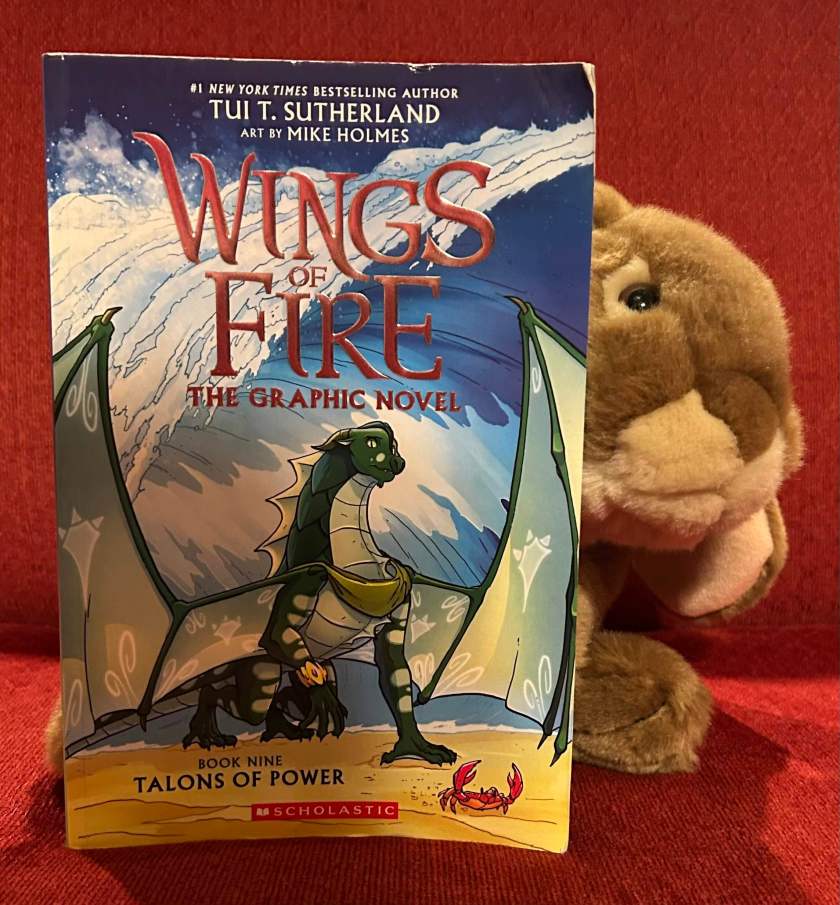
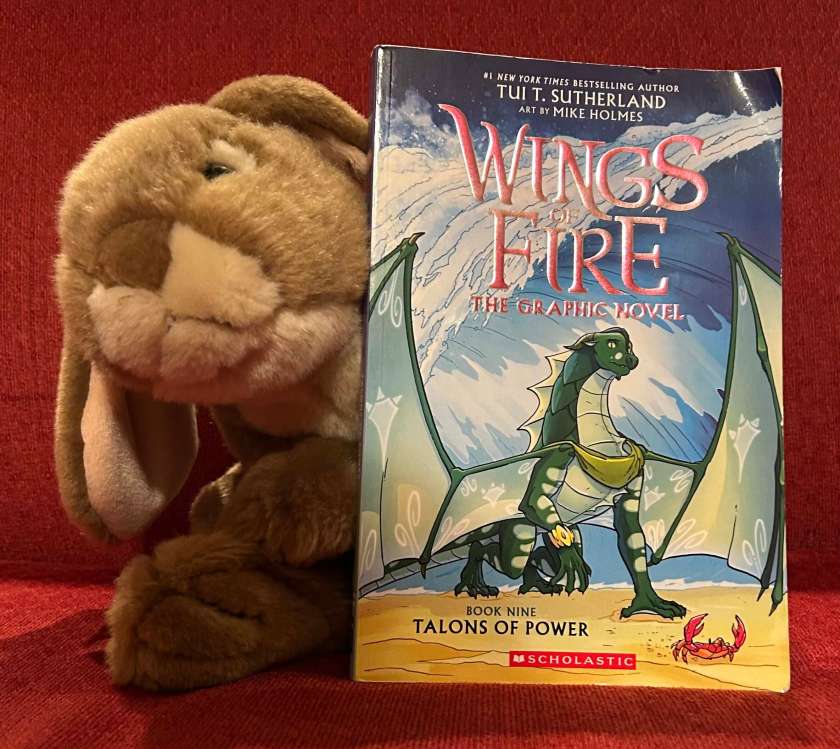
Caramel reviews Darkstalker: The Graphic Novel by Tui T. Sutherland and Jake Parker

Caramel has always been an avid fan of Tui T. Sutherland’s Wings of Fire series. He is also a lover of graphic novels. So he has already reviewed the graphic novelizations of the first eight Wings of Fire books (The Dragonet Prophecy, The Lost Heir, The Hidden Kingdom, The Dark Secret, The Brightest Night, Moon Rising, Winter Turning, and Escaping Peril) for the book bunnies blog. Today he reviews the graphic novel adaptation of Darkstalker, published just yesterday! As usual, Sprinkles is taking notes and asking followup questions.

Caramel reviews Darkstalker: The Graphic Novel by Tui T. Sutherland and Jake Parker.

Sprinkles: Here we are with a brand new Wings of Fire graphic novel! I knew you would be happy to get your paws on this book! 

Caramel: Yes, you know I had to get my paws on it. 

S: Well, it was just published yesterday, and here you are, ready to talk about it already. I am guessing that is a good sign.

C: Yep, it sure is. I’m very lucky to have it, and I’m glad we are talking about it.

S: Okay, so you had already read and reviewed the original Darktstalker

C: Yep, I have, and both are awesome.

S: So can you remind our readers a bit about what the deal is with the Wings of Fire books and this book especially, given how it is not one of the standard series, but rather belongs to the associated Legends series?

C: Ok, so the Legends, the Winglets, and the Wings of Fire are all different series. The Wings of Fire are the original books; there are fifteen of them and they are about many different dragons who live on different continents on a planet and have many different adventures and challenges. The Legends are more sort of books that fill in gaps in knowledge missed in the original series, about historical and legendary events and characters. And the Winglets books are like that, too, but they are more about some of the side characters from the main series.

S: Alright, that is a good summary I think.

Caramel is reading Darkstalker: The Graphic Novel by Tui T. Sutherland and Jake Parker.

S: So then this book is a graphic novel adaptation of one of the Legends books, about a historical character named Darkstalker, right? 

C: Yep, but he also shows up in the Jade Mountain story arc. That is the story arc that covers books six to ten.  

S: Wait, so he is historical in a way because he is really old and ancient, but he is still affecting the main story line?

C: Yes, this book is basically his origin story. 

S: I see. That’s cool. 

C: And this also contains the thoughts and storyline of him and two other characters, Clearsight, and Fathom, his friends who were forced to go against him..

S: They also show up in the original version though, right?

C: Yep, but I was sort of wanting to see what they looked like, this being a graphic novel and all. And this was very close.

S: That is so neat! So why don’t you tell me a bit more about the graphic part of the graphic novel? I noticed that the main illustrator is Jake Parker, and not Mike Holmes, who was the one from the graphic novelizations of the main series. 

C: Yeah, but it’s still good; I like this artist’s style too.

S: I am guessing the other books kind of set up a standard, a set of expectations for the reader, and this book is in line with those expectations.

C: I guess you could say it that way. I just say I liked them both. 

S: Okay, sounds good to me.

C: Somehow, his style is familiar to me. Not sure why?

S: It might be because you already read some of his other work. Remember Kepler’s Intergalactic Guide to Spaceships?

C: Oh, yeah! That was a cool book! I told you somehow his style felt familiar.

S: Good for you! By the way, did you know that there will soon be a book sixteen for the original Wings of Fire series

C: Yesss! I heard that a fourth arc is starting and I really really can’t wait! I really want to read it.

S: It is apparently titled The Hybrid Prince and will come out some time in March 2026. 

C: It is so hard to wait! 

S: It is apparently about a MudWing brother of Clay named Umber. 

C: Really, ooooooooooooo, now I really need to read it.

S: I love your enthusiasm Caramel. I think it is certain that you will read and review it when it comes out. 

C: Yay!

S: Okay, I think this is a good time to wrap up this review. What do you want to tell our readers?

C: Stay tuned for more book bunny reviews! And I can’t wait till March!!
Caramel loved reading Darkstalker: The Graphic Novel by Tui T. Sutherland and Jake Parker and can't wait for more Wings of Fire books!
Caramel loved reading Darkstalker: The Graphic Novel by Tui T. Sutherland and Jake Parker and can’t wait for more Wings of Fire books!

Marshmallow reviews Soseki Natsume’s I Am A Cat: The Manga Edition

Today Marshmallow reviews Soseki Natsume’s I Am A Cat: The Manga Edition, the graphic novelization of the Japanese classic I Am A Cat, originally written by Soeki Natsume in 1905-1906. This “manga edition” was retold and illustrated by Chiroru Kobato, translated into English by Zack Davisson, and published in 2021. Sprinkles is taking notes and asking questions.

[In this post, we mention suicide as it relates to the content of the book, so if this is a sensitive topic for you, please consider not reading further.]

Marshmallow reviews Soseki Natsume's I Am A Cat: The Manga Edition, retold and illustrated by Chiroru Kobato, and translated into English by Zack Davisson.
Marshmallow reviews Soseki Natsume’s I Am A Cat: The Manga Edition, retold and illustrated by Chiroru Kobato, and translated into English by Zack Davisson.

Sprinkles: I am so excited we are finally talking about this book! I am very curious about it. So let us start with your standard overview. 

Marshmallow: Sure! If you like thought-provoking and eye-opening books from other cultures and other time periods, then this is the book for you!

S: That is a great start. Okay, now please do tell us a bit about what this book is about.. Since the title is “I am a cat”, I am guessing it is probably about a cat.

M: Yes, actually the main character is a cat who narrates the whole story (which takes place in early twentieth century Japan). He was separated from his family at a young age and was taken in—reluctantly—by the family of an English teacher named Sensei Kushami. He describes his life with them and the silly human occurrences / things they experience. 

S: So what kinds of things does he talk about? 

M: Early on, he describes his near-death experience with mochi. He also watches the humans gossip a lot about a rich woman named Ms. Kaneda and her nose (which I thought was very insensitive). The woman, whom the cat calls Lady Nose, has a very ungrateful yet beautiful daughter who may marry one of Sensei Kushami’s friends. There is a lot of confusion that surrounds this affair though and a lot of false rumors and accusations get thrown around. 

S: So the cat witnesses and talks about a whole lot of silly, trivial, petty things humans worry about. 

M: Yes. In the original version of the book, according to this neat recap we found online, this makes him feel pretty superior. In this manga version, he also seems a little amused by their behavior; however, he seems a little less judgemental.

S: In that recap and also on the Wikipedia article for the book, we also learn that the Japanese version of the title “I Am A Cat” also has sort of this formal feel to it because it uses a particular version of the first person pronoun “I” that is “a very high-register phrasing more appropriate to a nobleman, conveying grandiloquence and self-importance”. I am guessing that also makes the book funny to begin with, the cat is kind of pretty full of himself. 

M: I presume it does in Japanese, but of course, I didn’t quite catch that joke myself in English. 

Marshmallow is reading Soseki Natsume's I Am A Cat: The Manga Edition, retold and illustrated by Chiroru Kobato, and translated into English by Zack Davisson.
Marshmallow is reading Soseki Natsume’s I Am A Cat: The Manga Edition, retold and illustrated by Chiroru Kobato, and translated into English by Zack Davisson.

S: English has a single first-person pronoun which makes it a lot easier to learn or speak it, but you also lose a lot of nuance in this way, I suppose. Anyways, so this cat is observing his humans, kind of like Garfield. Garfield is kind of self-important in a way, but maybe a bit less interested in the humans.

M: Yes. I felt like the main character here did seem to care about his human family, but they did not really seem to always care about him too much (Sensei Kushani originally did not want him in the house at all). 

S: Hmm, that is interesting. So I know that when you first read this book, you were a bit disturbed by it. Can you tell us a bit about that? 

M: I felt that the book made too many references to suicide too lightly. Several characters consider hanging themselves on a pine called the Hanging Tree. None of the main characters ends up killing themselves, but it felt like it was mentioned too many times in the course of such a short book. 

S: I can see how that made the feel of the book kind of dark and uncomfortable for you. I am sorry about that. I had thought that this book is supposed to be satirical and philosophical, so I suggested that you read it. 

M: It’s okay! It was a little dark and unexpected, but the rest of the book was amusing to read. I can see why people find it both satirical and philosophical. It is pretty amusing to read a cat pontificating about the silly ways of humans. Like we bunnies do sometimes. People-watching is one of my favorite hobbies. 

S: I know, right? People-watching is fun! Okay, so tell us a bit about the satire or the philosophy then. 

M: Okay, the philosophy part was also pretty dark and depressing though. Sensei Kushani and his friends in academia and one in business discuss the integration of Western ideals into traditional Japanese culture. They also say some very sexist things about women to their friend who just got engaged. Meanwhile, the cat narrating the book ponders about life and whether it is worth it. At some point, he reaches the conclusion (which I disagree with) that life is only suffering and that death is the only peace. 

S: Okay, I can see that maybe these ideas are a bit too heavy for a “manga edition”. Maybe the original book deals with them with more nuance. So maybe let us now talk about the manga nature of the book. I know both you and Caramel have read a lot of graphic novels. But is this your very first manga?

M: I think so. I have never read a book that was meant to be read backwards which was a little difficult to adjust to.

S: Backwards for us of course, not for many other people around the world who read from right to left. 

M: Yes, but  I am still not sure whether I was supposed to start from the top of the page or somewhere else. 

S: I can imagine that can be disorienting. I have read only one manga-style book and that was disorienting for me, too. But I am honestly disoriented by all graphic novels, so maybe it was also that. Anyways, so let us wrap up this review then. All in all, did you enjoy reading this book? Did you find it interesting?

M: This book was definitely interesting. It helped me understand a little bit more about Japan’s culture and its understated, natural aesthetics and style. I also liked how this version simplified a classic book into a format that was somewhat easy to understand and definitely a lot easier to read for people who can’t read Japanese. I liked how this made one of the great Japanese novels accessible to others! I would rate this book around 95%. 

S: That is wonderful, Marshmallow. Then I am also glad you read it. What would you like to tell our readers as we end the post?

M: Stay tuned for more amazing book reviews from the book bunnies!

Marshmallow rates Soseki Natsume's I Am A Cat: The Manga Edition, retold and illustrated by Chiroru Kobato, and translated into English by Zack Davisson, 95%.
Marshmallow rates Soseki Natsume’s I Am A Cat: The Manga Edition, retold and illustrated by Chiroru Kobato, and translated into English by Zack Davisson, 95%.