Marshmallow reviews The Outsiders by S. E. Hinton

Marshmallow has been reading S. E. Hinton’s classic novel The Outsiders, first published in 1967. Today she shares some of her thoughts on the book with the blog readers. Sprinkles is taking notes and asking questions.

Marshmallow reviews The Outsiders by S. E. Hinton.

Sprinkles: So Marshmallow, can you introduce us to this book?

Marshmallow: If you like books about belonging, growing up, and facing challenges as a young person, you might like this book.

S: That’s a good start. So now let us move into the book. Can you tell us a bit about the plot?

M: There are two gangs, or maybe groups of friends, who hang out and occasionally clash, sometimes pretty violently. They call these things rumbles, they are basically fights.

S: Okay, so two groups. Made up of young people, and our main characters belong to one or the other. What are the names of the two groups?

M: One of them is made up of richer kids and they are called the Soc, short for “social”. The other group has poorer kids in it, and they are called the greasers, because they put grease in their hair. Mostly boys but there are girls that hang out with one or the other group.

S: Okay, that gives us a good idea of the setting. So tell us now about what happens in the book.

M: The main character is this boy named Ponyboy. And that is his real name. And his middle brother’s name is Sodapop.

S: Those are some creative names!

M: I know, right? The oldest brother has a much more typical name, Darrel, but people call him Darry.

S: Alright.

M: So these three boys’ parents are dead. And the oldest brother Darry is taking care of the younger ones. Ponyboy is the youngest of the greasers. The other greasers are Steve, Johnny, Dally, Two-Bit, and I think that is mainly it.

S: Okay.

M: One day Ponyboy, Dally, and Johnny go to the movies and meet two Soc girls named Cherry and Marcia. Dally is rude to the girls, but Ponyboy and Johnny become closer to them. Then some Soc boys come and there is some trouble. Eventually, another day, there is a fight, and Johnny ends up killing one of the Soc boys while trying to save Ponyboy from getting hurt. So Johnny and Ponyboy run away and hide, with the help of Dally, who has gotten into trouble with the law before.

S: That sounds kind of big, killing someone. These are still only kids, aren’t they?

M: Well, they are more or less. Ponyboy is 14 and Johnny is 16.

S: Alright, then what happens?

M: Well, I cannot tell you everything, but there is a big fire, and the boys try to help save some children who have been trapped in the fire, so they become heroes of some sort, but Johnny still has killed someone, so he needs to be punished. But he is also pretty injured during the fire. So I will stop here because we are already talking about stuff way into the book.

S: Alright, that makes total sense. We already got the gist of the story I think.

Marshmallow is reading The Outsiders by S. E. Hinton.

S: So you began reading this book because your class is reading it at school, right?

M: Yep. We are still reading and discussing it in class.

S: We read it at school, too, I think, but it was many many years ago. I do not remember the story very well. I also did not remember the author’s name.

M: Well, she is using only initials. It is because she was very young when she wrote the book, and they thought a book by a young woman who is a total unknown would not sell. There is an interview with the author at the back of the copy of the book I read where she says this.

S: I did not remember that at all, but the Wikipedia article about the book says that she was only 15 when she started writing the story and was 18 when it was published. That is pretty young!

M: Yes, it is impressive.

S: And maybe that really was the right thing to do, because the book did get really famous and they made a movie of it, too.

M: I know! In fact we are going to watch it at school. Can we put the trailer of the movie here?

S: Sure. Here it is:

The Outsiders (1983) Official Trailer, from YouTube.

S: I remember that we did watch this movie in class too, and it was all very exciting. A lot of the actors became really famous after this.

M: I’m excited to watch it too.

S: So maybe we should slowly wrap this up. Before that, would you mind telling me what you thought of the characters?

M: I thought they were good. Ponyboy narrates the story, and you get to really empathize with him. He does smoke a lot though. Still he is very thoughtful and cares about people.

S: Anything else?

M: I thought the book did a good job of pointing towards social economic inequalities. The rich kids all also have problems with their families and such, but when the poor kids get into trouble, their lives get so much more difficult. And these kinds of differences make it harder for people to empathize with others. Ponyboy thinks that he and the greasers are all outsiders and nobody else, none of the Socs, can ever understand their lives. And he does have a point, I think.

S: But after some of the events of the book, he realizes that Socs are also human, according to the book description in one of the versions of the book.

M: Yes, I guess so. But the class differences still remain, and that is also there till the end. The consequences are so much tougher for the greasers.

S: Thank you for this review Marshmallow. I think I might want to revisit this book, or at least the movie! You always rate the books you review. So what would you rate this one?

M: I’d rate it 100%.

S: Sounds like it! Okay, and to wrap up, what do you want to tell our readers?

M: Stay tuned for more amazing book reviews from the book bunnies!
Marshmallow rates The Outsiders by S. E. Hinton 100%.

Marshmallow reviews Miss Marple: The Complete Short Stories by Agatha Christie

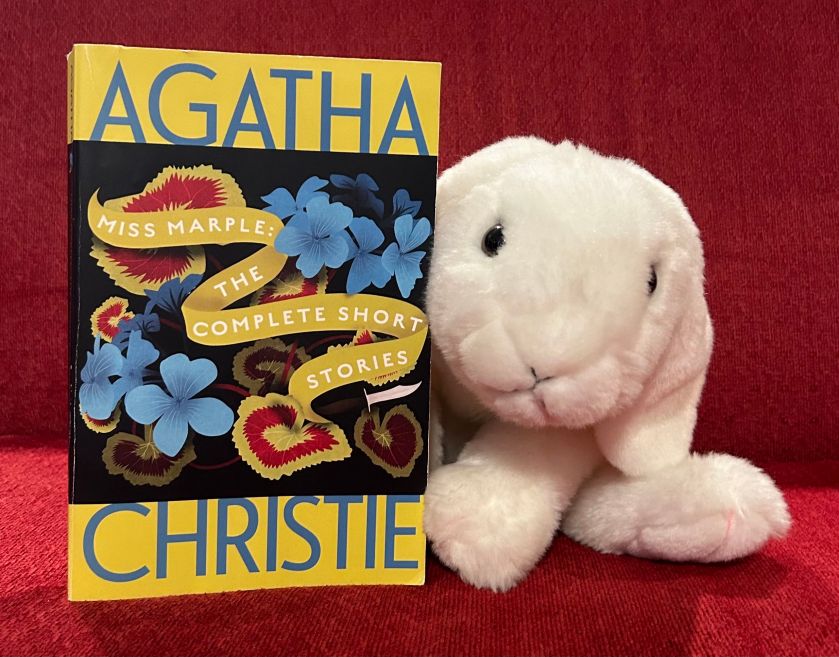
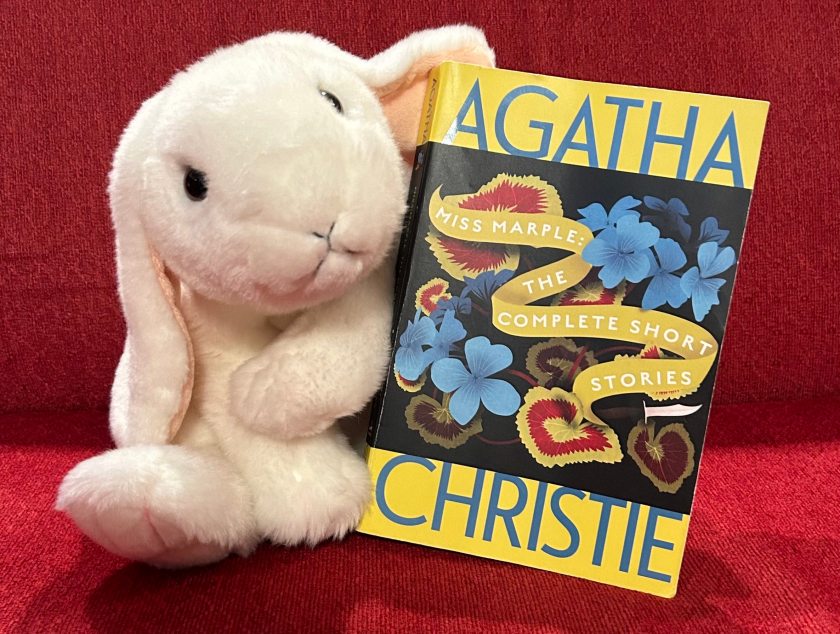
Today Marshmallow reviews Miss Marple: The Complete Short Stories, a book that collects together all twenty short stories Agatha Christie wrote featuring her favorite detective, Miss Marple; the original dates of the stories range from 1932 to 1961. Sprinkles, who has been a life-long Christie fan, is asking questions and taking notes.

Marshmallow reviews Miss Marple: The Complete Short Stories by Agatha Christie.

Sprinkles: Marshmallow, you know that I was so happy to find this collection of Miss Marple stories! But I was especially excited to have you read them, too. So what did you think?

Marshmallow: At first I found them very confusing.

S: How come?

M: I found the language a bit challenging at first. But reading the stories the second time, I got a lot more, and I really enjoyed them.

S: I guess the language is not contemporary. Christie wrote some of these almost a hundred years ago.

M: Yes. There were a lot of things I did not know about. For example you and I needed to look up the “hundreds and thousands” and the trifle that was one of the main plot points in the story “The Tuesday Night Club”.

S: Yes, apparently we do not know every traditional English dish and the usual ingredients for them.

M: And then there was “banting”. Apparently it means to diet by not eating things with carbs in them. And it is named after a scientist, Sir Frederick Grant Banting, who was one of the people who discovered insulin.

S: Yes, one learns a lot by reading!

M: Yes, of course.

S: So overall, what did you think of Miss Marple? Can you tell us a bit about who she is and what kind of a person she is?

M: She is an older lady, who seems like a nice and kind and easily distracted person, but she is extremely smart and insightful. So the first few stories in the book are told in the setting of a dinner party, where people are sharing mysteries and challenging others to figure them out. In almost all of them, everyone else is stumped, and Miss Marple outwits everyone, figuring things out.

S: And in the one that she claims she could not figure out the mystery, she actually did, but she had a reason not to divulge her reasoning. Right?

M: Right.

Marshmallow is reading Miss Marple: The Complete Short Stories by Agatha Christie.

S: So I have been a fan of Agatha Christie stories since I was a young bunny around your age. This is your very first exposure to Christie. What do you think about her writing style?

M: Other than the fact that her language took me a little while to get used to, I think she is a clever storyteller. The plots are very good. The mysteries are hard to figure out on one’s own, but when they are explained at the end, they all make sense, and you see that the author had sprinkled in the right clues all along.

S: Agreed. When compared with your favorite detective, Nancy Drew, how does Miss Marple measure up?

M: I am still quite loyal to Nancy Drew, and I don’t want to hurt her feelings. But Miss Marple is sharp, and she can figure things out pretty quickly.

S: Then again, you did not read a full novel with Miss Marple, so maybe in the novels she is more like Nancy, and the story opens up slowly and more gradually.

M: Yes, it is true that all Nancy Drew books I read were long-form novels. In a short story, things have to happen quicker.

S: You do not review short story collections much for our blog.

M: True. I do not read too many short story collections. I have read and reviewed Beasts and Beauty: Dangerous Tales by Soman Chainani and The Demigod Diaries by Rick Riordan, which were short story collections, but it seems that most stuff I read is in novel form.

S: You know Agatha Christie wrote a ton of novels, right?

M: Yep. Wikipedia says that she wrote 66 detective novels.

S: That is a lot!

M: Yes, I agree. So did you read all of them, Sprinkles?

S: I read all her books that my school library had, but no, I did not read all. I also do not remember any of them. I should reread them at some point. Would you join me? Did this book make you curious to read some of her novels?

M: Yep. I did watch the movie version of The Murder on the Orient Express, though I do not remember much. So maybe we should read that first.

S: Yes, that is a classic! Okay, let us do that. Alright, this is probably a good time to end this review. How would you rate Miss Marple: The Complete Short Stories by Agatha Christie?

M: I’d rate it 100%, though it did take me a second read!

S: Sounds good to me. What do you want to tell our readers next?

M: Stay tuned for more amazing book reviews from the book bunnies!

Marshmallow rates Miss Marple: The Complete Short Stories by Agatha Christie 100%.

Marshmallow reviews Lord of the Flies by William Golding

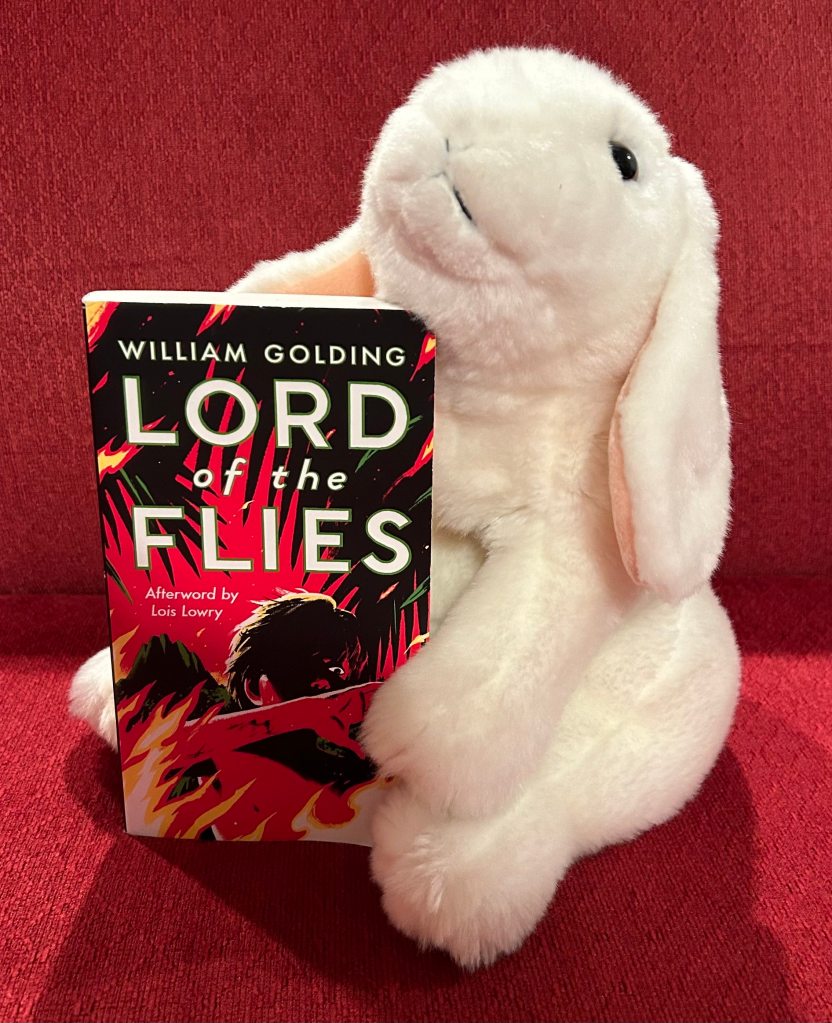
Marshmallow has been reading some classics on and off. Today she talks to Sprinkles about Lord of the Flies by William Golding, first published in 1954.

Marshmallow reviews Lord of the Flies by William Golding.

Sprinkles: So Marshmallow, it’s been years since I have read this book. So can you tell me a bit about what it’s about?

Marshmallow: Sure. This book is about a couple dozen British school boys whose plane crashlands on a deserted island. The boys try to set some rules and they use a conch that sort of represents order and civility. One of the boys named Ralph is elected leader, and another boy named Jack takes on hunting duties. The boys start a fire so that there will be smoke for ships to see.

As the story progresses, Ralph tries to encourage the boys to make shelter and keep the fire going. So basically what is essentially logical to do given the circumstances. But most of the other boys do not obey him and start to act like feral animals. At some point they start thinking that there is a beast in the island and they are terrified. Jack promises to hunt it down. And hunting and killing animals makes the boys become wilder and more violent and bloodthirsty, and eventually most of the boys join Jack and his hunters, which becomes a separate tribe than Ralph’s group. And they come into conflict, and things escalate very quickly after that.

S: Okay, I think this is a good summary of the plot and some of what happens in the book. Before saying much about what happens in the end, can you tell me if you thought it was tied up well?

M: I am not sure I’d say it was tied up, but the message of the book was well delivered and the moral is conveyed. The story is probably not really finalized. But it ends in a way that is still satisfying.

S: Though not quite happy, right?

M: Well, I can’t say too much without spoiling everything. But some things happen in the book that make it kind of impossible for a fully happy ending.

S: I do remember some of the book and definitely agree with you there. So what is this message or the moral you are talking about? Can you tell us that?

M: I think the moral of the book is that when humans are left to their devices there is potential for great evil. The children represent untouched innocence, but they eventually go feral and become morally corrupt. I think the author was probably trying to depict the violent side of humans and that it can lead them towards evil. The boys’ hunting leads to further violence and bloodthirst.

S: But how come do human societies ever go beyond violence then if humans left to their devices can easily go feral? There had to be some time that some humans decided to do things differently.

M: I think that the author is not claiming this always happens. I think that he is trying to show that there is a potential in humans for this kind of darkness, that there is a dark side of human nature.

Marshmallow is reading Lord of the Flies by William Golding.

S: Okay, that is heavy stuff. Tell me about the writing a bit. Did you think the author made the island visually come alive? Could you see the locations? How about the boys and how they looked and behaved? Could you visualize them?

M: Yes, but I think he focused a lot more on how they felt and their emotions and their transformation through the story. It is more psychological than physical descriptions, I’d say.

S: So would you say the characters were vividly created? Or were they more like archetypes, like Jack representing the violent tendencies and Ralph perhaps representing the inclination for law and order?

M: Well, I am not sure individual characters represented specific characteristics. In fact I think nobody represented a specific vice or virtue, because they all were pretty fleshed out as real people, who were basically mixed in virtue and vice. But you could see some changed in different ways than others.

S: Alright. That makes sense. So how did this book make you feel after you read it? It is a bit of a dark book, don’t you think?

M: Yes. Just as a narrative, just as a story, it is good, maybe like an adventure that has gone bad. But when you think about the ideas behind it, it enhances the reading experience. It definitely made me think about human nature. And I like that. And it is a classic so that is another reason why people should read it.

S: Did you know that about a decade after this book was published, a similar thing actually happened and a bunch of boys were stranded in an island by themselves? They did not become feral however, and they actually built a functioning mini-society.

M: I did not know that before we checked out the Wikipedia article for the book. But again, I think the book is not claiming this has to happen this way, but that there is a possibility that humans might give in to their violent and dark tendencies.

S: I guess so. The story of the Tongan boys makes me a lot more optimistic, but Golding’s book, even though I know it is fiction, is always a reminder for me that civil behavior or a safe and functioning society are not automatic or natural.

M: I’d agree.

S: Okay Marshmallow. Let us wrap this up. How would you rate this book?

M: 100%.

S: Wow! You liked it that much! Cool. I do recall it being one of my favorite books from high school, too, though I cannot bring myself to read it again, because I worry I’d get too depressed.

M: Well, then you can always reread the real story of what happened to those Tongan boys.

S: You are right! Anyways, what do you want to tell our readers?

M: Stay tuned for more amazing book reviews from the book bunnies!

Marshmallow rates Lord of the Flies by William Golding 100%.

Marshmallow reviews The Adventures of Tintin: The Calculus Affair by Hergé

Marshmallow likes graphic novels. And today she is talking to Sprinkles about a comic book that was published many years ago in 1956 though she only read recently: The Adventures of Tintin: The Calculus Affair by Hergé.

Marshmallow reviews The Adventures of Tintin: The Calculus Affair by Hergé.

Sprinkles: So Marshmallow this book was apparently published in 1956. Can you tell?

Marshmallow: I can tell that it is not contemporary. But I cannot really tell exactly what time the story is supposed to be happening.

S: That’s not too bad then. Tell me about the story.

M: What happens is that Tintin is visiting his friend Captain Haddock when suddenly everything in the house starts to break. They eventually learn that Professor Calculus has invented a device that can shatter glass. And soon this puts Calculus in danger because some people want to use his invention to make weapons.

S: And the book is about Tintin and Haddock trying to protect Calculus?

M: No. Calculus gets kidnapped so they have to find and rescue him.

S: Oh my. That sounds dangerous.

M: It does get a bit dangerous.

S: But of course since Tintin is the main hero, and Professor Calculus is apparently a recurring character in the series, we can imagine that he will be saved.

M: Yep. But no spoilers!

S: Okay. You are right.

Marshmallow is reading The Adventures of Tintin: The Calculus Affair by Hergé.

S: I think this is the first Tintin story you have read, right?

M: Yes. I looked at it before but it did not seem too interesting for some reason. But when I picked it up this time, I was kind of drawn into the story much easier. Maybe it is more appealing to older readers.

S: Maybe. My sister really liked Tintin, but I never read his adventures. As you know I am not very good with graphic novels. But I knew there are a lot of fans of Tintin all around the world. So I am glad you read this. According to some, this is one of the best books in the whole series, and there are about 23 or 24 books.

M: Well, I am glad I read it, too. I really liked the drawings. I felt like they were really detailed and you could see or even feel the movement in some of them. When I was reading, I felt enveloped in the world of the story.

S: I think, given that you have read a lot of graphic novels, Marshmallow, that is pretty high praise from you. Especially for a book that is older than even me!

M: Well, what can I say? I think it is very well done.

S: Do you think you might want to know more about Tintin and maybe read more of the series?

M: Yes. I did read the Wikipedia article about it a bit and learned that Tintin is a Belgian journalist who solves mysteries. But I also learned that at least one of the earlier books was eventually seen to be seriously racist.

S: I can unfortunately imagine that something written about Africa in 1930s by a Belgian could be racist about Africans.

M: You know, the back of the book I have read does not even list that particular adventure. So I am guessing they do not want to even bring it up.

S: I can understand that too. I don’t think we will be reading that book any time soon.

M: Definitely not. But I might want to read some of the other books.

S: Alright. We will look into that then. Let us wrap this up now. How would you rate the book Marshmallow?

M: I’m rating it 95% because of the really awesome drawing and the interesting story.

S: That’s great, thank you. And what do you want to tell our readers?

M: Stay tuned for more amazing book reviews from the book bunnies!

Marshmallow rates The Adventures of Tintin: The Calculus Affair by Hergé 95%.