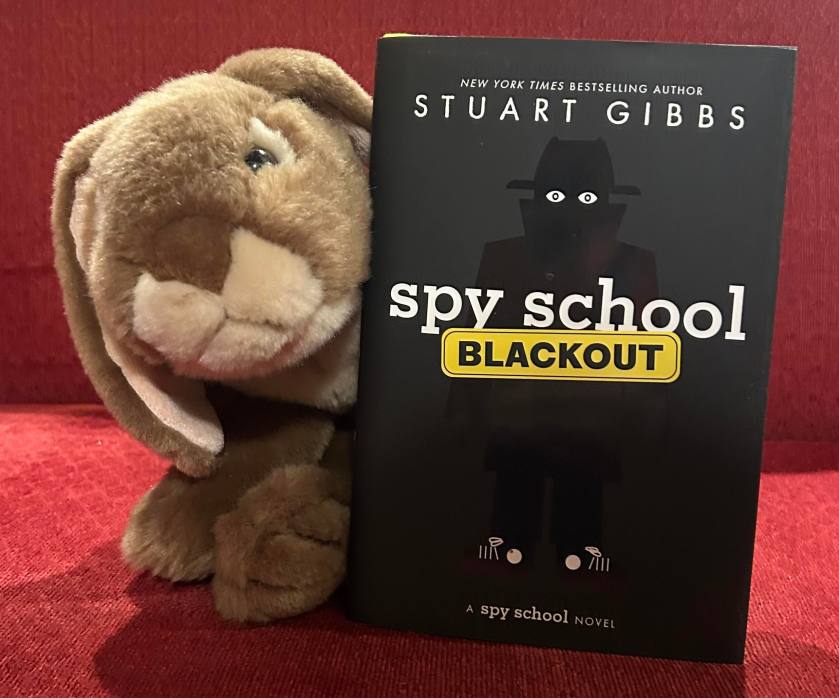
Caramel reviews The Five Sides of Marjorie Rice: How to Discover a Shape by Amy Alznauer

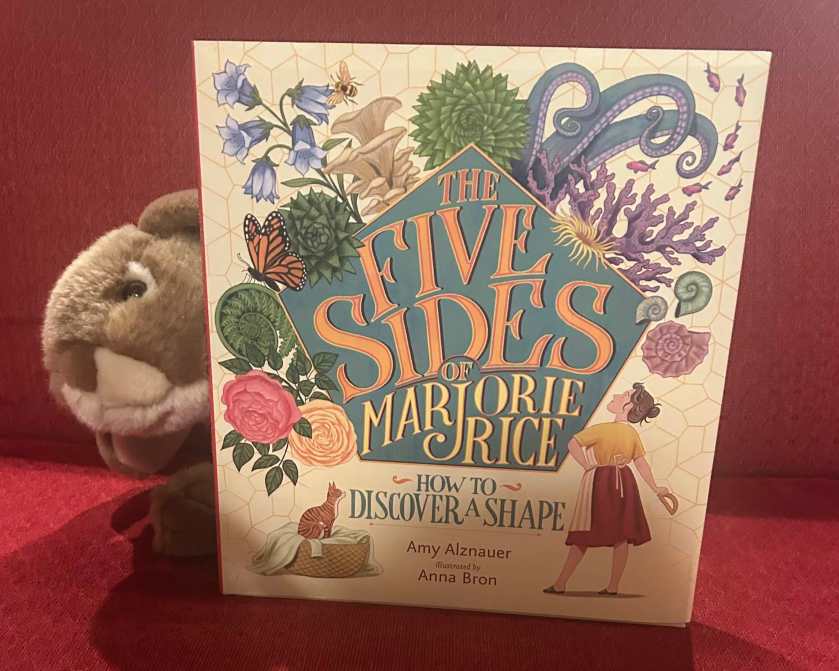
Today Caramel reviews an intriguing and colorful picture book: The Five Sides of Marjorie Rice: How to Discover a Shape, written by Amy Alznauer and illustrated by Anna Bron. Published in June 2025, this beautiful book was recommended to the book bunnies by a long-time friend of the blog: thank you, you-know-who-you-are! As usual Sprinkles is taking notes and asking followup questions.
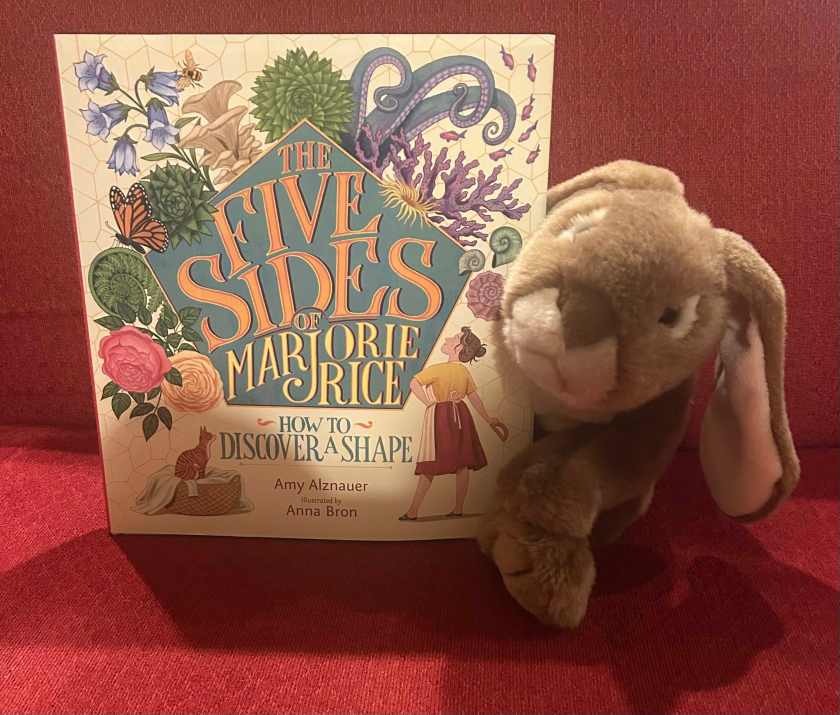
Caramel reviews The Five Sides of Marjorie Rice: How to Discover a Shape, written by Amy Alznauer and illustrated by Anna Bron.

Sprinkles: Today we are talking about another picture book, written by Amy Alznauer. We reviewed another book by her a while back.  

Caramel: Yes, I remember! That was a cool book, too; it was about a mathematician who thought about beautiful number patterns. This one is about a woman who discovered a new pentagon.

S: A new pentagon? How does one discover a new pentagon? I mean, pentagons are five-sided geometric shapes, and there are infinitely many of them. 

C: So yes, there are a lot of different types of pentagons, right? So she just found a new type. Pretty cool, right?

S: Yes, sounds cool, but I am still not sure I understand. Among the infinitely many different pentagons, the one she found has to be special somehow to be important. 

C: So, let me try to say it more carefully then. She found multiple new types of five-sided shapes that could cover the whole plane.

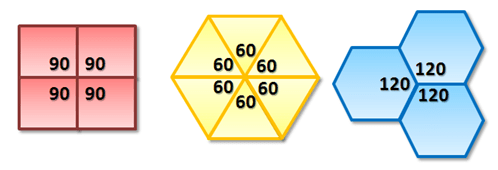
S: Oh, I see. So she found a new tile! I know about these! The problem is if you have a bathroom or a kitchen and you want to tile it with tiles, then in the hardware store, they usually will have square tiles, because squares tile the plane. That means you can use square tiles to cover a surface without leaving any gaps. It turns out that you can use hexagonal (six-sided) tiles or triangular (three-sided) tiles too. But these are the only options if you want to use regular tiles. That means each side has to be the same length and the corners in the angles should be the same. Here is a nice picture, showing the angles meeting at a corner for the three regular tiles:

Image from https://pappagallodifermat.blogspot.com/2012/07/ma-che-bel-pavimento.html

C: Yeah, so when she learned about this, she wondered why not five-sided tiles.

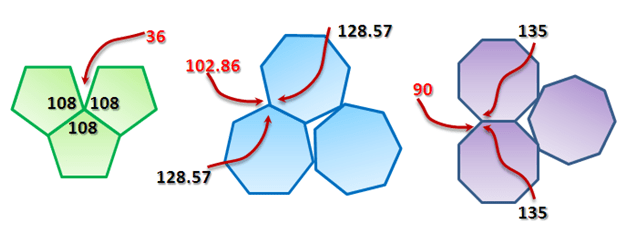
S: The math does not add up with five sides, at least if you want regular tiles, with the same side lengths and corner angles. See:

Image from https://pappagallodifermat.blogspot.com/2012/07/ma-che-bel-pavimento.html

C: Cool, I think I understood it a bit when reading the book, but these pictures help me understand it better. So let us keep them for our readers, too. Hopefully it will help them too. .

S: Sure. So all of that means that regular pentagons don’t work. So then she must have found a five-sided shape that can still tile the plane. That sounds really cool! 

C: Yeah, I agree. It looks like a crooked house! And she kept playing with different crooked houses in her head until she found one that worked. It is really cool. And the pictures are also very interesting. 

S: Yeah, I had a chance to look over the pages of the book, too, and agree with you. It is very colorful, and shapes of all types are all over the place. It is visually a very satisfying book. 

C: Yep. 

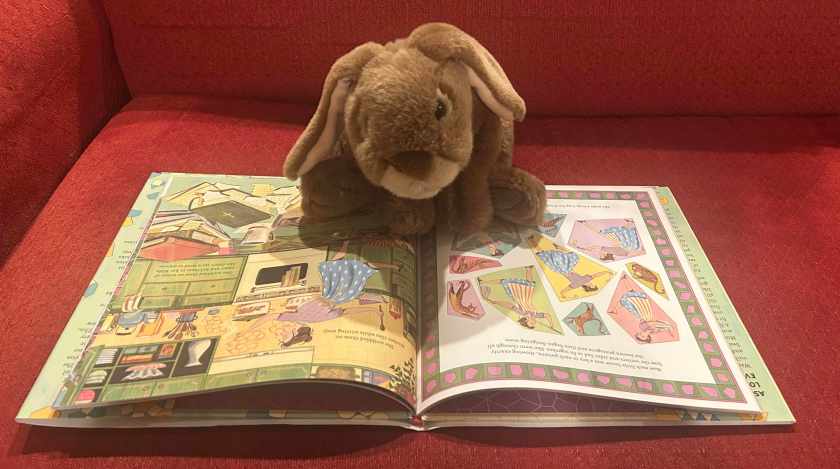
Caramel is reading The Five Sides of Marjorie Rice: How to Discover a Shape, written by Amy Alznauer and illustrated by Anna Bron.

C: So the book does tell us a bit about all the people who worked with this tiling problem you described above. But I wondered why this Marjorie Rice was the only woman among them, and no other women were mentioned other than her.

S: Hmm, you know, this is kind of a challenge for many people who want to encourage everyone to be more expansive about how they think of just who can do math. It seems that throughout human history, the mathematicians who made names for themselves have almost all been men. So I think Marjorie Rice’s story is a very interesting one, not only because the math she did is fascinating but also because she is a woman who did not become a famous mathematician, but while going about doing her life – she was a homemaker – she just happened to find a mathematical problem so interesting that she could not stop thinking about it. And she found a really neat solution to it, too!

C: Yeah, it is really cool, isn’t it?

S: Yes, I agree. This all reminds me of this article I read about what it means to be a mathematician. The author, a cool math blogger, basically says that you find mathematical problems interesting and you give yourself the freedom to work on them. 

C: Huh, cool, I like that! It means I could be a mathematician, too, if I found a problem that I could not stop thinking about and just kept at it. 

S: Yes, exactly. It is about curiosity and keeping at it. 

C: But maybe I want to become an astronaut instead?

S: Well, that is part of the point of the story, right? You don’t have to be a professional mathematician to do math. You can be anything else, and also play with math on the side. You know, some of the very famous mathematicians we still talk about today did math as a hobby. Like Pierre de Fermat, who was a lawyer but also did a lot of very interesting math on the side. 

C: Hmm, that is interesting… I am not sure I want to become an astronaut by the way. I like this planet too much, and as a tiny bunny, being in orbit is kind of intimidating. 

S: Yeah, I think you are very much planted on this planet. Me too. But you think reading about space is cool, though, right? 

C: Yeah, it really is. Hmm, I have not reviewed a space book recently. 

S: Well, you did just review Space Case: The Graphic Novel

C: True. And that is a really good book by the way. But I was kind of hinting toward another space book review coming up soon, wink wink! 

S: I know! Okay, maybe we should wrap this up because it is getting close to your bedtime. What would you like to tell our readers as we end this post Caramel?

C: Stay tuned for more book bunny reviews!

Caramel enjoyed reading The Five Sides of Marjorie Rice: How to Discover a Shape, written by Amy Alznauer and illustrated by Anna Bron, and is now looking around himself to see if he can find new hexagons.

Caramel reviews The Wild Robot on the Island by Peter Brown

Caramel has read and loved all three Wild Robot books by Peter Brown. He has also appreciated the Wild Robot movie when it came out last year. Today he is talking to Sprinkles about the most recent Wild Robot book, The Wild Robot on the Island: An Illustrated Picture Book Adaptation of The Wild Robot, written and illustrated by Peter Brown and published this past summer (June 2025).

Readers should also check out Caramel’s reviews of The Wild Robot, The Wild Robot Escapes, and The Wild Robot Protects.

Caramel reviews The Wild Robot on the Island: An Illustrated Picture Book Adaptation of The Wild Robot, written and illustrated by Peter Brown.

Sprinkles: So Caramel, we are finally talking about the picture book version of The Wild Robot; are you excited?

Caramel: Yep, because it is a very good book, the original and this version.

S: When I first heard about this, I thought it would be a new story, but it seems this is basically the original story, right?

C: Yes it is the same story, but more simplified. So there is a robot named Roz that gets lost in the ocean after a boat loses all of what it is carrying. And the robot finds itself on an island. And then it goes around looking for and making friends. It is really a sweet story!

S: Yes, I remember the book and the movie.

C: I am guessing this one is for younger bunnies. Because the original book was for bunnies who could read a big book. This is a picture book. 

S: Yes, that makes sense to me. Younger bunnies could not read the original book really. It was over two hundred pages. This one is a nice standard-sized picture book.

C: And there are very few words on each page in this version. The other one had a lot more words of course. 

Caramel is reading The Wild Robot on the Island: An Illustrated Picture Book Adaptation of The Wild Robot, written and illustrated by Peter Brown.

S: I think the book is illustrated by the author, right? 

C: Yeah, from what I can tell. 

S: Are they similar to the illustrations in the original? There were some pictures in those too, no?

C: Yeah, the style is very similar to the original book.

S: Maybe the author wanted readers to have the same mental images he has for the characters and the locations and such. The movie was also very pretty, but it was kind of different visually. 

C: Yeah, maybe. The movie was beautiful, and I loved it. But the illustrations in the original book and now in this new picture book are all slightly different. And they are also very beautiful. Speaking of the movie, can we add a link to the trailer? You just reminded me of how good the movie was…

S: Sure. Here it is.

C: Thank you! Maybe we will watch it again some day.

S: Maybe; I could like that too. But now let us get back to the book. Do you think that maybe the author thought the picture book was a good idea now that so many younger bunnies have actually seen the movie?

C: Maybe, I don’t know, but it was a fast read for me. 

S: Well, you are a very good reader, Caramel. 

C: I do read a lot, true. Maybe this book could get some bunnies into the bigger books. After all, there are two more books after the original one! 

S: And I know you actually would love it if there were a fourth book… 

C: Yes, I really want a fourth book. That would be very very very good.

S: Okay, maybe we publish this post and who knows, maybe it will eventually get to the author’s ears…

C: Yes, dear reader, if you are Peter Brown, the creator of The Wild Robot, then please write a fourth book! I really would love to read more of Roz’s adventures. 

S: Okay, maybe we can wrap this up then. You have made your opinions quite clear. So what would you like to tell the rest of our readers then?

C: Stay tuned for more book bunny reviews!

Caramel loved reading The Wild Robot on the Island: An Illustrated Picture Book Adaptation of The Wild Robot, written and illustrated by Peter Brown, and is hoping that soon there will also be new adventures for Roz and friends.

Caramel reviews The Day The Crayons Made Friends by Drew Daywalt and Oliver Jeffers

Today Caramel reviews a brand new picture book, The Day The Crayons Made Friends, written by Drew Daywalt, illustrated by Oliver Jeffers, and published in 2025. As usual Sprinkles is taking notes and asking questions.

Caramel reviews The Day The Crayons Made Friends by Drew Daywalt and Oliver Jeffers.

Sprinkles: So Caramel, what are we talking about today?

Caramel: We are talking about another Crayon book! Remember we reviewed The Crayons’ Christmas, one of the earlier books all the way back in 2020? This is a brand new book about the Crayons, so I had to read and review it! 

S: Yeah, I was excited too, to see this new one. Both you and Marshmallow have read and loved the first couple of Crayon books about Duncan’s crayons: The Day the Crayons Quit and The Day The Crayons Came Home. Those were written in 2013 and 2015 and both of you were so tiny! Then apparently there were several other Crayon books about Halloween, Valentine’s Day, St. Patrick’s Day, and so on. And you reviewed the one for Christmas. But this one seems like a really new adventure, just published this year! 

C:Yes, and I am all ready to talk about it. 

S: Great! So tell us a bit about this one. What is up with Duncan’s crayons this time?

C: They found friends, and they are writing back to Duncan about their experiences away.

S: Wait, so they are no longer in Duncan’s house? 

C: No, they are just not together in their box anymore. They are in different parts of the house exploring.  

S: That sounds cool! And they are again writing letters, like they did in the earlier books, right? 

C: Yeah, it’s kinda cool that they are writing to him. I wish my crayons and pens and toys wrote to me… 

S: I know, right? 

C: Yeah, it would be really cool! But then again, I’d feel bad using them.

S: I see what you mean. If they prefer to travel around the house and write about their adventures, maybe when you use them, they would wear out. But maybe not. Maybe they also would like you, like the Crayons like Duncan, and they would like to occasionally play with you and help you create fun pictures and colorful drawings and such. 

C: True, that is a good way of thinking about it.

Caramel is reading The Day The Crayons Made Friends by Drew Daywalt and Oliver Jeffers.

S: So tell me a bit about the kinds of adventures they are having. The title seems to say that they are meeting new beings and making friends with them. 

C: Yep, all of the notes are from the crayons saying how they met their friends, and how they’re doing. For example, here is what the Beige Crayon wrote:

My dearest Duncan,

I have discovered my calling … under your fridge! I found a flock of dog biscuits that were lost and afraid. I built a small cottage and now tend to them. It’s a simple, quiet life. But fulfilling, nonetheless. And Leslie here is expecting! I look forward to showing you her pups.

Your humble shepherd, 

Beige Crayon

S: That is pretty cool! So these Crayons have been gone for quite some time. Maybe it is like when you lose your pens or pencils or crayons and end up getting new ones, but you know the old ones are out there somewhere. Maybe they are having adventures of their own and that is why we never find them! 

C: Yeah, maybe they don’t want to be found!

S: I bet this happens to random single socks too! There are so many unpaired socks in my sock drawer — their partners must be out there adventuring! 

C: Same here!

S: Oh, so that is why you always wear mismatching socks! I just stop wearing them, hoping one day their partners will show up. But maybe I should give up.

C: You never know. Maybe one day they will come back, ready to settle down. 

S: Or maybe at some point, I, too, will start receiving letters … from missing socks! 

C: I think that could be fun. I would also like to receive a letter from my missing pencil I lost in third grade. I really liked it and was very sad when it disappeared. But if it is still out there and is just having too much fun to write to me, maybe that is alright. 

S: Yes, maybe we can let go and just be happy they are enjoying their lives, right? 

C: Yeah, I hope they are. But a letter would be nice. Just saying. Maybe, “I’m in your closet, please get me.” Or something. Anything.

S: I hear you. Maybe they will, too. Anyways, it definitely seems like you really enjoyed reading a new Crayon book. 

C: Yep! It is just as fun as the other Crayon books. The pictures are just as pretty, and they fit the book really well; they look like they were drawn using crayons!

S: Yeah, I like the way these books look, too. Okay, maybe it is time to wrap up this review then. What would you like to tell our readers? 

C: Stay tuned for more book bunnies reviews!

Caramel loved reading The Day The Crayons Made Friends by Drew Daywalt and Oliver Jeffers, meeting old friends and their new friends.

Caramel reviews Vietnamese Children’s Favorite Stories by Tran Thi Minh Phuoc

The book bunnies love various retellings of the classic fairy tales of the Western tradition, and through the years, they have reviewed many books that offered different takes on them. They also have explored, these past few months, several books that collect together fairy tales from geographies from around the world. Therefore they were delighted to learn that they made it to the list of 30 Best Fairy Tale Blogs and Websites in 2025, curated by Feedspot, a blog aggregation site.

To celebrate, today Caramel is reviewing yet another book of fairy tales: Vietnamese Children’s Favorite Stories, retold by Tran Thi Minh Phuoc and illustrated by Nguyen Thi Hop and Nguyen Dong, published originally in 2015. As usual Sprinkles is taking notes and asking questions.

Caramel reviews Vietnamese Children's Favorite Stories, retold by Tran Thi Minh Phuoc and illustrated by Nguyen Thi Hop and Nguyen Dong.
Caramel reviews Vietnamese Children’s Favorite Stories, retold by Tran Thi Minh Phuoc and illustrated by Nguyen Thi Hop and Nguyen Dong.

Sprinkles: So Caramel, what are we talking about today?

Caramel: Well, this is a book about the fairytales and stories that Vietnamese children would be told as they grew up.

S: So just like Japanese Myths, Legends, and Folktales, Tamamo the Fox Maiden and Other Asian Stories, and Chinese Myths and Legends: The Monkey King and Other Adventures, which you reviewed before for our blog, this is one of those books you read for that course you took on Asian myths and legends, right? 

C: Yeah, and just like those other books, this is a good book, too. I liked it a lot.

S: That sounds great! Tell us about it then. 

C: This book contains fifteen stories that the author remembers from their own childhood. They were told these stories as they were growing up. Each story is around nine pages or so. The stories all contain some sort of moral, like most children’s stories do. 

S: Yes, that is true; most fairy tales have some morals. The author Tran Thi Minh Phuoc writes in the introduction that all of the stories “paint a picture of a world that values the five great virtues: Nhan (compassion), Le (Rituals), Nghia (Righteousness), Tri (Wisdom), and Tin (Trust)”. What kinds of morals come up in these stories? 

C: Don’t be greedy, be kind to others, and don’t be selfish.

S: Those seem like very standard morals, good values to pass on to young bunnies. Did you come across any that felt different? 

C: No, not really. But there is a story called “Why Ducks Sleep on One Leg”, which, as you might guess, is about why ducks sleep on one leg.

S: Wait, does that one have a moral? What would it be?

C: I think it’s more of an explanation of why they sleep that way.

S: That is interesting. So not all have morals then. But all across different cultures, there are many traditional stories about how things are and they give explanations, sometimes humorous but always creative, about why things are the way they are. 

C: Yes. Some of the stories do not have obvious morals, but they still contain at least an explanation of something interesting, like a duck’s behavior. There is another story, “Why The Sea Is Salty”, about why the sea is salty. And there is a story about a tradition and why it exists: “Why One Shouldn’t Sweep the House on Tet Nguyen Dan“.

Caramel is reading Vietnamese Children's Favorite Stories, retold by Tran Thi Minh Phuoc and illustrated by Nguyen Thi Hop and Nguyen Dong.
Caramel is reading Vietnamese Children’s Favorite Stories, retold by Tran Thi Minh Phuoc and illustrated by Nguyen Thi Hop and Nguyen Dong.

S: I seem to recall a story about how the tiger got its stripes. The internet tells me it is also a Vietnamese story. Apparently such stories are called “pourquoi” stories, stories that purport to explain why some natural thing is the way it is. Anyways, does the story of the tiger stripes come up in this book? 

C: I don’t believe so. But there is the origin story of the jade rabbit. The jade rabbit lives in the forest with his friends and his companion, the goddess Chang’e, and he makes immortality elixirs.

S: Wait, the jade rabbit is not a natural being. It is a mythical creature, isn’t it? And didn’t we read about it in another story before? And the goddess Chang’e?

C; Yeah, the moon goddess Chang’e appeared in one of the stories we talked about before from Chinese Myths and Legends: The Monkey King and Other Adventures. And I remember the jade rabbit from the movie Over The Moon, which we talked about when we discussed that book. Anyways, according to the story “The Jade Rabbit” in this book, the jade rabbit used to be a normal rabbit, who sacrificed himself to help someone who happened to be the jade emperor in disguise. The rabbit did not know this though. Then the emperor carried him to the moon, and the goddess Chang’e turned him into the jade rabbit, an immortal being who makes immortality elixirs.

S: That is neat Caramel! According to Wikipedia, the character of the jade rabbit shows up in many East Asian traditions. And how wonderful that we now know one of its origin stories! 

C: Yeah, it’s cool. I told you this is a good book! 

S: So you did. Okay now, please tell me a bit about the illustrations. I see that this is really a beautiful book. 

C: Yes! The pictures are very interesting! They are made in the sort of painting type. I mean, the individual pictures look like they were made with water color and acrylic paint. Very pretty. Sometimes people look like they are floating and there is a lot of color. 

S: Cool! Alright, so it seems like you approve of this book and would recommend it to other young bunnies? 

C: Yeah, the stories were kind of made for younger bunnies. At least the book is very much meant for us. 

S: Then maybe young bunnies like you can read the book on their own, and even younger ones can maybe get an adult bunny to read it to them. 

C: Yeah that would be a good idea! They should do that!

S: Okay, Caramel. Thank you for this review. Do you want to say something to our readers as we wrap up this post?

C: Stay tuned for more book bunny reviews!

Caramel enjoyed reading Vietnamese Children's Favorite Stories, retold by Tran Thi Minh Phuoc and illustrated by Nguyen Thi Hop and Nguyen Dong, and recommends it to all young bunnies curious to hear more fairy tales from around the world.
Caramel enjoyed reading Vietnamese Children’s Favorite Stories, retold by Tran Thi Minh Phuoc and illustrated by Nguyen Thi Hop and Nguyen Dong, and recommends it to all young bunnies curious to hear more fairy tales from around the world.