Marshmallow reviews Percy Jackson’s Greek Heroes by Rick Riordan

Last week Marshmallow described Rick Riordan’s introductory book on Greek gods: Percy Jackson’s Greek Gods. This week she wanted to talk about a related book, again by Rick Riordan: Percy Jackson’s Greek Heroes. Sprinkles decided to join her and will be asking questions.
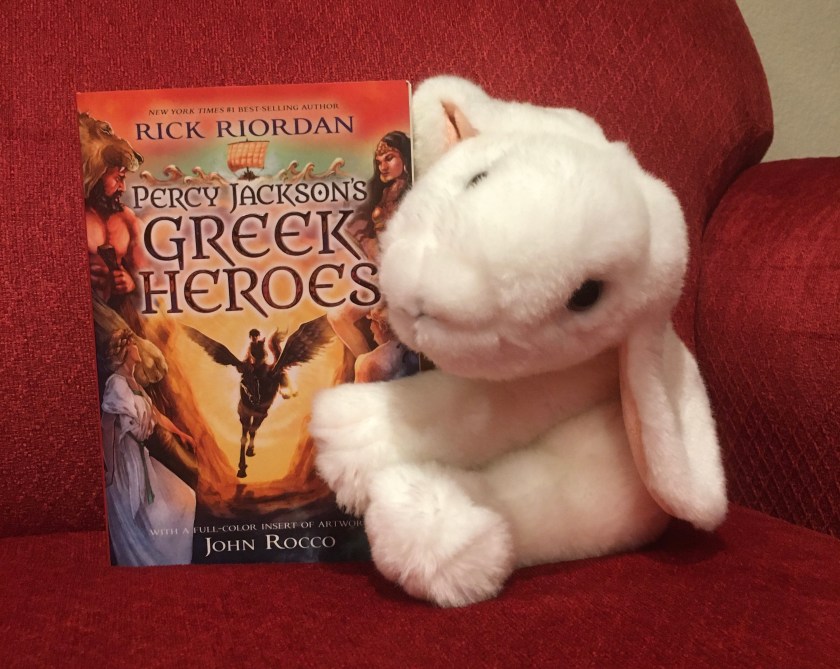
Marshmallow reviews Percy Jackson’s Greek Heroes by Rick Riordan.

Sprinkles: So this week we will be talking about Rick Riordan’s book about Greek heroes. This is another 500-page book and you have been reading it over and over again.

Marshmallow: Yes, I think it is a pretty good book.

S: So what is this book about really?

M: It’s about Greek heroes like Hercules and Perseus and Theseus. And Perseus is apparently who Percy Jackson was named after.

S: I think we had learned that in one of the Percy Jackson and the Olympians books. It was at least in one of the movies.

M: Oh yes, I remember that scene.

S: So just like in his Greek gods book, in this one, too Percy Jackson is narrating and telling us stories about these famous heroes of ancient Greek mythology.

M: Yes.

Marshmallow is reading Percy Jackson’s Greek Heroes by Rick Riordan.

S: I know you knew about some of the Greek gods before. But did you know about any of the heroes in this book before reading it?

M: Yes, I knew a little bit about Theseus and Perseus, and Atalanta, and Orpheus, and Hercules.

S: Oh, I didn’t know you knew that much about all these characters. Then did you learn anything new when reading this book?

M: Yes. I didn’t know about Otrera who started the Amazons. It is kind of a sad story really. And most of them are kind of sad stories anyways. But the chapter names are really funny.

S: Tell me some of your favorites then.

M: There is one called “Phaethon Fails Driver’s Ed”. And there is “Otrera Invents the Amazons (with Free Two-Day Shipping!)”. I also like “Atalanta vs. Three Pieces of Fruit: The Ultimate Death Match”.

S: I get the point. It seems like Rick Riordan always finds amusing chapter titles.

M: Yes, in his other books, the chapter titles are funny, too.
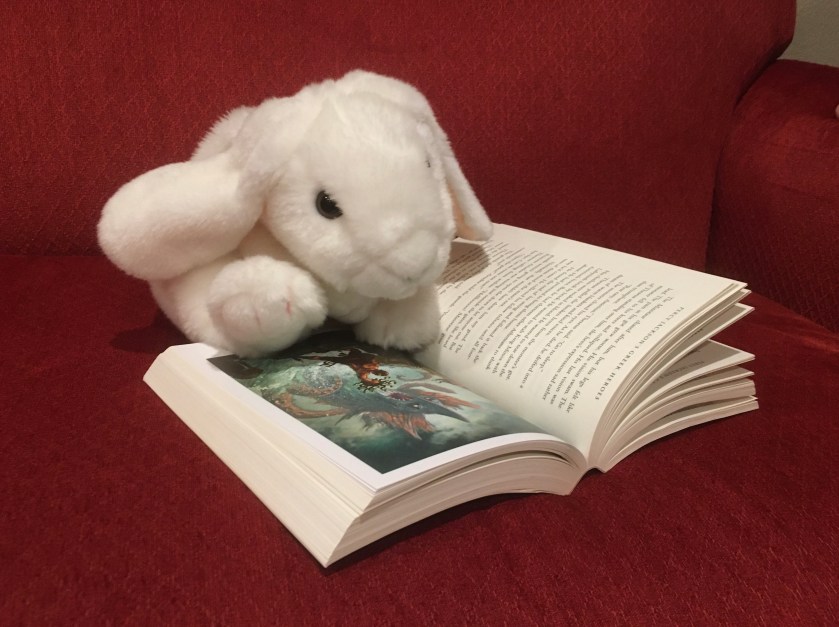
Marshmallow is looking at the colorful insert in Percy Jackson’s Greek Heroes by Rick Riordan. The first page displays artwork by John Rocco of Perseus defeating a monster.

S: There is once again an artwork insert in this book, right?

M: Yes. There are eight full-page illustrations by John Rocco in full color, in the middle of the book.

S: Is there a picture for each chapter?

M: No, there are more than eight chapters. Okay, let me count them. Twelve chapters.

S: I’m guessing folks who enjoyed other Percy Jackson books will like this book, too, right?

M: Yes. But maybe it might be better for older readers (9 and up). There are some words that some parents might not approve. But actually Percy Jackson always uses that kind of language. He does not always use bad words, but sometimes a few less savory words slip in.

S: Then again maybe this is almost always the case for middle-grade books. You told me before that the FunJungle books also have somewhat similar language.

M: That may be true.

S: Okay Marshmallow, I am guessing this is a good time to wrap up this review. Do you want to rate this book?

M: Yes! I rate it 95%.
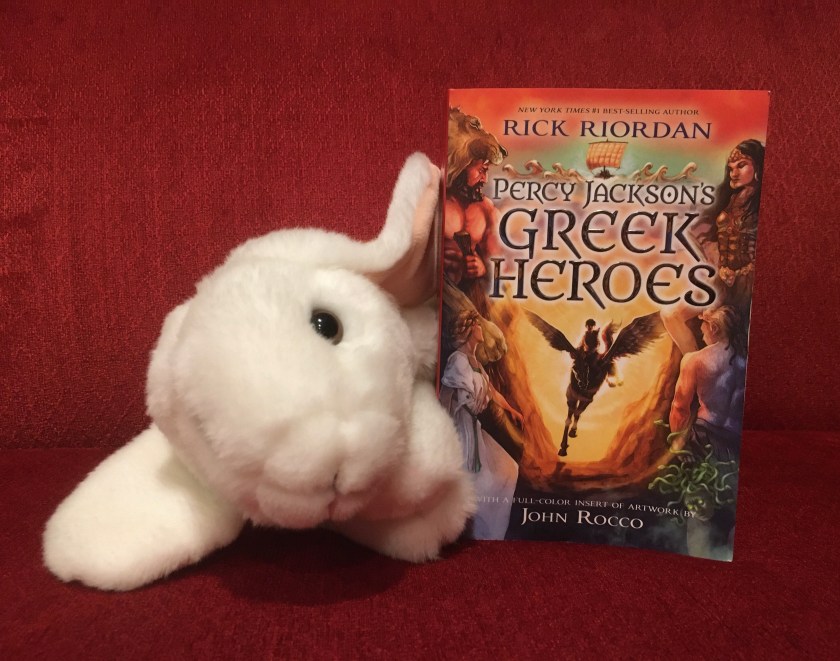
Marshmallow rates Percy Jackson’s Greek Heroes by Rick Riordan 95%.

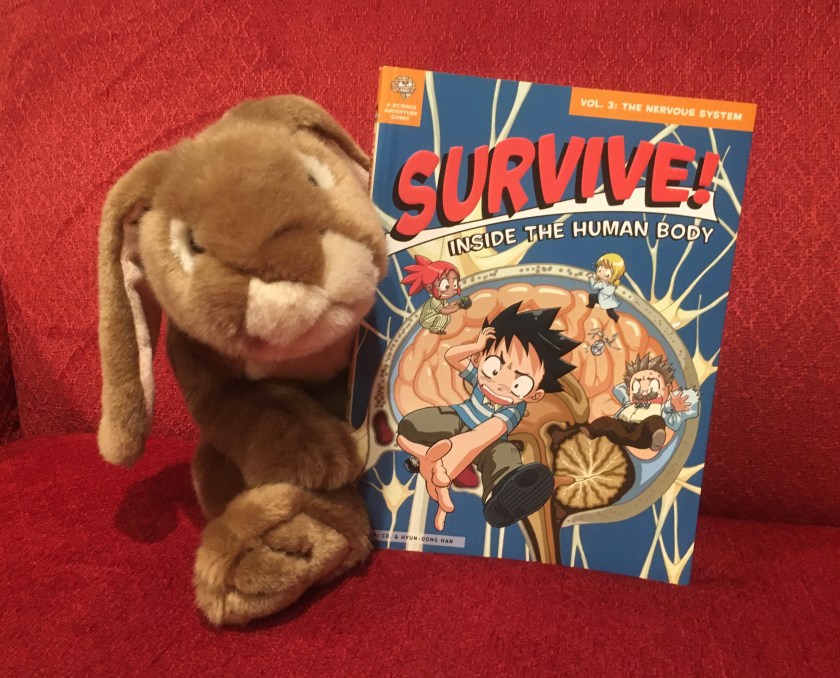
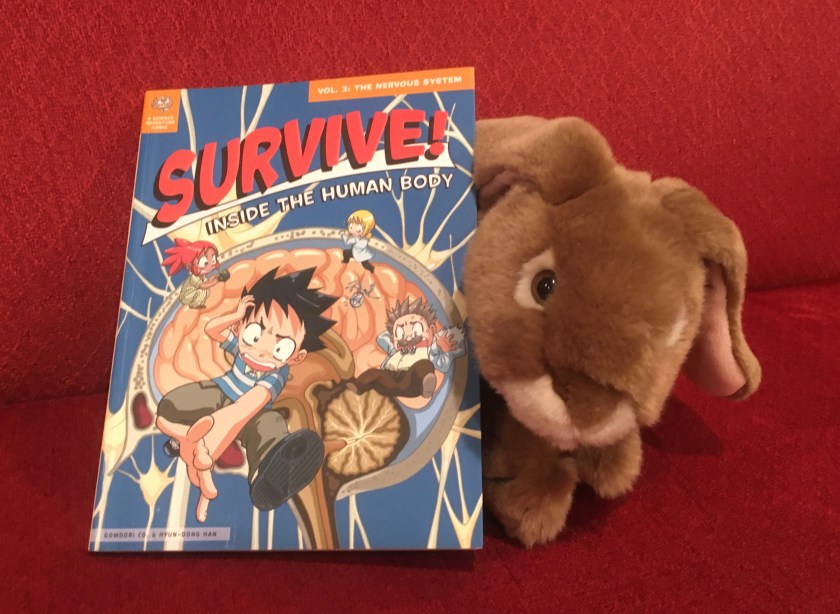
Caramel reviews Survive! Inside the Human Body: The Nervous System by Hyun-Dong Han

In the past two weeks Caramel reviewed  Survive: The Digestive System and Survive: The Circulatory System, the first two books in the Survive: Inside the Human Body series illustrated by Hyun-Dong Han. This week he is reviewing the third and last book in this series of graphic novels: Survive: The Nervous System. Sprinkles is taking notes and asking questions.

Caramel reviews Survive! Inside the Human Body: The Nervous System by Hyun-Dong Han.

Sprinkles: So after traveling through their friend Phoebe’s digestive system and then her circulatory system, Geo and Doctor Brain are back again! And what are they doing this time?

Caramel: They are in her brain this time. They figure out that there is a tumor in her brain. In her optic nerves.

S: That is scary! But how do they get from the circulatory system to the brain?

C: They went into the ear through the blood system, and then they went to the brain.

S: Okay, I don’t quite get it; I guess I will have to read this book too…

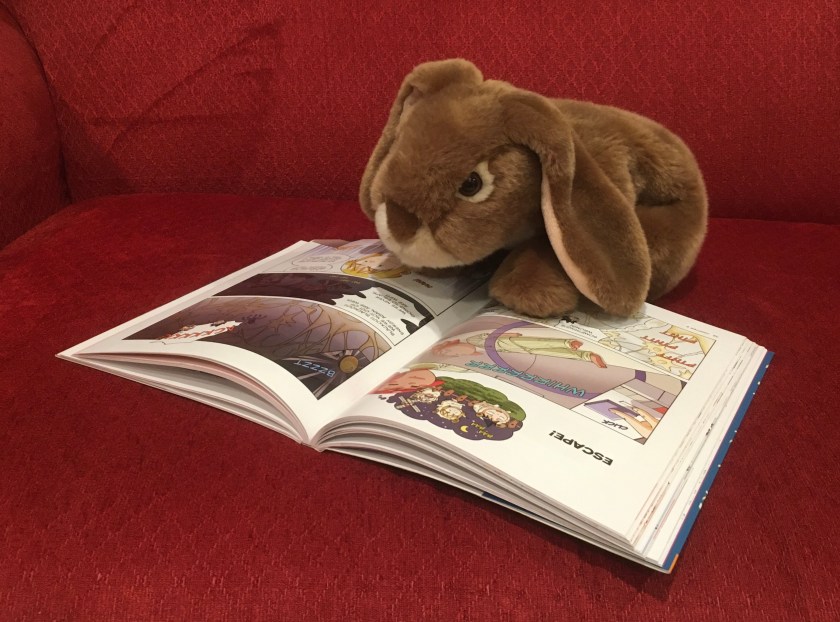
Caramel is reading Survive! Inside the Human Body: The Nervous System by Hyun-Dong Han.

S: Anyways, so Phoebe has a tumor, then?

C: Yes.

S: Is it malignant?

C: No it is benign. That means it is not cancerous and it does not spread fast. It grows slowly.

S: Good, so they have some time. Then do they try to get out or fight the tumor somehow?

C: They get out. They take a sample with them, and then they get out. That is how they find out that it is benign.

S: How do they get out?

C: They go to the eye, and then she cries, and they come out with her tears.

S: That is an adventure!

C: Really weird one!

S: So what did you learn in this book?

C: That there are two different types of tumors. And I learned about REM sleep. That is when you are having dreams and your eyes move. Rapidly. So Rapid Eye Movement = REM.

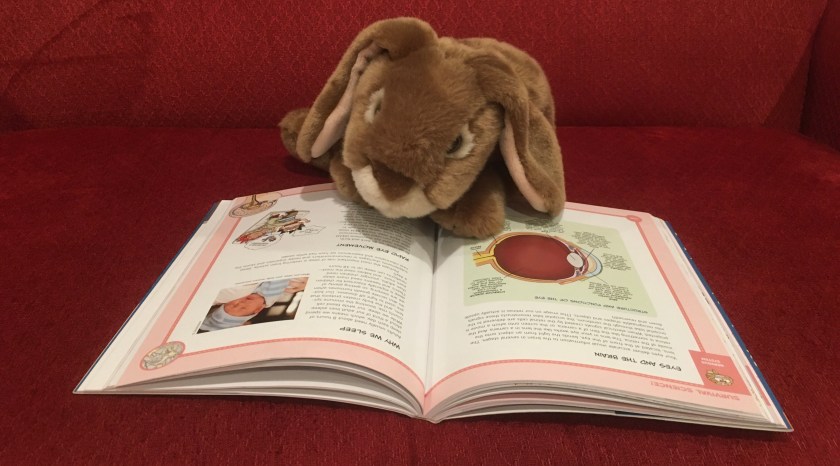
Caramel is reading about why we sleep in Survive! Inside the Human Body: The Nervous System by Hyun-Dong Han.

S: I see you read some of the fact pages! Did you read all of them? I know you like facts.

C: Yes but I did not read all of them this time. I wanted to read the story first.

S: I get that. Maybe you will go back and read the fact pages the next time.

C: Yes, probably.

S: So overall, did you enjoy reading this series?

C: Yes. I really enjoyed it. And I’m glad they got out!

S: Would you like to shrink and travel inside a living body?

C: I don’t think so. I don’t want to face parasites or tumors. And I also like being a normal-size bunny, and bouncing around is fun.

S: Maybe you could bounce around inside someone’s body.

C: Still, I don’t think I would like it.

S: I know. It can be scary. So let us wrap our review up with your three words for this book.

C: Funny, action, and color.

S: Those are good words to describe this book!

C: Yes! And stay tuned or more book bunny reviews!

Caramel has really enjoyed Survive! Inside the Human Body: The Nervous System by Hyun-Dong Han, and recommends the whole series to all little bunnies.

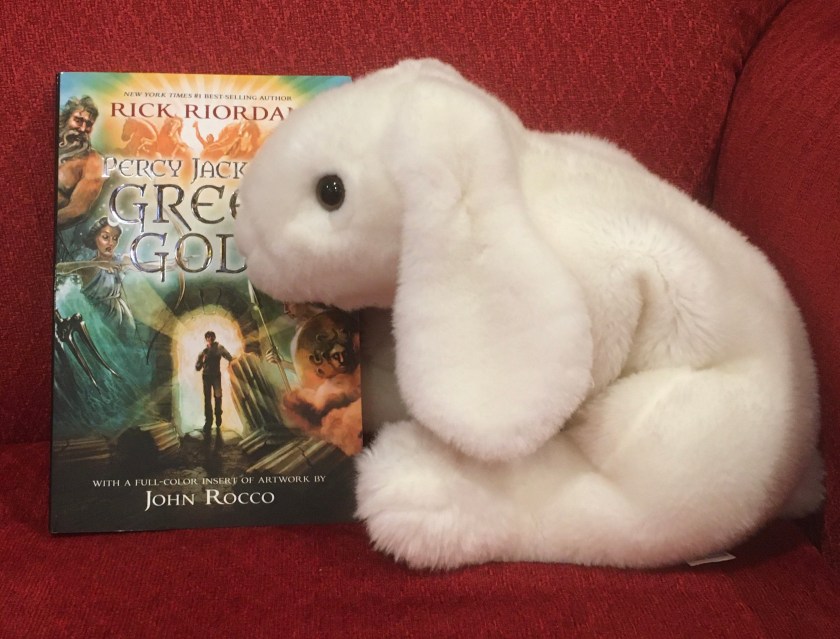
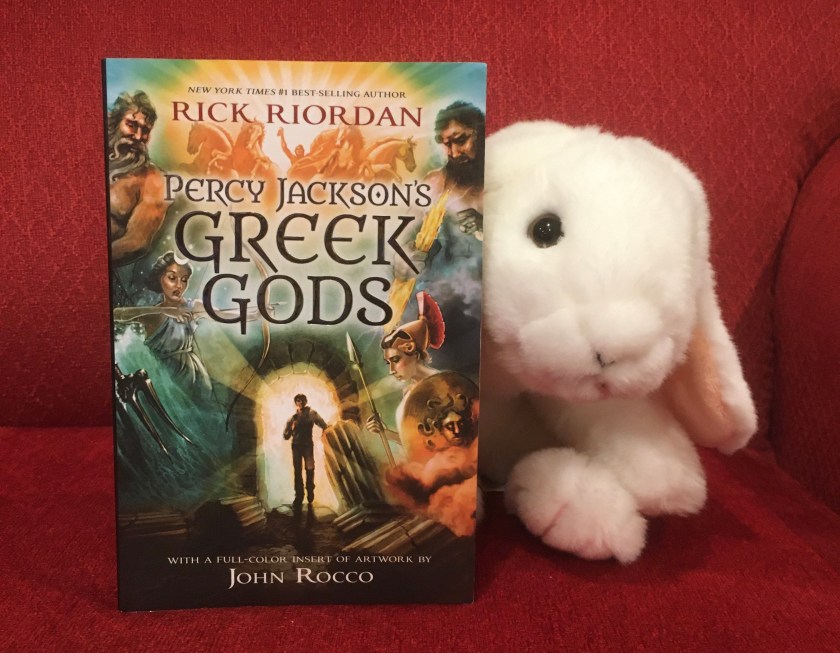
Marshmallow reviews Percy Jackson’s Greek Gods by Rick Riordan

Marshmallow has already reviewed the first three books of Rick Riordan’s Percy Jackson and the Olympians series. (Check out her reviews of The Lightning Thief, The Sea of Monsters, and The Titan’s Curse.) Today, instead of continuing with the series, which she strongly recommends readers to do, she wanted to talk about a different Percy Jackson book: Percy Jackson’s Greek Gods. Sprinkles has not read this one just yet, so she is asking Marshmallow questions and taking down her answers. Enjoy!

Marshmallow reviews Percy Jackson's Greek Gods by Rick Riordan.
Marshmallow reviews Percy Jackson’s Greek Gods by Rick Riordan.

Sprinkles: So Marshmallow you have read this 400-page book rather quickly!

Marshmallow: Yes, it’s a pretty good book. It is also very funny.

S: So what is it about?

M: The book is about the Greek gods and goddesses, and the Greek myths. Percy Jackson adds his perspective on each of the stories.

S: So the book is narrated by Percy Jackson, the hero of the Percy Jackson and the Olympians series?

M: Yes. You know what’s quite funny? Depending on whether he likes the particular god or goddess he is talking about, he inserts his opinions into the narrative. For example we know that Poseidon is his father, so he says that Poseidon is the coolest. He starts the chapter “Poseidon Gets Salty” by these words:

I’m biased. But if you’re going to have a Greek god for a parent, you couldn’t do better than Poseidon. Sure, I’ve had my problems with him. He’s not the most attentive dad. But, hey, none of the Greek gods is.

At least Poseidon has awesome powers and a laid-back attitude (most of the time).

He’s amazingly cool, considering how hard it was for him as a young god. He was the middle boy. He was always being compared to his brothers, like: Wow, you’re almost as handsome as Zeus! You’re almost as powerful as Zeus! Or sometimes: You’re not as much of a loser as Hades!

That can really grate a guy after a few centuries.

M: I don’t really understand why they are always so mean to Hades. But you get my point? Percy is a funny narrator.

S: I can see that! So it seems that you might need to know who Percy is when reading this book, Is that so?

M: I guess knowing who he is can be useful, but just having read the first of the series (The Lightning Thief) might be enough. He does mention Piper, a character from the Heroes of Olympus series, which I have not yet read.

S: But it still worked for you, right?

M: Yes.

S: So what else do you want to say about this book?

M: In the middle of the book there are eight pictures of the gods doing stuff. There is a picture each for Demeter, Hades, Poseidon, Zeus, Athena, Ares with Hephaestus, Apollo, and Dionysus.

S: Yes, that is a neat addition. They are full color and were drawn by John Rocco, the artist who illustrated the book covers of the five books of the Percy Jackson and the Olympians series.

Marshmallow is reading Percy Jackson's Greek Gods by Rick Riordan. She is at the beginning of the full-color insert of artwork by John Rocco.
Marshmallow is reading Percy Jackson’s Greek Gods by Rick Riordan. She is at the beginning of the full-color insert of artwork by John Rocco.

S: It seems like this is a book I might like to read! You had said that the Percy Jackson books could be good reading for all ages. What about this one? Is this a good book for bunnies of all ages?

M: It is probably best for ages 9 and up because it has some scenes that might be scary.

S: Alright, that is definitely good to know. How abut the myths? Do you think this is a good source for people looking to learn about Greek mythology?

M: I am not a Greek mythology expert so I honestly don’t know.

S: But maybe at least you can say whether it is a good book to get started or get more curious to learn more about Greek mythology?

M: Yes, I think so.

S: This might be a good place to wrap up this review. Would you like to rate it?

M: Yes. I rate it 95%.

Marshmallow rates Percy Jackson's Greek Gods by Rick Riordan 95%.
Marshmallow rates Percy Jackson’s Greek Gods by Rick Riordan 95%.

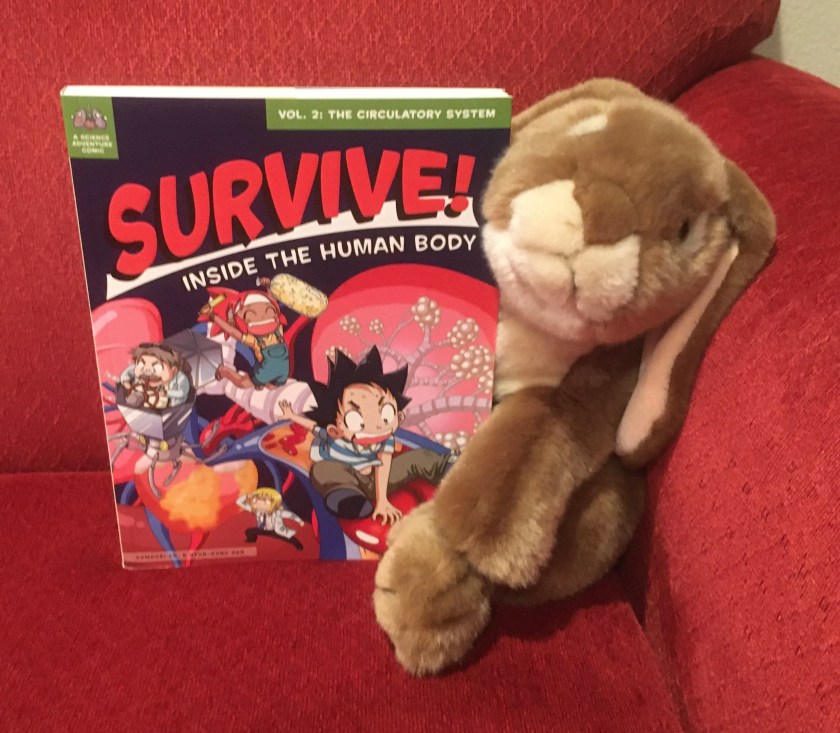
Caramel reviews Survive! Inside the Human Body: The Circulatory System by Hyun-Dong Han

Last week Caramel reviewed Survive: The Digestive System, the first book in the Survive: Inside the Human Body series illustrated by Hyun-Dong Han. This week he wanted to continue talking about this series of graphic novels, so today he will tell us about the second book: Survive! The Circulatory System, once again illustrated by Hyun-Dong Han. As is often the case, Sprinkles is taking notes and asking questions.

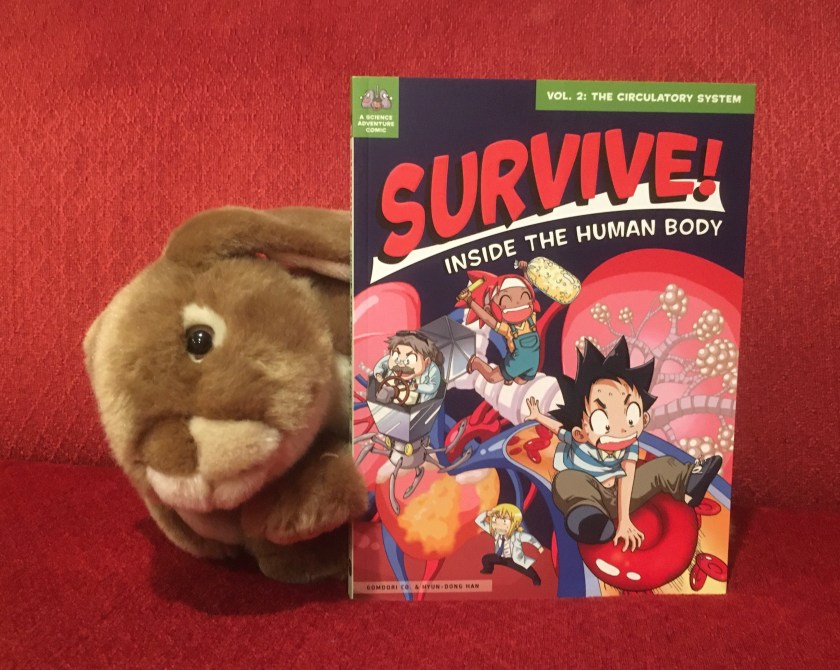
Caramel reviews Survive! Inside the Human Body: The Circulatory System by Hyun-Dong Han.

Sprinkles: So Caramel, you have enjoyed these books so much that you wanted to talk about the second one today.

Caramel: Yep.

S: So tell us from the beginning. What is this book about?

C: It is about the circulatory system.

S: So what is the circulatory system?

C: The circulatory system is the system that moves blood around the body.

S: So in this book we learn about the human body and the blood circulating through it. But then is it all about facts? Or is there a story line too?

C: Yes, there is a story line.

S: Tell me about it.

C: It’s about Geo and Doctor Brain and they go into Phoebe’s body accidentally. She eats them.

S: Wait, these are the same characters from the first book, right?

C: Yes. Phoebe and Geo are two friends. Doctor Brain is a mad scientist who invented the S.S. Hippocrates.

S: Oh do you know who Hippocrates was?

C: Yes. He lived in ancient Greece and he was a healer, and he believed that people should look at diseases in a more scientific way.

S: Yes. People see him as “the father of medicine”. So what is S.S. Hippocrates?

C: It’s a big ship but can shrink and go inside a human body. But they were not trying to get into anybody’s body.

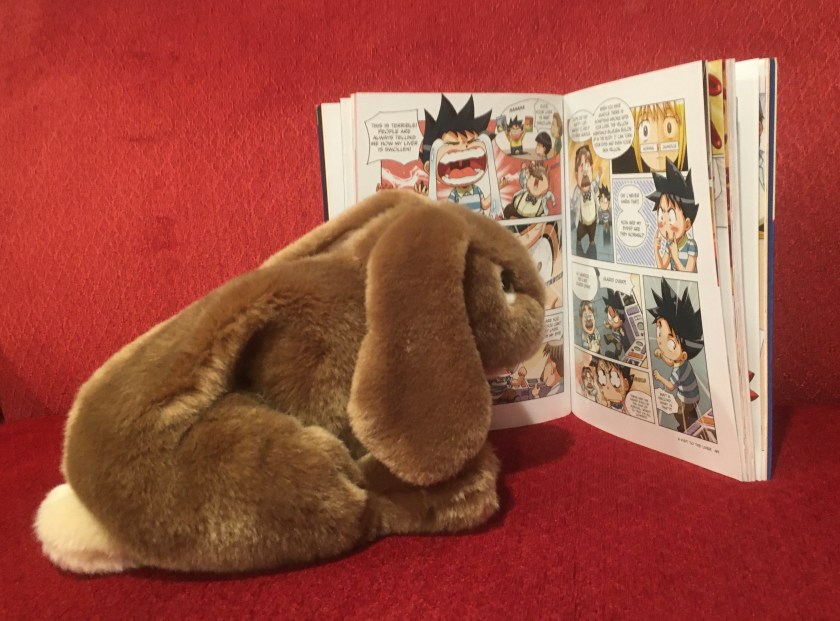
Caramel is reading Survive! Inside the Human Body: The Circulatory System by Hyun-Dong Han

S: Hmm, so in the first book they somehow get trapped inside Phoebe’s digestive system, she somehow eats them. How do they get into her blood stream this time?

C: They are digested.

S: So they were not able to get out the last time, and from the digestive system they are transferred into the circulatory system. Is that correct?

C: Yes.

S: Oh that sounds exciting but also kind of scary.

C: It is. They are attacked by microphages, white blood cells, and Kupfer cells.

S: Wait, what are Kupfer cells?

C: Oh apparently they are a type of microphage!

S: So they are attacked by the immune system while in the blood stream? That makes sense. After all, they are not supposed to be there!

C: Yeah. Plus Doctor Brain apparently made S.S. Hippocrates look like a bacterium.

S: That makes even more sense, of course: then the body’s defense system would try to fight it. We learned all about white blood cells and microphages in Cells At Work, right?

C: Yes, but we did not learn about the Kupfer cells there. Hey, why don’t we put in the song for Cells At Work here?

S: Good idea! Here you go, but viewers should keep in mind the show is quite violent—the little bunnies in our household often covered their eyes while we were watching the show—so this introductory sequence is also kind of violent (in second 39, you meet the White Blood Cell and with him start the violence and the gore):

Here is the introductory sequence to Cells At Work in English (warning: there is significant violence and gore in the show and in this video too).

S: Let us get back to the book. So do they figure out how to get out of Phoebe’s body?

C: Nope, not yet. You need to read the third book for that.

S: Oh, so this one ends with a cliffhanger!

C: Yes! But it was not bad because I actually wanted to read the third book anyway.

S: That makes sense. You like graphic novels and you like learning about facts.

C: Yes I really like facts and there are a lot of them in this book.

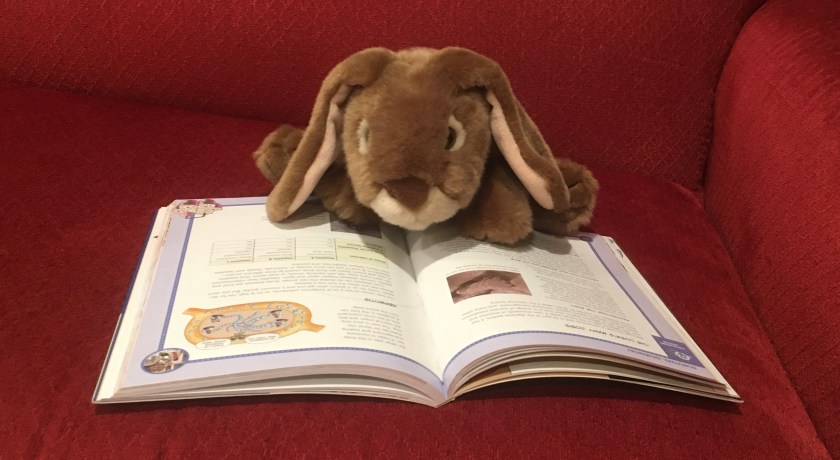
Caramel is reading about the liver in Survive! Inside the Human Body: The Circulatory System by Hyun-Dong Han

S: So this was a good read, then?

C: Yes, it was!

S: Tell me three words to describe it.

C: Colorful, informative, and funny.

S: Those make a good endorsement for this book! So it is time to wrap up!

C: Stay tuned for more book bunny adventures!

Caramel enjoyed reading Survive! Inside the Human Body: The Circulatory System by Hyun-Dong Han, and recommends it to all bunnies interested in learning about the human body.