Caramel reviews Darkstalker: The Graphic Novel by Tui T. Sutherland and Jake Parker

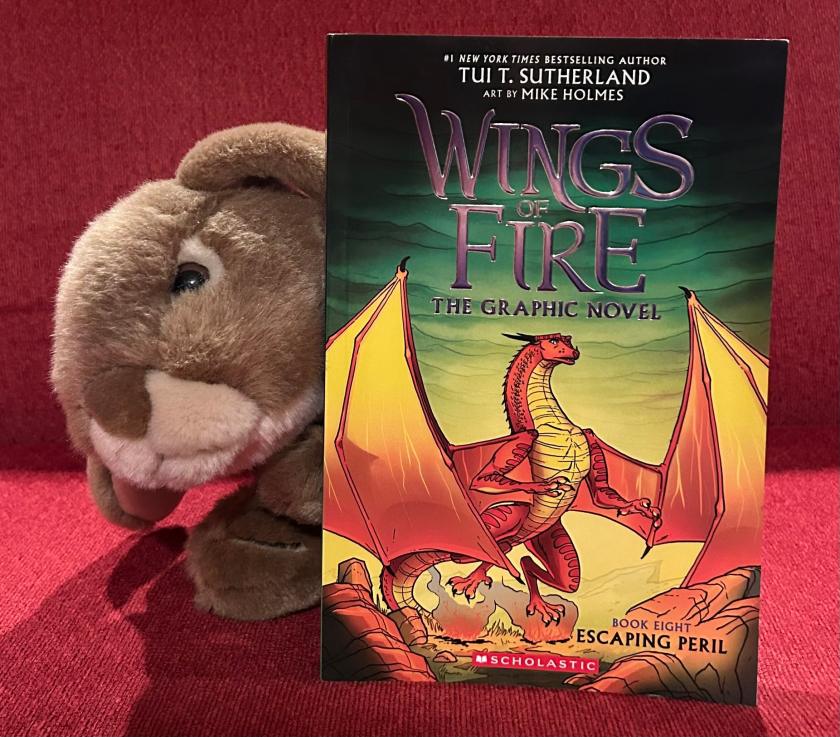
Caramel has always been an avid fan of Tui T. Sutherland’s Wings of Fire series. He is also a lover of graphic novels. So he has already reviewed the graphic novelizations of the first eight Wings of Fire books (The Dragonet Prophecy, The Lost Heir, The Hidden Kingdom, The Dark Secret, The Brightest Night, Moon Rising, Winter Turning, and Escaping Peril) for the book bunnies blog. Today he reviews the graphic novel adaptation of Darkstalker, published just yesterday! As usual, Sprinkles is taking notes and asking followup questions.

Caramel reviews Darkstalker: The Graphic Novel by Tui T. Sutherland and Jake Parker.

Sprinkles: Here we are with a brand new Wings of Fire graphic novel! I knew you would be happy to get your paws on this book! 

Caramel: Yes, you know I had to get my paws on it. 

S: Well, it was just published yesterday, and here you are, ready to talk about it already. I am guessing that is a good sign.

C: Yep, it sure is. I’m very lucky to have it, and I’m glad we are talking about it.

S: Okay, so you had already read and reviewed the original Darktstalker

C: Yep, I have, and both are awesome.

S: So can you remind our readers a bit about what the deal is with the Wings of Fire books and this book especially, given how it is not one of the standard series, but rather belongs to the associated Legends series?

C: Ok, so the Legends, the Winglets, and the Wings of Fire are all different series. The Wings of Fire are the original books; there are fifteen of them and they are about many different dragons who live on different continents on a planet and have many different adventures and challenges. The Legends are more sort of books that fill in gaps in knowledge missed in the original series, about historical and legendary events and characters. And the Winglets books are like that, too, but they are more about some of the side characters from the main series.

S: Alright, that is a good summary I think.

Caramel is reading Darkstalker: The Graphic Novel by Tui T. Sutherland and Jake Parker.

S: So then this book is a graphic novel adaptation of one of the Legends books, about a historical character named Darkstalker, right? 

C: Yep, but he also shows up in the Jade Mountain story arc. That is the story arc that covers books six to ten.  

S: Wait, so he is historical in a way because he is really old and ancient, but he is still affecting the main story line?

C: Yes, this book is basically his origin story. 

S: I see. That’s cool. 

C: And this also contains the thoughts and storyline of him and two other characters, Clearsight, and Fathom, his friends who were forced to go against him..

S: They also show up in the original version though, right?

C: Yep, but I was sort of wanting to see what they looked like, this being a graphic novel and all. And this was very close.

S: That is so neat! So why don’t you tell me a bit more about the graphic part of the graphic novel? I noticed that the main illustrator is Jake Parker, and not Mike Holmes, who was the one from the graphic novelizations of the main series. 

C: Yeah, but it’s still good; I like this artist’s style too.

S: I am guessing the other books kind of set up a standard, a set of expectations for the reader, and this book is in line with those expectations.

C: I guess you could say it that way. I just say I liked them both. 

S: Okay, sounds good to me.

C: Somehow, his style is familiar to me. Not sure why?

S: It might be because you already read some of his other work. Remember Kepler’s Intergalactic Guide to Spaceships?

C: Oh, yeah! That was a cool book! I told you somehow his style felt familiar.

S: Good for you! By the way, did you know that there will soon be a book sixteen for the original Wings of Fire series

C: Yesss! I heard that a fourth arc is starting and I really really can’t wait! I really want to read it.

S: It is apparently titled The Hybrid Prince and will come out some time in March 2026. 

C: It is so hard to wait! 

S: It is apparently about a MudWing brother of Clay named Umber. 

C: Really, ooooooooooooo, now I really need to read it.

S: I love your enthusiasm Caramel. I think it is certain that you will read and review it when it comes out. 

C: Yay!

S: Okay, I think this is a good time to wrap up this review. What do you want to tell our readers?

C: Stay tuned for more book bunny reviews! And I can’t wait till March!!

Caramel loved reading Darkstalker: The Graphic Novel by Tui T. Sutherland and Jake Parker and can't wait for more Wings of Fire books!
Caramel loved reading Darkstalker: The Graphic Novel by Tui T. Sutherland and Jake Parker and can’t wait for more Wings of Fire books!

Marshmallow reviews Spooky Classics for Children: A Companion Reader, as told by Jim Weiss, and with Dramatizations by Chris Bauer

This week both of the younger book bunnies wanted to review spooky books to honor Halloween 2025. So on Wednesday, Caramel reviewed a cute picture book about a zombie and a brain. And today, Marshmallow reviews Spooky Classics for Children: A Companion Reader, as told by Jim Weiss, and with Dramatizations by Chris Bauer, which offers modern adaptations of three classic short stories.

Marshmallow reviews Spooky Classics for Children: A Companion Reader, as told by Jim Weiss, and with Dramatizations by Chris Bauer
Marshmallow reviews Spooky Classics for Children: A Companion Reader, as told by Jim Weiss, and with Dramatizations by Chris Bauer.

Marshmallow’s Quick Take: If you are looking for a fun book to read with your family during the fall season, then this is the book for you!

Marshmallow’s Summary (with Spoilers): This book is divided into several sections. The Preface introduces the stories and explains that the book can be used in three ways: listen, read, and speak. The first section has the stories laid out in a normal picture book-like fashion; this is Part I: Three Spooky Stories. The second section (Part II: Three Spooky Plays) provides scripts for each story and a guide for how to perform each one. 

The first story is called “The Canterville Ghost”, and it was originally written by Oscar Wilde and published in 1887. The story is set in Britain. The American Otis family (Mr. Otis is the American ambassador to Great Britain) moves into the Canterville Chase, a famous old ancestral castle. The catch is that the estate is haunted by the Canterville Ghost. Lord Canterville warns the Otis family of the haunting, but they do not believe in “mumbo-jumbo.” However, when the ghost’s existence becomes undeniable, they react in a relatively kind, well-mannered way. Eventually, the story ends happily—which I was initially not expecting! (Readers interested in the original Wilde version can check out this Project Gutenberg link.)

The second story is called “Dr. Heidegger’s Experiment” and was originally written by Nathaniel Hawthorne and published anonymously in 1837. The story is about five friends who are in their older years. Dr. Heidegger invites his four friends over to his house and offers them water from the Fountain of Youth. All four of his friends lived lives of sin and are full of regret. However, Dr. Heidegger himself does not drink the water; he merely wishes to see what happens when they do. They drink the water and age backwards, regaining their beauty and energy. However, they did not follow Dr. Heidegger’s advice to record for themselves some lessons learned before they drank the elixir, and so they do not remember the wisdom that they were supposed to have learned throughout their lives (though it is not that they forgot it, it is mostly that they did not gain it in the first place). The story ends with a clear message, and this story made me think a lot more than I was expecting to at the end. (Interested readers can check out this Project Gutenberg page for Twice-Told Tales, a collection that contains, among many others, the original story by Hawthorne.)

The third story is called “The Sending of Dana Da” and was originally written by Rudyard Kipling and published in 1888. The story is set in India a long time ago. A British man named Richard Evans meets a local wizard named Dana Da whom he treats generously. Dana Da offers the man help in return, asking him if he needs help in dealing with anyone he loves or hates. Evans eventually admits that he loathes a man named Everett Lone. Dana Da’s sending is a magical energy that he can shape into whatever he wishes; for this case, he shapes it into cats that appear in Lone’s life constantly (Lone hates cats). This magical story ends in a quaint way and wraps up the first section of the book nicely. (The original version by Kipling is somewhat different and may or may not be appropriate for young bunnies, so we will not link to it from here.)

Marshmallow is reading Spooky Classics for Children: A Companion Reader, as told by Jim Weiss, and with Dramatizations by Chris Bauer

Marshmallow’s Review: Overall, I would highly recommend this book! I really enjoyed listening to the audio recording that came with it, and it was a really great experience. Jim Weiss is a great voice actor! (We loved his readings of the Harry Potter books many years ago.) But even if you do not have access to the recordings, the text itself is really engaging on its own. This book is accessible and appropriate for all ages, so I think it would be really fun to read or listen to as a family. I liked the drawings, but I especially liked the writing style; I found it energetic, engaging, yet simple at the same time.

The stories were also surprisingly deep. The first story made me think a lot about generosity while the second made me think a LOT about wisdom, living life in a meaningful way, and appreciation. I also wondered a lot about youth and age afterwards. The third one teaches a lesson about logic and magic, but also friendship and kindness. I would explain more but I think that might give the ending away.

The second section with the screenplay versions of the stories adapted by Chris Bauer would also be a great help for theatre programs for little children. I can see it helping set up a great show for children to watch and / or perform in. Of course I could also see a family doing it among themselves, too, just for fun. There are a lot of useful suggestions for either scenario.

As a whole, this book was really enjoyable, and I would completely recommend it to everyone! I know this is a bit late, but it would also make for a perfect Halloween book!

Marshmallow’s Rating: 100%.

Marshmallow rates Spooky Classics for Children: A Companion Reader, as told by Jim Weiss, and with Dramatizations by Chris Bauer 100%.

Caramel reviews Zombie and Brain Are Friends by Stephanie V.W. Lucianovic and Laan Cham

It is that most spooky time of the year, and here in the book bunnies house, we are getting ready for Halloween. So Caramel thought it would be appropriate to talk about a book with zombies in it which just got published this past month: Zombie and Brain Are Friends, written by Stephanie V.W. Lucianovic and illustrated by Laan Cham. As usual, Sprinkles is taking notes and asking questions.
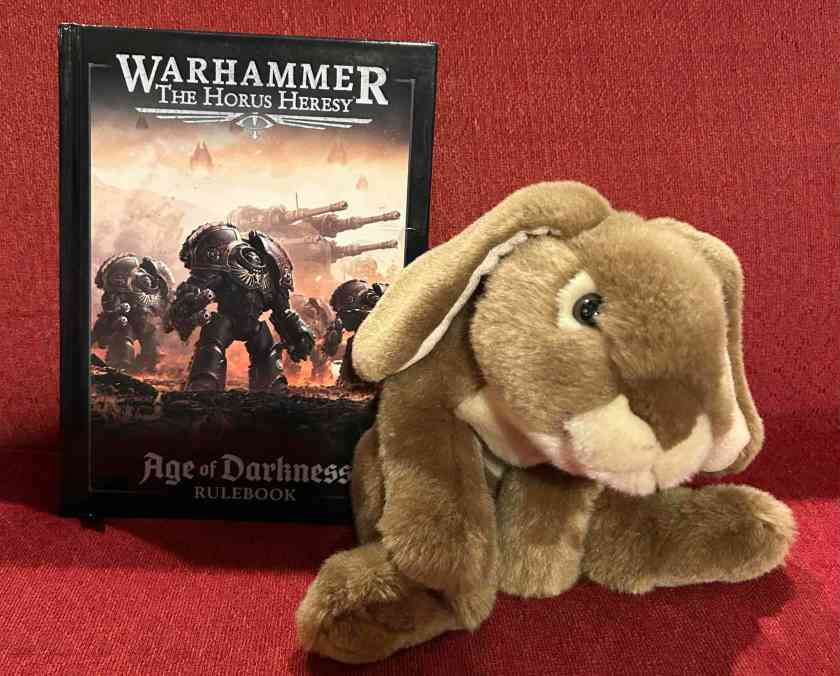
Caramel reviews Zombie and Brain Are Friends, written by Stephanie V.W. Lucianovic and illustrated by Laan Cham.

Sprinkles: So it is almost Halloween and we are just in time to talk about this picture book about a zombie and a brain that become friends. 

Caramel: Yep.

S: Can you tell us a bit about the book?

C: Sure, the story happens in a world in which there are only zombies (at least we don’t see any other people, humans or bunnies), and this one zombie family farms brains. And in this book brains grow in fields. 

S: So kind of like cabbage?

C: Yeah, kinda.

S: Okay, that will take some getting used to, but let us continue. 

C: Yeah, so in this family there is a boy zombie, whose name is Zeb. And one day, Zeb finds a baby brain while walking around, and he realizes that it’s alive. And they become friends.

S: But the brain is food basically, right?

C: I guess it’s like when people have a pet pig and they still eat pork. Kind of confusing but seems to happen all the time. 

S: I see. Okay so the brain is foodstuff, but Zeb becomes friends with it. The back of the book was talking about the thing a lot of parents say to their little ones: “Don’t play with your food”. One could imagine then that this causes some trouble in the household?

C: Not really. But there is some confusion, and things get out of hand a bit. At least for a while.

S: Hmm, but hopefully all ends well? 

C: Of course! It is a picture book, Sprinkles! Nothing too bad could happen. 

S: Of course you are right, Caramel.

Caramel is reading Zombie and Brain Are Friends, written by Stephanie V.W. Lucianovic and illustrated by Laan Cham.

S: Okay, so what did you think about the book? 

C: It is quite weird actually. You know I actually don’t like zombies, they kind of scare me, but this book was not scary at all. It was in fact good. And weird. You know, brains growing in bushes! Zombie farmers farming brains! And brains making friends with zombies! All so weird! But in a good way. 

S: I do know you don’t really love zombies. Remember the time I reviewed a whole lot of children’s books about zombies

C: Yeah, I didn’t like those books too much.

S: I know you did not like several of them. But I think you found one of them a lot of fun: Zombies Hate Stuff. It was quite funny, like Penguins Hate Stuff, which you had reviewed a bit earlier. 

C: Yeah, penguins do hate a lot of stuff.

S: Apparently so do zombies! But from this book we learn that they also love brains! 

C: Everyone already knows that, Sprinkles! Don’t they always go around saying “Brainzzz!”?

S: Yeah, but they can love brains, not just to eat, but also for friendship!

C: Yes, it is true that we learn that in this book. But again, it is not a real thing. Zombies being friends with brains, and brains growing in fields, and so on. 

S: Of course the brain-eating zombies themselves are not real, either. 

C: And I am so happy about that! 

S: I agree, Caramel. So this book was quite absurd in some sense, right? Things did not make too much sense in our world. There was some weird logic within the story world, but it did require ignoring a lot of what we are supposed to know about brains and zombies to get into the story. 

C: Yes, but then again, I prefer not to know much about zombies. I decided to read this book because it had a very friendly-looking pink brain and a smiling green-faced boy on the cover, and it said they were friends. I always like stories about good friends. 

S: True, your very first review was about the beginning of one of those legendary friendships, when Narwhal met Jelly! 

C: Yes! I love Narwhal and Jelly! Anyways, Zombie and Brain Are Friends was a lot of fun to read. 

S: We, in fact, read it out loud together, right? 

C: And we laughed out loud together, too!

S: Yes! Okay, maybe this is a good time to end this review. We need our sleep before Friday, so that night we can do all sorts of spooky things–

C: Yes! And eat lots and lots of candy! 

S: Of course! What would you like to tell our readers then?

C: Stay tuned for more book bunny reviews! And I hope you, too, will get lots and lots of candy on Halloween!
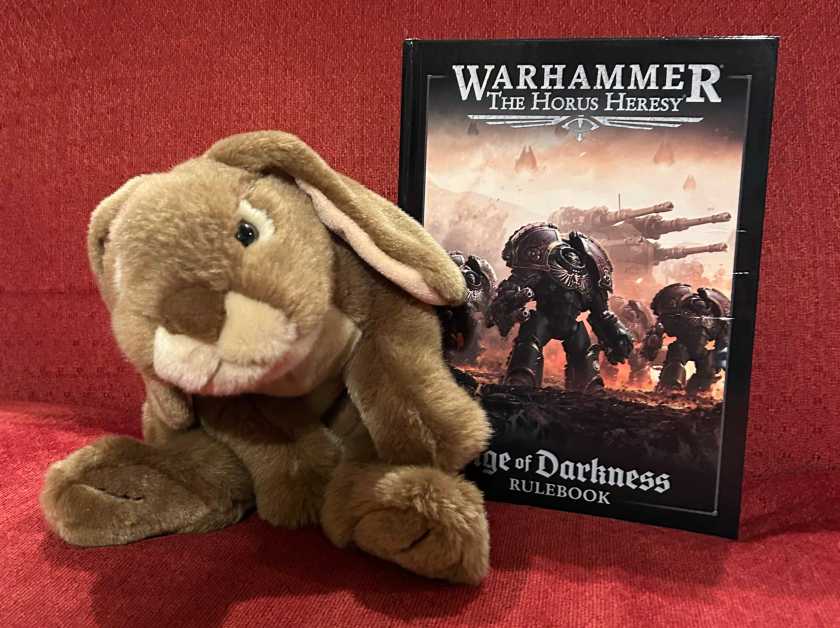
Caramel enjoyed reading Zombie and Brain Are Friends, written by Stephanie V.W. Lucianovic and illustrated by Laan Cham, and recommends it to young bunnies who wish to meet some friendly zombies this Halloween season.

Sprinkles reviews Flatland: A Journey of Many Dimensions – The Movie Edition by Edwin A. Abbott

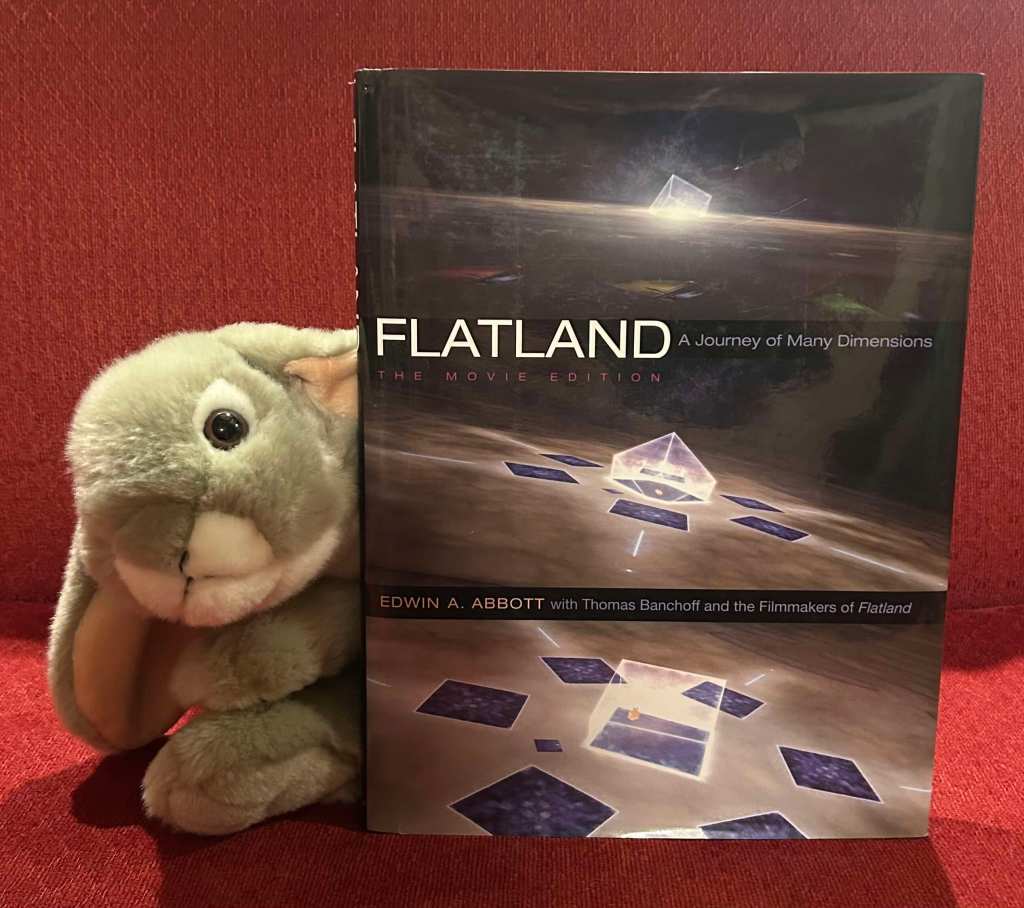
Today Sprinkles reviews a 2008 edition of a unique classic: Flatland: A Journey of Many Dimensions – The Movie Edition, credited to “Edwin A. Abbott, with Thomas Banchoff and the Filmmakers of Flatland“.

Today Sprinkles reviews Flatland: A Journey of Many Dimensions - The Movie Edition by Edwin A. Abbott, with Thomas Banchoff and the Filmmakers of Flatland.
Today Sprinkles reviews Flatland: A Journey of Many Dimensions – The Movie Edition by Edwin A. Abbott, with Thomas Banchoff and the Filmmakers of Flatland.

Flatland: A Romance of Many Dimensions by Edwin A. Abbott was originally published in 1884. As Wikipedia tells us, this was a novella written by “A Square” who lived in a two-dimensional world called Flatland. The main plot of the book involved the Square meeting a Sphere, coming into Flatland and teaching him about the third dimension. The Square, his consciousness now widened, began to stipulate the existence of fourth and higher dimensions, which in turn confused the Sphere.

The book’s story is amusing, and for many young minds it could be a welcome introduction to the mathematics and philosophy of higher dimensions. The adults reading the book together with their young one would also appreciate the satire underneath it all. Abbott’s pointed comments about the second class status of women in Victorian England, on the other hand, can be comprehended by some of the young crowd. (In Flatland, men are two-dimensional — they are polygons of various types — but women are one-dimensional; they are very very pointy and have no depth.)

The bottom of the Wikipedia article on Flatland lists several online places where one can access the full text of Flatland, as it is now in public domain. (Here, for example, is the Project Gutenberg version.) But I wanted to review this particular 2008 edition of the book because it not only contains the full text but also has some information about the 2007 movie made based on it. As such there are many colorful illustrations in the book, and this might make it even more fun for a young bunny to look through and read along.

Sprinkles is reading Flatland: A Journey of Many Dimensions - The Movie Edition by Edwin A. Abbott, with Thomas Banchoff and the Filmmakers of Flatland.
Sprinkles is reading Flatland: A Journey of Many Dimensions – The Movie Edition by Edwin A. Abbott, with Thomas Banchoff and the Filmmakers of Flatland.

Abbott’s original novella is not too long, so it takes about half of this large-format book. The rest of the book is also worth reading however. There is a short introduction by the mathematician Thomas Banchoff at the beginning, which is worth reading to contextualize what is to come. Then the whole text of the classic Flatland follows. After that, the second part of the book starts. This section is titled “Flatland: The Movie” and includes three brief essays (“Finding Flatland” by producer Seth Caplan, “Imagining Flatland” by director Jeffrey Travis, and “The Visual Design of Flatland: the Movie” by director and animator Dano Johnson), lots of colorful images on high-quality paper, and then the screenplay of the whole film.

Trailer of Flatland: The Movie, from YouTube.

The movie is also worth watching, actually, and it seems to be available in a bunch of places, including YouTube. Apparently right around the same time, some other folks made a second movie based on Flatland, so sometimes people get confused, but the book I am talking about here and the trailer above are both related to the shorter movie voiced by actors like Martin SheenKristen Bell and Tony Hale.

All in all, I recommend Flatland very highly; you should read it and you should introduce all the bunnies around you to it. The 2008 edition here is a good place to start, but it is also fine if you choose the movie version first. I should note that the women are not one-dimensional in the movie: the Victorian satire tends to go on the back-burner there, and the math seems to come to the fore. Which is fine by me but your preferences might be different.

Sprinkles enjoyed reading Flatland: A Journey of Many Dimensions - The Movie Edition by Edwin A. Abbott, with Thomas Banchoff and the Filmmakers of Flatland, and recommends it to all bunnies young and old.
Sprinkles enjoyed reading Flatland: A Journey of Many Dimensions – The Movie Edition by Edwin A. Abbott, with Thomas Banchoff and the Filmmakers of Flatland, and recommends it to all bunnies young and old.