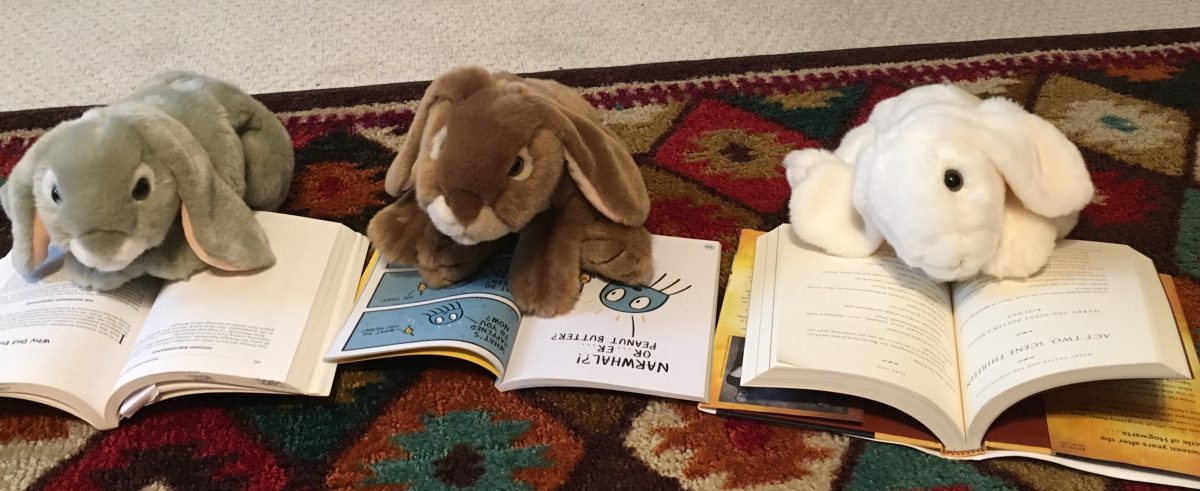
Marshmallow reviews Maus: A Survivor’s Tale by Art Spiegelman

Today Marshmallow reviews the first volume of Maus: A Survival Tale, Art Spiegelman’s graphic novel first published in 1986. Sprinkles is taking notes and asking questions.

Marshmallow reviews Maus: A Survivor's Tale - I: My Father Bleeds History by Art Spiegelman.
Marshmallow reviews Maus: A Survivor’s Tale – I: My Father Bleeds History by Art Spiegelman.

Sprinkles: So Marshmallow, you chose to talk about a classic graphic novel today.

Marshmallow: Yes, we are talking about Maus: A Survivor’s Tale. This is in fact the first of two volumes, and Art Spiegelman published the second volume in 1991.

S: Okay, thanks for that important note. Wikipedia tells us that this is the first graphic novel that won a Pulitzer Prize. So I am glad you have read it and will talk with me about it.

M: I can see why it would get such an important prize. It is a very important book and it has a very important message.

S: Okay, so maybe it is about time to tell our readers what this book is about. They have already seen your photos with it, and they must be wondering.

M: Yes, sure. The book is about the Holocaust, and the imagery in the front cover is basically describing the main metaphorical device used in the story.

S: How so?

M: This is a graphic novel, as we said before, and all characters are animals. There are mice, and those are supposed to be the Jews, and then there are cats. Those are the Nazi Germans. Then there are pigs, who are supposed to be the non-Jewish Poles. And as I said before, the story takes place around the time of the Second World War.

S: I see. When you tell me all this, I am thinking of how sometimes a cat could be playing with a mouse just to have fun and even kill it with no remorse even when it does not need to eat it. I can see how the cat-mouse-pig metaphor could work.

M: Yes. The story is basically about Vladek who is the author’s father, and his experiences before and during the war. Vladek lived in Poland before the war, and when Germany invaded Poland, he and his family continued to live there. For a while they try to survive but eventually they are sent to the Auschwitz concentration camp.

S: That sounds intense!

M: It is. There is also a second story line, which is more or less the present day, or rather around the time this book was first published. The main story is basically the author’s father’s story, and the second story line is about the author as a grownup trying to connect with his father.

Marshmallow is reading Maus: A Survivor's Tale - I: My Father Bleeds History by Art Spiegelman.
Marshmallow is reading Maus: A Survivor’s Tale – I: My Father Bleeds History by Art Spiegelman.

S: Okay, so now we know the main plot lines and so on, but tell me Marshmallow, how was it like reading such a tough story in graphic novel form?

M: I thought it worked really well. It was very easy to visualize things, even though the characters are mice and cats and so on, because they had already been visualized for you. The book and its visual nature show the undeniably horrific nature of the Holocaust. You fully feel the pain of the mice, and knowing that these events actually happened to people, it makes the whole book even more impactful.

S: I wonder if the harshness of the realities the book is depicting can be related to why some people want to ban this book from school libraries. Some people want us to forget and never talk about these historical events, I am not talking about those people. But even those who believe we should teach this history might think that these stories are too hard to share with young people.

M: I understand why you want us to emphasize that the themes and imagery of the book might be disturbing to very young readers. There is violence in the book. But I also think it is very important for young bunnies to know what happened. And this book does a very good job in telling exactly what happened. And maybe ironically, the use of animal characters allows you to end up seeing the humanity of the victims of the Holocaust very clearly.

S: You make a very good point Marshmallow.

M: Thank you. I also wanted to say the book reminded me of Animal Farm a bit because it shows the worst aspects of humanity under the guise of animals. The animal characters allow us to look at ourselves and see how terrible we truly are or can be. Since we are not seeing humans, we can see things more objectively.

S: That makes sense to me, too, Marshmallow. Okay, this is already a pretty long post. Before we wrap things up, can you tell me how you would rate this book?

M: I’d rate it 100%. It is a striking and impactful book. And I recommend it strongly. It is important for bunnies to understand the magnitude and the impact of these events.

S: Okay, thank you Marshmallow. So last words?

M: Stay tuned for more amazing reviews from the book bunnies!

Marshmallow rates Maus: A Survivor's Tale - I: My Father Bleeds History by Art Spiegelman 100%.
Marshmallow rates Maus: A Survivor’s Tale – I: My Father Bleeds History by Art Spiegelman 100%.

Caramel reviews Artemis Fowl and the Opal Deception by Eoin Colfer

Caramel has already read the first three Artemis Fowl books by Eoin Colfer. (You can read Caramel’s reviews of Artemis Fowl, Artemis Fowl: The Arctic Incident, and Artemis Fowl: The Eternity Code before moving on.) Today he is talking about the fourth book in the series: Artemis Fowl and the Opal Deception, first published in 2005. As usual, Sprinkles is taking notes and asking questions.

Caramel reviews Artemis Fowl and the Opal Deception by Eoin Colfer.

Sprinkles: So Caramel, we are back again with Artemis Fowl, the evil boy genius. What is he up to in this book?

Caramel: He was not evil really anymore in the second and the third book.

S: Okay. How come?

C: Because he decided to be a better person. But in this book, he is back to his evil ways, because his mind has been erased so he does not remember becoming a good person.

S: That is weird. Kind of convoluted, isn’t it?

C: Yes.

S: So does he recover his memory in the end?

C: Yes.

S: Tell me more.

C: The Opal Koboi from the previous book is back and she is still evil.

S: So is she a fairy?

C: She is a pixie, so yes, more or less.

S: And is the opal deception in the book title about her?

C: Yes. She is not really deceiving anyone, but much worse than that, she is trying to make the humans find the fairies so that they will start a war. She wants the humans to win.

S: Wait, she wants her own people to get destroyed?

C: Yup. She is evil, I said so already.

Caramel is reading Artemis Fowl and the Opal Deception by Eoin Colfer.

S: Okay, so this is once again a relatively long book but you seemed to have no trouble reading it fast.

C: Yes, it is over 343 pages, and yes, I did read it fast. Because it is amazing.

S: You mean it is exciting?

C: Yup. And it is extremely funny! Artemis Fowl can be really goofy.

S: So when he recovers his memories, does he decide to try to be a good person again?

C: Yes. I mean, he is trying to help the fairies and stop a war between them and the humans so yes, he is on the good side.

S: So if you were to describe this book in three to five words, how would you describe it?

C: Let me think. Fun adventures of not-so-evil boy genius. Does that work?

S: I think it is a bit longer than three to five words but still works. So are you ready to read the fifth book in the series?

C: Yes, so can we wrap up this review?

S: Sure, let us do that. What would you like to tell our readers?

C: Stay tuned for more book bunny reviews!

Caramel loved reading Artemis Fowl and the Opal Deception by Eoin Colfer and is ready to dive right into book five. Stay tuned!

Marshmallow reviews The Illustrated Happiness Trap by Russ Harris and Bev Aisbett

Today Marshmallow wanted to talk to Sprinkles about The Illustrated Happiness Trap by Russ Harris and Bev Ausbett, first published in 2014.

Marshmallow reviews The Illustrated Happiness Trap by Russ Harris and Bev Aisbett.

Sprinkles: So Marshmallow this time you chose a book that is not really intended for a young audience.

Marshmallow: Yeah, I suppose.

S: This book is apparently an illustrated and abbreviated version of a more normal-sized book which could be considered a self-help book. And we have not really gone into the self-help book genre here much.

M: True. I did review a book about confidence, a book about time management for teenagers, and two books about how to be a good student. But we do not typically review self-help books, you are right.

S: But I think the title and the cover page of this book are both very intriguing, aren’t they?

M: Yes, I like how it has a Pac-Man style half-split smiley face.

S: Yes, it is quite striking how the smiley who could represent authentic happiness, but also a fake version of it, is somehow split open with the title.

M: Yeah.

S: So I had only read a little bit of the book before you took it from me and I know you have finished reading it quite fast. I understand it is about happiness?

M: Yes, kind of. It is basically about how we should not be going after happiness as our goal in life.

S: Hmm, this reminds me of a very interesting young person in one of my classes who had said that they did not necessarily want happiness for their child. They wanted them to find purpose.

M: Yeah, it is kind of like that. The main goal of the book is to dispel the myth that happiness is the right goal for one’s life. The goal should instead be to figure out your values and live your life accordingly. Once you know your values, the goals you set for yourself should reflect those values and be feasible. And along the way, you are likely to be unhappy at times, and that is not a disaster.

S: I see. So the title is basically saying that the idea that you should always be happy is flawed.

M: Yes, and that pursuing the goal of living a life where you are always to be happy and have no negative feelings leads to only unhappiness.

S: I see. That makes sense to me. I also saw that the book mentions explicitly four myths. Can you tell us what they are?

M: Okay. So the first one is “Happiness is the natural state for human beings.” The second is “If you are not happy, you are defective.” The third is “To create a better life, we must get rid of negative feelings.” And the fourth one is “You should be able to control what you think and feel.”

S: I can see how the first three are wrong, if we accept the main thrust of the book. And I already did not believe some of them myself. Like there are sometimes very good reasons not to be happy. But the fourth one is hard for me to accept. It feels kind of disempowering.

M: I agree with you. But I think the idea behind their stance, which they call Acceptance and Commitment Therapy, is that basically you should accept your feelings and decide what to do with them in a productive manner. As you learn to do this better and more effectively, your emotional state can change, too, and improve, but that is not the main goal.

Marshmallow is reading The Illustrated Happiness Trap by Russ Harris and Bev Aisbett.

S: So Marshmallow, I think these are all rather hefty thoughts and a bit heavier than some of the things we read and talk about here in this blog.

M: True, but we have talked about all sorts of other heavy things like war and slavery and so on. So talking about mental health challenges should not be totally out of bounds, I think.

S: Oh I agree.

M: And we have talked about mindfulness before. Actually you and Caramel talked about a book about how breathing could be helpful. And then there were those two books about dragons and anger management.

S: True. And the topic is actually quite relevant to a lot of bunnies.

M: Yes,. sure, this is not really quite meant for little bunnies, but maybe a bunny around my age would be perfectly fine with it. And I think they could learn from it.

S: I am glad you found the book helpful.

M: I did. I found it resonating a bit with the Getting Things Done book I reviewed before. Both books say that figuring out your values and building your life around them is a good idea.

S: I can see how that could be helpful for teenagers who are looking to build their lives, preparing to grow up into adult bunnies. So if you were to rate the book then, what would you rate it?

M: I’d rate it 95%. I especially liked the illustrations and how they made the book so much easier and quicker to read. Because it is kind of stressful to read a book about mindfulness sometimes. I feel like I am losing time, but this book is so quick and you learn a lot.

S: Great! I will now take it from your paws then and finally get the chance to finish it myself. What would you like to tell our readers as we wrap up this review?

M: Stay tuned for more amazing reviews from the book bunnies!

Marshmallow rates The Illustrated Happiness Trap by Russ Harris and Bev Aisbett 95%.

Caramel reviews Tristan Strong Keeps Punching by Kwame Mbalia

Caramel has already reviewed the first two books of Kwame Mbalia’s Tristan Strong series: Tristan Strong Punches a Hole in the Sky and Tristan Strong Destroys the World. (In case you are curious, he also reviewed the graphic novel adaptation of the first book.) Today he talks to Sprinkles about the third and last book in this trilogy: Tristan Strong Keeps Punching, published first in 2021.

Caramel reviews Tristan Strong Keeps Punching by Kwame Mbalia.

Sprinkles: So Caramel, this is the third book about Tristan Strong.

Caramel: Well, actually it is the fourth one I read. I did read the graphic novel version of the first book, too, remember?

S: True. Anyways, this is the last book in the trilogy, right?

C: Yes.

S: So tell us a bit about it then.

C: It starts off with him burning. Spontaneously combusting!

S: Wait, those are big words! And who is burning? Tristan?

C: Yep.

S: Wait, how? Why?

C: Magic? I think it is magic.

S: Hmm, so you are not quite sure.

C: Okay, now that I think a bit more about it, I am pretty sure it is magic.

S: Okay…

C: Well, so I am exaggerating a bit. But anyways there is some flames coming from his knuckles.

S: Alright. So is the whole story about his inflamed knuckles?

C: No. It is again about him versus some baddies from the other world. There is a particular villain, named King Cotton, and we met him in the first book already.

S: You did not mention him back then.

C: Well, I probably should have. Anyways the guy is just evil, and he is the main villain in this book. Where is New Orleans?

S: It is in Louisiana. Why do you ask?

C: Because in this book, Tristan is not in Alabama but visiting New Orleans with his family.

S: New Orleans has a very unique history. So what happens in New Orleans?

C: Tristan figures out that King Cotton is back in the real world and causing mischief. And both Tristan and his friends are in danger.

S: I see. That means more excitement and adventure, I suppose.

C: Yes.

Caramel is reading Tristan Strong Keeps Punching by Kwame Mbalia.

S: Okay, so I think you read this book rather fast too.

C: I am a fast reader Sprinkles.

S: That is true. But this is again a big book. How many pages is it?

C: Let me see. 406 pages.

S: That is not bad! And I think you finished in a day or two at most.

C: I think it was one day.

S: School had not started yet then.

C: Yes. That is true.

S: Anyways, that is pretty impressive Caramel.

C: Well it is a good book, and it is very easy to read. You want to read it to know what’s going to happen next. And it is fast paced, and just fun to read.

S: I think that it is a good book for you then!

C: Yes, for me and for any other bunnies who like books about adventures in mythological lands!

S: That sounds almost like a book blurb, Caramel!

C: What’s a book blurb?

S: You know those sentences they have at the back cover of a book advertising it?

C: I see. Blurb is a funny word! Blurb! Blurb!

S: You are right, it is a funny word. Especially if you keep saying it like that.

C: Blurb.

S: Okay, I think you said it enough times.

C: Okay I will stop. Right after this: Blurb blurb blurb! Blurb.

S: Okay. Maybe this means we have come to the end of this review.

C: Maybe. And … blurb!

S: Alright. So let us wrap things up then. If you were to describe this whole series to someone, how would you do it?

C: Blurb!

S: Seriously!

C: Okay, seriously, here goes: magical adventures in and out of this world.

S: I like that!

C: Really? Do you think it would make a good-

S: Don’t say it!

C: -blurb?

S: Okay, I think I deserved that. Okay, let us wrap it up then. What would you like to tell our readers?

C: Stay tuned for more book bunny reviews! And that would make a good blurb!

Caramel enjoyed reading Tristan Strong Keeps Punching by Kwame Mbalia and recommends the trilogy to other young bunnies who love to read mythological adventures.