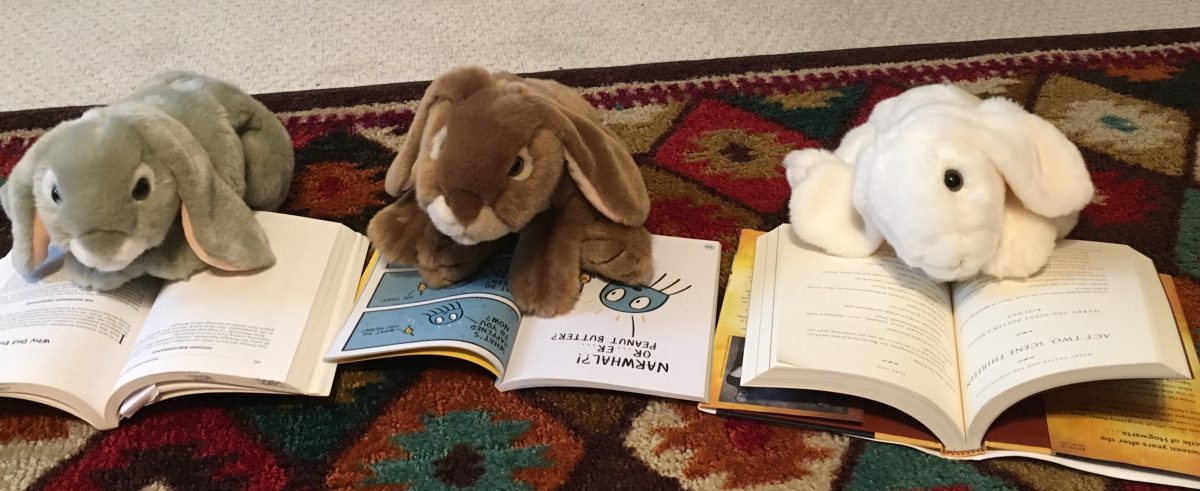
Caramel reviews Favorite Children’s Stories from China and Tibet by Lotta Carswell Hume

In these past few months Caramel has reviewed several books that collect together stories from various Asian traditions: Japanese Myths, Legends, and Folktales, Tamamo the Fox Maiden and Other Asian Stories, Chinese Myths and Legends: The Monkey King and Other Adventures, and Vietnamese Children’s Favorite Stories. Today he adds to this list another book: Favorite Children’s Stories from China and Tibet, written by Lotta Carswell Hume (1876-1976), illustrated by Lo Koon-Chiu (1918–2012), and originally published in 1962. The edition Caramel read was the 2004 edition. As usual, Sprinkles is taking notes and asking questions.

Caramel reviews Favorite Children’s Stories from China and Tibet, written by Lotta Carswell Hume and illustrated by Lo Koon-Chiu.

Sprinkles: So Caramel, here we are, talking about another neat collection of stories! 

Caramel: Yes, this one has stories from China and Tibet. 

S: Tell me more.

C: Well, let me see. There are eighteen stories. Each of them is about three to seven pages long. And there are a lot of pictures. I really liked them! 

S: Yeah, I saw that there are a lot of colorful illustrations. Apparently they were made by a Chinese artist named Lo Koon-Chiu. 

C: That makes sense. Because a lot of the stories are Chinese. But the person who wrote them does not sound like a Chinese person. And I don’t know too many Tibetan names, but the author’s name does not sound Tibetan either. 

S: You are right. The author was apparently from Baltimore, USA, and then got married and moved to Asia with her husband. She lived in China and India for decades, and her children got to hear a lot of traditional Chinese stories. So this is a collection she put together to share those stories with children who would read or be read to in English. 

C: I see. Then she did not write the stories herself. That makes a lot more sense now. 

S: Yeah, I was curious too, and then looked it all up. Anyways talk a bit about the stories. Can you tell which stories are from Tibet and which are from China?

C: Yes. There is a little note under the story title for each one. So there are five stories from Tibet. The rest are from China. But they separated those, too. Some are from West China, some from Southeast China, some from Central China, and so on. 

S: Hmm, I guess that makes sense. China is a big country. Maybe they did not want to go into detail about the exact geography of China and give the province names and such. 

C: I guess. But there are a lot more stories from China, so maybe they just split the Chinese stories so they would not look too uneven. 

S: Interesting! That could be a good reason, too, Caramel.

Caramel is reading Favorite Children’s Stories from China and Tibet, written by Lotta Carswell Hume and illustrated by Lo Koon-Chiu.

S: Anyways, so why don’t you tell me more about the stories themselves? 

C: Well, there is a story like Cinderella, and it is called A Chinese Cinderella, And there is this story about a woman who is called Mrs. Number Three who is an innkeeper.

S: That is a very strange name!

C: It is not her real name, but nobody knows her real name so they call her that. But the story is really interesting. Its name is “The Magic Pancakes at the Footbridge Tavern”. So as you can imagine, there are magic pancakes! 

S: Oh, I know you love pancakes! 

C: Yeah, but these are magic and you really don’t want to eat them. 

S: Oh, that is interesting! I guess I just have to read the story to figure out what you mean. 

C: Yep. 

S: Okay, so that is two of the eighteen stories. What about the others?

C: A lot of the others are about animals. Like there is a Tibetan story about a tortoise and a monkey and another about some jackals and a tiger. And then there is another about a hungry wolf, and one about some mice. 

S: Oh, that is interesting. Kind of like fables, I am guessing. 

C: Yeah, kind of. But wait, it looks like the animal stories are almost all stories from Tibet. Some of the Chinese stories also have animals, but they also have people. 

S: Very interesting observation, Caramel.

C: And then there are two stories like the ones we talked about before about how some things came to be the way they are. There is a story about how the rooster got its red crown and another about how the deer lost its tail. They are both from China. 

S: I see. True, we did talk about such stories when you were reviewing Vietnamese Children’s Favorite Stories by Tran Thi Minh Phuoc. Apparently such stories were called “pourquoi” stories

C: Oh, yes, I remember you said that last time. 

S: Okay, so all in all it seems like you have enjoyed reading this book, right? 

C: Yep! 

S: Can you tell us if you have a favorite story? 

C: No, I liked them all. 

S: That is wonderful, Caramel. Okay, maybe this is a good time to wrap up this review. What would you like to tell our readers? 

C: Stay tuned for more book bunny reviews!

Caramel enjoyed reading Favorite Children’s Stories from China and Tibet, written by Lotta Carswell Hume and illustrated by Lo Koon-Chiu, and recommends it to all the other little bunnies who enjoy reading or hearing short stories.

Marshmallow reviews Sunrise on the Reaping by Suzanne Collins

Marshmallow has already read and reviewed the three main books of The Hunger Games trilogy by Suzanne Collins: The Hunger Games, Catching Fire, Mockingjay. Then last October she reviewed The Hunger Games: The Illustrated Edition, a visually striking adaptation of the first book. Today she reviews Sunrise on the Reaping, a prequel to the trilogy, published in March 2025.

Marshmallow reviews Sunrise on the Reaping by Suzanne Collins.

Marshmallow’s Quick Take: If you liked the Hunger Games books or are interested in reading them, then this is the book for you!

Marshmallow’s Summary (with Spoilers): Haymitch Abernathy has one of the worst birthdays that one could get in Panem; he was born on Reaping Day—the day when the tributes from each district are selected and sent off to their deaths in the Arena. On his sixteenth birthday, he mentally prepares for the worst but refuses to show his fear on the outside. His name is in the drawing twenty times because he has had to enter it in extra to get food for his mother and brother. This is especially inopportune because twice as many tributes are being chosen because it is the Second Quarter Quell: the fiftieth Hunger Games that marks the remembrance of the Dark Days and the failed Rebellion. With these horrific events, the Capitol reminds its twelve districts that their past uprising will continually be remembered and they will be continually punished by the loss of their children on livestream.

Luckily, neither Haymitch nor his brother are pulled from the bowl of names. Haymitch’s girl Lenore Dove is also not selected. The odds seem to have favored them, until the second male tribute Woodbine Chance runs away and is killed by the Capitol’s Peacekeepers. Drusilla—the selfish, careless woman who draws the names—scrambles to find a replacement for him and chooses Haymitch when he tries to protect Lenore from the Peacekeepers during a struggle for Woodbine’s body (she was trying to help his mother have a few last moments with her son before they took his body away). All of a sudden, Haymitch is made a tribute even though he was not actually selected the right way. It does not matter though because the broadcasters rearrange the production so that Woodbine’s death is erased and it seems that he was never selected at all. In his place, Haymitch has to step up to the stage and prepare to leave to the Capitol to compete.

Haymitch knows that the Games are essentially a death sentence and, as a competitor from District 12 (a coal-mining district described as “nothing but coal dust and miners soaked in rotgut liquor”), he realizes the odds are stacked against them. (Other districts like 1, 2, and 4 prepare their children and often have less poverty and starvation, meaning their tributes are stronger and more likely to win; these tributes are called Careers.) However, he promises to his brother he will try and he also self-assigns himself as the protector of Louella McCoy, a little girl he thinks of as a sister who is also sent as a tribute for District 12.

The other two District 12 tributes are Wyatt, whose father orchestrates the gambling for the Hunger Games in District 12, and Maysilee, who comes from a richer family and seems very snobbish. Wyatt’s family’s disregard for the violence in the Games and Maysilee’s better-than-thou behavior makes Haymitch disgusted. But eventually, the four grow closer and start to ally with tributes from other districts that, like them, seem to be equally disadvantaged in comparison to the Careers. Their alliance is called the Newcomers and, for the first time, Haymitch (blissfully and perhaps willingly forgetting that they might eventually have to kill one another) begins to feel hopeful. But he is not an ordinary tribute because he is not just there to survive, he is there to fight the Capitol and everything they have done. Tragically, the Games themselves serve as foreshadowing that no resistance comes without punishing loss. 

Marshmallow is reading Sunrise on the Reaping by Suzanne Collins.

Marshmallow’s Review: Sunrise on the Reaping is a very good book. It is set around twenty four years before the Hunger Games that Katniss Everdeen first competes in. I read the original Hunger Games series a while ago, but I recalled the name Haymitch as he was the alcoholic mentor of the District 12 tributes. This made me guess that the story in Sunrise on the Reaping was unlikely to end well, and unfortunately I was proven correct. However, the book is very well written and holds up to Collins’ previous standards of success. It is touching and disturbingly realistic, painting a world that I hope never comes to pass.

Sunrise on the Reaping returns the reader to Panem and reveals links to the original series that I only just caught. The subtlety in the connections is both annoying and simultaneously awe-inspiring. I think that Sunrise on the Reaping could be read either before or after reading the original Hunger Games trilogy. It provides good context for the character of Haymitch and sets up the world shown later on. So if there are any bunnies out there who have not yet read the original three books, they could really begin with this one; it would work well.

I did find that Sunrise on the Reaping greatly deepened my view of Haymitch and I think this is a piece of heart-rending art for showing the exact process in which he was broken as a person and in such a perfectly-executed manner (both his torture and the way Collins describes the plot). His transformation is very thought-provoking and shows how he became the lonely drunk we are introduced to alongside Katniss in The Hunger Games.

This book, like Collins’ others, is violent and is not appropriate for younger bunnies (say eleven and younger). Collins’ use of verse and song is remarkable and I thought that set this book apart from most other violent books because it highlighted the depth and meaning of the violence, giving the reader time to pause and reflect on the implications of such pain. I liked how Collins used Edgar Allen Poe’s “The Raven” and how stanzas were woven throughout the book showing how Haymitch’s story aligned with the poem in more ways than one.

Overall, this was a very well written book. I am now looking forward to reading The Ballad of Songbirds and Snakes, another prequel to the series that was published about five years ago and retells the backstory of Coriolanus Snow, who was the president of Panem in the original trilogy. I hope that it, like this book, will be a meaningful addition to the Hunger Games series. 

Marshmallow’s Rating: 100%.

Marshmallow rates Sunrise on the Reaping by Suzanne Collins 100%.

Caramel reviews Ultimate Spy by H. Keith Melton

Today Caramel reviews Ultimate Spy by H. Keith Melton, published in 2002. As usual, Sprinkles is taking notes and asking questions.

Caramel reviews Ultimate Spy by H. Keith Melton.

Sprinkles: So what is this book about Caramel?

Caramel: This is about the equipment and weapons that spies use.

S: I see. After reading so many Spy School books, you needed to get to some of the facts! 

C: Yep. You know me and facts. I like them. 

S: Okay, so what kind of equipment and weapons are we talking about here? 

C: Some of them are really cool gadgets, like the match box pistol.

S: Sounds like something out of a James Bond movie. What is the match box pistol?

C: Yes, it sounds like it’s from a movie and it does look like it, too. It basically looks like a metal match box, but a barrel can be attached, and it can shoot one bullet. So you can carry it around without anyone being suspicious that you are carrying a weapon. Or you could simply let it sit on a coffee table and they would not suspect anything. 

S: I see. That is cunning. 

C: Yes, it is, it’s crazy. There are so many little and big things that they have made that spies can use as secret weapons. 

S: And these are real, not for movie sets and such?

C: Yep, they are all things that were used at some point.

S: Oh wait, you used the past tense. So these are real but maybe no longer classified, like the government no longer needs to keep them secret. 

C: Yeah, at least I think so. The author is a historian and the foreword of the book is written by some real people from the intelligence world. Some guy named Richard Helms who was apparently a former director of the CIA and Markus Wolf who was the former head of the East German Foreign Intelligence Service, the HVA. This is the real CIA, the Central Intelligence Agency! And I didn’t know about the HVA, but now I do. 

S: Wow! That is pretty cool. This all probably means that they have a lot of other cool stuff they are using these days, and we don’t know about them. 

C: Yeah, most likely a lot. And this book was published all the way back in 2002, so definitely they must have a lot of new tools and gadgets that they are not telling us about. 

S: I did notice that our copy is from 2002. There is apparently a newer edition, from 2015. 

C: Oh, that is cool. Maybe that edition has a few new things. But this book was more than good enough; it definitely has enough neat things to keep me busy! 

S: I can see that!

Caramel is reading Ultimate Spy by H. Keith Melton.

S: Okay, so tell me a bit more about the book. 

C: Sure.  The content is organized around some themes like Famous Spying Operations, World War II, Cold War, Post-Cold War Spying, and Equipment and Techniques.  Under that last one, there are pages on Cameras, Secret Operations, Counterintelligence, Clandestine Communications, and Weapons. Finally there is a section on How To Be a Spy. 

S: Hmm, it is interesting that there is some historical context to this all. And there are lots of big words in there. Did you know what “clandestine” means for example? 

C: Of course. It means secret. 

S: Of course, I should have guessed that. You are a little bunny with a huge vocabulary. Anyways, what else can you tell us about the book?

C: There are 206 pages. And there are many, many, many pictures on each page. 

S: That makes sense. You’d want to see these gadgets of course! 

C: Yeah, I definitely liked looking at them.

S: So what was your favorite gadget? 

C: Probably the match box pistol, it’s small, even a bunny spy could carry it around! 

S: Wait, are you interested in becoming a spy? 

C: Not really. I was teasing you. It is too dangerous. But it is neat to read about them. And you know I love my Spy School books, so this book helps me put what is going on in those books into some context. 

S: Alright, so maybe this is a good place to wrap up this review. You seem to have really enjoyed this book. 

C: Yes. And yes. 

S: So what would you like to tell our readers as we end this post?

C: Stay tuned for more book bunny reviews!

Caramel enjoyed reading Ultimate Spy by H. Keith Melton and learning about cool gadgets and some history, too.

Marshmallow reviews Learning How to Learn: How to Succeed in School Without Spending All Your Time Studying (A Guide for Kids and Teens) by Barbara Oakley, Terrence Sejnowski, and Alistair McConville

Marshmallow occasionally reads and reviews books about how to be a good student and today she is writing about one such book: Learning How to Learn: How to Succeed in School Without Spending All Your Time Studying (A Guide for Kids and Teens), a neat book by Barbara Oakley, Terrence Sejnowski, and Alistair McConville, published originally in 2018.

Marshmallow reviews Learning How to Learn: How to Succeed in School Without Spending All Your Time Studying (A Guide for Kids and Teens) by Barbara Oakley, Terrence Sejnowski, and Alistair McConville.

Marshmallow’s Quick Take: If you are a student, a teacher, or anyone who has felt lost in school, then this is the book for you!

Marshmallow’s Summary (with Spoilers): The book starts off with a note to parents and teachers who are reading the book to help a young student. The book officially starts with one of the authors, Oakley, introducing herself to the reader. She writes that she used to be a student who focused only on her liberal arts subjects, feeling that science and math (the subjects she struggled in) were not relevant to her because she was following her passions. However, I was a bit surprised to read the next sentence in which she reveals that she is now a professor of engineering—which requires a deep understanding of science and math as she admits. The enabling factor of this switch was her ability to learn how to learn. She next introduces her co-authors Sejnowski and McConville and then describes how her life changed and how she changed to adapt.

Most chapters in the book have case examples of somebody who, like Oakley, demonstrates the importance of knowing how to learn. Some of the chapter names are as follows: “The Problem with Passion,” “Easy Does It: Why Trying Too Hard Can Sometimes Be Part of the Problem,” “I’ll Do It Later, Honest! Using a Tomato to Beat Procrastination,” “Brain-Links and Fun with Space Aliens,” “Learning While You Sleep: How to Wake Up Smarter,” and “Learning Surprises: Pssst…Your Worst Traits Can Be Your Best Traits!”

One can probably tell that the book is full of interesting yet slightly silly-sounding topics. The authors talk about and teach a lot about fascinating neuroscience, but they explain everything with metaphors and cartoon drawings. There are a lot of pictures and the text of the book is large, so it is overall very comprehensible.

I liked how the authors synthesize the most relevant parts into tips at the end of the chapter. In order to teach the reader how to get better at learning, each chapter also has a list of questions to answer that help you do some active recall. I felt like these end-of-chapter activities make the book feel very interactive and energetic!

Overall, the authors provide a lot of intriguing information and shrewd advice. Some of the strategies were ones I had heard of before or have discovered on my own as a student, but a lot of them were also new to me. Each chapter focuses on a general theme or topic, expanding on the subject at hand throughout. This book is a great source for all students, teachers, and bunnies looking to get better at learning or just understand how the brain works better!

Marshmallow is reading Learning How to Learn: How to Succeed in School Without Spending All Your Time Studying (A Guide for Kids and Teens) by Barbara Oakley, Terrence Sejnowski, and Alistair McConville.

Marshmallow’s Review: I would highly recommend Learning How to Learn to everyone, especially students. I think (and I have heard some of my friends at school talk about this) that a lot of students feel as though they have never actually been taught how to learn. This is partially true, as most students are never told how to study or do their homework. When students are working on their own time, away from school and the direction of teachers, they are not always very good at knowing where to go or what to do. This book provides a lot of good instructions and helps steer the reader on a clearer, better path.

I regret not having read this book earlier. I will try to establish some of the habits suggested by this book and I hope that I will be better at learning and learning how to learn. I have already, on my own volition, focused a lot on how to learn and be a good student. For people also interested in this topic, I would also recommend looking at Cal Newport’s How to Be a High School Superstar and How to Become a Straight-A Student. This book is a lot more kid-friendly though, and a lot easier to read and understand. I really liked how interactive Learning How to Learn is and how it has a lot of images to break down the more complex ideas. I think the authors have done a very good thing by writing this book.

I would highly recommend that parents read Learning How to Learn with their children—the younger and earlier, the better. Too many bunnies fall behind in school because they feel like they simply aren’t smart enough to learn the material. This book shows that you don’t need to be smart, at least not in the way you think; you just need to try your best in a smarter way. 

Marshmallow’s Rating: 100%.

Marshmallow rates Learning How to Learn: How to Succeed in School Without Spending All Your Time Studying (A Guide for Kids and Teens) by Barbara Oakley, Terrence Sejnowski, and Alistair McConville 100%.