Caramel reviews The Wild Robot on the Island by Peter Brown

Caramel has read and loved all three Wild Robot books by Peter Brown. He has also appreciated the Wild Robot movie when it came out last year. Today he is talking to Sprinkles about the most recent Wild Robot book, The Wild Robot on the Island: An Illustrated Picture Book Adaptation of The Wild Robot, written and illustrated by Peter Brown and published this past summer (June 2025).

Readers should also check out Caramel’s reviews of The Wild Robot, The Wild Robot Escapes, and The Wild Robot Protects.
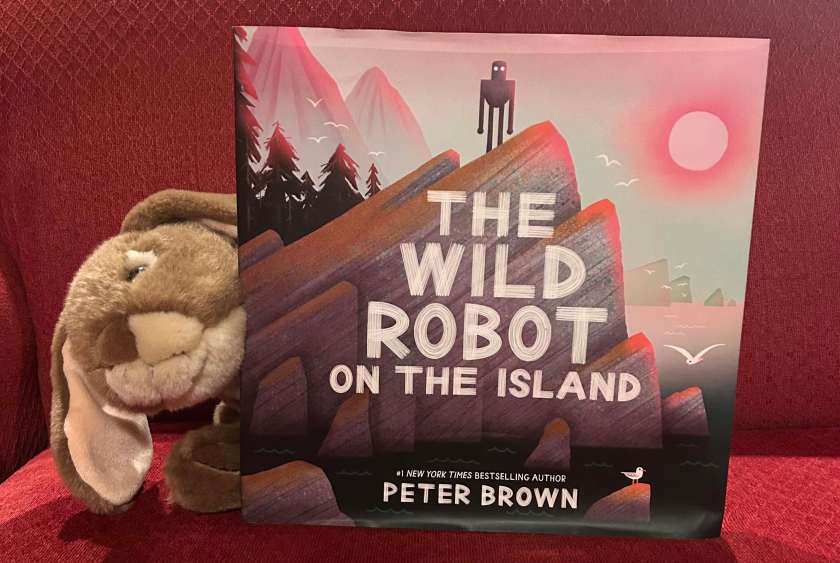
Caramel reviews The Wild Robot on the Island: An Illustrated Picture Book Adaptation of The Wild Robot, written and illustrated by Peter Brown.

Sprinkles: So Caramel, we are finally talking about the picture book version of The Wild Robot; are you excited?

Caramel: Yep, because it is a very good book, the original and this version.

S: When I first heard about this, I thought it would be a new story, but it seems this is basically the original story, right?

C: Yes it is the same story, but more simplified. So there is a robot named Roz that gets lost in the ocean after a boat loses all of what it is carrying. And the robot finds itself on an island. And then it goes around looking for and making friends. It is really a sweet story!

S: Yes, I remember the book and the movie.

C: I am guessing this one is for younger bunnies. Because the original book was for bunnies who could read a big book. This is a picture book. 

S: Yes, that makes sense to me. Younger bunnies could not read the original book really. It was over two hundred pages. This one is a nice standard-sized picture book.

C: And there are very few words on each page in this version. The other one had a lot more words of course. 
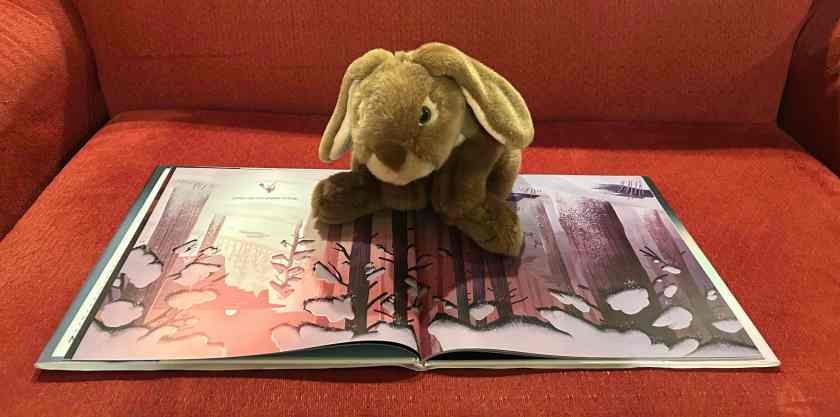
Caramel is reading The Wild Robot on the Island: An Illustrated Picture Book Adaptation of The Wild Robot, written and illustrated by Peter Brown.

S: I think the book is illustrated by the author, right? 

C: Yeah, from what I can tell. 

S: Are they similar to the illustrations in the original? There were some pictures in those too, no?

C: Yeah, the style is very similar to the original book.

S: Maybe the author wanted readers to have the same mental images he has for the characters and the locations and such. The movie was also very pretty, but it was kind of different visually. 

C: Yeah, maybe. The movie was beautiful, and I loved it. But the illustrations in the original book and now in this new picture book are all slightly different. And they are also very beautiful. Speaking of the movie, can we add a link to the trailer? You just reminded me of how good the movie was…

S: Sure. Here it is.

C: Thank you! Maybe we will watch it again some day.

S: Maybe; I could like that too. But now let us get back to the book. Do you think that maybe the author thought the picture book was a good idea now that so many younger bunnies have actually seen the movie?

C: Maybe, I don’t know, but it was a fast read for me. 

S: Well, you are a very good reader, Caramel. 

C: I do read a lot, true. Maybe this book could get some bunnies into the bigger books. After all, there are two more books after the original one! 

S: And I know you actually would love it if there were a fourth book… 

C: Yes, I really want a fourth book. That would be very very very good.

S: Okay, maybe we publish this post and who knows, maybe it will eventually get to the author’s ears…

C: Yes, dear reader, if you are Peter Brown, the creator of The Wild Robot, then please write a fourth book! I really would love to read more of Roz’s adventures. 

S: Okay, maybe we can wrap this up then. You have made your opinions quite clear. So what would you like to tell the rest of our readers then?

C: Stay tuned for more book bunny reviews!
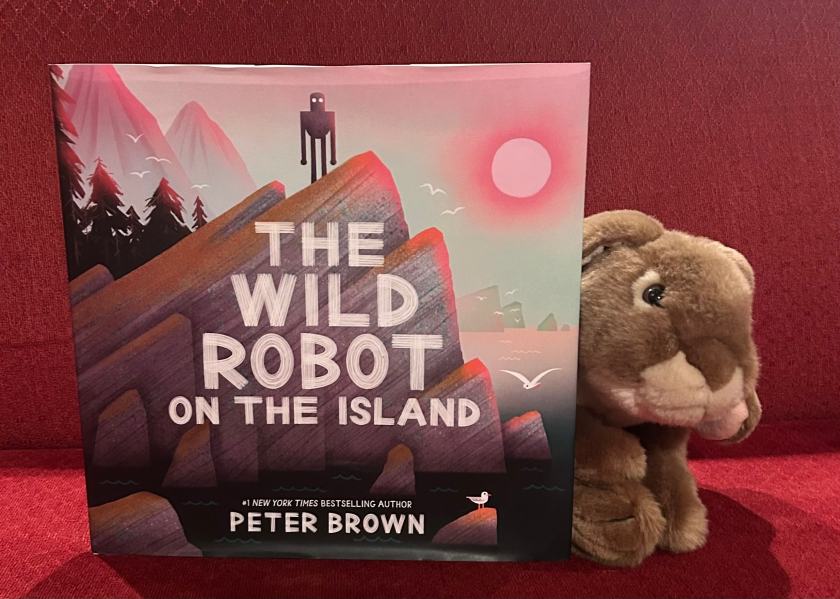
Caramel loved reading The Wild Robot on the Island: An Illustrated Picture Book Adaptation of The Wild Robot, written and illustrated by Peter Brown, and is hoping that soon there will also be new adventures for Roz and friends.

Marshmallow reviews The Witch’s Apprentice and Other Stories by Ekta R. Garg

The book bunnies love various retellings of the classic fairy tales of the Western tradition, and through the years, they have reviewed many books that offered different takes on them. They also have explored, these past few months, several books that collect together fairy tales from geographies from around the world. Therefore they were delighted to learn that they made it to the list of 30 Best Fairy Tale Blogs and Websites in 2025, curated by Feedspot, a blog aggregation site.

To celebrate, today Marshmallow is reviewing a brand new book of fairy tales: The Witch’s Apprentice and Other Stories, written by Ekta R. Garg. The book bunnies are delighted to be reviewing this book as part of a Blog Tour for The Witch’s Apprentice and Other Stories organized by WOW! Women On Writing.

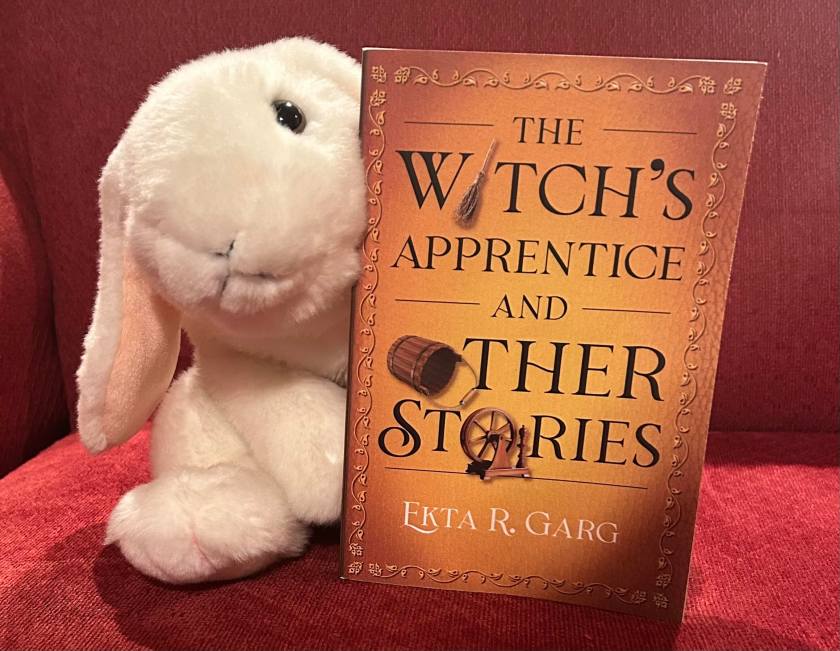
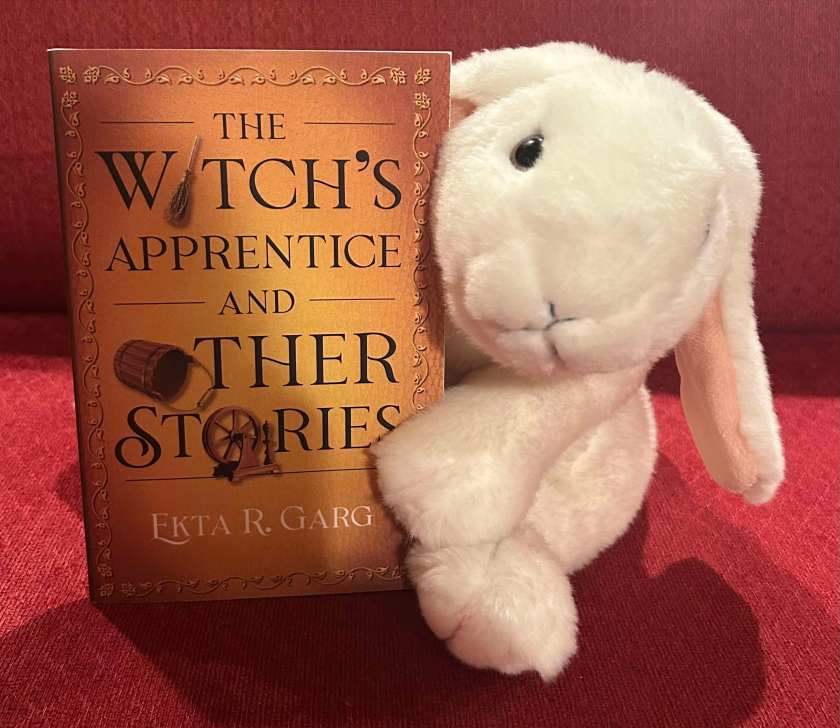
Marshmallow reviews The Witch's Apprentice and Other Stories by Ekta R. Garg.
Marshmallow reviews The Witch’s Apprentice and Other Stories by Ekta R. Garg.

Marshmallow’s Quick Take: If you like fantasy books that add on to the classic fairy tales and elaborate on their worlds, then this is the book for you! 

Marshmallow’s Summary (with Spoilers): The Witch’s Apprentice and Other Stories, as you can guess from the title, is a collection of short stories. There are a total of five stories in it. Each story picks up a well-known fairy tale or a classic folk tale, asks a followup question that you might have after reading it, and then goes on to offer a fantastical answer to that question.

The first story is set in the land of the Wonderful Wizard of Oz. The main character is the cousin of the Wicked Witch of the East. The Witch rules over Munchkinland and is the idol of the main character, who wants to become a witch just like her. This character, therefore, attends the school that trains students to be certified witches. Unfortunately, she is never summoned to take her final test, and the reasons she uncovers lead to the famous moment when Dorothy’s house smushes and crushes the Wicked Witch. The author offers this short story as a response to her question “When the tornado took Dorothy’s house to Oz, it landed on the Wicked Witch of the East and killed the witch instantly. What was the witch doing on the road in the first place?” I found this to be an interesting analysis and extension of the original story, opening the door to a related tangent that proved to be fun and entertaining to read.

The second story is about The Pied Piper of Hamelin. In this fairy tale, a musician promises to use his pipe music to get rid of the rats in the town of Hamelin. Even though he completes the job, the mayor refuses to pay the money owed, and the piper vows revenge. Later he comes back, plays his pipe, and lures all the children away from the town. The question this story seeks to answer is “What happened to the parents of Hamelin after that?” This story is much shorter than the others, and it left me feeling sad and somewhat unsatisfied.

But I really liked the story after it. This story focuses on the two conmen in The Emperor’s New Clothes, and I felt that it really helps flesh out the characters as three-dimensional people, rather than the flat caricatures shown in the more simplistic original story.

The second to last story is not quite about a fairy tale but rather a well-known nursery rhyme: Jack and Jill. The story goes into depth about the question “Why did Jack and Jill need that pail of water in the first place?” I found this story very touching in a heartbreaking way. It was very well developed and had a lot of nuance.

The final story is a mix of Goldilocks and Sleeping Beauty, which makes for an interesting cross-over. This time, the story answers two questions, one for each of the characters, and things get quite convoluted but in an interesting way.

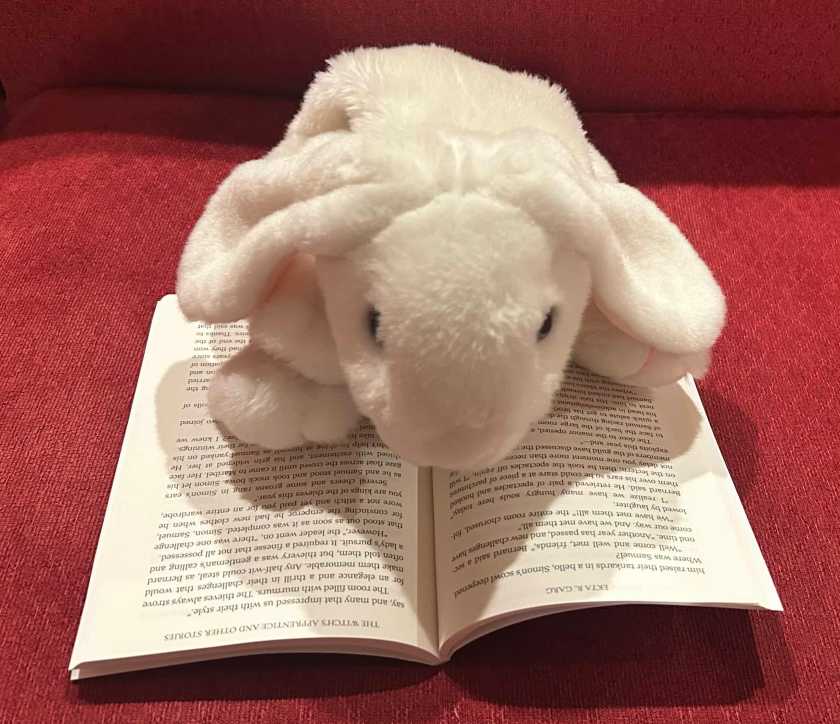
Marshmallow is reading The Witch's Apprentice and Other Stories by Ekta R. Garg.
Marshmallow is reading The Witch’s Apprentice and Other Stories by Ekta R. Garg.

Marshmallow’s Review: As you can probably tell, I highly enjoyed reading The Witch’s Apprentice and Other Stories. However, that was part of the problem; I liked the stories too much and was disappointed that some of them were so short. It was very satisfying to read explanations for some things that were confusing or vague in fairy tales. But, on the other hand, Garg’s stories opened up a whole new can of questions. I really wanted to hear more about the characters she developed and the new plots she started.

These stories were all fantastic and very quick and fun to read. I would highly recommend the book to readers of all ages, especially if you enjoy reading retellings of fairy tales, as in Beasts and Beauty: Dangerous Tales, Thornhedge, A Tale Dark and Grim, Tuck Everlasting, Ella Enchanted, Half Upon a Time, Thornwood or Glass Slippers. But I also would like the author to write extensions for these extensions—or more of these types of stories!

Marshmallow’s Rating: 95%.

Marshmallow rates The Witch's Apprentice and Other Stories by Ekta R. Garg 95%.
Marshmallow rates The Witch’s Apprentice and Other Stories by Ekta R. Garg 95%.

Caramel reviews The Day The Crayons Made Friends by Drew Daywalt and Oliver Jeffers

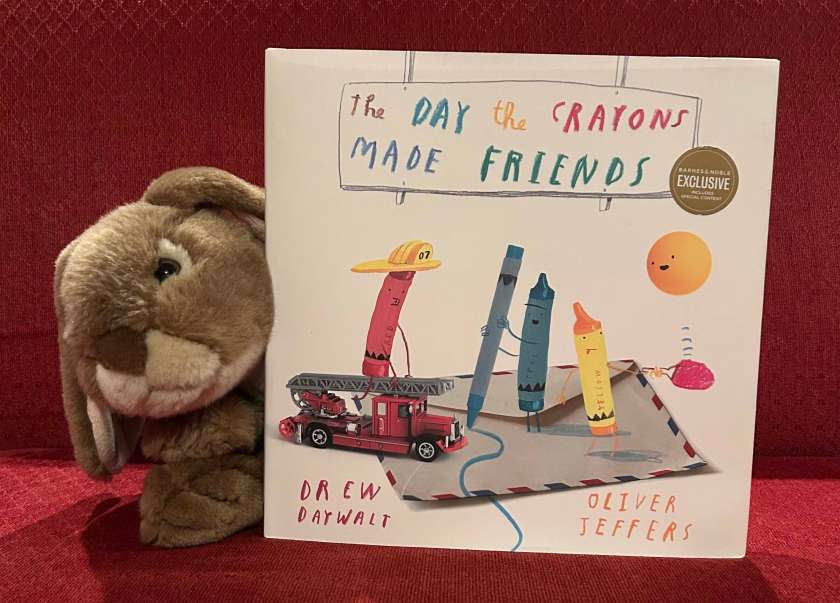
Today Caramel reviews a brand new picture book, The Day The Crayons Made Friends, written by Drew Daywalt, illustrated by Oliver Jeffers, and published in 2025. As usual Sprinkles is taking notes and asking questions.

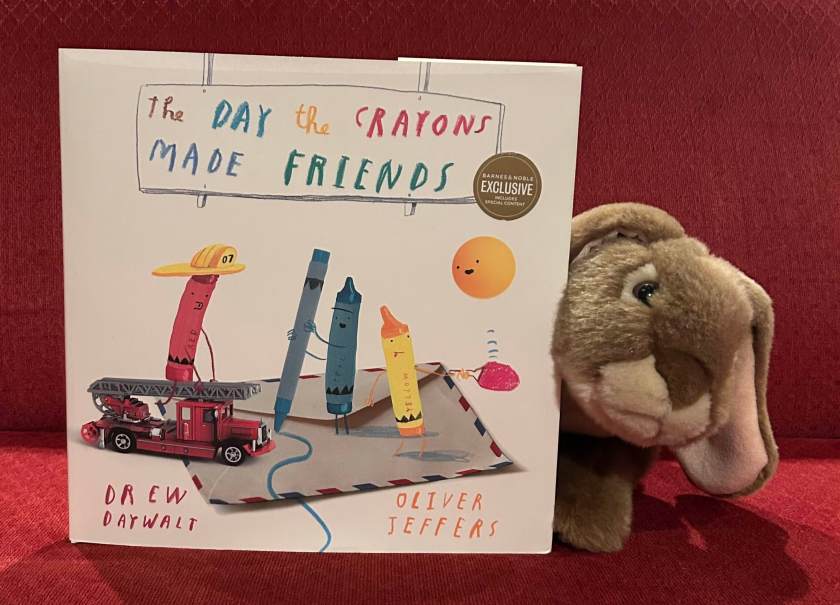
Caramel reviews The Day The Crayons Made Friends by Drew Daywalt and Oliver Jeffers.

Sprinkles: So Caramel, what are we talking about today?

Caramel: We are talking about another Crayon book! Remember we reviewed The Crayons’ Christmas, one of the earlier books all the way back in 2020? This is a brand new book about the Crayons, so I had to read and review it! 

S: Yeah, I was excited too, to see this new one. Both you and Marshmallow have read and loved the first couple of Crayon books about Duncan’s crayons: The Day the Crayons Quit and The Day The Crayons Came Home. Those were written in 2013 and 2015 and both of you were so tiny! Then apparently there were several other Crayon books about Halloween, Valentine’s Day, St. Patrick’s Day, and so on. And you reviewed the one for Christmas. But this one seems like a really new adventure, just published this year! 

C:Yes, and I am all ready to talk about it. 

S: Great! So tell us a bit about this one. What is up with Duncan’s crayons this time?

C: They found friends, and they are writing back to Duncan about their experiences away.

S: Wait, so they are no longer in Duncan’s house? 

C: No, they are just not together in their box anymore. They are in different parts of the house exploring.  

S: That sounds cool! And they are again writing letters, like they did in the earlier books, right? 

C: Yeah, it’s kinda cool that they are writing to him. I wish my crayons and pens and toys wrote to me… 

S: I know, right? 

C: Yeah, it would be really cool! But then again, I’d feel bad using them.

S: I see what you mean. If they prefer to travel around the house and write about their adventures, maybe when you use them, they would wear out. But maybe not. Maybe they also would like you, like the Crayons like Duncan, and they would like to occasionally play with you and help you create fun pictures and colorful drawings and such. 

C: True, that is a good way of thinking about it.

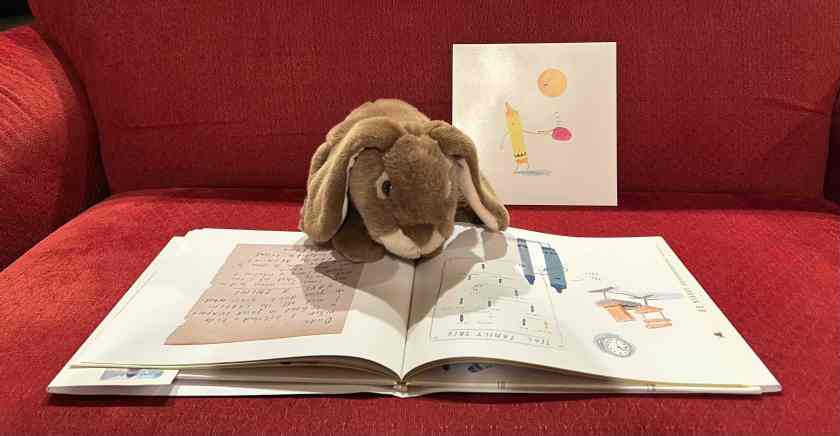
Caramel is reading The Day The Crayons Made Friends by Drew Daywalt and Oliver Jeffers.

S: So tell me a bit about the kinds of adventures they are having. The title seems to say that they are meeting new beings and making friends with them. 

C: Yep, all of the notes are from the crayons saying how they met their friends, and how they’re doing. For example, here is what the Beige Crayon wrote:

My dearest Duncan,

I have discovered my calling … under your fridge! I found a flock of dog biscuits that were lost and afraid. I built a small cottage and now tend to them. It’s a simple, quiet life. But fulfilling, nonetheless. And Leslie here is expecting! I look forward to showing you her pups.

Your humble shepherd, 

Beige Crayon

S: That is pretty cool! So these Crayons have been gone for quite some time. Maybe it is like when you lose your pens or pencils or crayons and end up getting new ones, but you know the old ones are out there somewhere. Maybe they are having adventures of their own and that is why we never find them! 

C: Yeah, maybe they don’t want to be found!

S: I bet this happens to random single socks too! There are so many unpaired socks in my sock drawer — their partners must be out there adventuring! 

C: Same here!

S: Oh, so that is why you always wear mismatching socks! I just stop wearing them, hoping one day their partners will show up. But maybe I should give up.

C: You never know. Maybe one day they will come back, ready to settle down. 

S: Or maybe at some point, I, too, will start receiving letters … from missing socks! 

C: I think that could be fun. I would also like to receive a letter from my missing pencil I lost in third grade. I really liked it and was very sad when it disappeared. But if it is still out there and is just having too much fun to write to me, maybe that is alright. 

S: Yes, maybe we can let go and just be happy they are enjoying their lives, right? 

C: Yeah, I hope they are. But a letter would be nice. Just saying. Maybe, “I’m in your closet, please get me.” Or something. Anything.

S: I hear you. Maybe they will, too. Anyways, it definitely seems like you really enjoyed reading a new Crayon book. 

C: Yep! It is just as fun as the other Crayon books. The pictures are just as pretty, and they fit the book really well; they look like they were drawn using crayons!

S: Yeah, I like the way these books look, too. Okay, maybe it is time to wrap up this review then. What would you like to tell our readers? 

C: Stay tuned for more book bunnies reviews!

Caramel loved reading The Day The Crayons Made Friends by Drew Daywalt and Oliver Jeffers, meeting old friends and their new friends.

Marshmallow reviews Digital SAT Manual (Version 8.0) by The Princeton Review

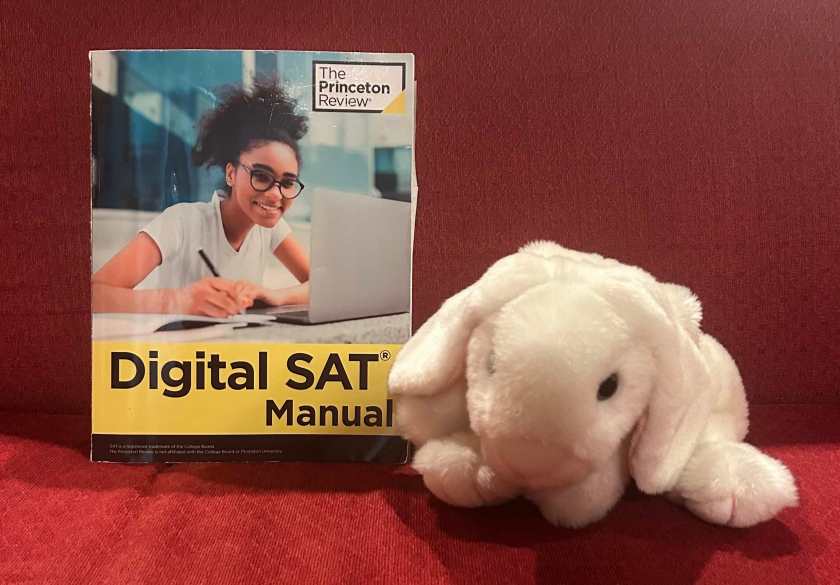
Today, Marshmallow is doing something different. She is writing about Digital SAT Manual by The Princeton Review, a test preparation manual.

[This is not meant as an advertisement or customer review. We felt that even though Digital SAT Manual is a different kind of book than our usual fare, it is undeniable that Marshmallow has spent a lot of time with it in these past few months. She also felt strongly that she had something useful to say about it.]

Marshmallow reviews Digital SAT Manual (Version 8.0) by The Princeton Review.

Marshmallow’s Quick Take: If you are a student planning on taking the SAT, then this is the book for you!

Marshmallow’s Summary (with no Spoilers): The SAT (or what used to be called the Scholastic Aptitude Test) is a standardized test used in the United States for college admissions. There is a lot of hype about it and many many rumors and myths. But ultimately, it seems to me that the SAT is not a measure of intelligence, but rather a measure of how good you are at utilizing tricks and the nuances of the testing type. It does seem to gauge, up to some level, how well you will do in college; this is true. If your score is below a certain level, many colleges will deem you unfit for entrance. The way to increase your score is to study, not just the material, but also the test itself.

Enter the Digital SAT Manual! The book starts off with a description of the SAT and the logistical details. It shows what the test will look like and how long each module is. This helps the reader gain a sense of familiarity with the testing format, which helps create a calmer experience during the actual exam. Then the book starts actually going into the specific types of questions that appear on the test and the strategies for each type. Before reading this book, I did not know that there were different question types. I kind of figured that the questions were all randomly ordered and were all random types. It turns out, though, that there is a lot of rhyme and reason behind the SAT, which is crucial to learn when preparing for the test.  

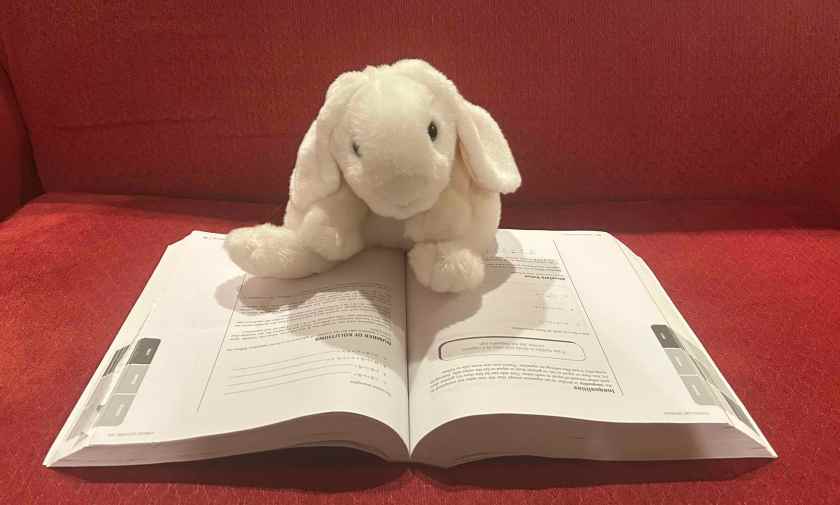
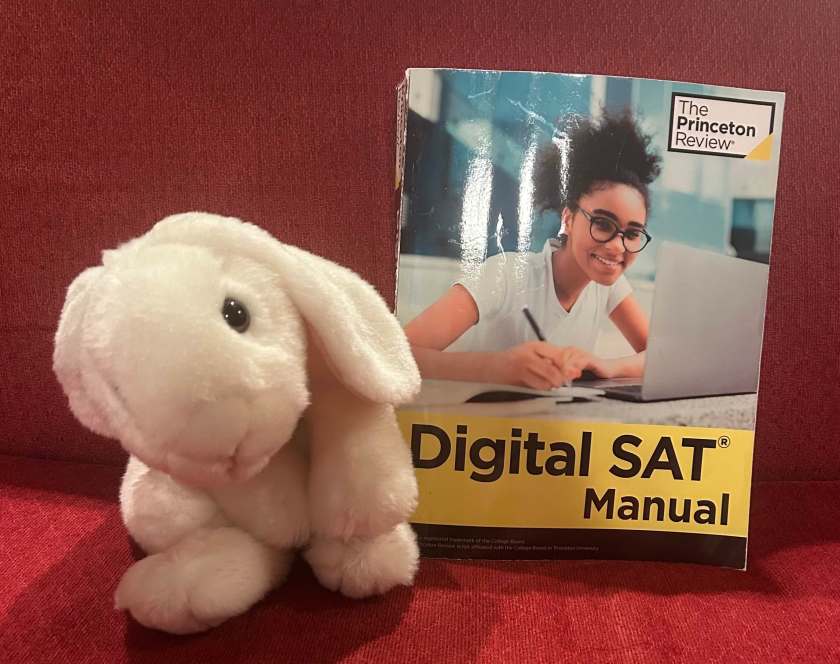
Marshmallow is reading the Digital SAT Manual (Version 8.0) by The Princeton Review.

Marshmallow’s Review: It may be clear already that I’ve recently taken the SAT. These past few months, the SAT has definitely been a topic close to the forefront of my mind. With many colleges and universities going back to requiring standardized test scores for admission, the importance of the SAT has only escalated. The best way to feel prepared is to know what is on the test and how to deal with it when you come face-to-face with it.

In the United States, the SAT marks a major landmark in many students’ lives—a point after which they are closer than ever to their college dreams. Of course, many withhold the fact that you need to study for the SAT. Many high-scoring students claim to have gone into the test without so much as opening a study book. However, anyone who has taken an SAT and examined the way it works will tell you: it is a test that scores how good you are at taking tests. As a bunny who took a couple practice tests and used study books before taking the actual digital SAT, I can confidently say that it is next to impossible for someone to get an outstanding score with no study; it is perhaps possible to get between a 1450 and 1500 first try but, above that, one must have studied.

I found the Digital SAT Manual to be extremely useful and effective; it helped me go from the mid-1400s to the 1500s. I really liked how it explained everything and was very transparent about the nature of the test. It detailed the different question types and had step-by-step instructions on how to answer each category. The practice sections were extremely helpful in helping me solidify my ability to understand the processes the book was teaching me. I did not always follow through with all of the book’s steps though; I felt like some annotation steps were superfluous and spent more time than I needed to or had. I also was a little surprised by how fast the test goes by; I definitely needed to go faster when taking it as opposed to when I did practice problems (for reference, I would generally finish the problem sets early, but found myself running out of time on longer practice tests).

As a whole, though, the Digital SAT Manual is irreplaceable. It is easy to understand and very interactive. I would highly recommend this book to all students. But above all, I would advise that you study for the SAT; trust me, the high-scorers are studying—even if they say otherwise!

Marshmallow’s Rating: 100%.

Marshmallow rates the Digital SAT Manual (Version 8.0) by The Princeton Review 100%.