Marshmallow reviews How to Speak Emoji by Fred Benenson

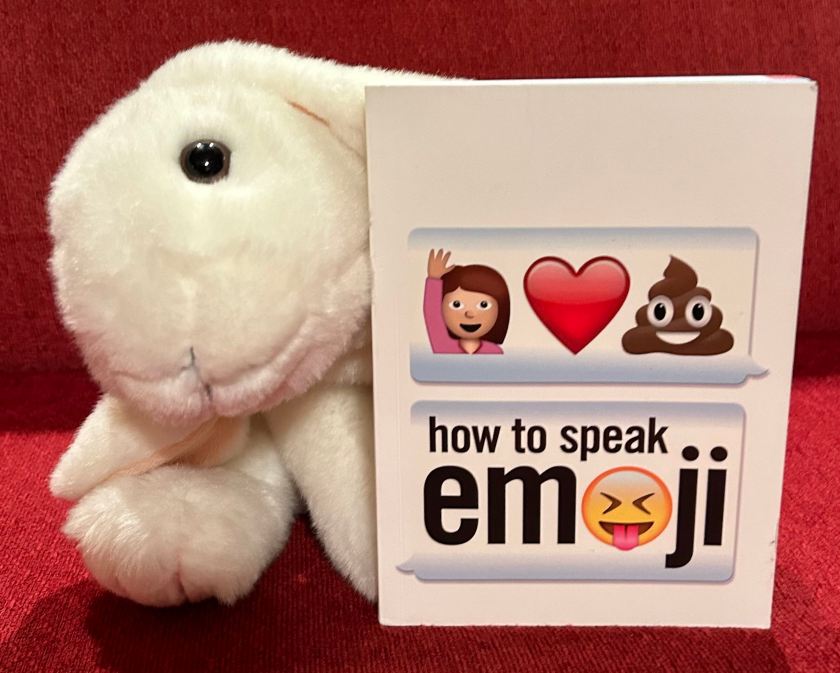
Today Marshmallow wanted to talk about a little book on emoji originally published in 2015: How to Speak Emoji by Fred Benenson.
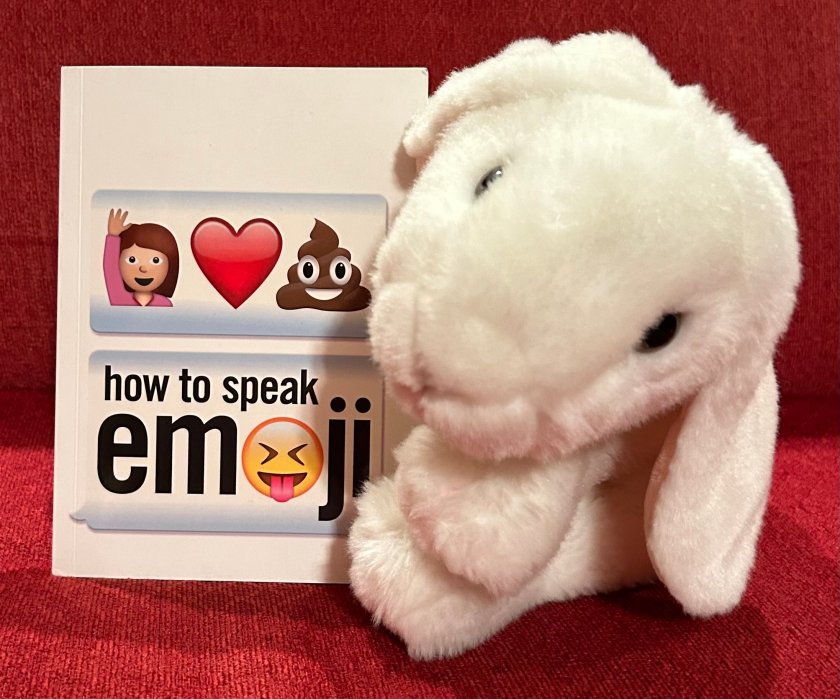
Marshmallow reviews How to Speak Emoji by Fred Benenson.

Marshmallow’s Quick Take: If you like funny books about how to do something or books about popular culture, then this might be the book for you. 

Marshmallow’s Summary (with Spoilers): In this book, Fred Benenson creates a useful glossary that you can use to navigate text conversations using emojis. Though this book is nonfiction, and is meant to be informative, some of the emoji strands have humorous meanings.

In the first part of the book, there is a list of the meanings of singular, specific emojis. These can get a bit subjective. For example, the author writes that the 💅 emoji means “Ooh, fancy!” And the 🆗 emoji means “grudging approval”.

After the initial, brief glossary, there is an emoji phrase book. The phrases in this vary by section. There is one section for pickup lines (which get pretty, um, weird 🫤), a section for food and drink 🍔, a section for insults, and many more (including but not limited to technology, travel, medical/emergency, weather, the Twelve Days of Christmas, etc ♾️). Idioms like “an elephant never forgets” become 🐘🚫💭 and “above and beyond” becomes 👆➕🔭🌌 (this is in the idioms section). These sections are all very entertaining, and it is interesting to see how the author translates standard phrases and sayings into emojis. 
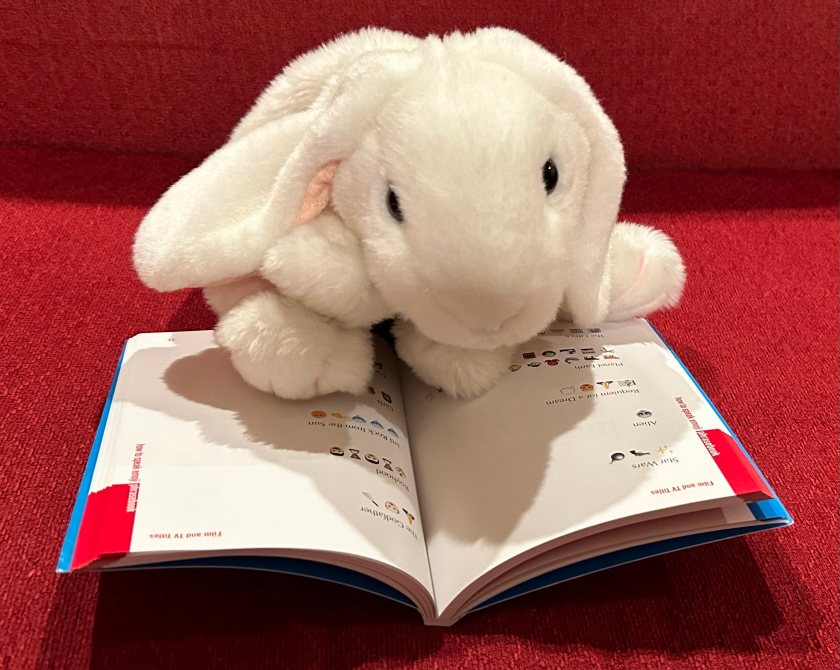
Marshmallow is reading How to Speak Emoji by Fred Benenson.

Marshmallow’s Review: You might be wondering, “Marshmallow 🤨🧐🤔 why would I want a book about the meaning of emojis when I can just google them?” My response to that question is that this book is also funny and teaches you how to communicate with emojis by themselves, which, admittedly, is not necessarily an essential skill but is definitely fun. And how can you not love a book which has the smiling poop emoji on its cover? I was a little sad to see that my favorite melting 🫠 emoji was not mentioned. However, it makes total sense because that is a new, quite recent (2023) addition to the vast army of emojis and only came out after this book was written (2015).

As a bunny who enjoys using emojis for the sake of using emojis, I liked this book a lot. Sometimes I find emojis that I don’t understand the meaning of, like this one: 🙃. And it is fun to learn how to use emojis to make phrases, and decoding them can be a fun game with friends and family. However, I would say that some of the content in this book is not appropriate for young bunnies, let us say, under the age of thirteen. Some of the phrases can be overly sexual. I just skimmed over those to get to the ones that were more amusing in my opinion. Otherwise however, this would be a very fun book for all readers. The sheer number of emojis and their complex meaning is fascinating 🤩 and this book does a good job explaining them.

Overall, this is a cute guide to using emojis 🥰 and I will take my knowledge gained from this to write this phrase: ⤵️📻➕😎📚🐰🐰🐰📋. (If you want, you can put your guess of what it means in the comments below!)

Marshmallow’s Rating: 98%

Marshmallow rates How to Speak Emoji by Fred Benenson 98%.

Caramel reviews A Writer’s Notebook by Ralph Fletcher

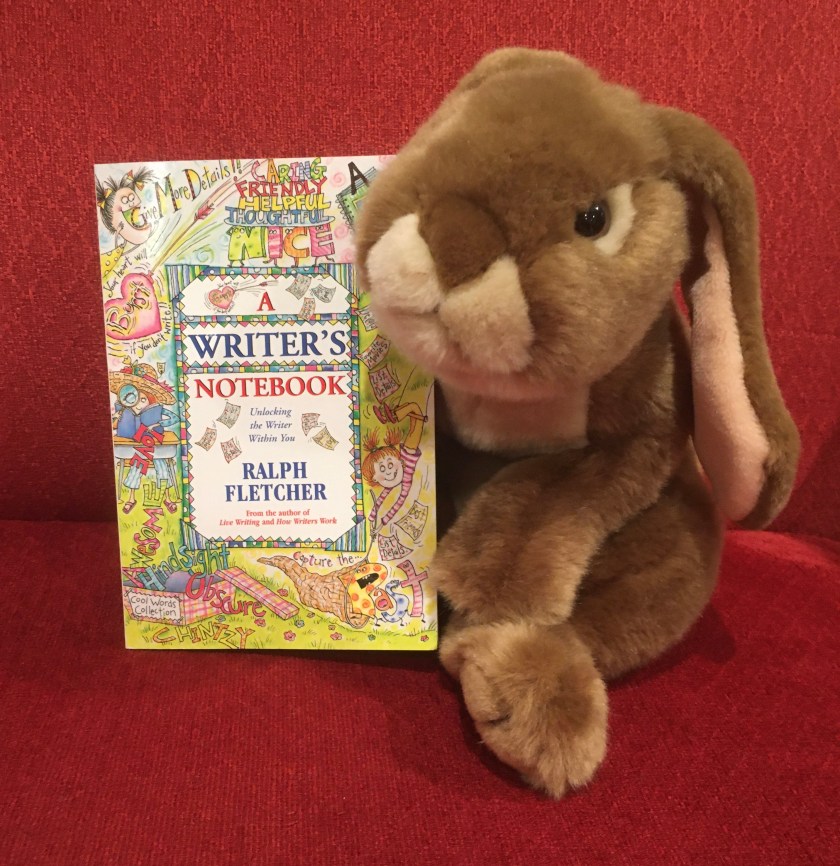
Over the summer Caramel got into keeping a notebook where he doodles sketches and writes stories. Today he reviews the book that inspired it all: A Writer’s Notebook by Ralph Fletcher. As usual, Sprinkles is taking notes and asking questions.

Caramel reviews A Writer's Notebook by Ralph Fletcher.
Caramel reviews A Writer’s Notebook by Ralph Fletcher.

Sprinkles: So Caramel, tell us a bit about this book.

Caramel: This book is about keeping a writer’s notebook.

S: What is a writer’s notebook?

C: A notebook where writers put writing about their everyday lives. Things they see, think of, and read about. They use it to capture interesting points in the past, so that they can remember them.

S: So it is like a journal, in some ways. They write notes on what is going on and what they think about those things. So how is a writer’s notebook different from a journal? What makes a writer’s notebook a writer’s notebook?

C: Hmm, I am not sure.

S: Maybe it has something to do with the person being a writer?

C: Yes, because if you are a writer, you come back to what you wrote and think about it and maybe you can use it in your stories or poems and so on.

S: So a writer’s notebook is basically a journal, but the person keeping it uses it for their writing purposes.

C: Yes.

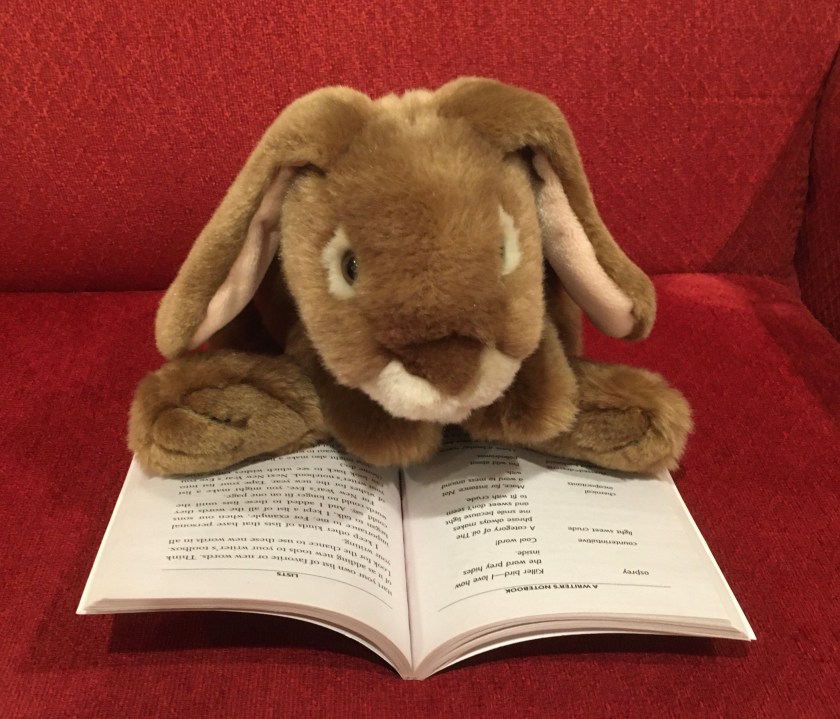
Caramel is reading A Writer's Notebook by Ralph Fletcher.
Caramel is reading A Writer’s Notebook by Ralph Fletcher.

S: So what is in the book exactly?

C: There are chapters about how different people use their writer’s notebooks. For example, there is a chapter about writing down memories of events that were important to you. Then there is a chapter where you learn that you can also write about really small things, things that might be interesting but not really important. But then somehow those might be useful later if you are writing a story or something.

S: I see.

C: There is a chapter called Fierce Wonderings, which is about how you can also write in your notebook about things that you want to know more about. There is a chapter about listening in on other people’s conversations and taking notes if they sound interesting.

S: I guess that teaches you about interesting dialogue.

C: I guess so. You can also have seed ideas.

S: What are those?

C: A seed idea is an idea that you can build on, so for example the author writes about someone who kept collecting facts about spiders.

S: That reminds me of your notebook, where you keep drawing different robot models.

C: Yes.

S: I think yours is not only a writer’s notebook, but rather, an artist’s notebook. Because you are drawing more than writing.

C: I guess so. But I think the idea is the same.

S: Yes, I can see that. You also keep drawing similar things and try to improve on the details. I think sometimes writers do that in their notebooks too.

C: Writers also put other people’s sentences and ideas in their notebooks too, if they like it.

S: And that is kind of similar to when you were trying to draw Eve in your notebook, inspired by the female robot in the movie Wall-E. You like how she is drawn and want to see if you can draw something similar.

C: Yes.

S: So do you also write stories or even shorter things in your notebook?

C: Yes. I have a few sentences here and there.

S: Do you like keeping a notebook?

C: Yes. Because then I can draw things whenever I want.

S: I can see how that is appealing. So let us get back to this book. What three words would you use to describe this book?

C: Many voices because the author shares writings of many other people, many of them are kids like me. Good ideas to get started with your own notebook… And … quick. It is a short book so I read it quickly.

S: That was definitely more than three words, but you did provide us with three distinct features of the book. Thank you. So let us wrap things up. What do you want to tell our readers?

C: Stay tuned for more book bunny reviews!

Caramel enjoyed reading A Writer's Notebook by Ralph Fletcher, and will probably continue to doodle and write in his notebook in the coming months and years. .
Caramel enjoyed reading A Writer’s Notebook by Ralph Fletcher, and will probably continue to doodle and write in his notebook in the coming months and years.