Marshmallow reviews The Hunger Games: The Illustrated Edition by Suzanne Collins and Nico Delort

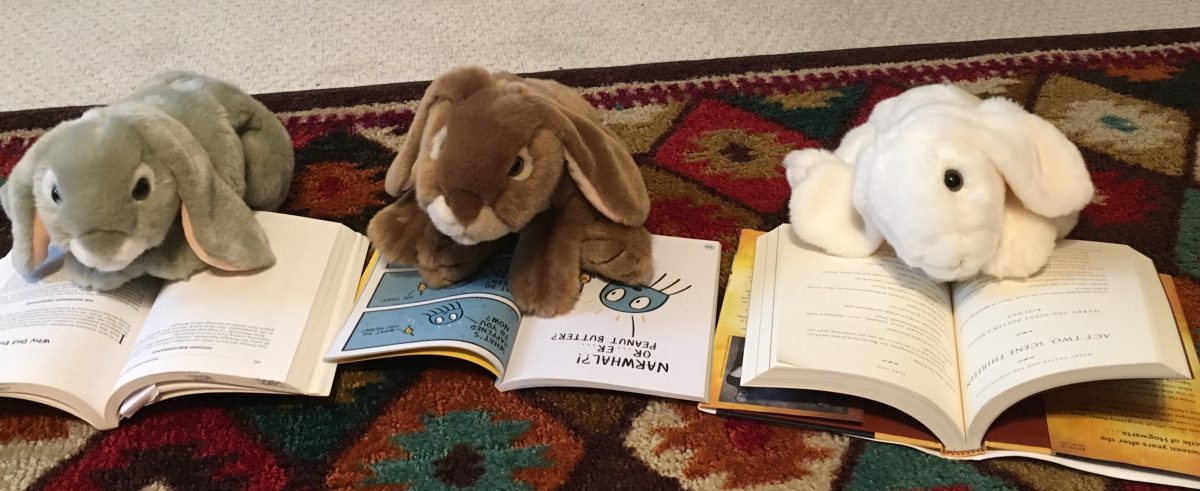
Marshmallow has read and reviewed all three books making up the Hunger Games trilogy by Suzanne Collins. This week she was excited to get her paws on the new and illustrated edition of the first book: The Hunger Games: The Illustrated Edition. Sprinkles is taking notes and asking questions.

[You can check out Marshmallow’s reviews of the three Hunger Games books here: The Hunger Games, Catching Fire, Mockingjay.]
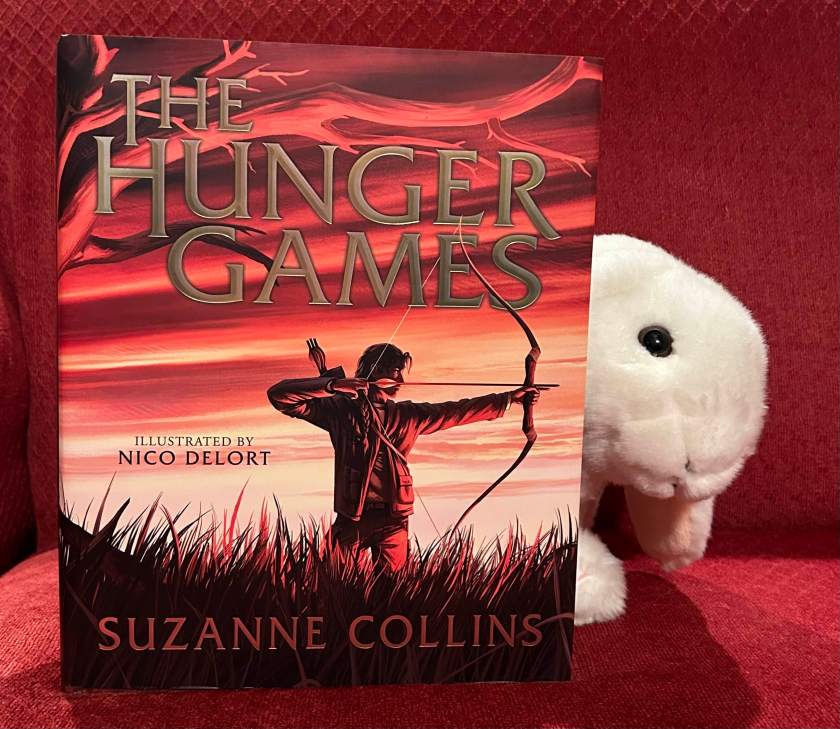
Marshmallow reviews The Hunger Games: The Illustrated Edition written by Suzanne Collins and illustrated by Nico Delort.

Sprinkles: So Marshmallow you read the original book and then watched the movie. How did this illustrated edition work for you?

Marshmallow: As far as I could tell, the text was the same as in the original book. But the illustrator added images every now and then, giving the book a fancy fairy tale feel.

S: I saw the illustrations. They look realistic but are all in black and white. I felt like maybe that matches the overall gloomy nature of the world the story is taking place in.

M: I think you might be right. The cover illustrations have other colors, too, but the illustrations inside the book are all in black and white, like you said. And the world of Katniss Everdeen is really gloomy.

S: Okay, maybe it makes sense for us to give our readers a quick recap of the main plot lines of the book. We cannot assume everyone has already read the original book or seen the movie version.

M: Well, I could just repeat what I said earlier: The book is set in a dystopian future, in North America. There are twelve districts and a Capitol city that make up a country named Panem. Katniss Everdeen, the main character, lives in District 12 with her mother and younger sister Prim. Everyone is very poor, except for the people of the Capitol, which hosts the Hunger Games every year. The Hunger Games are a big spectacle: Two children ages 12 to 18 are selected from each district. And they are brought to the Capitol and are to fight to the death in these Hunger Games. Katniss ends up being the girl representing her district in that year’s Games, along with a boy named Peeta. The book is about their trip to the Capitol and their time during the Games.
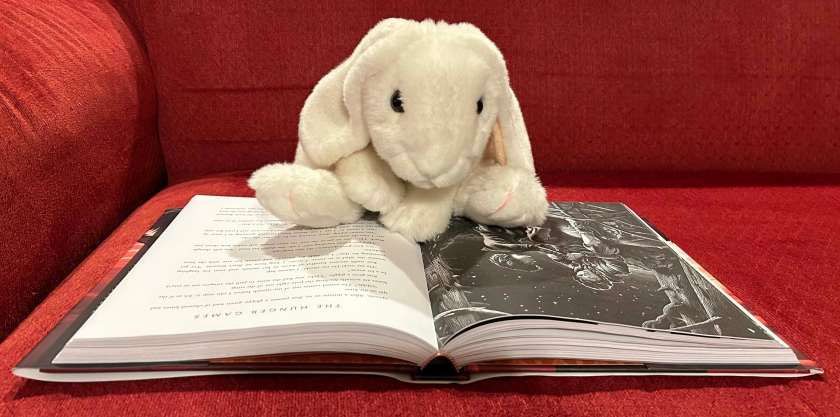
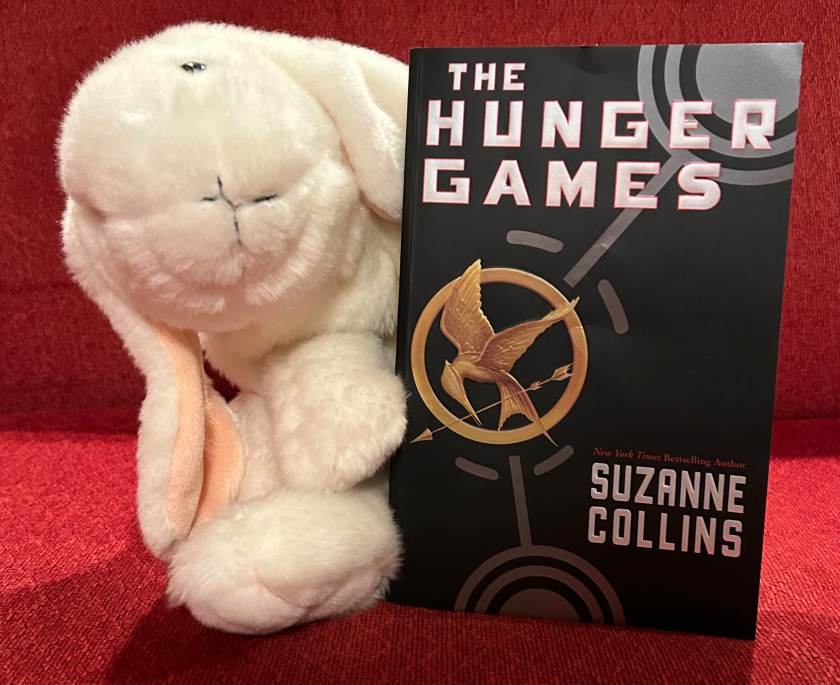
Marshmallow is reading The Hunger Games: The Illustrated Edition written by Suzanne Collins and illustrated by Nico Delort.

S: Okay, so the book is basically the same but there are illustrations in this version, right?

M: Yes. The format of the book is also bigger and the paper the pages are made of is much heavier, thicker paper. And there are a lot more words on a page. I think.

S: How many pages is it overall?

M: 357.

S: Comparing with the original paperback edition you read, which is 374 pages, do you think it is abridged?

M: I don’t think so. It seems that the large format allows more words on each page.

S: I see. So if the text is the same, then one could simply read this one instead of the original paperback you read.

M: Yes, and that could be a different kind of experience, I am sure. I mean, when you read the book, especially if you read it before having seen the movie, you completely are free when you are imagining Katniss and visualizing Panem. The illustrations would change that experience a bit. But I do not think it would be in a bad way.

S: So did you think the imagery was consistent with the book and how you imagined things to look like?

M: Yes. They match the movie images too. I mean Katniss is not Jennifer Lawrence in the illustrations, but the world and how every scene looks really resemble the movie images. But I am not saying the illustrations sort of simply copy the images form the movie. I thought the movie imagery was very faithful to the book, and only made the world seem richer and crisper. The illustrator of this book is very faithful to the book too, and the images just fit the mood of the book very well. Even, like you say, the fact that the illustrations are all in black and white adds to the general heaviness of the story.

S: Okay, that sounds like the illustrator did a really good job then.

M: Yes. I think if you want to read The Hunger Games series, this illustrated edition could be a good book to start your journey with.

S: So I am guessing you would rate this book rather highly?

M: Yes. Great story as before and very evocative imagery, so I’d rate it 100% for sure.

S: Thanks Marshmallow, this is all good to know. So maybe this would be a good time to wrap up this review. What would you like to tell our readers?

M: Stay tuned for more amazing reviews from the book bunnies!
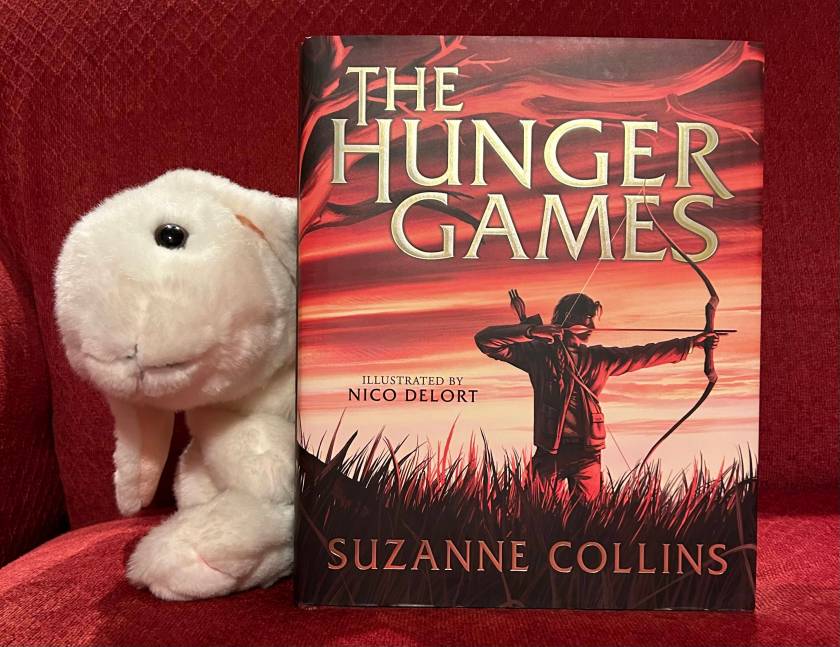
Marshmallow rates The Hunger Games: The Illustrated Edition written by Suzanne Collins and illustrated by Nico Delort 100%.

Marshmallow reviews The Hunger Games by Suzanne Collins

Today Marshmallow reviews The Hunger Games by Suzanne Collins, first published in 2008. Sprinkles has watched the movie version and is chatting with Marshmallow about the book.

Marshmallow reviews The Hunger Games by Suzanne Collins.

Sprinkles: So Marshmallow, let us start with a brief overview. Can you tell us a bit about the plot of Hunger Games?

Marshmallow: The book is set in a dystopian future, in North America. There are twelve districts and a Capitol city that make up a country named Panem. Katniss Everdeen is the main character. She lives in District 12 with her mother and younger sister Prim. All the districts are very poor, or maybe, I should say, everyone is very poor, except for the people of the Capitol. Every year, the Capitol hosts the Hunger Games, which are a big spectacle. Two children are selected from each district, a boy and a girl, ages 12 to 18. And they are brought to the Capitol and are to fight to the death in these Hunger Games.

S: That sounds pretty vicious. Children fighting to the death.

M: Yeah. It is really vicious. Also because it is kind of as a revenge of sorts. The twelve districts rebelled against the Capitol a while ago, and so they are paying tribute for their betrayal.

S: That sounds terrible actually.

M. Well, I did say it was dystopian.

S: You did.

M: Anyways, so Katniss ends up being the girl representing her district in that year’s Games. Along with a boy named Peeta. The book is about their trip to the Capitol and their time during the Games. The Games are rough, violent, and sadistic. They are almost like the gladiator games in the Roman Colosseum. The audience is watching and keeping track of who is surviving and the children playing the game are creating alliances and such. However, since there is only supposed to be one winner, everyone is actually working against everyone else, and they are all trying to kill each other.

S: So some of this reminds me of the Triwizard Tournament from Harry Potter and the Goblet of Fire by J.K. Rowling.

M: Yes, but actually I think it is more similar to the Purging Trials in Powerless by Lauren Roberts. They are both more vicious and are made to honor horrific events. The Triwizard Tournament is not supposed to be lethal even though it ends up being that way in Harry Potter and the Goblet of Fire.

Marshmallow is reading The Hunger Games by Suzanne Collins.

S: I know this book made a huge splash when it came out and it and its sequels were made into movies. I have not read the books yet, and only watched the first movie so far. But I think the plot and the setting of the book are quite fascinating. You watched the first movie with me. Can you tell me a bit about how the book compares with the movie?

M: I read the book before watching the movie. So I had a pretty good idea what the plot would be. But even then, the suspense built in the movie was very deep, and I really liked the way Katniss Everdeen’s world was portrayed on screen. I think the film was very well done. Maybe we can put a link to the trailer for the movie here.

S: Sure. Here it is:

The Hunger Games (2012 Movie) – Official Theatrical Trailer (YouTube).

M: Great, thanks!

S: So were there any significant differences between the book and the movie you noticed?

M: I did not notice really, but the book is written in present tense and in first person, so of course they could not really depict that style. However, I think they did a really good job creating the world Katniss is living in, and I would recommend the movie to bunnies who enjoy the book.

S: But they should read the book first?

M: Well, you did not. So maybe it does not matter too much.

S: Hmm, this is a book blog, remember?

M: Well, then maybe I should say read the book first. But the movie is pretty good too.

S: Okay, then, maybe this is a good time to wrap up this review. What would you rate the book?

M: I’d rate it 100%. It is really good. But it might be a bit too mature for some younger bunnies. It is about a very grim topic, a violent world and terrible tragedy.

S: I see. What would you say to our readers as we wrap things up?

M: Stay tuned for more amazing reviews from the book bunnies!

Marshmallow rates The Hunger Games by Suzanne Collins 100%.

Caramel reviews Buns Gone Bad by Anna Humphrey and Irma Kniivila

Today Caramel reviews Buns Gone Bad, by Anna Humphrey and Irma Kniivila, the first book in a new graphic novel series called Fluffle Bunnies, coming out later this month. As usual, Sprinkles is taking notes and asking questions.

The book bunnies received this book as an advance review copy.

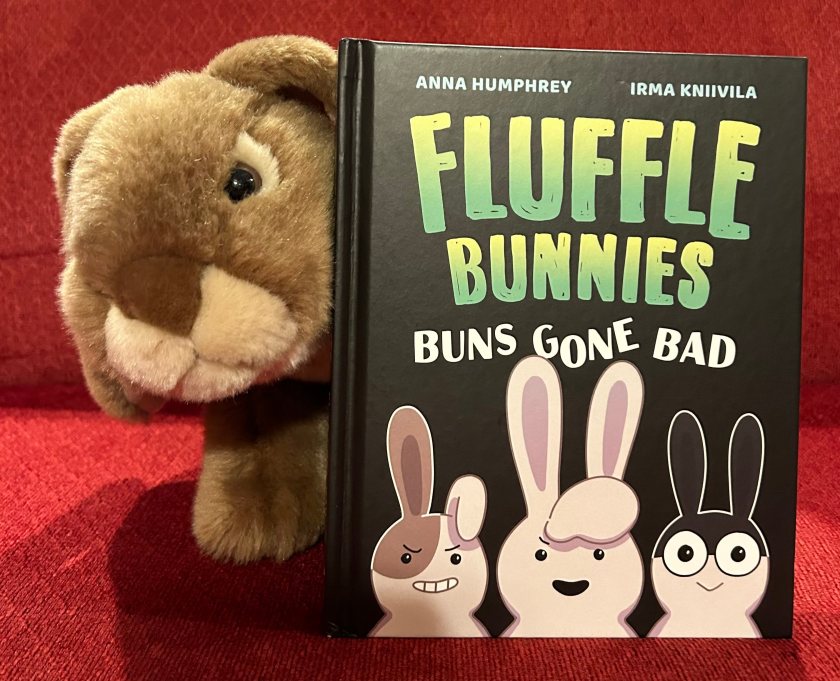
Caramel reviews Buns Gone Bad, written by Anna Humphrey and illustrated by Irma Kniivila.

Sprinkles: So Caramel, you got yourself a new graphic novel series.

Caramel: Yep.

S: Why don’t you start by introducing us to the Fluffle Bunnies, who are apparently going to go bad in this book?

C: These are three little bunnies. They are called Biggie, Boingy, and Flop, and they are really nice and cuddly. But then they decide to be TUFF bunnies.

S: Tell me more. What does that mean?

C: That means that they turn evil.

S: Wait, evil? I had thought this would be kind of like the Bad Guys books. So they would be bad in some ways but actually be cute deep inside.

C: This is kind of the opposite of the Bad Guys books actually. These guys start as cute little bunnies and then they go rotten. In Bad Guys, it’s the opposite; they are bad guys who turn good.

S: Well, I like cute little bunnies, and even mischievous little bunnies, after all, you are one. But evil ones? I am not sure that I like that…

C: Well, they are not really evil. So what happens is that their mother leaves for a trip, so the little bunnies are left defenseless, so the other animals try to take advantage of them, and so the little bunnies decide to toughen up. So they are not really evil, but they are tough. I said that before. They want to be TUFF. I guess they don’t know how to spell tough. Unlike me.

S: I see. So then they are not bad bunnies; they just learn to stand up for themselves.

C: Kinda. But they go a bit beyond just that. They take over the park. They go a little bit too far, maybe.

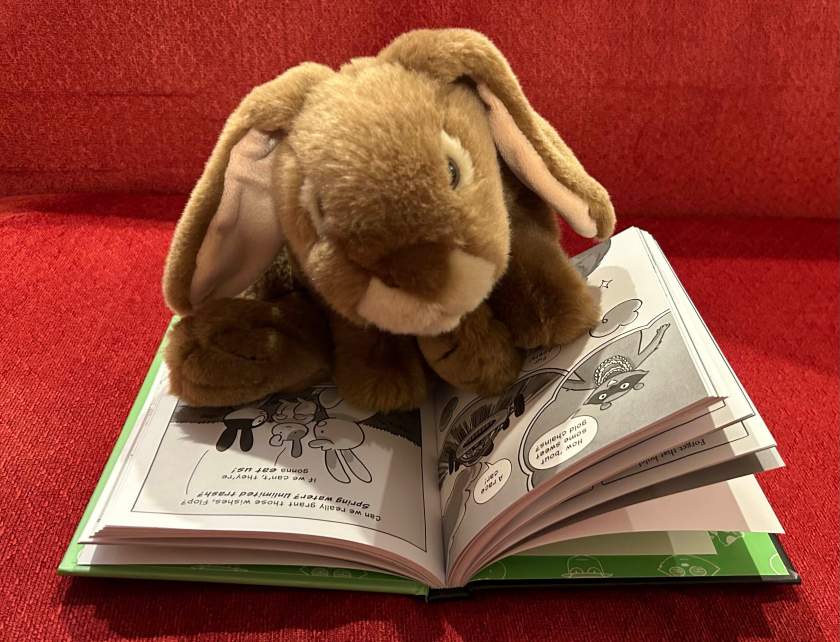
Caramel is reading Buns Gone Bad, written by Anna Humphrey and illustrated by Irma Kniivila.

S: That is interesting. And kind of funny, I must admit. Three little bunnies taking over a park.

C: It is funny, but it is also fun. Think of it Sprinkles; you, me and Marshmallow having our own park. Wouldn’t it be awesome? Of course the three bunnies in the book are all siblings. And you are our mommy. And you have not left home to go to Brazil to learn jujitsu.

S: Well, learning jujitsu could be really awesome. And Brazil is the heart of Brazilian jujitsu so that makes sense. Remember, years ago, you and Marshmallow tried to learn Brazilian jujitsu?

C: Yes, and that was a lot of fun. So maybe, I can understand the mommy bunny. But the three little bunnies go a little cuckoo when she leaves, so maybe she should have taken them along.. Oh well. If she did take them along, this book would not be written, and I would not have had all the fun I had reading it.

S: So you enjoyed the book then?

C: Yes. It is really funny. The way the bunnies take over is really hilarious.

S: And how about the pictures? They look like they are all black and white. Or rather all grayscale. That is, there are different shades of gray, but no other colors.

C: Yes. But that’s fine. The bunnies are very funny all the same.

S: So would you read more adventures of the Fluffle Bunnies? This is the first book of a series apparently.

C: Yes. I would. But this is a very new book, so I am afraid a second book might not come out too soon.

S: I guess we will just have to wait.

C: Yes, unfortunately. I really do not like waiting.

S: I know Caramel, but sometimes waiting is worth it.

C: Yes I guess.

S: So if you were to describe the book in three to five words…

C: Funny page-turner about three scrappy bunnies. Here I am using the “North American informal” meaning of the word “scrappy”. Like in the musical Hamilton. That’s where I heard it first.

S: I guess it is good we looked that word up together, Caramel. We also looked up the word “fluffle” right?

C: Yes, it means a group of bunnies. I really like it!

S: Me too. Okay, so let us wrap up this review then. What would you like to tell our readers?

C: Stay tuned for more book bunny reviews!

Caramel loved reading Buns Gone Bad, written by Anna Humphrey and illustrated by Irma Kniivila, and he can hardly wait for a second book in the series so he can read more about these "scrappy" little bunnies.
Caramel loved reading Buns Gone Bad, written by Anna Humphrey and illustrated by Irma Kniivila, and he can hardly wait for a second book in the series so he can read more about these “scrappy” little bunnies.

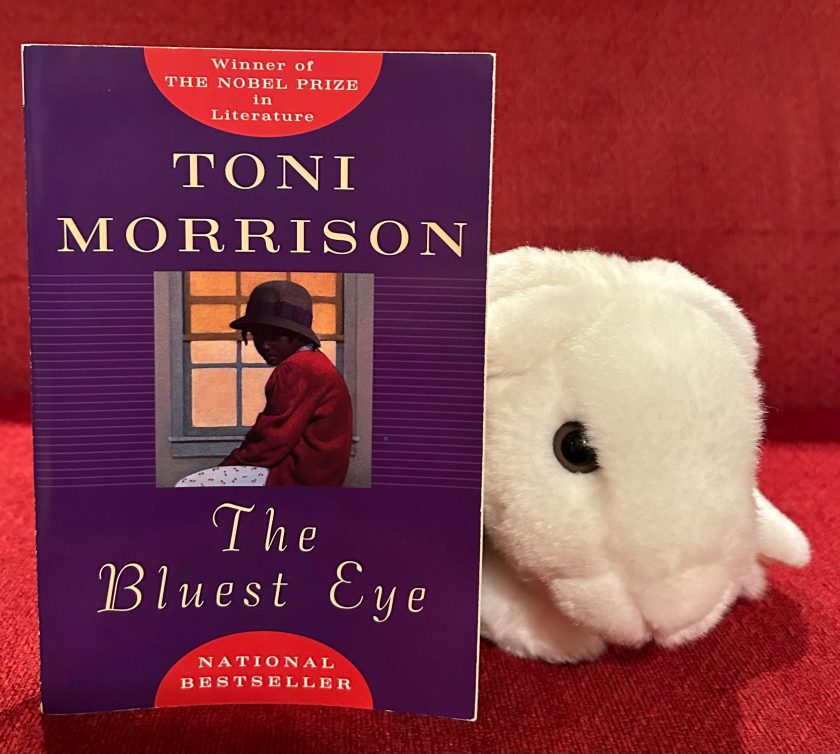
Marshmallow reviews The Bluest Eye by Toni Morrison

Today Marshmallow reviews The Bluest Eye by Toni Morrison, first published in 1970. Sprinkles is taking notes and asking questions.

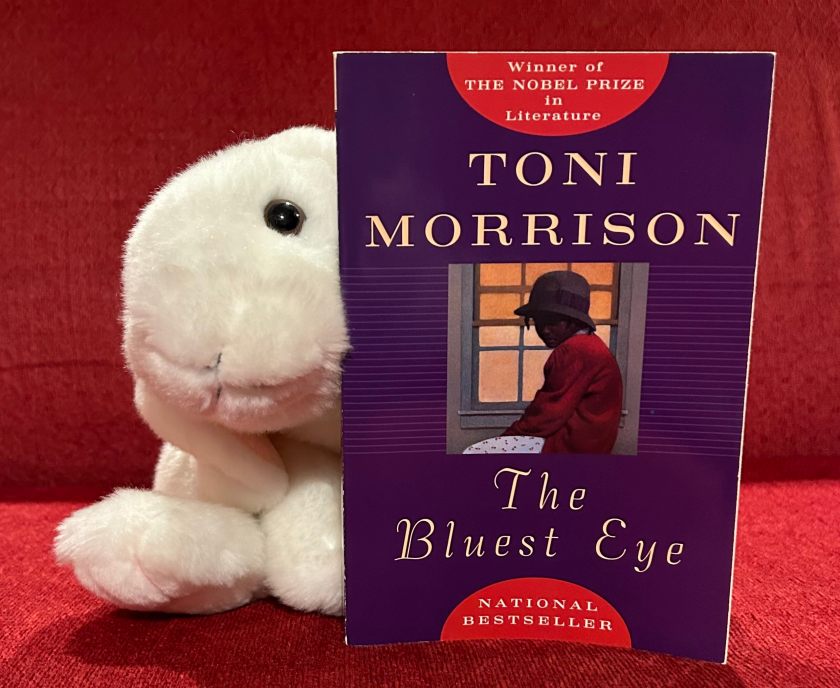
Marshmallow reviews The Bluest Eye by Toni Morrison.

Sprinkles: So Marshmallow, you always start your book reviews with what you call a quick overview. Can you give us one for this book, too?

Marshmallow: If you want to read about three young black girls growing up after the Great Depression and amidst internalized and externalized racism, then this is the book for you.

S: Okay, I think that is a good start. So tell us a bit more. Who are the three girls?

M: The main character is eleven-year-old Pecola Breedlove, and she is a foster sister to the other two girls, Claudia and Frieda MacTeer, who are nine and ten, and live with their parents. Pecola and Claudia are close, and a lot of the book is told from Claudia’s perspective. But we also have flashbacks and so on to events in Pecola’s life that Claudia could not have witnessed.

S: Okay, so tell me more. Why is the title The Bluest Eye?

M: Because Pecola wants to have the bluest eyes in the world. She thinks that she is ugly because a lot of people tell her she is, and she thinks that if she had blue eyes, she would be beautiful too.

S: I see. That must be very hard for a young girl of course.

M: That is not all that is hard in her life though. Her parents are both alive but they are not able to take good care of her. Her father is abusive and violent. Her mother does not support and protect her. The MacTeers on the other hand are a more supportive family for their children and Pecola, too, at least most of the time.

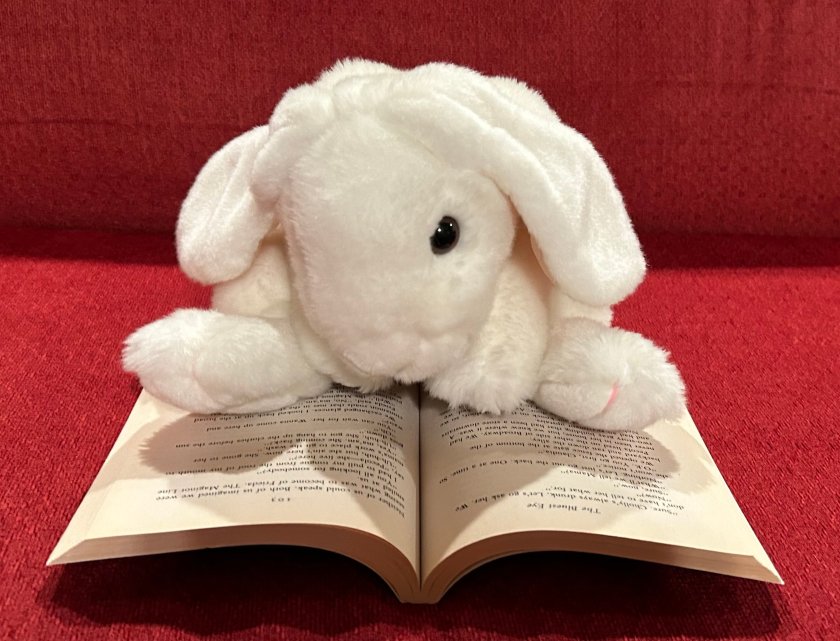
Marshmallow is reading The Bluest Eye by Toni Morrison.

S: I know this book has been banned in some school districts. Do you know why?

M: I think it is mainly because of two very sexually explicit scenes, which are also violent and abusive. And there are other parts where children are sexualized, and so on.

S: Hmm, I can see how those types of scenes would make a lot of people concerned about a book, especially for younger folks. How did you handle them?

M: I think the book is really hard to read, emotionally. When I was reading the book, I had to put it down several times. That is why it took me a really long time to read the book even though it is not very long and the author’s voice is fluid and captivating.

S: And yet you persisted and finished the book.

M: Yes, because I know it is an important book, and I know the author is trying to tell us something important.

S: What do you think she is trying to tell us?

M: I think she is trying to portray the chaos and the evil that results from racism. She says: “I felt compelled to write this mostly because in the 1960s, black male authors published powerful, aggressive, revolutionary fiction or nonfiction, and they had positive racially uplifting rhetoric with them that were stimulating and I thought they would skip over something and thought no one would remember that it wasn’t always beautiful.” So even though black people survived and often thrived despite the terrible oppression of racism they had to face, there were also people who did not survive, who were broken, and Toni Morrison wanted to make sure that we would not forget that.

S: I can see why you persevered Marshmallow. Sometimes we need to read difficult and heart-wrenching text to make sure we do not forget. But from what I am hearing you say, this book is probably not appropriate for young bunnies even though the main characters are young themselves.

M: Yes, definitely. I don’t think Caramel should read it yet for example. But for bunnies who are older and a bit more mature, it might be more appropriate.

S: You have read and reviewed Chains, Forge, and Ashes, the three books of the Seeds of America series, which were also about racism, or maybe more accurately, slavery. I think those books were also hard to read in some ways, but this one seems like it was a lot more challenging.

M: Yes. Possibly because in those books, even though there is a lot of pain and heartbreak, the main characters eventually overcome some of their challenges, and there is some sense of triumph, kind of like the writings Toni Morrison is referring to in the quote above. But in The Bluest Eye, both the life and the identity of Pecola are shattered. She does not survive her challenges. There is no redemption, only pain. Okay, there is some beauty too, in the book; there is solid love and affection, in the lives of Claudia and her family. But what happens to Pecola is traumatizing, and she does not survive the trauma.

S: I get that Marshmallow. Thank you for sharing your thoughts on this book. So do you have some last words to say about it?

M: I think this could be a good book to read for bunnies who are willing to face the full ugliness of racism and how it hurts people’s self-worth.

S: Thank you. So let us wrap this up then. What do you want to tell our readers?

M: Stay tuned for more amazing reviews from the book bunnies!

Marshmallow appreciated reading The Bluest Eye by Toni Morrison, though she thinks that it might be appropriate for only older bunnies.