Marshmallow reviews Spooky Classics for Children: A Companion Reader, as told by Jim Weiss, and with Dramatizations by Chris Bauer

This week both of the younger book bunnies wanted to review spooky books to honor Halloween 2025. So on Wednesday, Caramel reviewed a cute picture book about a zombie and a brain. And today, Marshmallow reviews Spooky Classics for Children: A Companion Reader, as told by Jim Weiss, and with Dramatizations by Chris Bauer, which offers modern adaptations of three classic short stories.
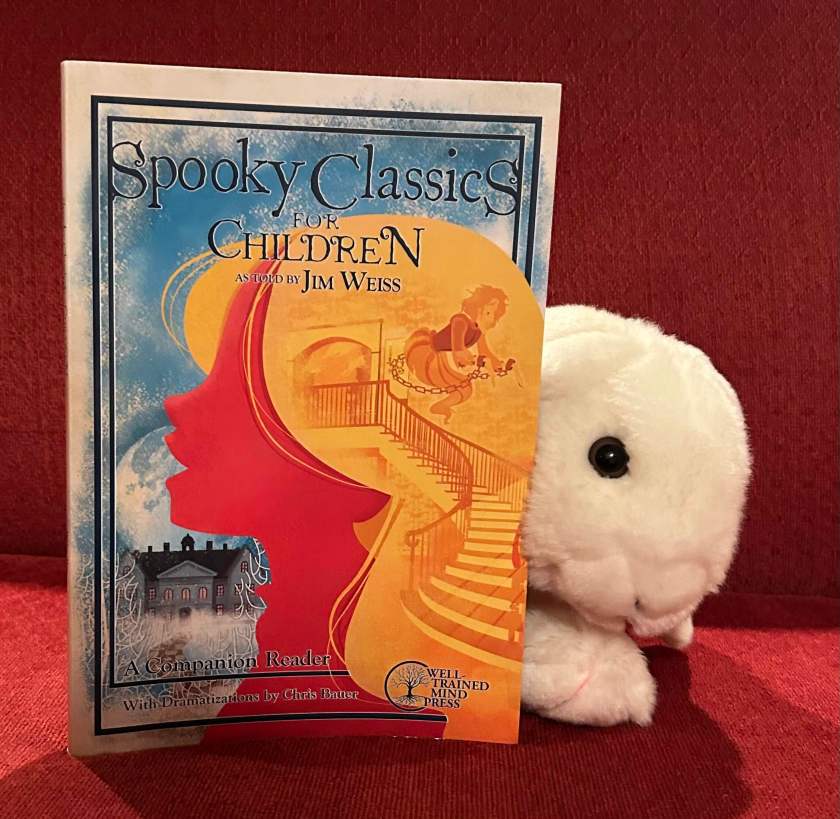
Marshmallow reviews Spooky Classics for Children: A Companion Reader, as told by Jim Weiss, and with Dramatizations by Chris Bauer
Marshmallow reviews Spooky Classics for Children: A Companion Reader, as told by Jim Weiss, and with Dramatizations by Chris Bauer.

Marshmallow’s Quick Take: If you are looking for a fun book to read with your family during the fall season, then this is the book for you!

Marshmallow’s Summary (with Spoilers): This book is divided into several sections. The Preface introduces the stories and explains that the book can be used in three ways: listen, read, and speak. The first section has the stories laid out in a normal picture book-like fashion; this is Part I: Three Spooky Stories. The second section (Part II: Three Spooky Plays) provides scripts for each story and a guide for how to perform each one. 

The first story is called “The Canterville Ghost”, and it was originally written by Oscar Wilde and published in 1887. The story is set in Britain. The American Otis family (Mr. Otis is the American ambassador to Great Britain) moves into the Canterville Chase, a famous old ancestral castle. The catch is that the estate is haunted by the Canterville Ghost. Lord Canterville warns the Otis family of the haunting, but they do not believe in “mumbo-jumbo.” However, when the ghost’s existence becomes undeniable, they react in a relatively kind, well-mannered way. Eventually, the story ends happily—which I was initially not expecting! (Readers interested in the original Wilde version can check out this Project Gutenberg link.)

The second story is called “Dr. Heidegger’s Experiment” and was originally written by Nathaniel Hawthorne and published anonymously in 1837. The story is about five friends who are in their older years. Dr. Heidegger invites his four friends over to his house and offers them water from the Fountain of Youth. All four of his friends lived lives of sin and are full of regret. However, Dr. Heidegger himself does not drink the water; he merely wishes to see what happens when they do. They drink the water and age backwards, regaining their beauty and energy. However, they did not follow Dr. Heidegger’s advice to record for themselves some lessons learned before they drank the elixir, and so they do not remember the wisdom that they were supposed to have learned throughout their lives (though it is not that they forgot it, it is mostly that they did not gain it in the first place). The story ends with a clear message, and this story made me think a lot more than I was expecting to at the end. (Interested readers can check out this Project Gutenberg page for Twice-Told Tales, a collection that contains, among many others, the original story by Hawthorne.)

The third story is called “The Sending of Dana Da” and was originally written by Rudyard Kipling and published in 1888. The story is set in India a long time ago. A British man named Richard Evans meets a local wizard named Dana Da whom he treats generously. Dana Da offers the man help in return, asking him if he needs help in dealing with anyone he loves or hates. Evans eventually admits that he loathes a man named Everett Lone. Dana Da’s sending is a magical energy that he can shape into whatever he wishes; for this case, he shapes it into cats that appear in Lone’s life constantly (Lone hates cats). This magical story ends in a quaint way and wraps up the first section of the book nicely. (The original version by Kipling is somewhat different and may or may not be appropriate for young bunnies, so we will not link to it from here.)
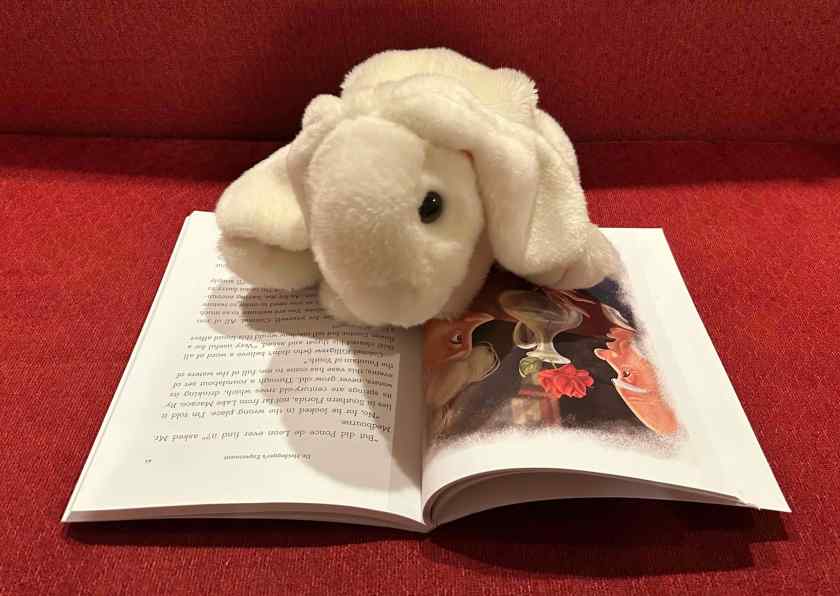
Marshmallow is reading Spooky Classics for Children: A Companion Reader, as told by Jim Weiss, and with Dramatizations by Chris Bauer

Marshmallow’s Review: Overall, I would highly recommend this book! I really enjoyed listening to the audio recording that came with it, and it was a really great experience. Jim Weiss is a great voice actor! (We loved his readings of the Harry Potter books many years ago.) But even if you do not have access to the recordings, the text itself is really engaging on its own. This book is accessible and appropriate for all ages, so I think it would be really fun to read or listen to as a family. I liked the drawings, but I especially liked the writing style; I found it energetic, engaging, yet simple at the same time.

The stories were also surprisingly deep. The first story made me think a lot about generosity while the second made me think a LOT about wisdom, living life in a meaningful way, and appreciation. I also wondered a lot about youth and age afterwards. The third one teaches a lesson about logic and magic, but also friendship and kindness. I would explain more but I think that might give the ending away.

The second section with the screenplay versions of the stories adapted by Chris Bauer would also be a great help for theatre programs for little children. I can see it helping set up a great show for children to watch and / or perform in. Of course I could also see a family doing it among themselves, too, just for fun. There are a lot of useful suggestions for either scenario.

As a whole, this book was really enjoyable, and I would completely recommend it to everyone! I know this is a bit late, but it would also make for a perfect Halloween book!

Marshmallow’s Rating: 100%.
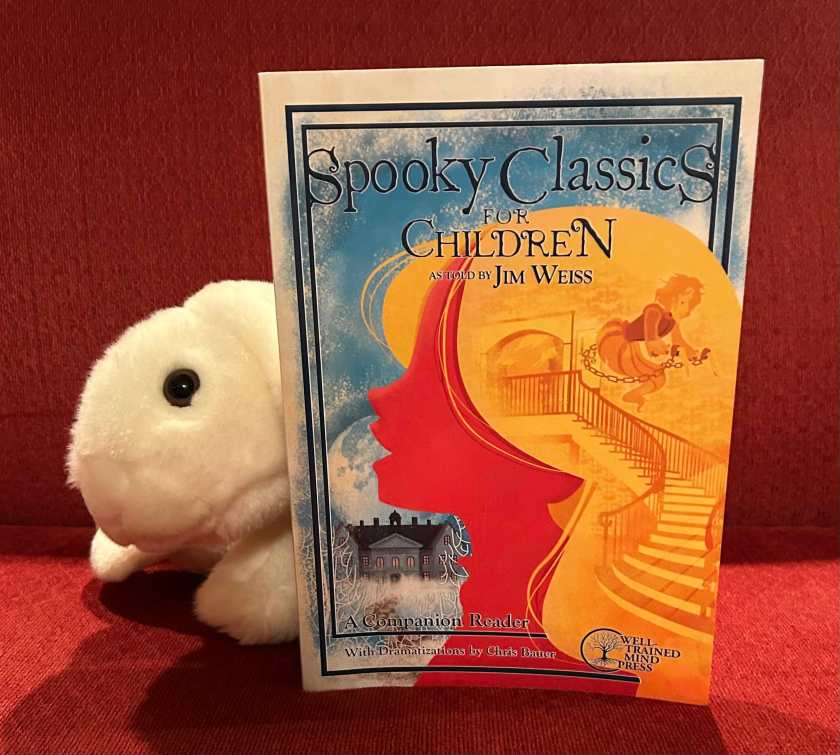
Marshmallow rates Spooky Classics for Children: A Companion Reader, as told by Jim Weiss, and with Dramatizations by Chris Bauer 100%.

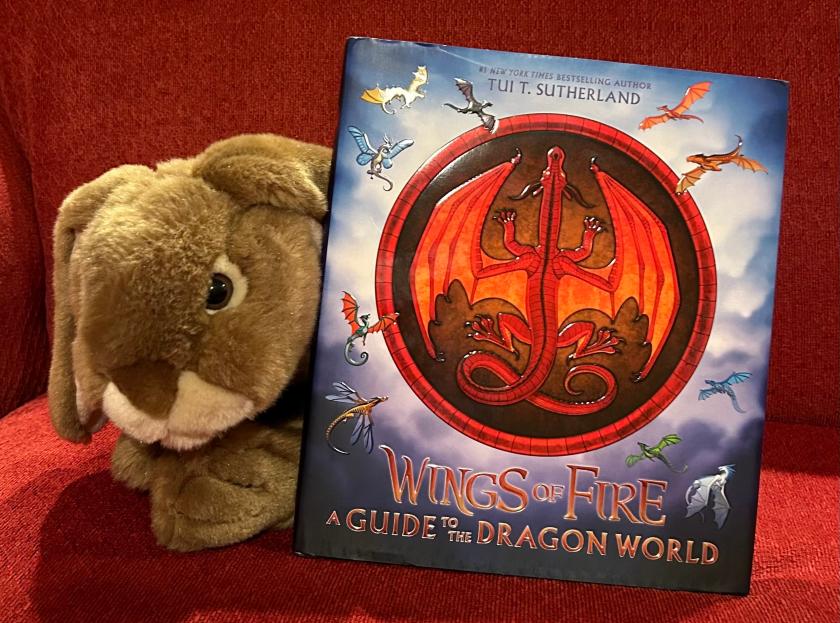
Caramel reviews Wings of Fire: A Guide to the Dragon World by Tui T. Sutherland

After over a year, Caramel finally got his paws on a new-for-him Wings of Fire book. So today he is talking about Wings of Fire: A Guide to the Dragon World, written by Tui T. Sutherland, illustrated by Joy Ang, with additional art from Mike Schley and Maarta Laiho, and published first in 2023. As usual, Sprinkles is taking notes and asking questions.

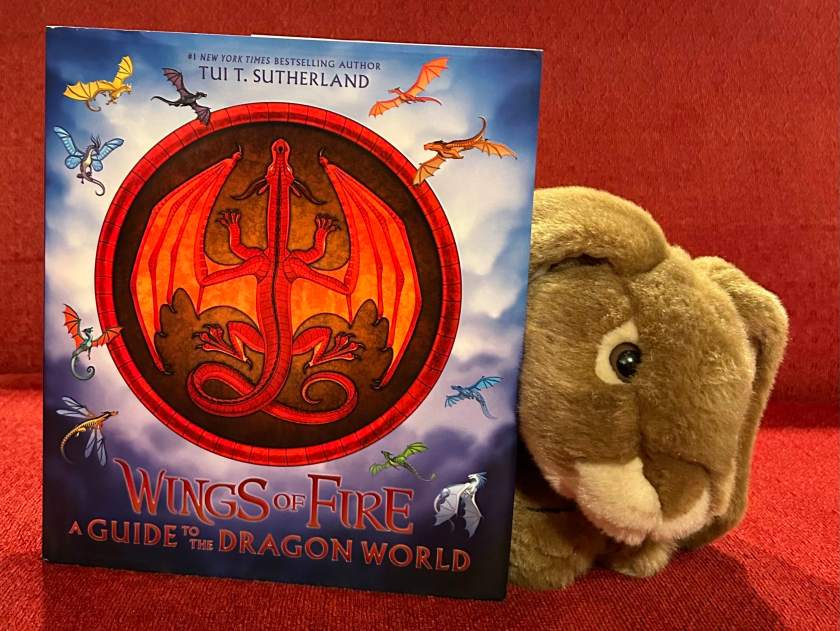
Caramel reviews Wings of Fire: A Guide to the Dragon World, written by Tui T. Sutherland and illustrated by Joy Ang, with additional art from Mike Schley and Maarta Laiho.

Sprinkles: So Caramel, this book just arrived today, and you just had to read it, right?

Caramel: Yup. Just had to.

S: I know how you still keep reading and rereading all of your Wings of Fire books. So I knew you would enjoy this book too. Please tell our readers about the book. Is this the sixteenth book you were waiting for?

C: Not quite, but it is definitely enough to satisfy my hunger for new Wings of Fire stories.

S: So this is a collection of new stories then, right?

C: Yes, but it is actually even more than that.

S: What do you mean?

C: There are ten main chapters, one for each dragon tribe: MudWings, SeaWings, RainWings, NightWings, SandWings, IceWings, SkyWings, SilkWings, HiveWings, and LeafWings. And in each chapter, there are some documents and short historical bits and always a short story about or a letter from a dragon from that tribe that we have met before. So for example, in the chapter on RainWings, they have a datasheet, a map of where they live, they have a letter from StarFlight, a letter from Glory, a story about a sloth made up by Kinkajou, a bit about the dangers of the RainForest, an explanation of how the challenges to the RainWing throne work, a guide to how RainWings change colors depending on their feelings by Jambu, and so on.

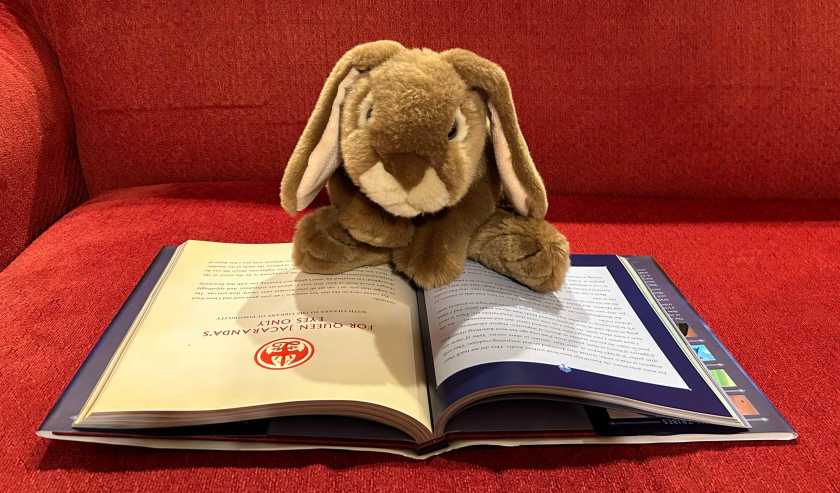
Caramel is reading Wings of Fire: A Guide to the Dragon World, written by Tui T. Sutherland and illustrated by Joy Ang, with additional art from Mike Schley and Maarta Laiho.

S: All that sounds fascinating, Caramel. I bet you really enjoyed the book.

C: Yes, and I am still enjoying it, and I think I will keep enjoying it forever! Or at least, for a very long time.

S: I can see that. I think it is a beautiful book.

C: Yes! The pictures are amazing! They have pictures of the dragons, and the things they are talking about. Like in the story about the sloth, there is a picture of a sloth. They have maps, too.

S: Yes, and this is all on really nice paper and in full color, so all in all, it makes for a really pretty book to behold.

C: Totally what I was going to say.

S: I know, right? Okay, so would you recommend this book to other bunnies who liked the Wings of Fire books?

C: Yes!

S: So do you think someone has to read all fifteen books before this one?

C: Yes, because so many characters from all the books keep showing up.

S: But looking over it, I thought that the book could also be a nice way to introduce a bunny to this world.

C: Maybe. They would not know who is telling the stories or their backstory, but they would learn a lot about the world the dragons are living in and a lot about each of the tribes. That could be fun too; you are right. Of course I will never know what it would be like to read this book first.

S: True, but I have a feeling it was a good experience, finally reading a new Wings of Fire book, after all these years.

C: Yes! But I would still like a sixteenth book. A real book that maybe starts a fourth story arc.

S: That could be wonderful, I know. But for now, this is what we have. And it is rather wonderful, isn’t it?

C: Yes!

S: So maybe we should wrap this up so you can continue to cherish your new book.

C: I agree!

S: What would you like to tell our readers in closing?

C: Stay tuned for more book bunny reviews!

Caramel loved reading Wings of Fire: A Guide to the Dragon World, written by Tui T. Sutherland and illustrated by Joy Ang, with additional art from Mike Schley and Maarta Laiho, and recommends it to all bunnies who love all things dragon.

Marshmallow reviews 9 From the Nine Worlds by Rick Riordan

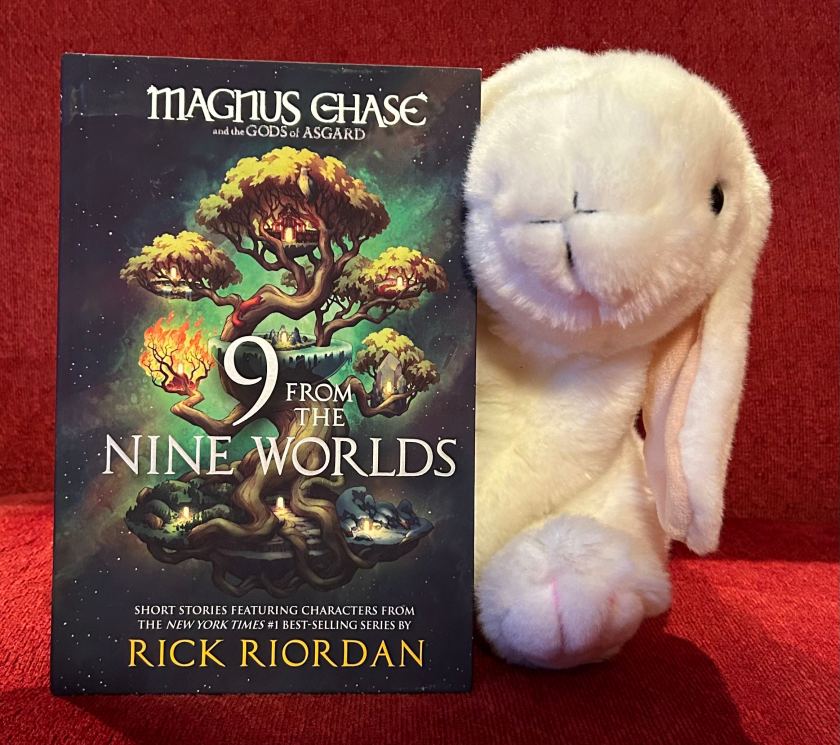
Marshmallow reviewed all three books of Rick Riordan’s Magnus Chase and the Gods of Asgard series. (You might want to check out her reviews of The Sword of SummerThe Hammer of Thor, and The Ship of the Dead before moving on.) She has also reviewed Hotel Valhalla: Guide to the Norse Worlds, a companion book to the trilogy. Today she reviews 9 From the Nine Worlds, a 2018 book of short stories written by Riordan about the nine worlds of the Norse mythology. As a fan of many of Riordan’s series, Sprinkles is asking questions and taking notes.

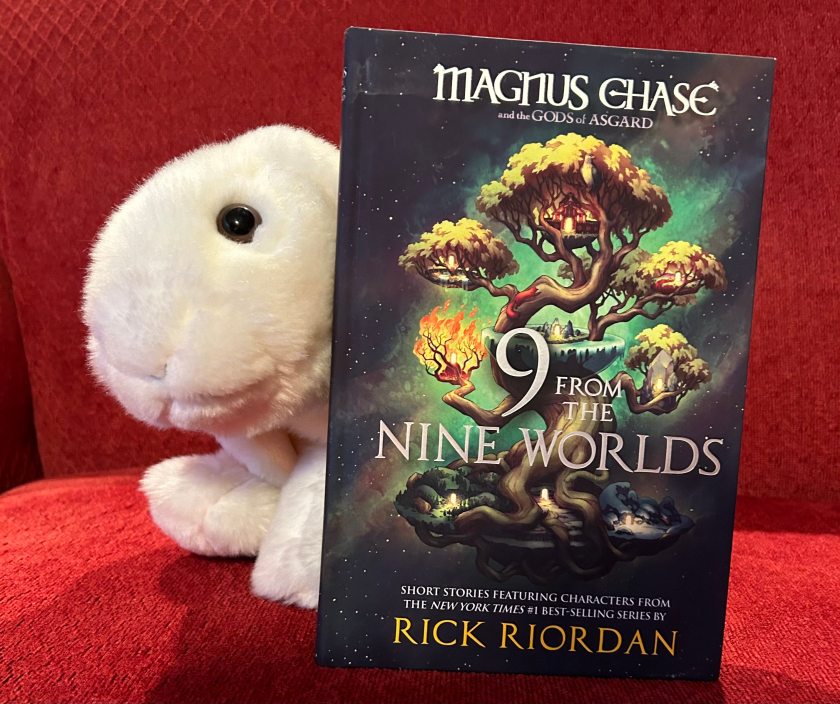
Marshmallow reviews Nine from the Nine Worlds by Rick Riordan.

Sprinkles: So Marshmallow, what would you like to tell us about this book?

Marshmallow: This is a collection of short stories Rick Riordan wrote about the nine worlds of Norse mythology. There is one story for each world.

S: Are any of the stories or the characters in them related to the Magnus Chase series?

M: Yes. All of them actually.

S: So these stories complement the Magnus Chase trilogy then?

M: I think they happen after the trilogy ends, but many of the characters are people we met before in the trilogy. There are some new characters, too, of course.

S: Of course. So what did you think of the stories? Did you enjoy them?

M: Yes, I thought the stories were really good.

S: Can you tell us about one or two of them? Did you have a favorite?

M: I liked “This Is Why I Hate Clothes Shopping” by Amir Fadlan the most.

S: Wait, weren’t these stories all written by Riordan?

M: Yep. Amir Fadlan is a character from the world of Magnus Chase. Maybe you remember? He was engaged to Samirah al Abbas.

S: Oh, yes, I remember. So the stories are each narrated by a character from the Magnus Chase trilogy.

M: Yes. I guess I should have said that earlier. Anyways, in the story by Amir, he gets tricked into wearing a pair of pants and the pants are– oh wait, no spoilers, so I cannot tell more.

S: But somehow some weird stuff happens about the pants, right?

M: Yes. Some magical stuff.

Marshmallow is reading Nine from the Nine Worlds by Rick Riordan.

S: Okay, so how does Riordan manage to narrate nine stories from nine different voices?

M: I really don’t know how he does it, but he definitely does it well. And they are all very funny. Or at least lighthearted.

S: And I saw that there were some full-color pictures in the book. Can you tell us a bit about those?

M: Yes, there are sixteen full-color full-page pictures, by James Firnhaber, Jim Madsen, and Yori Elita Narpati. Eight of them portray eight of the narrators, all except Amir actually. And the remaining eight depict eight of the nine worlds. Midgard is missing, probably because that is our world, the world of humans and bunnies, so we already should know what that looks like. There might be bunnies in Alfheim, too, actually, but I would not know. I have not been there.

S: Do the portraits of the characters fit your image of them in your mind from before?

M: A little. It is always interesting to see how other people visualize a character.

S: For sure. So overall, you enjoyed this book, right?

M: Yes, and it definitely is a quick read, and since it is made up of many short stories, you could stop and start and it would be okay. Just keep in mind that the stories are all kind of connected.

S: So does one need to read the book in order?

M: I think it would be better to read the stories in order.

S: And do you think one would need to have read the Magnus Chase trilogy before diving into these stories?

M: That would probably be a good idea. There might be some spoilers. And you would know the narrators much better then.

S: Okay Marshmallow, it seems like you will be lending me yet another book of yours soon. I am eager to read this book now that I know more about it.

M: Sure. I think you will like it!

S: Okay, it is time to wrap this up now. How would you rate the book?

M: I’d rate it 100%.

S: Great! And what do you want to tell our readers?

M: Stay tuned for more amazing reviews from the book bunnies!

Marshmallow rates Nine from the Nine Worlds by Rick Riordan 100%.

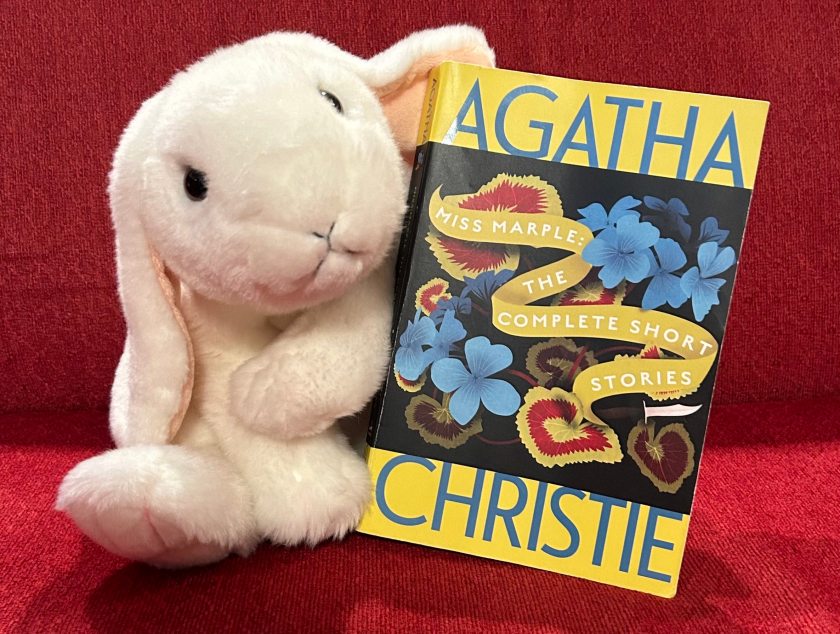
Marshmallow reviews Miss Marple: The Complete Short Stories by Agatha Christie

Today Marshmallow reviews Miss Marple: The Complete Short Stories, a book that collects together all twenty short stories Agatha Christie wrote featuring her favorite detective, Miss Marple; the original dates of the stories range from 1932 to 1961. Sprinkles, who has been a life-long Christie fan, is asking questions and taking notes.

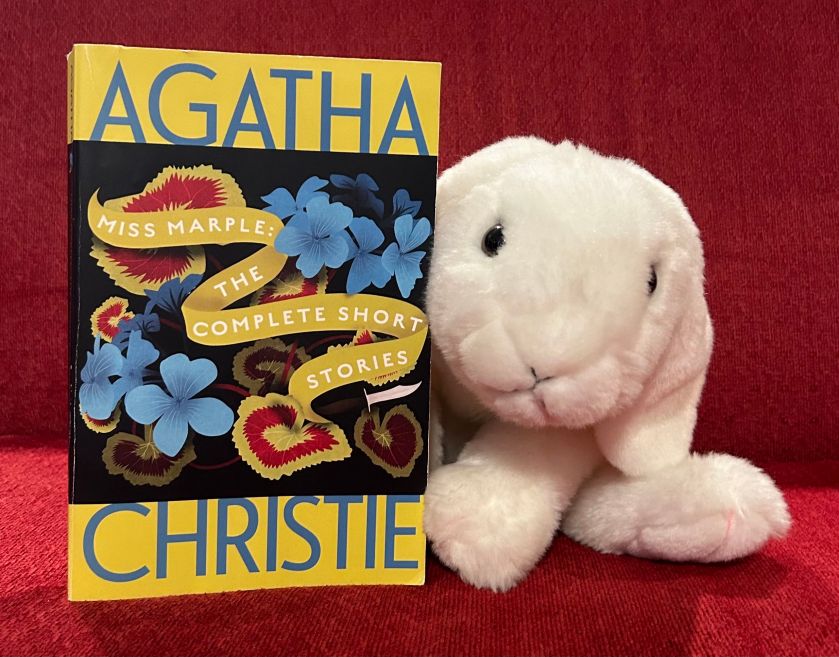
Marshmallow reviews Miss Marple: The Complete Short Stories by Agatha Christie.

Sprinkles: Marshmallow, you know that I was so happy to find this collection of Miss Marple stories! But I was especially excited to have you read them, too. So what did you think?

Marshmallow: At first I found them very confusing.

S: How come?

M: I found the language a bit challenging at first. But reading the stories the second time, I got a lot more, and I really enjoyed them.

S: I guess the language is not contemporary. Christie wrote some of these almost a hundred years ago.

M: Yes. There were a lot of things I did not know about. For example you and I needed to look up the “hundreds and thousands” and the trifle that was one of the main plot points in the story “The Tuesday Night Club”.

S: Yes, apparently we do not know every traditional English dish and the usual ingredients for them.

M: And then there was “banting”. Apparently it means to diet by not eating things with carbs in them. And it is named after a scientist, Sir Frederick Grant Banting, who was one of the people who discovered insulin.

S: Yes, one learns a lot by reading!

M: Yes, of course.

S: So overall, what did you think of Miss Marple? Can you tell us a bit about who she is and what kind of a person she is?

M: She is an older lady, who seems like a nice and kind and easily distracted person, but she is extremely smart and insightful. So the first few stories in the book are told in the setting of a dinner party, where people are sharing mysteries and challenging others to figure them out. In almost all of them, everyone else is stumped, and Miss Marple outwits everyone, figuring things out.

S: And in the one that she claims she could not figure out the mystery, she actually did, but she had a reason not to divulge her reasoning. Right?

M: Right.

Marshmallow is reading Miss Marple: The Complete Short Stories by Agatha Christie.

S: So I have been a fan of Agatha Christie stories since I was a young bunny around your age. This is your very first exposure to Christie. What do you think about her writing style?

M: Other than the fact that her language took me a little while to get used to, I think she is a clever storyteller. The plots are very good. The mysteries are hard to figure out on one’s own, but when they are explained at the end, they all make sense, and you see that the author had sprinkled in the right clues all along.

S: Agreed. When compared with your favorite detective, Nancy Drew, how does Miss Marple measure up?

M: I am still quite loyal to Nancy Drew, and I don’t want to hurt her feelings. But Miss Marple is sharp, and she can figure things out pretty quickly.

S: Then again, you did not read a full novel with Miss Marple, so maybe in the novels she is more like Nancy, and the story opens up slowly and more gradually.

M: Yes, it is true that all Nancy Drew books I read were long-form novels. In a short story, things have to happen quicker.

S: You do not review short story collections much for our blog.

M: True. I do not read too many short story collections. I have read and reviewed Beasts and Beauty: Dangerous Tales by Soman Chainani and The Demigod Diaries by Rick Riordan, which were short story collections, but it seems that most stuff I read is in novel form.

S: You know Agatha Christie wrote a ton of novels, right?

M: Yep. Wikipedia says that she wrote 66 detective novels.

S: That is a lot!

M: Yes, I agree. So did you read all of them, Sprinkles?

S: I read all her books that my school library had, but no, I did not read all. I also do not remember any of them. I should reread them at some point. Would you join me? Did this book make you curious to read some of her novels?

M: Yep. I did watch the movie version of The Murder on the Orient Express, though I do not remember much. So maybe we should read that first.

S: Yes, that is a classic! Okay, let us do that. Alright, this is probably a good time to end this review. How would you rate Miss Marple: The Complete Short Stories by Agatha Christie?

M: I’d rate it 100%, though it did take me a second read!

S: Sounds good to me. What do you want to tell our readers next?

M: Stay tuned for more amazing book reviews from the book bunnies!

Marshmallow rates Miss Marple: The Complete Short Stories by Agatha Christie 100%.