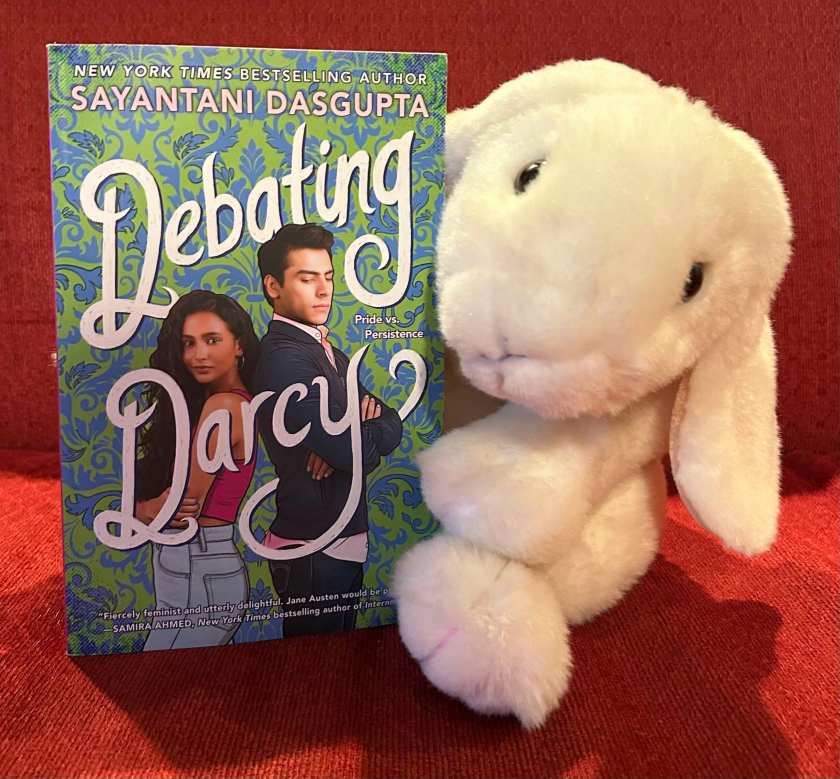
Today Marshmallow reviews Debating Darcy by Sayantani DasGupta, a book originally published in 2022 and recommended to us by a friend of the blog.
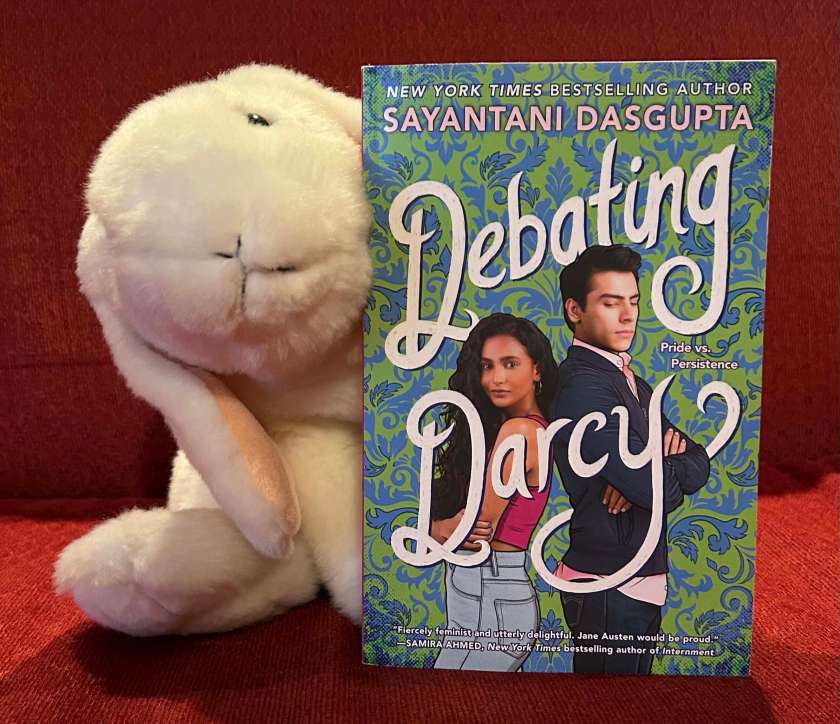
Marshmallow’s Quick Take: If you like romance books that do not completely revolve around romance or books about high school, then this is the book for you!
Marshmallow’s Summary (with Spoilers): Leela Bose is a Bengali American high schooler who has competed in Speech and Debate / forensics for all of her years at Longbourn High School. She specializes in Speech because those in Debate are, as she says, “the mansplainers of the forensic world […] all arguing, no artistry.”
And no one bugs Leela more than Firoze Darcy, a Lincoln Douglas debater from the private school Netherfield Academy. Though he is “at least by appearance, just what a young man ought to be,” the first time they meet makes a memorable impression on both. They are at a Speech and Debate tournament, and Leela is singing “The Schuyler Sisters” with her teammates on a table. She spots Firoze across the room and then sings part of the song to him. Unfortunately, he is offended and later ends up telling one of his friends that he didn’t think their private school should have joined the public school league and that Leela isn’t beautiful enough to “tempt him.” So, overall, they don’t fall in love at first sight.
This episode reminds Leela of a lot of unpleasant memories from when she felt out of place in a White neighborhood where her dark skin and curly hair was viewed as anything but beautiful; the fact that Firoze is also Desi like her makes the insult about her looks feel worse.
Enter the classic enemies-to-lovers trope. Eventually, it becomes clear that fate has other plans for the two because they keep bumping into one another. Leela eventually starts to prefer another boy in their league named Jishnu from Regimental (a military private school). He also does Lincoln-Douglas debate, but Leela and he click. The fact that they both hate Darcy is also a plus. But some things he tells her about Darcy feel a little off, and Leela starts to realize that she was a bit quick to jump to conclusions about him. She also eventually switches to doing Debate because she is already very good at Speech and feels like there is no more growth for her in that category. Not to mention that she wants to beat Darcy at his own game. And she does … but it is him that eventually wins her heart (sorry, I just felt like this line needed to be used).
Marshmallow’s Review: To be honest, I was initially a bit turned off by the premise of this book. I could tell it was going to be an enemies-to-lovers trope, and those make me sad because I am generally not convinced that if the guy is an unpleasant jerk at the beginning, he typically continues to be the same guy at the end; it is just that he starts treating the girl better or she starts making excuses for him and so on. However, this book was a pleasant surprise. All in all, I was relatively pleased at the conclusion with the ending.
Getting there was a bit painful though. If you like reading romance books that are a bit like torture and keep you waiting on your seat, then this is for you!
I liked the characters; DasGupta curates an entire cast of high school forensicators (as she calls Speech and Debaters) that are realistic, well-meaning, and endearing.
I was a bit surprised that the book went into the darker parts of Speech and Debate. There are discussions and scenes about sexism, sexual harassment, and sexual assault in the tournament setting. There is also one character who is groomed by another. This was jarring, but in a way that it needed to be. These problems do exist in all aspects of the world, and Speech and Debate is no exception. I think the author did a good job of showing Speech and Debate in an illuminating way (though she doesn’t show the sleep deprivation, anxiety, and depression some students go through). As a Speech and Debate competitor, I found it really cool to read about characters who do the same activity as me and a lot of things in the book felt very familiar. That was really cool to me!
When I started reading Debating Darcy, I expected to be disappointed by the romance but the familiarity kept me going and I was not disappointed. At the end, I was cheering them on. Debating Darcy is overall a very well written book; this should mean something coming from a person like me who doesn’t really like this type of book (enemies-to-lovers)!
Marshmallow’s Rating: 95%.
 BookBunnies