Marshmallow reviews The Brief and Frightening Reign of Phil by George Saunders

Today Marshmallow reviews The Brief and Frightening Reign of Phil by George Saunders, published originally in 2005.
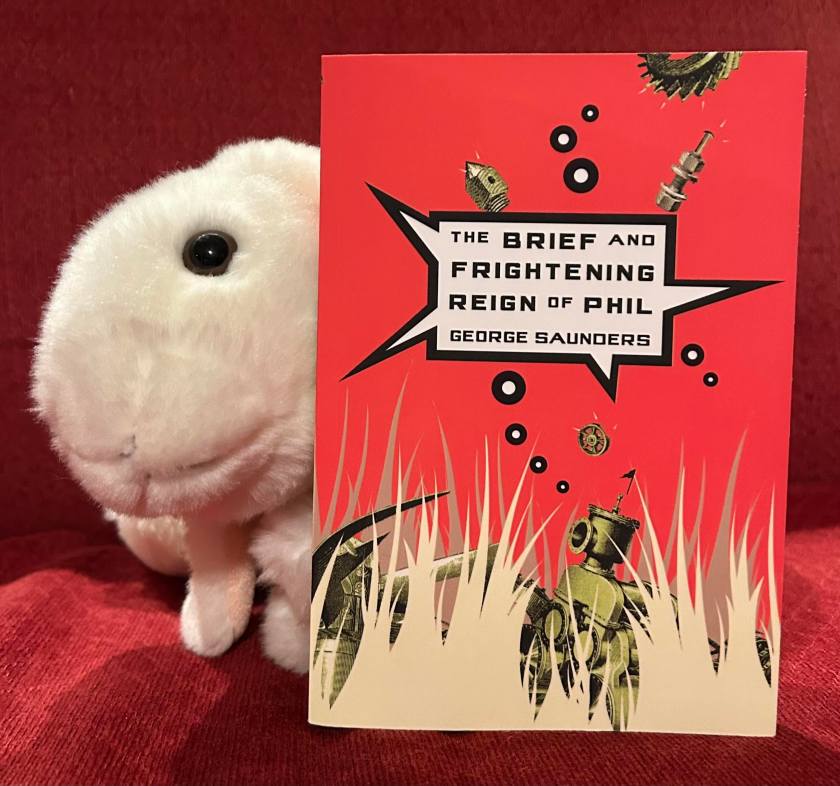
Marshmallow reviews The Brief and Frightening Reign of Phil by George Saunders.

Marshmallow’s Quick Take: If you like clever, thought-provoking books akin to those of George Orwell, then this is the book for you! 

Marshmallow’s Summary (with Spoilers): Set in a truly bizarre world, this story starts in Inner Horner which is a nation literally so small that only one of its seven citizens can fit in it at a time. What do the other six unfortunate Inner Hornerites have to do in the meantime? They basically sit in this tiny area called the Short-Term Residency Zone, located in Outer Horner. The Outer Hornerites naturally feel very superior in comparison to their miniscule neighbors. Suddenly, Inner Horner shrinks to be even smaller so that only one fourth of a citizen can inhabit the nation. This turns out to cause quite the issue with the Outer Horner Militia who feel that this constitutes an “Invasion in Progress” as they say.

While the militia deliberate on what course of action to take, Phil comes in and suggests taxing the Inner Hornites for every day that they infringe on Outer Horner. Phil is described as “a slightly bitter nobody” who fell in love with Carol–an Inner Hornite who fell in love with and married another Inner Hornite, much to Phil’s despair. With the birth of her child, Phil’s despondency contorted to more closely resemble anger. Utilizing his constituents’ naïveté and gullability, Phil convinces the Militia that the Inner Hornites are inferior to the Outer Hornites, something that confirms most of the Outer Hornites’ inner thoughts.

As the book progresses, the Inner Hornites are treated increasingly worse and worse as Phil rises from a nobody to the leader of Outer Horner. While the characters are not humans (they are all amalgamations of objects, biological parts, and machinery it seems), the plot draws a line definitively parallel to some of humanity’s worst times. 
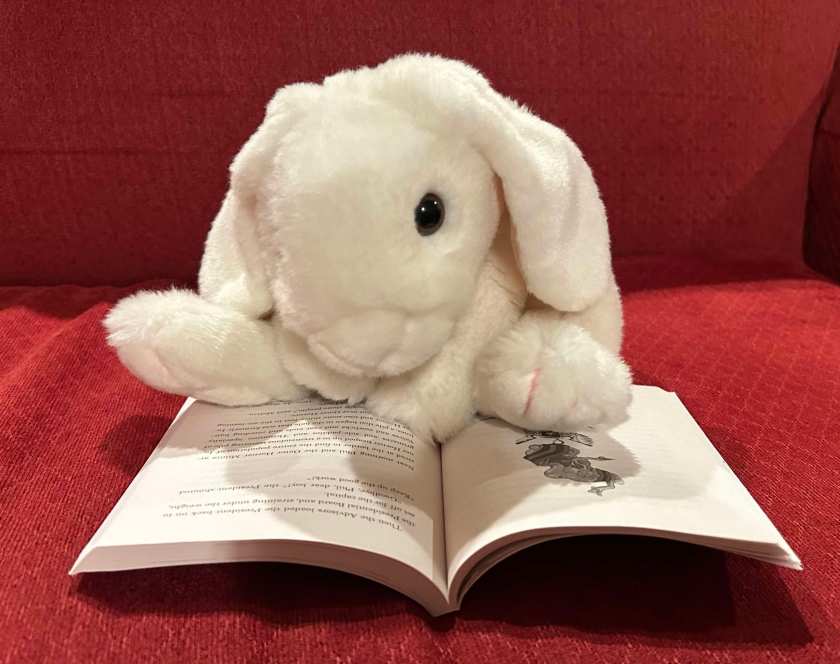
Marshmallow is reading The Brief and Frightening Reign of Phil by George Saunders.

Marshmallow’s Review: This book was really bizarre. The world, the nations’ names, the characters are all just weird, but all this weirdness makes the book stand out even more in my opinion. There is not very much description of the surroundings other than it seems like Earth. There are trees and rivers and dirt and apparently a cafe in Outer Horner, but, other than that, not much else is given. The citizens are all described and drawn as being some sort of strange creatures, but none of them are the same. For example, the president of Outer Horner is described as “consisting of a jumble of bellies, white mustaches, military medals, and dignified double chins, all borne magnificently aloft on three thin wobbly legs.” Suffice it to say, they all look pretty unusual.

But the differences between us and them pretty much end there. Phil’s rise to power and the suppression of the Inner Hornites honestly follows the same course human history has too many times (this disturbingly reminded me of what I learned about pre-WWII Germany). I wonder if the weird descriptions of the characters represent some deeper analogy. The plot is intriguing and the ending was definitely very interesting.

I read The Brief and Frightening Reign of Phil in an hour and five minutes, so it’s definitely pretty short. There are some drawings that made me feel like this book is a little similar to The Phantom Tollbooth. Of course one also cannot help but think of Animal Farm, another short allegorical tale about the rise of tyranny.

Overall, The Brief and Frightening Reign of Phil was a fascinating book and I would recommend it to almost all ages. It is slightly amusing yet intriguing in a bizarre way that is hard to explain; the way to best understand what I mean is to read it!

Marshmallow’s Rating: 100%.
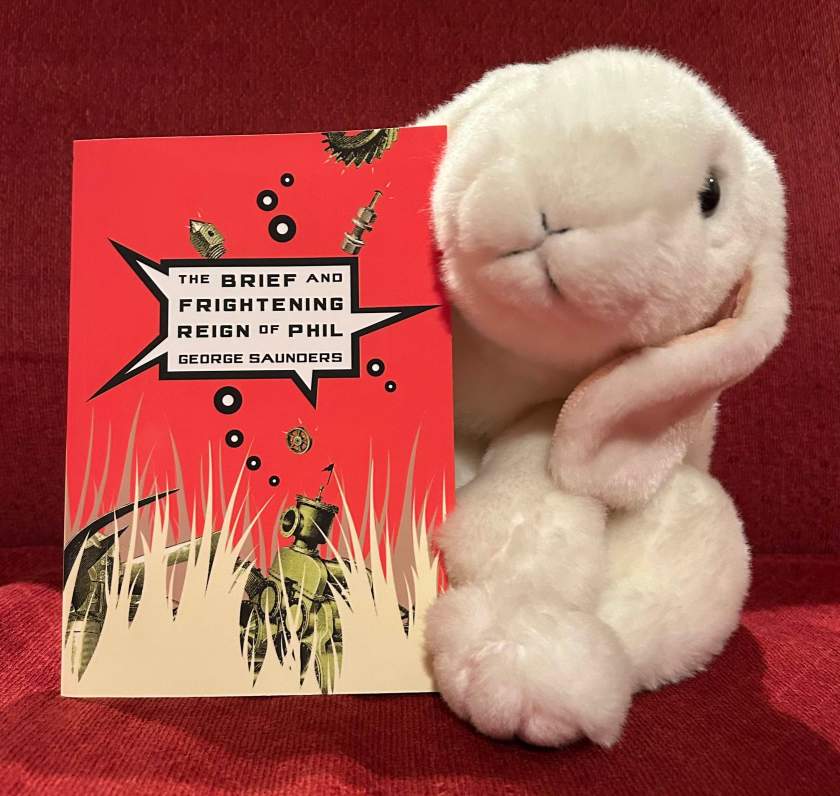
Marshmallow rates The Brief and Frightening Reign of Phil by George Saunders 100%.

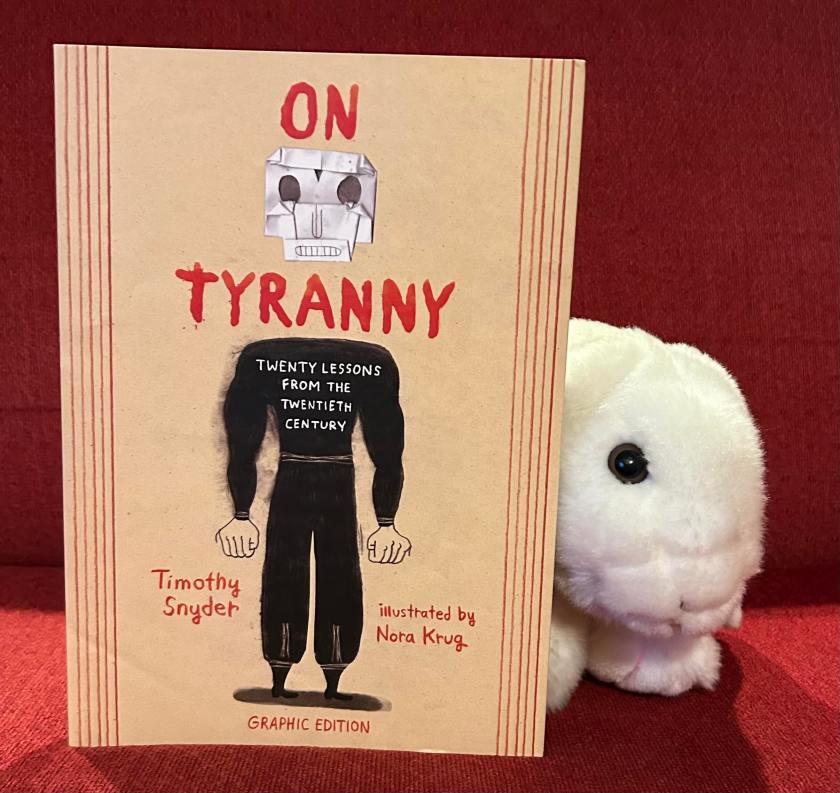
Marshmallow reviews On Tyranny: Graphic Edition by Timothy Snyder and Nora Krug

Today Marshmallow reviews the graphic edition of Timothy Snyder’s On Tyranny, originally published in 2017. The graphic edition was illustrated by Nora Krug and published in 2021.

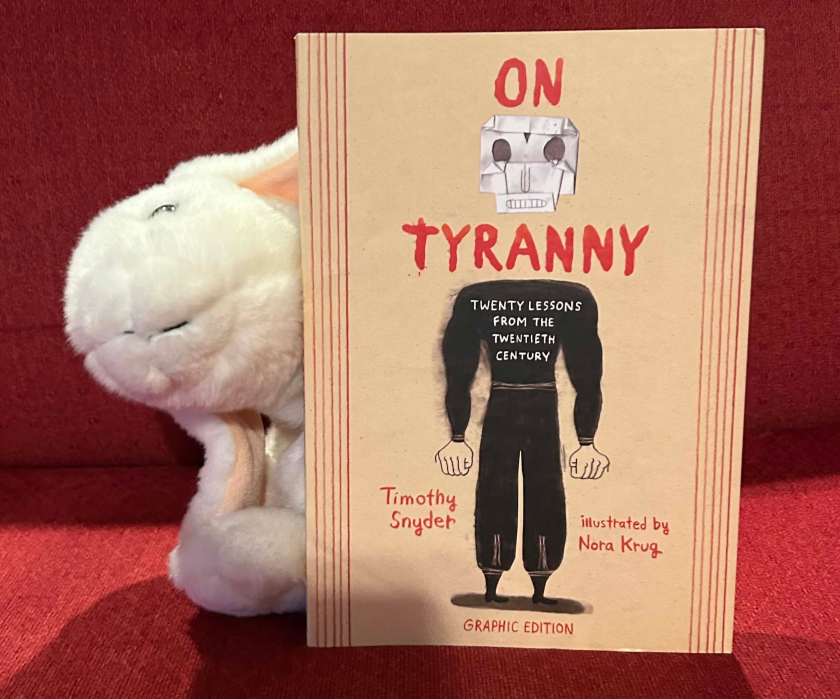
Marshmallow reviews On Tyranny: Graphic Edition, written by Timothy Snyder and illustrated by Nora Krug.

Marshmallow’s Quick Take: If you like reading books about current events and deep ideas about nations and history, then this is the book for you! If not, then this book is for you, too!

Marshmallow’s Summary (with Spoilers): This is a nonfiction book about the titular topic of tyranny. The dictionary defines tyranny as “oppressive power, especially oppressive power exerted by a government” and “a government in which absolute power is vested in a single ruler”. So On Tyranny is about oppressive government structures and how they come to be.

More specifically, the book is divided into twenty main lessons we can learn from the history of the twentieth century. Historian Timothy Snyder dives into what happened—in Europe mostly—during the twentieth century, examining the ways in which those past democracies were systematically replaced by tyrannical, manipulative dictators who seized control of their countries using several tactics some leaders are using today. Because I think these lessons are of utmost importance, I’ll put them here on this post for those who don’t plan on purchasing the book:

“Do not obey in advance. Defend institutions. Beware the one-party state. Take responsibility for the face of the world. Remember professional ethics. Be wary of paramilitaries. Be reflective if you must be armed. Stand out. Be kind to our language. Believe in truth. Investigate. Make eye contact and small talk. Practice corporeal politics. Establish a private life. Contribute to good causes. Learn from peers in other countries. Listen for dangerous words. Be calm when the unthinkable arrives. Be a patriot. Be as courageous as you can.”

Now, it’s simple to read these simple-sounding phrases and think, “I just learned everything this book has to offer.” But I cannot think of another book that I believe should be read more than this one. I think this book should be mandatory reading because it is an instruction manual for how to protect democratic governments. Democracy is the best way for peoples to govern themselves, but it can be vulnerable; it needs to be protected from enemies within and outside the borders of any nation that wishes to uphold democratic institutions.

The ideals of democracy, the book’s author conveys, are things that cannot be taken for granted. The people must be able to think for themselves, ask questions, and know when those in power are starting to sound a little too much like the tyrants in the history books. This book uses quotes, stories, facts, and nuanced, yet time-tested ideas to compellingly create the ultimate survival guide for a democratic nation. Telling us exactly what the downfall of a democracy would look like, this book offers its readers ways to prevent such an end. 

Marshmallow is reading On Tyranny: Graphic Edition, written by Timothy Snyder and illustrated by Nora Krug.

Marshmallow’s Review: In case you couldn’t tell from my little sermon above, I should explicitly write out that I think this book needs to be read by any and every person who is a part of a modern society today. The book is a timely warning and a critical manifesto that we all need to read, now more than ever.

As one of the wisest humans I know once said, “Nothing in this world is free. Freedom is not free.” We all have a responsibility to protect the blessings that liberal democracy has given us. Various forces are trying to tear democratic nations apart and rebuild them into their own image, Frankenstein-like and through fear. This book looks at history and pulls from what happened in the past to show us how people were manipulated into submission so today’s people don’t fall for the same tricks.

The book is definitely written with an American perspective, and I expect that there will be some who disagree with the author’s political views on contemporary U.S. politics. However, the history presented is still relevant, to each and every one of us living today. We all need to know what mistakes people like us made when they thought nothing bad could happen in their country. We need to understand their mistakes to recognize when we might be about to make our own. 

As is natural for all young bunnies, I love my country. If you love your country, too, then read this book so you know how to protect it.

Marshmallow’s Rating: 100%.

Marshmallow rates On Tyranny: Graphic Edition, written by Timothy Snyder and illustrated by Nora Krug 100%.

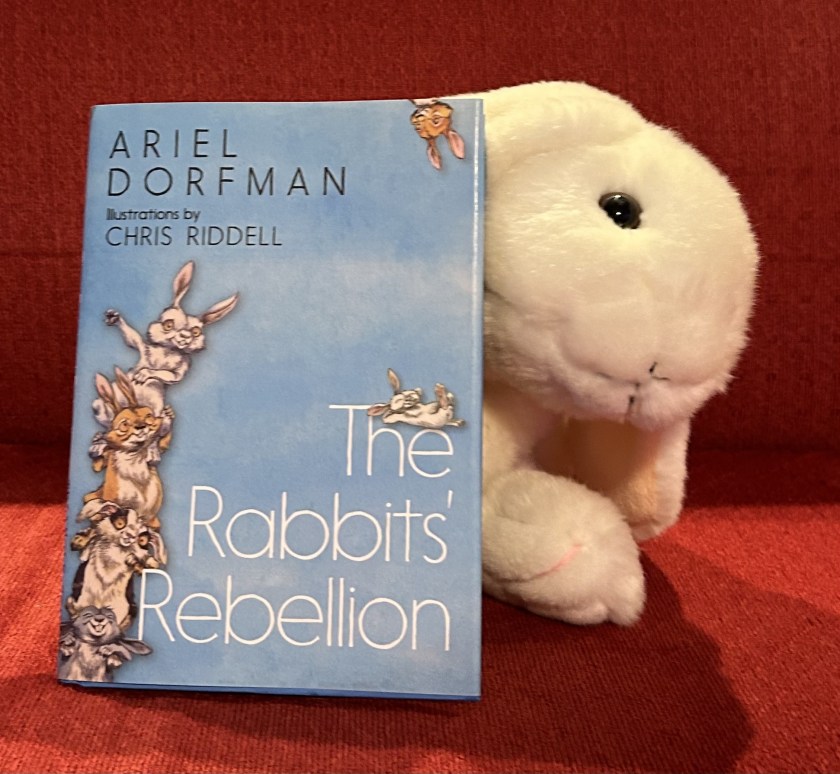
Marshmallow reviews The Rabbits’ Rebellion by Ariel Dorfman and Chris Riddell

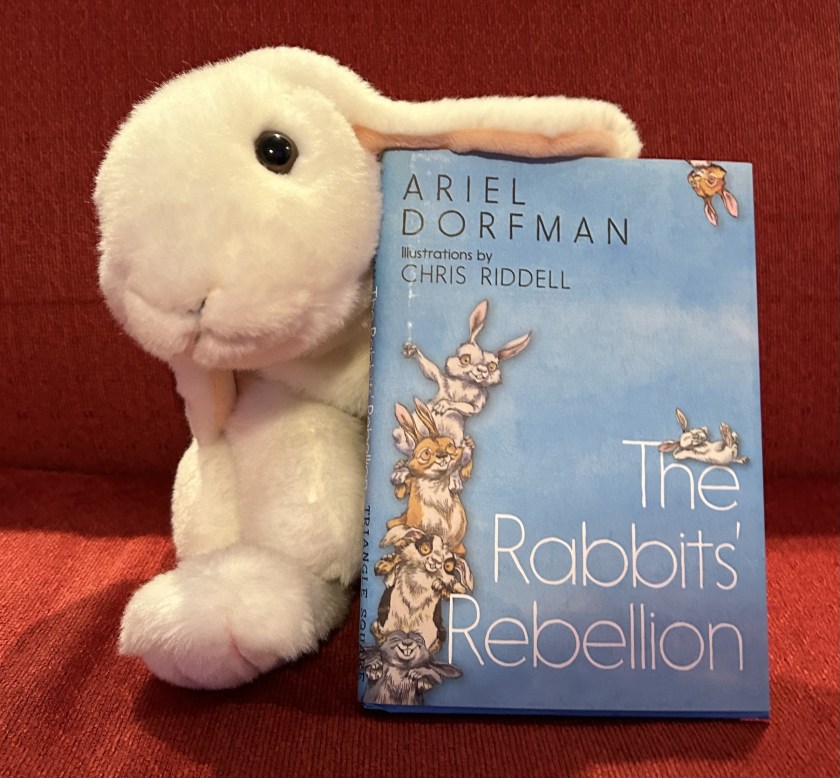
Today Marshmallow reviews a little book with a big message, first published in 2020: The Rabbits’ Rebellion, written by Ariel Dorfman and illustrated by Chris Riddell.

Marshmallow reviews The Rabbits' Rebellion, written by Ariel Dorfman and illustrated by Chris Riddell.
Marshmallow reviews The Rabbits’ Rebellion, written by Ariel Dorfman and illustrated by Chris Riddell.

Marshmallow’s Quick Take: If you like children’s books about animals and clever political commentary, then this is the book for you!

Marshmallow’s Summary (with Spoilers): When the wolves invade the land of the rabbits, the Wolf of all Wolves crowns himself king and begins to make some wild claims. First of all, he—feeling quite omnipotent that day—declares that rabbits don’t exist. He bans any reference to them in books (by personally crossing them all out) or in conversation. Unfortunately, birds can fly and report seeing some, which spread rumors that perhaps rabbits do exist.

The king then decides then, if (as his fox advisor says) “seeing is believing,” he’ll make his subjects see exactly what type of a ruler he is. So he commands an old monkey to take regal photos of him to be put up in every town square, every neighborhood, and in every house. He forces the birds to carry these posters, tying their feet to an “endless” cord to make sure they can’t escape. Naturally, the old monkey is terrified of the king and bends to his every whim and want. In other words, he says, too, that rabbits don’t exist. On the other hand (or paw!), the monkey’s daughter—with the fearlessness of innocence—knows that rabbits do exist even though her parents make sure to censor her whenever it becomes necessary.

But that’s just the beginning of the old monkey’s struggles. Every time he takes a photo of the wolf king, there is some hint of a rabbit in the background. When the king shatters the beavers’ dam (which took them three years to build), there are two rabbits sitting on the grass in front of the camera. When the king snarls in the most ‘majestic’ manner, a long, fuzzy ear shows up in the corner. This is most problematic because the monkey can’t show the king photos that go against his rule that rabbits don’t exist. So he doctors his photos after they develop, erasing any and every trace of rabbit hair, ears, or tails.

As the king becomes increasingly more controlling, more egotistical, and more tyrannical, the monkey must keep taking photos and editing them. Despite the king’s advisor tightening security around the photo shoots (he doesn’t want the king to know about the rabbits either—it would look bad on him), the rabbits persistently keep up their rebellious photo-bombing. But how could they, when they don’t exist?

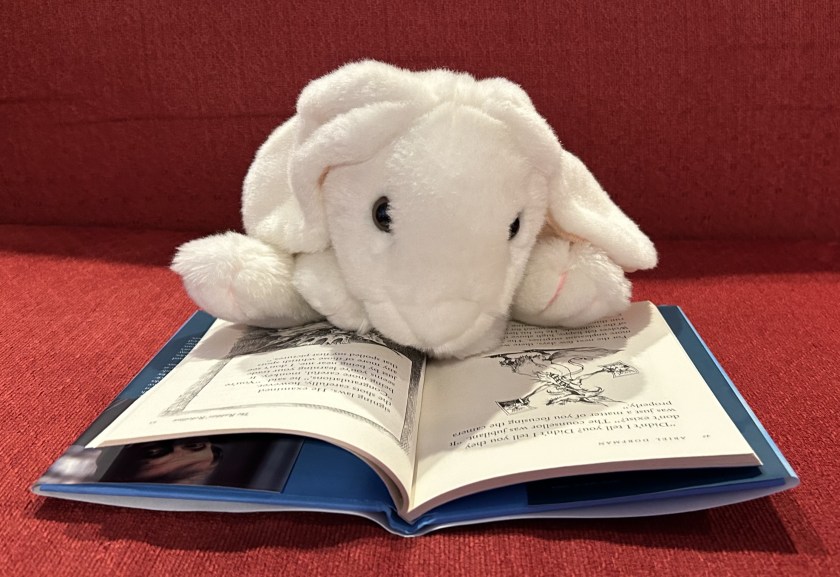
Marshmallow is reading The Rabbits' Rebellion, written by Ariel Dorfman and illustrated by Chris Riddell.
Marshmallow is reading The Rabbits’ Rebellion, written by Ariel Dorfman and illustrated by Chris Riddell.

Marshmallow’s Review: The Rabbits’ Rebellion is a really good book! It is written as a book for little children, and it reminds me of some Roald Dahl books I read earlier. Roald Dahl was unique in a way because his books could be read as childish tales, but they also touched on deeper topics. Likewise, the meaning of Dorfman’s book might not be understood by very young readers even though they would still enjoy reading about these mischievous rabbits who insist on existing! (Go, bunnies! Of course I cannot be too impartial here.)

At its core, The Rabbits’ Rebellion is about authoritarianism and dictatorship. The king’s suppression of truth, especially a truth that is so obvious, is in a way an almost comically extreme example of an Orwellian dystopia. In a way, this book is like Animal Farm or Nineteen Eighty-Four for young children. Except—spoiler alert—this one ends better than both of those books.

The Rabbits’ Rebellion is entertaining even if you don’t catch this theme. It is kind of like how one might enjoy reading parts of Animal Farm even without digging into the allegory. But Animal Farm ends at a quite depressing place for young bunnies to really enjoy it all the way to the end. Similarly, I learned that some parents have complained that the ending of The Rabbits’ Rebellion is too graphic to make it appropriate for a calm bedtime. So readers beware!

I found it interesting that the world of this book is so different yet also very similar to ours. There is no magic, but they do have cameras and books. Remember how in Maus the whole story only involved mice and a few other types of animals, but we could see our own world in it? Just in the same way, the differences and the similarities despite those differences help convey Dorfman’s message very clearly.

All in all, The Rabbits’ Rebellion has a really poignant yet simple plot and is a very thought-provoking book even though it is extremely short (only 63 pages). Written in large font and with really beautiful illustrations that evoke a serious, fairy-tale feel, it is quite easy to read, too. I think it could be a great way to introduce children to political thought and discussion. (I might reread Nineteen Eighty-Four as a result of reading The Rabbits’ Rebellion, because this book really reminded me of it.) Overall, I would definitely recommend this book to bunnies young and old, who both will find it entertaining (perhaps intellectually) and thought provoking. 

Marshmallow’s Rating: 100%.

Marshmallow rates The Rabbits' Rebellion, written by Ariel Dorfman and illustrated by Chris Riddell 100%.
Marshmallow rates The Rabbits’ Rebellion, written by Ariel Dorfman and illustrated by Chris Riddell 100%.

Marshmallow reviews We Should All Be Feminists by Chimamanda Ngozi Adichie

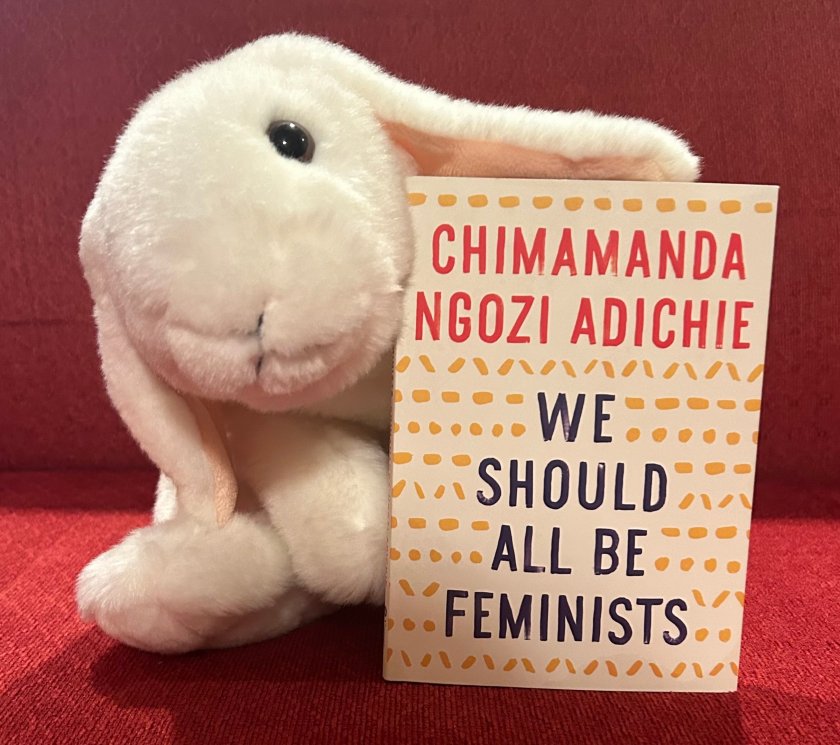
Today Marshmallow picked up a short little book from the book bunnies’ home library: We Should All Be Feminists by Chimamanda Ngozi Adichie, first published in 2014. Below she shares some of her thoughts on this little book.

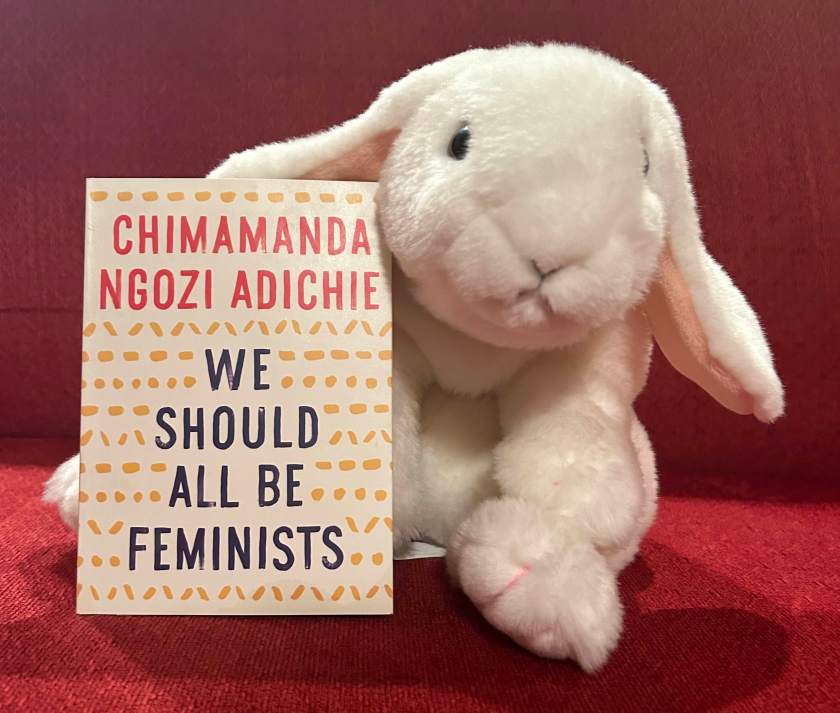
Marshmallow reviews We Should All Be Feminists by Chimamanda Ngozi Adichie.

Marshmallow’s Quick Take: If you are feeling up for a short, non-fiction book with an important message, then this might be the book for you.

Marshmallow’s Summary (without Spoilers): I’d like to start off by saying that this book is adapted from Chimamanda Ngozi Adichie’s TEDx talk which is also titled “We should all be feminists”. I would recommend watching the video of her talk before or after reading this book.

In this book, Ngozi Adichie covers her experiences as a feminist. She explores what it means to be a feminist, how we can raise feminist children of both genders, and how we can strive towards a future where we are all feminists. 

The author starts off by talking about her first encounter with the word “feminist”. The first time she was called a feminist, the word “feminist” was something akin to terrorist, used as an insult and an accusation. However, as we follow her, we learn that feminism is nothing to be afraid of and that instead it should be something we all should strive for.

Ngozi Adichie points out something insightful in this book when she states that the word “feminist” is often associated with the idea of being un-feminine. Ngozi Adichie writes that she enjoys wearing high heels and shiny lip gloss, even though she is a feminist. The author emphasizes that being a feminist doesn’t mean that you are unfeminine; it simply means that you believe that men and women deserve equal rights and prospects in life. The author specifically examines the treatment of women and men in Nigeria, offering examples and anecdotes from her personal experience. Though her examples were mostly from Nigeria, she does allow us to recognize that many women around the world are often ignored and silenced. 

The author also talks about how men fit into feminism. She says that being a feminist doesn’t mean believing in female superiority; it means believing in female equality. Ngozi Adichie writes that ideas of masculinity also feed into the unjust sexism that exists in all cultures. Ngozi Adichie talks about how we must change the perspectives on gender, for both genders, for the sake of women and men. 

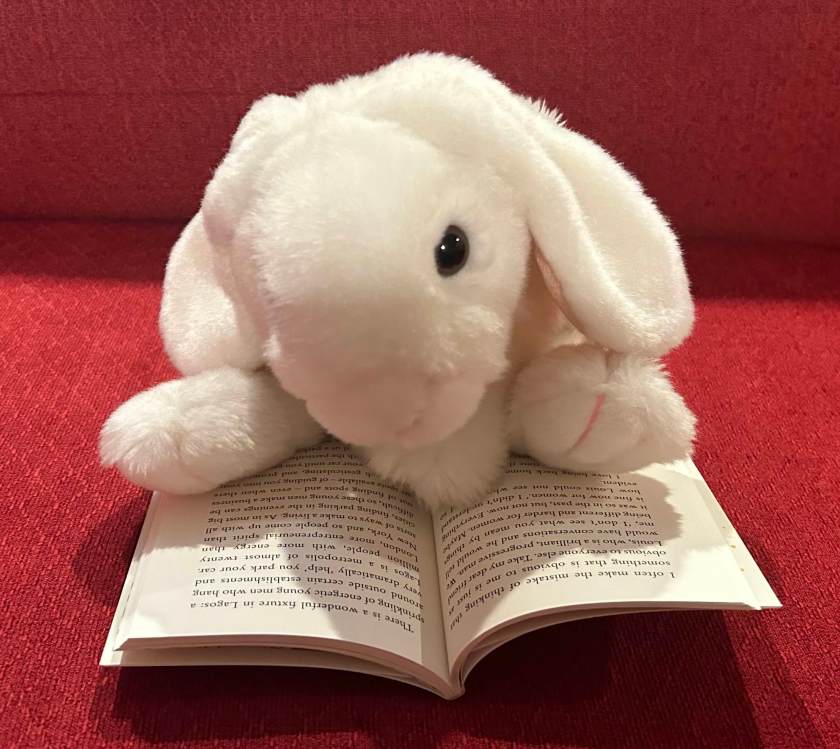
Marshmallow is reading We Should All Be Feminists by Chimamanda Ngozi Adichie.

Marshmallow’s Review: I really liked this book. I completely agreed with practically everything in this book and felt verified by some of her statements. As a female bunny, I think books like this are important for change, especially this book. This book is very short and concise. The writing style is fresh and engaging, easy to follow and easy to understand. Yet the simplicity is most successful because of the way the author is so persuasive.

We Should All Be Feminists is a great book to give to someone who might not recognize the issues that women still face today. This is a very important message for everyone because feminism isn’t about pushing men down at all. It’s about focusing on what we have in our brains, rather than what sex chromosomes we have. 

Overall, We Should All Be Feminists is very meaningful, easy to understand, and appropriate for all ages. I would recommend that everyone reads this book or at least watch the TEDx version of it

Marshmallow’s Rating: 100%

Marshmallow rates We Should All Be Feminists by Chimamanda Ngozi Adichie 100%.