Caramel reviews Animated Science: Periodic Table by Shiho Pate and John Farndon

For his first review back from his summer break, Caramel wanted to talk about Animated Science: Periodic Table, a 2021 book illustrated by Shiho Pate and written by John Farndon. As usual Sprinkles is taking notes and asking questions.
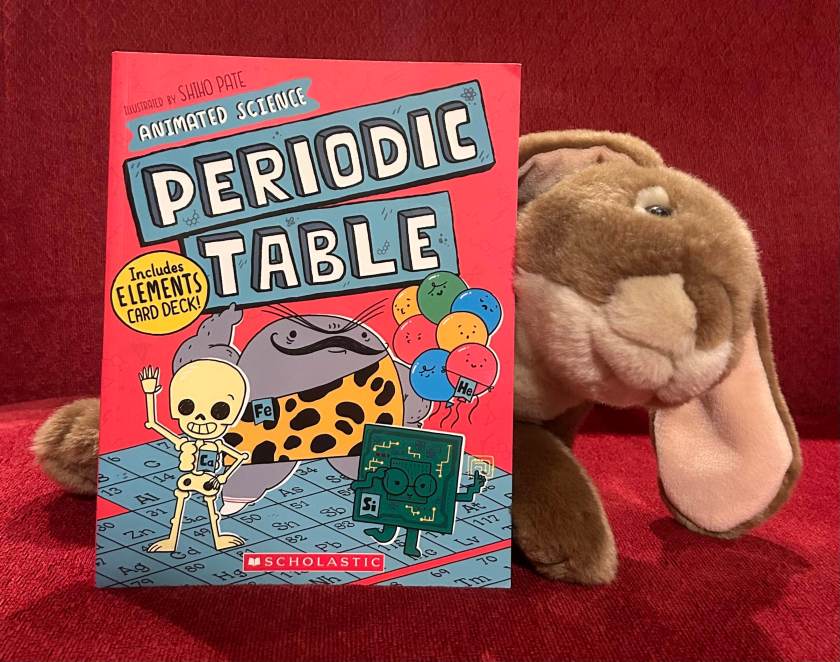
Caramel reviews Animated Science: Periodic Table, illustrated by Shiho Pate and written by John Farndon.

Sprinkles: Welcome back Caramel!

Caramel: It’s great to be back!

S: Yay! Are you ready to talk about books again?

C: Always!

S: So you chose a nonfiction book to talk about today. Can you tell us what it is about?

C: It is about the periodic table, as its title says.

S: So what is the periodic table?

C: The periodic table is a way to organize the elements and the atoms.

S: Yes, you actually talked about it before, when you were reviewing The Elements: A Visual Exploration of Every Known Atom in the Universe by Theodore Gray. Do you remember that book?

C: Yes, of course I do.

S: So how is this book similar ot or different from that book?

C: Well, it is similar because it talks about many different elements and their uses. There are special pages for some of the elements and some of the elements are together on one page, but they talk about each of the elements.

S: That is cool!

C: Yes.

S: Back then, you told me your two favorite elements were titanium and uranium. If you were to pick two new ones now, which ones would you pick?

C: That’s a tough question. But I found some new interesting facts. Can I tell you about them?

S: Sure.

C: For example, Gallium is a metal that melts very quickly, only at 86 degrees Fahrenheit.

S: That is a reasonably warm day in California, no?

C: Yep.

S: That sounds interesting, a metal that can melt at a temperature that we can survive in. Is that what you found interesting about Gallium?

C: Yes. Also the book has very cute drawings, and I like the one for Gallium. It is a melted gray blob and it is very cute!
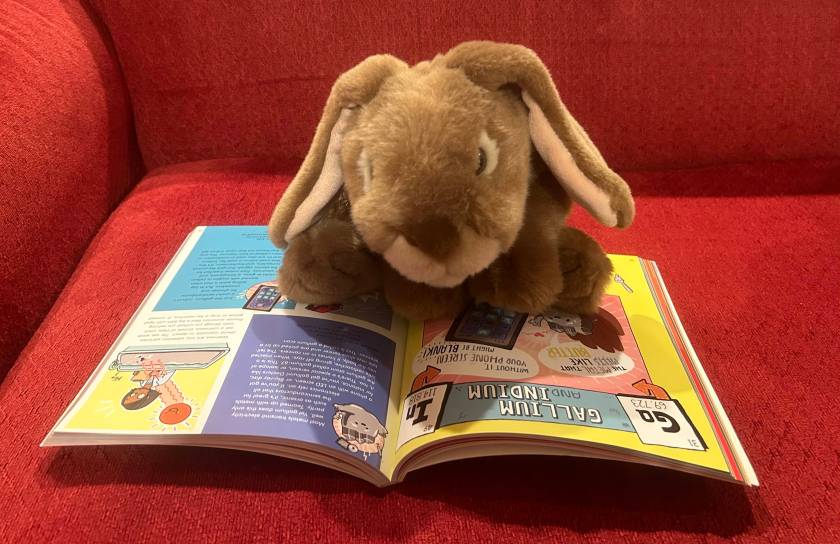
Caramel is reading about Gallium in Animated Science: Periodic Table, illustrated by Shiho Pate and written by John Farndon.

S: So tell me more about the drawings then.

C: They make them very cute. All the elements have faces and they are different colors and some are wearing clothes.

S: That is funny!

C: Yep. Then there is a green cube that is silicon and he is being sliced up so people can make chips with it. It could be sad or scary, but the cube is looking very serious but not in pain. So maybe he is concentrating.

S: That could be!

C: Also I learned from this book that the Latin name for lead is plumbum, and that is why its abbreviation is Pb.

S: I did not know that!

C: Neither did I.

S: So the book is full of lots of new facts then, right?

C: Yes. So “factful” is one of my three words.

S: Okay, so what are your other words then?

C: Incredibly cute pictures.

S: Hmm, that is three words on its own. But alright, I think we can let it slip by. So do you think other little bunnies would enjoy this book?

C: Yep. Especially if they like cute pictures.

S: Okay, that sounds good Caramel. Let us wrap this up then. What would you like to tell our readers?

C: Stay tuned for more book bunny reviews!
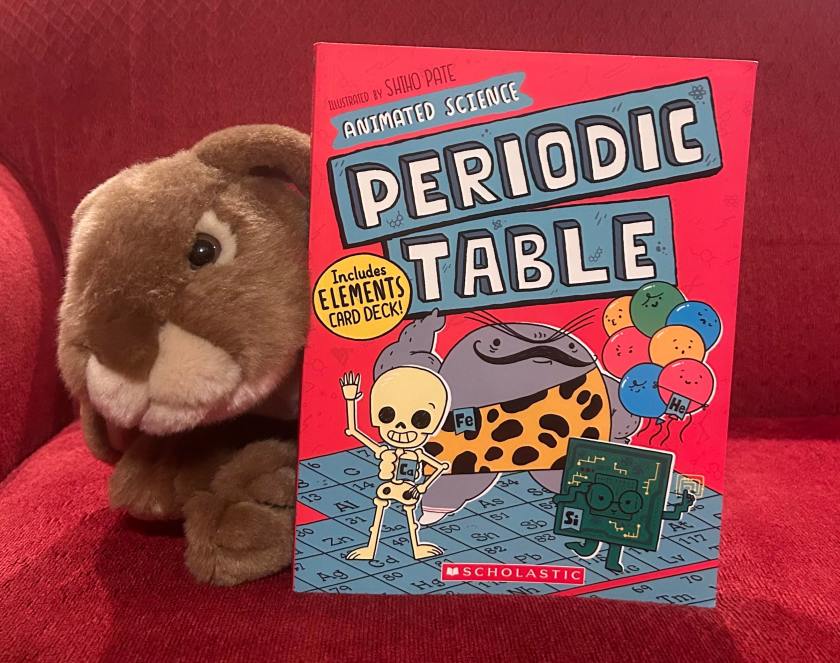
Caramel loved reading Animated Science: Periodic Table, illustrated by Shiho Pate and written by John Farndon and recommends it to all curious little bunnies looking to learn more about the world around us.

Caramel reviews Invented by Animals by Christiane Dorion and Gosia Herba

Every summer the book bunnies take the month of July off. For his last review before the summer break, Caramel chose to talk today about a fun book he read recently: Invented by Animals, written by Christiane Dorion, illustrated by Gosia Herba, and published in 2021. As usual, Sprinkles is taking notes and asking questions.

Caramel reviews Invented by Animals, written by Christiane Dorion and illustrated by Gosia Herba.

Sprinkles: So Caramel, tell me a bit about Invented by Animals. It has an inviting subtitle: “Meet the creatures who inspired our everyday technologies.”

Caramel: This book has a lot of different animals telling us about what inventions or ideas for inventions they gave to humans.

S: What is that supposed to mean? Can you give me an example?

C: My favorite is an eagle telling us how his eyeballs work. And how well he sees.

S: Hmm, so it is not that the eagle itself has invented neat eyes, but humans have been inspired by how his eyes work.

C: Yes.

S: That makes sense. Are there any examples of the other kind, where some animal is doing something interesting or has invented something intentionally to solve a problem and the humans are inspired by it to do something themselves?

C: Yes. For example, the paper wasp chews up bark and mixes it with its saliva to create paper. That is one of the ways humans figured out how to make paper themselves. In fact today’s paper is made more or less in that same way.

S: I don’t think humans chew bark to make paper.

C: Nor do bunnies, Sprinkles, I know. But the idea is about the same.

S: I see.

Caramel is reading Invented by Animals, written by Christiane Dorion and illustrated by Gosia Herba.

S: I know you love your facts, Caramel. Did you learn new facts from this book?

C: Yes, a ton! Almost all of the book was new to me.

S: That is awesome, so you must have enjoyed the book immensely.

C: Yes, I did.

S: So give the a three-word description of the book then.

C: Colorful, factful, and nature-ful.

S: Hmm, why don’t we rephrase that and say, full of color, facts, and cool nature?

C: I can work with that!

S: Okay. What else can you tell us about the book?

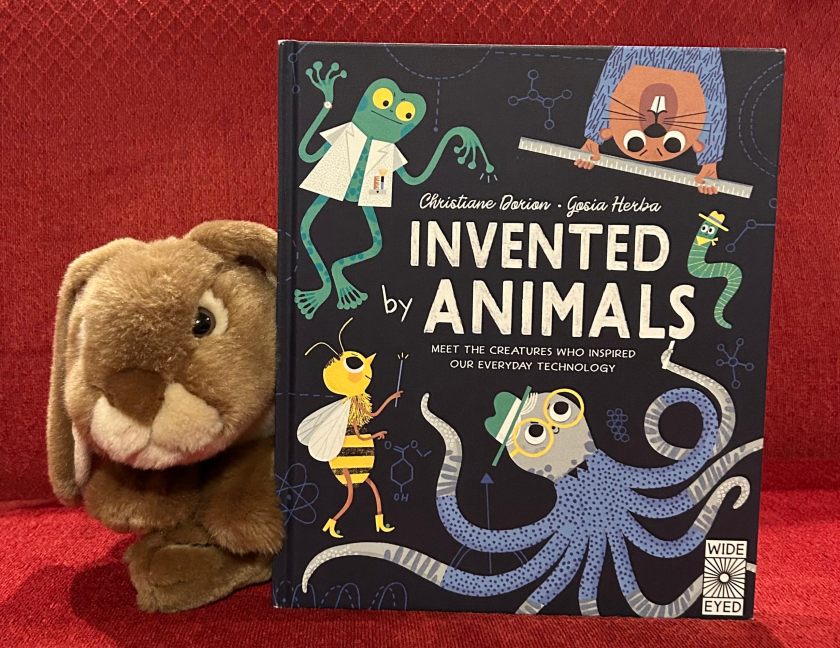
C: I love the pictures! They are not quite anatomically correct; all animals have mouths on the front of their heads, and eyes and so on, and they are wearing clothes. Some even have shoes.

S: Hmm, so they are anthropomorphized, I suppose.

C: Exactly.

S: So how did that make you feel as a bunny?

C: Well, I have eyes and a mouth in the front of my head, too, so that works for me.

S: I guess those features make the illustrations more friendly and fun, right?

C: Yep. But I wished that they had some things about bunnies. It made me feel kind of excluded.

S: I see. But they could not have something from all animals. The book would be too long.

C: That’s true. But I still kind of wanted a bunny invention there.

S: I can totally sympathize.

C: They had an albatross even. Come on!

S: I understand Caramel. But other than that, you did enjoy the book, right?

C: Yep, very much so. Maybe they can write a second volume, and they can include a bunny or two in that one.

S: We can always hope. Okay, Caramel, this is a good time to wrap up this review. Is there something you want to tell our readers?

C: Stay tuned for more book bunny reviews! We will be back in August!

Caramel loved reading Invented by Animals, written by Christiane Dorion and illustrated by Gosia Herba, and recommends it to all young bunnies interested in learning more about the amazing creativity of nature.

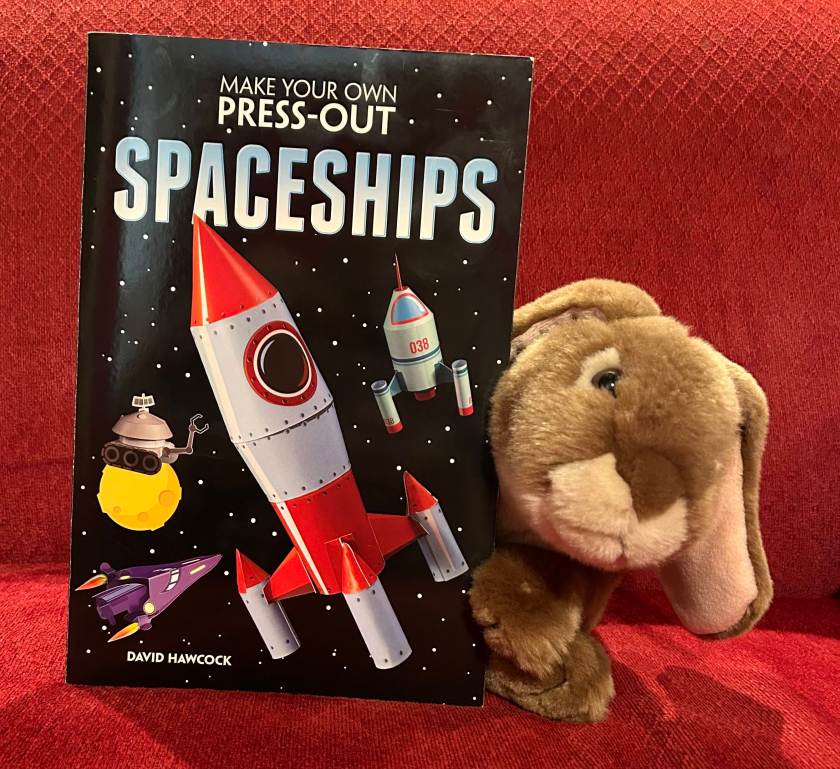
Caramel reviews Make Your Own Press-Out Spaceships by David Hawcock

Today Caramel reviews a recent favorite, Make Your own Press-Out Spaceships, by David Hawcock. As usual, Sprinkles is taking notes and asking questions.

Caramel reviews Make Your Own Press-Out Spaceships by David Hawcock.

Sprinkles: So Caramel, as soon as you saw this book in a catalog, you wanted to get your paws on it. But it took us a while to get a copy. Was it worth the wait?

Caramel: Yes. It most certainly was.

S: So tell us a bit about the book.

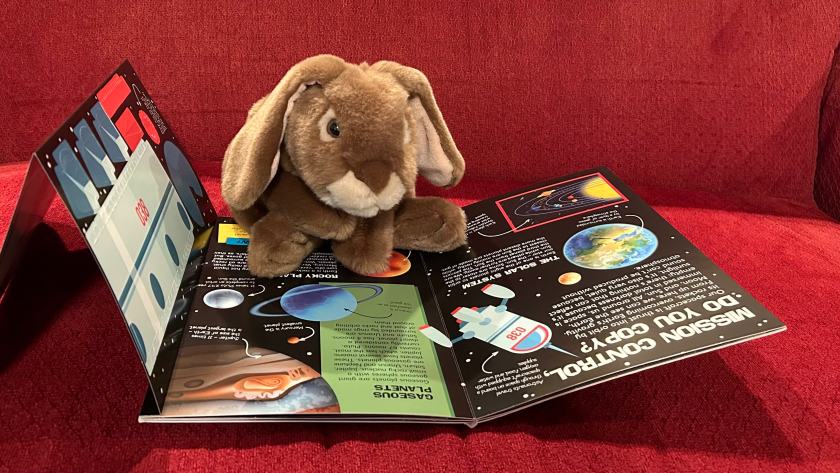
C: This book has a lot of fun facts about space, and in between, there are special pages you push out and make spaceships with. As you can imagine, this made me very happy.

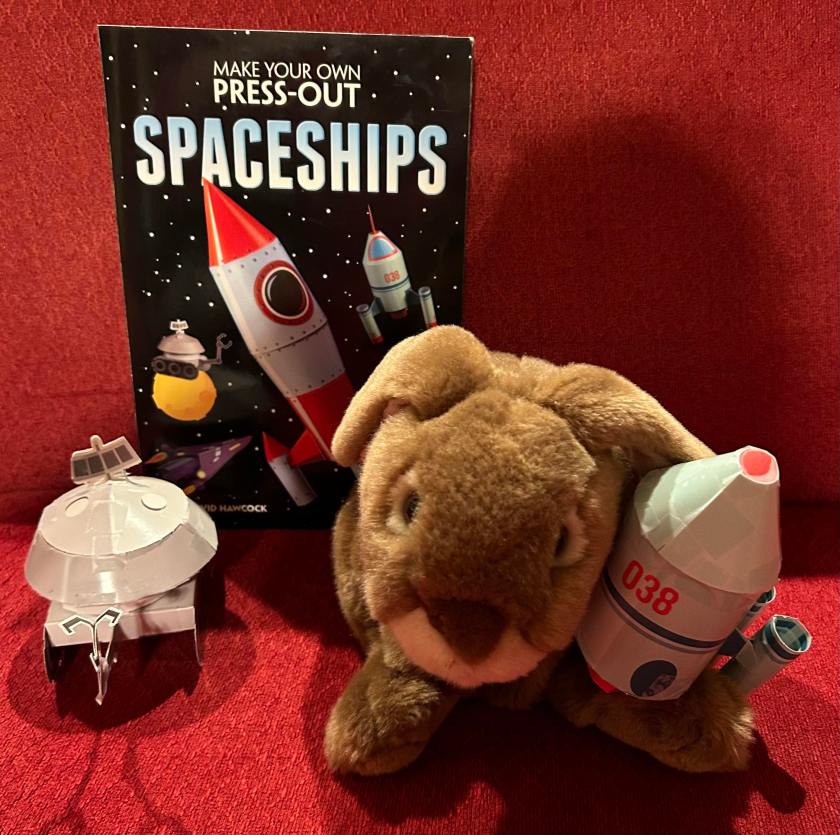
S: I can imagine. But I don’t have to. I saw you happily building a rover and a space shuttle already.

C: Yep. And next I’m going to build the purple spaceship at the end. I will call it the Dark Star.

S: That sounds cool!

C: It is!

Caramel is reading Make Your Own Press-Out Spaceships by David Hawcock.

S: So you said the book is full of facts. And we know you love facts and have a lot of them in your head already. Can you tell me one new fact you learned?

C: I learned about dark matter. Apparently it is “an invisible component of matter that makes up most of the universe.” According to the NASA website we found, “dark matter is composed of particles that do not absorb, reflect, or emit light, so they cannot be detected by observing electromagnetic radiation. Dark matter is material that cannot be seen directly. We know that dark matter exists because of the effect it has on objects that we can observe directly.” That is pretty awesome!

S: I agree, it is pretty awesome!

C: I also learned that it takes Mercury eighty-eight days to orbit the sun, but it takes Pluto 247 Earth-years! That is kind of sad!

S: Yes, so if we lived on Pluto, years would probably not be too useful as units of time, right?

C: I guess you could use them to measure things that take a longer time.

S: But our lifetimes would be less than a Pluto-year.

C: Unless we would be different there, and our lives would last about the same number but in Pluto-years.

S: Those lives would be long!

C: Yes, and they would be excellent!

S: Okay, let us not get too carried away. So I know the book has cool facts and cool spaceship models, but when you remove the pages to make the models, what remains of the book? Do you still have something left over?

C: Yes. They were clever and put the model pages separately from the main book pages with the facts and the pictures. Did I tell you about the pictures yet?

S: No.

C: Okay, let me tell you now then. On every page there are a lot of colorful illustrations of astronauts and spaceships and so on. The book is really fun to look at.

S: That’s neat Caramel. So can you describe the book to me in three words?

C: Colorful, factful, and craftful.

S: Okay, I know I have accepted “factful” before even though it is kind of a stretch, but I have never heard of “craftful”.

C: Well, I created it so it now exists. You do know what I mean.

S: Yes, I suppose you mean that the book is a book of paper crafts.

C: Yep. You got it.

S: Okay, let us say it works then. So maybe this is a good time to wrap up the review. What do you want to tell our readers?

C: Stay tuned for more book bunny reviews!
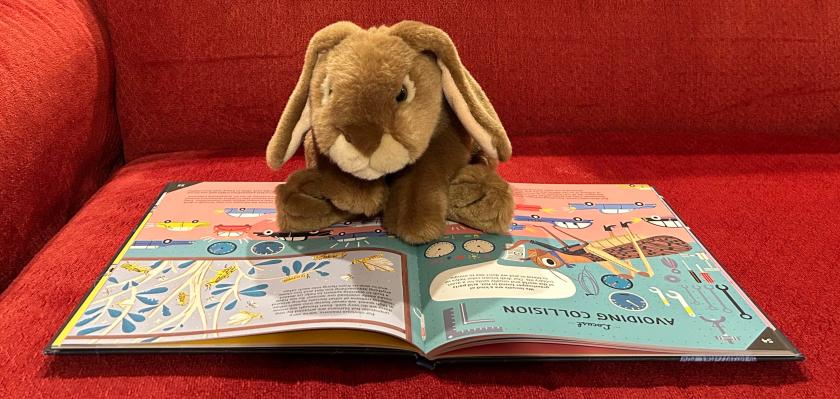
Caramel enjoyed reading Make Your Own Press-Out Spaceships by David Hawcock and made several of the spaceships already. Here he is posing with Rover the Rover and Kevin the Space Shuttle.

Caramel reviews Weird But True! 350 Outrageous Facts (Book 6) by National Geographic Kids

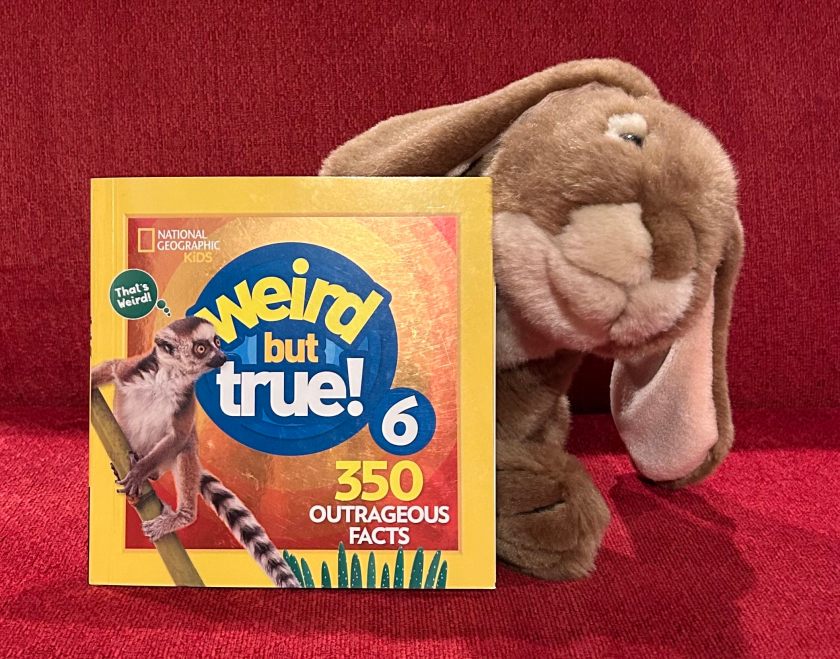
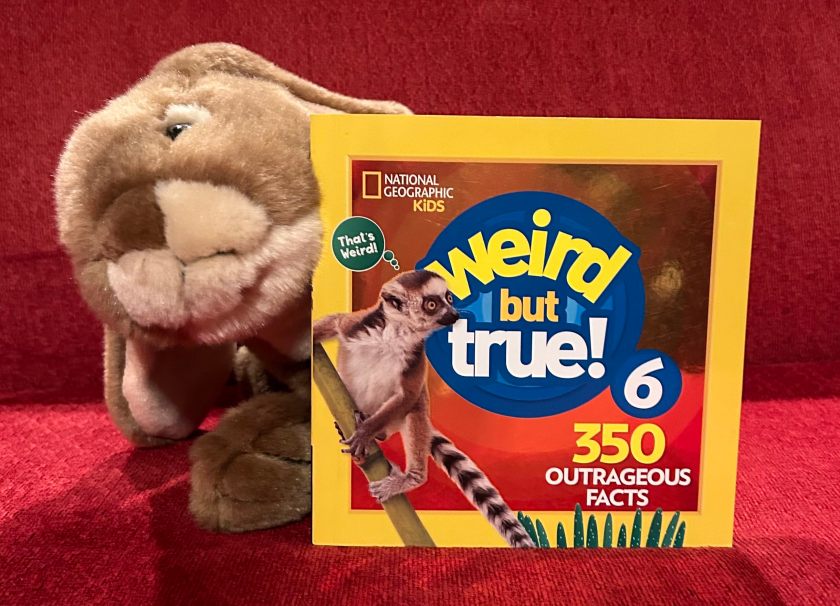
Caramel is a little bunny who loves robots, animals, space ships, and … facts. He loves facts! So today he is talking about a book that is all about facts: Weird But True! 350 Outrageous Facts (Book 6), by National Geographic Kids. As usual, Sprinkles is taking notes and asking questions.

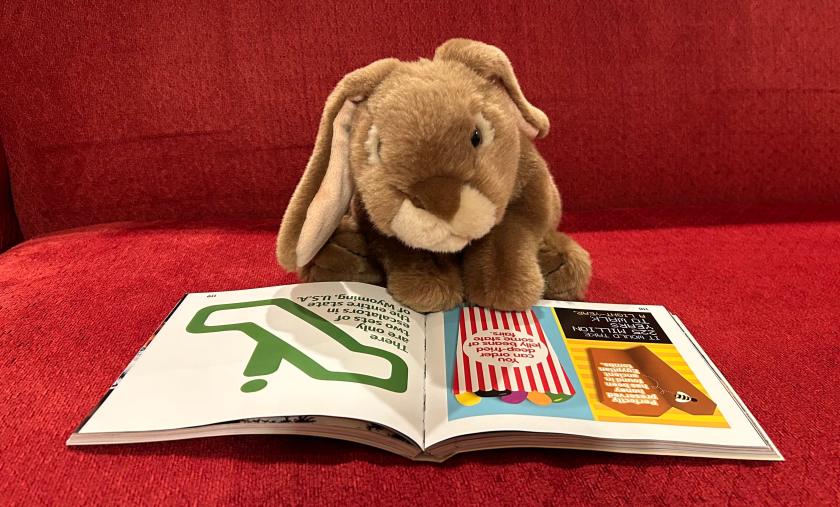
Caramel reviews Weird But True! 350 Outrageous Facts (Book 6) by National Geographic Kids.

Sprinkles: So Caramel, you have found yet another book full of facts!

Caramel: Yup! I have.

S: This is a little book with some weird facts on each page, and with lots of colorful pictures. So for example, I did not know that there was a pink lake in Australia.

C: I did know about Lake Hillier, yes!

S: I know you know a lot of weird facts already! So I am not too surprised that you had already known of this lake. Were there things that were new to you in the book then?

C: Sure. For example, I did not know that some people built a life-size Star Wars x-wing from LEGOs. And I did not know that there is an airport in Turkey named Batman.

S: Oh, there I win! I knew about Batman. It is actually a whole city, and it has nothing to do with the superhero Batman. It is also pronounced differently.

C: Well, I know it now! And I now know that ailurophobia is an extreme fear of cats. And that a planet about the size of our Earth partially made up of diamonds is worth $26.9 nonillion (that is 26.9 plus twenty-nine zeros!)

S: I did not know any of that! But did you know that this is the sixth book in a series and that there are many more books called “Weird But True! 350 Outrageous Facts”?

C: Yes, in the back of the book, there are pictures of ten of them. Can we get some of those books, too?

S: Hmm, I don’t know. Do you think it is useful to have a book that has random facts organized in no discernible order or logic?

C: Yes!

Caramel is reading Weird But True! 350 Outrageous Facts (Book 6) by National Geographic Kids.

S: To me, it sounds amusing but maybe kind of weird because there is no way to organize the facts in my mind.

C: Why bother with organizing? It is fun to read the book. Something new and surprising shows up on each page, and that is fun.

S: Hmm, I guess I can see the appeal of that. You could also just read the book on and off, and open it randomly to a random page and get amused and pass time and learn things, all at the same time.

C: Yes. That’s what I am saying.

S: That wasn’t how you read it though, right? You read it from cover to cover?

C: Yes. At least the first time. But the second time and the third time and the fourth time and so on, I just open the book to some page and read.

S: So even though you have read the book already, you think you might want to read it again and again?

C: Yup. I sometimes forget some of the facts and when I read them I remember and it is like new again. I like to look at the pictures, too.

S: Okay, so we are trying something new this week. You just started using a reading notebook. It asks you how the book made you feel. What is your answer to that question?

C: Happy!

S: How come?

C: Because I was happy to learn all these new facts!

S: You are an awesome little bunny Caramel! What three words would you use to describe the book?

C: Colorful, factful fun.

S: I think that works! This is a good place to end this post. What would you like to tell our readers?

C: Stay tuned for more book bunny reviews!
Caramel loved reading Weird But True! 350 Outrageous Facts (Book 6) by National Geographic Kids and is now wondering about the nine remaining books in the series.