Marshmallow reviews National Parks of the U.S.A. by Kate Siber and Chris Turnham

Marshmallow loves everything beautiful, and today she picked a beautiful book to talk about: National Parks of the U.S.A., written by Kate Siber, illustrated by Chris Turnham, and first published in 2018. Sprinkles was intrigued by the book and therefore is asking questions and taking notes along the way.
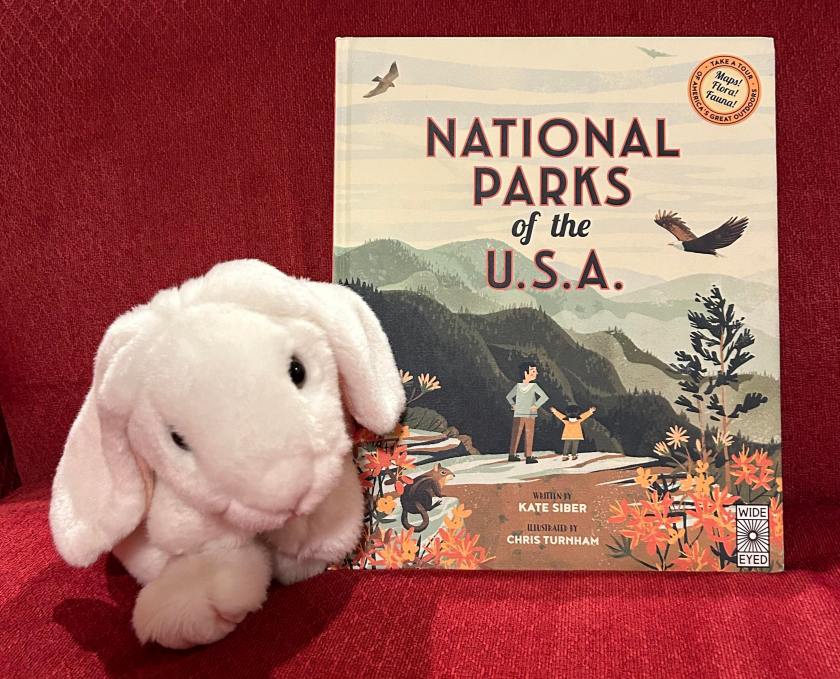
Marshmallow reviews National Parks of the U.S.A., written by Kate Siber and illustrated by Chris Turnham.

Sprinkles: So Marshmallow, you picked a really beautiful book for today’s review. Can you tell us a bit about it?

Marshmallow: If you like the wilderness or at least you enjoy being outdoors, and especially if you are in the U.S.A. and want to know more about its many national parks, then this might be the book for you.

S: It also seems to be a great book for folks who might just want to look at a pretty book.

M: Yes, I agree. It is really a pretty book. Every page is beautifully illustrated. Even though the illustrations seem to be using a limited color palette, focusing mainly on oranges, browns, and greens, each page is distinct and well designed. The limited color scheme actually works really well.

S: Okay, so we both agree that this is a beautiful book to look at. So let us get to the content of the book next.

M: As you can tell from the title, the book is about the national parks in the U.S.A. They are organized more or less geographically. It goes from the east, to the central U.S., then to the Southwest, then to the Rocky Mountains, then to the West. And finally there is a section on Alaska and then the tropics. For each of the regions there is an introductory page or two, and then they focus on some specific parks from the region and talk about the geographic formations, and the flora and fauna found in there.
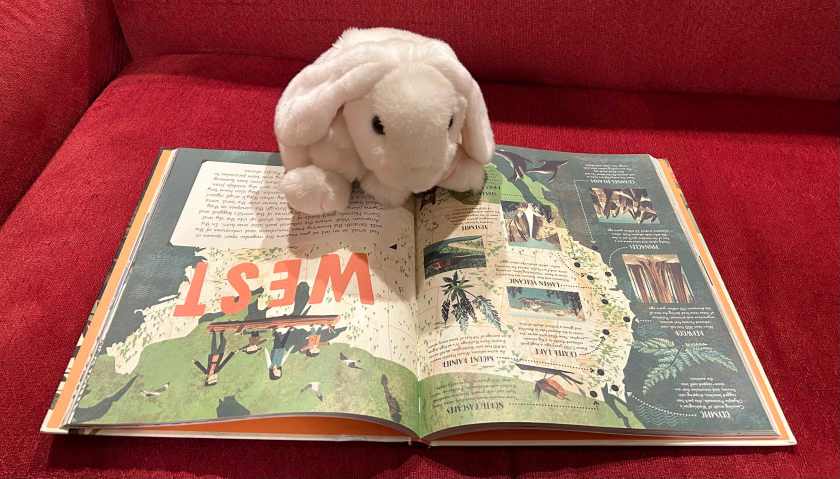
Marshmallow is reading National Parks of the U.S.A., written by Kate Siber and illustrated by Chris Turnham.

S: Did you find some parks that you want to visit some day?

M: Yes, several actually. We have not been to most of these yet. And I think it would be great if we could go to at least some of them.

S: True. Our country has so many beautiful national parks to visit. We have been to a few state parks but not to any of the national ones yet.

M: Maybe we can go on a rabbit-road trip and see some of them.

S: That would be lovely Marshmallow! Did you know that the idea of national parks is relatively new? The first one in the U.S. is the Yellowstone National Park, which only became a national park in 1872. And today many countries around the world have reserved land in similar ways.

M: I did not know that before we found that Wikipedia article; it is very informative. But my book is also very informative. For example did you know that glaciers are not “massive stationary blocks of ice”, but instead are “rivers of frozen water that flow down mountains”? I learned that when I was reading about the Glacier National Park.

S: That is cool!

M: And apparently rangers in the Badlands National Park say that “you have only 500,000 years to visit before the spires and the hills [of the park] wash away from rain and wind”.

S: Sounds like the author has a playful voice.

M: Yes. I really liked her voice. She is playful and friendly and makes the reader want to see all these places.

S: I’d say that is a successful book! How would you rate it?

M: I’d rate it 100%.

S: I knew it! Okay, this is a good time to wrap this up. What would you like to tell our readers?

M: Stay tuned for more amazing reviews from the book bunnies!
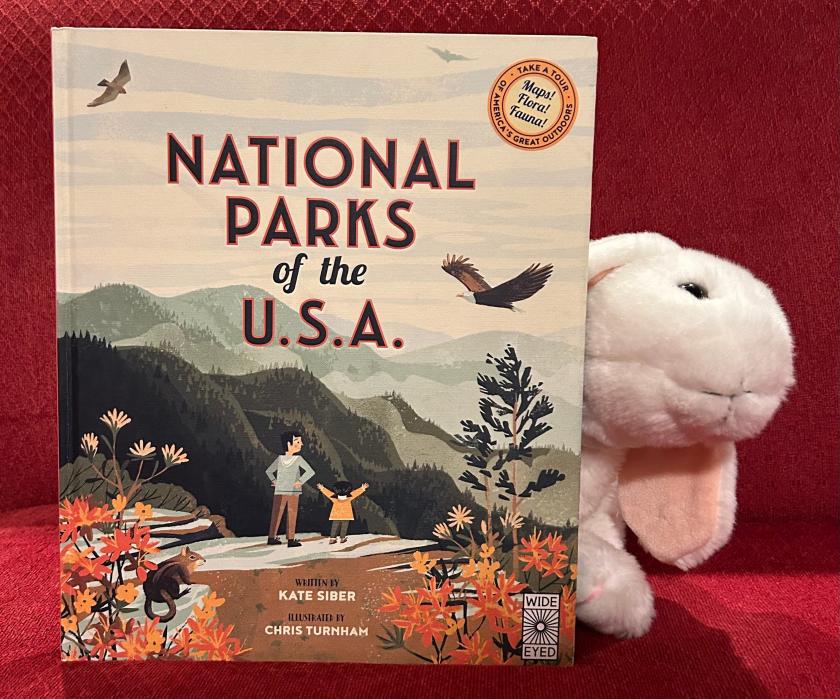
Marshmallow rates National Parks of the U.S.A., written by Kate Siber and illustrated by Chris Turnham, 100%.

Marshmallow reviews An Illustrated Book of Bad Arguments by Ali Almossawi

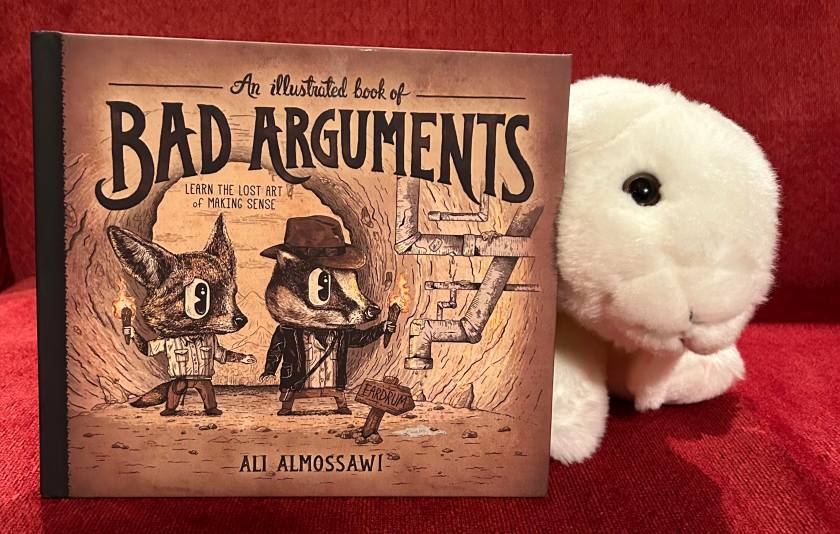
Today Marshmallow reviews a little book about big ideas: An Illustrated Book of Bad Arguments, written by Ali Almossawi and illustrated by Alejandro Giraldo, first published in 2013.

Marshmallow reviews An Illustrated Book of Bad Arguments, written by Ali Almossawi and illustrated by Alejandro Giraldo.

Marshmallow’s Quick Take: If you like nonfiction books with drawings, or if you are curious to learn more about how to make good arguments, then this might be the book for you. 

Marshmallow’s Summary (with Spoilers): This cute book covers a surprisingly serious topic in a surprisingly simple way. This is quite simply an illustrated book of different logical fallacies. (According to Wikipedia, “a fallacy is the use of invalid or otherwise faulty reasoning in the construction of an argument that may appear to be well-reasoned if unnoticed.”) Each fallacy has a couple short paragraphs of explanations and a drawing of human-like animals to demonstrate a different bad argument based on a different logical fallacy. Each description is about a page long (though keep in mind that it is with a relatively large font size on a small, square page). The drawings are big and take up another page which makes it very visually appealing to be able to see the description on the left page with the image on the right. The images are hand-drawn (I think) and are in black and white.

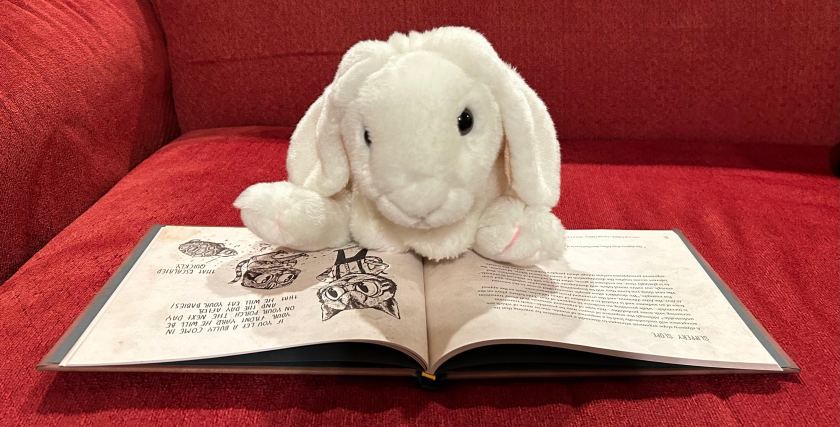
Marshmallow is reading An Illustrated Book of Bad Arguments, written by Ali Almossawi and illustrated by Alejandro Giraldo.

Marshmallow’s Review: An Illustrated Book of Bad Arguments by Ali Almossawi is extremely well written and extremely easy to understand and read. Younger bunnies could comprehend practically all of the book’s content (since the examples are fairly basic). Yet, this book conveys an important message: Bad arguments are disturbingly common, in daily life and on the larger scale.

Be it political or personal, people are constantly making bad arguments based on logical fallacies to sway others. And unfortunately, this approach often works. Having a good understanding of how to evaluate arguments based on logical reasoning is a necessity in a world overwhelmed with poor arguments and fallacies meant to deceive.

I think this book is a good read for bunnies of all ages because of the simple but useful explanations and descriptions of each logical fallacy. The illustrating artist, Alejandro Giraldo, has a clear, consistent style which draws you in (forgive the pun).

Overall, this is a very neat and clean book that is entertaining and informative to read. It can help develop skills that all bunnies will likely need to use for their whole lives. I think it can also be useful if you yourself are writing arguments. It helps you recognize some of your own argumentative mistakes so that you can make better claims. As a bunny who is into Speech and Debate, I know that this is a very useful skill. But for all students in general who need to learn to write so they can defend their beliefs and ideas, this book is a great source to improve their ability to refute and strengthen arguments.

In summary, An Illustrated Book of Bad Arguments is a comprehensive guide to living in a world where the truth is not always clear. But this illustrated book of bad arguments makes things clearer, and if I haven’t proven this to you yet, then I guess I must be using some sort of logical fallacy. And the only way for you to find out whether I have is to read this book!

Marshmallow’s Rating: 100%.

Marshmallow rates An Illustrated Book of Bad Arguments, written by Ali Almossawi and illustrated by Alejandro Giraldo, 100%.

Caramel reviews The Cult of LEGO by John Baichtal and Joe Meno

Caramel is a huge LEGO fan. He has already reviewed one LEGO book for the book bunnies blog; you might like to check out his review of The Big Book of Amazing LEGO Creations With Bricks You Already Have by Sarah Dees if you are curious. Today he talks about The Cult of LEGO, a neat book by John Baichtal and Joe Meno, first published in 2011. As usual Sprinkles is taking notes and asking followup questions.

[Saturdays are usually Marshmallow’s review days, but this week she is away on school business, and Caramel has had a lot to say about a lot of books recently. That is why we have a review from him this time. Watch this space next Saturday for more reviews from Marshmallow!]

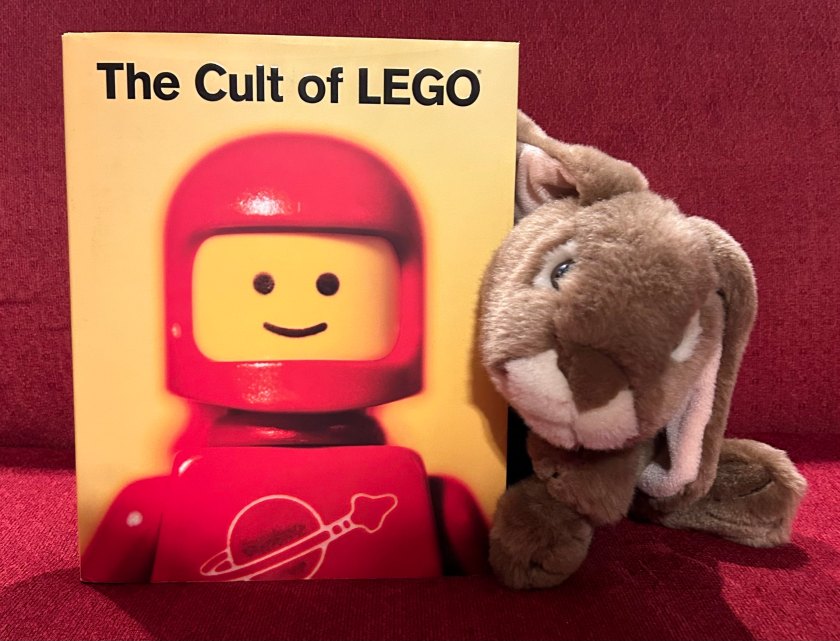
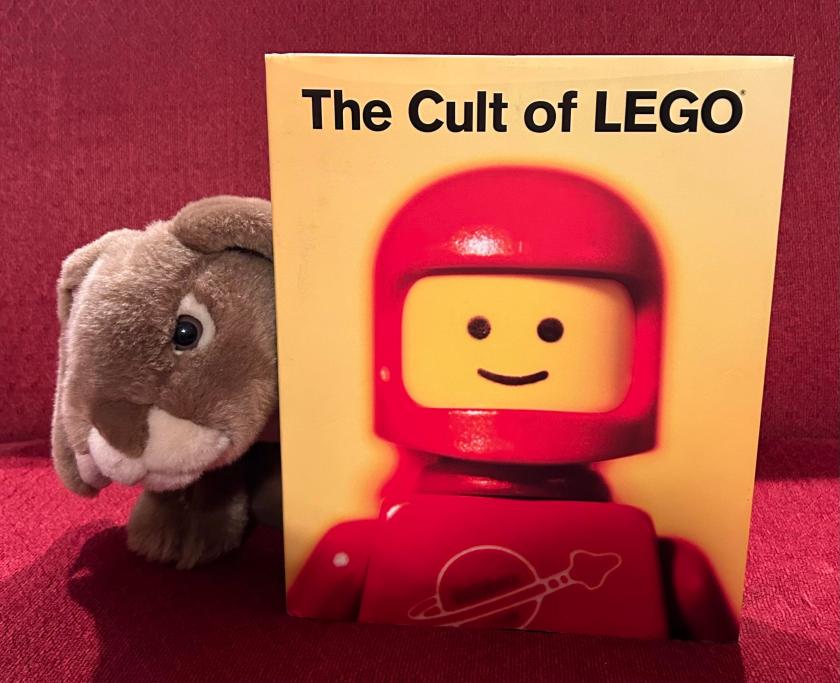
Caramel reviews The Cult of LEGO by John Baichtal and Joe Meno.

Sprinkles: So Caramel, I know you love to play with LEGOs, but I did not expect you would grab this book from my paws when it arrived. I had intended to read it myself.

Caramel: Heh heh heh! Anything LEGO is my domain!

S: Hmm, I can see that. I had not thought that this book would appeal to you so much, because I thought it was mainly about the LEGO as a cultural phenomenon.

C: Well, there is that, too, but it also shows you a lot of cool LEGO creations from all sorts of people around the world, and they are awesome!

S: So you mainly appreciated the pictures then? I know it is a beautiful hardcover book with almost three hundred pages, full of pictures. And they are full color and very detailed. I can definitely see why you would like them. But did you read the book as a whole? Did you read the text part, too? –

C: Yes, of course. Because it was interesting.

S: Cool! So tell me what it is about then.

C: It’s about LEGO as a cultural phenomenon, like you said. And about what people do with it, and it explains what kinds of different LEGOs exist, and the history, too, how it got started, and so on.

S: Hmm, I can now see actually why I should have known you would enjoy this book. It is after all about LEGO and it is full of facts!

C: Yes!

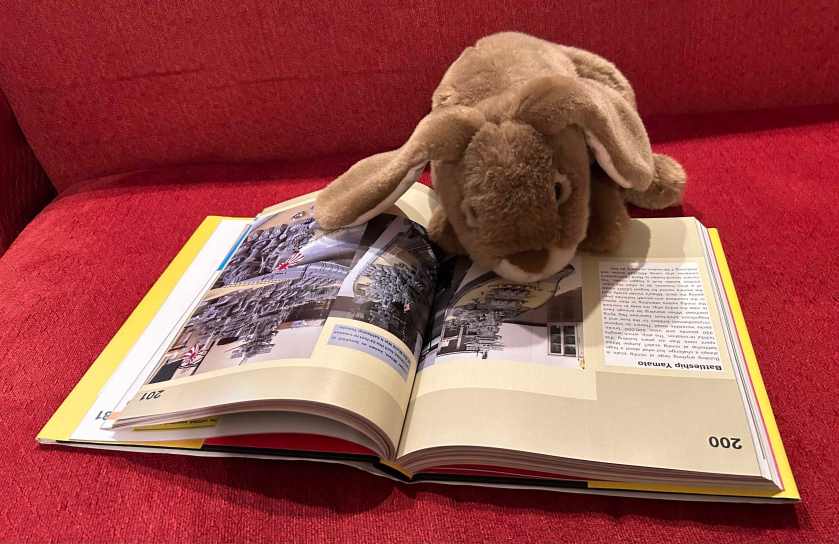
Caramel is reading The Cult of LEGO by John Baichtal and Joe Meno.

S: So let us look at the book more carefully. Can you tell me your favorite LEGO creation in the book?

C: My favorite LEGO creation in this book is the Boba Fett costume that someone made with LEGOs. The person made it and then actually wore it! It is probably not very comfortable but it is definitely cool!

S: Of course, I should have expected your favorite would be something about Star Wars!

C: Of course! There is another one that I really liked.

S: I also saw that you had a favorite quote from the book that you wanted to share with our readers.

C: Yes. Somewhere there is the quote:

“The little LEGO has become the perfect tool for expressing our imagination.”

The Cult of LEGO

And I really like it!

S: I can see why! It captures the essence of why LEGOs have been so amazingly successful. They are so versatile; the bunnies playing with them have the freedom to do whatever they want with them. I can see this with you, Caramel. How you keep tweaking your space ships and robots and so on. Your mind is always creating, revising, renovating, and the LEGO is exactly flexible enough to let you do that.

C: Exactly.

S: Okay, Caramel, I think this is a good place to end our review today. What would you like to tell our readers?

C: Stay tuned for more book bunny reviews!

Caramel loved reading The Cult of LEGO by John Baichtal and Joe Meno and knows he will read and reread this book for many more months and years to come.

Marshmallow reviews The Secret Life of a Snowflake by Kenneth Libbrecht

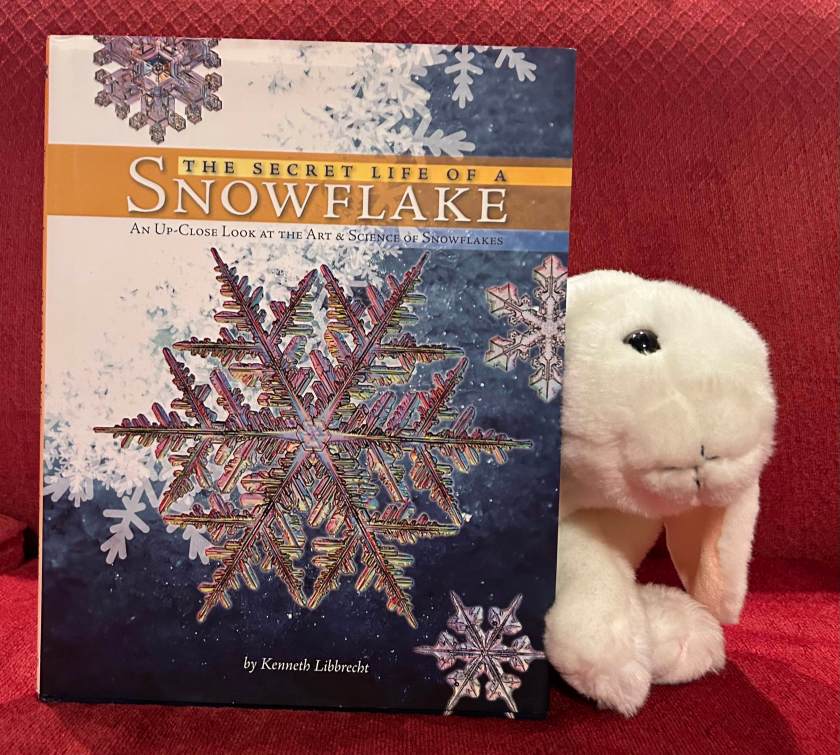
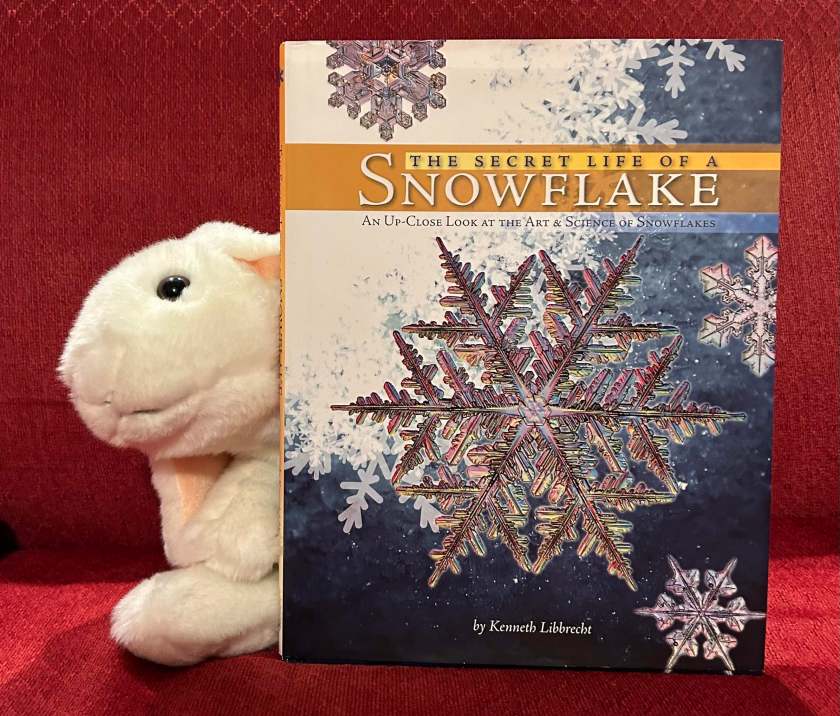
Today Marshmallow reviews a beautiful book she really likes: The Secret Life of a Snowflake: An Up-Close Look at the Art and Science of Snowflakes by Kenneth Libbrecht, published first in 2009. Sprinkles is asking questions and taking notes.

Marshmallow reviews The Secret Life of a Snowflake: An Up-Close Look at the Art and Science of Snowflakes by Kenneth Libbrecht.

Sprinkles: So Marshmallow, you decided to talk about The Secret Life of a Snowflake today. This book has been on our bookshelves for a while now. I’m glad you picked it up for the blog today. Can you tell us a bit about it?

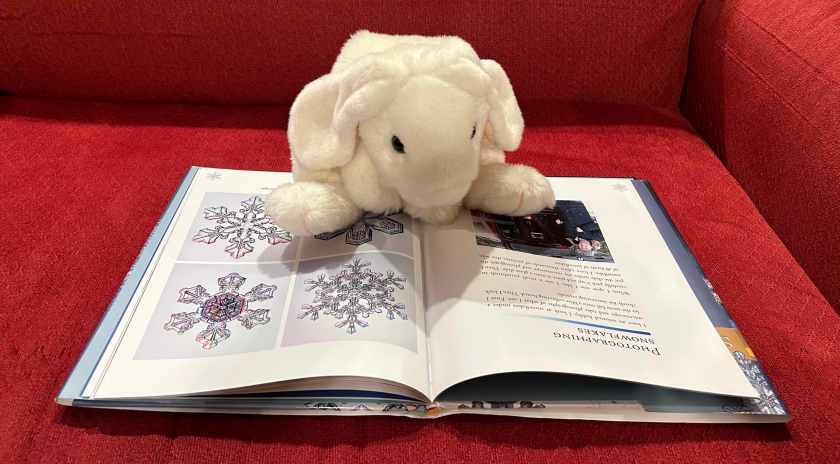
Marshmallow: This is a book written by a physicist named Kenneth Libbrecht who loves and studies crystals. And snowflakes are crystals, and he loves to take their photos. There are lots of photos in the book, and I love looking at them.

S: I know. I love looking at this book, too. It is just beautiful.

M: Yes! But the author is a scientist, so he also explains a bit about how snowflakes are formed and also about how clouds are formed, why snow is white, and so on.

S: Caramel would like this book, right?

M: Of course. He would love it because it is so “factful”!

S: Exactly.

Marshmallow is reading The Secret Life of a Snowflake: An Up-Close Look at the Art and Science of Snowflakes by Kenneth Libbrecht.

S: Did you know that the author has a website where he has a lot more information and photos about snowflakes?

M:Well, I did not, until you told me. And then we went and checked it out together. Our readers should check it out too: http://snowcrystals.com/

S: Yes. There are lots of exciting things there.

M: Exciting and beautiful. I found the section about designer snowflakes especially interesting.

S: There is also a special page for a monster snowflake which is apparently almost comparable to a penny in size! But back to the book. I know reading it once or twice, you get the science down. But I saw you read this book many many more times.

M: Yes. Because I really like the pictures in it. They calm me and comfort me.

S: And they make you smile. I saw.

M: Yes. They are very pretty, and each snowflake is so different, so pretty in a different way.

S: They are all very symmetric. I think that can feel somewhat calming.

M: Yes, maybe.

S: So if you were to rate this book, what would your rating be?

M: 100%. Definitely. I think this could be a really neat book for young bunnies to read with their parents, because it has science, it has beautiful pictures; it has all kinds of good things. The writing is simple, but very clear. And it gets a lot of information across.

S: Agreed. But I think bunnies can definitely read it on their own and enjoy it too, no matter how old they are.

M: Yes. Or it could make a great gift, especially for a winter holiday…

S: What a neat idea! Okay, Marshmallow. I think this is a good time to wrap up this review. What would you like to tell our readers?

M: Stay tuned for more amazing reviews from the book bunnies!

Marshmallow rates The Secret Life of a Snowflake: An Up-Close Look at the Art and Science of Snowflakes by Kenneth Libbrecht 100%.