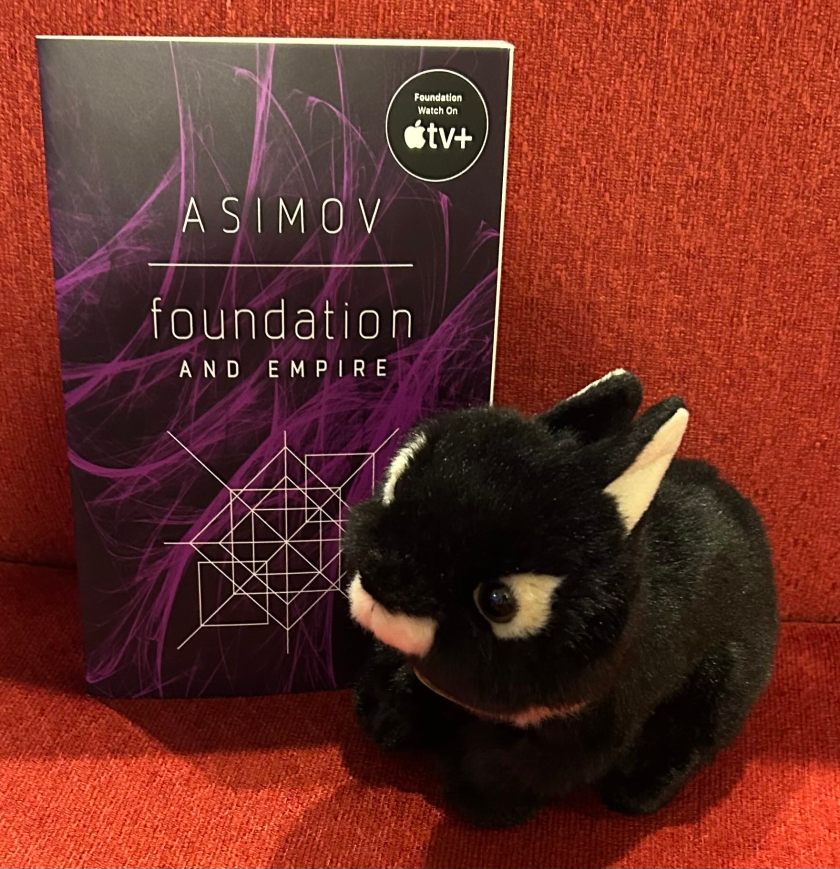
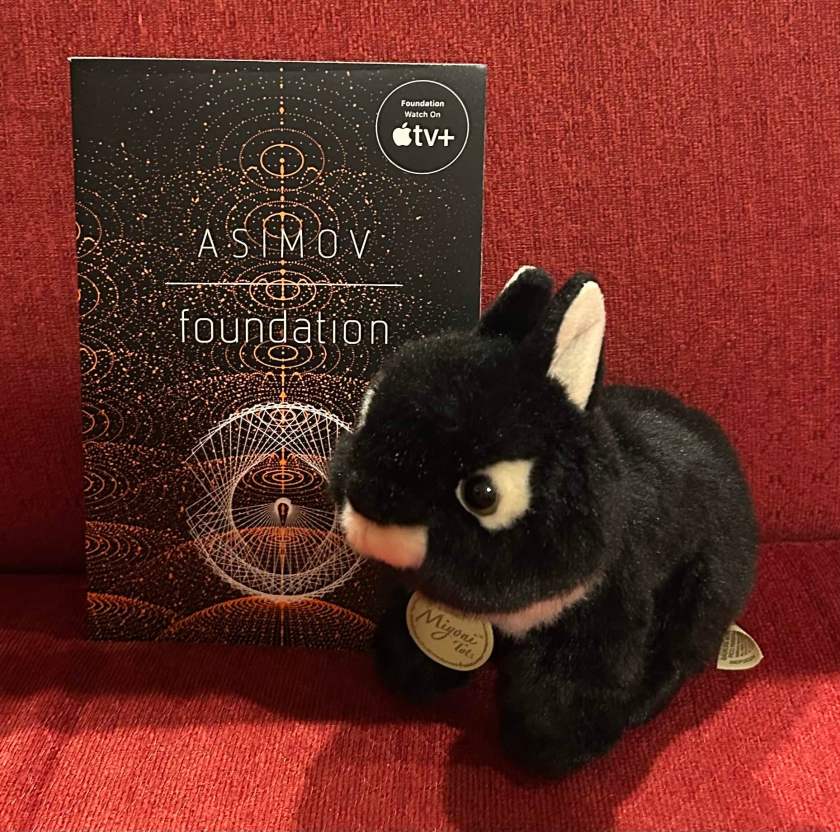
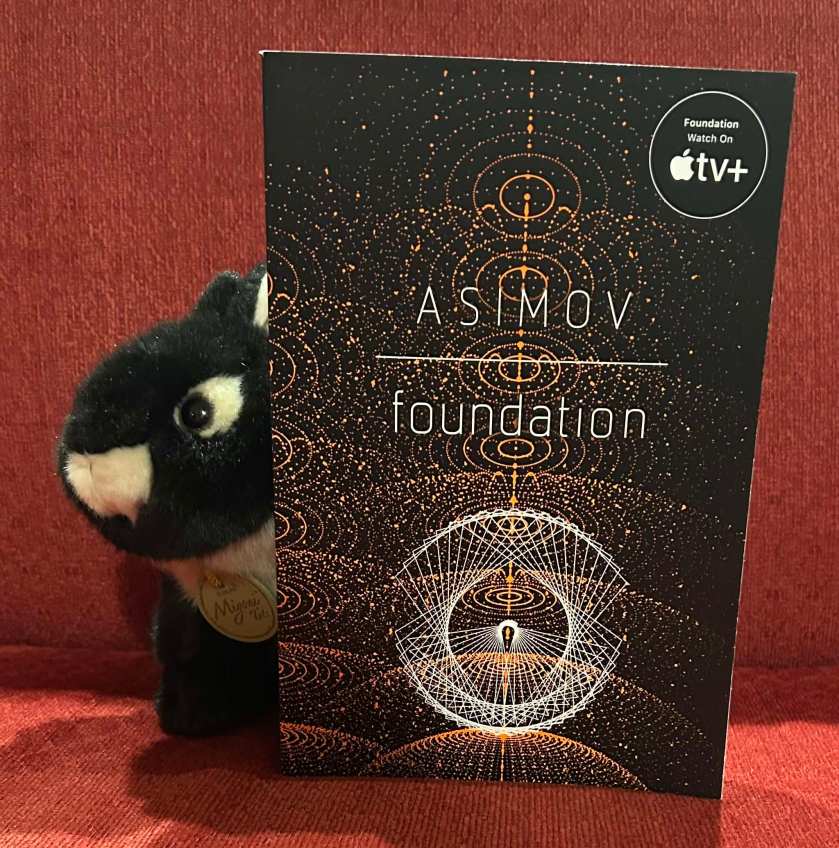
Late last year the mysterious and reclusive black bunny of the family, Midnight, decided to join in the book fun and reviewed Foundation by Isaac Asimov, the first book in Asimov’s Foundation trilogy. Today he is talking to Sprinkles about the second book in the series, Foundation and Empire, originally published in 1952.
Sprinkles: It is nice to have you back here for another book review, Midnight!
Midnight: It’s good to be invited back. A being such as myself needs to be invited across a threshold before entering. (Bares teeth.)
Sprinkles: No need to try to be menacing Midnight; we appreciate you without the fear factor.
Midnight: Hmm. Underestimate me at your peril.
Sprinkles: Okay, whatever. So last time you and I talked about Asimov’s Foundation. And today we are talking about the second book in the series: Foundation and Empire.
Midnight: Foundation and Empire is really two long stories put together in one volume.
Sprinkles: Like the first book, which was five stories put together, right?
Midnight: If you want to put words in my mouth, then I suppose so.
Sprinkles: Okay, then you can use your own words. Go ahead.
Midnight: As I was saying, there are two stories. The first story is called “The General”. It is about Bel Riose, an ambitious general of the Galactic Empire who wants to fight for the glory of the Empire. He wants to attack the Foundation, which is by now a serious galactic power itself.
Sprinkles: But Hari Seldon comes through for the Foundation once more, right?
Midnight: Yes. However, by this point in galactic history, Hari Seldon is long dead. But as this rabbit can tell you, the long dead may still pose a great danger to the unwary. (Bares teeth.)
Sprinkles: Midnight! Stop scaring our readers. Some of them are young.
Midnight: Some people say I overcompensate for my modest size. Anyway, I thought you did not want to provide too many spoilers in these reviews, so I was trying to be entertaining.
Sprinkles: Yes, you are right, maybe we should not go too deep into the plot. But I think it is an important setup for the second story …
Midnight: Yes, in some ways. The second story is called “The Mule” and it is about a new challenge for the Foundation that Seldon could not have predicted. Things get out of hand, and a small group of people from the Foundation heads out to look for the mythical Second Foundation in order to reclaim Seldon’s legacy.
Sprinkles: Yes, I think this is a good summary of the plot.
Midnight: Glad you approve.
Sprinkles: Anyways, maybe that is enough about the plot.
Midnight: Now what do we talk about?
Sprinkles: What else do you want to say about the book?
Midnight: Not much. I think I am not an Asimov fan. This book was better than the first book though. The characters were a bit more developed. The jumps in time were less drastic. The first book skipped around five different times or something. Here we have only the two, separated by about a century. So that allowed him to focus on the characters in each story a bit more.
Sprinkles: I did like the characters in this book a lot more actually. I also really liked the idea of the visi-sonor, the musical instrument the clown Magnifico played in the second part. It could combine sound and images and affect people’s emotions. It fit the storyline really well, too.
Midnight: True. Also, there is a twist at the end of “The Mule” which I had not expected, so that was successful.
Sprinkles: I did not catch it either. And I agree. It was good.
Midnight: I guess you will want to talk with me about the third book next.
Sprinkles: That would be great!
Midnight: I am not committing to it. I may take a break from Asimov for a while. No one commands Midnight.
Sprinkles: Sure, we can take a break from Asimov, I suppose. I would love to get back to it eventually, but maybe you will enjoy talking about some Tolkien next.
Midnight: That sounds great! I really enjoy watching science fiction, but somehow reading it is not my beverage of choice.
Sprinkles: Yes, you are more into fantasy. So maybe that is what we can talk about the next time you visit.
Midnight: No promises.
Sprinkles: Okay, Midnight. This is a good place as any to wrap up this review. So what will you say as your last words?
Midnight: Farewell, dear reader. Until such a time as the Black Bunny sees fit to reappear.
 BookBunnies