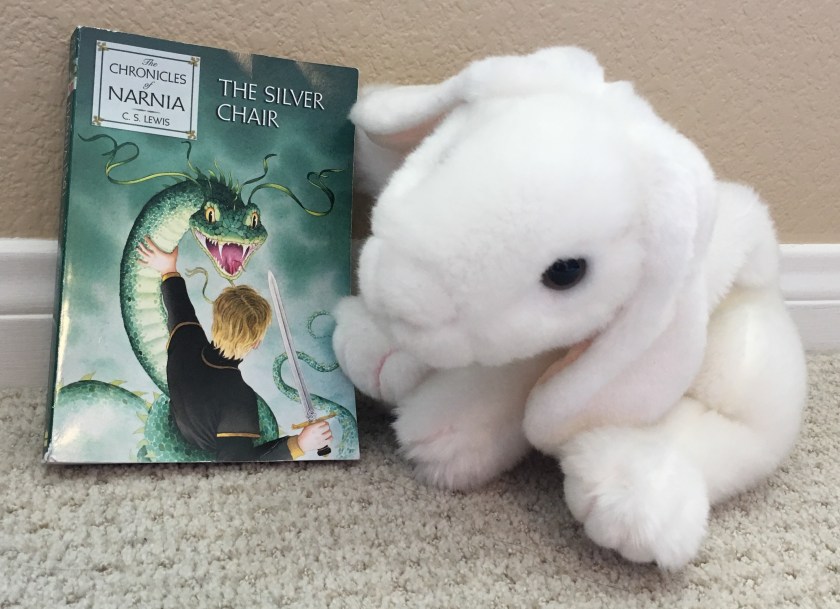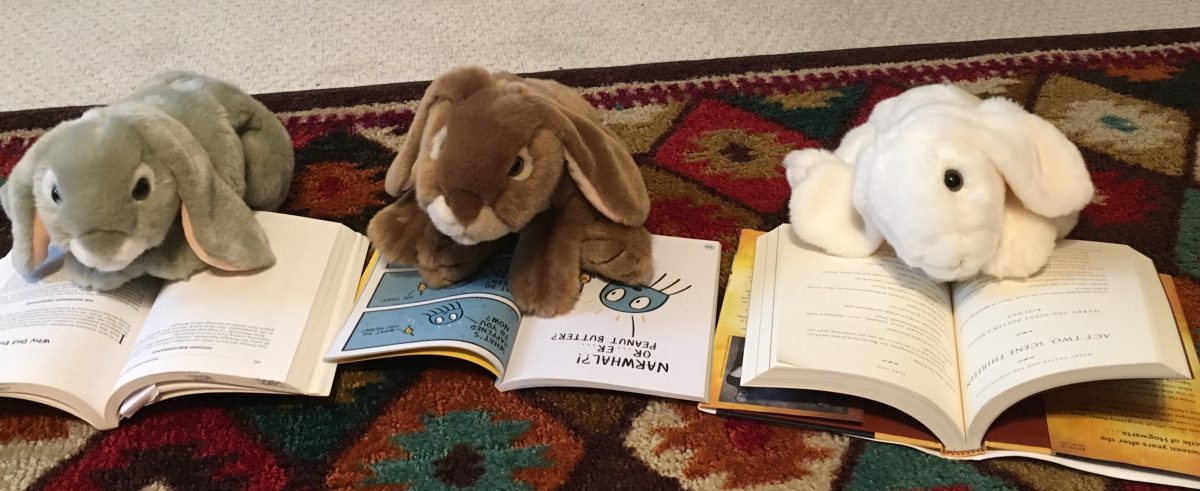
Marshmallow reviews Tuck Everlasting by Natalie Babbitt

Marshmallow enjoys reading books that pose complicated questions. Below she reviews a newish classic, Tuck Everlasting by Natalie Babbitt, published first in 1975, that explores the theme of immortality, in a way reminiscent of the story of Peter Pan.

Marshmallow reviews Tuck Everlasting by Natalie Babbitt.

Marshmallow’s quick take: If you like books that pose life-size dilemmas and dig deeper into well-known stories, then this might be the book for you.  

Marshmallow’s Summary (with spoilers): Winifred Foster (nicknamed Winnie) is venturing in a forest that she thinks is owned by her family when she finds a spring. She sees a boy that is drinking from it. The boy tells her that she should not drink from it. He says that his name is Jesse Tuck. Winnie asks him how old he is. Jesse claims that he is one hundred and four years old. Of course, she thinks that he is joking and trying to trick her and so she asks him how old he really is. He says that he is seventeen years old. Then she attempts to drink the water coming from the spring. He stops her, wondering aloud how he will explain the story of the spring to her. Then he hears his parents coming and says that they will explain the story to her. 

Jesse Tuck and his family take Winnie to their house. There they explain to her the curse of the spring. The curse of the spring is that it grants the drinker eternal life. Jesse’s family all drank from it and became immortal. 

But what is wrong with eternal life? The brother of Jesse Tuck, Miles Tuck, was married, but when he became immortal, his wife thought that he had sold his soul to the Devil. She then ran away with their children. He never saw them again. 

Later in the story, the Tucks set out to take Winnie back to her family. Then another man learns about the spring that makes the drinker immortal. He tells Winnie’s family (who have started to worry about her) that he will find Winnie and bring her back if they give him the forest. He later confronts the Tucks and tells them that he knows their secret and the secret of the spring. He tells them also that he will sell the spring water as immortal water. How can they stop him?    

Marshmallow’s Review: This is a great book that raises the question:

Is eternal life a blessing or a curse?

The Tucks say that it is a curse because people they love end up thinking that they sold their souls to the Devil. It can also be very lonely:

That’s what us Tucks are, Winnie. Stuck so’s we can’t move on. We ain’t part of the wheel no more. Dropped off, Winnie. Left behind. And everywhere around us, things is moving and growing and changing. You, for instance. A child now, but someday a woman. And after that moving on to make room for the new children.

Living’s heavy work, but off to one side, the way we are, it’s useless too …. You can’t call it living what we got.

But then there is the man who thinks he will make a fortune selling immortality. So people both want immortality and are afraid of it. 

The question of how the spring is there is also interesting. Mr. Tuck thinks that it is something left over from a plan that did not work. This remains a mystery in the book. 

Tuck Everlasting is a story that takes some of the ideas and themes from an older story, Peter Pan, and makes things messier and more complicated. In a paper she wrote in 1982, Professor Catherine M. Lynch says the following:

Both Peter Pan and Tuck Everlasting explore two alternative solutions to a conflict central to childhood experience: to grow up to adult responsibilities or not to grow up at all. By introducing readers to the Tuck family who magically cannot die in a world where everyone else does, Natalie Babbitt’s novel deepens the Peter Pan “myth” by dramatizing the fact that the choice of embracing adulthood includes, of necessity, choosing death.

I agree. I think this is a deeper and a more moving book than Peter Pan, which to me felt to be mainly about a little boy who did not want to grow up. But hmm, maybe I should read that story again…

Marshmallow is pointing to the foreword to her edition of Tuck Everlasting, written by Gregory Maguire. Maguire has a convincing argument for rereading good books, which Marshmallow agrees with.

Marshmallow’s rating: 95%.

Marshmallow rates Tuck Everlasting 95%.

Marshmallow reviews Rabbits for Dummies by Audrey Pavia

Marshmallow has been thinking a lot about bunnies lately. So she borrowed a For Dummies book from the home library: Rabbits for Dummies by Audrey Pavia. Below she writes about her thoughts on this book, her first review of a non-fiction book.

Marshmallow reviews Rabbits for Dummies by Audrey Pavia.

Marshmallow’s quick take: If you like books about taking care of pets, or if you love rabbits (like I do!), then this might be the book for you. 

Marshmallow’s Summary: This is a non-fiction book. It contains many facts about rabbits. It tells the reader how to litter box train a rabbit, how to clip the nails of a pet rabbit, and many more tidbits of information. It has a wide variety of facts. 

The book contains nineteen chapters. My favorites are Chapters 10 (Reading Your Rabbit) and 11 (Putting Boxing Gloves on Your Rabbit: Training). These chapters are about how to understand a rabbit’s behavior (Reading Your Rabbit) and how to train your rabbit (Putting Boxing Gloves on Your Rabbit

The nineteen chapters of the book are organized into five parts. My favorite part is Part 1 Bringing on the Bunny Basics. I like this part because it teaches you about the many different breeds of rabbits. 

In the introduction the author lists the people who could like this book:

This book is for you if you:

* Want a rabbit.

* Think rabbits are cool and want to know more about them.

* Have a rabbit and are considering getting another.

* Own a rabbit and are considering breeding or showing it.

* Have a rabbit (or two) and want to expand your knowledge on how to care for these pets.

Marshmallow’s Review: The book Rabbits for Dummies is about how to take care of rabbits. It is a very good book for rabbits (like me!) and rabbit lovers. Reading it can really help a person learn about rabbits. 

The book has pictures that help describe the book contents. Many are distributed in the text, but there is a small section in the middle of the book made up entirely of color photos, printed on higher quality paper.  

Marshmallow is pointing at a Holland lop rabbit, one of her favorites.

At the beginning of each part, there is a comic that is about the contents of that part. These are all pretty hilarious. I laughed out loud while reading some of them. 

At the beginning of each part is a single comic. Marshmallow's favorite is the one starting Part IV.
At the beginning of each part is a single comic. Marshmallow’s favorite is the one starting Part IV.

Overall this is a very good book that is educational, funny, well-written, and very entertaining. It is sure to help everyone that wants to have a pet bunny. However, be warned: it will certainly make you want a bunny even more than you did before. When she lent me the book, Sprinkles had thought that it would make me realize how much work taking care of a bunny would be, but it seems like this has backfired. I now want a bunny even more!

Marshmallow’s rating: 100%

Marshmallow rates Rabbits for Dummies by Audrey Pavia 100%.

Marshmallow reviews Encyclopedia Brown Books 1-4 by Donald Sobol

Marshmallow loves to read detective stories with young protagonists. Below she shares some of her thoughts on the first four books of a classic series, Encyclopedia Brown, by Donald J. Sobol.

Marshmallow reviews the first four books of Donald Sobol's Encyclopedia Brown series.
Marshmallow reviews the first four books of Donald J. Sobol’s Encyclopedia Brown series.

Marshmallow’s quick take: If you like books that have very smart people in them, or if you simply like detective stories where the main character is a kid who solves crime mysteries, then this might be the book series for you. 

Marshmallow’s Summary (with spoilers): The name Encyclopedia Brown gives you the hint that he or she is very smart since an encyclopedia is a book that contains facts, A to Z. (Encyclopedia Brown’s real name is Leroy Brown. Encyclopedia is his nickname.) The truth is, yes, Encyclopedia Brown is VERY smart and has a vast amount of knowledge. Encyclopedia is also a great detective. He can solve any mystery, even if it is an eighty-five-year-old case that has been a story for a long time. 

According to Wikipedia, there are at least twenty-nine Encyclopedia Brown books, but I have read only four of them so far. Each book is less than a hundred pages and is easy to read in one day or less. In each book there are about ten stories. Sometimes the stories in one book are related to one another and have common characters. For example Sally Kimball is one of Encyclopedia Brown’s best friends and serves as his body guard. Another character who appears several times is Bugs Meany, often the criminal in the cases brought to Encyclopedia by other kids. 

Encyclopedia Brown and the Case of the Secret Pitch is Marshmallow's favorite among the four.
Encyclopedia Brown and the Case of the Secret Pitch is Marshmallow’s favorite among the four.

The book I like the most is book number two, Encyclopedia Brown and the Case of the Secret Pitch. In that book, one of my favorite stories is The Case of the Glass of Ginger Ale. This story is about a famous blind violinist who got tricked by Hans Braun, “concert master of the Glendon Symphony”. Encyclopedia solves this mystery quickly and gets an autograph from the violinist as well.

Marshmallow is reading her favorite Encyclopedia Brown story: The Case of the Glass of Ginger Ale.
Marshmallow is reading one of her favorite Encyclopedia Brown stories: The Case of the Glass of Ginger Ale.

Another one of my favorites is The Case of the Balloon Man. In this story, a man named Izzy is suspected of kidnapping a little child named Bobby Tyler. Encyclopedia solves this mystery quickly while eating dinner. 

The Case of the Hungry Hitchhiker is a great example of how good Encyclopedia’s mystery solving skills are. In this story, a “hitchhiker” turns out to be a part of a holdup gang. Encyclopedia figures this out by a not-melted chocolate bar that should have been melted. (Especially if you have been standing outside on a ninety-three-degree day for an hour as the hitchhiker claimed.) 

Marshmallow’s Review: This is a book series that everyone will enjoy. The author puts the clues in plain sight, but it is very easy to not notice them because they are not things that will attract a lot of attention. Encyclopedia Brown is clever and always has the right answers. The answers to the mysteries are in the backs of the books. The reader will probably need to go to the end often to find out the answers to the cases that Encyclopedia Brown easily solves.

Marshmallow’s rating: 95%

Marshmallow rates Encyclopedia Brown books 1-4 95%.

Marshmallow reviews Half Magic by Edward Eager

This week Marshmallow reviews a 1954 classic, Half Magic by Edward Eager, the first book in his Tales of Magic series.

Marshmallow reviews Half Magic by Edward Eager.

Marshmallow’s quick take: If you like books about magical charms, and adventure stories about a handful of siblings, then this might be the book for you.

Marshmallow’s Summary (with spoilers): The four siblings Jane, Mark, Katharine, and Martha are expecting to have a very boring summer. That is until they find the charm. The charm that works by halves. If you made a wish while touching the charm, then half of your wish would come true. So in order to get your whole wish you would have to say it in this fashion. Let’s say you wish is to have a dog appear then you would say that you wanted two dogs to appear because if you wished that one dog would appear then one half of a dog would appear. (You probably wouldn’t want to have half of a dog.)

Wishing for two times some things is a cinch, but other doubled wishes only cause twice as much trouble. What is half of twice a talking cat? Or to be half-again twice not-here? And how do you double your most heartfelt wish, the one you care about so much that it has to be perfect?

The children decide that they will take turns to use the charm. It turns out that other people have knowledge of the charm that grants wishes and they happen to want the charm. In a desert, which they travel to on Mark’s wish — he wants a desert island but the charmed coin takes them to a desert –. a man tries to abduct Jane, Mark, Katharine, and Martha. When he realizes that they have the charm, he says that they stole it from his people. 

On Katharine’s turn to make a wish, they travel into the story of King Arthur and the Knights of the Round Table. They help stop Morgan Le Fay, an evil sorceress in this retelling of the myth, from kidnapping and killing the Knights of the Round Table.

Marshmallow is pointing toward one of her favorite parts of the book, where Jane makes a foolish decision. Here Jane is wishing that she belonged to a different family.

They have some problems though, before they figure out how to use the charm. For instance, Martha wishes that she was not at the place she was and since she didn’t say it the way you need to, she became half there and half not there. The children eventually learn how to use it, and in the end, they have a very exciting summer, not at all the one they thought lay ahead.

Marshmallow’s Review: Half Magic is a classic and I think a great read for all ages. Written in 1954, it successfully entertained children for many years and probably will do the same for many to come. I enjoyed Half Magic very much and look forward to reading more about these characters in Edward Eager’s other novels.

Marshmallow’s rating: 100% 

Marshmallow rates Half Magic by Edward Eager 100%. And she adds: "May the Fourth Be With You!"
Marshmallow rates Half Magic by Edward Eager 100%. And she adds: “May the Fourth Be With You!”