Marshmallow reviews Spooky Classics for Children: A Companion Reader, as told by Jim Weiss, and with Dramatizations by Chris Bauer

This week both of the younger book bunnies wanted to review spooky books to honor Halloween 2025. So on Wednesday, Caramel reviewed a cute picture book about a zombie and a brain. And today, Marshmallow reviews Spooky Classics for Children: A Companion Reader, as told by Jim Weiss, and with Dramatizations by Chris Bauer, which offers modern adaptations of three classic short stories.
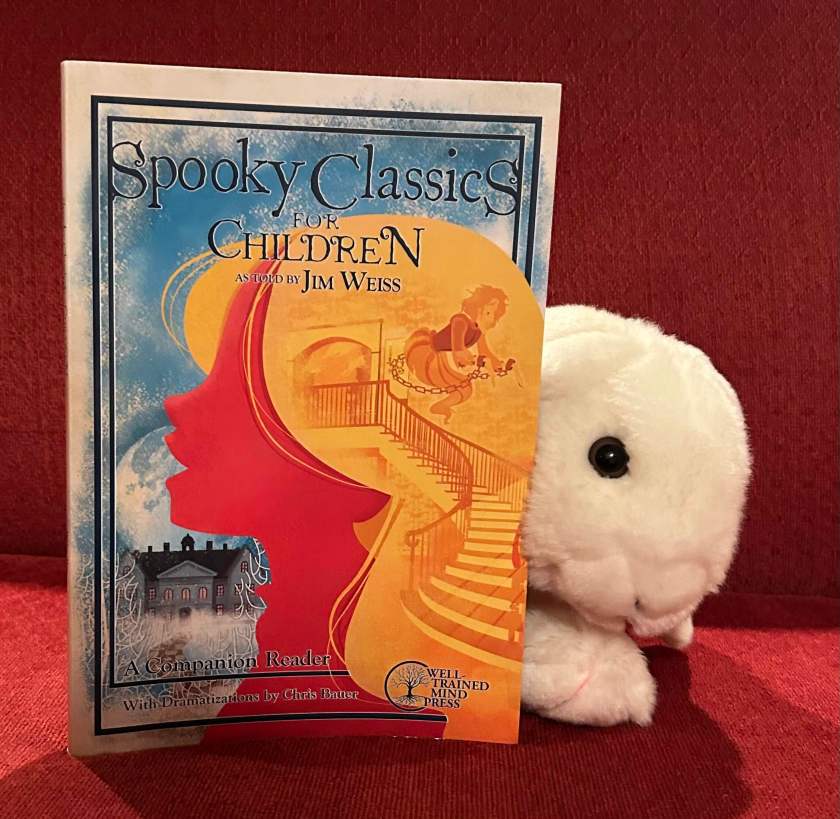
Marshmallow reviews Spooky Classics for Children: A Companion Reader, as told by Jim Weiss, and with Dramatizations by Chris Bauer
Marshmallow reviews Spooky Classics for Children: A Companion Reader, as told by Jim Weiss, and with Dramatizations by Chris Bauer.

Marshmallow’s Quick Take: If you are looking for a fun book to read with your family during the fall season, then this is the book for you!

Marshmallow’s Summary (with Spoilers): This book is divided into several sections. The Preface introduces the stories and explains that the book can be used in three ways: listen, read, and speak. The first section has the stories laid out in a normal picture book-like fashion; this is Part I: Three Spooky Stories. The second section (Part II: Three Spooky Plays) provides scripts for each story and a guide for how to perform each one. 

The first story is called “The Canterville Ghost”, and it was originally written by Oscar Wilde and published in 1887. The story is set in Britain. The American Otis family (Mr. Otis is the American ambassador to Great Britain) moves into the Canterville Chase, a famous old ancestral castle. The catch is that the estate is haunted by the Canterville Ghost. Lord Canterville warns the Otis family of the haunting, but they do not believe in “mumbo-jumbo.” However, when the ghost’s existence becomes undeniable, they react in a relatively kind, well-mannered way. Eventually, the story ends happily—which I was initially not expecting! (Readers interested in the original Wilde version can check out this Project Gutenberg link.)

The second story is called “Dr. Heidegger’s Experiment” and was originally written by Nathaniel Hawthorne and published anonymously in 1837. The story is about five friends who are in their older years. Dr. Heidegger invites his four friends over to his house and offers them water from the Fountain of Youth. All four of his friends lived lives of sin and are full of regret. However, Dr. Heidegger himself does not drink the water; he merely wishes to see what happens when they do. They drink the water and age backwards, regaining their beauty and energy. However, they did not follow Dr. Heidegger’s advice to record for themselves some lessons learned before they drank the elixir, and so they do not remember the wisdom that they were supposed to have learned throughout their lives (though it is not that they forgot it, it is mostly that they did not gain it in the first place). The story ends with a clear message, and this story made me think a lot more than I was expecting to at the end. (Interested readers can check out this Project Gutenberg page for Twice-Told Tales, a collection that contains, among many others, the original story by Hawthorne.)

The third story is called “The Sending of Dana Da” and was originally written by Rudyard Kipling and published in 1888. The story is set in India a long time ago. A British man named Richard Evans meets a local wizard named Dana Da whom he treats generously. Dana Da offers the man help in return, asking him if he needs help in dealing with anyone he loves or hates. Evans eventually admits that he loathes a man named Everett Lone. Dana Da’s sending is a magical energy that he can shape into whatever he wishes; for this case, he shapes it into cats that appear in Lone’s life constantly (Lone hates cats). This magical story ends in a quaint way and wraps up the first section of the book nicely. (The original version by Kipling is somewhat different and may or may not be appropriate for young bunnies, so we will not link to it from here.)
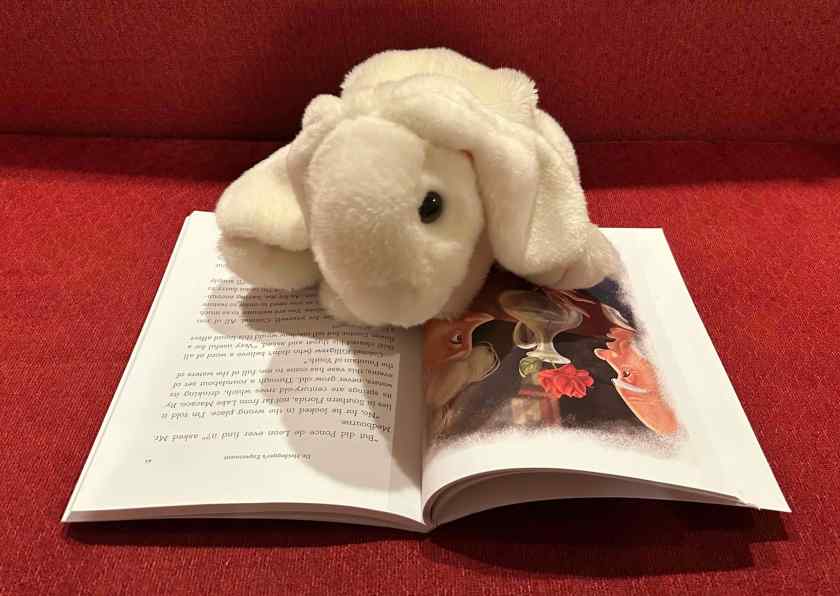
Marshmallow is reading Spooky Classics for Children: A Companion Reader, as told by Jim Weiss, and with Dramatizations by Chris Bauer

Marshmallow’s Review: Overall, I would highly recommend this book! I really enjoyed listening to the audio recording that came with it, and it was a really great experience. Jim Weiss is a great voice actor! (We loved his readings of the Harry Potter books many years ago.) But even if you do not have access to the recordings, the text itself is really engaging on its own. This book is accessible and appropriate for all ages, so I think it would be really fun to read or listen to as a family. I liked the drawings, but I especially liked the writing style; I found it energetic, engaging, yet simple at the same time.

The stories were also surprisingly deep. The first story made me think a lot about generosity while the second made me think a LOT about wisdom, living life in a meaningful way, and appreciation. I also wondered a lot about youth and age afterwards. The third one teaches a lesson about logic and magic, but also friendship and kindness. I would explain more but I think that might give the ending away.

The second section with the screenplay versions of the stories adapted by Chris Bauer would also be a great help for theatre programs for little children. I can see it helping set up a great show for children to watch and / or perform in. Of course I could also see a family doing it among themselves, too, just for fun. There are a lot of useful suggestions for either scenario.

As a whole, this book was really enjoyable, and I would completely recommend it to everyone! I know this is a bit late, but it would also make for a perfect Halloween book!

Marshmallow’s Rating: 100%.
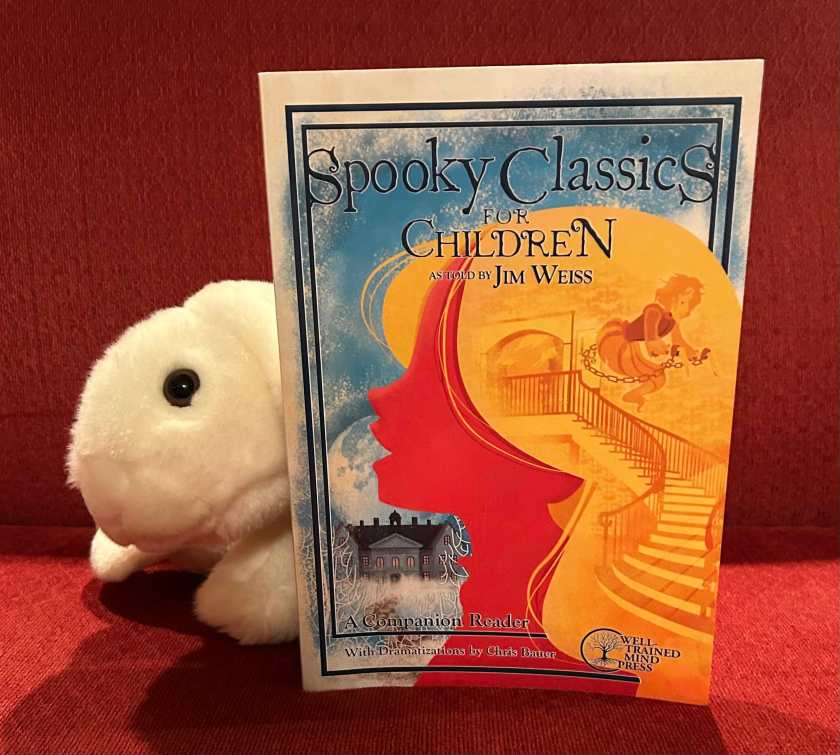
Marshmallow rates Spooky Classics for Children: A Companion Reader, as told by Jim Weiss, and with Dramatizations by Chris Bauer 100%.

Sprinkles reviews Heroes, Horses, and Harvest Moons: A Cornucopia of Best-Loved Poems

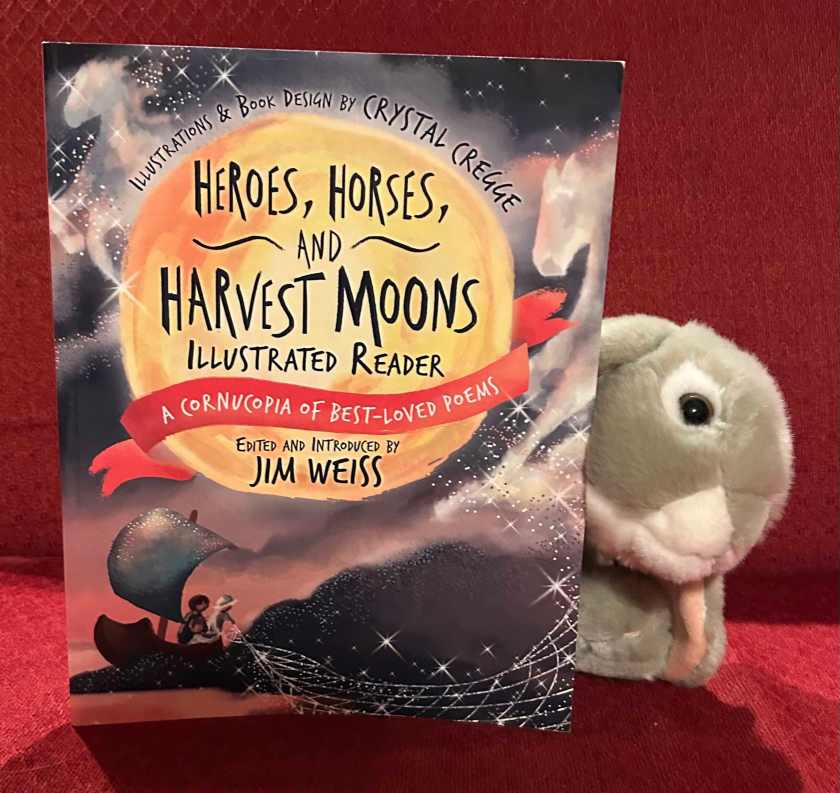
Sprinkles has reviewed several poetry anthologies for the book bunnies blog. Today she is writing about another: Heroes, Horses, and Harvest Moons: A Cornucopia of Best-Loved Poems, edited and introduced by Jim Weiss, illustrated by Crystal Cregge, and published in 2018.

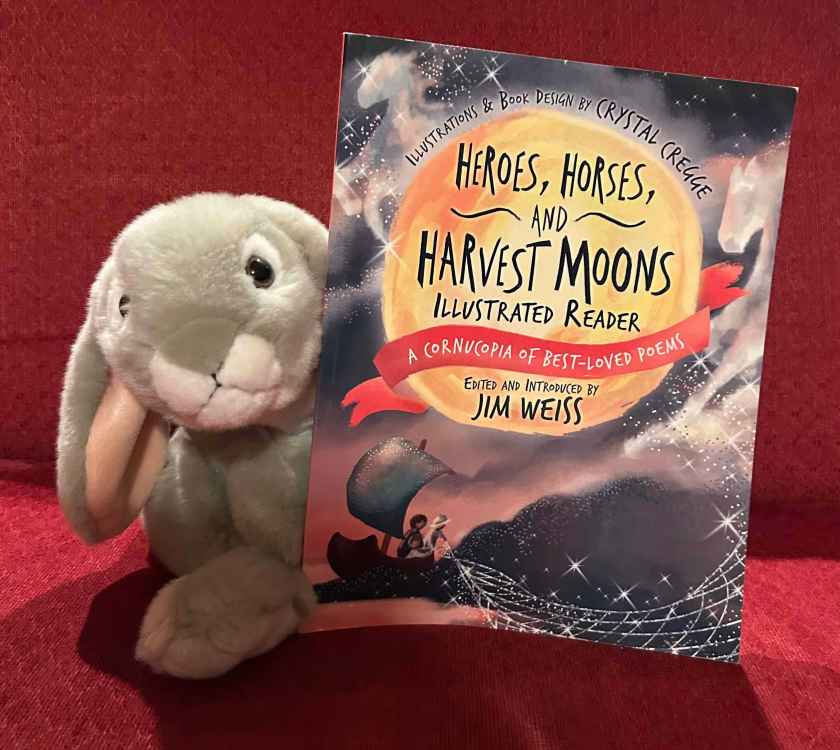
Sprinkles reviews Heroes, Horses, and Harvest Moons: A Cornucopia of Best-Loved Poems, edited and introduced by Jim Weiss and illustrated by Crystal Cregge.

When I first began to look for poetry books for young readers, I did not know there would be so many beautiful options out there. But through the years, I was pleasantly surprised to find several lovely books that fit the bill, all clearly created with much care and love. Today I wanted to share with you one such book: a lovely little collection of poems titled Heroes, Horses, and Harvest Moons: A Cornucopia of Best-Loved Poems.

Heroes, Horses, and Harvest Moons: A Cornucopia of Best-Loved Poems is a paperback large-format book, and in the course of fifty-two pages, covers thirty-one poems and nine nursery rhymes. Most poetry anthologies will not have Mother Goose in their repertoire, but this is a different kind of an anthology. The sounds matter a lot in this book, and the easy rhymes and repetitions of the nursery rhymes included seem to be a natural place to introduce young ones to poetry.

So this could indeed be a first introduction to poetry for a young bunny. There is a little blurb at the beginning about what poetry is; it ends with “I hope you have fun.” This captures the spirit of the book well. These are poems selected not only for being well-known and well-loved, but also a lot of the time, they are fun and fun to read out loud. Christina Rosseti’s “Who Has Seen the Wind?” is almost like a fun little riddle, and would be fun for a young one to read out loud together with their grownup.

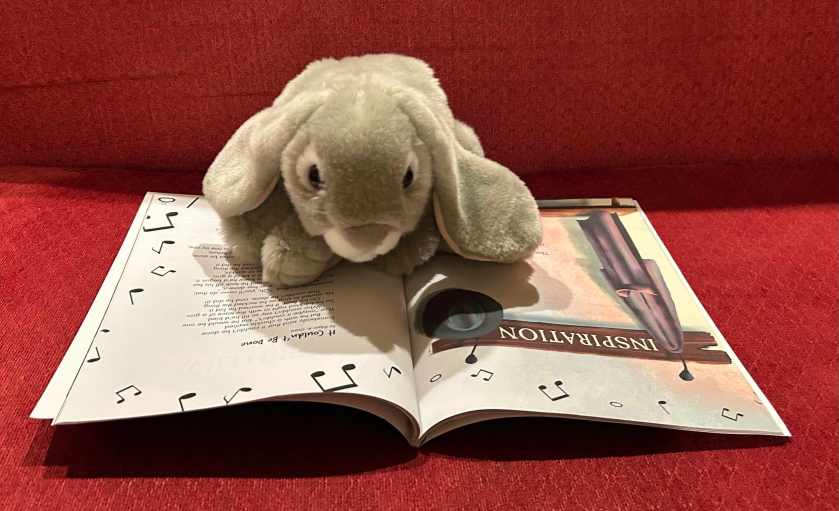
The illustrations on each page add to the fun factor. Carl Sandburg’s “Fog” starting with the lines:

The fog comes
on little cat feet.

is decorated by a city skyline with a crouching gray cat seemingly hiding behind it. The cat is looking curiously on and its tail is making an elegant wave above the city’s trees. All very amusing to explore as one thinks about the words of the poem…

Sprinkles is reading Heroes, Horses, and Harvest Moons: A Cornucopia of Best-Loved Poems, edited and introduced by Jim Weiss and illustrated by Crystal Cregge.

Many of the poems that appear in Heroes, Horses, and Harvest Moons: A Cornucopia of Best-Loved Poems can be found in some of the books I have reviewed before. For example Robert Louis Stevenson’s “Windy Nights” is from A Child’s Garden of Verses. “I Hear America Singing” by Walt Whitman was in two of the anthologies I reviewed. “The King’s Breakfast” and “Jonathan Jo” by A.A. Milne are both from When We Were Very Young. But there are also a lot of new poems here. So one should not worry about complete overlaps. And when it comes to poetry, revisiting an old acquaintance is always welcome!

The poems are loosely organized into whimsical themed sections. The first section is made up of nursery rhymes from Mother Goose. Then comes a section on poems about nature. There are two sections called “Wild Ride”. The first contains “Paul Revere’s Ride” by Henry Wadsworth Longfellow, the second, “The Charge of the Light Brigade” by Alfred, Lord Tennyson. Other sections are titled “All American Poems”, “Unusual Companions”, “Poems That Take Flight”, “Sensible Nonsense”, “Bedtime and Dreamtime”. “Unusual Companions”, for example, contains “The Beanstalk” by Edna St. Vincent Millay, “The Little Elf” by John Kendrick Bangs, and “The Song of the Wandering Aengus” by William Butler Yeats.

All of these sections are preceded by a Foreword by Susan Wise Bauer, directed at parents, with some recommendations on how to use the book. But the recommendations are not simply about just reading the book together with a child and talking about the pictures. There is some discussion of the role of memorization and recitation of poetry, both seemingly lost arts. Older children might recoil at the idea of reciting a poem in front of others, but younger children often enjoy memorizing and reciting rhyming language. If they recited poetry instead of commercial jingles, wouldn’t that be lovely?

The book is accompanied by an audio version of the poems, too, all read by Weiss himself. You can hear a sample on the publisher’s website for the audio companion. Weiss has a very versatile voice and his readings of the poems are a joy to listen to. But I’d say that it will be a whole lot more fun to read it out loud yourself with your little one.

Sprinkles enjoyed reading Heroes, Horses, and Harvest Moons: A Cornucopia of Best-Loved Poems, and recommends it to all young lovers of poetry and their adults.