Sprinkles reviews children’s books about Emmy Noether

Sprinkles has recently seen the one-woman play Diving Into Math with Emmy Noether, performed expertly by Anita Zieher. When she saw the play, she was in the middle of writing a joint review of two recent biographies on Emmy Noether for the newsletter of the Association for Women in Mathematics: Proving it Her Way: Emmy Noether, A Life in Mathematics, by David E. Rowe and Mechthild Koreuber, and Emmy Noether – Mathematician Extraordinaire by David E. Rowe, published in 2020 and 2021, respectively. The play impacted her deeply, and so she began to wonder if there were any good books about Emmy Noether written for children. This post is the outcome of her resulting explorations.
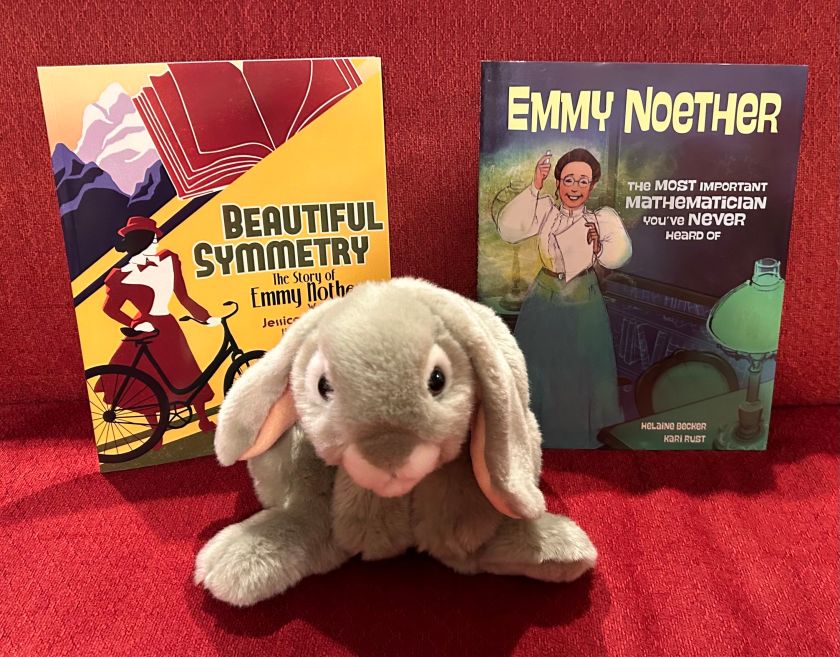
Sprinkles reviews two children's books about Emmy Noether: Beautiful Symmetry: The Story of Emmy Noether, written by Jessica Christianson and illustrated by Brittany Goris, and Emmy Noether: The Most Important Mathematician You've Never Heard Of, written by Helaine Becker and illustrated by Kari Rust.

Today I am writing to share with you some of my thoughts on reading two children’s books about Emmy Noether (1882-1935), who just happens to be one of the greatest mathematicians of the twentieth century. After having reviewed a whole bunch of children’s books about Ada Lovelace, I expected that Noether’s life must also have been depicted in several children’s books, given the importance of her work to modern mathematics and physics.

Emmy Noether’s life is also intrinsically interesting: though filled with sorrows and frustrations, and all sorts of challenges due to her gender (being a woman) and ethnicity (being a German Jew during the rise of Nazism before World War II), Noether’s life was also jam-packed with good friendships, great creative accomplishments, and according to the one-woman play Diving into Math with Emmy Noether performed by Anita Zieher, plenty of delicious pudding. [In case you are interested, here is a trailer for the play:

Trailer for Diving into Math with Emmy Noether, via YouTube.]

Especially after seeing Diving Into Math, I was convinced that Noether’s story would be appealing not only to an adult general audience of curious readers but also to a great many young readers. So I began to look around for books intended for a young audience.

Surprisingly I could find only two books: Beautiful Symmetry: The Story of Emmy Noether, written by Jessica Christianson and illustrated by Brittany Goris, and Emmy Noether: The Most Important Mathematician You’ve Never Heard Of, written by Helaine Becker and illustrated by Kari Rust. Both books are interesting and could be appealing to young readers, though I believe they have somewhat different strengths.
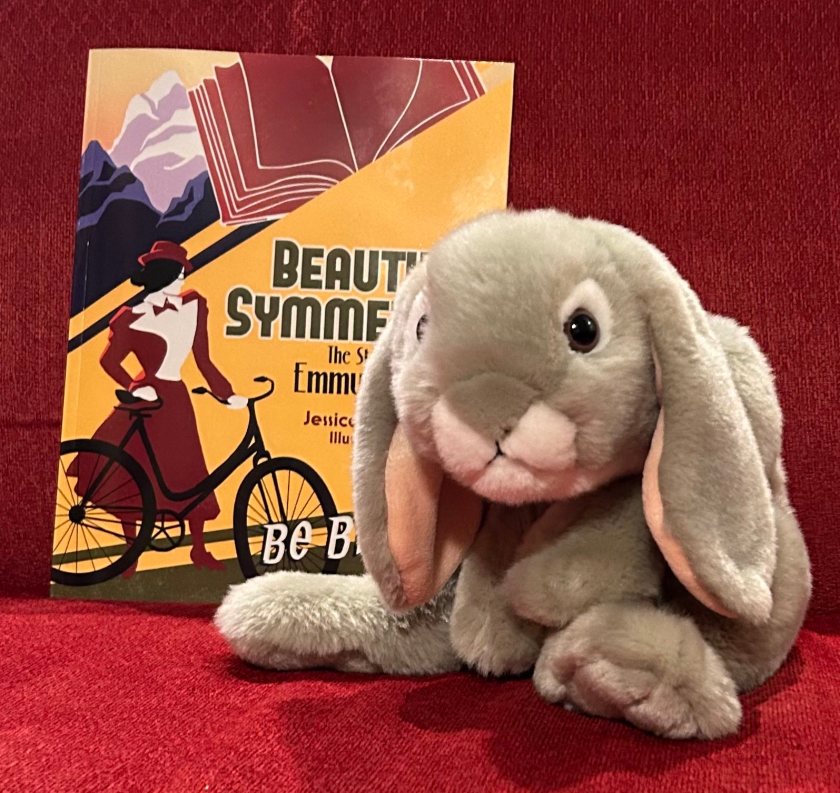
Sprinkles is posing with Beautiful Symmetry: The Story of Emmy Noether, written by Jessica Christianson and illustrated by Brittany Goris.

The first of the pair, Beautiful Symmetry: The Story of Emmy Noether, written by Jessica Christianson and illustrated by Brittany Goris, was published in 2017. In softcover paperback, the book is large format. The bold, striking page design which alternately reminded me of political posters and The Powerpuff Girls, and the large font used throughout might make the book more appealing to younger bunnies. The story of Emmy Noether’s life is told in the book in broad strokes, and that might also help with the younger crowd.

Beautiful Symmetry is visually very appealing and symmetry abounds throughout the book, adding to the theme and encouraging the reader to associate Noether’s life and accomplishments with the visual experience of symmetry. The end of the book has a short section on Emmy Noether’s mathematical work as well as a few simple math puzzles for the young readers who might want to explore math on their own a bit now that they have presumably gotten all inspired by the story they just read. I liked and appreciated each of these features.
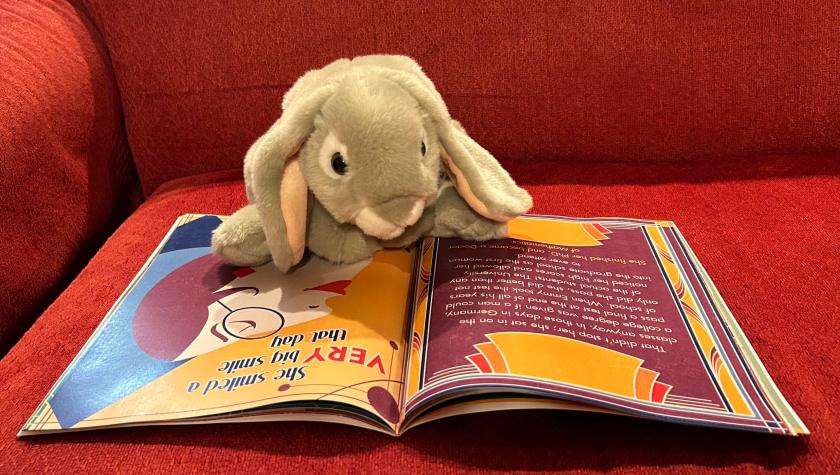
Sprinkles is reading Beautiful Symmetry: The Story of Emmy Noether, written by Jessica Christianson and illustrated by Brittany Goris.

Unfortunately, one occasionally finds a few factual errors here and there. For example, it was not a simple university official but the great mathematician David Hilbert who defended Emmy Noether in Göttingen, and he did not mention a locker room; rather he said “After all, we are a university, not a bathhouse.” (Well, he said it in German, so his exact words were “Meine Herren, der Senat ist doch keine Badeanstalt.”) Here is another example: Emmy Noether eventually did find a position at Bryn Mawr College, but despite what we read in Beautiful Symmetry, she never became the math department head there. (For more on Noether’s time at Bryn Mawr, see, for example, “A Refugee Scholar from Nazi Germany: Emmy Noether and Bryn Mawr College” by Qinna Shen.) These and a couple other small errors (including an embarrassing typo on the front cover) make me a bit wary to encourage readers to use this book as a reference for a book report.

For a book report, a much better reference would be Emmy Noether: The Most Important Mathematician You’ve Never Heard Of, written by Helaine Becker and illustrated by Kari Rust, and published in 2020. This book is well researched and according to the acknowledgments, had some fact-checking assistance from the Perimeter Institute. So in terms of facts, including the math and physics connections of Noether’s work, this book is a lot more reliable.
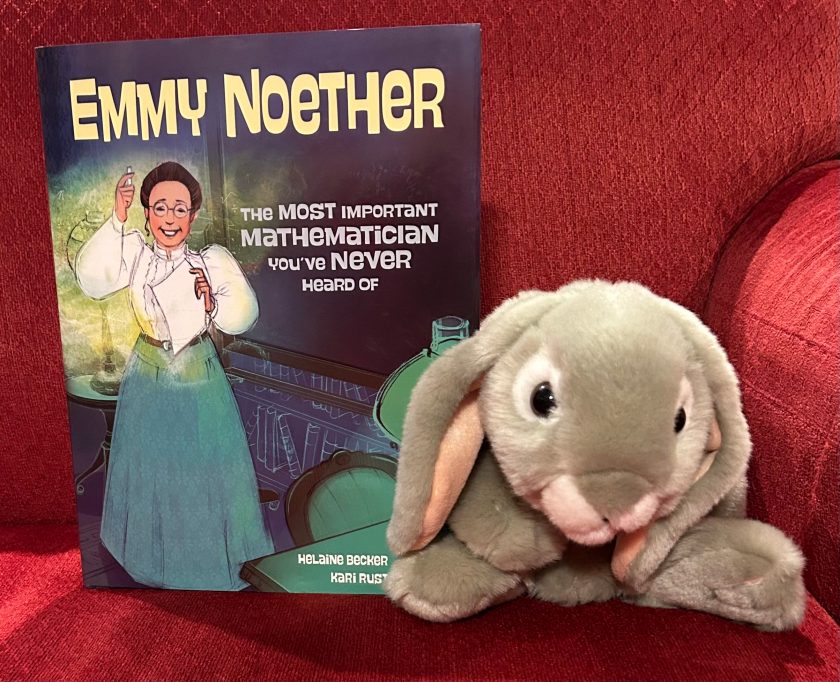
Sprinkles is posing with Emmy Noether: The Most Important Mathematician You've Never Heard Of, written by Helaine Becker and illustrated by Kari Rust.
Sprinkles is posing with Emmy Noether: The Most Important Mathematician You’ve Never Heard Of, written by Helaine Becker and illustrated by Kari Rust.

Emmy Noether: The Most Important Mathematician You’ve Never Heard Of was published in 2020, and the title is reminiscent of a 2012 New York Times article on Noether, “The Mighty Mathematician You’ve Never Heard Of” by Natalie Angier. But that essay, though very well written, made an unfounded claim that Noether published articles using men’s names. (Beautiful Symmetry also makes this unfounded claim, so perhaps Angier’s article led to some misunderstandings that were propagated. See this discussion for more details on the claim.) Becker’s book does not fall into such oversimplifications. And the story of Emmy Noether does not need such tropes. It is fascinating on its own with no need for embellishments.

Rust’s illustrations are cute and sharp at the same time, and the cartoonish detractors of Noether are shown humorously while the severity of Noether’s challenges is not minimized. The math and physics connections of her work are explained with precise terms in what is still a totally comprehensible language, and the illustrations support these descriptions. The book manages to distill into simple language some relatively abstract and advanced mathematical ideas, and somehow still retains a entertaining quality. The reader cannot help but root for Emmy, and laugh triumphantly each time she embarrasses her detractors.
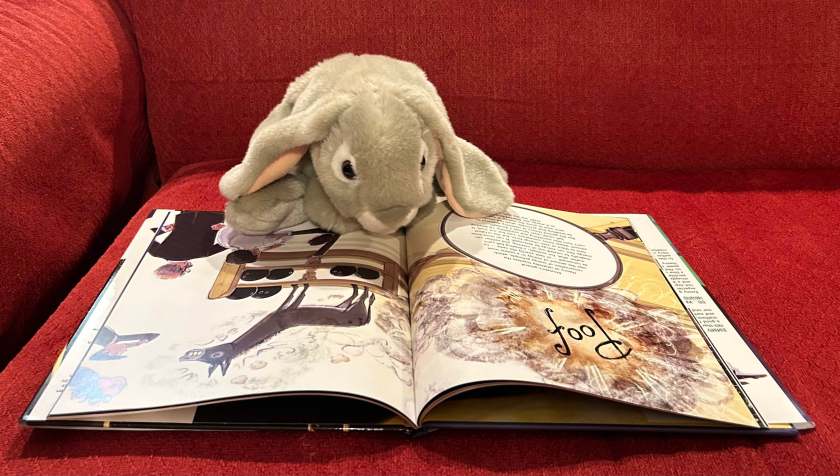
Sprinkles is reading Emmy Noether: The Most Important Mathematician You've Never Heard Of, written by Helaine Becker and illustrated by Kari Rust.
Sprinkles is reading Emmy Noether: The Most Important Mathematician You’ve Never Heard Of, written by Helaine Becker and illustrated by Kari Rust.

All in all, I enjoyed reading Emmy Noether: The Most Important Mathematician You’ve Never Heard Of, and would definitely recommend it to any young person interested in learning about what a mathematician does. Similarly the book would work well to introduce young bunnies to a most creative and impactful woman scientist, whose name is unfortunately not as well known as some others. There is a significant amount of math in the book, too, for those who want it, though the reader who does not want to dive too deep into those pools can easily avoid the more technical bits (left to a separate section at the very end) and enjoy and appreciate the rest of Emmy Noether’s story completely.

To be honest, I did enjoy reading both books, and despite the factual errors of Beautiful Symmetry, I would recommend either book to young readers. If one is looking for complete factual accuracy of course, I’d suggest sticking with The Most Important Mathematician You’ve Never Heard Of, or perhaps even jumping over to the other side and looking into some of the more standard biographies, written for adult consumption. Proving It Her Way by David E. Rowe was published in 2020 to accompany the play Diving into Math with Emmy Noether I started this review with. Rowe is a historian of mathematics, but this book was intended for a general audience. As such, I think it could be a great next step for anyone interested in learning more about this creative mind who found so much joy in mathematics, abstract ideas, and good intellectual companions.
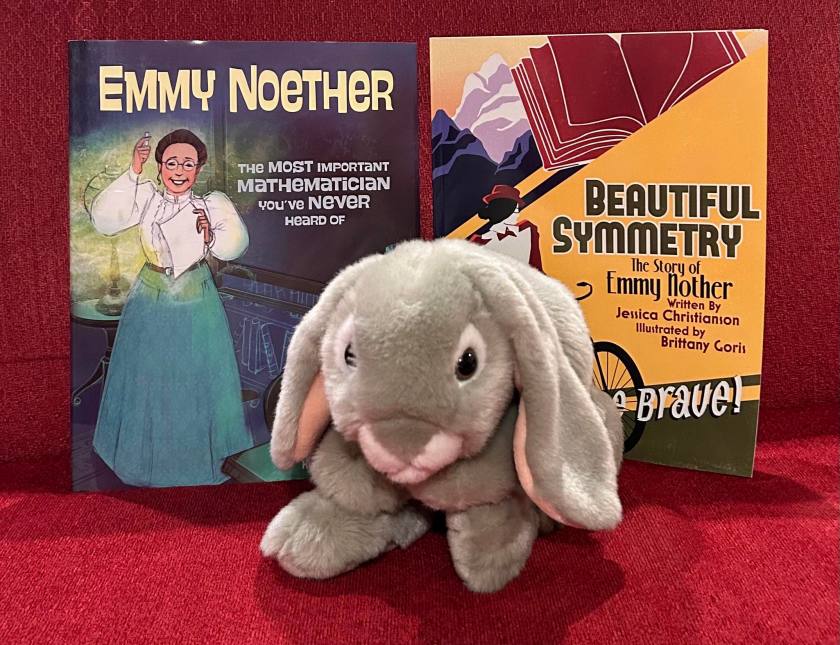
Sprinkles encourages all young bunnies to learn more about Emmy Noether by exploring one of the two children's books about Emmy Noether she reviewed here: Beautiful Symmetry: The Story of Emmy Noether, written by Jessica Christianson and illustrated by Brittany Goris, and Emmy Noether: The Most Important Mathematician You've Never Heard Of, written by Helaine Becker and illustrated by Kari Rust.
Sprinkles encourages all young bunnies to learn more about Emmy Noether by exploring one of the two children’s books about Emmy Noether she reviewed here: Beautiful Symmetry: The Story of Emmy Noether, written by Jessica Christianson and illustrated by Brittany Goris, and Emmy Noether: The Most Important Mathematician You’ve Never Heard Of, written by Helaine Becker and illustrated by Kari Rust.

Sprinkles reviews children’s books on Ada Lovelace

Sprinkles reviews children’s books about Ada Lovelace and suggests a few other books on women in STEM.

Ever since the launch of the Book Bunnies blog, Sprinkles has been thinking about what she should post here as her first review. Finally she decided to share a review she had written about several books on Ada Lovelace for a different outlet. Below is a revised version of what first appeared as “Reading About Ada: Children’s Edition” in the Association for Women in Mathematics Newsletter (Volume 49 Number 1 (January-February 2019), pages 9-13). This is long and will be the only post for July 2019; the book bunnies will be back with new reviews in August 2019.

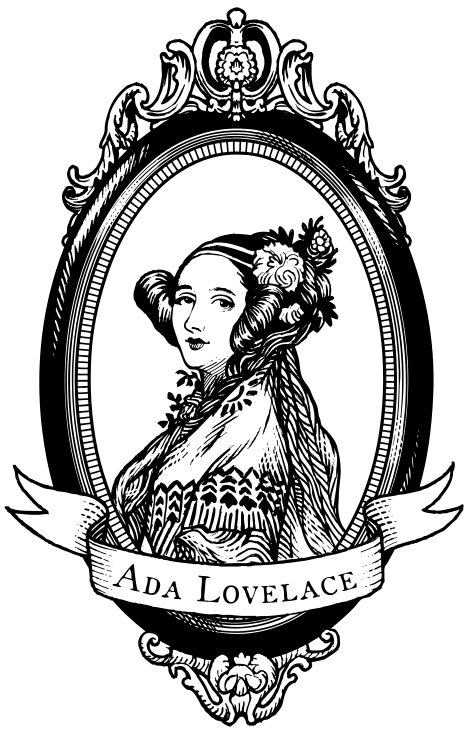
A black-and-white woodcut-style portrait of Ada Lovelace, based on the nineteenth century A. E. Chaton portrait, created by Colin Adams for the Ada Initiative.
A black-and-white woodcut-style portrait of Ada Lovelace, based on the nineteenth century A. E. Chaton portrait, created by Colin Adams for the Ada Initiative , Creative Commons licensed Public Domain image available at
https://commons.wikimedia.org/wiki/File:Ada_Lovelace.svg

We’re living at a time of many opportunities for people who can code. Today children of privilege begin playing with computers as toddlers. Attempts at leveling the playing field can involve coding camps as well as more traditional STEM-focused enrichment activities. Yet the computer science and engineering workforce remains heavily male-dominated. So proponents of women in STEM grasp at any loose end they can find to help alleviate the dearth of female role models. This is why we’re seeing book after book written about Ada, the first woman who wrote a computer program. And she is not only the first woman who did that, but actually the first person ever. A neat win for the Girls Team!

I completely empathize with this desire to share Ada’s story with younger people. And more generally I’m always on the lookout for books that can open up worlds of opportunity for girls of all ages. Hence I appreciated the opportunity to review several recent books on Ada written for the under-ten age group. The first three books I read belong to special series of books intended to encourage children to learn more about scientists and innovators and their contributions:

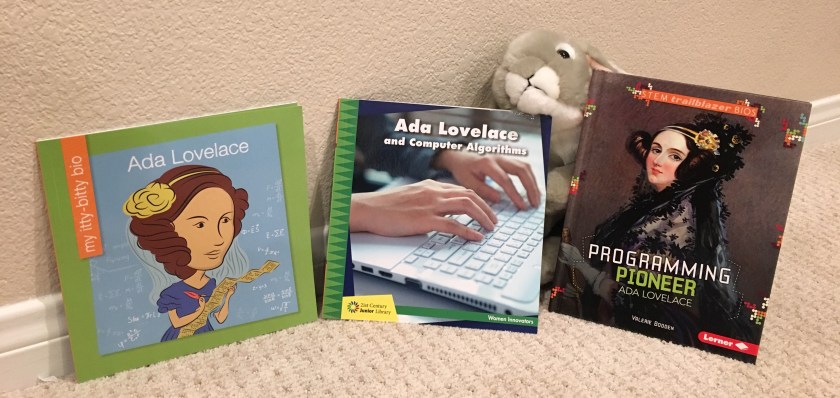
Ada Lovelace by Virginia Loh-Hagan (my itty-bitty bio) (illustrated by Jeff Bane)

Ada Lovelace and Computer Algorithms by Ellen Labrecque (Women Innovators: 21st Century Junior Library)

Programming Pioneer Ada Lovelace by Valerie Bodden (STEM trailblazer BIOS)

Sprinkles writes about Ada Lovelace by Virginia Loh-Hagan, Ada Lovelace and Computer Algorithms by Ellen Labrecque, and Programming Pioneer Ada Lovelace by Valerie Bodden.

Loh-Hagan’s book is for the youngest in the crowd. The book is narrated through Ada’s perspective and the plain Ada illustration on the cover appears throughout; there is also a range of images from Ada’s life. Though reading a sentence such as “I died in 1852” feels weird, the open-ended questions throughout try to connect the child reading the book (or being read to) to Ada’s story. Though the story is much simplified, perhaps to the extent of not being com- pletely accurate (Ada Lovelace didn’t “invent” the first computer program, she “wrote” it, and Charles Babbage didn’t “invent the computer” as his work didn’t connect with the actual historical development of computers), it is told in an age- appropriate way to inspire and intrigue.

Labrecque’s book presents itself in a similar vein. Printed in a very large font, it could be read out loud with a new reader, and the occasional prompts to the reader sprinkled throughout can make this reading session more fun and engaging. This book goes into more detail about Ada and her contributions, and the reader is offered a clearer idea of what her life’s work was about. Several color photos and images accompany the text and enrich the reading experience. A few follow-up resources and activities are suggested, and I could see an enthusiastic parent or summer camp instructor turning the book into a cool afternoon full of learning and fun.

At 28+ pages Bodden’s is a book one could (or should!) find in any school library. This hardcover chapter book would be a neat resource for elementary school students trying to learn about Ada and her contributions; it could also be a great story to share with that special shy niece interested in mathy stuff. Many images throughout bring Ada’s story to life. The section titled “Thinking Like a Man” openly brings up gender issues and could make a good conversation starter for pre-teens. This, I believe, is the most detailed and accurate account of Ada’s story for the under-ten crowd.

Next are larger-format storybook-style books on Ada. Each of these would be great to read to or together with a young child; their beautiful illustrations will add much joy to the experience.

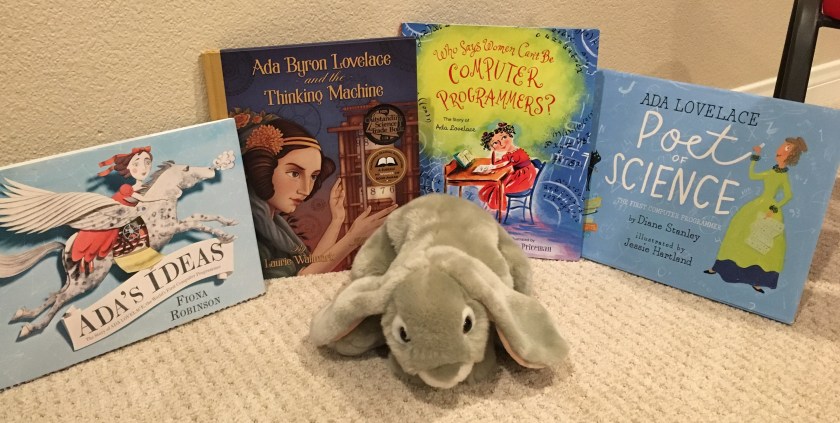
Ada’s Ideas: The Story of Ada Lovelace, the World’s First Computer Programmer written and illustrated by Fiona Robinson

Ada Byron Lovelace and the Thinking Machine by Laurie Wallmark (illustrated by April Chu)

Who Says Women Can’t Be Computer Programmers? The Story of Ada Lovelace by Tanya Lee Stone (illustrated by Marjorie Priceman)

Ada Lovelace, Poet of Science: The First Computer Programmer by Diane Stanley (illustrated by Jessie Hartland)

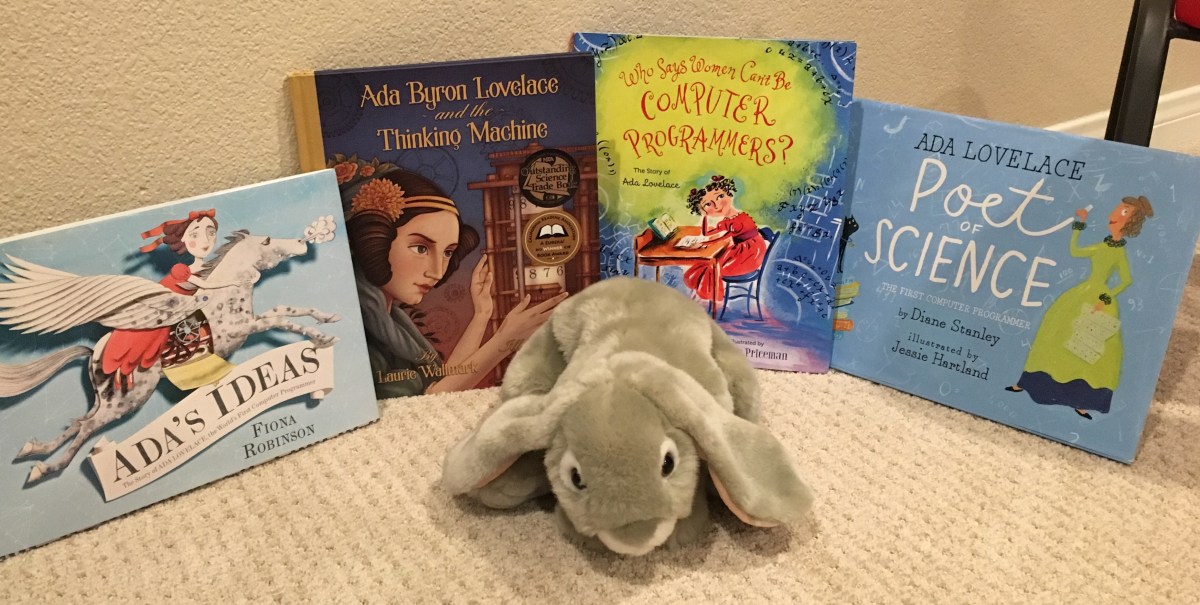
Sprinkles writes about Ada’s Ideas: The Story of Ada Lovelace, the World’s First Computer Programmer by Fiona Robinson, Ada Byron Lovelace and the Thinking Machine by Laurie Wallmark, Who Says Women Can’t Be Computer Programmers? The Story of Ada Lovelace by Tanya Lee Stone, and Ada Lovelace, Poet of Science: The First Computer Programmer by Diane Stanley.

None of these goes beyond Bodden’s Programming Pioneer Ada Lovelace in terms of technical details, but the technical details that are included are dispensed in perfectly digestible amounts. This makes the books not only fun to read but also intellectually stimulating. Interestingly, they all seem to be fascinated by nine-year-old Ada’s efforts to design and construct a flying machine; this plays an important role in each of the four books. The sheer beauty of illustration in each book also makes these great gifts for young children and the adults who enjoy reading with them. The expert illustrations range from the realistic (in Wallmark and Chu’s Thinking Machine) to the whimsical (Stone and Priceman’s Who Says Women Can’t Be Computer Programmers?). Most play with the contrast of the poet’s imagination with the mathematician’s strict discipline, and all successfully combine the two in the end.

But what to do with that special little person who read several of these books and wants to know more about Ada? Here let me tell you one thing: Whatever you do, don’t jump into any random book about Ada with your youngster, without first reading it on your own. Otherwise you just might find yourself, like I did, in some very awkward territory, where you need to either explain, or explain away, or simply skip through large portions of exposition, which go beyond PG-13. Yes, Ada’s life is inspiring to children, but it also contains a lot of messy bits for the adults.

Indeed, it saddens me to acknowledge that children only get to hear part of Ada’s story. Ada’s life is complex, and as you immediately discover when you dig into the juicy details, she certainly didn’t do everything right. She was ambitious and confident. She had vision and she had sass. She was also the person who wrote the very first computer program. But Ada is an ideal role model for more than just the above. Yes, she was brilliant. But she was also a failed genius, and this time, she is on our team. Except for her gender, Ada’s story resembles the stories of any of those wild geniuses appreciated not only for their achievements but also for their larger-than-life personalities. And how many such stories do we have with female protagonists? How many others like her can you count? A female genius, who was brimming with potential and yet was mostly misunderstood and unappreciated during her time? An extraordinary figure, one who saw farther than her peers, one who basically squandered her voluminous talents because she was just interested in way too many disparate things?

The standard simplified Ada story tells us that she was a genius who wrote the first computer program. A similarly simplified story could tell us alternatively that she ended up doing nothing impactful, that her work and that of Charles was not what led to today’s computers, so that overall, she was a failure. Another simplified story could badmouth her mothering, her wifely skills, and her “loose attitude” with other men and tell us a tale of immorality in the grandeur of Victorian England. (Valerie Aurora in her amazing talk explores these different stories about Ada and encourages us to accept the complexities of her life instead of trying to fit her into a straitjacket.)

The story most people would choose to tell their children is the first one. However, for those children ready to take on a more complex persona and engage with her fully, some grownup books might help. The one I’d recommend for people who might also enjoy reading along to learn some of the math Ada was engaged in is Ada Lovelace: The Making of a Computer Scientist by Christopher Hollings, Ursula Martin, and Adrian Rice. The authors are historians of mathematics and computer science and have dug deep into the archives and brought us a mathematically rich and yet a most readable account of Ada.

But maybe you don’t want to go there. Then, why not expand your little ones’ horizons and introduce them to other amazing women? Here are three of my other favorites if you want a break from Ada:

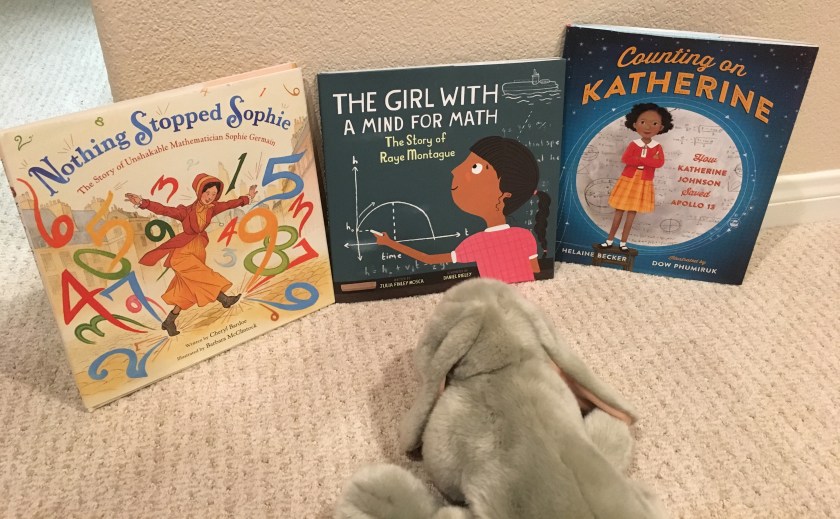
Nothing Stopped Sophie: The Story of Unshakable Mathematician Sophie Germain by Cheryl Bardoe (illustrated by Barbara McClintock) – about Sophie Germain

The Girl with a Mind for Math: The Story of Raye Montague by Julia Finley Mosca (illustrated by Daniel Rieley) – about Raye Montague

Counting on Katherine: How Katherine Johnson Saved Apollo 13 by Helaine Becker (illustrated by Dow Phumiruk) – about Katherine Johnson

Sprinkles also recommends Nothing Stopped Sophie: The Story of Unshakable Mathematician Sophie Germain by Cheryl Bardoe, The Girl with a Mind for Math: The Story of Raye Montague by Julia Finley Mosca, and Counting on Katherine: How Katherine Johnson Saved Apollo 13 by Helaine Becker.

And for neat collections of short bios, you will not go wrong with either of the two volumes of Good Night Stories for Rebel Girls by Elena Favilli and Francesca Cavallo; if you’re especially rooting for math, don’t miss the second volume, with its portrayal of Maryam Mirzakhani.