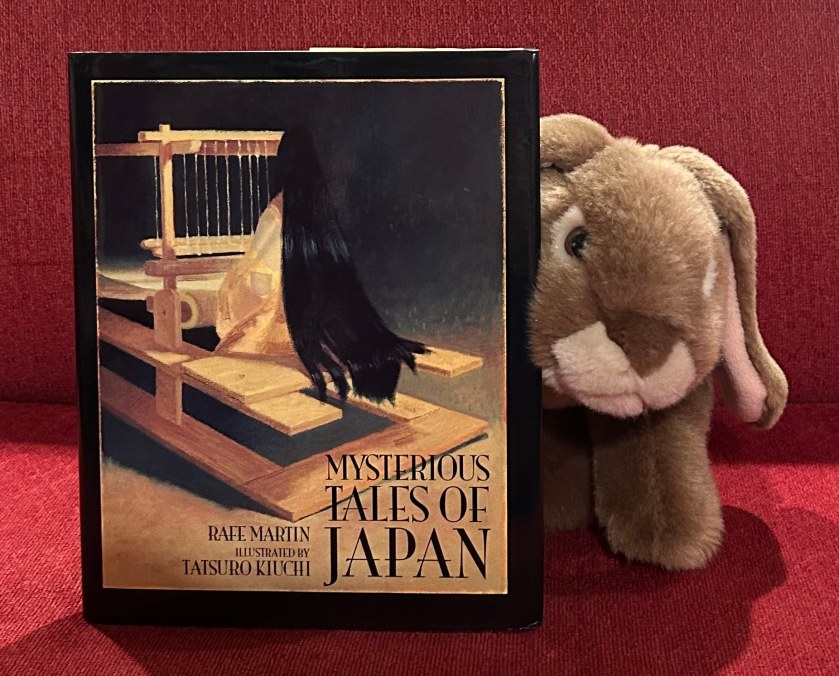
Today Caramel is talking to Sprinkles about Mysterious Tales of Japan, written by Rafe Martin and illustrated by Tatsuro Kiuchi, originally published in 1996.
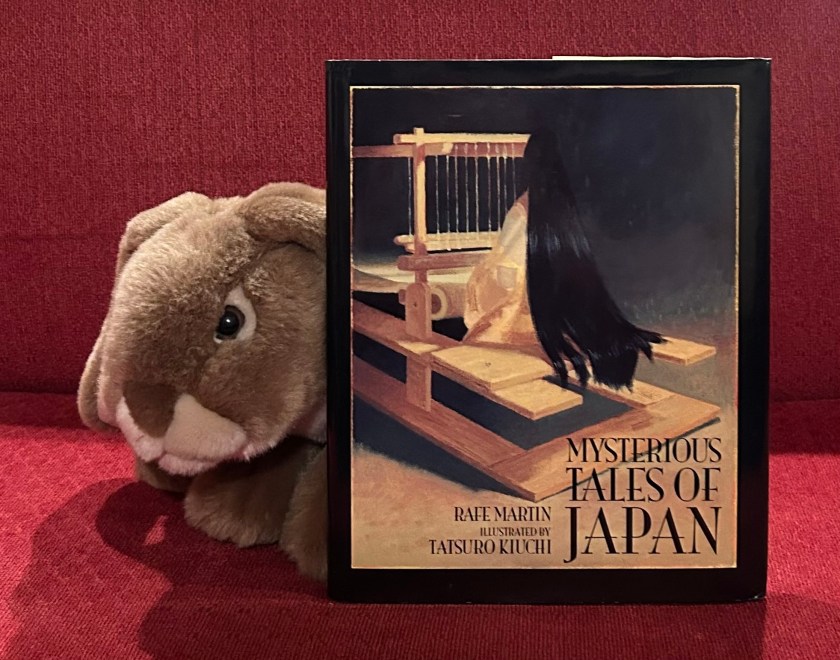
Sprinkles: So Caramel, today we are talking about Mysterious Tales of Japan, another one of those books you read for that Asian Myths and Legends summer course you took a while back.
Caramel: Yeah, it is, I think, the last one? I already reviewed the other ones: Japanese Myths, Legends, and Folktales, Tamamo the Fox Maiden and Other Asian Stories, Chinese Myths and Legends: The Monkey King and Other Adventures, Vietnamese Children’s Favorite Stories, and Favorite Children’s Stories from China and Tibet.
S: Yes, I think you are completing the set today. But this one is a bit different from the others, right? The stories are a bit spooky, I am guessing.
C: Spooky? No, they’re not that spooky. But yes, there are ghosts and spirits and such.
S: I see. Then please tell me a bit more about the book.
C: It has some stories shared with some of the others, like “Ho-Ichi the Earless” and “Urashimmo Taro”, which I had already read in Tamamo the Fox Maiden and Other Asian Stories. Besides these, there are eight other stories, and I had not read those before; they were all new to me.
S: That’s cool Caramel. So ten stories and eight of them were totally new for you. Tell me a bit about the new stories.
C: The other eight stories are “Green Willow”, “The Snow Woman”, “Kogi”, “The Crane Maiden”, “The Pine of Akoya”, “A Frog’s Gift”, “The Boy Who Drew Cats”, and “Black Hair”. They are all about five pages or so.
S: Okay, so tell me a bit about these stories. Any one that surprised you?
C: No, not really; most of the stories are sort of similar to others that I read before.
S: Okay, so I guess you are getting used to Japanese folk tales and their general feel. Then, maybe tell me which was the most interesting? Or the spookiest?
C: I think that “Ho-ichi the Earless” is the spookiest.
S: I remember that story from the other book. It was quite weird and spooky, I agree. But that book was basically a graphic novel adaptation, so it was very visual. Left not much to your imagination.
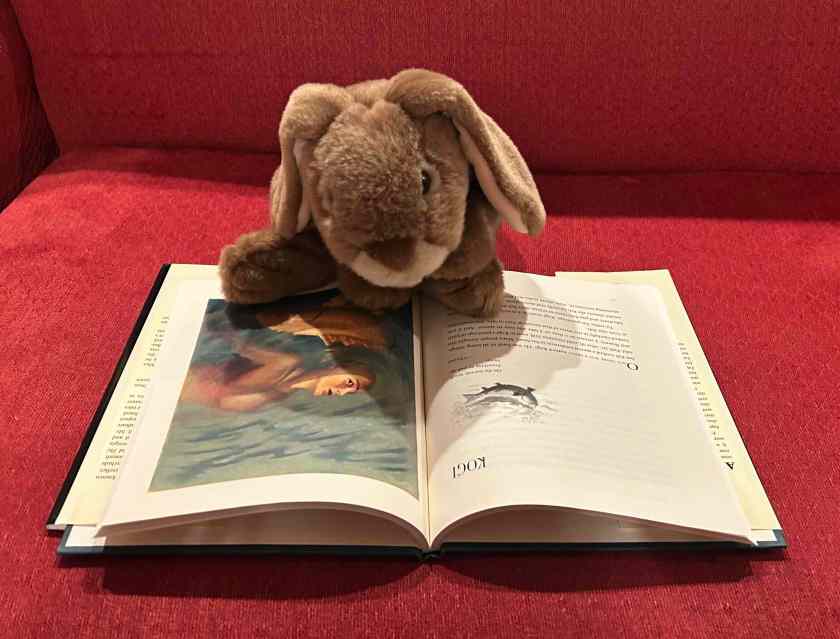
C: This book has pictures, too, but only one or two for each story. So you have a lot more to imagine.
S: That can sometimes be scarier.
C: True. Sometimes the imagining is the part where I like real books over picture books. Let me think about what I want the main character to look like. Let me think about how the house the author is describing actually looks like. And so on. And the pictures in this book are not all very detailed. They give you a feel for the story, but you still have a lot more to imagine on your own.
S: Yes, the pictures are beautiful and evocative, but you are right, they are not very detailed. They leave much room to create in your own imagination. So for example, the two stories you had already read before in that other book: when you were reading them here, did you have some new imagery in your mind to go along with the story line?
C: Yeah, sometimes the space not drawn is the spookiest. It definitely was like that for me for “Ho-ichi the Earless”.
S: Cool, thanks for all this Caramel. I think we have enough for a post, so maybe this is a good time to wrap things up.
C: Sure, why not?
S: Great! What would you like to say to our readers as your closing words?
C: Stay tuned for more book bunny reviews!
 BookBunnies