Caramel reviews Mysterious Tales of Japan by Rafe Martin

Today Caramel is talking to Sprinkles about Mysterious Tales of Japan, written by Rafe Martin and illustrated by Tatsuro Kiuchi, originally published in 1996.
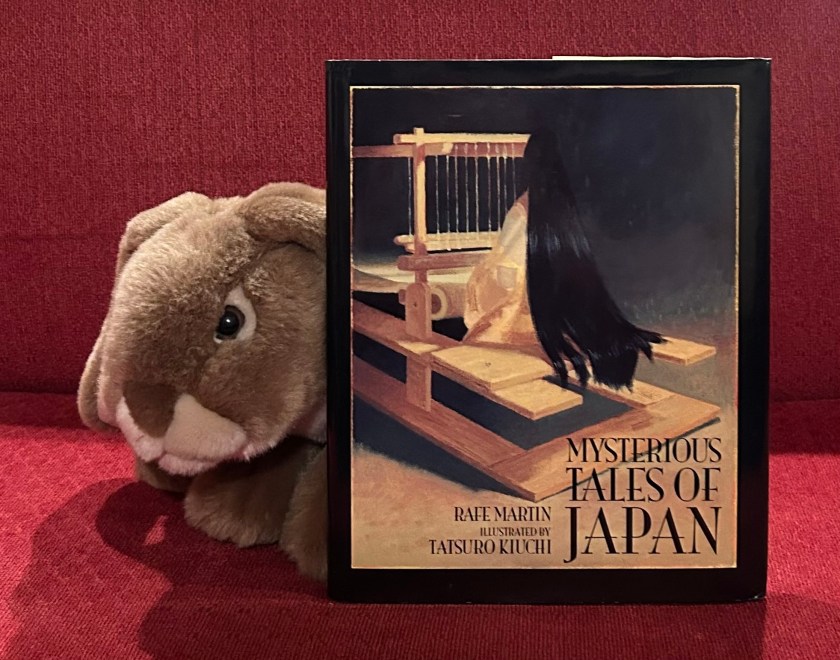
Caramel reviews Mysterious Tales of Japan, written by Rafe Martin and illustrated by Tatsuro Kiuchi.

Sprinkles: So Caramel, today we are talking about Mysterious Tales of Japan, another one of those books you read for that Asian Myths and Legends summer course you took a while back. 

Caramel: Yeah, it is, I think, the last one? I already reviewed the other ones: Japanese Myths, Legends, and Folktales, Tamamo the Fox Maiden and Other Asian Stories, Chinese Myths and Legends: The Monkey King and Other Adventures, Vietnamese Children’s Favorite Stories, and Favorite Children’s Stories from China and Tibet

S: Yes, I think you are completing the set today. But this one is a bit different from the others, right? The stories are a bit spooky, I am guessing. 

C: Spooky? No, they’re not that spooky. But yes, there are ghosts and spirits and such. 

S: I see. Then please tell me a bit more about the book. 

C: It has some stories shared with some of the others, like “Ho-Ichi the Earless” and “Urashimmo Taro”, which I had already read in Tamamo the Fox Maiden and Other Asian Stories. Besides these, there are eight other stories, and I had not read those before; they were all new to me.

S: That’s cool Caramel. So ten stories and eight of them were totally new for you. Tell me a bit about the new stories. 

C: The other eight stories are “Green Willow”, “The Snow Woman”, “Kogi”, “The Crane Maiden”, “The Pine of Akoya”, “A Frog’s Gift”,  “The Boy Who Drew Cats”, and “Black Hair”. They are all about five pages or so.
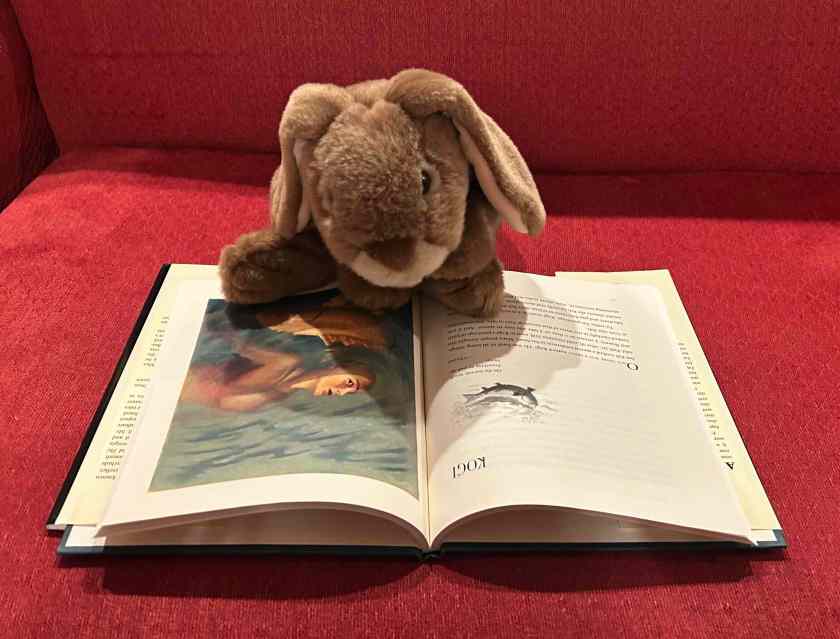
Caramel is reading Mysterious Tales of Japan, written by Rafe Martin and illustrated by Tatsuro Kiuchi.

S: Okay, so tell me a bit about these stories. Any one that surprised you? 

C: No, not really; most of the stories are sort of similar to others that I read before.

S: Okay, so I guess you are getting used to Japanese folk tales and their general feel. Then, maybe tell me which was the most interesting? Or the spookiest? 

C: I think that “Ho-ichi the Earless” is the spookiest. 

S: I remember that story from the other book. It was quite weird and spooky, I agree. But that book was basically a graphic novel adaptation, so it was very visual. Left not much to your imagination. 

C: This book has pictures, too, but only one or two for each story. So you have a lot more to imagine. 

S: That can sometimes be scarier. 

C: True. Sometimes the imagining is the part where I like real books over picture books. Let me think about what I want the main character to look like. Let me think about how the house the author is describing actually looks like. And so on. And the pictures in this book are not all very detailed. They give you a feel for the story, but you still have a lot more to imagine on your own. 

S: Yes, the pictures are beautiful and evocative, but you are right, they are not very detailed. They leave much room to create in your own imagination. So for example, the two stories you had already read before in that other book: when you were reading them here, did you have some new imagery in your mind to go along with the story line? 

C: Yeah, sometimes the space not drawn is the spookiest. It definitely was like that for me for “Ho-ichi the Earless”. 

S: Cool, thanks for all this Caramel. I think we have enough for a post, so maybe this is a good time to wrap things up. 

C: Sure, why not?

S: Great! What would you like to say to our readers as your closing words? 

C: Stay tuned for more book bunny reviews!
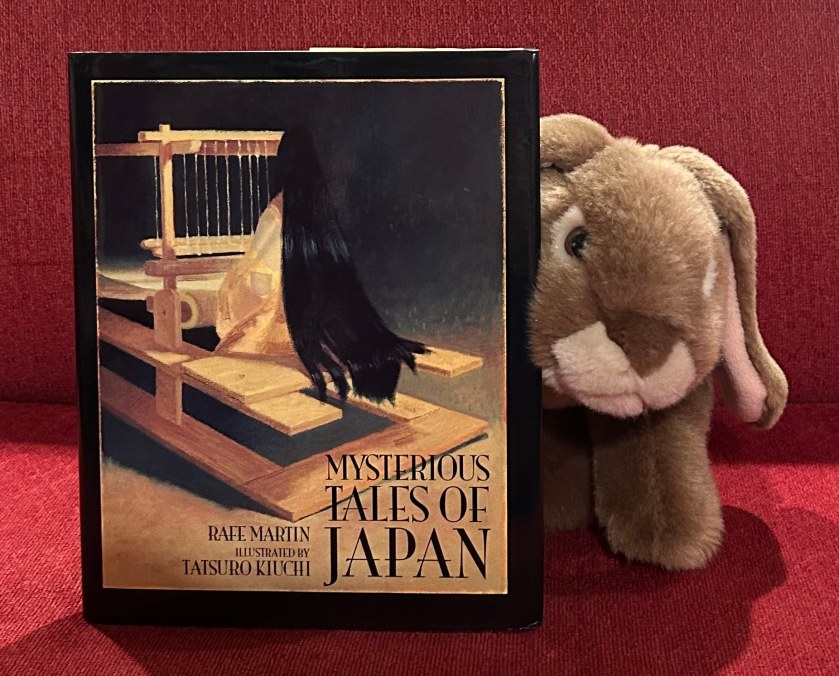
Caramel appreciated reading Mysterious Tales of Japan, written by Rafe Martin and illustrated by Tatsuro Kiuchi, and recommends it to all other young bunnies, but maybe they should think about reading it with a grownup bunny so they don't get too scared.
Caramel appreciated reading Mysterious Tales of Japan, written by Rafe Martin and illustrated by Tatsuro Kiuchi, and recommends it to all other young bunnies, but maybe they should think about reading it with a grownup bunny so they don’t get too scared.

Caramel reviews Favorite Children’s Stories from China and Tibet by Lotta Carswell Hume

In these past few months Caramel has reviewed several books that collect together stories from various Asian traditions: Japanese Myths, Legends, and Folktales, Tamamo the Fox Maiden and Other Asian Stories, Chinese Myths and Legends: The Monkey King and Other Adventures, and Vietnamese Children’s Favorite Stories. Today he adds to this list another book: Favorite Children’s Stories from China and Tibet, written by Lotta Carswell Hume (1876-1976), illustrated by Lo Koon-Chiu (1918–2012), and originally published in 1962. The edition Caramel read was the 2004 edition. As usual, Sprinkles is taking notes and asking questions.

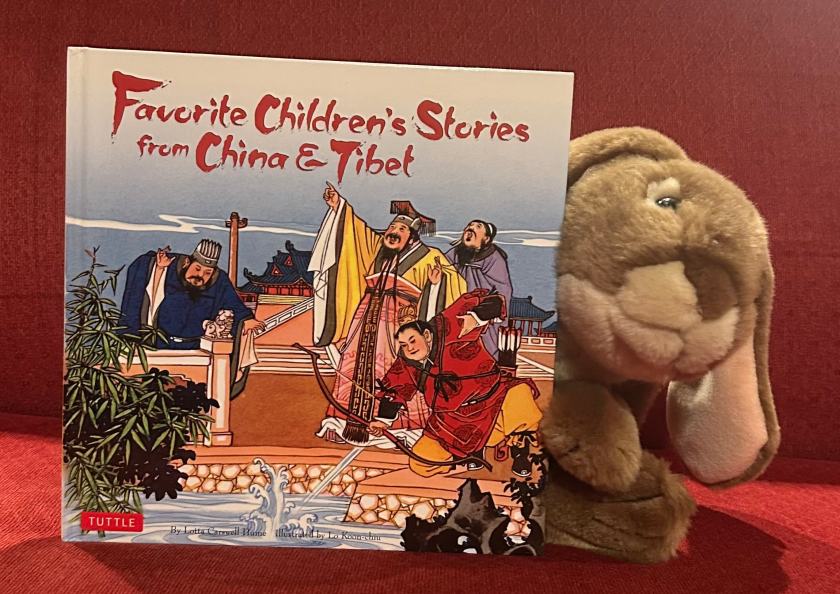
Caramel reviews Favorite Children’s Stories from China and Tibet, written by Lotta Carswell Hume and illustrated by Lo Koon-Chiu.

Sprinkles: So Caramel, here we are, talking about another neat collection of stories! 

Caramel: Yes, this one has stories from China and Tibet. 

S: Tell me more.

C: Well, let me see. There are eighteen stories. Each of them is about three to seven pages long. And there are a lot of pictures. I really liked them! 

S: Yeah, I saw that there are a lot of colorful illustrations. Apparently they were made by a Chinese artist named Lo Koon-Chiu. 

C: That makes sense. Because a lot of the stories are Chinese. But the person who wrote them does not sound like a Chinese person. And I don’t know too many Tibetan names, but the author’s name does not sound Tibetan either. 

S: You are right. The author was apparently from Baltimore, USA, and then got married and moved to Asia with her husband. She lived in China and India for decades, and her children got to hear a lot of traditional Chinese stories. So this is a collection she put together to share those stories with children who would read or be read to in English. 

C: I see. Then she did not write the stories herself. That makes a lot more sense now. 

S: Yeah, I was curious too, and then looked it all up. Anyways talk a bit about the stories. Can you tell which stories are from Tibet and which are from China?

C: Yes. There is a little note under the story title for each one. So there are five stories from Tibet. The rest are from China. But they separated those, too. Some are from West China, some from Southeast China, some from Central China, and so on. 

S: Hmm, I guess that makes sense. China is a big country. Maybe they did not want to go into detail about the exact geography of China and give the province names and such. 

C: I guess. But there are a lot more stories from China, so maybe they just split the Chinese stories so they would not look too uneven. 

S: Interesting! That could be a good reason, too, Caramel.

Caramel is reading Favorite Children’s Stories from China and Tibet, written by Lotta Carswell Hume and illustrated by Lo Koon-Chiu.

S: Anyways, so why don’t you tell me more about the stories themselves? 

C: Well, there is a story like Cinderella, and it is called A Chinese Cinderella, And there is this story about a woman who is called Mrs. Number Three who is an innkeeper.

S: That is a very strange name!

C: It is not her real name, but nobody knows her real name so they call her that. But the story is really interesting. Its name is “The Magic Pancakes at the Footbridge Tavern”. So as you can imagine, there are magic pancakes! 

S: Oh, I know you love pancakes! 

C: Yeah, but these are magic and you really don’t want to eat them. 

S: Oh, that is interesting! I guess I just have to read the story to figure out what you mean. 

C: Yep. 

S: Okay, so that is two of the eighteen stories. What about the others?

C: A lot of the others are about animals. Like there is a Tibetan story about a tortoise and a monkey and another about some jackals and a tiger. And then there is another about a hungry wolf, and one about some mice. 

S: Oh, that is interesting. Kind of like fables, I am guessing. 

C: Yeah, kind of. But wait, it looks like the animal stories are almost all stories from Tibet. Some of the Chinese stories also have animals, but they also have people. 

S: Very interesting observation, Caramel.

C: And then there are two stories like the ones we talked about before about how some things came to be the way they are. There is a story about how the rooster got its red crown and another about how the deer lost its tail. They are both from China. 

S: I see. True, we did talk about such stories when you were reviewing Vietnamese Children’s Favorite Stories by Tran Thi Minh Phuoc. Apparently such stories were called “pourquoi” stories

C: Oh, yes, I remember you said that last time. 

S: Okay, so all in all it seems like you have enjoyed reading this book, right? 

C: Yep! 

S: Can you tell us if you have a favorite story? 

C: No, I liked them all. 

S: That is wonderful, Caramel. Okay, maybe this is a good time to wrap up this review. What would you like to tell our readers? 

C: Stay tuned for more book bunny reviews!
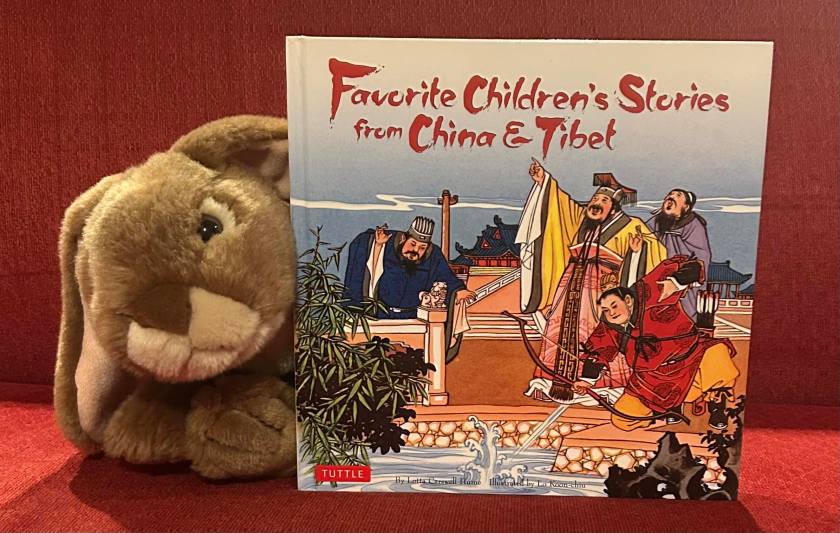
Caramel enjoyed reading Favorite Children’s Stories from China and Tibet, written by Lotta Carswell Hume and illustrated by Lo Koon-Chiu, and recommends it to all the other little bunnies who enjoy reading or hearing short stories.

Marshmallow reviews The Witch’s Apprentice and Other Stories by Ekta R. Garg

The book bunnies love various retellings of the classic fairy tales of the Western tradition, and through the years, they have reviewed many books that offered different takes on them. They also have explored, these past few months, several books that collect together fairy tales from geographies from around the world. Therefore they were delighted to learn that they made it to the list of 30 Best Fairy Tale Blogs and Websites in 2025, curated by Feedspot, a blog aggregation site.

To celebrate, today Marshmallow is reviewing a brand new book of fairy tales: The Witch’s Apprentice and Other Stories, written by Ekta R. Garg. The book bunnies are delighted to be reviewing this book as part of a Blog Tour for The Witch’s Apprentice and Other Stories organized by WOW! Women On Writing.

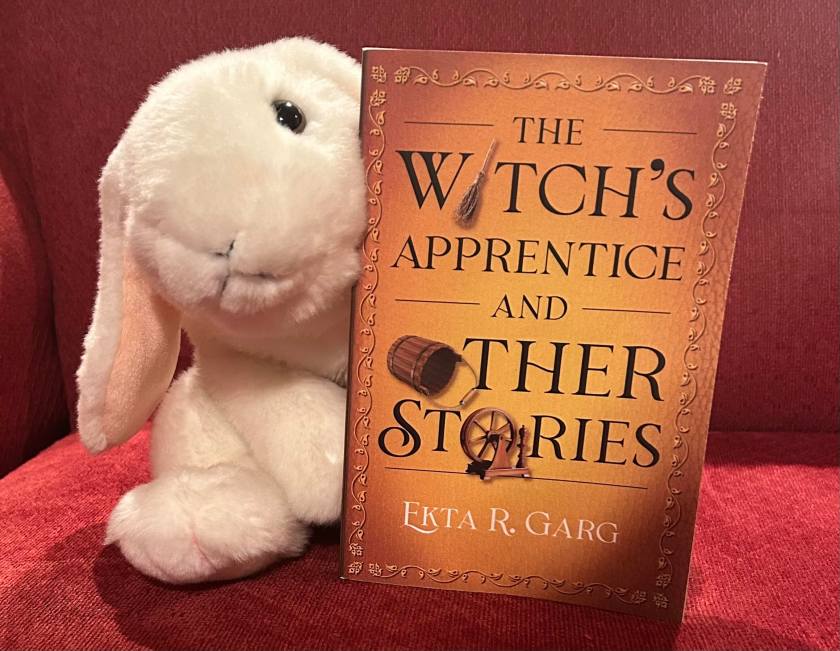
Marshmallow reviews The Witch's Apprentice and Other Stories by Ekta R. Garg.
Marshmallow reviews The Witch’s Apprentice and Other Stories by Ekta R. Garg.

Marshmallow’s Quick Take: If you like fantasy books that add on to the classic fairy tales and elaborate on their worlds, then this is the book for you! 

Marshmallow’s Summary (with Spoilers): The Witch’s Apprentice and Other Stories, as you can guess from the title, is a collection of short stories. There are a total of five stories in it. Each story picks up a well-known fairy tale or a classic folk tale, asks a followup question that you might have after reading it, and then goes on to offer a fantastical answer to that question.

The first story is set in the land of the Wonderful Wizard of Oz. The main character is the cousin of the Wicked Witch of the East. The Witch rules over Munchkinland and is the idol of the main character, who wants to become a witch just like her. This character, therefore, attends the school that trains students to be certified witches. Unfortunately, she is never summoned to take her final test, and the reasons she uncovers lead to the famous moment when Dorothy’s house smushes and crushes the Wicked Witch. The author offers this short story as a response to her question “When the tornado took Dorothy’s house to Oz, it landed on the Wicked Witch of the East and killed the witch instantly. What was the witch doing on the road in the first place?” I found this to be an interesting analysis and extension of the original story, opening the door to a related tangent that proved to be fun and entertaining to read.

The second story is about The Pied Piper of Hamelin. In this fairy tale, a musician promises to use his pipe music to get rid of the rats in the town of Hamelin. Even though he completes the job, the mayor refuses to pay the money owed, and the piper vows revenge. Later he comes back, plays his pipe, and lures all the children away from the town. The question this story seeks to answer is “What happened to the parents of Hamelin after that?” This story is much shorter than the others, and it left me feeling sad and somewhat unsatisfied.

But I really liked the story after it. This story focuses on the two conmen in The Emperor’s New Clothes, and I felt that it really helps flesh out the characters as three-dimensional people, rather than the flat caricatures shown in the more simplistic original story.

The second to last story is not quite about a fairy tale but rather a well-known nursery rhyme: Jack and Jill. The story goes into depth about the question “Why did Jack and Jill need that pail of water in the first place?” I found this story very touching in a heartbreaking way. It was very well developed and had a lot of nuance.

The final story is a mix of Goldilocks and Sleeping Beauty, which makes for an interesting cross-over. This time, the story answers two questions, one for each of the characters, and things get quite convoluted but in an interesting way.

Marshmallow is reading The Witch's Apprentice and Other Stories by Ekta R. Garg.
Marshmallow is reading The Witch’s Apprentice and Other Stories by Ekta R. Garg.

Marshmallow’s Review: As you can probably tell, I highly enjoyed reading The Witch’s Apprentice and Other Stories. However, that was part of the problem; I liked the stories too much and was disappointed that some of them were so short. It was very satisfying to read explanations for some things that were confusing or vague in fairy tales. But, on the other hand, Garg’s stories opened up a whole new can of questions. I really wanted to hear more about the characters she developed and the new plots she started.

These stories were all fantastic and very quick and fun to read. I would highly recommend the book to readers of all ages, especially if you enjoy reading retellings of fairy tales, as in Beasts and Beauty: Dangerous Tales, Thornhedge, A Tale Dark and Grim, Tuck Everlasting, Ella Enchanted, Half Upon a Time, Thornwood or Glass Slippers. But I also would like the author to write extensions for these extensions—or more of these types of stories!

Marshmallow’s Rating: 95%.

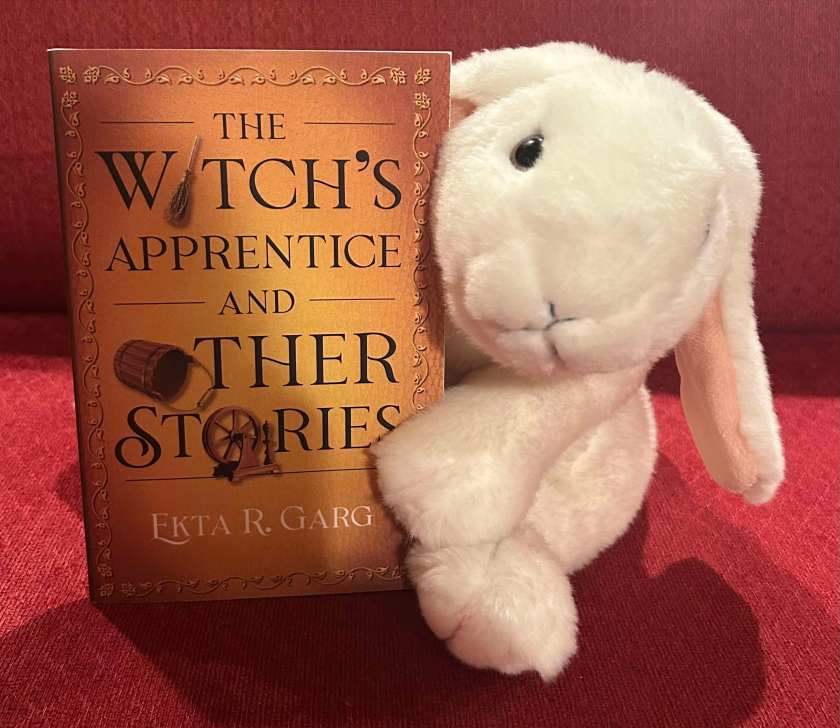
Marshmallow rates The Witch's Apprentice and Other Stories by Ekta R. Garg 95%.
Marshmallow rates The Witch’s Apprentice and Other Stories by Ekta R. Garg 95%.

Caramel reviews Vietnamese Children’s Favorite Stories by Tran Thi Minh Phuoc

The book bunnies love various retellings of the classic fairy tales of the Western tradition, and through the years, they have reviewed many books that offered different takes on them. They also have explored, these past few months, several books that collect together fairy tales from geographies from around the world. Therefore they were delighted to learn that they made it to the list of 30 Best Fairy Tale Blogs and Websites in 2025, curated by Feedspot, a blog aggregation site.

To celebrate, today Caramel is reviewing yet another book of fairy tales: Vietnamese Children’s Favorite Stories, retold by Tran Thi Minh Phuoc and illustrated by Nguyen Thi Hop and Nguyen Dong, published originally in 2015. As usual Sprinkles is taking notes and asking questions.

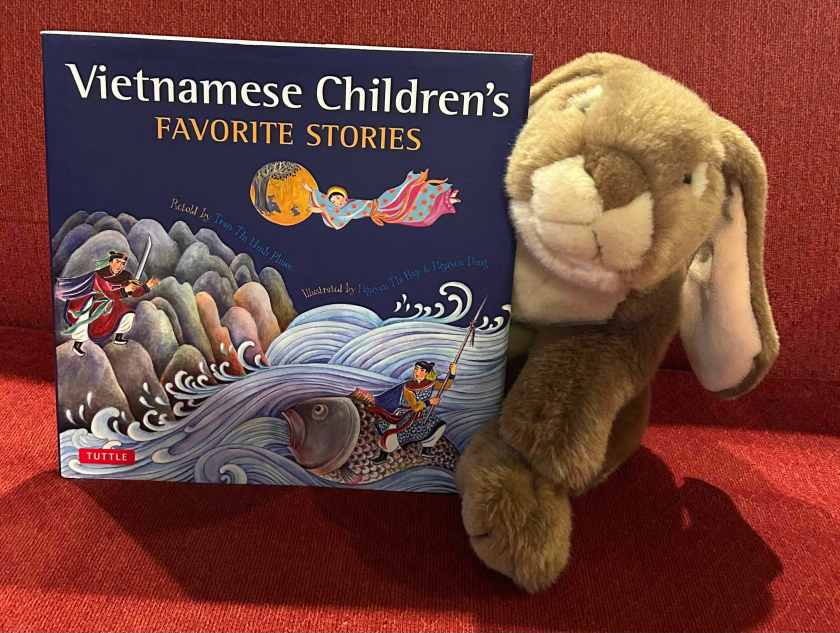
Caramel reviews Vietnamese Children's Favorite Stories, retold by Tran Thi Minh Phuoc and illustrated by Nguyen Thi Hop and Nguyen Dong.
Caramel reviews Vietnamese Children’s Favorite Stories, retold by Tran Thi Minh Phuoc and illustrated by Nguyen Thi Hop and Nguyen Dong.

Sprinkles: So Caramel, what are we talking about today?

Caramel: Well, this is a book about the fairytales and stories that Vietnamese children would be told as they grew up.

S: So just like Japanese Myths, Legends, and Folktales, Tamamo the Fox Maiden and Other Asian Stories, and Chinese Myths and Legends: The Monkey King and Other Adventures, which you reviewed before for our blog, this is one of those books you read for that course you took on Asian myths and legends, right? 

C: Yeah, and just like those other books, this is a good book, too. I liked it a lot.

S: That sounds great! Tell us about it then. 

C: This book contains fifteen stories that the author remembers from their own childhood. They were told these stories as they were growing up. Each story is around nine pages or so. The stories all contain some sort of moral, like most children’s stories do. 

S: Yes, that is true; most fairy tales have some morals. The author Tran Thi Minh Phuoc writes in the introduction that all of the stories “paint a picture of a world that values the five great virtues: Nhan (compassion), Le (Rituals), Nghia (Righteousness), Tri (Wisdom), and Tin (Trust)”. What kinds of morals come up in these stories? 

C: Don’t be greedy, be kind to others, and don’t be selfish.

S: Those seem like very standard morals, good values to pass on to young bunnies. Did you come across any that felt different? 

C: No, not really. But there is a story called “Why Ducks Sleep on One Leg”, which, as you might guess, is about why ducks sleep on one leg.

S: Wait, does that one have a moral? What would it be?

C: I think it’s more of an explanation of why they sleep that way.

S: That is interesting. So not all have morals then. But all across different cultures, there are many traditional stories about how things are and they give explanations, sometimes humorous but always creative, about why things are the way they are. 

C: Yes. Some of the stories do not have obvious morals, but they still contain at least an explanation of something interesting, like a duck’s behavior. There is another story, “Why The Sea Is Salty”, about why the sea is salty. And there is a story about a tradition and why it exists: “Why One Shouldn’t Sweep the House on Tet Nguyen Dan“.

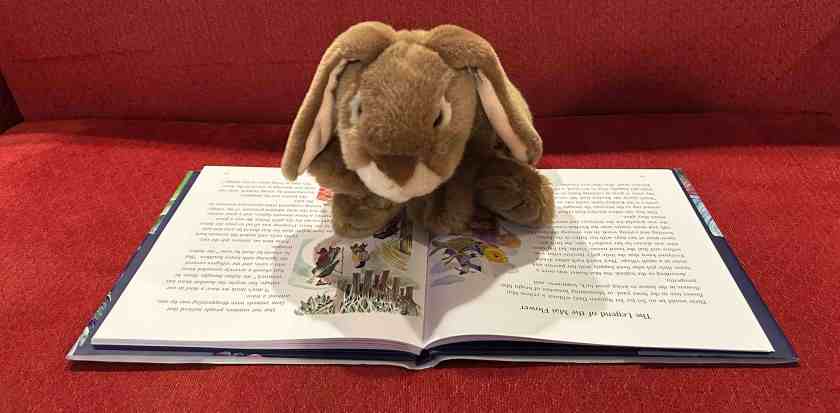
Caramel is reading Vietnamese Children's Favorite Stories, retold by Tran Thi Minh Phuoc and illustrated by Nguyen Thi Hop and Nguyen Dong.
Caramel is reading Vietnamese Children’s Favorite Stories, retold by Tran Thi Minh Phuoc and illustrated by Nguyen Thi Hop and Nguyen Dong.

S: I seem to recall a story about how the tiger got its stripes. The internet tells me it is also a Vietnamese story. Apparently such stories are called “pourquoi” stories, stories that purport to explain why some natural thing is the way it is. Anyways, does the story of the tiger stripes come up in this book? 

C: I don’t believe so. But there is the origin story of the jade rabbit. The jade rabbit lives in the forest with his friends and his companion, the goddess Chang’e, and he makes immortality elixirs.

S: Wait, the jade rabbit is not a natural being. It is a mythical creature, isn’t it? And didn’t we read about it in another story before? And the goddess Chang’e?

C; Yeah, the moon goddess Chang’e appeared in one of the stories we talked about before from Chinese Myths and Legends: The Monkey King and Other Adventures. And I remember the jade rabbit from the movie Over The Moon, which we talked about when we discussed that book. Anyways, according to the story “The Jade Rabbit” in this book, the jade rabbit used to be a normal rabbit, who sacrificed himself to help someone who happened to be the jade emperor in disguise. The rabbit did not know this though. Then the emperor carried him to the moon, and the goddess Chang’e turned him into the jade rabbit, an immortal being who makes immortality elixirs.

S: That is neat Caramel! According to Wikipedia, the character of the jade rabbit shows up in many East Asian traditions. And how wonderful that we now know one of its origin stories! 

C: Yeah, it’s cool. I told you this is a good book! 

S: So you did. Okay now, please tell me a bit about the illustrations. I see that this is really a beautiful book. 

C: Yes! The pictures are very interesting! They are made in the sort of painting type. I mean, the individual pictures look like they were made with water color and acrylic paint. Very pretty. Sometimes people look like they are floating and there is a lot of color. 

S: Cool! Alright, so it seems like you approve of this book and would recommend it to other young bunnies? 

C: Yeah, the stories were kind of made for younger bunnies. At least the book is very much meant for us. 

S: Then maybe young bunnies like you can read the book on their own, and even younger ones can maybe get an adult bunny to read it to them. 

C: Yeah that would be a good idea! They should do that!

S: Okay, Caramel. Thank you for this review. Do you want to say something to our readers as we wrap up this post?

C: Stay tuned for more book bunny reviews!
Caramel enjoyed reading Vietnamese Children's Favorite Stories, retold by Tran Thi Minh Phuoc and illustrated by Nguyen Thi Hop and Nguyen Dong, and recommends it to all young bunnies curious to hear more fairy tales from around the world.
Caramel enjoyed reading Vietnamese Children’s Favorite Stories, retold by Tran Thi Minh Phuoc and illustrated by Nguyen Thi Hop and Nguyen Dong, and recommends it to all young bunnies curious to hear more fairy tales from around the world.