Marshmallow reviews The Awakening by Kate Chopin

Today Marshmallow reviews a classic novel originally published in 1899: Kate Chopin’s The Awakening.
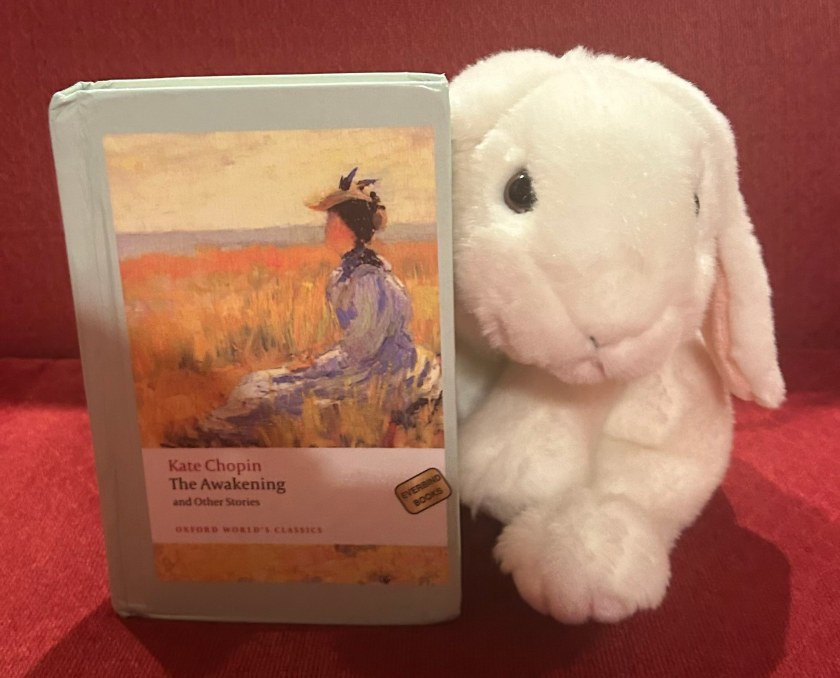
Marshmallow reviews The Awakening by Kate Chopin.

Marshmallow’s Quick Take: If you like reading books that make you think and take you back in time, then this is the book for you!

Marshmallow’s Summary (with Spoilers): Edna Pontellier lives in New Orleans, Louisiana during the late nineteenth century. As she is originally from Kentucky, Edna has felt a little out of place ever since she married Mr. Pontellier (who was born into the Creole culture), moving to Louisiana to live with him. Edna spends her days as a “mother-woman” now, attending to the needs of her husband and two sons and running the domestic details of the Pontellier household; however, this is not enough to satisfy Edna.

The Pontelliers are fortunately very wealthy and the book introduces us to them during their trip to Grand Isle (near the Gulf of Mexico) during the summer. At Grand Isle, Edna realizes that she is truly unhappy when Mr. Pontellier berates her for neglecting their children (despite the fact that he was out the whole night at the pub). She breaks down in tears, but finds comfort in spending time with her friend Robert—who is the son of the woman who runs the resort the Pontelliers stay at. While Mr. Pontellier is regarded as the best husband Edna and her friends know, he is not particularly attentive. Still, he sends back sumptuous gifts while he is away, and he has never abused or assaulted Edna.

To me, it seems that Mr. Pontellier is the best husband one could hope for from the men of that time period; he is a very by-the-book gentleman, treating his wife in the most caring manner he knows how (though it is mostly materialistic and he does not offer much in the way of emotional support or attention). I do not blame Edna for feeling discontent though.

During their time at Grand Isle, Robert and Edna become closer and closer—to the point that Adéle Ratignolle (a very close friend of Edna’s) warns him to stay away from Edna lest they start to believe they could become more than friends. But it is already too late because Edna’s heart has already made its way to Robert. Adéle, who is the paragon of what an ideal woman would be, provides a stark contrast to Edna. Edna is not a bad wife, but she is far from matching Adéle’s doting adoration and care for Mr. Ratignolle and their children. Along with her budding love for Robert, Edna starts to feel as though maybe she is not cut out to fit this mother-woman role.

When the Pontelliers return to New Orleans, Edna starts to take up more room, rejecting the standards she tried so hard to fit herself in. When Mr. Pontellier goes on a business trip and the children go to stay with his mother, Edna decides to move to a small cottage they own, called the pigeon house. There, her agency and independence are kindled and eventually ignite an affair with a man named Alcée Arobin (there are no inappropriate scenes; Chopin only describes an occasional kiss).

One might ask why Alcée comes into the picture when Edna loves Robert. The unfortunate answer would be that Robert ran off to Mexico in pursuit of some business opportunity, though this was a thinly veiled attempt to distance himself from Edna and his feelings of attraction to her. Alcée (a lady’s man with a distinct pattern of chasing married women) provides the physical satisfaction that Edna was missing. But Edna does not feel any sense of love or emotional connection to him. Robert is the one she loved. When he returns, Edna’s life will be forever changed. 
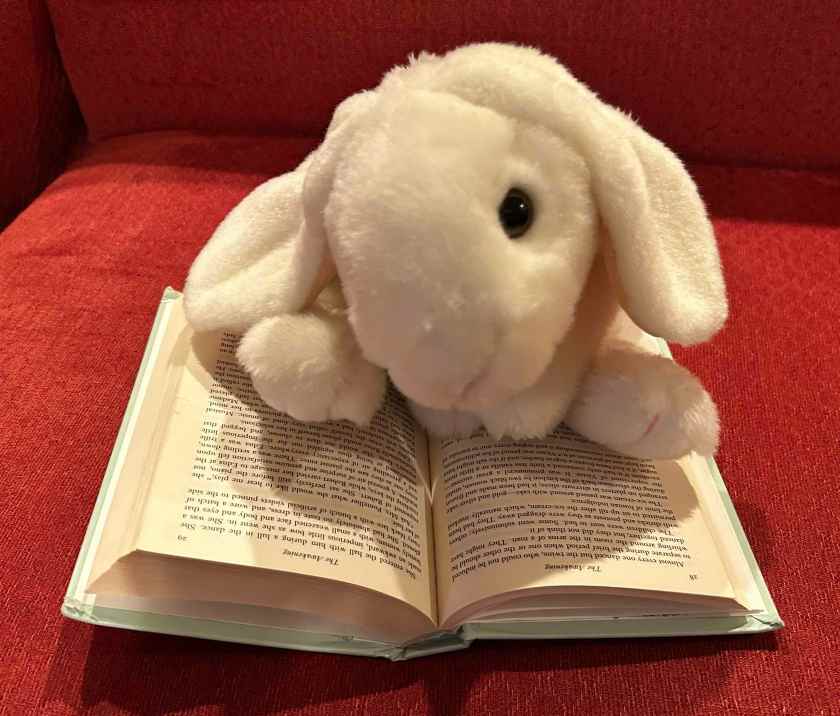
Marshmallow is reading The Awakening by Kate Chopin.

Marshmallow’s Review: This was a fascinating book. I really enjoyed reading about what life was like back then, and I felt as though Chopin had actually transported me there to witness it. I will say that I found Edna’s treatment of some of the servants quite infuriating (she is not abusive, but definitely demeaning). Regardless, this book was worth the time I put into trying to understand it. Initially, much like my endeavors with A Tale of Two Cities, reading the first couple of chapters was grueling. But after I got accustomed to the writing style of the time period, it was relatively easy to read.

I read The Awakening in my English class, so I did do a deeper analysis of this book than I might have done otherwise. I noticed that the titular “Awakening” could represent one of many things (her rebellion, her sexual relationships, her artistic pursuits, etc.) or perhaps all of them together. There is also the consistent image of the sea. This motif serves to represent independence, death, freedom, life, rebirth, rebellion, and more. Really, anything can represent anything—it is all up to the reader what they get out of the book. I found this book to be a source of gratitude for me. I am really glad that Edna’s world of repression and dissatisfaction has been partially torn down over the years since this book’s publication. The idea of a mother-woman that so defined and constrained her life has loosened its grip on women today. 

The ending came as a bit of a shock to me. I was hoping for the resolution of the story to go one way and it went off a cliff in the other direction (metaphorically, I mean, due to the surprising nature of the end). I will not say much more. But I think the ending Chopin chose sends the most meaningful message and it is quite open to interpretation.

I wonder if it is possible that the whole story is a dream and that Edna imagines her whole affair with Alcée and the drama with Robert. She does have one part of the book where she starts imagining something and perhaps she never stopped? This is a bit of a stretch, but I find such mental investigations intriguing. 

I would also mention that this is a very psychologically interesting book as well. Chopin does an excellent job of showing Edna’s psyche and why she feels the way she does. The reader’s emotions follow the same arc as those of Edna’s. I was saddened to come to the end of the book. 

This particular edition of the novel contains many short stories by the author; however, I have not read them yet; so far I have only read The Awakening. That is the only one I can speak about in depth. But I can definitely say that I would highly recommend reading it to all!

Marshmallow’s Rating: 98%.
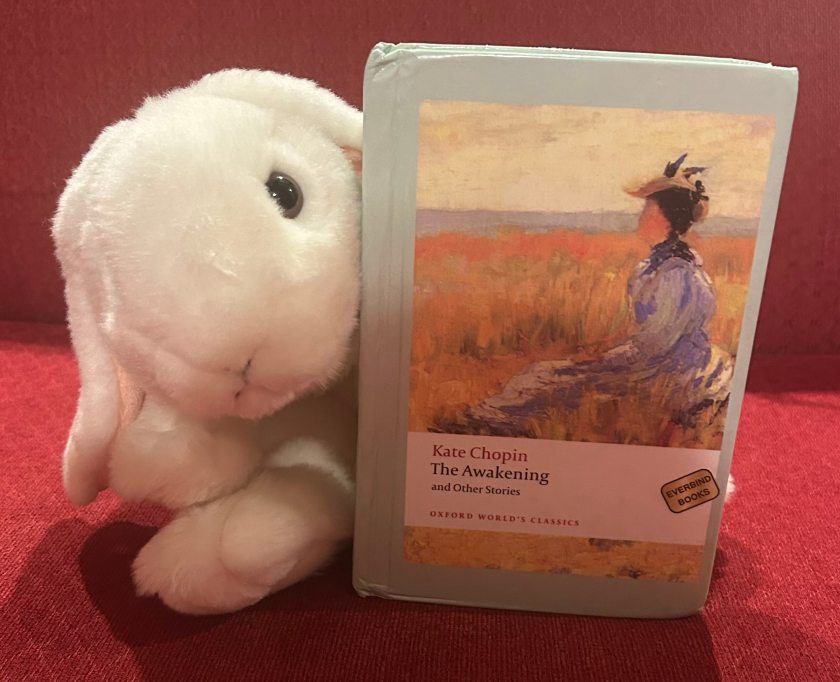
Marshmallow rates The Awakening by Kate Chopin 98%.

Marshmallow reviews The Handmaid’s Tale by Margaret Atwood

This week, Marshmallow decided to take on Margaret Atwood’s The Handmaid’s Tale. Originally published in 1985, this book is about a dystopian near-future where women’s lives are extremely constrained and their rights are almost nonexistent, and it might be a bit more challenging for some of our young readers than our usual fare.

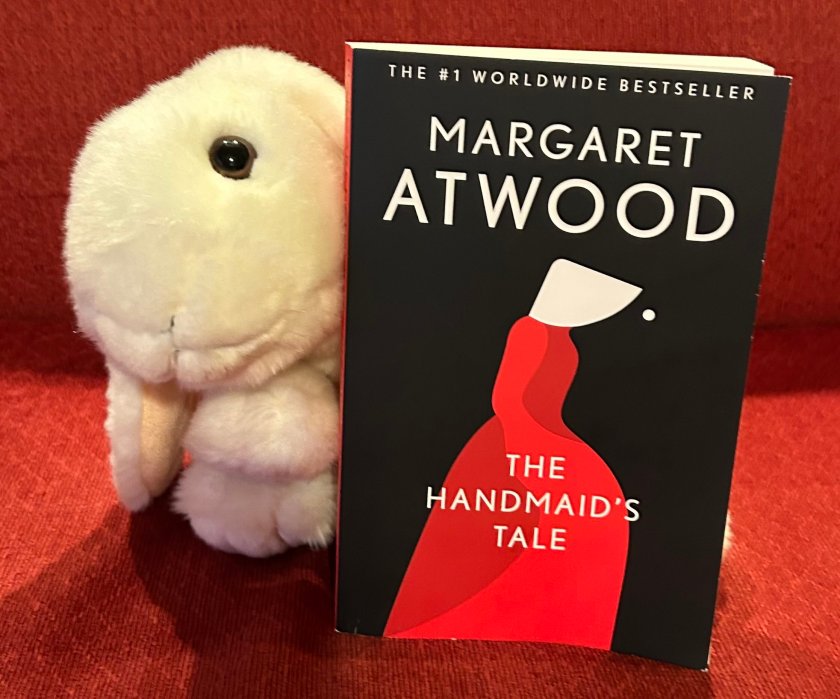
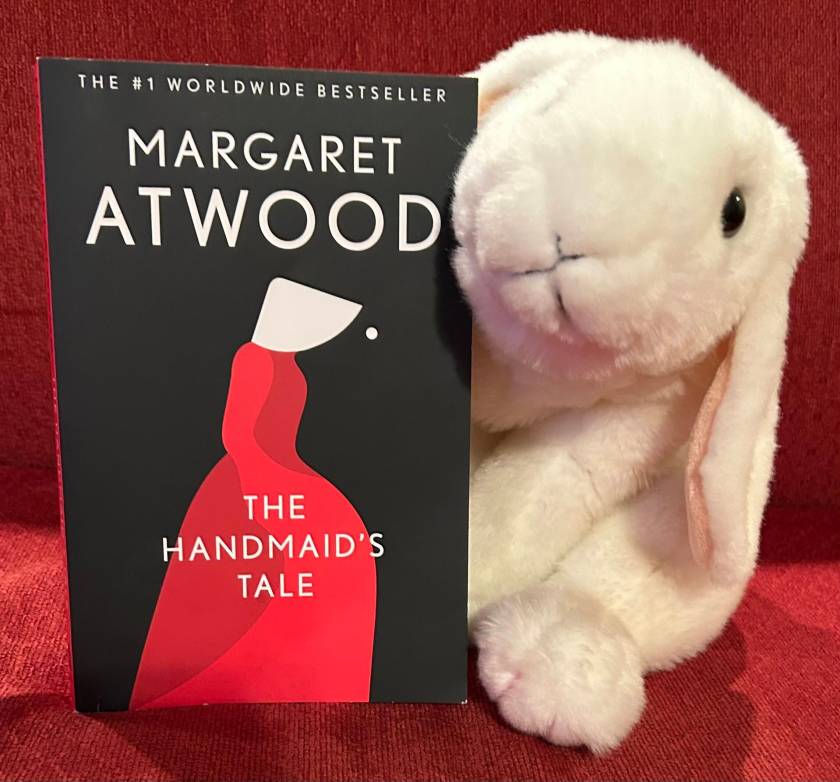
Marshmallow reviews The Handmaid's Tale by Margaret Atwood.
Marshmallow reviews The Handmaid’s Tale by Margaret Atwood.

Marshmallow’s Quick Take: If you like books about terrifying dystopian futures, then this is the book for you!

Marshmallow’s Summary (with Spoilers): Offred is a handmaiden in Gilead who has been given to a Commander to conceive his child. Gilead is set in the north east of what used to be the United States and was established after the President, Congress, and the U.S. government were violently overthrown by the Sons of Jacob, a radical political group. The rebels set up a system that puts women as second-class citizens with no rights. This happens gradually. Early on, the Sons and the army say some of the measures are for security purposes, such as closing down roads and increasing surveillance. But eventually, women’s bank accounts are shut off and they are let go from their jobs.

Reading the signs, Offred (who had an unknown name before), her husband Luke, and her daughter attempt to flee to Canada. But Luke’s divorce with a previous wife is not valid according to Gilead’s new laws, making Offred an adulteress. They try to run away, but Offred is caught and taken away from her family. Her husband’s fate remains unknown, but her daughter is confirmed to be given to parents that firmly believe in Gilead’s ideals. Offred is taken to the Rachel and Leah Re-education Center or Red Center, in which she is taught to be a handmaiden. Amidst declining birth rates, increased infertility, and climate disasters, Gilead’s new system of birth is forcing fertile women to conceive. Handmaidens are forcibly impregnated by the leading elite—Commanders—in Ceremonies.

More generally, all people in Gilead are sorted into a structure, and power is concentrated solely at the top in the hands of certain white men. (The fate of non-white people is not described in the book.) Women are sorted into several categories: Wives who wear blue (who are married to the Commanders but have no physical or emotional bond with them), Aunts who wear brown (who re-educate Handmaids), Handmaids who wear red (who are forced to procreate with their assigned Commander, but have no relationship with anyone), Marthas who wear green (cooks, servants, etc.), Econowives who wear striped clothing (wives of lower ranking men), and so on.

The government watches its people with Eyes, who are like a secret police so that no one knows who to trust. Everyone lives in fear, but some truly believe that this is an improvement.

Offred is assigned to a Commander to bear him a child, and she is renamed Offred presumably because his name is Fred (Of Fred; all the Handmaids are named like that, like Ofwarren, Ofglen, etc.) The Commander’s Wife is Serena Joy, a former televangelist who pushed for Gilead’s extreme take of the Bible—which is used to justify the new way of life. Now, confined to home with a husband who does not love her, she realizes that the whole thing might have been a bad idea.

This Commander feels that Serena Joy does not understand him, so he invites Offred to play Scrabble with him. In this manner, they develop a peculiar bond, a sort of mutated friendship. However, Offred knows that she can never truly be friends with the man who literally has the power of life or death over her.

The Commander argues that life is much better now, and tries to convince Offred of this. At the same time, Offred’s assigned partner (for getting groceries in a very formal, terse manner) Ofglen reveals herself to be a member of a resistance group. Offred yearns for a way out, but at the same time finds herself becoming attached to the Commander’s personal servant.

What will happen to Offred? And what about Gilead?

Marshmallow is reading The Handmaid's Tale by Margaret Atwood.
Marshmallow is reading The Handmaid’s Tale by Margaret Atwood.

Marshmallow’s Review: The Handmaid’s Tale is a hard book to read, especially for a female bunny. It is definitely not appropriate for young bunnies. The book progresses in a very disturbing way. The ending is not definite, but it leaves a mark.

I read this book initially because I’d started hearing a lot more about it recently. Many people have begun to compare Gilead to the present United States of America, especially after the recent TV series adaptation of it. Some parallels do exist and are becoming more apparent, which is very saddening and truly terrifying. This book shows a distorted version of the United States, one which will hopefully never come to pass. But the geography certainly makes the book feel more urgent and too close for comfort. (Other books that depict possible dystopian futures for the United States, like Our Missing Hearts by Celeste Ng and The Hunger Games series, come to mind.)

I must say that The Handmaid’s Tale is definitely not a children’s book. Sex and sexual activity are frequently discussed—especially since Offred’s very existence is due to her fertility and ability to conceive. The world of Gilead is also in itself extremely harrowing. Political prisoners are killed by mobs at Prayvaganzas, hangings are regularly showcased at the Wall, women are ceremoniously raped, and there’s a lot of discourse about suicide. It’s a very dark book.

However, reading The Handmaid’s Tale makes one more motivated to fight for equal rights. While books like We Should All Be Feminists by Chimamanda Ngozi Adichie make clear-eyed arguments, this book depicts the chilling effects of what a world with no rights for women could be like. Offred’s mother was an activist who fought for those rights, which Offred remembers during several flashbacks. Those flashbacks are instrumental to the nuance of this book. They show the subtle ways in which the world changed, until it had transformed into a monstrous beast that couldn’t be cured.

The Handmaid’s Tale should also serve as a warning and as a reminder that democracy must be protected. Once again, as I mentioned in my review of On Tyranny: Graphic Edition by Timothy Snyder and Nora Krug, freedom is not free. This is a resounding message that has been echoed by so many people, in so many books, throughout so many different times.

It is interesting that the author does say that other countries have not changed like Gilead. In fact, it is implied that some of the states did not submit to the Sons of Jacob. There are references to war every now and then. But the way in which the narrative flows is really a testament to the author’s prowess. It leaves the reader with an understanding of how Offred feels because of how confused and disturbed and angry and anxious and traumatized the plot leaves one.

I would definitely recommend The Handmaid’s Tale to everyone, but once they can handle it and they can understand the reason for reading such a book: to understand why equal rights for all are so important. 

Marshmallow’s Rating: 100%

Marshmallow rates The Handmaid's Tale by Margaret Atwood 100%.
Marshmallow rates The Handmaid’s Tale by Margaret Atwood 100%.

Marshmallow reviews We Should All Be Feminists by Chimamanda Ngozi Adichie

Today Marshmallow picked up a short little book from the book bunnies’ home library: We Should All Be Feminists by Chimamanda Ngozi Adichie, first published in 2014. Below she shares some of her thoughts on this little book.

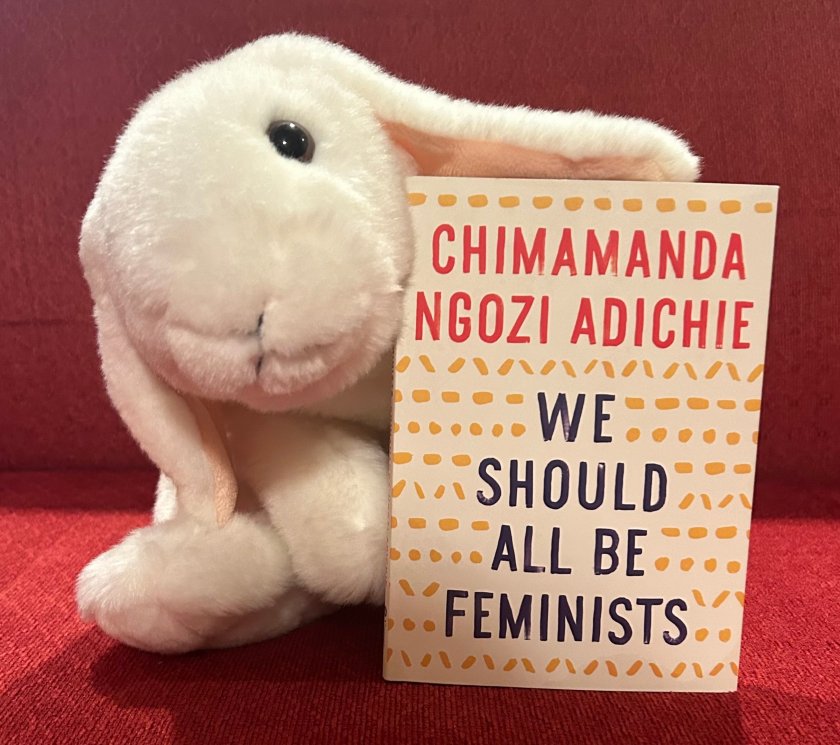
Marshmallow reviews We Should All Be Feminists by Chimamanda Ngozi Adichie.

Marshmallow’s Quick Take: If you are feeling up for a short, non-fiction book with an important message, then this might be the book for you.

Marshmallow’s Summary (without Spoilers): I’d like to start off by saying that this book is adapted from Chimamanda Ngozi Adichie’s TEDx talk which is also titled “We should all be feminists”. I would recommend watching the video of her talk before or after reading this book.

In this book, Ngozi Adichie covers her experiences as a feminist. She explores what it means to be a feminist, how we can raise feminist children of both genders, and how we can strive towards a future where we are all feminists. 

The author starts off by talking about her first encounter with the word “feminist”. The first time she was called a feminist, the word “feminist” was something akin to terrorist, used as an insult and an accusation. However, as we follow her, we learn that feminism is nothing to be afraid of and that instead it should be something we all should strive for.

Ngozi Adichie points out something insightful in this book when she states that the word “feminist” is often associated with the idea of being un-feminine. Ngozi Adichie writes that she enjoys wearing high heels and shiny lip gloss, even though she is a feminist. The author emphasizes that being a feminist doesn’t mean that you are unfeminine; it simply means that you believe that men and women deserve equal rights and prospects in life. The author specifically examines the treatment of women and men in Nigeria, offering examples and anecdotes from her personal experience. Though her examples were mostly from Nigeria, she does allow us to recognize that many women around the world are often ignored and silenced. 

The author also talks about how men fit into feminism. She says that being a feminist doesn’t mean believing in female superiority; it means believing in female equality. Ngozi Adichie writes that ideas of masculinity also feed into the unjust sexism that exists in all cultures. Ngozi Adichie talks about how we must change the perspectives on gender, for both genders, for the sake of women and men. 

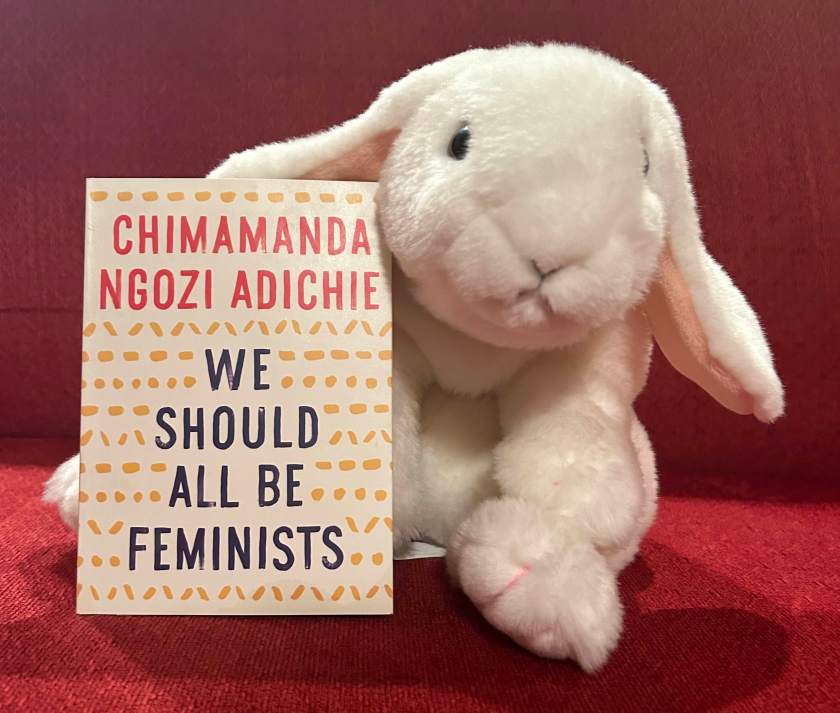
Marshmallow is reading We Should All Be Feminists by Chimamanda Ngozi Adichie.

Marshmallow’s Review: I really liked this book. I completely agreed with practically everything in this book and felt verified by some of her statements. As a female bunny, I think books like this are important for change, especially this book. This book is very short and concise. The writing style is fresh and engaging, easy to follow and easy to understand. Yet the simplicity is most successful because of the way the author is so persuasive.

We Should All Be Feminists is a great book to give to someone who might not recognize the issues that women still face today. This is a very important message for everyone because feminism isn’t about pushing men down at all. It’s about focusing on what we have in our brains, rather than what sex chromosomes we have. 

Overall, We Should All Be Feminists is very meaningful, easy to understand, and appropriate for all ages. I would recommend that everyone reads this book or at least watch the TEDx version of it

Marshmallow’s Rating: 100%

Marshmallow rates We Should All Be Feminists by Chimamanda Ngozi Adichie 100%.