Marshmallow reviews The Awakening by Kate Chopin

Today Marshmallow reviews a classic novel originally published in 1899: Kate Chopin’s The Awakening.
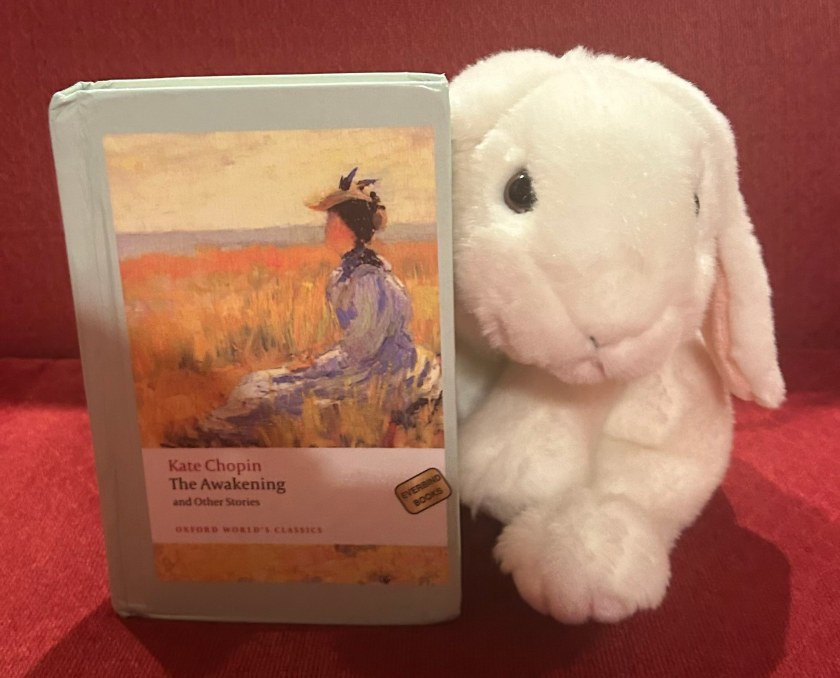
Marshmallow reviews The Awakening by Kate Chopin.

Marshmallow’s Quick Take: If you like reading books that make you think and take you back in time, then this is the book for you!

Marshmallow’s Summary (with Spoilers): Edna Pontellier lives in New Orleans, Louisiana during the late nineteenth century. As she is originally from Kentucky, Edna has felt a little out of place ever since she married Mr. Pontellier (who was born into the Creole culture), moving to Louisiana to live with him. Edna spends her days as a “mother-woman” now, attending to the needs of her husband and two sons and running the domestic details of the Pontellier household; however, this is not enough to satisfy Edna.

The Pontelliers are fortunately very wealthy and the book introduces us to them during their trip to Grand Isle (near the Gulf of Mexico) during the summer. At Grand Isle, Edna realizes that she is truly unhappy when Mr. Pontellier berates her for neglecting their children (despite the fact that he was out the whole night at the pub). She breaks down in tears, but finds comfort in spending time with her friend Robert—who is the son of the woman who runs the resort the Pontelliers stay at. While Mr. Pontellier is regarded as the best husband Edna and her friends know, he is not particularly attentive. Still, he sends back sumptuous gifts while he is away, and he has never abused or assaulted Edna.

To me, it seems that Mr. Pontellier is the best husband one could hope for from the men of that time period; he is a very by-the-book gentleman, treating his wife in the most caring manner he knows how (though it is mostly materialistic and he does not offer much in the way of emotional support or attention). I do not blame Edna for feeling discontent though.

During their time at Grand Isle, Robert and Edna become closer and closer—to the point that Adéle Ratignolle (a very close friend of Edna’s) warns him to stay away from Edna lest they start to believe they could become more than friends. But it is already too late because Edna’s heart has already made its way to Robert. Adéle, who is the paragon of what an ideal woman would be, provides a stark contrast to Edna. Edna is not a bad wife, but she is far from matching Adéle’s doting adoration and care for Mr. Ratignolle and their children. Along with her budding love for Robert, Edna starts to feel as though maybe she is not cut out to fit this mother-woman role.

When the Pontelliers return to New Orleans, Edna starts to take up more room, rejecting the standards she tried so hard to fit herself in. When Mr. Pontellier goes on a business trip and the children go to stay with his mother, Edna decides to move to a small cottage they own, called the pigeon house. There, her agency and independence are kindled and eventually ignite an affair with a man named Alcée Arobin (there are no inappropriate scenes; Chopin only describes an occasional kiss).

One might ask why Alcée comes into the picture when Edna loves Robert. The unfortunate answer would be that Robert ran off to Mexico in pursuit of some business opportunity, though this was a thinly veiled attempt to distance himself from Edna and his feelings of attraction to her. Alcée (a lady’s man with a distinct pattern of chasing married women) provides the physical satisfaction that Edna was missing. But Edna does not feel any sense of love or emotional connection to him. Robert is the one she loved. When he returns, Edna’s life will be forever changed. 
Marshmallow is reading The Awakening by Kate Chopin.

Marshmallow’s Review: This was a fascinating book. I really enjoyed reading about what life was like back then, and I felt as though Chopin had actually transported me there to witness it. I will say that I found Edna’s treatment of some of the servants quite infuriating (she is not abusive, but definitely demeaning). Regardless, this book was worth the time I put into trying to understand it. Initially, much like my endeavors with A Tale of Two Cities, reading the first couple of chapters was grueling. But after I got accustomed to the writing style of the time period, it was relatively easy to read.

I read The Awakening in my English class, so I did do a deeper analysis of this book than I might have done otherwise. I noticed that the titular “Awakening” could represent one of many things (her rebellion, her sexual relationships, her artistic pursuits, etc.) or perhaps all of them together. There is also the consistent image of the sea. This motif serves to represent independence, death, freedom, life, rebirth, rebellion, and more. Really, anything can represent anything—it is all up to the reader what they get out of the book. I found this book to be a source of gratitude for me. I am really glad that Edna’s world of repression and dissatisfaction has been partially torn down over the years since this book’s publication. The idea of a mother-woman that so defined and constrained her life has loosened its grip on women today. 

The ending came as a bit of a shock to me. I was hoping for the resolution of the story to go one way and it went off a cliff in the other direction (metaphorically, I mean, due to the surprising nature of the end). I will not say much more. But I think the ending Chopin chose sends the most meaningful message and it is quite open to interpretation.

I wonder if it is possible that the whole story is a dream and that Edna imagines her whole affair with Alcée and the drama with Robert. She does have one part of the book where she starts imagining something and perhaps she never stopped? This is a bit of a stretch, but I find such mental investigations intriguing. 

I would also mention that this is a very psychologically interesting book as well. Chopin does an excellent job of showing Edna’s psyche and why she feels the way she does. The reader’s emotions follow the same arc as those of Edna’s. I was saddened to come to the end of the book. 

This particular edition of the novel contains many short stories by the author; however, I have not read them yet; so far I have only read The Awakening. That is the only one I can speak about in depth. But I can definitely say that I would highly recommend reading it to all!

Marshmallow’s Rating: 98%.
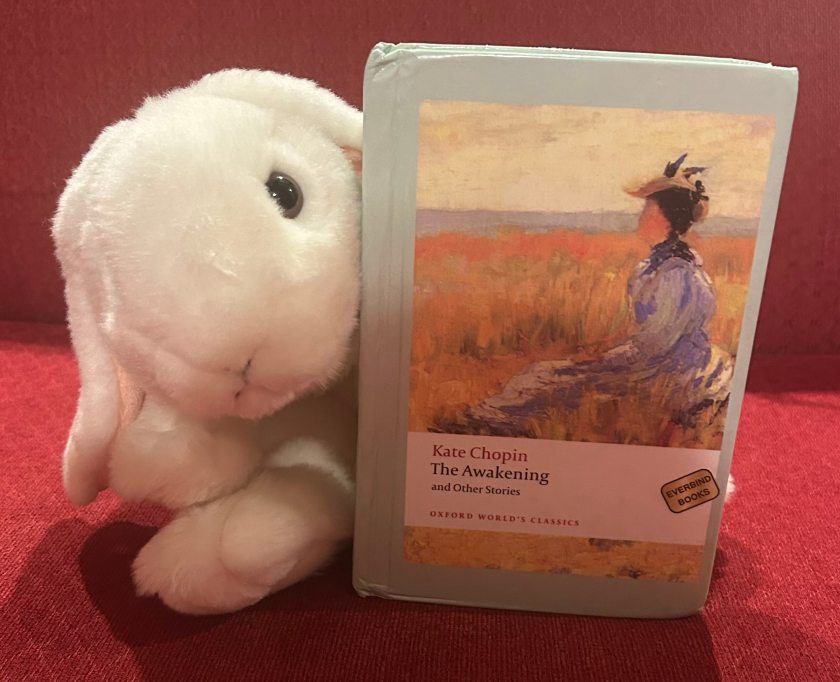
Marshmallow rates The Awakening by Kate Chopin 98%.

Caramel reviews The Wild Robot on the Island by Peter Brown

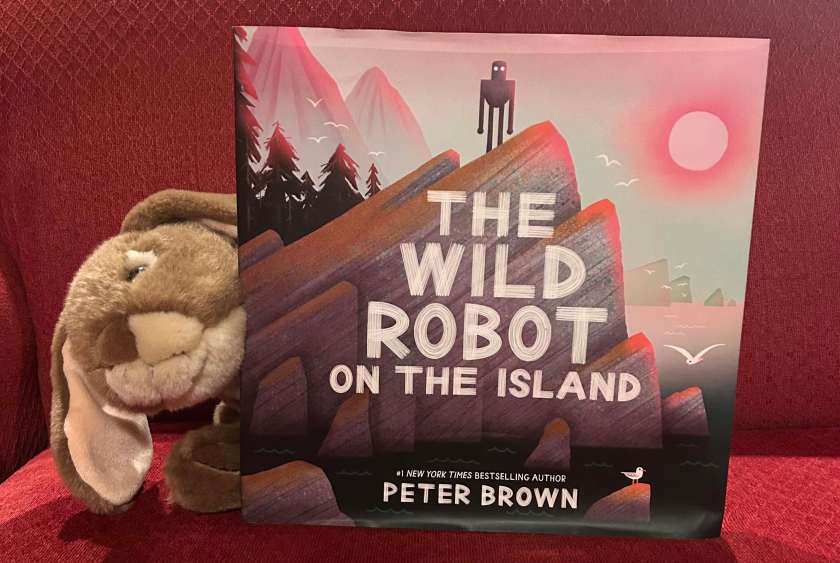
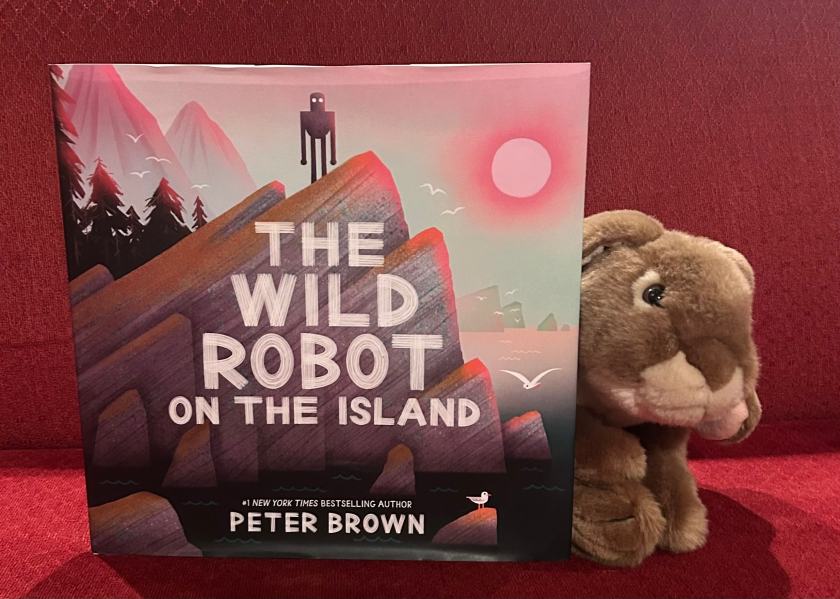
Caramel has read and loved all three Wild Robot books by Peter Brown. He has also appreciated the Wild Robot movie when it came out last year. Today he is talking to Sprinkles about the most recent Wild Robot book, The Wild Robot on the Island: An Illustrated Picture Book Adaptation of The Wild Robot, written and illustrated by Peter Brown and published this past summer (June 2025).

Readers should also check out Caramel’s reviews of The Wild Robot, The Wild Robot Escapes, and The Wild Robot Protects.

Caramel reviews The Wild Robot on the Island: An Illustrated Picture Book Adaptation of The Wild Robot, written and illustrated by Peter Brown.

Sprinkles: So Caramel, we are finally talking about the picture book version of The Wild Robot; are you excited?

Caramel: Yep, because it is a very good book, the original and this version.

S: When I first heard about this, I thought it would be a new story, but it seems this is basically the original story, right?

C: Yes it is the same story, but more simplified. So there is a robot named Roz that gets lost in the ocean after a boat loses all of what it is carrying. And the robot finds itself on an island. And then it goes around looking for and making friends. It is really a sweet story!

S: Yes, I remember the book and the movie.

C: I am guessing this one is for younger bunnies. Because the original book was for bunnies who could read a big book. This is a picture book. 

S: Yes, that makes sense to me. Younger bunnies could not read the original book really. It was over two hundred pages. This one is a nice standard-sized picture book.

C: And there are very few words on each page in this version. The other one had a lot more words of course. 

Caramel is reading The Wild Robot on the Island: An Illustrated Picture Book Adaptation of The Wild Robot, written and illustrated by Peter Brown.

S: I think the book is illustrated by the author, right? 

C: Yeah, from what I can tell. 

S: Are they similar to the illustrations in the original? There were some pictures in those too, no?

C: Yeah, the style is very similar to the original book.

S: Maybe the author wanted readers to have the same mental images he has for the characters and the locations and such. The movie was also very pretty, but it was kind of different visually. 

C: Yeah, maybe. The movie was beautiful, and I loved it. But the illustrations in the original book and now in this new picture book are all slightly different. And they are also very beautiful. Speaking of the movie, can we add a link to the trailer? You just reminded me of how good the movie was…

S: Sure. Here it is.

C: Thank you! Maybe we will watch it again some day.

S: Maybe; I could like that too. But now let us get back to the book. Do you think that maybe the author thought the picture book was a good idea now that so many younger bunnies have actually seen the movie?

C: Maybe, I don’t know, but it was a fast read for me. 

S: Well, you are a very good reader, Caramel. 

C: I do read a lot, true. Maybe this book could get some bunnies into the bigger books. After all, there are two more books after the original one! 

S: And I know you actually would love it if there were a fourth book… 

C: Yes, I really want a fourth book. That would be very very very good.

S: Okay, maybe we publish this post and who knows, maybe it will eventually get to the author’s ears…

C: Yes, dear reader, if you are Peter Brown, the creator of The Wild Robot, then please write a fourth book! I really would love to read more of Roz’s adventures. 

S: Okay, maybe we can wrap this up then. You have made your opinions quite clear. So what would you like to tell the rest of our readers then?

C: Stay tuned for more book bunny reviews!

Caramel loved reading The Wild Robot on the Island: An Illustrated Picture Book Adaptation of The Wild Robot, written and illustrated by Peter Brown, and is hoping that soon there will also be new adventures for Roz and friends.

Caramel reviews Grandma Yogini by Raven Howell and Alexander Santos

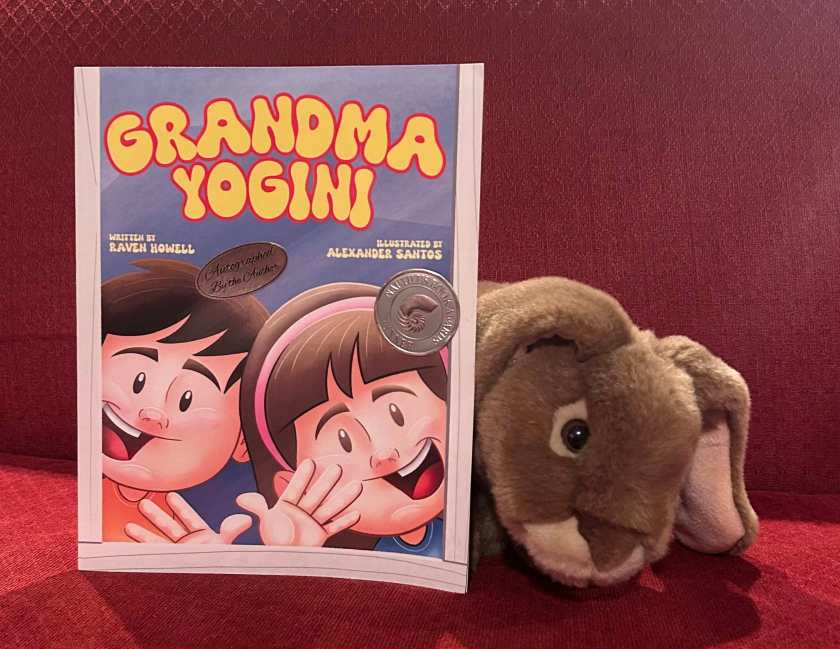
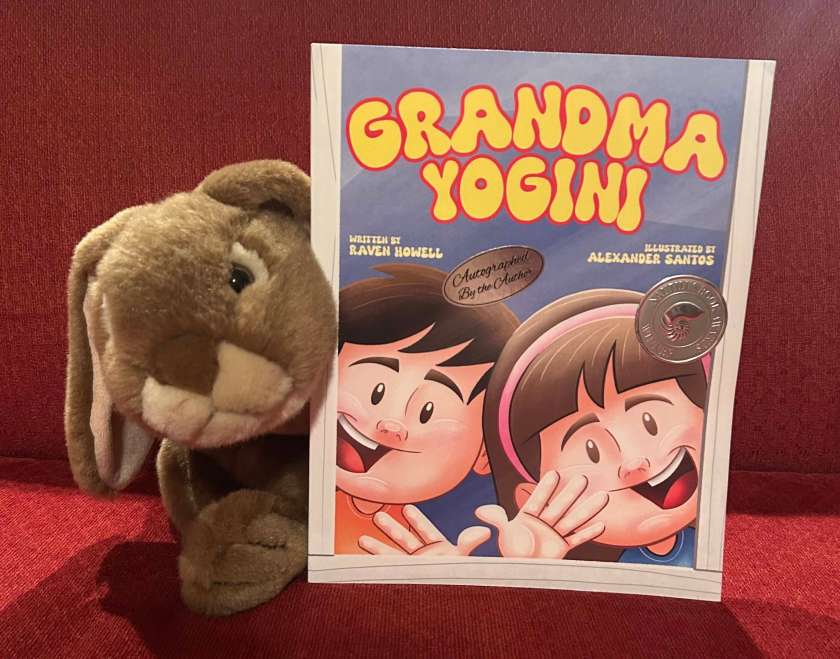
Today Caramel reviews Grandma Yogini, a neat picture book written by Raven Howell and illustrated by Alexander Santos. As usual Sprinkles is taking notes and asking questions.

The book bunnies are delighted to be reviewing this book as part of a Blog Tour for Grandma Yogini organized by WOW! Women On Writing.

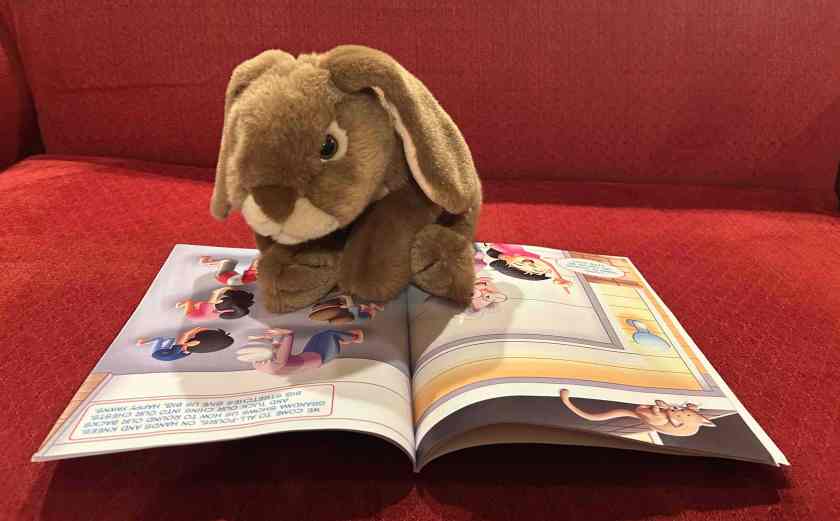
Caramel reviews Grandma Yogini, written by Raven Howell and illustrated by Alexander Santos.

Sprinkles: So Caramel, today we are talking about a brand new book called Grandma Yogini

Caramel: Yeah, it is a book about a grandma of these two children named Henry and Meredith. They are excited to play with her, and she teaches them some yoga.

S: It seems like she teaches them and some of their friends too, right?

C: Yeah. It seems like these kids and their friends do everything together. They are always doing things with one another’s grandmothers. One grandma bakes for them and another couple kids. Another grandma teaches them how to draw and so on. 

S: So it seems that the two kids and their friends all like to spend time with their grandparents, right?

C: Yes. And that is totally the way it should be. Grandparents are awesome! 

S: Yes, I agree. I loved my grandmother a lot and luckily spent a lot of time with her. You love spending time with your grandparents, too, right?

C: Yes, of course I do!! They are always so fun! We watch TV and movies, we eat awesome food, and we talk about things, they always have the best stories! And I love it!

Caramel is reading Grandma Yogini, written by Raven Howell and illustrated by Alexander Santos.

S: Let us get back to Henry and Meredith’s grandma. So she is a Yogini, which apparently means a female master of yoga. 

C: Yes, that is what the book seems to imply.

S: And in the book she teaches some yoga moves to the kids and their friends, right?

C: Yeah. The book gives you the full instructions, and you can see the kids doing the poses. It is kind of cool, almost like an instruction manual so you can learn some new moves. Especially if you want to be an eagle or a cat or a snake. There is always a yoga pose for that! But there does not seem to be one for a bunny. 

S: You are right. At least Grandma Yogini does not teach the kids a bunny pose. 

C: No she doesn’t. That’s kind of sad. But they do a kangaroo pose, and kangaroos hop, like we do. So there is that. 

S: Alright, let us count that as a plus for the bunnies then. So you might remember that you reviewed another book by this same author. 

C: Yes, it was called Blink and Glow. There were two kids in that book, too. And they were always smiling. They are always smiling in this book, too. They are always happy. 

S: Yes, this is a happy book too, right?

C: Yep. and it should be. Kids are happy with their grandma. And they are learning to do some cool animal poses. Then when she is leaving, the grandma tells them that the next time grandpa comes along, he will teach them Tai Chi

S: Have you ever done Tai Chi, Caramel?

C: No. But I did do some yoga in preschool. It was nice and calming. 

S: Yeah, it can be relaxing and calming for sure. But it can also be really challenging. Tai Chi is kind of like that too, I think. I tried it only once. 

C: Cool. I might want to give it a try some day. 

S: Maybe you will. So all in all, did you enjoy this book Caramel?

C: Yes, I did. I love my grandparents, so it was a natural book for me. Grandparents are awesome! 

S: Yes! I love that, Caramel. Okay, so this is a good time to wrap up this review. What do you want to tell our readers?

C: Stay tuned for more book bunny reviews!

Caramel enjoyed reading Grandma Yogini, written by Raven Howell and illustrated by Alexander Santos and now wants to know more about Tai Chi.

Marshmallow reviews North of Tomboy by Julie A. Swanson

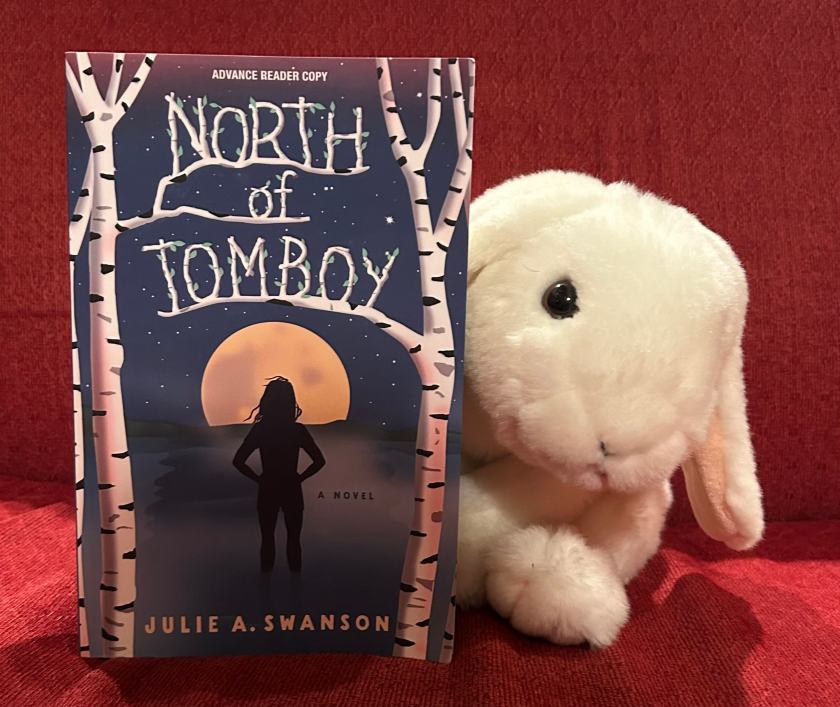
Today Marshmallow reviews North of Tomboy, a new book by Julie A Swanson, that is coming out this week.

The book bunnies received this book as an advance review copy.

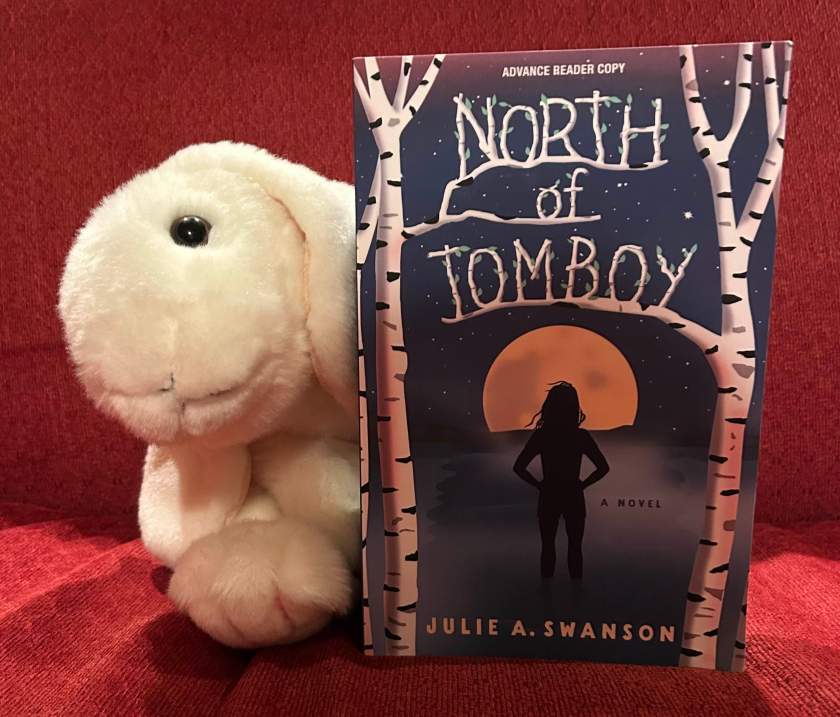
Marshmallow reviews North of Tomboy by Julie A. Swanson.

Marshmallow’s Quick Take: If you like books about growing up and exploring your identity and gender, then this is the book for you!

Marshmallow’s Summary (with Spoilers): Jessica Jezowski is a nine-year-old girl, but she definitely doesn’t feel like one. She believes that God must have made her with both girl and boy parts, except for the defining part which he made with only girl parts. Jess lives in Leelanau County in Michigan with her parents, two brothers, and little sister in the very early 1970s. Her mother is very enthusiastic about things Jess feels are only for “girly girls.” She doesn’t like having long hair or wearing dresses because she feels like that prevents her from having any fun and it seems to actually cause her physical and emotional distress.

Jess loves her family, but she sometimes wishes they would stop treating her differently from her older brothers just because she is a girl. For example, she wishes they’d stop giving her baby girl dolls every year for Christmas. However, one year, she can’t bring herself to ignore or destroy the doll she is given (it is insinuated that the previous ones suffered unfortunate fates). She ends up feeling a sort of connection to the doll and cutting its hair. She names it Mickey and announces that it is a boy. She pretends that he is the family’s newly adopted son and animates him, giving him a charming Southern drawl. Using Mickey as a transparent veil of protection, Jess finds that she can be funnier, more confident, and more herself. Mickey, she finds, seems to be more loved than she is. Eventually though, she starts to feel like Mickey is taking over. Jess realizes that she needs to find who she is without hiding behind a doll. 

Marshmallow is reading North of Tomboy by Julie A. Swanson.

Marshmallow’s Review: This was a very interesting and eye-opening book. It introduced me to a way of life in a different time period in a different location that I had never experienced before. Swanson does a very good job immersing the reader in Michigan’s nature and scenery, and I really enjoyed learning about what it would be like to live in a place like Jess’s home in the past.

In the beginning of the book, I felt like the writing was a little different from most books I have read. The dialogue felt a little bit off. But then again Jess is supposed to be just nine years old and I have not been nine for quite some time now. (Yes, I am pretty mature for a bunny!) In any case, over time, the prose fell into place and the picture of Jess’s world felt more whole and realistic. Later on, the dialogue was exceptionally good and the characters in Jess’s family became extremely human.

I like how the book both romanticizes the Jezowski’s way of life, but also shows its dark parts. Jess’s father often loses his temper and ends up blaming his wife for things that are not her fault. I thought the way Swanson handled the dialogue concerning his behavior and the family’s responses felt extraordinarily real and nuanced.

North of Tomboy as a whole got progressively more and more nuanced as I read on. I was originally confused by Jess’s feelings in the beginning. It seemed like she just did not like girls or women and so did not want to be one. But I liked how, in the end, Jess realizes that she isn’t necessarily against being female; she just wants to be her own type of girl. This is a take that I found very interesting. At the start, I was confused about whether Jess would have wanted to transition to a different gender or not if this were possible during her time. But soon enough, I noticed that Jess herself is very sexist. She hates being a girl because she thinks girls are all stupid and weak and whiny. This is a result of her upbringing. I think, in other words, that the main character definitely has a lot of internalized misogyny which parent bunnies might wish to discuss with their children if they are reading the book together.

I liked how Jess found who she wanted to be in the end, but I would have preferred it if the book were more explicit in affirming that women do not have to be stupid and weak and whiny. I also liked that we also got to learn a lot about how Jess’s faith shaped her thoughts. It was very interesting to hear her internal dialogue, and the growth of her faith as she was trying to figure herself out was definitely a critical part of the story.

I would highly recommend North of Tomboy to all readers because it really shows the workings of people that many do not understand. Some might say this is a good book about people thinking about their gender, and I think that it is. But I would also say that this is a good book for a lot of other people to read, too, and not for reasons related to gender. I think this shows the way many families work and how some people are raised. It shows a way of life many are not familiar with. Learning about how Jess and her family live was eye-opening. North of Tomboy offers one perspective of what it’s like to be from a very rural, very religious, and rather conservative background. This is not something everyone understands, something I have never experienced. Of course, one book obviously does not and cannot represent the complete picture. But it shows that people whom some vilify are still very human. It is always important to remember that. Understanding where everyone comes from is crucial to making this world a better place for everyone.

Marshmallow’s Rating: 95%.

Marshmallow rates North of Tomboy by Julie A. Swanson 95%.