Caramel reviews Japanese Myths, Legends, and Folktales by Yuri Yasuda

Last summer Caramel read several books on Asian myths and legends. Today he is talking to Sprinkles about one of these: Japanese Myths, Legends and Folktales: Bilingual English and Japanese Edition, written by Yuri Yasuda, illustrated by Yoshinobu Sakakura and Eiichi Mitsui, and published in 2019.
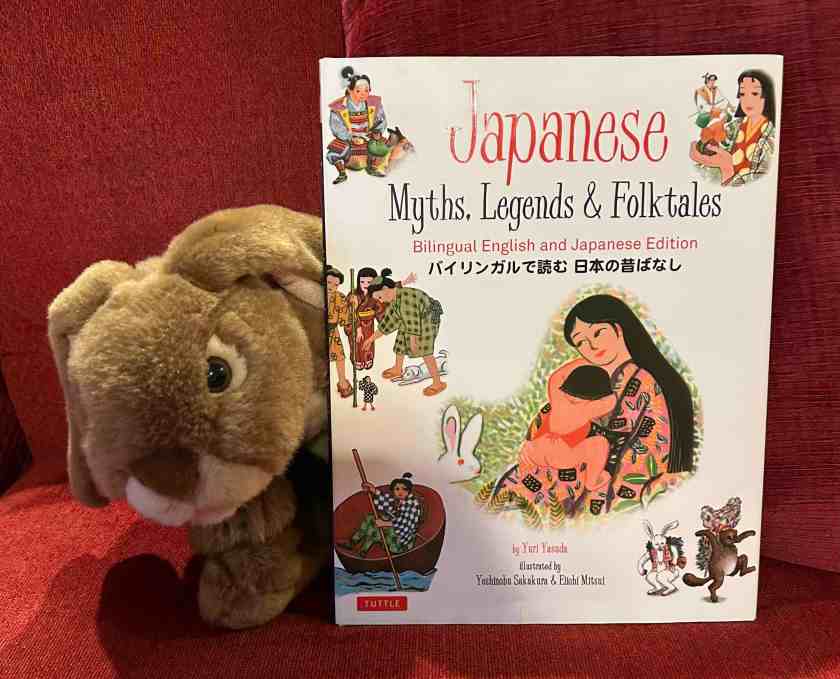
Caramel reviews Japanese Myths, Legends, and Folktales by Yuri Yasuda.

Sprinkles: So Caramel, this is one of your last reviews before we take off for the summer. What do you want to talk about today?

Caramel: It’s this book on Japanese myths and legends. I like all of the nice stories, and the pictures. The colors are nice.

S: You are right, there are a lot of illustrations in this book. Each page has at least one. And they are very stylized. That is, they all kind of fit in one style, they resemble one another in some ways. 

C: That makes sense though. It is all the same people who drew them. So it makes sense they would look like one another. 

S: True. 

C: And they are all very colorful and they use some really cool drawing  techniques!

S: That is a good observation Caramel! I agree with you! Now tell me a bit more about the stories.

C: There are twelve stories. Each of them takes about three to five pages, usually below ten. On each page there is a picture or two, and then the top of the page is in English. And in the second half of the page the story is in Japanese. 

S: Oh, part of the book is in Japanese then! I guess it makes sense: the book is subtitled “The Bilingual Edition” after all. 

C: Well, actually, it’s called, “Bilingual English and Japanese Edition”.

S: Thank you for the correction Caramel. That makes total sense. But you don’t know how to read in Japanese. Was that okay?

C: Well, I don’t know how to read in Japanese YET. But yes, it was more than okay. It was cool to see the difference in the writing. Japanese people use a different alphabet than us. Or rather three different writing systems. I looked it up. There is a long Wikipedia article about it. And we tried to learn a bit of Japanese last summer. It is hard but it is also a lot of fun. I loved using the brush pens! 

S: Yes, that was a lot of fun! And you are so right in saying that you don’t know it YET. You are still such a young bunny, maybe you will learn it at some point.

C: I hope so. I especially want to play more with the brush pens, mostly the pens.

S: Sounds like a plan to me!
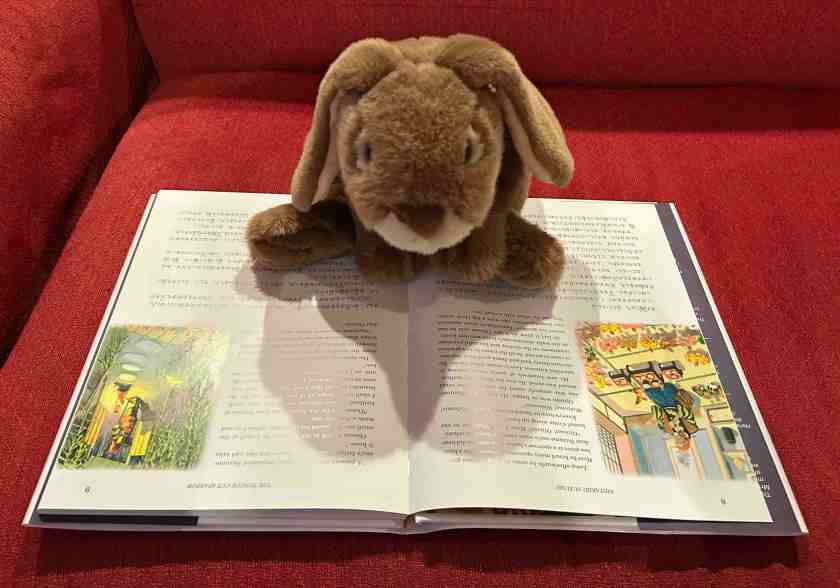
Caramel is reading Japanese Myths, Legends, and Folktales by Yuri Yasuda.

S: Okay, so let us get back to the stories. You said there are twelve of them. So tell us a bit about a couple of them. Maybe your favorites?

C: I liked the first one, “The Tongue-Cut Sparrow”. It’s about a kind old man who finds an injured sparrow and saves it. One day as he is out doing something, the sparrow eats the house flour, so the old man’s wife cuts the sparrow’s tongue off as punishment, and the sparrow flies off. Then on another day, the old man goes walking, and he meets the sparrow again. The old man was always kind to the bird, so the sparrow offers him some gifts. The old man takes the smaller gift and walks home to find that it has money. But his wife is not a nice person and she is greedy too so she gets upset that her husband did not get the bigger gift. So the next day she takes off to find the sparrow and asks for the bigger gift. The sparrow gives her the bigger gift and tells her not to open it until she is home. But she does open it before she gets home, and the demons inside the box attack her. Finally the old kind man finds her and saves her and the wife apologizes for being mean and unkind and they all forgive each other and live happily ever after. 

S: Hmm. What do you think the story means?

C: I think the moral of the story is that if you are given a gift, and told not to open it till home, then you should not open it till home. 

S: I can see how that could be one of the messages you get. Anything else?

C: You should not be selfish or greedy? And ask for the bigger gift? Bigger is not always better. 

S: That too could be a good lesson. 

C: Yes, and maybe being kind is always a good thing? The old man was kind to the bird and he was rewarded for it even though he was not being kind to get a reward. 

S: All true. Very good Caramel! I like these messages! And apparently this is a well-known story. There is even a Wikipedia article on it.

C: I am not surprised. The book is supposed to be about myths and legends, and those are probably all well known.   

S: You do have a good point there Caramel. Can you tell us the names of some of the other stories? 

C: Here is the full list: The Strong Boy, The Marriage of a Mouse, The Fisherman and the Tortoise, The Luminous Princess, The Peach Boy, The Kachi Kachi Mountain, The Old Man With Wens, The Old Man Who Made Trees Blossom,  The One-Inch Boy, The Lucky Cauldron, and The Monkey-and-Crab Fight. 

S: What is that last one about?

C: There is a crab who wants some peaches and asks for help from a monkey but the monkey cheats him and steals all the peaches.

S: So these stories are somewhat different from the fairy tales you grew up with, right? 

C: Yes very much so. There are lessons to learn in these too, but sometimes the lessons are a bit harder to see. 

S: Maybe because we did not grow up in Japan, the cultural context is not as transparent to us. 

C: Maybe. But I really liked these stories. They are all somewhat different but also very interesting. Kind of surprising and definitely fun to read. 

S: So I am guessing you would not mind it if other young bunnies read this book too?

C: Mind it? Of course not. In fact I would say they should read it. And maybe also look at the pictures and also the Japanese text below. I will learn how to read it one day, hopefully.

S: Sounds like a good goal, Caramel. Okay, this is a good time to wrap up this review. What do you want to tell our readers?

C: Stay tuned for more book bunny reviews!
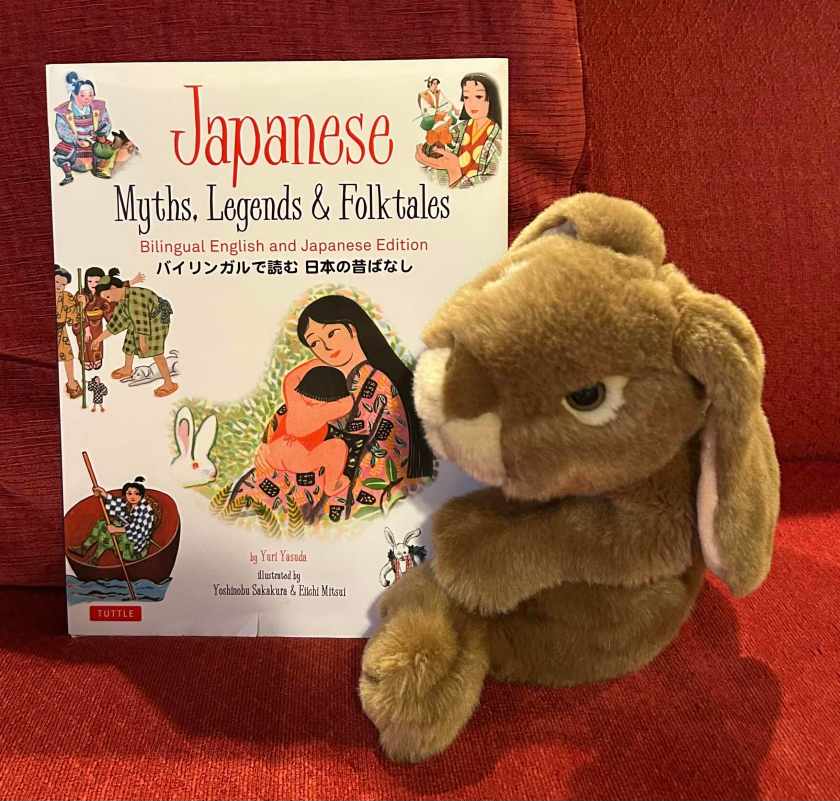
Caramel enjoyed reading Japanese Myths, Legends, and Folktales by Yuri Yasuda and recommends it to all curious little bunnies who want to learn about the many different stories young bunnies around the world grow up with.

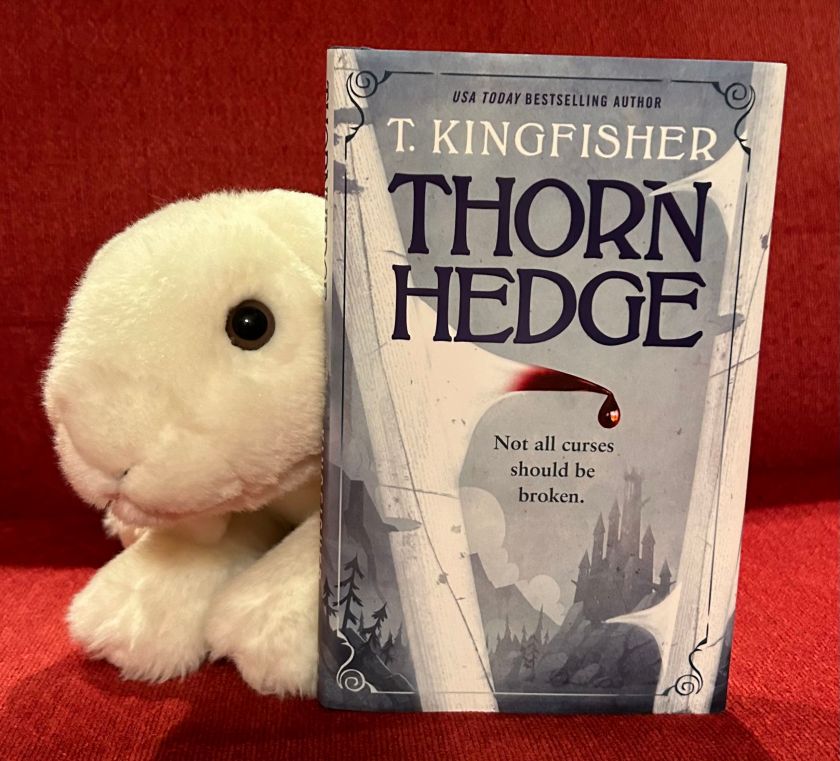
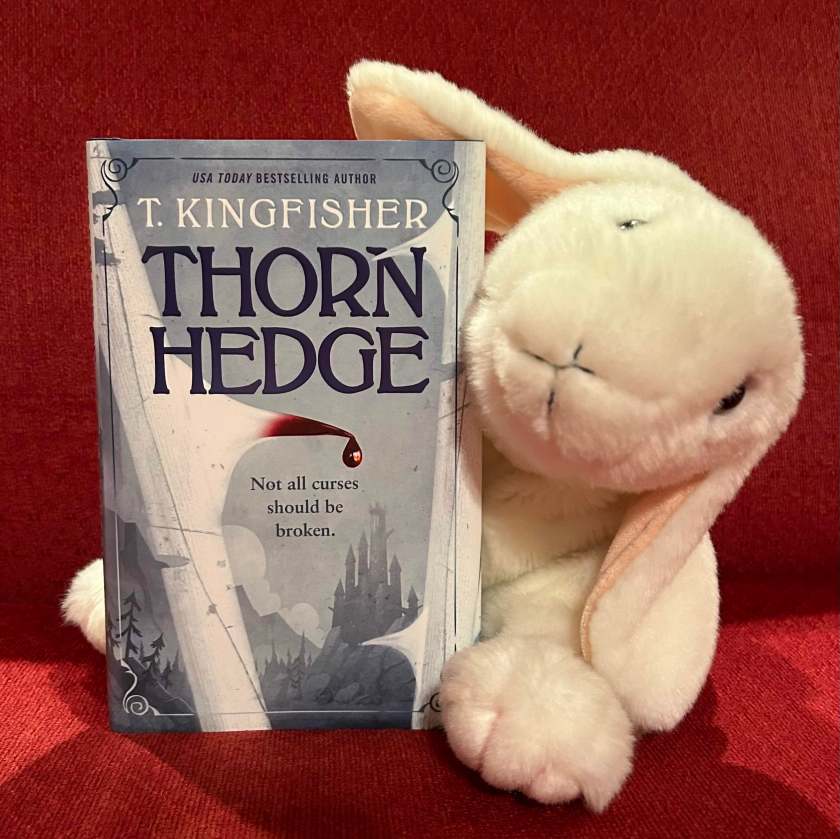
Marshmallow reviews Thornhedge by T. Kingfisher

Today Marshmallow is talking to Sprinkles about Thornhedge, a 2023 book by T. Kingfisher that won the Hugo Award for Best Novella in 2024.

Marshmallow reviews Thornhedge by T. Kingfisher.

Sprinkles: So Marshmallow, I know you love retellings of fairy tales, so I thought you would appreciate this book. Was I right?

Marshmallow: Yes.

S: Yay! I liked it too. So tell us a bit about the book.

M: This is a retelling of the Sleeping Beauty story. I had already read and reviewed Thornwood, another retelling of Sleeping Beauty, and that was pretty good too, but this one turns things even more upside down.

S: What do you mean?

M: Well, first of all, the narrator is a timid creature who calls herself Toadling, and we eventually learn that she is the fairy godmother who was the one to put the princess to sleep. But nothing is as we think we knew it to be.

S: You are being quite cryptic Marshmallow.

M: Yes, I am a very cryptic bunny.

S: That might not be optimal for one who is reviewing a book!

M: Well, I do not want to spill all the beans!

S: Okay, yes, you do have a point, but maybe then let us give the readers just a bit more.

M: So as I said, the book tells the story of the fairy godmother of Sleeping Beauty. It turns out that she was a human child, and she was kidnapped from the castle of her parents, a king and a queen, by evil fairies who replaced her with a changeling. Changelings are powerful creatures that seek to cause mischief or even worse. There is a deeper reason for why they cause mischief, but maybe this is enough for the time being.

S: Okay, so changelings in the sense of European folk stories.

M: Yes, not like the changelings of Star Trek Deep Space Nine.

S: Okay, I see.

M: When Toadling was replaced by a changeling, she was taken to the fairy world and was raised there by some frog-like fairy creatures called greenteeth. Then she is then somewhere else by a hare goddess and trained to be a fairy godmother.

S: Ooh, I like it when there are bunnies in the story!

M: Well, I am not sure this hare goddess is a very nice bunny. Anyways, time passes differently in the fairy world and the regular world. So by the time Toadling has spent nine years with the greenteeth and one year in training, the changeling named Fayette has just been “born”. So Toadling goes and becomes her doppelganger’s godmother.

S: That is interesting. Do her parents recognize her?

M: No. The nine years she spent with the greenteeth underwater have changed her and morphed her into a toadlike creature. She can look humanlike, but also can transform into a toad when she wants.

S: I see. So why is Fayette sleeping though?

M: Well, she is not, when Toadling comes by, but Toadling is supposed to do some magic and make her not harm anyone but she is sidetracked somehow and misses the opportunity to do her magic fully. So she ends up trying to stay around the child to make sure she will not harm anyone. But as the child grows up, she becomes more and more unruly, and at some point even starts torturing animals and shows no remorse or pity. So Toadling decides to put her to sleep.

S: That is awful! So these changelings are pure evil?

M: Well, in some sense yes, they are evil. But there is actually a reason for this. The changelings who are placed in human families are also babies when the switch occurs. However, these changelings belong to another plane of existence (the fairy world, I think), so nothing feels real to them. They grow up never really feeling anything, never being able to taste any food, and having metallic things burn them upon touch. The changelings grow up in a world without their kind, knowing in the back of their mind that this was not where they were supposed to be. Ultimately, they grow up confused and alone, and to them, human life is insignificant in this fake, foreign world.

S: Yes, but so was Toadling taken and placed in a totally different world. And she did not become wantonly cruel. She wants to help she wants to diminish people’s pains.

M: You have a point, so maybe the changelings have some tinge of evil in them from the start. But then again, Toadling was in some sense lucky. The greenteeth were kind to her and loved her.

S: But a family whose baby has been replaced by a changeling would also love that changeling, not knowing that it is not their original baby.

M: Yeah, I guess. But I kind of want to believe that nothing is born evil.

S: I can totally understand that and sympathize.

Marshmallow is reading Thornhedge by T. Kingfisher.

S: Okay back to the story though. So Toadling put the changeling to sleep and then what happens?

M: Well, lots of time passes. Centuries. And Toadling stays around the castle and grows a thorn hedge around it to keep people out. She hopes that people will eventually forget the castle, the story of the princess who fell asleep and so on. Unfortunately people do spread the story, and even though she hides things so well that most do forget, there comes a knight one day who wants to save the princess. But maybe it is not the princess who needs saving but Toadling herself!

S: Ooh, that is a great way to wrap up your summary and keep things still open!

M: Thank you.

S: Okay, so now tell me a bit about the book in terms of style.

M: I liked how the author used a very simple voice but still managed to capture a fairy-tale atmosphere for the story. And she created this character, a timid human-fairy child, that is very likeable. She was only ten when she became this fairy godmother, but then she lived outside the castle for centuries, determined to keep the world safe from the changeling-princess. So she grows up and maybe more mature but she still has this childlike innocence.

S: I agree.

M: I also like how the author develops two themes throughout the book; these were the two I caught: first magic being intertwined and represented and talked about as water. And second how beauty is not surface-level, that beauty is not what you see on the outside, but something else entirely. The changeling looks like a beautiful child, but she is evil and to Toadling she looks terrifying. The greenteeth would look ugly to us probably but to Toadling they are strong, and they define beauty for her. It is somehow related to their strength and skills.

S: But she likes them, they are kind to her, and they are her family.

M: Yes, but it goes beyond that I think. Toadling is raised in this other world based on scavenging and surviving, so she learns to appreciate totally different things, not superficial beauty but something beyond. She values traits like skilled hunting over things like soft smooth skin.

S: That makes sense to me Marshmallow. So this short little book was worth reading then?

M: Yes, 100%. Which is also, coincidentally, how I’d rate it.

S: I was just going to ask that!

M: Well, now you don’t have to!

S: Yes, thank you. Okay, let us wrap this review then. What would you like to tell our readers?

M: Stay tuned for more amazing reviews from the book bunnies!

Marshmallow rates Thornhedge by T. Kingfisher 100%.

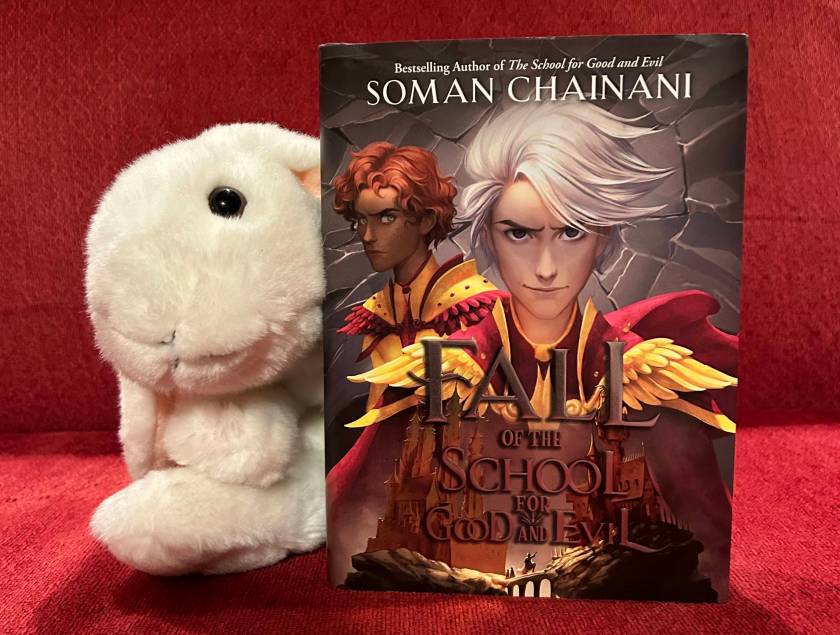
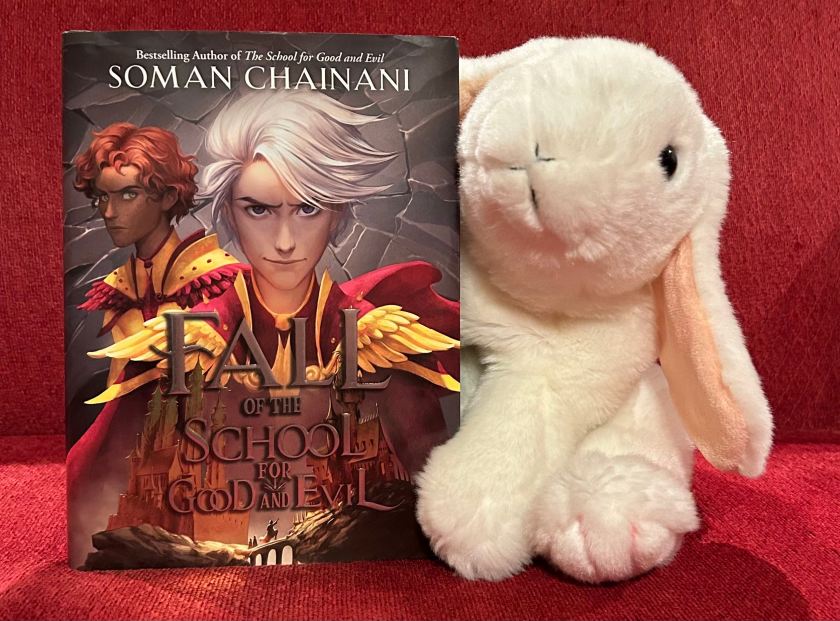
Marshmallow reviews Fall of the School for Good and Evil by Soman Chainani

Last June, Marshmallow reviewed Rise of the School for Good and Evil, the first of the two prequels Soman Chainani wrote for his School for Good and Evil hexalogy. And this week, finally, she was able to get her paws on the second prequel book, Fall of the School for Good and Evil, fresh off the press (the book just came out on May 2, 2023). Below, she shares her thoughts on this long-awaited book.

Marshmallow reviews Fall of the School for Good and Evil by Soman Chainani.

Marshmallow’s Quick Take: If you like books about fairy tales, friendship, family, or any of Soman Chainani’s other books, then this might be the book for you. But to understand the book fully, you should probably have read (or checked out my reviews of) some of the other School for Good and Evil books. For example check out The School for Good and Evil, the very first book that started this whole saga, or the book right before this one: Rise of the School for Good and Evil.

Marshmallow’s Summary (with Spoilers): Twins Rafal and Rhian rule the School for Good and Evil (a school that trains children to be in fairy tales) together. Rafal is the evil twin, and Rhian is the good twin. Their two contradicting souls, bound by their love for each other, balance the school and allow them to serve as School Masters. That is until they start having problems and tensions rise between them. If their bond does not last, they will both lose the immortality and magic given to them by the Storian.

Fall of the School for Good and Evil starts off when the twins go to Gavaldon to find new students for their school after losing several of their best ones. Gavaldon is a town outside of the magic of the woods, and the townspeople are called Readers. Gavaldon is not magical, but its inhabitants read the stories and fairy tales that happen in the woods. Their children read of magic, unaware that it is real. Rafal hopes that this will make them more effective and excited students, as opposed to the children who come from the kingdoms in the woods who have grown up with magic their entire lives.

Upon visiting Gavaldon, Rhian selects a Reader named Midas and takes him to be a new student at his School for Good. Rafal also picks a Reader to take to his School for Evil, but unfortunately, this person betrays him; Rafal is captured and accused of being a witch. Luckily, the brothers manage to escape with Midas. When they return to the School for Good and Evil, the twins discover their immortality is fading. They fear losing their powers and immortality. But a new division has started with Midas; each twin wants Midas to join his school, which causes competition between them. By the time they realize and recognize their division, the cracks are too big. The fight that started out as a small sibling rivalry becomes a full-blown war for the position of School Master with more than two competitors. But the result of the conflict is not what anyone would have expected and will change the course of fairy tales forever. 

Marshmallow is reading Fall of the School for Good and Evil by Soman Chainani.

Marshmallow’s Review: This is a sequel to Rise of the School for Good and Evil and is set before the School for Good and Evil series. I would definitely suggest reading those books before this because otherwise nothing will make sense. The other books are necessary for understanding the fantasy world that this book is set in. However, for those who have read the other books, this book is full of twists and turns that will leave readers astonished by revelations hidden throughout the entire series. Even though the reader thinks they know what will happen (since this book is set before the others), the road to the future of the School for Good and Evil is long and not as straight as one may think. The characters (specifically one!) in the other books is not who we thought they were.

I loved how Fall of the School for Good and Evil added nuance to the other books and built the world in which they are set. The depth of Chainani’s characters is astonishing. The characters we read about in Peter Pan and other fairy tales are transformed into living, breathing, and complex characters. I loved how characters from other fairy tales are given a new level of nuance and depth.

Fall of the School for Good and Evil did not have as much romance as previous books written by Chainani, which I think was a good move since it left more room for character and plot development.

This is a book that is appropriate for most ages, though it is likely more interesting for readers 8 and up.

Overall, this is an amazing book for those who like (retellings of) fairy tales and the School for Good and Evil series. 

Marshmallow’s Rating: 100%.

Marshmallow rates Fall of the School for Good and Evil by Soman Chainani 100%.

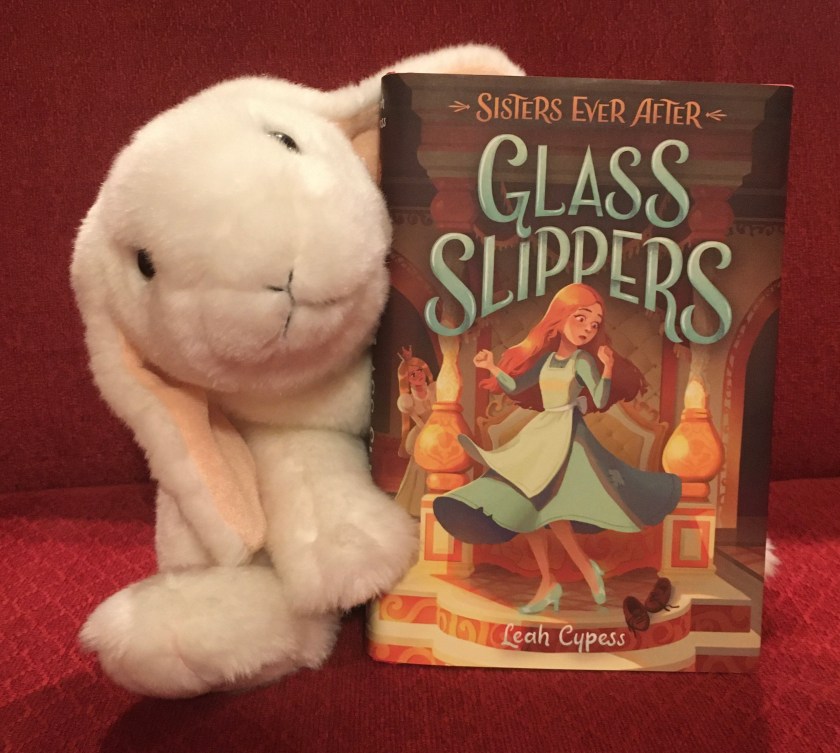
Marshmallow reviews Glass Slippers by Leah Cypess

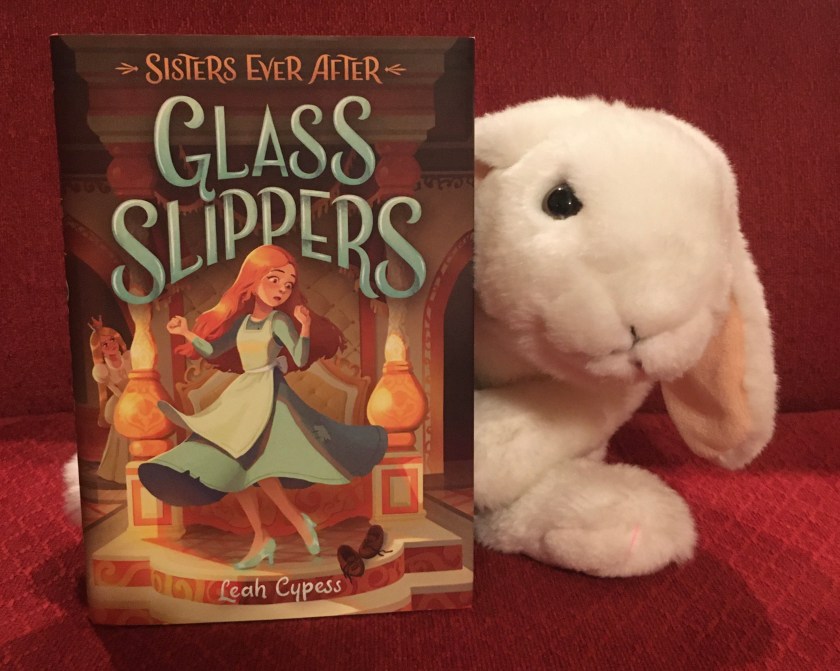
Almost exactly a year ago, Marshmallow reviewed Thornwood by Leah Cypess, a neat retelling of the story of Sleeping Beauty, which started the author’s Sisters Ever After series. Today she reviews the second book in this series, Glass Slippers, which adds some interesting twists to the well-known Cinderella story.

Marshmallow reviews Glass Slippers by Leah Cypess.

Marshmallow’s Quick Take: If you like books about sisters, magic, and mystery, or if you enjoy retellings of fairy tales, then this might be the book for you. 

Marshmallow’s Summary (with Spoilers): Tirza is the youngest stepsister of Queen Ella or Cinderella. After Ella became the queen, she banished her two older and wicked stepsisters to a different country but kept Tirza with her because Tirza was only five when Cinderella went to the famous ball.

Queen Ella is always very kind to Tirza, though it seems very artificial. Nobody else in the castle even tries to act kind; they all mistrust her and are cruel to her. Tirza is used to all this, but then she makes a bad mistake. One day, she finds the famous glass slippers out in Queen Ella’s room, and tries them on. Of course she puts them back where she found them, but this doesn’t matter because the slippers disappear and Tirza becomes the only suspect. Naturally nobody believes her when she says that she didn’t do it. Queen Ella nonetheless tries to continue to be nice to her.

Eventually the evidence against her becomes overwhelming and Tirza has to leave the kingdom. She decides to join her older sisters and plan a way to defeat and overthrow Cinderella. But the truth is much more complicated than it seems. Tirza must find out who is really evil: Cinderella or her real sisters or maybe someone else? Along the way, she must also come face to face with the fact that magic is not as nice as she had believed it to be.

Marshmallow is reading Glass Slippers by Leah Cypess.

Marshmallow’s Review: I think that Glass Slippers is a very interesting book. Readers of this blog know that I love retellings of fairy tales. But the plot here was so unpredictable! I had no idea that things were going to be so different from the original fairytale. It was also strange to see the fairies and the famous glass slippers of the original story become scarier and actually sort of bad as things evolved. I can’t say more than that because I don’t want to give away too much, but quite a few surprises are on the way for those bunnies who end up reading this book.

I also found it interesting that the characters were all realistic. In fairy tales some people are purely good and you know from the start. And others are really bad and you know from the beginning, too. In Glass Slippers, you don’t know who is good and who is evil until the end. Even so, the ending was quite different than I had expected. 

Marshmallow’s Rating: 95%.

Marshmallow rates Glass Slippers by Leah Cypess 95%.