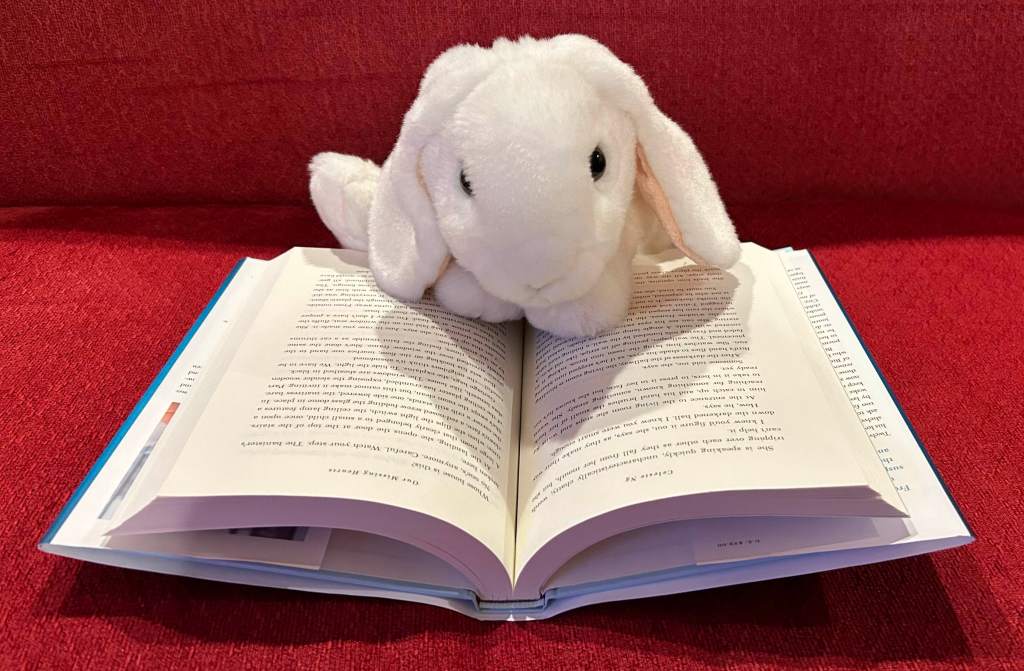
Today Marshmallow reviews Little Fires Everywhere, a 2017 novel by Celeste Ng, which has been turned into a one-season TV series in 2020.
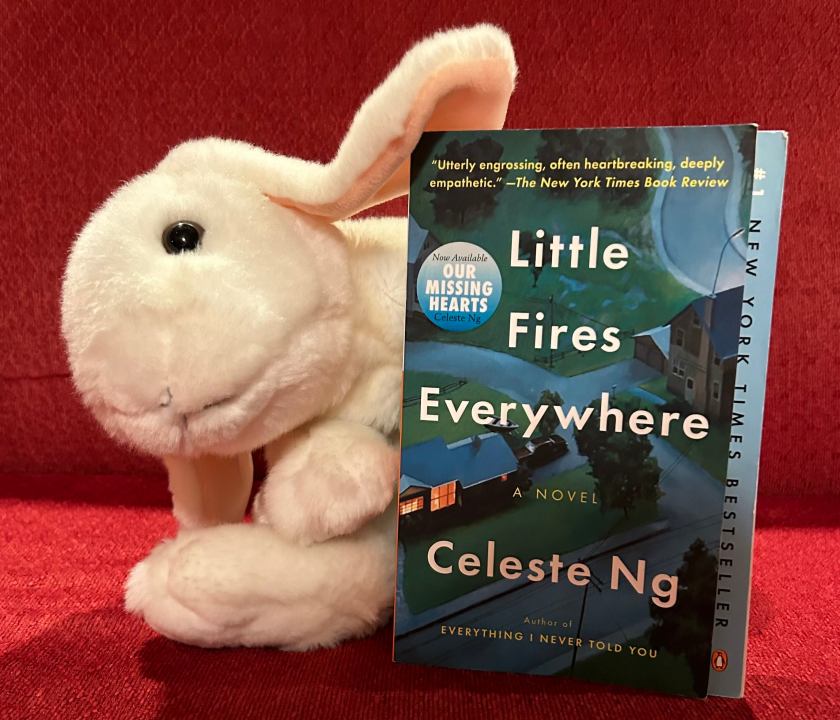
Marshmallow’s Quick Take: If you like books about family (specifically the relationship between a mother and their children) and racial differences, then this is the book for you.
Marshmallow’s Summary (with Spoilers): Pearl Warren has lived her whole life moving from one place to another. Her mother Mia is a photographer, an artist who finishes one project, sells it, and then decides to move on. To support herself and Pearl, she works odd jobs at restaurants or shops. But after a close brush with Pearl’s pneumonia, Mia decides that a nomadic life isn’t good enough for her developing daughter who is missing out on a normal life. So they settle down in Shaker Heights, the first, fully planned community in America.
In Shaker Heights, the houses are all color coordinated and regulated to be perfectly in order. But it’s not just the houses that are picture perfect. Every person in Shaker Heights is born with a set plan: success, planned success at that. The epitome, the poster child of this planning approach is Elena Richardson. Born in Shaker Heights, she followed her plan to the smallest detail: high school, college, job, marriage, children. Now wealthy, living with a husband, four children, and two houses, she generously rents her extra house to those she feels deserve a better chance, a chance to live in Shaker Heights. Shaker Heights’ schools and environment is expensive but full of opportunity, a place that many wouldn’t be able to afford. So out of Mrs. Richardson’s generosity, Mia and Pearl are able to move into a house, permanently, Mia promises.
The Richardson family has four children, all of whom fascinate Pearl. The oldest daughter (a senior), Lexie, is confident and mature in a way Pearl wishes to be able to emulate. The oldest son (one year older than Pearl and a junior) is named Trip. Trip is athletic and very popular with girls, including Pearl. The younger son (a sophomore, the same age as Pearl) named Moody befriends Pearl and invites her to the fascinating Richardson house. The first three Richardson children match Elena’s plan, but the youngest child, Izzy (a freshman), doesn’t fit in and doesn’t seem to want to fit in. She is rebellious and contends with her mother to frustrate her. But when Izzy meets Mia and her art, she becomes almost obsessed with Pearl and her mother’s lifestyle.
In the opposite fashion, Pearl becomes obsessed with the Richardsons and their entrancing life. But with a growing, intensifying crush on Trip and a budding friendship with Lexie, her original friend in the Richardson family (Moody) becomes a little neglected. Eventually, Trip reciprocates her feelings and they engage in sexual relationships. Meanwhile, Lexie gets pregnant with her boyfriend. But in Shaker Heights, where greatness is a given, pregnancy is not tolerated in teenagers. So when she gets an abortion, out of embarrassment, she puts her name down as Pearl.
At the same time, Elena’s old friend Linda McCullough (who also returned to Shaker Heights after college) is having issues of her own. Mrs. McCullough and her husband have been trying to have children for fourteen years while Elena was giving birth to four children at one-year intervals. So when Mrs. McCullough is informed there is a baby they can adopt, she is overjoyed. The baby was dropped off at the fire station in a cardboard box with blankets. The baby’s mother is unknown and anonymous. So when her new baby’s first birthday (still during the adoption process) comes around, she invites her old friend Elena. Mia hears about the McCulloughs’ new baby and is shocked to realize that one of her coworkers at a Chinese restaurant is the baby’s mother. Bebe Chow is a Chinese immigrant whose boyfriend abandoned her after learning that she was pregnant. She worked to support her child, but, in a moment of desperation, she left her baby at the fire station. Afterwards, she desperately tried to get her baby back for a year. Now that she knows where her baby is, Bebe goes to the press, following Mia’s advice. This becomes a huge news story dividing people into camps, and the coverage eventually earns Bebe visitation rights and a lawyer.
The situation is very difficult. The McCulloughs genuinely love the baby with all of their hearts, especially after spending fourteen years waiting for one. However, Bebe really wants her baby now, having only left her due to extreme poverty and depression. Now, she has a more stable job and wants to take care of her baby. Also, her lawyer says that as a Chinese baby, Bebe’s baby won’t be connected to her heritage unless she is raised by her Chinese mother.
So in summary, Shaker Heights was perfectly planned, but with the arrival of Mia and Pearl, chaos ensues. Nothing will be the same again.
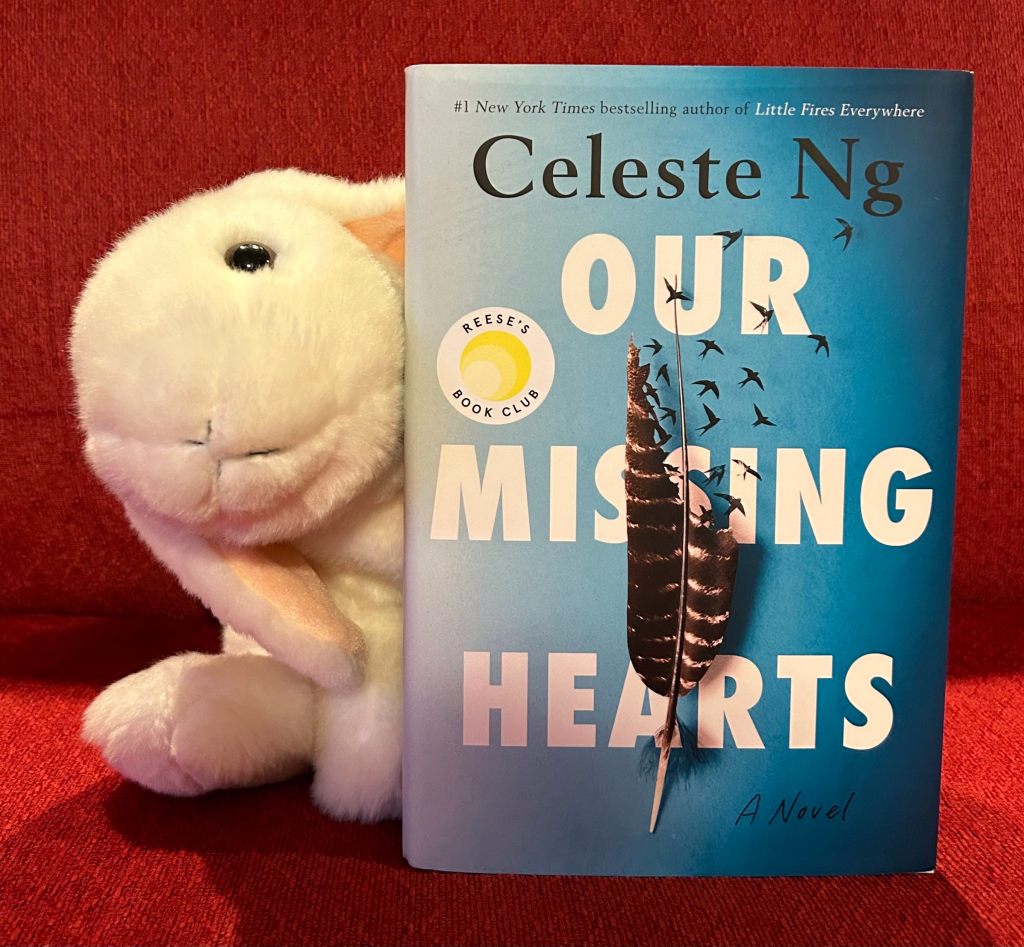
Marshmallow’s Review: I really liked this book. I did have very high expectations; Celeste Ng’s other book, Our Missing Hearts, is one of my favorites ever. Celeste Ng’s writing is unique in a way I can’t describe with words. Something about her writing puts her on another level. She writes so simply, yet provides overwhelming detail: clear and concise. So I really wanted to read another book written by her.
And Little Fires Everywhere is definitely not a disappointment. The world the author creates is realistic yet retains an air of fantasy in a way. The storyline is unique and different from most books. Just like in Our Missing Hearts, Ng always gives convincing and deep backstories and context before extending the plot further.
The storyline is rich and complex, but easily understandable. There is some inappropriate content for younger bunnies. Underage characters do engage in sexual activity, however, there is no explicit, overly detailed scenes (unlike the, cough, Shatter Me series, cough cough 🤨). Teenage pregnancy is mentioned, as is abortion. The topic of motherhood and what it means to be a mother is a pervasive theme throughout the book. The relationship between parent and child is explored deeply through the lives of several different characters. The topics in the book (specifically the conflict between the McCulloughs and Bebe) are complicated and cannot be answered in a simple manner. The book also seems to have a message about the value and limitations of planning. Celeste Ng seems to imply that some parts of life cannot and should not be planned.
I think this was a fascinating, deep, and interesting book that had an impact on me, emotionally and intellectually. Of course, some content might make it better for older bunnies, perhaps 14 and up. And the ending, for me, was not satisfying, but it fit the style of Celeste Ng (which again, I don’t know how to describe). Overall, I would definitely recommend this book to all bunnies.
Marshmallow’s Rating: 100%.


 BookBunnies