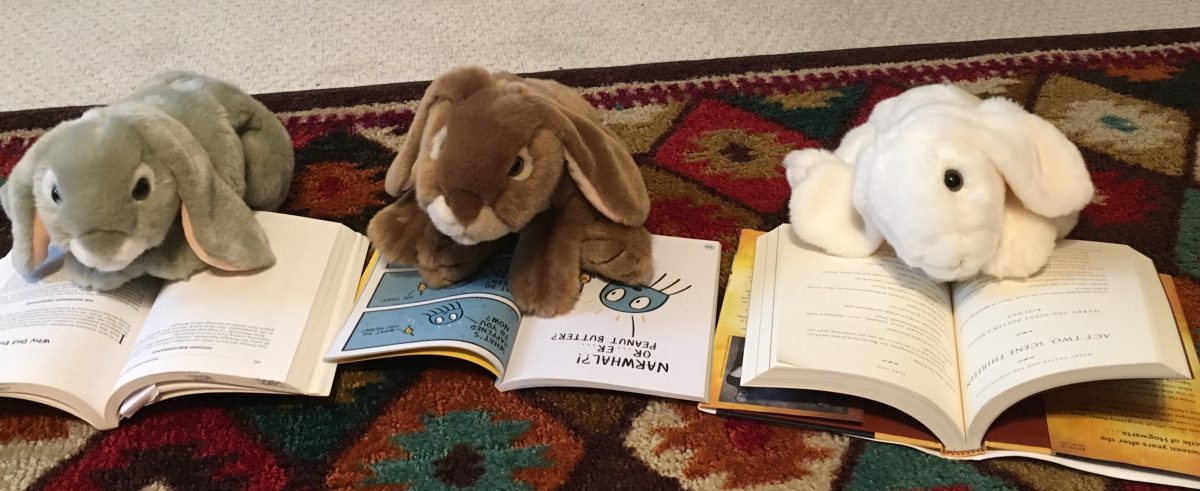
Caramel reviews Survive! Inside the Human Body: The Circulatory System by Hyun-Dong Han

Last week Caramel reviewed Survive: The Digestive System, the first book in the Survive: Inside the Human Body series illustrated by Hyun-Dong Han. This week he wanted to continue talking about this series of graphic novels, so today he will tell us about the second book: Survive! The Circulatory System, once again illustrated by Hyun-Dong Han. As is often the case, Sprinkles is taking notes and asking questions.
Caramel reviews Survive! Inside the Human Body: The Circulatory System by Hyun-Dong Han.

Sprinkles: So Caramel, you have enjoyed these books so much that you wanted to talk about the second one today.

Caramel: Yep.

S: So tell us from the beginning. What is this book about?

C: It is about the circulatory system.

S: So what is the circulatory system?

C: The circulatory system is the system that moves blood around the body.

S: So in this book we learn about the human body and the blood circulating through it. But then is it all about facts? Or is there a story line too?

C: Yes, there is a story line.

S: Tell me about it.

C: It’s about Geo and Doctor Brain and they go into Phoebe’s body accidentally. She eats them.

S: Wait, these are the same characters from the first book, right?

C: Yes. Phoebe and Geo are two friends. Doctor Brain is a mad scientist who invented the S.S. Hippocrates.

S: Oh do you know who Hippocrates was?

C: Yes. He lived in ancient Greece and he was a healer, and he believed that people should look at diseases in a more scientific way.

S: Yes. People see him as “the father of medicine”. So what is S.S. Hippocrates?

C: It’s a big ship but can shrink and go inside a human body. But they were not trying to get into anybody’s body.

Caramel is reading Survive! Inside the Human Body: The Circulatory System by Hyun-Dong Han

S: Hmm, so in the first book they somehow get trapped inside Phoebe’s digestive system, she somehow eats them. How do they get into her blood stream this time?

C: They are digested.

S: So they were not able to get out the last time, and from the digestive system they are transferred into the circulatory system. Is that correct?

C: Yes.

S: Oh that sounds exciting but also kind of scary.

C: It is. They are attacked by microphages, white blood cells, and Kupfer cells.

S: Wait, what are Kupfer cells?

C: Oh apparently they are a type of microphage!

S: So they are attacked by the immune system while in the blood stream? That makes sense. After all, they are not supposed to be there!

C: Yeah. Plus Doctor Brain apparently made S.S. Hippocrates look like a bacterium.

S: That makes even more sense, of course: then the body’s defense system would try to fight it. We learned all about white blood cells and microphages in Cells At Work, right?

C: Yes, but we did not learn about the Kupfer cells there. Hey, why don’t we put in the song for Cells At Work here?

S: Good idea! Here you go, but viewers should keep in mind the show is quite violent—the little bunnies in our household often covered their eyes while we were watching the show—so this introductory sequence is also kind of violent (in second 39, you meet the White Blood Cell and with him start the violence and the gore):

Here is the introductory sequence to Cells At Work in English (warning: there is significant violence and gore in the show and in this video too).

S: Let us get back to the book. So do they figure out how to get out of Phoebe’s body?

C: Nope, not yet. You need to read the third book for that.

S: Oh, so this one ends with a cliffhanger!

C: Yes! But it was not bad because I actually wanted to read the third book anyway.

S: That makes sense. You like graphic novels and you like learning about facts.

C: Yes I really like facts and there are a lot of them in this book.

Caramel is reading about the liver in Survive! Inside the Human Body: The Circulatory System by Hyun-Dong Han

S: So this was a good read, then?

C: Yes, it was!

S: Tell me three words to describe it.

C: Colorful, informative, and funny.

S: Those make a good endorsement for this book! So it is time to wrap up!

C: Stay tuned for more book bunny adventures!

Caramel enjoyed reading Survive! Inside the Human Body: The Circulatory System by Hyun-Dong Han, and recommends it to all bunnies interested in learning about the human body.

Caramel reviews Survive! Inside the Human Body: The Digestive System by Hyun-Dong Han

A few weeks ago, as the book bunny household was just finishing up watching the (surprisingly violent but also extremely engaging) manga series Cells At Work, we came across a series of graphic novels set inside the human body. Of course both little bunnies read through the books in the blink of an eye. Today Marshmallow interviews Caramel about the first book in the series: Survive: The Digestive System, illustrated by Hyun-Dong Han.

Caramel reviews Survive: The Digestive System, illustrated by Hyun-Dong Han.

Marshmallow: So, Caramel, what do you want to tell us about this book?

Caramel: This book is a book that can teach a lot. 

M: What is something you learned?

C: I learned that the esophagus is a hole that goes down to your stomach.  

M: What happens in the book?

C: It’s about a girl named Phoebe, and then there is this Doctor Brain. Doctor Brain’s a medical person who’s a mad scientist too. He invents this machine that makes things smaller, and then accidentally, Geo and Doctor Brain get swallowed by Phoebe.

M: Who is Geo?

C: Phoebe’s friend. 

M: Who is the other character on the cover?

C: That is Kay, the assistant of Doctor Brain, and Geo and Phoebe’s friend. 

M: What are Geo and Doctor Brain trying to do?

C: They are trying to get out of Phoebe’s body after she swallows them. 

M: What part of her body are they in?

C: In this book, they are in the digestive tract. 

M: “Digestive tract,” that’s a big word. But wait, does the “In this book” mean that there are more books?

C:  Yes, there are two more. There is a book on The Circulatory System and another on The Nervous System.

Caramel is reading Survive: The Digestive System, illustrated by Hyun-Dong Han.

M: Is this book scary?

C: Sort of, maybe for little kids. It could be scary for younger kids. 

M: Do you have a favorite character?

C: Doctor Brain because he’s smart. Really smart. 

M: Do you think that this book is easy to read?

C: Yes, it’s a pretty easy book. It’s a graphic novel, and it has fewer words than a normal book.

M: Did you enjoy reading it? 

C: Yes, I really liked it.

M: Do you think that everyone could like it or do you think that the book is meant for a certain age group?

C: I think that every one could like it. 

M: Do you like the pictures or the drawings?

C: The pictures are pretty good drawing. They do describe the action pretty well. They are colorful. 

M: In some parts, there are facts, right?

C: Yes, there are many facts. Here’s one, “We use nearly 40 muscles to chew and swallow.” 

M: Wow! That a lot of muscles. I wonder if bunnies like us use more or less.

Caramel is reading one of the fact based spreads in Survive: The Digestive System, illustrated by Hyun-Dong Han.

M: So, Caramel, what are three words that describe this book?

C: Action, informative, and colorful.

M: Sounds good to me! And it’s about time to wrap up. What do you say?

C: Stay tuned for more book bunny reviews!
Caramel has enjoyed reading Survive: The Digestive System, illustrated by Hyun-Dong Han, and recommends it to all other little bunnies interested in the human body.

Caramel reviews From the Stars in the Sky to the Fish in the Sea by Kai Cheng Thom

For his first review back, Caramel grabbed a book from a pile of books on Sprinkles’s desk for which she has been planning a joint review and decided he wanted to review it. The book From the Stars in the Sky to the Fish in the Sea, written by Kai Cheng Thom and illustrated by Wai-Yant Li and Kai Yun Ching, is about a young child and their identity. As usual Sprinkles is taking notes and asking questions—and she is still planning a review of the remaining books on her pile on this topic for the near future.

Caramel reviews From the Stars in the Sky to the Fish in the Sea, written by Kai Cheng Thom and illustrated by Wai-Yant Li and Kai Yun Ching.

Sprinkles: So Caramel, you grabbed this book from my pile and decided you want to review it yourself. Why?

Caramel: I like it. I like the creatures in it. The illustrations.

S: You are right, the illustrations are neat. They have beautiful colors and they remind one of being in a dream.

C: This book is a good book if you like mythical animals.

S: Okay, I see what you did there. That is the kind of thing Marshmallow says about books when she is reviewing them. But where do you find mythical animals in this book?

C: In the pictures!

S: Tell me more about the book Caramel.

C: There is a child named Miu Lan in this book. They are not a boy nor a girl.

S: Are they a mythical creature themselves then?

C: Sort of. Basically they are.

S: But not really, right? Because this can happen sometimes, and a child may not feel like they are a boy or a girl or a little bit of both or neither.

C: Yes, but I think Miu Lan is actually a mythical creature, because they can change their form when they want. When they want to, they can grow a turtle shell and porcupine quills.

Caramel is looking at the pages in From the Stars in the Sky to the Fish in the Sea (written by Kai Cheng Thom and illustrated by Wai-Yant Li and Kai Yun Ching) where Miu Lan is going to school for the first time and they are so excited that "they grew a tail of peacock feathers and a coat of tiger stripes".
Caramel is looking at the pages in From the Stars in the Sky to the Fish in the Sea (written by Kai Cheng Thom and illustrated by Wai-Yant Li and Kai Yun Ching) where Miu Lan is going to school for the first time and they are so excited that “they grew a tail of peacock feathers and a coat of tiger stripes”.

C: And they can also fly!

S: Yes, I love how they have scales and feathers or wings or stripes as they wish. It is pretty exciting to think about. But do you really think they are doing those things when they claim they are?

C: Probably not. But it would be cool if we could do that, wouldn’t it?

S: I think so, too. I’d especially like to be able to fly.

C: As bunnies we can at least jump pretty high…

S: Again, true. But back to Miu Lan. I don’t think they are a mythical being any more than you or me. But there are two little creatures that show up on each page that look like mythical beasts themselves.

C: Yes. There is a dog with a fish tail, or maybe a whale tail. I don’t know. I think that is the best creature in the book.

S: There is also a poem that the mother sings to her child every other page and we hear it resonate through the story, like in a retelling of a myth, where you would have repeated verses. Can you read that poem to me?

C: Okay let me find it. Ah, here we go:

whatever you dream of,
i believe you can be,
from the stars in the sky to the fish in the sea.
you can crawl like a crab or with feathers fly high,
and i'll always be here, i'll be near, standing by,
and you know that i'll love you till the day that i die. 
whatever you dream of,
i believe you can be,
for you are my child, courageous and free. 

S: That is beautiful Caramel, isn’t it?

C: Yes but it is not the best sleeping poem, because I don’t think I want to think of you dying before I go to sleep.

S: I can see that, but saying “I’ll love you till I die” is something people say when they love someone so deeply and so unconditionally, that they want to make sure the person knows their love will always be there as long as that person lives. I can see how the death part might be off-putting. Other than that, do you like the poem?

C: Yes. Other than the death part I like it.

S: So the book is about this child Mui Lan who is different from other children in their school and they try to fit in and find friends and have some difficulties.

C: Yes. But in the end things work out. They do make friends.

S: That is true. This is a beautiful story. Maybe I will read it to you again tonight.

C: Yes, yes, yes, yes, I’d like that!

S: So now are we ready to wrap up this review?

C: Yes! Stay tuned for more book bunnies reviews!

Caramel enjoyed reading and looking at the pictures in From the Stars in the Sky to the Fish in the Sea, written by Kai Cheng Thom and illustrated by Wai-Yant Li and Kai Yun Ching.

Caramel reviews The Magnificent Book of Ocean Creatures by Val Walerczuk and Tom Jackson

A few weeks ago Caramel reviewed a beautiful nonfiction book titled The Magnificent Book of Animals, illustrated by Val Walerczuk and written by Tom Jackson. Today he decided to talk about a similar book: The Magnificent Book of Ocean Creatures, once again illustrated by Val Walerczuk and written by Tom Jackson. As usual Sprinkles is taking notes and asking questions.

Caramel reviews The Magnificent Book of Ocean Creatures by Val Walerczuk and Tom Jackson.

Sprinkles: I have been seeing you read and reread this book for the last few weeks. What is it about?

Caramel: It’s about ocean animals. Well, there is also corals…

S: Are corals animals?

C: They’re made of polyps which are little animals. Tiny, probably microscopic.

S: Hmm, let’s see. Wikipedia tells us that corals are made up of polyps as you said. And polyps are tiny invertebrates but nowhere do I see how big they are. So I guess I will take your word for it for now…

C: Oh, wait, I want to tell you this fact: Polyps are relatives of jellyfish! Did you know that?

S: No!

C: And they have “tentacles for sifting food from water”.

S: That is interesting Caramel! I can see why you find this book fascinating! It is full of interesting facts.

C: Yep. Let me tell you a few facts about my favorite ocean creature in this book.

S: Oh, I am curious. What is it about?

C: Here, I found it: Flying fish!

Flying fish do not actually fly. They leap out of the water at high speeds and then glide on their winglike fins. The fish glide to escape larger predators that are attacking them underwater.

Caramel is reading his favorite pages (about flying fish) in The Magnificent Book of Ocean Creatures by Val Walerczuk and Tom Jackson.

S: This is all very interesting!

C: There’s more!

S: But we should talk more about the book more generally. So tell me more about the book. What creatures are described in it?

C: I’ll tell you all of the animals in this book.

S: So you’ll read me the table of contents basically?

C: Yes.

S: That’s alright. Go ahead.

C: Sea otter, walrus, hooded seal, blue whale, humpback whale, narwhal, orca (killer whale), bottlenose dolphin, manatee, yellowfin tuna, marine iguana, whale shark, great white shark, ocean sunfish, manta ray, oarfish, humpback anglerfish, sea horse, queen parrotfish, clownfish, green sea turtle, lionfish, sailfish, flying fish, tufted puffin, emperor penguin, pelican, giant clam, lobster, giant Pacific octopus, giant squid, insulamon freshwater crab, sea slug, sea star, lion’s mane jellyfish, and coral.

S: Wow! That is a lot of creatures. And just like in the other Magnificient Book you reviewed, each of these animals gets two pages to itself, right?

C: Yes. And they also have amazing drawings! They are actually hand-drawn! It’s amazing!

S: I know! Some people are really good at drawing and illustrating, right?

C: They’re so good! They’re out of this world! At first I actually thought they were photos, but no, they are hand-drawn.

S: Yes, I am sure the illustrator worked really hard on them. And she must have worked really hard to get this good!

C: This reminds me of a quote, I do not know who it is from: “We do not do it because it is easy. We do it because it is hard.”

S: Oh, that is President John F. Kennedy’s speech about going to the moon. Here is the full transcript. The part you are remembering is:

We choose to go to the moon. We choose to go to the moon in this decade and do the other things, not because they are easy, but because they are hard, because that goal will serve to organize and measure the best of our energies and skills, because that challenge is one that we are willing to accept, one we are unwilling to postpone, and one which we intend to win, and the others, too. 

Isn’t it an inspiring speech? And you are right in remembering it just now. Good illustrators work hard at their craft, and even if they probably find drawing easier than you and me, drawing that well needs a lot of hard work.

C: I guess all that hard work be tiring.

S: Probably. But in the end they have a truly magnificent book!

C: Yes!

S: Okay, Caramel. Let us wrap this up. Do you want to rate it again, by finding three words to describe this book?

C: Yes. Here they are: Awesome, amazing, beautiful.

S: Well, these basically say the same thing, but I know what you mean. The book is beautiful. Alright, here are my three words: “colorful”, “big”, because it is a pretty big book, and “interesting”, because there are a lot of interesting facts in this book that I did not know about.

C: I agree!

S: Ok, and now you tell everyone:

C: Stay tuned for more book bunny reviews!
Caramel enjoyed reading The Magnificent Book of Ocean Creatures by Val Walerczuk and Tom Jackson, and is looking forward to many more reads where he will study once again the many amazing creatures of the world's oceans.
Caramel enjoyed reading The Magnificent Book of Ocean Creatures by Val Walerczuk and Tom Jackson, and is looking forward to many more reads where he will study once again the many amazing creatures of the world’s oceans.