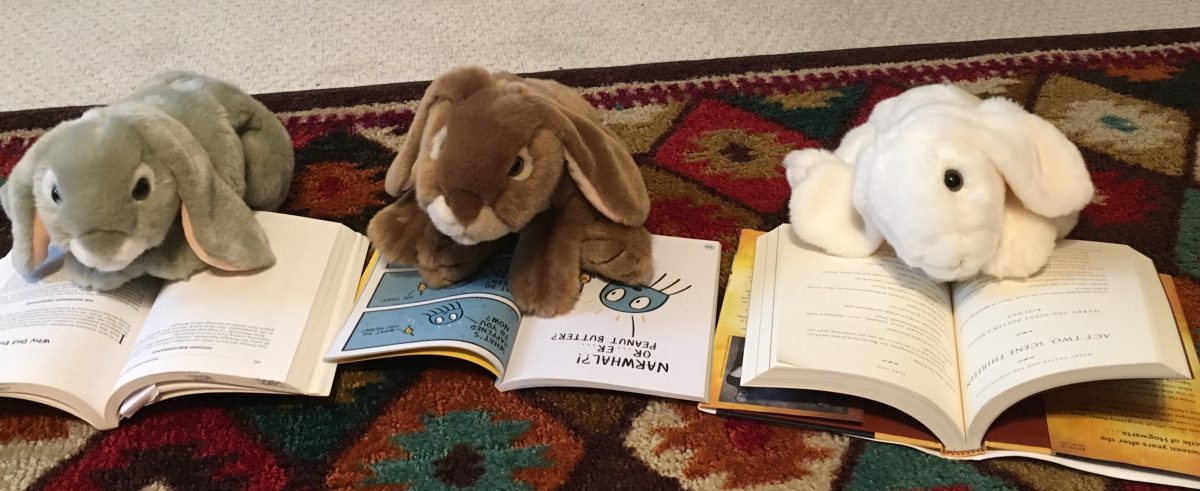
Caramel reviews A Writer’s Notebook by Ralph Fletcher

Over the summer Caramel got into keeping a notebook where he doodles sketches and writes stories. Today he reviews the book that inspired it all: A Writer’s Notebook by Ralph Fletcher. As usual, Sprinkles is taking notes and asking questions.

Caramel reviews A Writer's Notebook by Ralph Fletcher.
Caramel reviews A Writer’s Notebook by Ralph Fletcher.

Sprinkles: So Caramel, tell us a bit about this book.

Caramel: This book is about keeping a writer’s notebook.

S: What is a writer’s notebook?

C: A notebook where writers put writing about their everyday lives. Things they see, think of, and read about. They use it to capture interesting points in the past, so that they can remember them.

S: So it is like a journal, in some ways. They write notes on what is going on and what they think about those things. So how is a writer’s notebook different from a journal? What makes a writer’s notebook a writer’s notebook?

C: Hmm, I am not sure.

S: Maybe it has something to do with the person being a writer?

C: Yes, because if you are a writer, you come back to what you wrote and think about it and maybe you can use it in your stories or poems and so on.

S: So a writer’s notebook is basically a journal, but the person keeping it uses it for their writing purposes.

C: Yes.

Caramel is reading A Writer's Notebook by Ralph Fletcher.
Caramel is reading A Writer’s Notebook by Ralph Fletcher.

S: So what is in the book exactly?

C: There are chapters about how different people use their writer’s notebooks. For example, there is a chapter about writing down memories of events that were important to you. Then there is a chapter where you learn that you can also write about really small things, things that might be interesting but not really important. But then somehow those might be useful later if you are writing a story or something.

S: I see.

C: There is a chapter called Fierce Wonderings, which is about how you can also write in your notebook about things that you want to know more about. There is a chapter about listening in on other people’s conversations and taking notes if they sound interesting.

S: I guess that teaches you about interesting dialogue.

C: I guess so. You can also have seed ideas.

S: What are those?

C: A seed idea is an idea that you can build on, so for example the author writes about someone who kept collecting facts about spiders.

S: That reminds me of your notebook, where you keep drawing different robot models.

C: Yes.

S: I think yours is not only a writer’s notebook, but rather, an artist’s notebook. Because you are drawing more than writing.

C: I guess so. But I think the idea is the same.

S: Yes, I can see that. You also keep drawing similar things and try to improve on the details. I think sometimes writers do that in their notebooks too.

C: Writers also put other people’s sentences and ideas in their notebooks too, if they like it.

S: And that is kind of similar to when you were trying to draw Eve in your notebook, inspired by the female robot in the movie Wall-E. You like how she is drawn and want to see if you can draw something similar.

C: Yes.

S: So do you also write stories or even shorter things in your notebook?

C: Yes. I have a few sentences here and there.

S: Do you like keeping a notebook?

C: Yes. Because then I can draw things whenever I want.

S: I can see how that is appealing. So let us get back to this book. What three words would you use to describe this book?

C: Many voices because the author shares writings of many other people, many of them are kids like me. Good ideas to get started with your own notebook… And … quick. It is a short book so I read it quickly.

S: That was definitely more than three words, but you did provide us with three distinct features of the book. Thank you. So let us wrap things up. What do you want to tell our readers?

C: Stay tuned for more book bunny reviews!

Caramel enjoyed reading A Writer's Notebook by Ralph Fletcher, and will probably continue to doodle and write in his notebook in the coming months and years. .
Caramel enjoyed reading A Writer’s Notebook by Ralph Fletcher, and will probably continue to doodle and write in his notebook in the coming months and years.

Caramel reviews Change Sings: A Children’s Anthem by Amanda Gorman and Loren Long

Today Caramel reviews the new book Change Sings: A Children’s Anthem, written by poet Amanda Gorman and illustrated by Loren Long. As usual, Sprinkles is taking notes and asking questions.

Caramel reviews Change Sings: A Children's Anthem, written by poet Amanda Gorman and illustrated by Loren Long.
Caramel reviews Change Sings: A Children’s Anthem, written by poet Amanda Gorman and illustrated by Loren Long.

Sprinkles: So Caramel, tell me a bit about this book.

Caramel: This book is about change, and how children can change the world.

S: That sounds inspiring! Tell me, how can children change the world?

C: Well, let me tell you what happens in the book. There is a girl in the beginning, who I think might be Amanda Gorman herself, and she has a guitar and is calling people to join her to try and make the world a better place. She helps another person recycle, then the two of them go and help others by giving them food, and deliver groceries to an elderly woman, and then they invite another boy to join their little band, each of them has an instrument. And the three of them go and build a ramp for a disabled kid’s home. Then that kid joins them too, and the group grows, and they keep cleaning up, planting flowers, and they fix up their community buildings and so on.

S: So they all help, and they all work together to make their community a more welcoming place, a good place to live.

C: Yes. And they are making music all along.

S: Well, the book is called A Children’s Anthem, and according to my dictionary, an anthem is a “a rousing or uplifting song identified with a particular group, body, or cause”, so it makes sense that there is music in there, right?

C: Yeah. And it makes it livelier and more fun.

Caramel is reading Change Sings: A Children's Anthem, written by poet Amanda Gorman and illustrated by Loren Long.
Caramel is reading Change Sings: A Children’s Anthem, written by poet Amanda Gorman and illustrated by Loren Long.

S: Amanda Gorman is a poet. Is there poetry in this book too?

C: Yes, the whole book is one long poem. All of it rhymes, and it is fun to read out loud.

S: Yeah, I enjoyed reading it out loud with you. We saw Gorman read her poem “The Hill We Climb” in the inauguration of President Joe Biden this January. Do you remember?

C: Yes I do. Can we put a video of her poem here?

S: Yes, of course. Okay, here it is:

Amanda Gorman reads inauguration poem, ‘The Hill We Climb’ (January 20, 2021, PBS).

S: So what do you think about the poem that is the main text of the book?

C: There are so many different types of people, and the poem brings them all together. And even though they are all very different, they all work together and make their community better.

S: So you also like the illustrations.

C: Yes. They are very colorful. And the children really look like they are dancing and making music and having lots of fun. But this one boy looks like he is dancing but I don’t think that the position he is in is possible, his feet would break!

S: Yes, but think of it not as standing but while jumping up and down or turning around, in some instant, you might look like you are doing something impossible.

C: I guess he could be jumping up. And there is a kid who is playing basketball and that is cool too.

S: Yes, the children when they join are just doing standard kid things and they just join in to help. And that seems to be the message, right? That we can all help.

C: And even us kids can help too, and if we do, we can change the world.

S: That is inspiring. Okay Caramel, we wrote long enough. Tell me your three words to describe this book, and we can wrap it up.

C: Colorful, inspiring, poetic.

S: I like those words Caramel. And what do you want to say to finish the review?

C: Stay tuned for more book bunny reviews!

Caramel enjoyed reading Change Sings: A Children's Anthem, written by poet Amanda Gorman and illustrated by Loren Long, and recommends it to little bunnies who enjoy the sound of words and like to think about how they can make the world a better place.
Caramel enjoyed reading Change Sings: A Children’s Anthem, written by poet Amanda Gorman and illustrated by Loren Long, and recommends it to little bunnies who enjoy the sound of words and like to think about how they can make the world a better place.

Caramel reviews Narwhal’s School of Awesomeness by Ben Clanton

Caramel chose to talk about the first book of Ben Clanton’s Narwhal and Jelly series,  Narwhal: The Unicorn of the Sea!, in his very first review for the book bunnies blog. Then through the next few months, he reviewed Super Narwhal and Jelly JoltPeanut Butter and JellyNarwhal’s Otter Friend, and finally Happy Narwhalidays. So it was natural that when he heard about a sixth book in the series titled Narwhal’s School of Awesomeness, he thought he’d better get his paws on a copy and review it, too. This is exactly what he does in this post. As usual, Sprinkles is taking notes and asking followup questions.

Caramel reviews Narwhal's School of Awesomeness by Ben Clanton.
Caramel reviews Narwhal’s School of Awesomeness by Ben Clanton.

Sprinkles: So you must be feeling pretty good having gotten your paws on yet another Narwhal and Jelly adventure!

Caramel: Yup! It is fin-tastic to be reading about these two once again.

S: I see what you did there! Fin-tastic is one of those words Clanton uses, created by slightly changing a word to have ocean-life connotations.

C: Yep yep yep.

S: So will you tell us anything about the book?

C: Narwhal and Jelly are back and Narwhal becomes a teacher.

S: How does he do that?

C: Well, one of the fish school teachers is sick, and so he goes home, and then Narwhal takes over the school. He’s not told to do it, but he just does it himself.

S: So he just decides to be a teacher and gets going, right? That’s interesting.

C: Yes. And what’s more interesting is what he teaches. He teaches wafflematics, which is math + waffles.

S: That sounds deliciously nerdy!

C: Yes. And there are other classes, mostly fake classes of course. Narwhal does not know a lot, because I think he is young, kind of like me, so he is making things up as he goes along.

Caramel is reading Narwhal's School of Awesomeness by Ben Clanton.
Caramel is reading Narwhal’s School of Awesomeness by Ben Clanton, when Narwhal is explaining what wafflematics is.

S: But there are still a lot of real facts in the book, right? Like in the earlier Narwhal and Jelly books?

C: Yes, and you know I love my facts.

S: I know you do. So did you learn anything new from this book?

C: Yes. Did you know what a group of snails is called?

S: No.

C: It’s called a walk. And a group of sharks is called a shiver.

S: I did not know any of those.

C: Yes, and then there is a picture of a hammerhead shark and he is really funny, talking like a pirate…

S: So the books are factful and funny again, right?

C: Yes! At some point Narwhal says “This is what I’m chalking about!” You see, talking becomes chalking because he is now a teacher?

S: Yes, I see. I’m glad you are enjoying this book just as much as you did the earlier ones.

C: <giggles> Wait, what? Sorry, I was reading the book again.

S: Okay, maybe we will end the review so you can get back to the book once more. But before that, tell me a third word to describe the book. You already have factful and funny.

C: Colorful. Because the book is very colorful. They are adorable fishies and I love them!

S: That is so cool that you liked this book so much!

C: Yes. It is o-fish-ally awesome!

S: Okay, then why don’t we wrap it up? What do you want to tell our readers?

C: Stay tuned for more book bunny reviews!
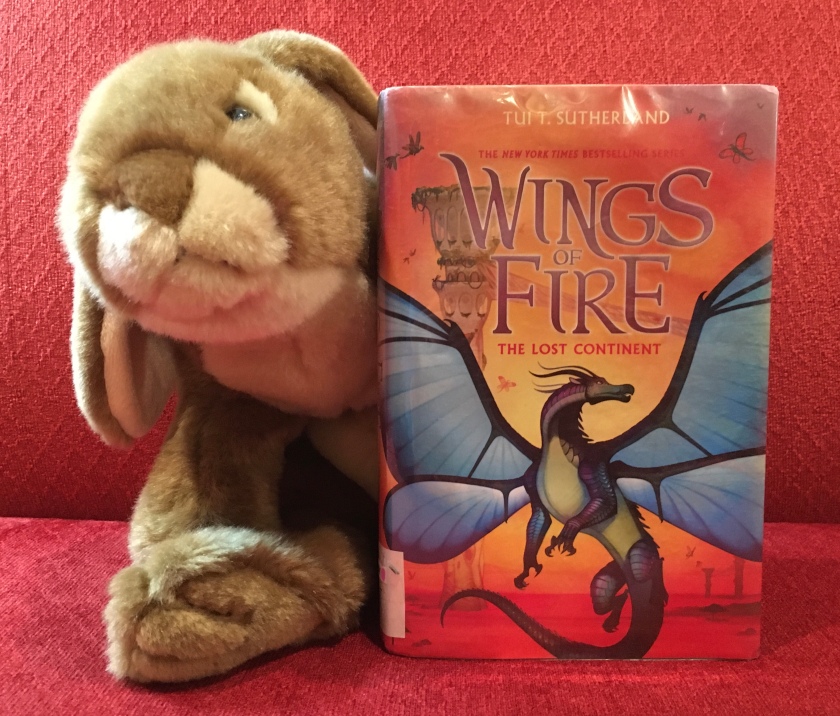
Caramel loved reading Narwhal's School of Awesomeness by Ben Clanton, and reconnecting with old friends Narwhal and Jelly.
Caramel loved reading Narwhal’s School of Awesomeness by Ben Clanton, and reconnecting with old friends Narwhal and Jelly.

Caramel reviews If You Give … books by Laura Numeroff and Felicia Bond

A couple weeks ago Caramel went over his How Do Dinosaurs … books and reviewed the whole series for the book bunnies blog. Today he wanted to do something similar and chose another old favorite series of his: the If You Give … series, written by Laura Numeroff and illustrated by Felicia Bond. As usual, Sprinkles is taking notes and asking followup questions.

Caramel reviews If You Give a Mouse a Cookie (1985), If You Give a Moose a Muffin (1991), If You Give a Pig a Pancake (1998), If You Take a Mouse to the Movies (2000), If You Take a Mouse to School (2002), If You Give a Pig a Party (2004), If You Give a Cat a Cupcake (2008), If You Give a Dog a Donut (2011), and If You Give a Mouse a Brownie (2016), all written by Laura Numeroff and illustrated by Felicia Bond.

Sprinkles: So Caramel you wanted to talk about some of your old favorites again.

Caramel: Yup.

S: So how would you like to start this review?

C: From the beginning. With the first book. This is called If You Give A Mouse A Cookie. It’s about a mouse, a cookie, and a boy who is really nice and gives the mouse a cookie. Then the mouse asks for a glass of milk, then a straw, then a napkin, then a look in the mirror to see if he has a milk mustache…

S: Okay, I get it. So the boy gives the mouse something, and then that leads to another wish, and then pretty soon …

C: It goes all the way from a cookie to a lot of mess and lots of action, and in the end the mouse will get thirsty and want milk, and then another cookie. And you are back to the beginning of the story.

S: Ooh, that is neat. Kind of a circular story, but also seeing all sorts of consequences of just one little action.

C: Yep.

Caramel is reading  If You Give a Mouse a Cookie (1985), written by Laura Numeroff and illustrated by Felicia Bond.
Caramel is reading If You Give a Mouse a Cookie (1985), written by Laura Numeroff and illustrated by Felicia Bond.

S: So tell me more. What do you like about this book?

C: The illustrations are great! The mouse is sitting beside the milk glass in one picture, and he is so full, with a ginormous tummy. The cookie and the milk must be bigger than him all together, so no wonder he is exhausted.

S: That is funny!

C: The whole story is hilarious. I love it! And it all starts with a little boy giving a little mouse a little cookie.

S: That is really cool. Okay, so there are several other books in this series. You have read nine of them, right?

C: Yes. The second book I read is called If You Give A Moose A Muffin, and the third is If You Give A Pig A Pancake. And those books are about what the titles say. In the one about the moose, a boy gives the moose a muffin, and then a lot of things happen, including a puppet show, and blackberry jam, and so on. The one about the pig involves a girl giving a pancake to a pig, and then pancakes, a dancing pig, building a tree house, putting up wallpaper on that tree house, and many other things.

S: So a lot happens in each of the stories, when the child in question gives the animal in question something they want?

C: Yes. And in the end somehow we always come back to the beginning. So the moose ends up wanting a muffin again and the pig wants a pancake once more.

S: That is really cool. The author must be thinking very carefully and creatively about how to build that chain of events in a way that brings us all back to the beginning somehow.

C: Yes. No matter what, the books always end at the place they started. That is neat!

S: I agree.

Caramel is looking at If You Give a Mouse a Cookie (1985), If You Give a Moose a Muffin (1991), and If You Give a Pig a Pancake (1998), all written by Laura Numeroff and illustrated by Felicia Bond.

S: Tell me about some of the other books.

C: The next thee books are If You Take a Mouse to the Movies, If You Take a Mouse to School, and If You Give a Pig a Party. So you can already tell that one of them is about a boy taking a mouse to the movies, and it is probably the same boy from the first book, and the same mouse. And in the next book the same boy takes the same mouse to school. And a lot of fun and messy things happen at school because of that. The pig and the girl in the last book, If You Give a Pig a Party, are also the same pig and the girl from If You Give A Pig A Pancake. I like that we see the same characters.

S: Well, you couldn’t really tell they are the same if you did not have the illustrations.

C: Yes, but the pictures are the same. And so I know they are the same people and same animals. And so the pictures tell a lot of the story. I like that too.

Caramel poses in front of If You Take a Mouse to the Movies (2000), If You Take a Mouse to School (2002), and If You Give a Pig a Party (2004), all written by Laura Numeroff and illustrated by Felicia Bond.

S: But then the seventh and the eighth books introduce new animals, right?

C: Right. The seventh book is If You Give A Cat A Cupcake, and it has a cat in it. There is a girl who gives the cat a cupcake and then the cat takes off and takes a karate class, and goes on a merry-go-round and visits a science museum, and so on.

S: You like doing those things!

C: Yes. I love going to the science museum, but we have not done it for a while. And we have not been to the beach for a while either.

S: That is true. So these animals are all doing all sorts of active and fun things, right?

C: Yes, in the next book, called If You Give A Dog A Donut, there is a dog who wants a donut, and then he gets one from a boy, who is not the boy from any of the other books I think. Then the dog goes picking apples, playing baseball, doing a happy dance, and having a water fight.

S: All fun!

C: Yep. And finally the last book is the mouse again, and he wants a brownie.

S: And let me guess, it is titled If You Give A Mouse A Brownie.

C: Yep. And it starts and ends with the brownie. And it is again hilarious.

Caramel is showing the readers If You Give a Cat a Cupcake (2008), If You Give a Dog a Donut (2011), and If You Give a Mouse a Brownie (2016), all written by Laura Numeroff and illustrated by Felicia Bond.

S: So I think I know one of your three words to describe this series would be hilarious. What would be your remaining two words?

C: Circular, because they all end where they start, and great illustrations, because I love the pictures.

S: That sounds good. So apparently there are a few other books in this series, but we never read those. They do not start with “If You Give …” or “If You Take …” but the same mouse has adventures in each.

C: Oh well. At least we read all the “If You Give …” and “If You Take …” ones.

S: That’s true. And I think nine books are enough for this one review.

C: I agree.

S: So what do you want to tell our readers?

C: Stay tuned for more book bunny reviews!
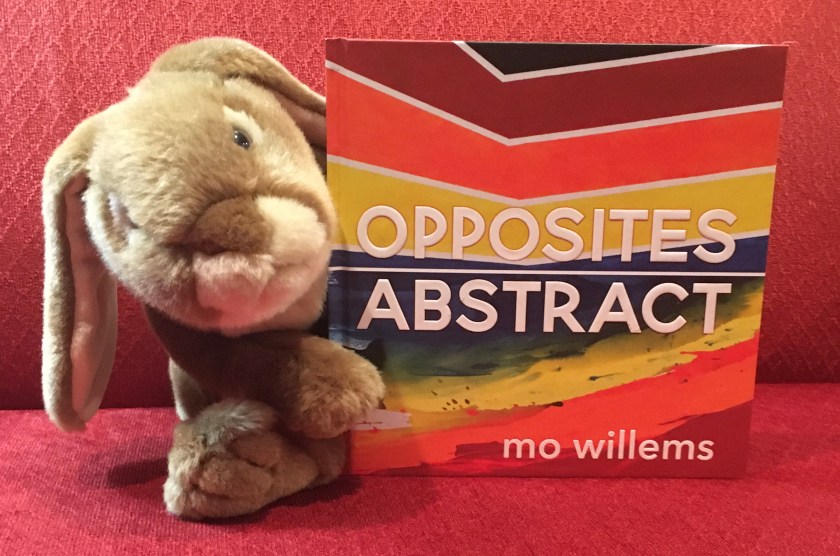
Caramel has loved reading If You Give a Mouse a Cookie (1985), If You Give a Moose a Muffin (1991), If You Give a Pig a Pancake (1998), If You Take a Mouse to the Movies (2000), If You Take a Mouse to School (2002), If You Give a Pig a Party (2004), If You Give a Cat a Cupcake (2008), If You Give a Dog a Donut (2011), and If You Give a Mouse a Brownie (2016), all written by Laura Numeroff and illustrated by Felicia Bond, through the years, and recommends them to all little bunnies and their grownups who love reading with them.